
For electronic products entering the Japanese market, as long as they have wireless functions such as Bluetooth and WiFi, you will most likely hear the terms “TELEC certification” and “TELEC testing”. Many people who come into contact with it for the first time are confused: What exactly does this test measure? Does my product need to do it? Can I use it directly after passing FCC/CE? This article starts from the most basic concepts, covering how to judge whether testing is needed, what the core tests are, what to pay attention to when sending samples for testing, and how to understand the report. Even beginners who have never been exposed to it can understand the core requirements of TELEC testing.
First, Understand: What Exactly is TELEC Testing?
Core Function of TELEC Testing
Many people think that TELEC testing is to test whether the product is easy to use or has complete functions, but that is not the case at all. It is the core testing component for applying for the “Technical Conformity Certification” of radio equipment (commonly referred to as TELEC certification in the industry) under the framework of Japan’s . The core only checks one thing: whether the radio signals emitted by your device will interfere with other normally working equipment, broadcasting, or communication systems. As for whether the product itself has good functions or is durable, they are not within the scope of TELEC testing.
It is also necessary to clarify an industry habit first: the commonly mentioned “TELEC certification” is actually a general term for Japan’s radio compliance certification. It is not only available from TELEC; it is just one of the earliest and most well-known authorized bodies, so it has become a synonym for the certification in the industry.
Who is in Charge? What is the Compliance Mark?
Many people think TELEC is a Japanese government department, but it is not. The competent authority for radio compliance in Japan is the Ministry of Internal Affairs and Communications (MIC) of Japan. TELEC is just one of the third-party certification bodies (called “Registered Certification Bodies”, or RCB for short) authorized by the MIC, with the same status as other qualified certification bodies.
The corresponding compliance mark is not the “TELEC mark”, but the MIC Giteki mark stipulated by the Ministry of Internal Affairs and Communications of Japan. Products that have passed certification must be marked with the Giteki mark and certification number in accordance with MIC rules. Specifically, they can be marked on the product body, electronic screen, packaging, or instruction documents, depending on the device form and applicable rules.
Differences from Other Common Japanese Certifications
People who are new to the Japanese market are often confused by certifications such as PSE, VCCI, and JATE. In fact, they cover completely different fields. A simple comparison is as follows:
| Certification Name | Core Regulatory Content | Applicable Equipment |
| TELEC certification | Radio spectrum compliance of radio transmissions, preventing interference with other equipment | All equipment that actively transmits radio signals |
| PSE certification | Electrical safety, preventing risks such as electric leakage and fire | Applicability depends on whether the product is subject to the and its category, which requires separate determination and is unrelated to radio functions |
| VCCI certification | Electromagnetic disturbance control for information technology/multimedia equipment | Whether it applies and whether compliance is required should be confirmed based on product category and sales arrangements |
| JATE certification | Compliance of telecommunications terminals accessing Japan’s public communication networks | Cellular devices that access public networks, such as mobile phones and plug-in routers, are often processed simultaneously with TELEC certification |
Two Most Commonly Misunderstood Basic Facts
Beginners are most likely to fall into two basic misunderstandings, which are clarified here in advance: First, TELEC is not a government department, but a third-party certification body with official authorization. Second, not all electrical products require TELEC testing; only equipment that actively transmits radio signals needs it. Purely wired devices and devices that only receive signals (such as ordinary radios and GPS-only trackers) do not.
3-Step Judgment: Does Your Product Need TELEC Testing?
After understanding the basic concepts, the next most concerned question is: Does my product need to do it? In fact, it only takes 3 steps to make a clear judgment.
Step 1: Does It Have a Function to Actively Transmit Radio Signals?
This is the core judgment standard: whether the device will actively send out radio signals. As long as it has active transmission functions, it is usually necessary to confirm whether TELEC/Giteki requirements apply in accordance with Japan’s ; exceptions such as very low power and specific uses shall be subject to MIC announcements and the judgment of the certification body.
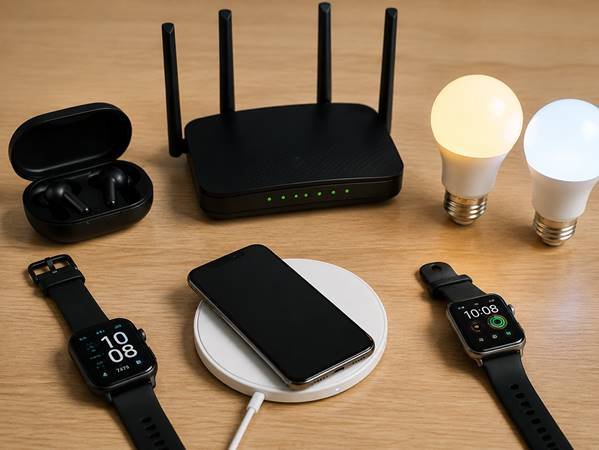
Common products that require testing include familiar wireless devices such as Bluetooth headsets, WiFi routers, walkie-talkies, smart watches, wireless chargers, RFID readers, and automotive radars. There are also some easily overlooked categories, such as wireless sensor tags, car remote keys, human presence sensors, and home appliances with WiFi/Bluetooth modules (such as smart rice cookers and smart lights). Even if the wireless function is only auxiliary, testing is required.
Step 2: Will It Be Sold, Imported, or Used Within Japan?
TELEC is a market access requirement of Japan, and is only required when the product will be sold, imported, leased, or actually used within Japan. If it is only transshipped through Japan and not used within Japan, or is equipment within the exemption scope such as military use, police use, or specific very low power equipment, testing is not required. However, the exemption scope is adjusted with policies, and the specific details shall be subject to the latest announcement of the Ministry of Internal Affairs and Communications of Japan; do not make judgments on your own.
Step 3: Can the Existing TELEC Certification of the Module Be Used Directly?
Many people will ask: The wireless module I use already has a TELEC certificate, so does the whole machine not need to be tested? The answer is not necessarily. The module’s certification can be directly cited only if three conditions are met at the same time: first, the antenna model, gain, and installation method used in the whole machine are exactly the same as those declared during the module certification; second, the power setting of the whole machine does not exceed the limit of the module certification; third, the radio frequency parameters in the firmware have not been modified.
If any of these items is changed—for example, replacing a higher-gain antenna, changing the housing resulting in a changed antenna position, or adjusting the transmission power in the firmware—it may be necessary to supplement the testing of the whole machine’s RF performance, and the module certificate cannot be used directly.
Two Easily Confused Boundary Cases
There are two boundary cases that are most likely to be misjudged, which are explained separately here:
The first is for transmissible devices sold in Japan or used in Japan. Compliance shall be confirmed based on the Japanese sales configuration and the frequency bands, channels, and power capabilities that users can enable. Even if the default region is not Japan, as long as users can switch or software can unlock configurations not allowed in Japan, they shall be restricted or disabled before testing, and compliance requirements cannot be evaded by relying on users’ own choices.
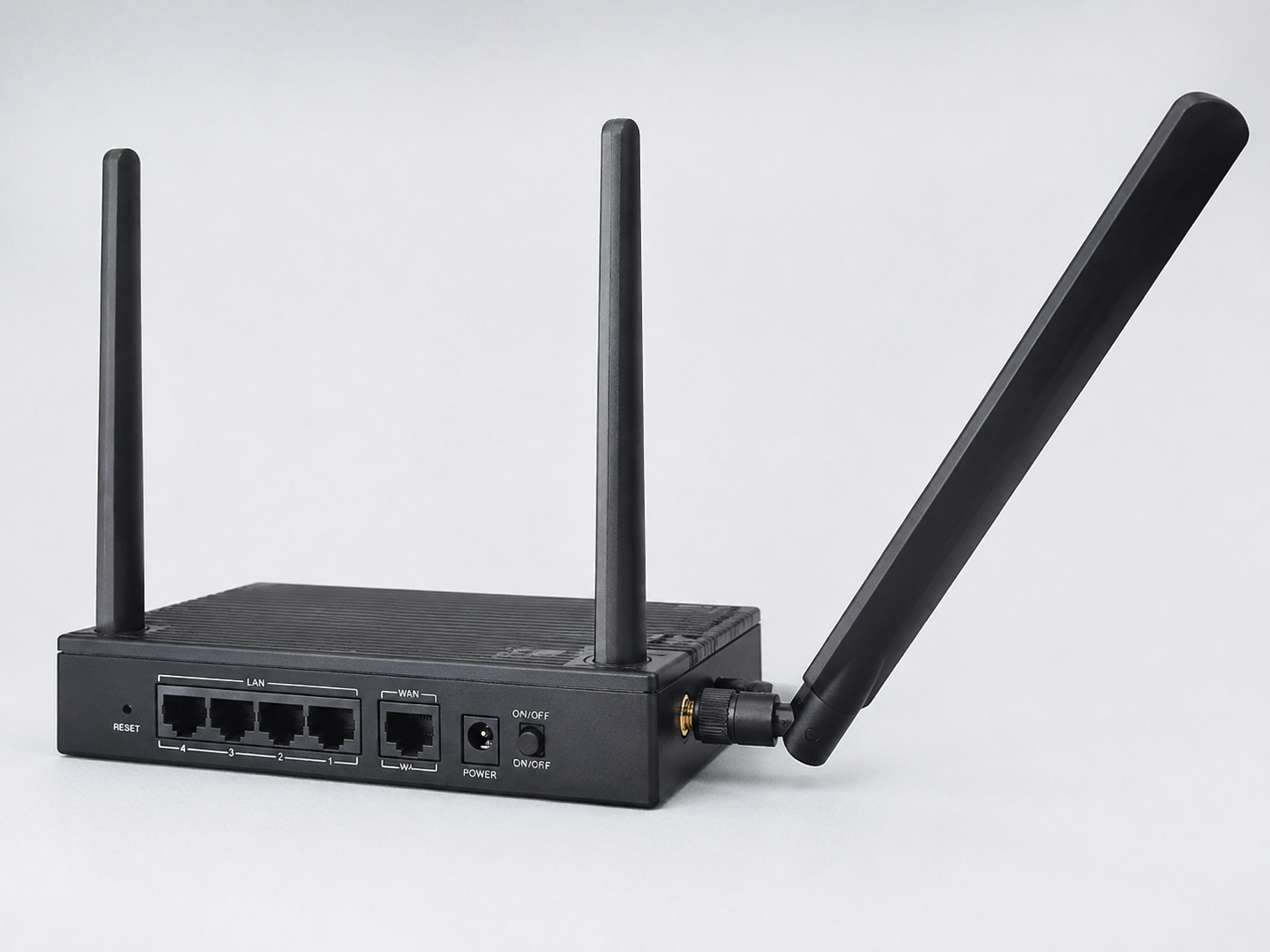
The second is for devices with replaceable antennas. Testing will be conducted based on the highest-gain antenna you declare, and the certification only corresponds to the declared antenna configuration. If users replace the antenna with a higher-gain one on their own, it is a user violation, but the configuration of the product at the time of sale must meet the certification requirements.
Understand the Rules: Why Different Products Have Different Test Items
Many people are curious: Why are the test items for Bluetooth headsets different from those for WiFi routers, even though they are both wireless devices? In fact, the test items and limits are not set randomly; there is a clear rule logic.
Legal Source of Test Requirements
The legal effect of TELEC testing comes from the technical standards of the issued by the Ministry of Internal Affairs and Communications of Japan. Different categories of equipment correspond to different standard requirements; for example, the limits for low-power Bluetooth devices and high-power walkie-talkies are completely different. The specific test methods are determined by the certification body in accordance with official rules, and enterprises do not need to choose test items by themselves. It should be noted that technical standards are updated regularly, and new testing projects are usually implemented according to the current effective version; whether existing certificates or historical reports can be used depends on whether there is a transition arrangement by the authorities and whether the product has changes that affect RF performance. It is best to confirm the current applicable standard version before testing.
3 Core Factors Determining Test Items and Limits
For a specific product, what to test and what the limits are are mainly determined by three factors:
The first is working frequency band: Japan’s radio frequency band division is different from that of Europe, America, and China. Some frequency bands are legal in other countries but prohibited in Japan. If an illegal frequency band is used, it will directly fail.
The second is wireless standard: Different wireless technologies such as WiFi, Bluetooth, LoRa, and cellular communication have different working principles, so the test items vary greatly.
The third is product type: Consumer-grade low-power devices have relatively fewer requirements, while professional-grade high-power devices have stricter requirements.
Frequency Band Legality is the First Threshold
Frequency band legality is the first hurdle of TELEC testing, and many products fail here. All channels supported by the device must comply with Japanese rules. If the region lock of the firmware is set incorrectly and channels not allowed in Japan are accidentally opened, it will be directly judged as unqualified.
Take the most common example: For WiFi 5GHz, Japan divides it into multiple sub-bands such as W52, W53, and W56. Each sub-band has different indoor/outdoor use restrictions, DFS (Dynamic Frequency Selection), TPC (Transmit Power Control), and power conditions. They shall be confirmed item by item according to the equipment category, working sub-band, and the MIC technical standards effective at the time of testing; it cannot be judged only by WiFi standard or overseas regional configuration. For new frequency bands such as WiFi 6E/7, 5G millimeter wave, and LPWA, be sure to confirm the official opening status and corresponding use scenario restrictions in Japan before testing, and do not apply the rules of other regions for granted.
Can Overseas Test Reports Be Used Directly?
Many overseas sellers will ask: I already have FCC or CE test reports, can I use them directly for TELEC certification? The answer is usually not directly. Only if two conditions are met, overseas test data may be accepted by Japan’s authorized certification bodies: first, the laboratory issuing the report has corresponding testing capabilities and the data can be recognized by Japanese RCBs; second, the test methods and test conditions fully comply with the technical standards of Japan’s , and FCC/CE test methods and limits cannot be directly applied. If you want to transfer the report, be sure to confirm with the certification body in advance, don’t wait until the sample is sent for testing to find out it doesn’t work.
Quick Check of Test Focus for Common Categories
The test focus of different product categories varies greatly. Here are the core test focuses of common categories sorted out for your quick correspondence:
| Product Category | Core Test Focus |
| WiFi category | For 2.4G, the focus is on transmission power, occupied bandwidth, spurious emissions, and channel range; for 5GHz, requirements shall be confirmed according to the technical standards of the corresponding sub-band, which may involve channel use restrictions, Dynamic Frequency Selection (DFS)/Transmit Power Control (TPC) and other items; for WiFi 6E/7, first confirm the opening status of Japanese frequency bands |
| Bluetooth/BLE category | For classic Bluetooth, the focus is on frequency hopping rules, transmission power, and frequency range; for BLE, the focus is on low-power transmission modes and duty cycle (the ratio of transmission time to total time); for module integration, it is necessary to confirm that the whole machine configuration meets the module certification limits |
| 920MHz/Sub-G category | Japan’s frequency band rules are different from those of Europe and America, and overseas parameters cannot be directly applied; the focus is on channel compliance, transmission power, duty cycle/transmission time limits, commonly found in LoRa sensors and meter reading equipment |
| Cellular communication category (4G/5G) | Need to match Japan’s legal frequency bands, and often need to apply for JATE certification simultaneously; using certified modules can simplify testing, but it is necessary to confirm that the whole machine configuration meets the module certification limits |
| Special categories | For radar/human sensors, the focus is on frequency band compliance, ranging/speed measurement accuracy, and false trigger rate; for wireless charging, the focus is on working frequency band and radiation limits; for RFID, the focus is on read-write power and spurious emissions |
Plain Language Interpretation of Core Test Items: What Exactly is Being Tested?
TELEC testing seems to have many items, but in fact, they can be divided into three categories: mandatory active transmission items, reception items required for some products, and special additional items only for specific products.
Mandatory Active Transmission Items: The Part Most Likely to Fail
Active transmission items are mandatory for all devices with wireless transmission functions, and are also the part most prone to failure. There are four core items, which can be understood in plain language.
Maximum Transmission Power: The Device’s “Voice” Cannot Be Too Loud
This test measures the maximum intensity of the radio signal transmitted by the device. Common units are milliwatts (mW) or decibel-milliwatts (dBm), which is equivalent to measuring the “loudness” of the device. The qualification logic is simple: it cannot exceed the legal upper limit for the corresponding frequency band and product category. The power upper limit depends on the specific frequency band and product category, and must be checked against the corresponding technical standards, which cannot be generalized.
There are many factors affecting power, including firmware power settings, antenna gain, modulation mode, and working channel, which may all cause power changes. The most common reason for failure is that the firmware power setting is too high, or an unreported high-gain antenna is used—the higher the antenna gain, the greater the actual equivalent transmitted power, which is easy to exceed the limit.
Frequency Deviation/Stability: Cannot “Be Out of Tune” and Occupy the Wrong Channel
This test measures the error between the actual transmitted frequency of the device and the specified frequency. The error is usually expressed in parts per million (ppm), which is a proportional error relative to the carrier frequency. The specific allowable value is determined according to the equipment category and working frequency band, and the core requirement is that the signal cannot “be out of tune” and occupy other channels.
The qualification requirement is not only that the error is within the range at room temperature, but also that the frequency stability does not exceed the limit under high and low temperature and voltage fluctuations. The core factor affecting frequency is the accuracy of the crystal oscillator in the device, followed by ambient temperature and supply voltage which may also cause frequency drift. The most common reason for failure is using a poor-quality crystal oscillator, whose frequency drifts out of the allowable range when the temperature changes.
Occupied Bandwidth and Adjacent Channel Leakage: Don’t Crowd the Next Channel
This test includes two parts: first, whether the actual occupied channel width of the signal exceeds the regulation, and second, whether the signal strength leaking to the adjacent channel is low enough. Just like driving must stay in your own lane, you cannot cross the line or occupy the next lane, otherwise it will interfere with the normal communication of adjacent channels.
The qualification logic is: the occupied bandwidth does not exceed the specified upper limit, and the power of adjacent channel leakage is much lower than the power of the main signal. Factors affecting these two items are mainly modulation method, data rate, and the effect of the filter circuit in the device. Common reasons for failure are either the modulation method does not meet the requirements resulting in excessive bandwidth, or the filter circuit is too poorly made, resulting in too strong adjacent channel leakage signal.
Spurious Emissions: Don’t Transmit Useless Spurious Signals Randomly
Spurious emissions refer to all unwanted signals leaked by the device outside the main working signal, such as harmonics and parasitic radiation. Although these spurious signals are not very powerful, they may interfere with broadcasting, aviation communications, or other dedicated systems, so they must be strictly limited.
The qualification requirement is that the power of all spurious signals is lower than the corresponding limit and will not cause interference to other systems. There are many factors affecting spurious emissions, such as the quality of the device’s metal shielding design, whether the power adapter has interference, and whether the external cables radiate signals. Common reasons for failure include gaps in the metal housing leading to shielding failure, excessive interference from the power adapter, and poor shielding of the RF circuit.
Easily Overlooked Receiver Testing: Only Required for Some Products
Many people think TELEC only tests transmission, but in fact, some products also need to test reception performance. Whether reception items need to be tested must be confirmed item by item according to the technical standards of the corresponding product category; not all products have this requirement.
There are two main reception tests: The first is receiver sensitivity, which is the weakest signal strength that the device can normally receive, equivalent to testing whether the device “can hear faint sounds”. If it is too weak, it will affect normal use. The qualification requirement is to meet the minimum sensitivity requirement of the corresponding product category. Common reasons for failure are poor antenna matching or defects in the receiver circuit design. The second is adjacent channel interference rejection, which is whether the device can still normally receive its own signal when there is a strong interference signal on the adjacent channel, equivalent to “whether you can still hear the sound you want to hear when the next door is noisy”. The qualification requirement is that the decline in reception performance under interference does not exceed the allowable range. Failure is mostly due to the poor effect of the filter circuit at the receiver end.
Generally speaking, digital communication, cellular, and specific low-power devices require reception testing. Some devices with only transmission functions or whose corresponding standards do not clearly require reception performance may not be tested. The specific details shall be subject to the corresponding technical standards, and there is no need to guess randomly.
Special Additional Testing: Only Required for Specific Products
There are also some special test items that are only required for corresponding types of products, and will not increase costs for unrelated products, so there is no need to worry too much.
The first category is Specific Absorption Rate (SAR) assessment, which tests whether the amount of RF radiation absorbed by the human body exceeds the limit for devices used close to or in contact with the body. Whether it applies shall be judged in combination with the working frequency, maximum transmission power, distance from the human body during normal use, device form, and applicable technical standards; close contact or close-range use is an important triggering factor, but low-power devices or devices that meet the specified exemption conditions may not require separate SAR testing. The specific assessment path and limits shall be confirmed by the certification body. Devices used at close range such as Bluetooth headsets and wearable smart watches need to be prioritized to verify whether they apply.
The second category is intermittent transmission/duty cycle testing, which tests whether low-power devices transmit signals at specified intervals and do not occupy the channel for a long time. Devices such as Bluetooth beacons, wireless sensors, and remote keys that sleep most of the time and transmit signals once every other period of time need this test to ensure that the transmission interval and duty cycle meet the standard requirements and do not occupy the channel all the time affecting the use of other devices.
The third category is special function special testing. For example, some sub-bands of 5GHz WiFi may require testing of Dynamic Frequency Selection (DFS) and Transmit Power Control (TPC) functions according to technical standards; radar products need to test ranging/speed measurement accuracy and false trigger rate; wireless charging devices need to meet the Wireless Power Transfer (WPT) requirements of specific frequency bands. These are tests only involved in corresponding products, and have nothing to do with ordinary consumer wireless devices.
Must Read Before Testing: Core Prerequisites for Valid Testing
Many people do not prepare the samples correctly when sending them for testing, or the test conditions do not meet the requirements, resulting in invalid test results, wasting money and delaying time. For the test to be valid, several core prerequisites must be met.
Sample and Configuration Consistency Requirements
The first prerequisite for valid testing is that the submitted samples and supporting configurations must be exactly the same as the final mass-produced and sold version, to ensure that the test results are reproducible and traceable. Engineering machines with temporarily adjusted parameters cannot be used to cope, otherwise even if the test is passed, the mass-produced version may not be compliant.
Hardware and Firmware Requirements
The hardware version and firmware version of the sample must be exactly the same as the mass-produced version. If there are subsequent hardware or firmware changes that affect RF performance, re-evaluation or testing is required. The sample must be able to enter a stable dedicated test mode (such as continuous transmission, fixed channel, fixed power). The frequency hopping and intermittent transmission modes used by ordinary users in daily use cannot meet the parameter requirements for accurate testing.
There is no fixed standard for the number of samples, which is determined according to the complexity of test items, laboratory requirements, and sample backup needs. In addition to basic functions, frequency bands, and test mode descriptions, the RCB or laboratory may require block diagrams, key RF components and antenna data, operating instructions, and other application documents; the scope of documents shall be subject to the application path and institutional requirements, and confidentiality arrangements can be confirmed before commissioning.
Antenna Configuration Requirements
The model, gain, installation position and method of the antenna used for testing must be exactly the same as the declared mass production configuration, and the certification result is only valid for this configuration. If the antenna model is subsequently replaced, the gain or installation position is adjusted, or the housing structure near the antenna is modified, re-testing is usually required.
Test Methods and Environment
According to different test purposes, commonly used test methods are divided into conducted testing and radiated testing, and their site and layout requirements must comply with corresponding rules:
• Conducted testing: directly connect the RF port of the device and the test instrument with an RF cable, without transmitting through the antenna, eliminating antenna and environmental interference, used to measure the reference value of the device’s own RF parameters, and can be carried out in an ordinary laboratory environment.
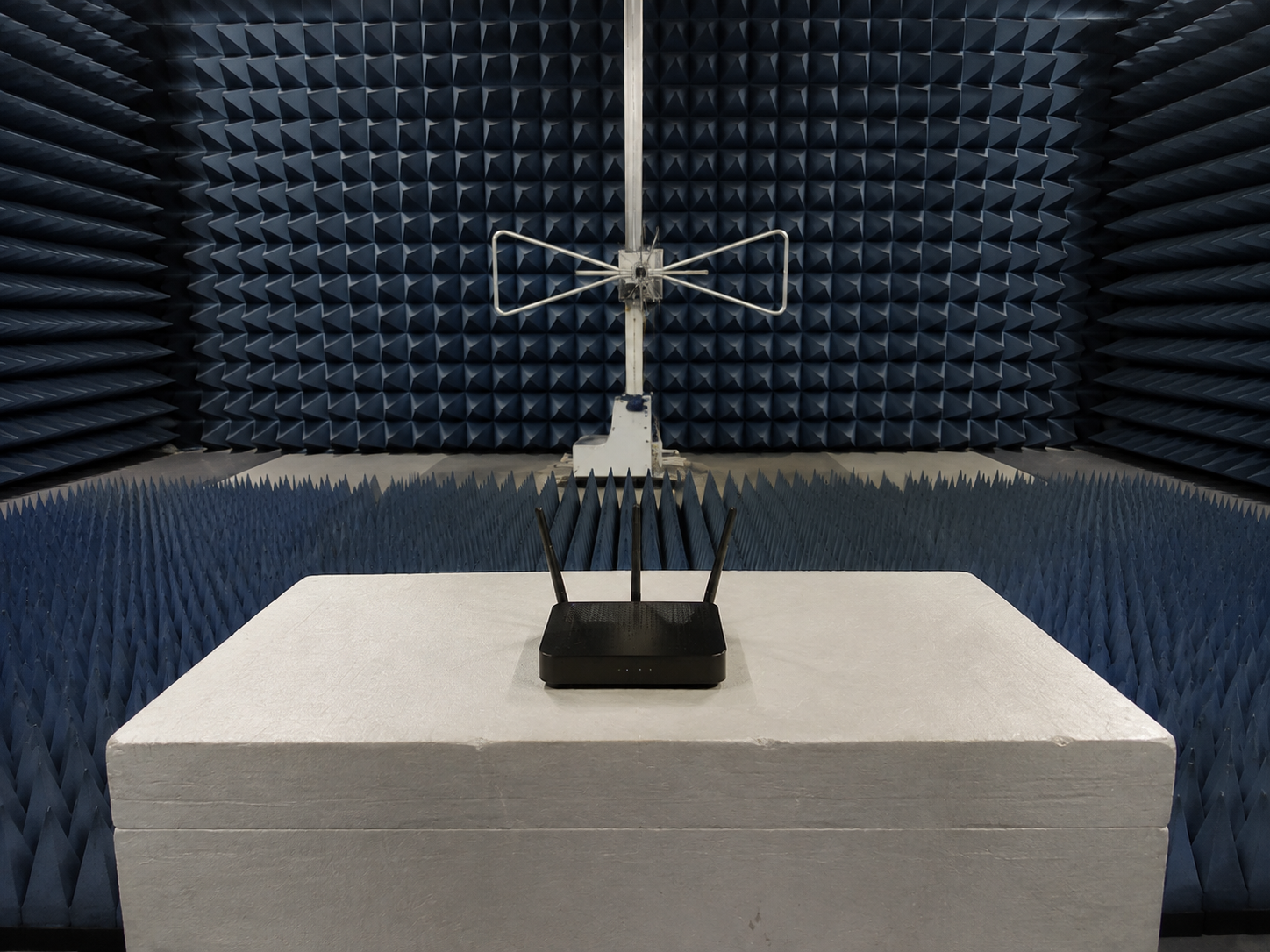
• Radiated testing: test with the whole machine equipped with the declared antenna, simulate the transmission situation in actual use, and verify the compliance of the actual radiation of the whole machine. The test site must meet the requirements of applicable technical standards and RCB recognition, and a shielded anechoic chamber or other recognized test sites can be used.
For multi-antenna/MIMO devices, it is necessary to evaluate the power superposition when multiple channels transmit simultaneously and the worst case of each antenna combination. Whether to use actual measurement, alternative testing, or document evaluation is determined by the applicable technical standards and the certification body.
In addition, some test items need to cover different environmental conditions: for example, frequency stability needs to cover the upper and lower limits of the rated voltage (or the most unfavorable voltage situation, such as when the battery is almost dead); some products also need to be tested under high and low temperature conditions to verify that the parameters are still compliant in extreme environments; devices powered by batteries and adapters may need to be tested separately, because different supply voltages may affect RF parameters.
Test Mode Selection: Must Cover the Worst Case
The core principle of TELEC testing is “covering the worst case”, that is, specifically selecting the mode that is most likely to fail for testing. As long as the worst case passes, there will be no problem in normal use.
Specifically, the power mode must test the highest transmission power mode, because it is most likely to exceed the limit when the power is the highest; the bandwidth mode must test the maximum occupied bandwidth mode, which is the most prone to adjacent channel leakage; for channel selection, according to the applicable technical standards and representative channels selected by the laboratory, cover the low, medium, and high positions in the frequency band or the worst frequency points identified by pre-scanning; if it is a multi-standard device (such as supporting both WiFi and Bluetooth), each supported standard must be evaluated separately, not just one.
Advanced: How to Read Test Reports and Judge Whether They Are Truly Qualified
After getting the test report, you can’t just look at the word “Pass” on the conclusion page. You must learn to check the key information to judge whether the report is really applicable to your product and whether the results are really reliable.
Check 4 Things First When You Get the Report
Don’t rush to look at the conclusion when you get the report. First check four basic pieces of information to ensure that the report corresponds to your product:
The first is sample information: whether the model, hardware version, and firmware version are exactly the same as your mass-produced product. If any one is different, this report cannot be used for your mass-produced product.
The second is antenna information: whether the antenna model, gain, and installation method are consistent with your actual sales configuration. If the antenna is changed, the report will be invalid.
The third is test basis: check the technical standard and its version used in the report, and confirm whether the version is still applicable at the time of application or sales; after the standard is updated, confirm with the RCB the transition period, the usable scope of existing certificates/reports, and whether supplementary evaluation is required.
The fourth is test scope: whether it covers all wireless standards and frequency bands of your product. For example, if your product has both WiFi and Bluetooth, but the report only tests WiFi, that’s definitely not okay.
How to Judge Whether the Result is Truly Qualified
After checking the basic information, look at the test results. Don’t just look at “Pass” on the conclusion page. Remember several principles:
First, all test items must meet the limits to be qualified, there is no such thing as “partial pass”. As long as one item is unqualified, the whole is unqualified.
Second, understand the concept of “margin”: margin is the gap between the measured value and the limit. For example, if the limit is 10mW and the measured value is 8mW, the margin is 2mW. The larger the margin, the more sufficient the reserve, and it is not easy to be unqualified when there are fluctuations in mass production or minor changes later.
Third, pay attention to the results of the worst case, not just the average value. Look at the parameters under the worst channel and worst modulation mode. As long as the worst case is qualified, other cases will be fine.
Finally, if the measured value of an item is very close to the limit, it will probably be unqualified when changing materials or modifying the antenna in mass production. It is best to adjust the design in advance to leave sufficient margin.
Applicable Boundaries of Test Reports
Test reports are not omnipotent; they have clear applicable boundaries: they only cover the product model, hardware/firmware version, and antenna configuration listed in the report, and will not automatically cover new frequency bands, new antennas, or new wireless modules. If it is different models of the same series, it is necessary to confirm whether the difference will affect RF performance, and the same report cannot be applied directly. If it is an ODM/OEM private label product, it is also necessary to confirm the certification holder and model coverage relationship, such as whether the factory’s certificate can cover your brand model, to avoid subsequent problems.
Where to Check First If Unqualified? Quick Location of Common Problems
If the test fails, don’t panic. You can first check from the most common reasons:
If the transmission power exceeds the limit, first check whether the firmware power setting is too high, and whether an unreported high-gain antenna is used;
If the spurious emissions exceed the limit, first check whether there are gaps in the metal housing, whether the power adapter has interference, and whether the shielding structure is well done;
If the frequency deviation exceeds the limit, first check whether the accuracy of the crystal oscillator is sufficient, and whether the working temperature range meets the product’s use scenario;
If the channel/frequency band is unqualified, first check whether the firmware’s region lock is set to Japan mode, and whether channels not allowed in Japan are accidentally opened.
Do You Need to Retest After Product Modification? Change Judgment Rules
It is inevitable that there will be modifications after the product is launched, and not all modifications require re-testing. Whether a change requires difference evaluation, supplementary testing, or re-application shall be confirmed by the certification holder to the RCB based on the impact of the change on RF performance and certificate coverage, and shall not be determined by oneself.
The following changes usually require priority evaluation by the RCB and may trigger supplementary testing or re-application: replacing the antenna (changes in model, gain, installation position), adjusting firmware RF parameters (power, frequency band, channel lock), replacing core RF front-end components, modifying the housing structure that affects RF performance (such as changes in housing material or shape near the antenna).
The following changes should still be documented with difference descriptions and processed after confirmation by the RCB: only changes to non-RF parts of the appearance, firmware only updates non-RF functions, and the RF hardware of the same series of products is exactly the same.
Before the modified product continues to be placed on the Japanese market or used, the relevant responsible entity shall ensure that it is still within the scope of valid certification.
Pitfall Avoidance Guide: Common Misconceptions and Self-Check Before Testing
4 Most Common Advanced Misconceptions
People who are new to TELEC certification are easily misled by some empirical statements. Here are 4 most frequent advanced misconceptions sorted out to help you avoid core pitfalls:
1. Misconception 1: Passing FCC/CE means you can directly pass TELEC certification
Correct understanding: Japan’s frequency band division, limit requirements, and test methods are different from those of Europe and America, and FCC/CE test data are usually not directly applicable. If you have overseas reports, you need to confirm the acceptance conditions with the Japanese authorized certification body (RCB) in advance, and do not apply directly.
2. Misconception 2: If the module has a TELEC certificate, the whole machine definitely does not need to be tested
Correct understanding: Only when the antenna, power, and RF configuration of the whole machine fully meet the limit conditions of the module certification can the module certification be directly cited. Otherwise, it is necessary to supplement the testing of the whole machine’s RF performance, and the whole machine test cannot be exempted only by the module certificate.
3. Misconception 3: The test is valid for life after passing
Correct understanding: The technical standards of Japan’s are updated regularly, and RF-related changes such as product hardware, firmware, and antennas may also affect compliance, requiring re-evaluation or testing. There is no such thing as “one pass, lifetime validity”.
4. Misconception 4: Being able to connect to Japanese networks means compliance
Correct understanding: The fact that a device can connect to a Japanese wireless network does not mean that its spectrum parameters meet the requirements. Unlocking illegal channels through firmware or modifying RF parameters through software updates may lead to violations. Products sold in Japan must lock legal frequency bands and channels, and must not open illegal configurations that users can switch.
Free Self-Check List Before Testing: Can Be Done Without Understanding Circuits
You can check 4 things by yourself before sending samples for testing. You don’t need to understand circuits, and you can avoid common low-level mistakes:
First, confirm that the firmware has locked Japan’s legal frequency bands and channels, and users cannot switch to illegal frequency bands at will. Do not leave a “region selection” backdoor to avoid users mistakenly selecting frequency bands of other regions.
Second, confirm that the antenna model and gain used are exactly the same as what you declared, and that no higher-gain antenna has been privately replaced.
Third, confirm that the hardware and firmware of the mass-produced version are exactly the same as the test samples, and there are no subsequent modifications. If there are changes, communicate with the laboratory in advance.
Fourth, confirm that the Japanese instruction manual and the design of the MIC Giteki mark meet the regulatory requirements, such as the size and position of the mark, and the relevant precautions in the instruction manual.
Practical Tips to Reduce Test Failure Costs
If you want to reduce the probability of test failure and reduce costs, you can try these methods:
First, do a pre-test (also called a摸底 test) before the formal test to find problems in advance. Otherwise, if the formal test fails, retesting will cost extra and delay more time.
Second, provide complete parameter descriptions when sending samples for testing, such as the supported standards, frequency bands, power levels, and antenna parameters of the product. The more detailed, the better, to avoid the laboratory choosing the wrong test standard.
Third, if there are multiple SKUs of products, explain the differences in advance and confirm whether test data can be shared. For example, if only the color and memory are different and the RF hardware is exactly the same, there is no need to test each SKU.
Fourth, overseas enterprises can prioritize local laboratories with accreditation recognized by Japanese certification bodies, which is more convenient for communication and does not need to send samples to Japan, which can reduce a lot of communication and logistics costs.
Summary
After reading this article, you can independently make the following judgments:
1. Judge whether your product needs TELEC certification and the corresponding test focus direction;
2. Understand the meaning of core test items, know common reasons for failure, and complete basic self-checks;
3. Check the key information of the test report and judge whether the report is applicable to your product;
4. Initially judge whether product changes require re-evaluation and avoid core cognitive misconceptions.