
If you do cross-border e-commerce selling wireless products to Japan, plan to live or travel in Japan, or even just buy a small Bluetooth-enabled appliance via overseas shopping, you have most likely heard terms like “TELEC certification” and “Radio Law”. Many people easily confuse related concepts when they first come into contact with them, or think this is something only large companies need to worry about, until their goods are detained by customs or their products are removed from platforms, only to find they have fallen into a trap. In this content, we will explain the core requirements of Japan’s Radio Law in the plainest language, from the entry-level question “does this apply to me?” to the semi-proficient question “how to choose a compliance path and avoid pitfalls”, which can be understood by both merchants and individual users.
1. Basic Understanding: First Clarify What the Radio Law Is and Its Relationship with TELEC
First, let’s clarify the most basic point: Japan’s Radio Law is not an internal regulation of a certain certification body, but the core mandatory law in Japan’s radio field. Together with related government ordinances and ministerial ordinances, it forms a complete rule system. The Ministry of Internal Affairs and Communications (MIC for short) is responsible for overseeing radio affairs, formulating or issuing related technical rules, handling licenses, and implementing supervision and law enforcement. Its core purpose is to regulate all radio transmission behaviors, avoid signal interference between different devices, and ensure public communication safety — just like traffic rules on the road, all participants must abide by them, otherwise there will be traffic jams and accidents.
There are three types of core roles related to the Radio Law, don’t confuse them:
The first type is the rule-making and law enforcement party, that is, the Ministry of Internal Affairs and Communications (MIC), which is equivalent to the “traffic management department”. It is responsible for setting standards, issuing licenses, and investigating violations. The final law enforcement standards and technical rules are determined by it in accordance with the law.
The second type is authorized certification bodies, such as TELEC which people hear most often, as well as RMI, JQA, etc. These are third-party testing and certification bodies authorized by MIC, not government departments. They are only recognized to issue compliance certificates for equipment that meets the standards, equivalent to “authorized testing stations”.
The third type is subjects related to compliance responsibilities. Here is a special note: certification applicants/certificate holders, product manufacturers, importers, sellers, and radio station license holders are different roles, each bearing corresponding obligations. It is not necessary for a Japanese local entity to act as the “certificate holder” in all cases. However, overseas manufacturers usually need a local Japanese importer, agent or liaison to assist in fulfilling obligations such as import docking, document preservation, and regulatory liaison. The specific requirements depend on the certification type and business model.
Some people may say, I am overseas, what does Japan’s law have to do with me? As long as it involves the Japanese market or use within Japan, it matters:
If you are a cross-border seller or commercial importer, as long as you sell wireless products to Japan, whether through e-commerce platforms or independent websites, you must meet the requirements. Otherwise, the goods may not be able to clear customs, and may also be removed from the channels.
If you are an individual, buying wireless equipment via overseas shopping, bringing wireless products into Japan, or even using wireless equipment in Japan, may also touch upon the requirements. For example, bringing a high-power walkie-talkie to Japan may be directly detained by customs.
Even for prototype display, participating in exhibitions, or testing, you cannot turn on wireless signals casually, and you must also abide by the rules.
Here are three of the most common entry-level misunderstandings that many people get wrong when they first start:
First, TELEC is not equal to the Radio Law. The former is a common certification and issuance channel, and the latter is the legal basis, just like you cannot equate driving school exams with traffic laws.
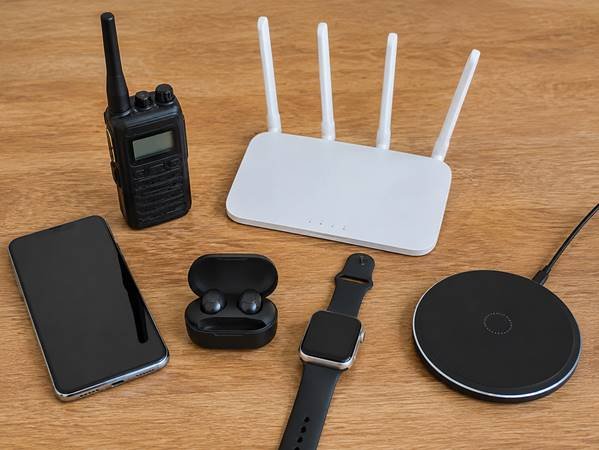
Second, it is not only mobile phones and walkie-talkies that are regulated. As long as the device actively transmits radio waves defined by Japan’s Radio Law, such as WiFi routers, Bluetooth headsets, smart watches, and even devices with transmitting wireless charging, may be involved.
Third, FCC and CE certifications cannot be used directly. The frequency band and power requirements of each country are different. Japan has no mutual recognition agreement for wireless certification with other countries. Even if you have passed the US FCC or EU CE, you still have to do the required compliance when you go to Japan.
2. Jurisdiction Scope and Quick Preliminary Judgment: Understand Whether Compliance Is Required with One Table
After clarifying the basic concepts, what you care most about must be: does my product/the device I bring fall under the jurisdiction of the Radio Law? What process should I follow? In fact, you don’t need to memorize the rules scattered. We have sorted out the core judgment steps into a general table, from “whether it is regulated” to “what path to take” and then to “whether to apply for a use license”, all in one step.
Before looking at the table, first clarify two basic premises:
First, to judge whether it is subject to the jurisdiction of the Radio Law, the core is to see whether it transmits radio waves defined by Japan’s Radio Law (usually referring to electromagnetic waves above 30 kHz, infrared, visible light, etc. are generally not included), and it must be comprehensively judged in combination with the frequency band, power, equipment category and specific legal provisions, not just based on “whether it actively transmits”.
Second, pure wired equipment and equipment that only receives but does not transmit (such as ordinary broadcast radios, old TV receivers) are usually not the main objects of wireless equipment compliance, but some special receiving equipment may be subject to other rules, which need to be confirmed separately; pure electrical safety issues are under the control of PSE regulations, and pure cybersecurity issues are also not under the control of the Radio Law, don’t confuse them.
For the convenience of entry-level understanding, we divide regulated equipment into three categories according to practical handling directions — note that this is a practical classification for easy understanding, not a unified legal classification:
The first category is equipment that needs to follow the statutory equipment compliance path: this type of equipment accounts for the majority, and needs to pass third-party technical standard conformity certification or other statutory compliance procedures before it can be imported and sold, such as mobile phones, walkie-talkies, cellular communication modules, home WiFi routers. The specific situation is subject to the actual frequency band, power and applicable provisions of the equipment.
The second category is specific equipment that is allowed by regulations to self-confirm or be used without a license: only categories explicitly listed in regulations can apply. Those that meet the conditions can be confirmed by the enterprise itself for technical standards, or used in accordance with license-free rules, such as 2.4GHz low-power wireless mice that meet specific conditions. The scope of application cannot be expanded without authorization.
The third category is statutorily exempt equipment/radio stations: those that meet the strict thresholds of power, frequency band, use, etc. announced by MIC, do not need equipment-side compliance certificates, such as specific wireless sensors that meet very low power thresholds. They must be confirmed against the official MIC list, and cannot be judged by oneself.
The following is the complete quick decision-making table, follow it to make a preliminary judgment:
| Judgment Step | Judgment Content | Corresponding Conclusion |
| Step 1 | Does it transmit radio waves defined by Japan’s Radio Law (above 30 kHz)? | No → Not subject to the Radio Law (such as pure infrared remote controls, wired equipment); Yes → Proceed to the next step |
| Step 2 | Will it be sold, imported or used within Japan? | No → No compliance required; Yes → Proceed to the next step |
| Step 3 | Does it fall into the statutory exemption list announced by MIC? | Yes → No equipment-side compliance certificate required; No → Proceed to the next step |
| Step 4 (Equipment-side path) | Does it belong to specific low-power equipment that is explicitly allowed by regulations to self-confirm? | Yes → Follow the technical standard conformity self-confirmation path; No → Need to apply for third-party technical standard conformity certification (or construction design certification) |
| Step 5 (Use-side judgment) | Does it belong to the category of statutorily license-free low-power equipment, and does the use scenario meet the requirements? | Yes → No additional radio station license required; No → Need to apply for a radio station license/permission as required, and some categories require operator qualifications |
If you are unsure about a certain step in the table, such as not sure whether it is an exempt category or whether self-confirmation is possible, first check the official public list of MIC, or consult a professional certification body authorized by MIC, don’t make a decision on your own.
3. Core Management Logic: Equipment Compliance and Use Compliance Are Two Different Things
Many people think that as long as wireless equipment passes certification, everything is fine, but that’s not the case. The management logic of Japan’s Radio Law can be divided into two independent but related lines, and many compliance misunderstandings come from confusing these two lines.
The first line is equipment-side compliance, that is, the access threshold before entering the market, which answers the question “can this equipment be manufactured, imported, and sold according to this design”. For example, the technical conformity certification and self-confirmation we often talk about are all equipment-side compliance procedures, which confirm that the equipment itself meets Japan’s wireless technical standards. The consumer electronic products with technical conformity marks we usually buy in Japan have basically completed equipment-side compliance.
The second line is use-side compliance, that is, the behavioral constraints after entering the market, which answers the question “can this radio station be set up and operated under specific conditions”. Even if the equipment itself is qualified, it cannot be used indiscriminately to interfere with legal communications — just like you buy a compliant car, you can’t run red lights or drive in the emergency lane casually.
Another concept that is easy to confuse is operator qualification, which is only required for specific types of radio stations (such as amateur radio stations, high-power professional radio stations). Ordinary consumer-grade low-power equipment does not need it at all, don’t treat it as the same thing as equipment certification and use license.
Corresponding to actual scenarios, there are three common situations:
The first is that only equipment-side compliance is required: ordinary consumer-grade license-free low-power equipment, such as home WiFi and Bluetooth headsets, as long as the equipment itself is compliant, users can use it directly after buying, without applying for any use license.
The second is that both equipment and use compliance are required: some professional and high-power radio stations, such as amateur radio stations, commercial repeaters, and communication base stations, not only need the equipment to meet technical requirements, but also need to apply for a radio station license, and some also require operators to have corresponding qualifications. The specific requirements depend on the category, frequency, power and use of the radio station, not all professional equipment is the same.
The third is complete exemption: that is, the very low-power equipment and equipment without transmission function listed in the MIC exemption list mentioned earlier, no need to worry about it.
Here is a very frequent misunderstanding that must be noted: license-free use does not equal equipment certification exemption. Many people think that since WiFi does not require a radio station license, they can sell uncertified routers casually, which is wrong. WiFi only does not require users to apply for an additional use license, but the equipment itself must meet the technical requirements. Selling WiFi routers without compliance certificates is an illegal act.
In addition, it should be noted that the review of a radio station license will require the radio station to meet corresponding technical conditions. Whether it is necessary to obtain a technical conformity certificate separately depends on the equipment category and the application and inspection path. The technical conformity certificate cannot be regarded as an independent precondition for all licensed radio stations, but the requirements of the two lines cannot replace each other.
4. Core Technical Requirements for Equipment Side (Plain Language Version): What Exactly Does Compliance Check
Since equipment compliance is the first threshold, what exactly does it check? We can easily understand it with the highway analogy: frequency band means you can only drive in the designated lane, power means you can’t speed, spurious emission means you can’t leak exhaust to interfere with others, plus standardized markings and documents, these are basically the core requirements.
The first core requirement is frequency band compliance. Radio frequency bands are like highways, with dedicated lanes for different uses, which cannot be occupied randomly. For example, the available channels for 5GHz WiFi in Japan are different from those in Europe, America and China, and the Sub-GHz industrial frequency band also has its own division. The compliance requirement is not only that the working frequency band must be within the range allowed by Japan, but also that the frequency must be stable and cannot drift out of the allowed range. Many overseas version devices default to supporting global channels, which is not allowed. They must lock the channels available in Japan through firmware, and users cannot be allowed to switch to frequency bands not opened in Japan on their own — even if the device hardware supports it, this function must be locked.
The second is power compliance. The higher the power, the farther the signal travels, but the higher the risk of interfering with others, so each frequency band and each type of equipment has a clear upper limit of power, just like the speed limit on the highway. It should be noted that the upper limit of power is not fixed, it is determined by the frequency band, equipment type, and modulation method. You can’t just look at the “low power consumption” on the product brochure and think there is no problem. If the equipment power exceeds the license-free upper limit of the corresponding category, either it cannot be sold as consumer-grade equipment, or a special radio station license must be applied for, otherwise it is illegal.
The third is spurious emission compliance. In plain language, in addition to transmitting signals in its own working frequency band, the equipment must not leak extra interference signals in other frequency bands, just like a car cannot leak exhaust to pollute the environment. This item is one of the most likely to fail in certification testing, and it cannot be solved simply by reducing power. It needs to be adjusted from the aspects of hardware filtering, software parameter setting, etc. Many small manufacturers’ products fail on this point.
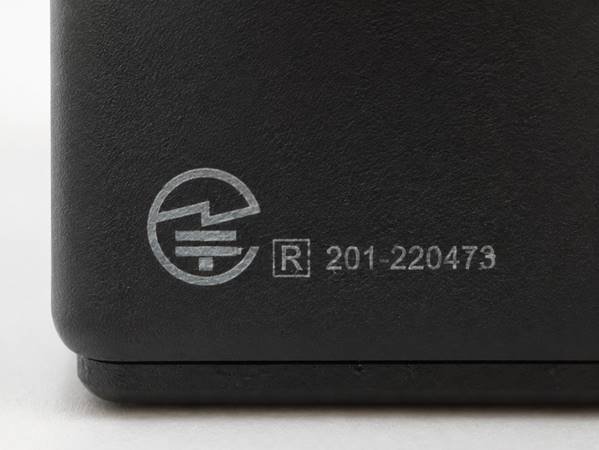
The fourth is marking and document compliance. Equipment that has passed the compliance procedure shall, in accordance with the applicable certification or self-confirmation procedure, mark the technical standard conformity mark and corresponding number at the position required by law; electronic marking (such as screen display, built-in menu) can only be used if it meets the rules of corresponding equipment type, accessibility, etc. It is not that you can use electronic labels casually just because the equipment is small. The product manual needs to mark the key wireless parameters required by law, and must not guide users to modify to non-compliant frequency bands or power. Enterprises should also keep the corresponding technical data for supervision and spot checks.
Semi-proficient Judgment: Which Changes Will Affect the Validity of Compliance
Whether it is third-party certification or self-confirmation, the compliance conclusion is drawn based on specific hardware, software, and antenna configurations. If there are subsequent changes, they may affect the validity of compliance and need to be re-evaluated:
• Changes that directly change radio frequency performance: such as replacing antennas not in the certification list, adding power amplifiers or extension cables, modifying radio frequency circuits, replacing motherboards, etc., will most likely exceed the original compliance coverage and need to be re-evaluated.
• Structural changes that may affect signals: such as replacing shell materials, changing the installation position of modules, if the resulting changes in transmission performance exceed the original compliance scope, the original conclusion cannot be used.
• Firmware upgrade: if the upgrade content involves the adjustment of core wireless parameters such as frequency band and power, and exceeds the original compliance coverage, it needs to be re-evaluated; if it only optimizes non-wireless related functions and does not change wireless parameters, it will not be affected.
• Coexistence of multiple modules: if there are multiple wireless modules in the device (such as both WiFi and Bluetooth), and the combined interference generated when working at the same time exceeds the standard requirements, it also needs to be re-adjusted and evaluated.
In short: as long as the change may affect the wireless transmission performance and exceeds the scope covered by the original compliance procedure, you cannot directly use the original compliance conclusion. You need to find a professional institution for evaluation, don’t take it for granted that “just changing the shell doesn’t matter”.
5. Details of Compliance Paths: What to Pay Attention to for Different Paths
The previous decision table has helped you choose the general direction. Here we will explain the details and precautions of each path clearly to avoid pitfalls.
1. Third-Party Technical Standard Conformity Certification
This is the most common equipment-side compliance path, which is what people often call “TELEC certification”, applicable to most consumer wireless devices, such as WiFi, Bluetooth, IoT devices, etc. The operation method is to send samples to an institution authorized by MIC for testing, and a certificate will be issued after passing. The product can be marked with the technical conformity mark as required.
There are two common types of this certification: one is single model certification, that is, one model corresponds to one certificate; the other is construction design certification, which is for products with the same design in batches and stable manufacturing control. The certification body certifies the overall design plan, and subsequent products with the same design can use this certification.
It should be noted that if there are changes to subsequent products, whether models can be added and tests can be reduced shall be judged by the certification body according to the actual change situation (such as whether wireless parameters, antennas, radio frequency circuits, etc. have been changed). It is not that you can automatically use it just by changing the model name or shell color.
2. Technical Standard Conformity Self-Confirmation
Many people have misunderstandings about this path. Here is a special note: only specific low-power, simple equipment explicitly listed in regulations can follow the self-confirmation path, not all low-power equipment can use it.
Self-confirmation is not “no compliance required”, but the enterprise tests itself in accordance with the standards, keeps complete test records, and bears compliance responsibility on its own; self-confirmation equipment that meets the conditions also needs to mark the technical standard conformity mark and self-confirmation number as required, cannot mark randomly, and cannot expand the applicable categories without authorization — for example, originally only specific 2.4G wireless mice can be self-confirmed, you cannot also apply this path to Bluetooth speakers.
3. Radio Station License/Permission
This is the use-side compliance path, targeting scenarios where specific radio stations need to be set up and used, such as communication base stations, amateur radio stations, high-power walkie-talkies, etc. This type of permission is applied to MIC, and some categories also require operators to have corresponding qualification certificates.
Again: the radio station license and equipment-side compliance are two lines, which cannot replace each other; the review of the radio station license will involve technical conditions, but it does not mean that the equipment side does not need to meet the corresponding requirements. The specific situation depends on the equipment category and application path.
4. Exempt Equipment
Very low-power equipment that meets the power, frequency band, and use thresholds announced by MIC do not need to do equipment-side compliance certificates, but must be strictly confirmed against the official list, and cannot be judged by oneself based on the “feeling that the power is small”.
6. Applicable Boundaries of Module Certification: Don’t Fall into the Trap of “Certificate Misappropriation”
Sellers who make smart home and IoT products often encounter the term “module certification” — that is, the WiFi and Bluetooth modules they buy already have compliance certificates themselves, so can the whole machine be used directly? There are many pitfalls here, and if you are not careful, you will step on the mine of “certificate misappropriation”.
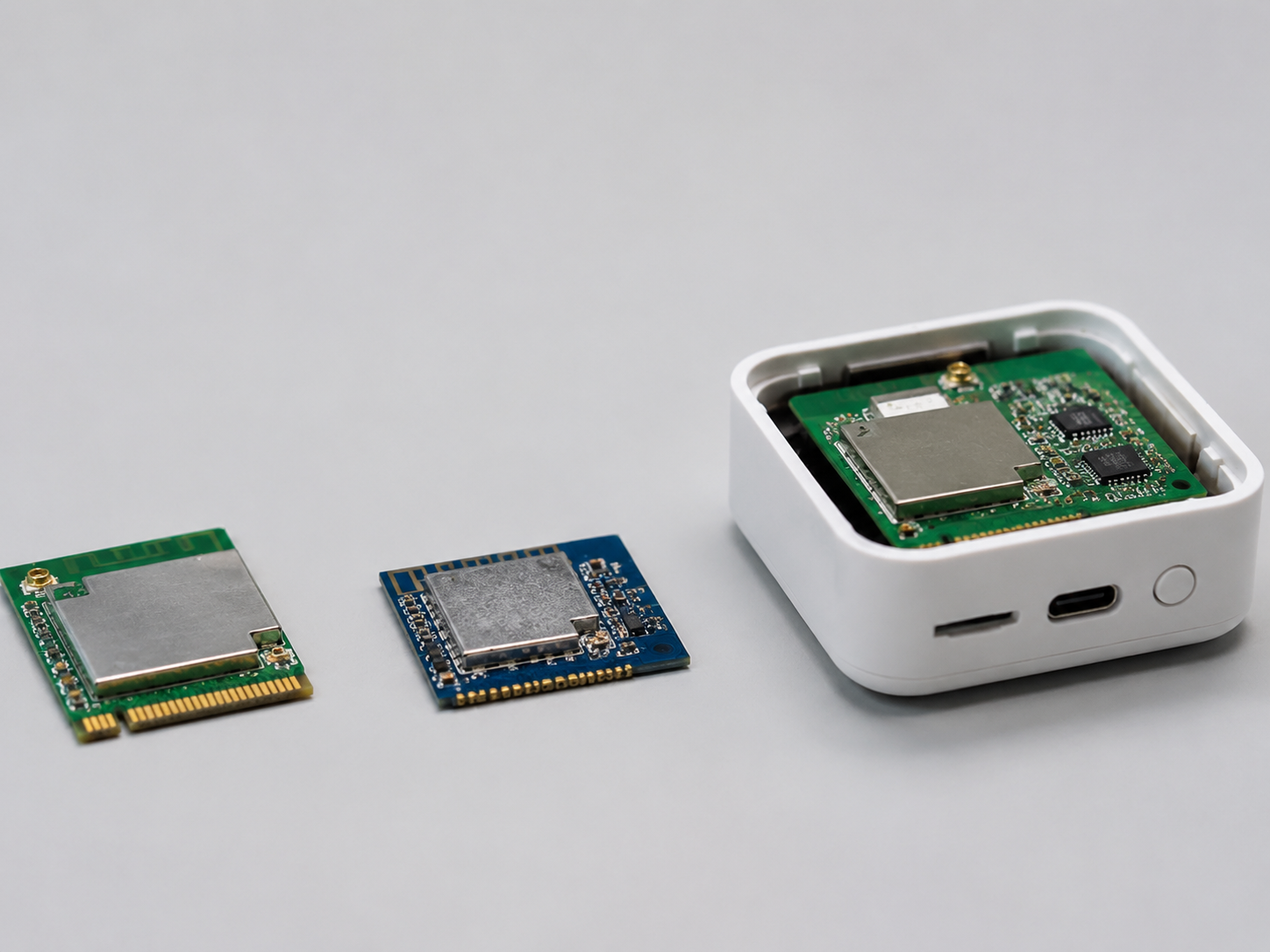
First, let’s talk about what module certification is: it is the equipment-side compliance certificate obtained in advance by a wireless module (such as a WiFi module, a Bluetooth module) as a separate component. Its benefits are obvious: if the whole machine integrates this module without changing the wireless performance and meets all applicable conditions of the certification, it can use the module’s certification without repeating the wireless test of the whole machine, which can save a lot of cost and time, especially suitable for multi-category IoT products.
But it is not that if you buy a certified module, the whole machine will definitely be compliant. The following necessary conditions must be met at the same time:
1. The model and hardware version of the module must be exactly the same as those on the certification certificate, not different models of the same series, nor modified modules.
2. The type, gain, and installation position of the antenna used must be within the list/conditions allowed by the module certification, and you cannot casually replace a high-gain antenna by yourself.
3. The hardware connection, power supply method, shell material, etc. of the whole machine do not significantly change the wireless transmission performance of the module, or the change is still within the scope of certification coverage.
4. The use and use scenario of the final product must be within the applicable scope of the module certification. For example, if the module certification is for consumer-grade products, it cannot be used on industrial-grade professional equipment.
5. If the whole machine has multiple wireless modules working at the same time, the combined interference must meet the standard requirements and be within the coverage of the module certification.
Key Points of Final Verification After Whole Machine Integration
Don’t rush to launch the product after integrating the module. Do a final round of verification to ensure that it really meets the requirements:
• Check the validity of the module certification certificate, as well as details such as the approved antenna list, installation conditions, and simultaneous transmission restrictions.
• Confirm that the marking method of the final product meets the regulatory requirements, and the technical conformity mark cannot be marked casually.
• Keep materials such as module certification certificates, antenna specifications, supplier declarations, and whole machine evaluation records for spot checks.
If there is anything you are unsure about, such as whether changing the shell will have an impact, or whether multi-module coexistence will exceed the standard, be sure to find a certification body or Japanese importer for evaluation. Never trust the supplier’s verbal “definitely no problem”. If something goes wrong, you are the one who bears the responsibility.
7. Compliance Points for Different Entities (Exclusive for Overseas Users)
The previous ones are general requirements. For overseas users, the compliance points for different identities are different. We will talk about them in three categories, all of which are directly related to you.
Cross-Border Sellers/Commercial Importers
If you are a seller or importer selling wireless products to Japan, pay attention to these points:
• For products that need to follow the equipment-side compliance procedure, the corresponding compliance certificate must be obtained before they can be legally imported and sold.
• Different roles bear different obligations: manufacturers are responsible for the technical compliance of products, importers are responsible for the compliance of the import link, and sellers are responsible for the compliance of the products they sell; overseas manufacturers usually need to cooperate in providing technical materials, and assist in fulfilling obligations such as regulatory docking and document preservation through local Japanese importers, agents or liaisons.
• Some e-commerce platforms, channel providers or importers may require submission of certification numbers and technical materials. Failure to pass spot checks may lead to product removal. The specific requirements are subject to the rules of the corresponding platform or channel.
• Be sure to keep materials such as certification certificates, test reports, model correspondence tables, and change records to ensure that the product models and configurations sold are consistent with the certification, for supervision and spot checks.
Individual Overseas Shopping/Carrying into Japan
Many people think that personal use is completely fine, but that’s not the case. It needs to be judged at three levels:
• Can it be imported: Individuals carrying or buying wireless equipment via overseas shopping and entering Japan also need to meet the requirements of Japan’s Radio Law. “Personal use”, “non-commercial”, and “small quantity” are not universal exemption reasons. Customs will make a comprehensive judgment based on the type of equipment, use, quantity, packaging, etc. Non-compliant ones may be detained or returned.
• Can it be used: Even if the equipment can enter the country, as long as it transmits radio waves within Japan, it must meet the requirements of equipment compliance and use license. You can’t turn it on casually just because it’s for personal use.
• Special rules for short-term visitors: Overseas visitors who stay in Japan for a short period of time and use specific wireless equipment that have obtained legal certification in their own country may meet the special use conditions stipulated by MIC, but there are strict requirements on the period, equipment type, and technical standards. The specific situation needs to be checked against the current MIC regulations in advance, and cannot be applied by default.
Also a special reminder: walkie-talkies, high-power wireless equipment and other highly regulated products, even for personal use, cannot be imported or used casually. You need to confirm the license requirements in advance, don’t take chances.
Prototype/Exhibition/Testing Scenarios
Many enterprises go to Japan to participate in exhibitions and bring prototypes, thinking that no compliance is required, but there are also requirements:
The “prototype” identity itself does not generate compliance exemption, and needs to be judged according to the actual situation:
• If the equipment has obtained Japanese equipment-side compliance and belongs to the license-free category, it can be used normally at the exhibition site as required.
• If the equipment has not obtained compliance, or belongs to the category that requires a license, wireless signals cannot be transmitted casually on site. It can be displayed by shielding, turning off the transmission function, etc.; if it is really necessary to turn on the machine for testing, a test radio station or temporary permission must be applied for in advance.
• For equipment for testing purposes brought into Japan, it is necessary to confirm in advance whether a temporary import permit or test permit is required. Absolutely cannot use the excuse of “prototype” to publicly sell or normally use wireless equipment in Japan.
8. Pitfall Avoidance Guide: Common Problems and Compliance Boundaries
Finally, we have sorted out the most common pitfalls and easily confused regulatory boundaries to help you avoid detours.
How to Verify the Authenticity of the Technical Conformity Mark
Whether you are buying a product or a supplier shows you a certificate, you can use this method to verify:
It is impossible to accurately judge compliance by appearance alone. The most reliable way is to query the official MIC technical conformity database with the certification number to confirm that the certification record is valid, and at the same time check that the model, hardware version, frequency band, power, antenna specifications, etc. on the certificate are completely consistent with the actual product. It should be noted that the public information in the database may be limited, and if necessary, you need to ask the certification body or supplier for the complete certificate and test materials to support.
5 Most Common Pitfalls
The first pit: using FCC, CE, PSE, VCCI certification to replace technical conformity certification. These certifications cannot replace the wireless compliance requirements of Japan’s Radio Law. Products may still be required to supplement materials, stop selling, rectify or return. The specific consequences depend on the product, channel and law enforcement situation.
The second pit: having module certification means the whole machine is compliant by default. Module certification has strict applicable conditions. If they are not met, it cannot be used, which means there is no compliance.
The third pit: privately modifying the antenna, power, and firmware frequency band beyond the original compliance scope. It may lead to the invalidation of compliance markings or eligibility, and may trigger sales suspension, rectification, recall or punishment, depending on the behavior and law enforcement determination.
The fourth pit: individuals bringing multiple brand-new wireless devices for personal use. If it is determined to have commercial intent, you may face detention, return or requirement to supplement compliance materials.
The fifth pit: passing platform review equals complete compliance. The platform only conducts minimum screening, and the spot check requirements of regulatory authorities are stricter. Passing the platform does not mean fully meeting the regulatory requirements.
Easily Confused Regulatory Boundaries
Other regulations are often mixed with the Radio Law. Let’s clarify them at once:
| Regulation Name | Core Jurisdiction Content | Mandatory/Voluntary | Relationship with the Radio Law |
| PSE | Electrical product safety (electric shock prevention, fire prevention, etc.) | Mandatory | Manages electrical safety, the Radio Law manages wireless transmission. Wireless devices with power supplies may need both |
| Telecommunications Business Law | Compliance of terminal equipment accessing public communication networks | Mandatory | Manages public network access, the Radio Law manages wireless transmission. Mobile phones and cellular modules may involve both |
| VCCI | Electromagnetic interference of information technology equipment | Voluntary | Cannot replace mandatory technical conformity certification. The test scopes of the two overlap but the requirements are different |
| FCC/CE | US/EU wireless/electromagnetic compatibility certification | Mandatory in corresponding regions | No mutual recognition with Japan’s wireless certification. The test items are similar but the requirements such as frequency bands and limits are different |
In short, each manages its own affairs, don’t confuse them. Wireless devices may need several certifications at the same time, don’t think that one is enough.
Consequences of Non-Compliance
Finally, let’s talk about the consequences of non-compliance, so that everyone has a clear idea:
The Radio Law stipulates different penalties for different illegal acts (such as setting up/operating radio stations without a license, violating technical standards, illegal marking, obstructing public communications, etc.). The responsibilities and upper limits of fines for individuals and legal persons vary with the type of illegal act. For example, for some acts of setting up radio stations without a license, individuals may be sentenced to up to 1 year of imprisonment or a fine of up to 1 million yen, and legal persons may be fined up to 100 million yen; if it is a serious violation such as malicious interference with public communications and emergency communications, it may also involve heavier criminal penalties. The specific penalty shall be subject to the actual illegal circumstances and applicable legal provisions.
Common consequences on the product side include customs detention, return, channel removal, mandatory recall, etc., which also depend on the severity of the violation.
At this point, you should be able to independently judge these 5 things: whether the wireless product in hand or the product to be sold needs to meet the requirements of Japan’s Radio Law; which compliance category the product belongs to and which compliance path it roughly follows; whether the existing wireless module certification can be directly applied to your own whole machine product; whether you need to apply for an additional use license to use wireless equipment in Japan; whether importing, selling or buying wireless products via overseas shopping will fall into common compliance pitfalls.
If you encounter complex situations such as multi-module combination and special frequency band equipment, it is recommended to consult a professional certification body authorized by MIC or a local Japanese compliance service provider to avoid unnecessary losses due to misjudgment.