
Foreign trade merchants selling to the U.S. market, purchasers of U.S. industrial products, and even users purchasing workplace equipment locally in the U.S. have most likely heard of “NRTL certification”. First, a core boundary must be clarified: NRTL (Nationally Recognized Testing Laboratory) is a third-party laboratory accreditation program led by the U.S. Occupational Safety and Health Administration (OSHA). Whether a product requires NRTL certification depends on the applicable OSHA workplace safety standards, the product’s installation and use scenario, the requirements of the local Authority Having Jurisdiction (AHJ), and the purchaser’s contractual agreement. It is not mandatory for all products entering the U.S., nor is it a general entry requirement for customs clearance. However, as long as the product is intended for use in OSHA-regulated workplaces, subject to AHJ acceptance, or the purchaser explicitly requires NRTL qualification, whether the issuing body holds valid NRTL recognition is one of the core prerequisites for compliance judgment. The most authoritative channel for verifying the qualification of NRTL bodies is the official NRTL recognition directory published by OSHA.
Basics: Definition and Core Value of the NRTL List
Plain-Language Explanation of Core Terms
Let’s first clarify the three most commonly encountered terms to avoid confusion later:
- U.S. Occupational Safety and Health Administration (OSHA): The official federal regulatory agency in the U.S. responsible for occupational safety and health in workplaces. It leads the recognition, management and supervision of NRTL qualifications.
- Nationally Recognized Testing Laboratory (NRTL): A third-party body formally recognized by OSHA that is qualified to conduct product testing and certification in accordance with relevant U.S. safety standards. Simply put, it is a “laboratory qualified to provide NRTL certification services”.
- OSHA-Recognized NRTL Directory: The complete list of bodies with NRTL qualifications officially published by OSHA. It is the authoritative official channel for verifying the recognition status and scope of NRTL bodies.
Core Functions of the List
Different groups of people use this directory to solve core problems with different focuses:
For exporters and manufacturers, it is the core basis for selecting compliant certification bodies. If an unrecognized body is selected, the “NRTL certification” issued will not be recognized by OSHA, AHJ or the purchaser, which may result in the product being unable to be installed and used in the target workplace, and even affect project delivery.
For purchasers and industrial users, it is the first step in verifying the qualification of the issuing body. There are many products on the market with fake NRTL marks. Checking the directory first to confirm the body’s qualification, combined with product listing verification, can effectively avoid safety risks and liability issues caused by non-compliant products.
For regulatory scenarios, it is the official reference for verifying body qualifications during OSHA safety inspections and AHJ acceptance. If the issuing body is not in the OSHA directory, or the recognition scope does not match, the corresponding certification will usually not be recognized as proof of meeting NRTL requirements.
3 Core Boundaries to Know for Beginners
Before starting to use this directory, three most common cognitive pitfalls must be clarified first:
First, only bodies included in the OSHA NRTL directory are qualified to carry out NRTL certification business within the corresponding scope. “NRTL certification” issued by bodies not included in the directory has no NRTL compliance effect recognized by OSHA or AHJ, no matter how professional their promotion is.
Second, not all bodies in the directory can conduct NRTL certification for all products. Each body has a Scope of Recognition clearly defined by OSHA. Certifications issued beyond the scope also do not have corresponding compliance effect.
Third, NRTL recognition qualifications are not permanent. OSHA will adjust the recognition status and scope of bodies based on changes in their capabilities, renewal status, and compliance performance. Query results from months or even years ago cannot be used as the current basis for compliance.
Authoritative Source and Dynamic Rules of the Official List
Now that we know what the directory is, the next most critical question is: where to check it to get authoritative results?
The Only Query Channel with Compliance Effect
Only the official directory under the “NRTL Recognition Program” section on OSHA’s official website is the authoritative official channel for verifying the qualifications of NRTL bodies.
Lists compiled by third-party websites, lists of bodies issued by intermediaries, and even qualifications promoted by certification bodies themselves can only be used as preliminary references, and must never be used as the final basis for compliance judgment. In the event of an OSHA safety inspection or AHJ acceptance, the official will take the public records on OSHA’s official website as the standard.
Finding the entry is also very simple: just search for “NRTL Recognition” or “NRTL Program” on the homepage of OSHA’s official website to find the entry to the official directory.
Common Changes to the Directory
For the convenience of beginner readers to quickly understand, the following is a general classification of various adjustments to the OSHA directory, not the official fixed status classification of OSHA. The specific reasons for adjustments and status statements shall be subject to the official website announcement:
- Addition: A new laboratory passes OSHA’s complete review process, obtains NRTL recognition for the first time, and is added to the official directory.
- Change: Information such as the laboratory’s legal name, test site address, and recognized standard scope is officially adjusted, and the directory will be updated simultaneously.
- Recognition restriction or withdrawal: If a body fails to meet relevant OSHA requirements, its recognition scope may be restricted; in serious cases, all its NRTL recognition may be withdrawn.
- Renewal and expiration: NRTL recognition has a certain validity period. Bodies need to apply for renewal before expiration. Those that fail to complete renewal will no longer have recognition qualifications.
Timeliness Requirements That Must Be Noted
When using the directory for compliance judgment, you must pay attention to three timeliness rules, otherwise it is easy to make wrong judgments:
First, the OSHA directory does not have a fixed update frequency; it is updated irregularly according to changes in qualifications. It is recommended that each time you make a compliance judgment, you take the latest record on the official website on the day of the query as the standard, and save the query date and screenshot for internal filing.
Second, to judge the current qualification of a body, you must take the latest result on the day of your query as the standard, and cannot use historical query records to replace current verification.
Finally, for historically issued NRTL certificates, their validity needs to be comprehensively judged in combination with the body’s recognition status on the day of certificate issuance, the maintenance of subsequent product listings, the transition requirements of applicable standards, etc. You cannot only look at the current directory status. For example, if a body had recognition for a certain standard in 2023 and its recognition for that standard was withdrawn in 2024, whether the corresponding certificate it issued in 2023 is still valid depends on multiple conditions such as whether the product listing is continuously maintained and whether the standard is within the transition period.
Interpretation of Core Directory Information: How to Verify Each Record
After finding a body, you cannot only check “whether it is in the directory”, but also carefully verify all information on the detail page, otherwise it is easy to fall into the pit of “being in the directory but the certification is invalid”.
Identity Information: Confirm the Issuing Entity Matches
This step is the foundation. You must ensure that the body issuing your certificate is the recognized entity in the directory, not an entity with the same name but different subject, or one that piggybacks on a famous brand.
First, check the full legal name: Verify whether the name of the issuing body stated on the certificate corresponds to the legal name of the body in the OSHA directory, to avoid confusing different legal entities. For example, if the certificate says “UL LLC” and what you find is a “UL branch” in a certain country, those are two completely different entities, and the latter does not have NRTL recognition qualification.
Then, check the commercial brand/alias: Many bodies use commercial brands for product marks instead of full legal names. The most common one is ETL. The familiar ETL mark corresponds to the NRTL-recognized body under Intertek. You may not find it by searching “ETL” directly. In this case, you can first map the brand to the common recognized entity, and then query by the legal name.
Finally, check the recognized test sites: OSHA’s recognition scope will clearly list the addresses of recognized test sites. Tests involving corresponding standards shall be completed in the recognized sites. Other addresses and branches of the same group, even with the same brand, cannot conduct NRTL tests for corresponding standards as long as they are not in the list of recognized test sites.
Recognition Status and Validity Period: Judge Whether the Body Currently Has Qualifications
After confirming that the entity is correct, the next step is to check its recognition status and validity period to confirm whether it can normally carry out corresponding business at present.
On the body’s detail page, you can view the current recognition status description and recognition validity period announced by OSHA, and the specific statement shall be subject to the actual content on the official website. Only bodies in normal recognition status and within the recognition validity period can issue compliant NRTL certifications. If the body’s recognition is restricted or has expired, it can no longer issue new certifications within the corresponding scope.
Scope of Recognition: Judge Whether It Can Handle Your Product
This is the most easily overlooked and most error-prone part. Even if the body is in the directory and in normal status, if its recognition scope does not cover the applicable standards of your product, the certification issued is still useless.
The core of the recognition scope is the recognized test standards and their versions/revision numbers: OSHA will clearly list the specific safety standards recognized for the NRTL and the corresponding version range. The standards applicable to the product need to be within its recognition scope. If it involves standard update and transition, it needs to be comprehensively judged in combination with OSHA’s transition policy and the NRTL’s certification scheme; it is not absolutely invalid just because the version is different.
Second are the restrictions corresponding to the standards: Some standards may come with restrictions such as test sites and product types. For example, a certain standard only recognizes the laboratory of the body at a certain address, or only covers specific categories of products. These restrictions need to be verified one by one.
In addition, note that the commonly referred to “NRTL certification” (i.e., product listing), in addition to the initial laboratory test, also requires the NRTL to conduct regular follow-up inspections of the factory to ensure that mass-produced products are consistently consistent with the test samples. Different NRTLs have different follow-up inspection arrangements, which depend on the body’s certification scheme and the standard requirements corresponding to the product. If the body can only provide a single test report and cannot provide complete product listing and subsequent follow-up services, it cannot issue compliant NRTL certification.
Official Query Practical Steps and Abnormality Troubleshooting
Now that we’ve covered how to read the information, next we will provide you with a set of directly applicable query methods, as well as solutions to abnormal situations.
Common Query Methods and Applicable Scenarios
OSHA’s official NRTL directory currently supports searching by body name and recognized test standards. The specific functions are subject to the current page on the official website. Different search methods correspond to different needs:
- Query by body name: Suitable for when you have already obtained an NRTL certificate and want to verify whether the issuing body’s qualification is real. You can directly enter the legal name of the body to query.
- Query by test standard: Suitable for when you clearly know which standard the product must meet (for example, UL 62368-1 commonly used for IT/audio-visual equipment). Enter the standard number directly to find bodies with corresponding standard qualifications, with the highest accuracy.
If you haven’t determined the applicable standard for the product and want to find a body that can handle a certain type of product, it is recommended to first confirm the corresponding OSHA safety standard number through product category and applicable scenario, and then search by standard number, which is more accurate than searching generally by category.
Steps for Standard Query
Beginner users can directly follow these four steps without making mistakes:
Step 1: Enter the NRTL Recognition Program page on OSHA’s official website and find the entry to the official directory.
Step 2: Select the search method according to your needs, and enter the corresponding keywords, such as the legal name of the body or the test standard number.
Step 3: Find the target body in the search results and click to enter its detail page.
Step 4: Check the body’s current recognition status and recognition validity period, and focus on verifying whether the Scope of Recognition covers the test standards and versions you need, as well as the corresponding restrictions.
Query Abnormality Troubleshooting Methods
When querying, you often encounter situations where you can’t find results or the information doesn’t match. Don’t panic, troubleshoot according to these methods:
If you can’t find the body, first check whether you entered the legal name or the commercial brand name. For example, if you can’t find it by entering ETL, change to the name of the relevant recognized entity of Intertek, and then check for spelling errors. If you still can’t find it, you can search by the standard number corresponding to the product; maybe you remembered the name of the body wrong.
If you encounter bodies with similar names, for example, multiple TÜV branches (Rheinland, SÜD, NORD) all have the word TÜV, you must verify the specific legal entity, not just look at the group brand “TÜV”. The NRTL qualifications of different branches are independent, and the covered standard scopes are also different.
If you still have doubts about the information after verification, don’t listen to the one-sided statement of the body or intermediary. Directly send an email or call to verify through the program contact channels announced on OSHA’s official website. The official reply is the most accurate.
Common OSHA-Recognized NRTL Bodies and Their Areas of Expertise
Note: The following are examples of well-known bodies in the industry that have long appeared in the OSHA NRTL directory. They are only for preliminary selection reference and do not constitute qualification proof. The specific recognition status, recognition scope and legal entity name must be subject to the real-time query results on OSHA’s official website.
Established North American Comprehensive Bodies
This type of body entered the NRTL system earlier and has a wide range of recognized standards. They are common choices for most conventional category projects:
- UL LLC: A long-established local U.S. safety certification body. Its recognition scope covers common standards for multiple categories such as home appliances, industrial equipment, medical equipment, and building materials. It has high market recognition and is suitable for projects with high requirements for certification acceptance.
- Intertek Testing Services (corresponding to the ETL mark): Corresponding to the common ETL listed mark on the market. Its recognition scope covers multiple categories such as home appliances, IT/audio-visual, and industrial equipment. The project process is relatively flexible, suitable for conventional projects that need to balance efficiency and cost.
- CSA Group: Holds both U.S. OSHA NRTL recognition and Canadian SCC recognition. Suitable for projects that need to lay out both the U.S. and Canadian markets, and can simultaneously promote the certification processes of the two places (still need to meet the standards and marking requirements of the two places respectively).
- MET Laboratories: A local North American NRTL body. Its recognition scope covers common standards for categories such as medical, industrial, and IT equipment. It is a common alternative body for conventional category projects.
North American Branches of International Bodies
These are North American NRTL-recognized entities of internationally renowned certification groups. Suitable for enterprises that need to simultaneously carry out multi-market global certification, and can rely on the group’s global network to coordinate processes:
- TÜV North American recognized branches (Rheinland, SÜD, NORD, etc.): Have many recognitions for relevant standards of categories such as industrial equipment, new energy, and medical devices. Suitable for projects that simultaneously promote EU CE and U.S. NRTL certification.
- North American recognized branches of other international groups (DEKRA, SGS, Nemko, etc.): Cover relevant standards of multiple categories such as consumer goods, industry, and telecommunications. With perfect global service outlets, they are suitable for enterprises laying out global multi-markets to simultaneously promote certification.
Specialized Bodies in Niche Fields
This type of body has a relatively complete recognition scope for relevant standards of specific categories, with high professional matching. Projects in niche categories can give priority to consulting them:
- FM Approvals: Has high recognition for relevant standards of fire protection, security, and industrial explosion-proof products. It is a common choice in this field.
- NSF International: Has many recognitions for standards of hygiene and safety-related categories such as food contact equipment, water treatment, and pool equipment.
- IAPMO: Has rich certification experience in relevant standards for plumbing, sanitary ware, and heating, ventilation and air conditioning (HVAC) products.
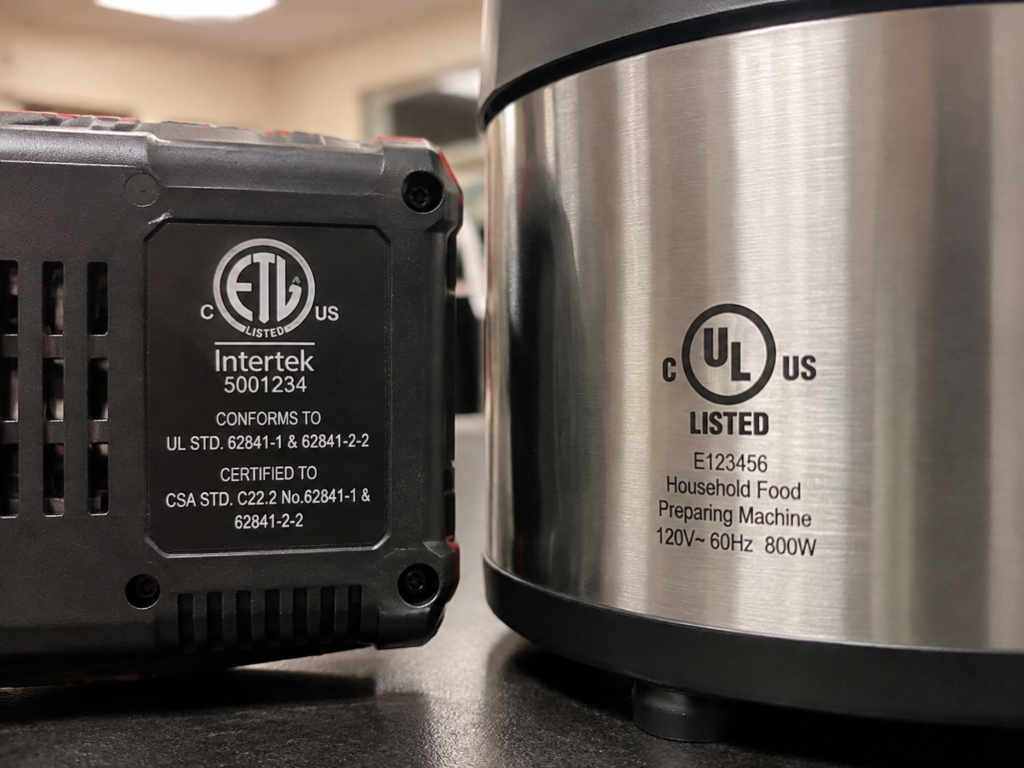
Comparison of Common Marks and Recognized Entities
Many people usually only see the NRTL mark on products and do not know the corresponding common recognized entities. Here are the most common groups sorted out for your reference when querying:
| Common Product Mark | Corresponding Common Recognized Entity (subject to OSHA directory and issuing body records) |
|---|---|
| UL Listed | UL LLC |
| ETL Listed | Relevant NRTL-recognized entity under Intertek |
| cCSAus | Relevant NRTL-recognized entity under CSA Group |
| FM Approved | FM Approvals |
Reminder: Marks are only for quick identification. The specific issuing entity and qualifications must be verified through the OSHA directory and the official records of the issuing body.
Pitfall Avoidance Guide: Qualification Authenticity Identification and Common Misconceptions
4 High-Frequency Cognitive Misconceptions
These four misconceptions are easy for many beginners to fall into, and must be avoided in advance:
First misconception: Global branches of well-known certification companies and all sites of the same group have NRTL qualifications. Wrong. NRTL recognition is for specific legal entities and designated test sites. Different branches of the same group and sites in different regions have independent qualifications. It must be subject to the recognized entities and test sites listed in the OSHA directory, and NRTL qualifications cannot be judged solely by the group brand.
Second misconception: Bodies in the OSHA directory can issue NRTL certificates for all products. Wrong. Each body has a clear recognition scope. Only when the test standards applicable to the product are within its recognition scope and meet relevant restrictions, the issued certification has the corresponding NRTL compliance effect.
Third misconception: NRTL test report equals complete NRTL certification. Wrong. The commonly referred to “NRTL certification” (i.e., product listing), in addition to the initial laboratory test, also requires the NRTL to conduct regular follow-up inspections of the factory to ensure that mass-produced products continue to meet the standards. A single test report can only prove that the sample meets the requirements at the time of testing, cannot be equated with complete product listing, and cannot be used alone as proof of meeting OSHA requirements.
Fourth misconception: ISO/IEC 17025 recognition equals NRTL qualification. Wrong. ISO/IEC 17025 is a general laboratory capability recognition system that can be obtained by laboratories in many countries. However, NRTL is a special recognition by OSHA for U.S. workplace product safety. The recognition basis and applicable scope of the two are different. Obtaining 17025 recognition does not mean having NRTL qualification.
Common Tricks of Fake Qualification Laboratories
There are many fake NRTL bodies on the market. The common tricks are as follows. Be vigilant when you encounter them:
First, piggybacking on famous brands with similar names. For example, using brand names or body names similar to well-known NRTLs such as UL and ETL to confuse the public and make users mistakenly think they are branches of well-known bodies.
Second, forging OSHA recognition documents or official website screenshots. Lying about having obtained NRTL recognition by modifying qualification documents, editing pictures, etc.
Third, passing off other certifications as NRTL. For example, taking other types of certifications such as CE, FCC, and energy efficiency certification as U.S. safety certification, confusing the concept of NRTL.
Fourth, issuing certificates beyond the recognition scope. For example, only having recognition for home appliance standards, but issuing “NRTL certification” for industrial machinery and explosion-proof products, taking advantage of the loophole that most users do not carefully check the recognition scope.
NRTL Certification Validity Verification Method
When encountering uncertain NRTL certification, check layer by layer according to this method to effectively avoid the risk of fake qualifications:
Step 1: Check the official OSHA NRTL directory to confirm that the entity of the issuing body is in the directory, and check its current recognition scope.
Step 2: Verify the test standards and versions applicable to the product, confirm that the standards are within the body’s recognition scope, and meet relevant restrictions such as test sites and applicable scope.
Step 3: Through the official listing database or certificate verification channel of the issuing body, confirm that the product model/series, certification mark, control number/listing number and other information are true and valid, and the product is currently in normal listing status.
Step 4: Combined with the product’s use scenario, confirm that the NRTL certification meets the applicable OSHA standards, local AHJ requirements, and the purchaser’s contractual agreement. If in doubt, you can consult the local AHJ or a professional compliance consultant.
Scenario-Based Use: List Application Logic for Different Needs
After knowing how to query, you also need to use the directory correctly in combination with your actual needs. The focus of different scenarios is completely different.
Products Exported to the U.S.: Logic for Selecting NRTL Laboratories
When selecting a body for product export, the first premise is always compliance, then consider cost and efficiency:
First, clarify whether your product requires NRTL certification: Confirm whether NRTL certification is required in combination with the product category, the use scenario in the U.S. (whether it is workplace equipment regulated by OSHA), applicable OSHA standards, AHJ requirements of the target market, and the purchaser’s contractual requirements.
Then, determine the specific test standards applicable to the product, search by standard number in the OSHA NRTL directory, and screen out bodies with corresponding standard recognition. This is the bottom line. Bodies without corresponding standard recognition cannot be selected no matter how low the quotation is.
Next, from the qualified bodies, compare according to project needs: such as certification cycle, certification cost, whether there is a local service team and factory audit resources, whether it can provide subsequent follow-up inspection services, whether it can simultaneously do certification for other markets, etc.
If the product is to enter both the U.S. and Canadian markets, you can give priority to bodies that have both OSHA NRTL recognition and Canadian SCC recognition to improve the coordination efficiency of certification in the two places (still need to meet the standards and marking requirements of the two places respectively).
For small-batch orders or niche categories (such as fire protection, sanitary ware, food contact equipment, etc.), you can give priority to specialized bodies with many recognitions in this field, which may have higher professional matching.
Final reminder: Certificates from different NRTL bodies are not mutually recognized by default. If you need to switch the issuing body, the receiving body needs to evaluate based on the validity of the original certificate, product structure changes, applicable standard version, factory follow-up inspection records, etc. Additional difference tests or even re-application may be required. It is recommended to select a suitable body at the initial stage of the project to reduce the cost and time of subsequent certificate transfer.
Purchasing Imported Products: Logic for Verifying Certification Authenticity
When purchasing products that require NRTL certification, don’t just look at the mark on the product, verify according to the following steps:
- First find the NRTL mark, listing number/control number, and product model/series on the product, and map to the common issuing body through the mark (you can refer to the mark comparison table above).
- Check the official OSHA NRTL directory to confirm that the entity of the issuing body is in the directory and its recognition scope covers the test standards applicable to the product.
- Log in to the official listing query system of the issuing body, enter the product model or listing number, and confirm that the product is indeed within the valid listing scope of the body and in normal status.
- Verify the certificate information provided by the supplier to ensure that the body name, product model, applicable standards, listing number and other information are consistent with the official query results.
Note: The OSHA directory can only prove the recognition qualification of the body, and cannot alone prove that a product has obtained valid certification. It must be judged jointly with the product listing records of the issuing body.
Responding to OSHA Safety Inspections/Market Spot Checks: How to Use the List
If you encounter an on-site inspection by OSHA safety supervision or AHJ, the materials to be provided usually include the product’s NRTL listing certificate, product mark and listing number, applicable standard description, etc. The specific requirements are subject to the requirements of the inspectors. The query results of the OSHA directory can be used as auxiliary materials to prove the recognition qualification of the issuing body:
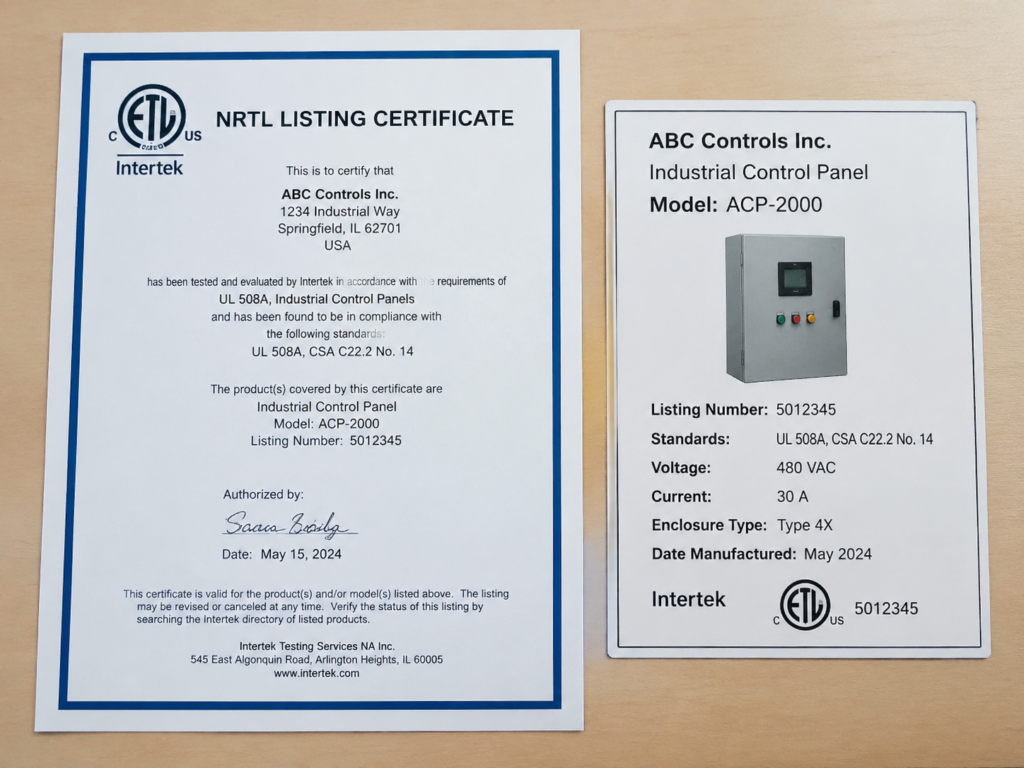
- Prepare the corresponding NRTL listing certificate, product model and listing number description of the product in advance to ensure that the information is clear and verifiable.
- You can save the screenshot of the OSHA directory on the day of query to prove that the issuing body has the recognition qualification for the corresponding standard at the time of query, as auxiliary proof material.
- If the certificate was issued earlier, you need to be able to prove that the body had the corresponding recognition qualification when the certificate was issued, and the product’s listing status has been maintained valid (can be proved by the listing records of the issuing body).
- The final compliance judgment needs to be comprehensively considered in combination with the product’s installation and use scenario, applicable OSHA standards, AHJ requirements, etc. It cannot be fully proved solely by the body’s qualification.
Core Competency Summary
Mastering the use of the OSHA NRTL recognition directory, the core is to establish a three-layer judgment logic of “body qualification + product listing + scenario applicability”: The official OSHA directory is the authoritative starting point for verifying the recognition status and scope of NRTL bodies. The certification validity of specific products needs to be confirmed in combination with the listing records of the issuing body. The final compliance also needs to be comprehensively judged in combination with the product use scenario, applicable standards and regulatory requirements. You don’t need to memorize the specific list of bodies by rote. Mastering the query method and judgment logic can safely deal with the vast majority of NRTL-related compliance issues.