
If you plan to bring products with wireless functions to the Japanese market, or need to use radio equipment in Japan, you will most likely come across the term “TELEC certification”. Many people confuse it with MIC certification, technical conformity certification, and JATE certification. Practitioners who focus on the European and American markets also mistakenly believe that FCC/CE related compliance certificates can be directly applied. For specific differences, please refer to the cross-border certification comparison section later. This article will help you sort out the core logic of TELEC certification from the aspects of basic definition, scope of application, certification rules, processes, and verification methods.
1. Basics of TELEC Certification: Compliance Certificate for Japanese Wireless Equipment
The commonly mentioned “TELEC certification” is essentially an industry colloquial term. TELEC (Telecommunication Engineering Center) is one of the registered certification bodies designated by Japan’s Ministry of Internal Affairs and Communications (MIC for short). Because it is frequently used in the industry, the radio equipment technical standards conformity certificate it issues is commonly referred to as “TELEC certification”. The legal basis for this compliance is Japan’s Radio Law, with the core purpose of regulating spectrum use and avoiding mutual interference between wireless signals of different devices.
Regarding the roles of supervision and certification issuance, here is a clear distinction:
• The competent authority is Japan’s Ministry of Internal Affairs and Communications (MIC): it is the rule-maker, responsible for formulating rules related to the Radio Law, allocating radio frequencies, and managing the entire compliance system.
• Registered certification bodies (such as TELEC): they are third-party institutions authorized by the MIC that can issue technical standards conformity certificates, and are not government departments themselves. TELEC is not the only certification issuing body, but it is the most well-known one, so it has become a common industry synonym for this type of certification.
• Regarding “MIC certification”: this is also a non-official term, referring to radio compliance that meets the requirements of the MIC’s Radio Law. The certification issued by TELEC is the most common form of implementation, and it is not an officially established separate certification type.
The radio equipment technical standards conformity certificate is one of the statutory mandatory requirements under Japan’s Radio Law, and it mainly applies to civilian radio equipment that does not require a separate radio station license (that is, the radio category commonly referred to as “technical conformity certification” in the industry). It should be noted that this certification does not apply to all equipment with radio transmission functions: high-power radio equipment and radio equipment for special industries may require separate application for a radio station license or special permit, and the specific requirements shall be subject to official rules.
If a product falls within the certification scope but is not compliant, it will face corresponding compliance risks. Specific penalties are determined based on the illegal clauses and circumstances. Common situations include customs detention of goods and removal from e-commerce platforms (specifically subject to platform rules). In serious cases, statutory penalties will be triggered. According to the Radio Law, acts such as selling non-compliant radio equipment without a certificate and operating radio stations without authorization are subject to a maximum fine of less than 1 million yen or imprisonment of less than 1 year.
Many people cannot distinguish the relationship between “technical conformity certification”, “TELEC certification”, and “JATE certification”. The core logic is as follows: “Technical conformity certification” is the general non-official term for “technical standards conformity certification”, covering compliance categories under different regulations: One category is radio transmission type, which is based on the Radio Law and issued by radio certification bodies designated by the MIC such as TELEC, which is commonly known as “TELEC certification”. It regulates that wireless transmission does not interfere with legal radio services. The other category is telecommunications terminal type, which is based on the Telecommunications Business Law and issued by institutions such as JATE (Japan Telecommunications Terminal Equipment Review Association, also an officially designated certification body), commonly known as “JATE certification”. It regulates whether telecommunications terminals can safely access Japan’s public communication networks. In short, TELEC and JATE are first and foremost the names of certification bodies. They are used to refer to the corresponding categories of technical standards conformity certification only because they are widely used in their respective fields.
2. Does Your Product Need TELEC Certification: 3-Step Preliminary Judgment + Complex Scenario Rules
The major premise for judgment is that the product is planned to be commercially sold, imported, or officially used for commercial purposes in the Japanese market. For ordinary products, you can use the 3-step method for quick preliminary judgment:
Step 1: Check whether the product actively transmits radio waves. Equipment that only receives signals does not need it; as long as it actively transmits wireless signals outward (such as Bluetooth headsets transmitting audio, Wi-Fi routers transmitting network signals), proceed to Step 2.
Step 2: Check whether the transmission frequency and power are not within the MIC’s exemption scope and belong to the categories covered by the technical standards conformity certification. If they are not within the exemption scope and belong to the certification-covered categories, proceed to Step 3.
Step 3: Check whether the product is only a non-sales prototype for R&D/experiment purposes. If it is a mass-produced model for market sale, certification is required; prototypes only used for R&D testing and not for sale on the market need to meet the relevant exception requirements for experimental radio equipment, and do not fall into the mandatory certification category for commercial circulation.
According to this logic, common products that require radio technical conformity certification mainly fall into several categories:
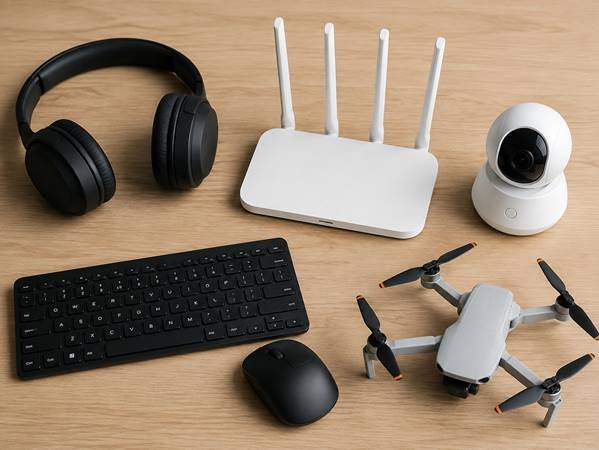
• Short-range consumer products: Bluetooth headsets/speakers, Wi-Fi routers, wireless keyboards and mice, home wireless cameras, small drones
• Cellular communication products: 2G/3G/4G/5G mobile phones, smart watches with cellular function, portable Wi-Fi, cellular modules
• IoT products: RFID readers/writers, Zigbee/LoRa sensors, smart home wireless switches/gateways
• Others: walkie-talkies, wireless microphones, toys with wireless remote control
The following situations usually do not require application for a radio equipment technical standards conformity certificate, but each category has clear preconditions and is not naturally exempt:
1. Pure wired electronic devices (such as wired headsets, wired routers): they have no wireless transmission function, are not subject to the transmission supervision of the Radio Law at all, and do not require certification.
2. Signal-only receiving devices: devices that only passively receive wireless signals and have no active transmission function (such as ordinary FM/AM radios, GPS receivers that only receive positioning signals) do not require certification; however, GPS devices with active transmission functions such as data backhaul and location reporting are not included in this category.
3. Very low power exemption devices that meet MIC regulations: such devices need to be confirmed strictly against the latest official exemption list issued by Japan’s MIC (including limiting conditions such as transmission power, frequency band, and usage scenarios). Self-judgment is not recommended to avoid non-compliance caused by misjudgment.
4. Pure magnetic induction wireless charging devices: wireless charging devices that only rely on magnetic induction to transmit energy and do not actively transmit communication/remote control radio waves (such as ordinary wireless chargers that meet the Qi standard) do not fall into the scope of radio transmission supervision and do not require certification; however, if they are equipped with wireless communication functions such as Bluetooth and Wi-Fi, the compliance of the corresponding transmission functions still needs to be evaluated.
5. Non-sales prototypes for R&D/experiment purposes: devices only used for internal R&D testing and not sold in the Japanese market are not naturally exempt from the supervision of the Radio Law. They still need to meet the licensing requirements for experimental radio stations or the experimental exception conditions stipulated by the MIC, and cannot be sold as commercial products on the market.
6. Self-use devices carried by individuals into the country: a small number of self-use overseas radio devices carried by individuals when visiting Japan must simultaneously meet the exception conditions for bringing in and use stipulated in Japan’s Radio Law (including device type, frequency band used, length of stay, purpose of use, etc.). Those that do not meet the requirements still need to go through compliance procedures, and cannot be directly equated with “no certification required for personal use”.
When encountering complex scenarios such as all-in-one products, modified models, and modularization, further judgment can be made according to the following rules:
• All-in-one products: If a device has multiple wireless transmission functions such as Bluetooth, Wi-Fi, and cellular at the same time, each transmission function must meet the corresponding compliance requirements, and it is not allowed to only do one of them.
• Modified products: If only the appearance, shell color is changed, or software unrelated to wireless transmission (such as product UI) is updated, which does not affect radio frequency parameters, re-certification is not required; if radio frequency-related designs such as transmission circuit, power, frequency, and antenna are changed, it is necessary to first evaluate whether it exceeds the original certification scope. If it exceeds, re-application for certification or corresponding change procedures is required.
• Modular certification: For a wireless module that has obtained certification, the certification validity of the module can only be extended to the whole machine if the use conditions of the whole machine fully meet the restriction requirements of the module certification (such as antenna type and gain, installation position, output power, shell material, etc.); if the restrictions are exceeded, the whole machine needs to be re-evaluated for compliance. If the whole machine adds other wireless functions in addition to the module, the new functions need to be evaluated separately.
• Differences in usage scenarios: Commercially sold and imported equipment must complete compliance as required; personal self-use and experimental equipment need to meet the corresponding exception or licensing conditions, and the rules for commercial products cannot be directly applied.
3. Core Rules and Result Forms of TELEC Certification
The core requirement of the radio equipment technical standards conformity certificate is that the radio transmission parameters of the product comply with Japan’s Radio Law and statutory technical standards such as ministerial ordinances and notices issued by the MIC, and will not interfere with Japan’s legal radio services. Statutory technical standards are formulated and issued by Japan’s Ministry of Internal Affairs and Communications (MIC). The relevant technical documents of the Association of Radio Industries and Businesses (ARIB) are common implementation references in the industry, but they do not have legal effect. The final compliance judgment shall be subject to the official requirements of the MIC.
It should be noted that Japan has independent frequency allocation and power limit rules, which are different from the standards of Europe, America, and China (such as available channels for 5GHz Wi-Fi, maximum Bluetooth transmission power requirements, etc.), so the standards of other countries cannot be directly applied.
According to applicable scenarios, radio equipment technical standards conformity certificates are mainly divided into two categories, and ordinary consumer products basically only contact the first one:
1. Type certification (also commonly referred to as type approval): For mass-produced standard model products, such as mass-produced Bluetooth headsets, Wi-Fi routers and other consumer electronics, most apply for this type of certification. After certification is passed, mass-produced equipment of the same model can directly use it.
2. Construction certification (also commonly referred to as construction design certification): For individually customized or on-site installed special radio equipment, mostly used in special scenarios such as industry and base stations, and rarely involved in ordinary consumer products.
In addition to being classified by applicable scenarios, the Radio Law also divides radio equipment that requires technical conformity certification into two statutory supervision categories: “designated radio equipment” and “specified radio equipment”:
• Designated radio equipment: mostly low-power, civilian popular wireless equipment, usually do not require a separate radio station license, and can follow the conventional type certification path. Most ordinary consumer electronic products fall into this category;
• Specified radio equipment: covers radio equipment with some dedicated frequency bands and special purposes, with stricter regulatory requirements and more complex test items and materials. It should be noted that whether a separate radio station license is required needs to be officially determined according to the specific use, frequency band and power of the equipment. Not all specified radio equipment require additional licenses, nor can the category be simply divided by “power level”.
After passing the certification, you will obtain two types of core certificates, with clear rules for use:
The first is the certification certificate: it will be marked with a unique certification number, issuing body, product model, radio frequency configuration and other information. The certificate is only valid for the specific model and specific radio frequency configuration (including antenna, power, etc.) at the time of application, and cannot be extended to other models or configurations. Certificates issued by different bodies can be queried and verified through the official channels of the corresponding body or the MIC’s public database.
The second is the technical conformity mark: this is a unified compliance mark stipulated in Japan. In principle, it should be affixed to a prominent position on the device body; if it cannot be marked on the body due to reasons such as too small device size or special structure, alternative methods such as electronic display, packaging or manual marking can be adopted in accordance with relevant regulations. The specific requirements must comply with the corresponding certification rules.
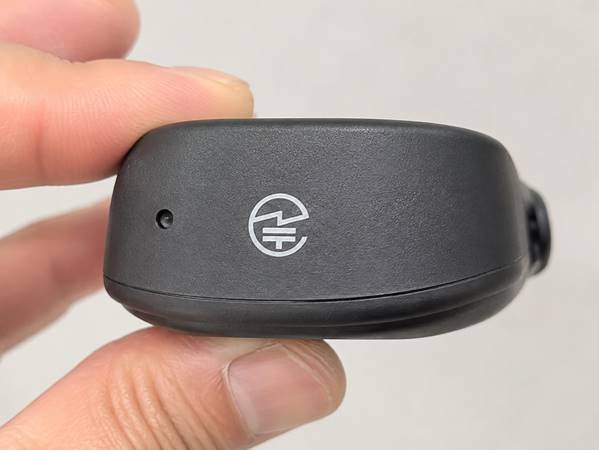
Most categories of type certification do not have a fixed validity period. As long as the radio frequency-related design of the product has not changed and continues to meet the requirements of current regulations, the certificate remains valid. There are two situations that require special attention:
1. When regulations are updated, Japan’s MIC usually issues supporting transition arrangements. The applicable requirements for existing certified equipment and newly produced/imported equipment shall be subject to the official transition rules, and the certificate does not automatically become invalid.
2. If the radio frequency-related design of the product such as transmission circuit, power, frequency, and antenna changes, it is necessary to first determine whether it exceeds the original certification scope. If it exceeds, re-application for certification or corresponding change procedures is required, and the original certificate cannot be directly used.
In addition, the certified party shall keep the product’s technical documents and certification records as required, and cooperate with the compliance spot checks of the MIC or the market.
4. Easy to Confuse: Differences Between TELEC and Other Common Compliance Requirements
Different compliance requirements have different regulatory dimensions and cannot replace each other. The same product may involve multiple compliance requirements at the same time, and which ones are specifically needed shall be confirmed separately according to the function and attributes of the product. The following is a comparison of common compliance types:
| Compliance Type | Core Regulatory Direction | Basis Rules | Common Applicable Products |
| Radio equipment technical standards conformity certificate (commonly known as TELEC certification) | Radio transmission compliance (avoid signal interference) | Japan’s Radio Law and relevant regulations of the MIC | Civilian equipment with wireless transmission functions such as Bluetooth headsets, Wi-Fi routers, walkie-talkies |
| Telecommunications terminal technical standards conformity certificate (commonly known as JATE certification) | Compliance of telecommunications terminals accessing public networks | Japan’s Telecommunications Business Law | Telecommunications terminals such as mobile phones and cellular tablets that need to access the public network of Japanese operators |
| PSE certification | Electrical product safety (prevent electric leakage, fire, etc.) | Japan’s Electrical Appliance and Material Safety Law | Electrical products such as plug-in appliances and power adapters within the statutory control scope |
| VCCI electromagnetic interference control | IT equipment electromagnetic interference control (industry voluntary plan) | VCCI association rules / industry voluntary system | Information technology products such as computers and printers |
| US FCC radio compliance requirements | Radio transmission compliance for the US market | Relevant US FCC rules | Products with wireless transmission functions entering the US market |
| EU RED conformity and CE marking | Radio and telecommunications terminal compliance for the EU market | EU RED Directive | Products with wireless transmission functions entering the EU market |
It should be specially noted that, unlike TELEC and PSE, VCCI is not a statutory mandatory access certification of the same nature, but belongs to industry self-regulatory electromagnetic interference control requirements. However, some e-commerce platforms, industry customers, or specific application scenarios may require relevant certificates.
For ordinary consumer wireless products, it is usually a parallel judgment of “TELEC + other compliance”: products with plug-in power supply function usually need to add PSE safety certification, products with cellular communication function that need to access Japanese operator networks usually need to add JATE certification. Each requirement cannot replace the other, and needs to be confirmed one by one according to product functions.
Regarding the applicability of European and American compliance: Japan’s radio rules are different from those of Europe and America, so the compliance certificates of US FCC and EU RED cannot directly replace Japan’s radio technical conformity certification. However, if you already have test data for European and American compliance, you can submit it to the certification body as a reference. If the test items overlap with Japan’s requirements, some repeated tests may be reduced after confirmation by the body, saving time and cost, but this is not necessarily applicable.
5. Full TELEC Certification Process and Reference for Cost and Cycle
If you are sure that your product needs to apply for radio technical conformity certification, the overall process is roughly divided into four steps. The specific details may vary slightly depending on the certification body and equipment category:
Step 1: Preliminary Judgment and Pre-evaluation
First, conduct self-screening according to the 3-step preliminary judgment method mentioned above, and don’t waste time if it is obviously not needed. Then prepare the basic information of the product: such as wireless function list, transmission parameters, model specifications, etc., the more detailed the better. Most certification bodies provide free pre-evaluation services (specifically subject to the body) to help you confirm whether certification is needed, corresponding test items, approximate cycle and cost. At this stage, you can compare several formal bodies.
Step 2: Prepare Samples and Technical Materials
After the pre-evaluation is confirmed, you can prepare samples and materials. Usually, 2-3 finalized prototypes that can work normally are required (the specific number is adjusted according to product complexity and body requirements). They must be completely consistent with the radio frequency configuration of the final market version, otherwise the test results will be invalid. Technical materials generally include product manuals, circuit schematics, transmission function descriptions, model difference descriptions (if it is a series of models), etc.; some materials need to be translated into Japanese according to the requirements of the certification body and comply with the MIC’s format specifications, and the body usually provides corresponding templates.
Step 3: Testing and Body Review
Testing must be completed in a MIC-recognized laboratory or a testing system designated by the certification body for the corresponding project. The scope of qualification accreditation varies across different certification bodies and equipment categories. Before submitting samples for testing, you must first confirm with the certification body whether the qualifications of the intended laboratory are accepted for the project, so as to avoid invalid test results.
In plain terms, the core test content covers three points: whether the transmission frequency is within the range permitted by Japan, whether the transmission power meets the limit, and whether it will generate spurious interference affecting other equipment. After passing the test, the certification body will conduct a comprehensive review of all materials and test reports. If no issues are found, it will proceed to the certificate issuance stage; if the test fails, the body will inform you of the problem points, and you need to rectify the product before retesting.
Step 4: Obtaining Certification and Market Launch Preparation
After passing the review, the certification body will issue an electronic or paper certification certificate with a unique certification number. After obtaining the certificate, you must affix the technical conformity mark on the product as required, and properly keep the technical documents and certification certificate for customs, e-commerce platform or market spot checks.
Regarding the cycle and cost that everyone is most concerned about, here is a reference range, and the specific shall be subject to the actual project:
• Cycle reference: usually 4-8 weeks, specifically affected by factors such as product complexity, completeness of materials, test pass rate, and scheduling of certification bodies; for projects with simple equipment, complete materials and existing qualified test data, the cycle may be shorter.
• Cost reference: ranging from several thousand to tens of thousands of RMB, mainly depending on the number of transmission functions, power level, product category, certification path, etc. Japan’s MIC does not have a unified pricing, which is formulated by each certification body on its own. Be alert to compliance risks when encountering quotations that are significantly lower than the market price.
• Common reasons for delay: missing materials or non-compliant formats, failure to pass tests requiring rectification, inconsistency between the applied model/configuration and the actual sample, etc.
6. Quick Check of Common Misconceptions and Pitfall Avoidance Guide
Many beginners are prone to fall into the following common misconceptions. Here is a quick check list to help you avoid pitfalls quickly:
| Common Misconception | Correct Explanation |
| Having FCC/CE radio compliance can replace TELEC certification | Japan has independent radio rules, and European and American compliance cannot be directly replaced. For details, please refer to the explanation in the previous cross-border certification comparison section |
| All products with the word “wireless” need TELEC certification | Situations such as pure reception, very low power exemption, and pure magnetic induction wireless charging do not require certification. Judge according to the logic of “active transmission + non-exemption + non-R&D prototype” |
| If the wireless module has certification, the whole machine is automatically compliant | Module certification has strict use restrictions (antenna, installation method, power, etc.), and the whole machine that exceeds the restrictions needs to be re-evaluated for compliance |
| Once you get the certification certificate, you are always compliant | The validity of the certificate is based on the premise that the product’s RF design has not changed and complies with current regulations; there are transition arrangements for regulation updates, and design changes require re-evaluation of the scope |
| If the certificate cannot be found on TELEC’s official website, it is fake | Certificates issued by different registered certification bodies have different query channels, and need to be verified at the corresponding issuing body or the MIC’s public database |
| Only look at the agent’s quotation, do not verify the qualification of the issuing body | The agency can be a third party providing docking services, and does not need to have the MIC’s certification and issuance qualification itself, but the final certificate-issuing body must be a registered certification body designated by Japan’s MIC; when handling, you should require the agent to provide the name of the issuing body, the official certificate query path, and the cooperation/authorization proof between the two parties to avoid obtaining non-compliant fake certificates |
| A product model with one letter difference definitely won’t work | Whether the model is within the certification coverage depends on the model range on the certificate and the consistency of the RF configuration, and shall be subject to the review conclusion of the certification body |
| Products with the same transmission part can definitely do series certification | Series/family certification requires the certification body to review model differences, and only those confirmed not to affect RF compliance can be covered |
For cross-border e-commerce sellers, there are also several practical compliance tips:
1. Japan’s mainstream e-commerce platforms usually conduct spot checks on the compliance qualifications of radio products. Products without valid certification may be removed from the shelves. The specific rules are subject to the latest requirements of the platform, and it is recommended to prepare for compliance in advance.
2. The model marked on the product packaging and detail page must be consistent with the model on the certification certificate or the series model covered by the certification, to avoid being judged as non-compliant due to model mismatch.
3. If the RF core design of multiple products is completely consistent, you can apply for series/family certification from the certification body. After passing the review, it can cover multiple models and reduce compliance costs.
4. When choosing a service provider, first confirm whether the docking issuing body is a registered certification body designated by the MIC. Be cautious about promises that obviously do not conform to conventional procedures, and you can verify the body’s qualifications in advance.
7. Things You Can Judge Independently After Learning
In general, after mastering the core logic of TELEC certification, you can independently complete the following four things:
First, quickly judge product certification requirements. You can use the 3-step preliminary judgment method to screen ordinary products, and also handle the judgment of complex scenarios such as all-in-one products, modified models, and modularization.
Second, clearly distinguish the boundaries of different certifications. You can distinguish the different regulatory scopes of local Japanese compliance requirements such as TELEC, JATE, PSE, and VCCI, and also understand the applicable rules of cross-border certification.
Third, independently verify the authenticity of certification. You can check the core information of the certificate, and query the authenticity and validity of the certificate through official channels.
Fourth, avoid common compliance misconceptions. You can identify wrong statements such as “module certification = whole machine compliance” and “one certification is valid for life”, understand the core compliance precautions in cross-border e-commerce scenarios, and also prepare the certification cycle and materials in advance.