
If you do business in the EU market, whether you are a local brand, an importer, or a cross-border e-commerce seller, you have most likely heard terms like “packaging compliance” and “EPR”. But when asked in detail about what rules packaging recycling must follow, what responsibilities you bear, and what the consequences of non-compliance are, many people only have a smattering of knowledge — some think “it’s just printing a recycling logo”, others get dizzy from all kinds of terminology, and end up either getting fined for falling into pitfalls, or spending unnecessary money without achieving compliance. This article sorts out the core requirements of EU packaging recycling and circular utilization from entry-level knowledge to practical operation, focusing on implementable judgment methods and key points to avoid pitfalls, without piling up rigid legal provisions.
First Step for Beginners: What These Requirements Cover, Who Is Responsible, and Why They Matter
First of all, it is necessary to figure out which packaging must comply with these rules. The answer is: all product packaging that enters the EU market, covering the entire chain. Sales packaging you can think of (such as bottles for cosmetics, bags for snacks), combined packaging (such as plastic-sealed packaging for a row of yogurt), industrial packaging for transportation (such as pallets, stretch film), e-commerce express packaging (express boxes, bubble wrap, tape), and even disposable food packaging, all fall within the scope of jurisdiction.

What many people easily miss are: fillers in express boxes, sealing tape, labels affixed to packaging, wooden pallets for transportation, and stretch film wrapped around pallets — these seemingly trivial items, as long as they enter the EU with the goods, must be included in the scope of packaging compliance. Of course, there are exceptions: packaging for hazardous chemicals, packaging for medical infectious items, and military packaging are governed by special regulations and do not apply to this set of general packaging rules.
Next is the core question: who is responsible for packaging compliance? EU rules are very clear: the entity that places packaged goods on the EU market is the primary responsible party. Sorted by common business scenarios, the responsible party is first the brand owner or manufacturer within the EU; if the brand is not in the EU, the importer is the responsible party; if you are an overseas cross-border e-commerce seller with neither an EU-based company nor an importer, which is a situation without a domestic responsible person, you usually need to designate an authorized representative within the EU in accordance with the EPR rules of the target member state, or complete registration, declaration and payment through a locally officially recognized PRO or compliance service agency; whether an authorized representative must be designated and who bears the final responsibility shall be confirmed in accordance with the laws of the selling country and the actual transaction structure.
At present, EU packaging recycling rules are in a state of parallel operation of “current rules + upcoming new rules”. Many people confuse the difference between the two, so let’s clarify it once and for all: the current core rule is the Packaging and Packaging Waste Directive, abbreviated as PPWD, which significantly increased recycling targets after its revision in 2018. You can understand a “directive” as the minimum standard set by the EU for each member state — each country must transpose this requirement into its own law, and can make it stricter on the basis of the EU minimum line. For example, the EU requires an overall recycling rate of no less than 65% by 2025, and some countries may set it at 70%. The new rule to be fully implemented is the Packaging and Packaging Waste Regulation, abbreviated as PPWR, with the official number Regulation (EU) 2025/40. Most core obligations apply from August 12, 2026, and some requirements will be implemented in phases according to the clauses. Unlike directives, a “regulation” is a unified rule across the EU, which does not need to be transposed into national laws by each country, and directly applies to all member states. In the future, the differences in rules between countries will be significantly reduced.
Many people think “compliance is just paying money, at worst a fine”. In fact, the consequences of non-compliance are more serious than you think: the most direct is market access risk — goods may be detained when they arrive at EU customs, e-commerce platforms will directly remove non-compliant products, and in serious cases, you may even be banned from entering the EU market. Then there are economic penalties, especially for those who have not completed EPR registration and declaration, the fine amount may be much higher than the recycling fee you have to pay. There is also invisible brand loss: now EU consumers have very high requirements for green environmental protection. If your packaging does not meet environmental expectations, consumer trust will directly decline, which will instead affect sales.
Must-Know Concepts: 4 Most Easily Confused Recycling-Related Terms
After clarifying the basic rules, let’s first thoroughly explain the four most easily confused recycling-related terms — at least 80% of compliance misunderstandings stem from treating these terms as the same thing.
The first is Recycling. Many people think “when waste is collected by sanitation workers, it is recycled”, but that is not the case at all. The accurate definition of recycling is: used waste packaging, after being collected and sorted, is actually processed into raw materials that can be used for re-production. Only the part that enters the official recycling system and is actually processed into new raw materials counts as recycling; if it is incinerated for power generation, landfilled, or just collected and piled up without processing, it does not count as recycling.
The second is Recyclability. This is the most easily misunderstood term. Many people think “packaging printed with the triangular recycling logo is recyclable”, or “this material can theoretically be recycled so it is recyclable”, but both are wrong. The core of judging recyclability is: whether the local recycling facilities in the country where you sell goods can sort out this packaging and process it into usable raw materials. For example, soft plastic film has a special collection system in some EU countries, so it counts as recyclable; but in other countries, without corresponding sorting and processing facilities, even if it can theoretically be recycled, it does not actually count as recyclable packaging. To put it bluntly, recyclability is not an attribute of the packaging itself, but is jointly determined by “packaging + local recycling system”.
The third is Recycled Content. This is an indicator for new packaging. Simply put, it is the weight proportion of recycled materials used in your newly made packaging. Many people confuse it with “recycling rate”, but they are completely different things: the recycling rate is a national-level statistical indicator, which calculates how much of all waste packaging is recycled; while recycled content is an attribute of a single product, which refers to how much recycled material is used in this new packaging itself.
The fourth is Reuse/Circularity. This means that packaging should not be thrown away after only one use — either it can be used repeatedly for turnover, such as logistics turnover boxes and returnable beverage bottles; or the material can be recycled in a closed loop without becoming waste. It should be noted that even for reusable packaging, when it is scrapped and needs to be discarded, it must still comply with recycling and disposal rules. It is not that reusable packaging does not need to consider recycling.
Core Hard Indicators: How to Correctly View EU Packaging Recycling Targets
After understanding the basic concepts, let’s look at the recycling targets that everyone is most concerned about — don’t get nervous as soon as you see “65% recycling rate”. First, figure out who this target is for and how it is calculated.
First is the overall recycling target, that is, the minimum recycling rate required by the EU for all packaging combined, calculated by weight: no less than 65% by 2025, and no less than 70% by 2030. There is a very important premise here: this target is set for member states, not requiring individual enterprises to directly achieve a 65% recycling rate. Enterprises do not need to calculate by themselves “whether 65% of the packaging I sell is recycled”, but share the cost of member states achieving recycling targets by paying EPR fees. Of course, if the packaging you use is difficult to recycle, the payment will be more expensive, which is equivalent to indirectly bearing higher costs.
Different materials have different recycling difficulties, so the EU has also set recycling targets by material, as follows:
| Material Type | 2025 EU Minimum Recycling Rate | 2030 EU Minimum Recycling Rate | Remarks |
| Paper/paperboard | 75% | 85% | Highest requirement, most mature recycling system |
| Glass | 70% | 75% | Requires recycling by color classification |
| Ferrous metals (iron, etc.) | 70% | 80% | Easy to sort by magnetic separation, high recycling value |
| Aluminum | 50% | 60% | Low recycling energy consumption, high value |
| Plastic | 50% | 55% | Highest difficulty |
| Wood | 25% | 30% | Lowest requirement |
Paper/paperboard has the highest requirement because its recycling system is the most mature and sorting and processing difficulty is low; plastic has the greatest difficulty in actually meeting the standard because of its wide variety, high sorting difficulty, and high proportion of pollution. In many member states, the EPR rate for plastics, especially hard-to-recycle plastics, is usually higher than that of common easily recyclable materials such as paper, glass, and metal; the actual fee is still subject to the PRO rate schedule and ecological adjustment rules of the target country.
Regarding the calculation of the recycling rate, there are several common misunderstandings to avoid: first, the general formula for the recycling rate is「weight of actually recycled and regenerated material ÷ total weight placed on the market × 100%」. The numerator is the weight that is actually processed into raw materials, not the weight collected — many people take the collection volume as the recycling volume, which is wrong. Second, parts that are incinerated for power generation, landfilled, or cannot be regenerated due to too serious pollution cannot be included in the recycling volume. In addition, the reporting methods and recycling systems of each member state are slightly different, so the actual recycling rate data of different countries may have differences in statistical calibers and cannot be directly compared rigidly.
Practical Judgment: Whether Your Packaging Can Be Actually Recycled
For enterprises, more practical than understanding recycling targets is judging whether their own packaging can actually be recycled — this is directly related to your compliance costs and whether you can meet the requirements of new rules in the future.
There are five core conditions for judging the recyclability of packaging, all of which are indispensable: first, Identifiable: local sorting equipment (such as optical sorting, magnetic separation, winnowing) can recognize what material this packaging is made of and can separate it from a pile of waste. Second, Disposable: consumers know which trash bin this packaging should be thrown into and can correctly dispose of it in accordance with local classification rules. If consumers don’t know where to throw it, no matter how recyclable the material is, it is useless. Third, Processable: there are corresponding recycling and processing facilities locally that can process this packaging into usable raw materials. Fourth, Usable: the recycled material processed has actual market demand, someone buys it and can use it; otherwise, even if it is processed, it is just piled up and does not count as effective recycling. Fifth, Non-polluting: coatings, glues, inks, and accessories on the packaging will not seriously reduce the quality of recycled materials, nor will they ruin the entire batch of recycled materials.
According to the difficulty of recycling, common packaging materials can be roughly divided into three tiers: the first tier is the easiest to recycle, including pure paper/paperboard, metal cans, standard glass bottles, and PET bottles. These materials have the most mature recycling systems, no problems with sorting and processing, and the lowest compliance costs. The second tier is conditionally recyclable, such as rigid PE and PP plastics, as well as soft plastic film — whether these can be recycled depends entirely on whether there are corresponding collection and processing systems locally, and the situation varies greatly from country to country. The third tier is hard to recycle, such as inseparable composite materials (such as Tetra Pak made of paper-plastic-aluminum composite), dark-colored especially black plastics, and packaging with many complex accessories. These either cannot be sorted or cannot be processed, with high compliance costs, and even cannot be counted as recyclable at all.
In many cases, whether packaging is easy to recycle depends entirely on design details. Several common “pitfalls” must be noted: first is the material structure. If it is an inseparable multi-layer composite, or multiple materials are glued together, such as pump heads with metal springs and paper-plastic composite bags, the recyclability will be greatly reduced. Then is the appearance color, especially dark and black plastics — most optical sorting equipment identifies materials by color. Black plastic absorbs light, so the equipment cannot recognize it, and it will be landfilled or incinerated as waste, not counting as effective recycling. There are also accessories and labels. If the glue used for labels is hard to tear off, a large area uses materials different from the main body of the packaging, or lids and inner trays are made of other inseparable materials, it will affect recycling. Finally, there is pollution residue, such as food oil stains, chemical residues, and liquid residues, which will reduce the value of recycled materials, and in severe cases, even make the entire batch of recycled materials unusable.
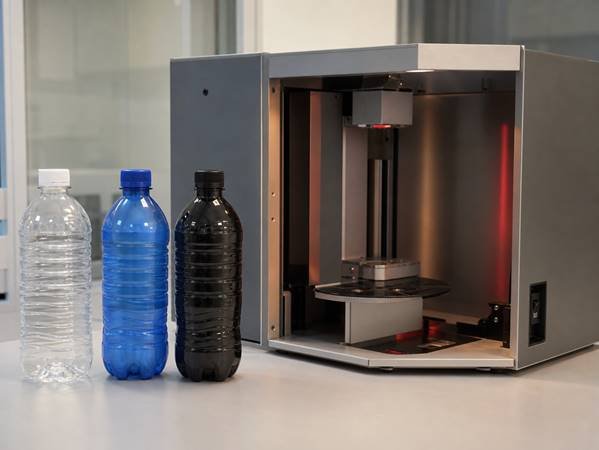
The recycling of different materials also has their own realistic boundaries. It is not that if a material belongs to the first tier, it can be recycled no matter how it is used: for example, although paper and paperboard have a high recycling rate, if they are stained with a lot of oil or covered with plastic film, they cannot be recycled for papermaking, and their value will drop significantly. The recycling system for PET bottles is very mature, but the color of the bottle body, additives, and label materials will all affect the quality of recycled materials. For example, the recycling value of colored PET is lower than that of transparent PET. Glass can theoretically be recycled infinitely, but it must be sorted by color. If impurities such as ceramics and stones are mixed in, it may even damage the furnace, causing losses instead. Metal has high recycling value, but aerosol cans and metal hoses with plastic parts require pre-treatment in advance and cannot be thrown directly into recycling bins. As for composite packaging, such as Tetra Pak and snack flexible packaging, special separation facilities are required for recycling. At present, only a few regions in the EU have such facilities, and most places cannot process them.
Advanced Requirements: Rules for Recycled Content, Reuse and Reduction
In addition to basic recycling requirements, the EU also has some advanced compliance directions. Although they are not fully mandatory now, they will become stricter in the future. Understanding them in advance can save a lot of detours.
First is the requirement for recycled content, which currently focuses on plastic packaging. The current PPWD has no mandatory recycled content requirements at the EU level, and only a few member states have set their own local rules. But in the upcoming new PPWR rules, starting from 2030, a minimum proportion of recycled content will be mandatory for some plastic packaging: for PET packaging in contact with sensitive categories such as food and cosmetics, the recycled content shall not be less than 30%; for other sensitive-contact plastic packaging, not less than 10%; for non-sensitive-contact plastic packaging, not less than 35%. It should be noted here: the specific scope of application, calculation methods, exemptions, and approval requirements for food-contact recycled plastics shall be checked in accordance with PPWR clauses and food contact material rules; sensitive-contact packaging is not only judged by the name of the use, but also by the material, contact type and safety assessment. In addition, there are two key restrictions: first, for packaging in contact with food, cosmetics, and pharmaceuticals, the use of recycled materials must first meet safety standards, and unqualified recycled materials cannot be used just to meet the proportion; second, the source of recycled materials must be traceable, and you cannot casually claim how much recycled material you have used. There is also a common misunderstanding: it is not that the higher the recycled content, the more compliant — if the packaging itself is not recyclable, or the recycled material does not meet safety standards, no matter how high the content is, it is useless.
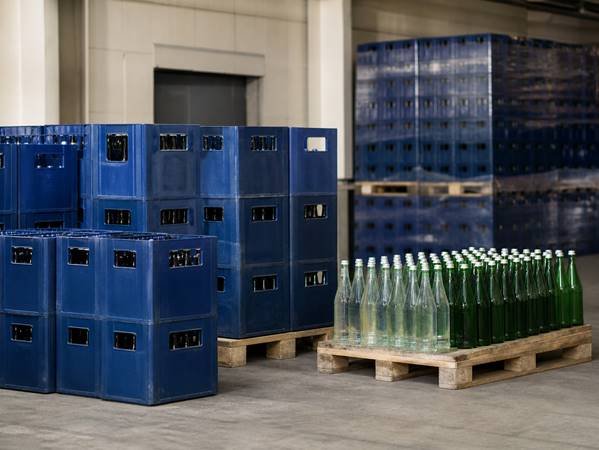
Then is the requirement for reusable packaging. The current PPWD mainly encourages reuse, and only a few countries such as Germany and France have local mandatory requirements. In the new PPWR rules, starting from 2030, a certain proportion of reusable packaging must be configured in scenarios such as beverages, takeout, and e-commerce. But reuse is not just making a sturdier packaging casually. It has an important prerequisite: there must be supporting recycling, cleaning, and re-placement systems, and it must still meet safety requirements after multiple uses. If there is no supporting system, no matter how sturdy the packaging is, consumers will still throw it away after use, which does not count as real reuse. From a cost perspective, reusable packaging is most suitable for scenarios with high turnover, short distances, and low loss rates, such as internal logistics turnover boxes of enterprises and beverage bottles with a deposit system. In these scenarios, long-term use is more cost-effective than disposable packaging.
Finally is the requirement for packaging reduction. The logic is very simple: first use less packaging, then talk about recycling. Reducing waste from the source is the most effective. The core requirement is: the weight and volume of packaging shall not exceed the necessary limits for protecting and displaying products, and excessive packaging is prohibited. For example, a small lipstick with three layers of boxes and a lot of fillers is considered excessive packaging. But reduction is not that the lighter the better — if the packaging is made too thin to save materials, resulting in product damage during transportation, it will instead produce more waste, which is not worth the loss. The new PPWR rules will further clarify the judgment criteria for excessive packaging and restrict unnecessary packaging layers. In the future, the control over excessive packaging will become stricter and stricter.
Compliance Practice: Complete Steps from Packaging to EU Market Launch
After talking about so many rules, many people may ask: I want to enter the EU market now, how should I achieve compliance step by step? The following five steps, from responsibility confirmation to subsequent declaration, cover the entire process.
Step 1: First confirm your own EPR responsibilities. EPR stands for Extended Producer Responsibility, with the core logic of “whoever places packaging on the market bears the recycling and disposal costs”, and it is the core system of EU packaging recycling rules. Responsibility determination follows the principle that “the entity that places packaged goods on the EU market is the primary responsible party”, and the specific responsible party can refer to the entity ranking in the previous article. There is no general small-amount exemption rule at the EU level, and only a very few countries have very low thresholds. In most cases, as long as you place packaged goods on the EU market, you must bear EPR responsibilities.
Step 2: Take stock of all your packaging information clearly. You need to count how many layers of packaging each SKU has, what material each layer is made of, and what the weight of each material is. Parts that many people easily miss: express boxes, bubble wrap, buffer paper, sealing tape, express waybills used for e-commerce delivery, as well as pallets and stretch film used for batch transportation, all of which must be included. In addition, food-contact packaging, dangerous goods packaging, and inseparable composite material packaging are best marked separately, as their compliance requirements are different from ordinary packaging.
Step 3: Complete EPR registration and payment. You can choose to register an EPR account directly with the official agency of the target selling country, or join an officially recognized Producer Responsibility Organization (abbreviated as PRO, which is an institution authorized by the government to collect and pay recycling fees on behalf of producers) to handle it on your behalf. For most small and medium-sized enterprises, especially cross-border sellers, finding a PRO to handle it is more worry-free. The fee is calculated based on the material type and weight of the packaging. Materials that are difficult to recycle have higher fees. For example, the fee for plastic is much more expensive than that for paper. If you sell in multiple EU countries, you either register separately in each country, or find a PRO service that can cover multiple countries. You cannot say that since you are registered in Germany, it can be used across the EU — at present, EPR is still managed by each country separately.
Step 4: Check whether the labels on the packaging and your environmental protection claims have problems. Some EU countries mandate the printing of triangular recycling logos plus material codes on packaging to facilitate consumers’ classified disposal. The specific requirements depend on the rules of the target country — note that such labels are only for classification convenience and do not mean that the packaging is necessarily recyclable. In addition, special attention should be paid to the “Green Dot logo”: many people think that printing the Green Dot means recyclable and compliant, but that is not the case — the Green Dot logo only indicates that you have paid the EPR fee, and does not mean that the packaging is recyclable, nor that you are fully compliant. In addition, do not use vague expressions such as “100% environmentally friendly” and “fully degradable” casually. All environmental claims must be supported by actual evidence, otherwise they may be suspected of false publicity.
Step 5: Declare on time and keep all relevant documents properly. Usually, you need to declare the quantity and material composition of packaging you placed on the market that year to the regulatory authority or PRO every year. All relevant documents must be kept properly, including packaging specification descriptions, supplier material declarations, EPR payment records, weight calculation basis, etc., for inspection. Cross-border e-commerce sellers should also note: some platforms will help sellers withhold and pay EPR fees, or make unified declarations. You must carefully read the platform rules to avoid duplicate payments or missed declarations.
Scenario-Based Judgment: Compliance Key Points for Different Industries
Different industries have different types of packaging and different compliance priorities. Below, we will talk about the respective precautions for several of the most common scenarios.
First are e-commerce sellers. Many e-commerce sellers think that only the packaging of the product itself needs to be counted, but that is not the case: express boxes, fillers, tape, express bags, waybills, all packaging that reaches consumers with the product must be included in the statistics. If your goods are sold to multiple EU countries, you must confirm the EPR requirements of each country separately, and do not take it for granted that registration in one country is valid across the EU. When choosing packaging, try to use single-material buffers, such as pure paper buffers, and use less composite material bubble wrap, which can reduce a lot of recycling costs. It should be noted that small parcels and low-value goods do not automatically exempt from compliance obligations, and the specific threshold shall be confirmed in accordance with the rules of the target country.
Then is the food and beverage industry. The top priority of this industry is always food safety. The use of recycled materials and recycling design must give way to safety requirements, and food safety cannot be sacrificed for environmental protection. When choosing packaging, PET bottles, glass bottles, and aluminum cans have mature recycling systems and are usually easier to design as recyclable packaging; but the final cost also depends on the deposit return system, packaging weight, transportation distance, cleaning/recycling system and food contact safety requirements. In addition, some EU countries have a deposit return system for beverage containers. If you sell bottled beverages, you must understand the deposit rules of the target country in advance, otherwise you may fall into a big pit.
Next is the cosmetics and daily necessities industry. The packaging of this industry often has many design details that affect recycling, such as pump heads with metal springs, mirror decorations, and dark or even black bottle bodies, which will greatly reduce the recyclability of packaging and increase compliance costs. In addition, small-capacity trial packs and sample packaging may be directly treated as waste because they are too small to be recognized by sorting equipment, which should also be noted. Moreover, the cosmetics industry likes to make environmental protection claims, such as “eco-friendly packaging” and “degradable”. All these claims must be supported by actual material evidence and cannot be made casually.
Finally is B2B and industrial transportation packaging. Many people think that industrial packaging does not need to comply with recycling rules, but that is not the case at all: pallets, turnover boxes, stretch film, and buffer materials used for transportation must all be included in the statistical scope. For industrial transportation, if you want to reduce compliance costs, the best way is to establish a reuse system such as turnover boxes. Although the initial investment is high, it is much more cost-effective than disposable packaging in the long run. It should also be noted that if wooden pallets or wooden packaging are used, they must comply with EU phytosanitary rules and have the IPPC mark, otherwise the goods will be detained by customs.
Pitfall Avoidance Guide: Common Misunderstandings and Risk Investigation
We have sorted out three types of the most common compliance misunderstandings. Many people may fall into pitfalls even if they have been in the EU market for a long time. You can check whether you have been affected by comparing them.
Cognitive Misunderstandings: The Most Easily Misunderstood Basic Logic
• Degradable and compostable plastics count as recyclable: most degradable plastics cannot enter the ordinary plastic recycling system, and may also contaminate the entire batch of recycled ordinary plastics, which is even more troublesome.
• Printing a recycling logo or Green Dot equals compliance: the logo is only used for classification or payment proof, and you need to meet both the full-process EPR obligations and recyclability requirements at the same time.
• Reusable packaging does not need to comply with recycling requirements: after reusable packaging is scrapped, it must still comply with recycling and disposal rules and cannot be disposed of casually.
• All EU countries have the same requirements: the EU only sets minimum standards, and each country can tighten recycling targets, fee standards, and labeling rules. The requirements of different countries may vary greatly.
Design Misunderstandings: Thought to Be Eco-Friendly But Actually Non-Compliant
• The lighter the packaging, the more compliant: excessive lightening leads to product damage, which instead produces more waste. Reduction should be done on the premise of ensuring the protective function.
• Black plastic is also plastic, so it must be recyclable: most optical sorting equipment cannot recognize black plastic, which will be directly treated as waste and does not count as effective recycling.
• Composite materials can be recycled as long as the materials are clearly marked: inseparable composite materials are calculated based on the component that is most difficult to recycle, which not only has high recycling difficulty but also high compliance costs.
• Using recycled materials equals circular packaging: using recycled materials is only part of circularity, and you also need to meet recyclable design and safety requirements at the same time, otherwise it does not count as real circularity.
Operational Misunderstandings: Common Compliance Pitfalls
• If the supplier says the packaging is compliant, you don’t need to worry about it: the ultimate compliance responsibility always lies with the entity that places the product on the market. The supplier’s information can only be used as a reference, and you are still responsible if something goes wrong.
• Passing platform review equals compliance: platform review is only a basic inspection and cannot replace the enterprise’s own legal obligations. If something really goes wrong, the regulator will still come to you.
• Small sellers and low-value goods can be automatically exempted: there is no general small-amount exemption at the EU level, and only a very few countries set low thresholds. Do not take chances.
• Paying the EPR fee equals meeting recycling standards: the EPR fee is only used to share the operating cost of the recycling system, and does not mean that your packaging itself meets the recyclability requirements, let alone that all your compliance work is done.
Future Trends: Changes Brought by PPWR and Preparations in Advance
Finally, let’s talk about the upcoming new PPWR rules. Many people think 2026 is still early, but in fact, you can start preparing now. Otherwise, if you wait until the new rules take effect to make changes, it will not only be costly but also may not be in time.
First, let’s talk about the core changes of PPWR. Compared with the current PPWD, there are three main differences: first, the application method is different. PPWR is a regulation that directly applies to all EU member states, and does not need to be transposed into national laws by each country. In the future, EU-wide packaging rules will be more unified, and there is no need to check country by country. Second, the requirements are much stricter, including mandatory requirements for packaging to meet recyclable design, plastic packaging must meet the minimum proportion of recycled content, mandatory use of reusable packaging in some scenarios, restriction on the use of disposable packaging, etc. Third, long-term goals are promoted in phases: the long-term direction of PPWR is to promote the gradual realization of recyclable design, large-scale recyclability, waste reduction and increased reuse proportion of packaging in the EU market. Different goals correspond to different timetables: mandatory requirements for recyclable design, minimum proportion of recycled content for some plastic packaging, and reuse requirements for some scenarios will be gradually implemented from 2030; by 2035, the EU needs to achieve large-scale recyclability of the vast majority of packaging; by 2040, the level of recycling and reuse will be further improved and the total amount of packaging waste will be reduced. Enterprises need to adjust their rhythm according to the obligations of different stages, and cannot only focus on a single time node.
These changes have a real impact on ordinary enterprises and sellers: first, costs will rise. The prices of easily recyclable materials and compliant recycled materials will increase, and packaging procurement costs will be higher than now. Then is compliance upgrading. In the past, paying the EPR fee might be almost enough, but in the future, the entire process starting from packaging design must meet the requirements, and the penalty intensity will also be greater than now. Finally, market thresholds will increase. The market space for packaging that is not easy to recycle, such as composite materials and black plastics, will become smaller and smaller, and may even be banned.
There are still more than two years before the core obligations of PPWR take effect, which is just a window period for adjusting packaging. You can prepare in advance from the following aspects: first, gradually replace packaging, try to switch to single-material, easily recyclable packaging, reduce the use of inseparable composite materials and black plastics. Early replacement costs less. Second, track the regulatory updates of the target selling country. Although PPWR is a unified rule, there will still be some implementation details. Understanding in advance allows you to adjust early. Third, lay out the supply chain in advance and connect with compliant recycled material suppliers. When everyone is scrambling for recycled materials in the future, you will not be flustered due to material shortage or price increases. Fourth, sort out data in advance, count the packaging materials and weights of all products clearly, and establish a complete packaging data list. In the future, whether it is declaration or packaging modification, it can save a lot of trouble.
Summary
So far, the core requirements of EU packaging recycling and circular utilization have been covered. To sum up, after learning these contents, you should be able to do the following things: judge whether your packaging is within the jurisdiction of the EU and whether you need to bear EPR responsibilities; distinguish the four core concepts of recycling, recyclability, recycled content, and reuse, understand the statistical caliber of recycling targets, and will not be misled by various numbers; complete basic compliance operations in five steps, and roughly estimate your own recycling and disposal costs; quickly judge the recyclability of a piece of packaging, and avoid common cognitive, design, and operational compliance pitfalls; combine the future trends of PPWR to adjust packaging solutions in advance and reduce long-term compliance risks.
The core logic of packaging compliance has always been “whoever places it on the market is responsible, reduce waste from the source, and promote the true circular utilization of packaging”. Layout in advance according to the rhythm can steadily reduce long-term compliance costs.