
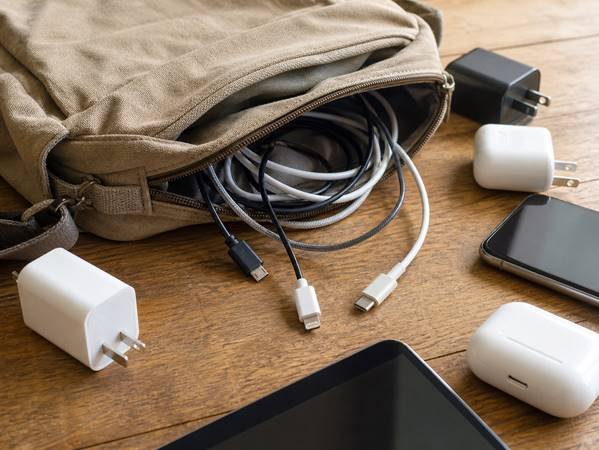
If you often go out with multiple electronic devices, you must have experienced the hassle of being overwhelmed by a pile of chargers and charging cables: your phone uses one type of port, your earphones another, and your tablet yet another. Your bag gets stuffed full and it’s easy to pick the wrong one. The mandatory USB-C requirement implemented by the EU is designed to solve this problem — but many people’s understanding of it is either too one-sided or full of misunderstandings. This article will explain this matter clearly from basic concepts to practical judgment. Whether you live and shop in the EU, or just want to understand the rules of the common charger, you will be able to follow along.
1. Basic Understanding: First Grasp the Most Core Issues
Many people think the “Common Charger Directive” is a brand-new set of regulations established by the EU, but that is not the case. It is a revision of the EU’s original Radio Equipment Directive (abbreviated as the RED Directive, which you can think of as the EU’s “general rule” for all electronic devices with wireless functions such as Bluetooth and WiFi). It is equivalent to adding requirements related to charging ports to the old regulations, not a completely independent new law. If you search for relevant overseas materials, the common English terms are EU Common Charger or USB-C mandate, both of which refer to this set of rules.
Its coverage is not the whole of Europe, but the 27 EU member states plus the 3 countries of the European Economic Area (EEA): Norway, Iceland, and Liechtenstein, totaling 30 countries. Regions that have left the EU, such as the United Kingdom, shall be subject to their own local regulations and are not within the scope of this requirement.
The EU has officially calculated that after full implementation, it can reduce about 11,000 tons of e-waste every year, and ordinary users can save a total of about 250 million euros in charger costs annually — after all, there is no need to buy a new charger every time you change devices.
To put it simply, the core logic of this set of requirements is very straightforward, with only three points: First, new electronic devices that meet the requirements must have at least one USB-C port that can be used for charging. Second, whether it is a charger included with the device or a universal charger sold separately, the output port must be USB-C. Third, it only regulates the port standard for wired charging, does not prohibit devices from retaining other ports, and does not mandate unified wireless charging (the EU is still evaluating the feasibility of unifying wireless charging, and there is no mandatory requirement at this stage).
Many people confuse USB-C with fast charging, but in fact they are completely different things. This is the basis for understanding all the rules, and even if you know nothing about technology, you must first distinguish between them:
| Name | Essence | Core Function |
| USB-C | The shape of the physical port (oval, reversible plug) | Determines whether the charging cable can be plugged into the device |
| USB PD (USB Power Delivery) | A cross-brand universal fast charging “communication rule” | Enables devices and chargers of different brands to automatically negotiate a suitable charging power to achieve universal fast charging |
Simply put, USB-C is “the shape of the port”, and USB PD is “the rule of charging”. Having a USB-C port does not mean there must be fast charging — this is the most common misunderstanding.
Before continuing with the details, let’s clarify the three most easily misunderstood top-level cognitions to avoid getting more confused later: First, not all electronic devices need to be changed to USB-C, only the consumer electronics categories explicitly listed in the regulations are required. Second, this set of requirements only regulates manufacturers and sales channels. You can use your old chargers and old devices at home as you like, and personal use is completely unrestricted. Third, the EU does not intend to unify all charging methods. There is currently no mandatory requirement for wireless charging, and it only targets wired charging ports.
2. Applicable Boundaries: Which Products and Scenarios Must Comply
Most people’s misunderstandings about this set of rules stem from the “scope of application”. In fact, as long as you figure out “which products are regulated” and “where they are regulated”, you won’t be confused.
Which specific products must meet the requirements? The EU is advancing in two steps by category, leaving different adaptation times for different types of products:
The first step targets small portable devices, and will be mandatory starting from December 28, 2024. It covers the categories that people use most in daily life, which can be roughly divided into three categories: The first category is portable digital devices, including mobile phones, tablets, e-readers, and digital cameras. The second category is audio and entertainment devices, including in-ear headphones (including charging cases), over-ear headphones, portable speakers, and handheld game consoles. The third category is office peripherals, including wired/wireless keyboards and mice, portable navigators, portable WiFi devices, and portable routers and other portable internet devices.
The second step targets medium and large devices, and will be mandatory starting from April 28, 2026. It covers all laptops with wired charging function (including 2-in-1 devices with detachable tablets and keyboards), and the requirements for high-power universal chargers will also be implemented simultaneously — the high-power universal chargers here mainly refer to USB-C PD chargers that can support higher-power charging for devices such as laptops, with common power of 65W and above. Compared with the 20W and 30W chargers commonly used for small devices, they have a wider range of applications. The reason laptops have a transition period of more than a year later is that the charging power of laptops varies too widely, from thin and light laptops with more than ten watts to gaming laptops with hundreds of watts. Manufacturers face higher adaptation difficulties and need a longer transition period.
| Effective Date | Core Coverage |
| December 28, 2024 | Small portable consumer electronics (mobile phones, tablets, headphones, handheld game consoles, etc.) |
| April 28, 2026 | Laptops with wired charging (including 2-in-1 devices), high-power universal chargers |
Of course, not all devices with charging functions need to be changed. Several categories are explicitly excluded from the mandatory scope: The first category is devices without wired charging function. For example, some small accessories that can only be charged wirelessly do not need to meet the requirements. The second category is particularly small devices such as smart watches and fitness bands, which are not yet included in the mandatory scope due to insufficient internal space. The third category is non-consumer-grade devices such as industrial, medical, and disability assistive devices, which are not covered by this set of rules. In addition, second-hand products and new stock products produced before the regulations take effect do not need to be changed and can be sold normally.
There is another very important boundary: this set of requirements only regulates brand-new products newly placed on the EU/EEA market — to put it bluntly, new products newly produced by manufacturers and first sold in the EU market. If you buy a device from a non-EU country and bring it back for your own use, there is no problem at all, and no one will check you.
Some large manufacturers, because of the large size of the EU market, simply change all products of the same model sold globally to USB-C. This is the manufacturer’s own business choice, not a regulatory mandate. For example, the familiar iPhone 15 series was changed to a USB-C port to meet EU requirements, and this design is adopted in all global versions. But this does not mean that other regions such as China and the United States also have the same mandatory USB-C regulations. So if you buy a product of the same model with a USB-C port in a non-EU region, it does not mean that the local area has the same mandatory requirements.
3. Breakdown of Specific Requirements: It’s Not Just About Changing to a USB-C Port
Many people think this set of requirements is just “adding a USB-C port to the device”, but in fact there are more details than that. There are clear regulations from devices to accessories to packaging.
First, let’s look at the requirements for the device itself: the most core rule is that the USB-C port on the device must be usable for charging. If only a USB-C port that can only transmit data is added, and charging still requires a dedicated round port or other port, that is non-compliant. Of course, the regulations do not prohibit devices from retaining other ports at the same time. For example, dedicated charging ports, HDMI ports, and headphone jacks can all be retained, as long as the USB-C port can perform normal charging functions. As for whether this USB-C port can transmit high-speed data, output video, or is a Thunderbolt port, the regulations do not require any of these, and it is entirely up to the manufacturer to decide.
Let’s talk about the fast charging rules that everyone is most concerned about. Not all devices must support fast charging, but if the device’s wired charging power exceeds 15W (that is, voltage exceeds 5V and current exceeds 3A), it must support the USB PD protocol. Many people ask: What about the brand’s own proprietary fast charging protocol (that is, the fast charging rules independently formulated by the brand and only adapted to its own specific devices and chargers)? For example, can the 100-watt-level super fast charging developed by some brands still be used? The answer is that it can be retained, but it must not affect the universal charging of USB PD — that is to say, if you use an ordinary third-party PD charger to charge this device, it must at least reach the charging speed corresponding to the PD protocol, and you cannot deliberately restrict fast charging to only work with your own brand’s charger. For example, Samsung’s 45W super fast charging and Google Pixel’s 30W fast charging are both proprietary fast charging rules optimized by the brand for its own devices. As long as the device is also compatible with universal USB PD fast charging, it meets the regulatory requirements — you can charge normally with an ordinary third-party PD charger, but you just won’t reach the maximum speed of the brand’s proprietary protocol.
Here’s a reminder: To achieve the rated maximum power for fast charging, the device, charger, and charging cable must all support the corresponding power — none can be missing. For example, if your laptop supports 65W PD fast charging, you use a 65W PD charger, but you have an ordinary 3A current C-to-C cable, then the maximum power can only reach about 60W, which cannot reach full speed. You need to replace it with a 5A cable to reach the rated 65W.
Now let’s look at the rules for accessories. Universal chargers included with devices or sold separately must have a USB-C output port and support the USB PD protocol. The requirements for charging cables are relatively looser: for cables included with the device, at least the end that plugs into the device must be USB-C; but to support full PD fast charging, the cable must have USB-C on both ends. In addition, USB-C cables are divided into different current levels, commonly 3A and 5A. If the cable’s level is insufficient, even if both the device and charger support high power, the maximum charging speed cannot be reached.
Finally, there are the rules for packaging and information disclosure. The EU allows manufacturers to choose not to include a charger — which is often called “eco-friendly packaging” — but it must be clearly marked in a prominent position on the product packaging and sales detail page, and cannot be hidden in small print to mislead consumers. In addition, manufacturers need to mark several core pieces of information: charging port type, minimum and maximum charging power, and whether USB PD is supported. There are also unified icons, so consumers can see at a glance whether a charger is included in the package without having to flip through the manual for a long time.
4. Implementation Timeline and Transition Period Rules
The two core effective dates have been mentioned earlier. Here we will clarify the details of the transition period to avoid people confusing the difference between “effective” and “cannot be sold”.
First, the first phase takes effect on December 28, 2024, targeting small portable devices. “Effective” here means: from this date, small devices newly produced and newly placed on the EU market must meet the requirements. However, stock products produced before this date can continue to be sold. The specific inventory clearance period may vary slightly according to the regulatory requirements of each EU country, and local regulations shall prevail.
The second phase takes effect on April 28, 2026, targeting laptops and high-power universal chargers. The transition period rules are the same as the first phase: inventory produced before the effective date can be cleared normally, and there is no mandatory recall or removal from shelves.
In addition, it should be emphasized again: second-hand products are not subject to this set of mandatory requirements from start to finish. Even very old second-hand mobile phones with micro-USB ports can still be sold in the EU market.
5. Quick Judgment Method for Ordinary Users: 3 Steps to Check If a Product Is Compliant
If you are shopping in the EU and want to quickly judge whether a product meets the mandatory requirements, you don’t need to flip through hundreds of pages of regulatory text. Just follow these three steps, which are simple and easy to remember.
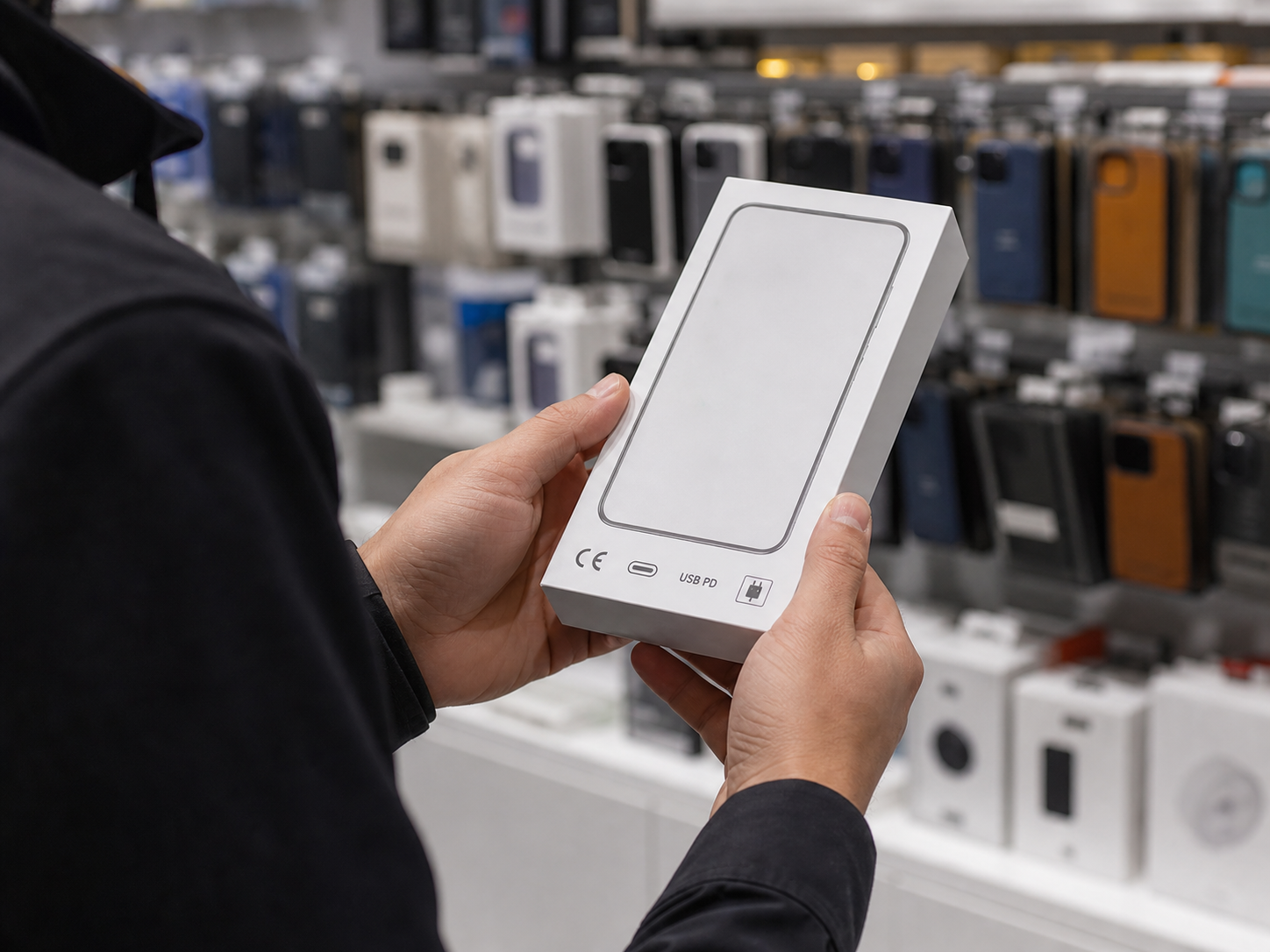
Step 1: Check basic markings. First, the product must have the CE mark — you can think of it as the “access pass” for electronic devices to enter the EU market, and it is the basic marking for manufacturers to self-declare that the product meets all relevant EU regulations such as safety and environmental protection. Then confirm that this product belongs to the mandatory coverage categories mentioned above, such as mobile phones, tablets, laptops, etc. If it is a product not within the scope, such as a smart watch or industrial equipment, it naturally does not need to meet the requirements.
Step 2: Check port functions. First, check if there is a USB-C port. Don’t just look at the shape; go to the product description to confirm that this port supports the charging function, to avoid buying fake compliant products that only have a “data-only USB-C port”.
Step 3: Check fast charging parameters. If this device has a fast charging function and the charging power exceeds 15W, the product description must clearly mark support for “USB PD” or “USB Power Delivery”. Otherwise, even if it has a USB-C port, it does not meet the requirements.
There are three common pitfalls of “seeming compliant but actually non-compliant” that you must be careful to avoid when buying: The first is having a USB-C port, but it can only be used for data transmission, and charging still requires a dedicated other port. This does not meet the requirements — for example, some early business tablets were equipped with a USB-C port, but only supported data transmission, and charging required a dedicated round power port. This is a typical case of fake compliance. The second is that the included cable is USB-A to USB-C, but the charger’s own output port is still USB-A. This is also not allowed, because the requirement is that the charger’s output port must be USB-C. The third is having a USB-C port and being able to fast charge, but the fast charging only supports the brand’s own proprietary protocol and is completely incompatible with USB PD. As long as the power exceeds 15W, this is non-compliant.
When encountering two special situations, you can judge according to this logic: One is a device with wireless charging. As long as it also has a wired charging function, it must be equipped with a USB-C wired charging port; if it is a device that can only be charged wirelessly, it is not restricted. The other is non-EU version devices. For the same product, the version sold in the EU must meet the USB-C requirements, but the version sold in non-EU regions may still have the old port. When buying, be sure to check the sales region and specific configuration clearly, and don’t just look at the model to place an order.
6. Practical Impact on Ordinary Users: Benefits and Precautions
After talking about so many rules, what changes will this set of requirements bring to ordinary users? In fact, there are both tangible benefits and some small troubles that need to be adapted to.
The most direct benefit is that accessories can be used across brands. In the future, when you buy mobile phones, headphones, and tablets of different brands, as long as they are compliant products, one USB-C charger plus one cable can charge them all. You don’t need to bring a pile of chargers and cables when going out, and your bag will be much lighter. Second, it reduces long-term use costs. In the past, if you changed to a different brand of mobile phone, you might have to buy a new set of chargers and cables. Now, as long as it is a compliant PD charger, it can be used for five or six years without problems. You don’t need to change the charger when you change devices, which can save a lot of money in the long run. Also, public charging is more convenient. In the future, USB-C charging facilities will become more and more common in public places such as hotels, offices, and cafes in the EU. You don’t have to look everywhere for charging cables with the corresponding port, nor do you have to specifically look for power bank rental machines.
Of course, it’s not all good news. There are a few small troubles that everyone should be mentally prepared for: First, accessories for old ports may become fewer and fewer. For example, for previous Apple devices with Lightning ports and old Android phones with micro-USB, the corresponding charging cables and chargers may gradually reduce production, making it less convenient to buy accessories in the future. Second, some manufacturers will choose not to include chargers. If you don’t have a suitable PD charger at home, you may have to spend extra money to buy one when you buy a new device, which instead increases short-term costs. Third, even for USB-C devices, charging speeds can vary greatly. Some phones support 65W fast charging, while others only have 10W slow charging. You can’t just assume it charges fast just because it has a USB-C port. Be sure to check the power parameters when buying.
In daily use, you should also pay attention to two points: First, the regular USB-C PD chargers you bought before at home can be used for new devices as long as the port is correct and the power is sufficient. Don’t worry about damaging the device by charging. The PD protocol will automatically negotiate a suitable power, outputting as much as the device needs, and will not force high power to damage the device. Second, don’t buy too cheap uncertified accessories, especially chargers and charging cables. Inferior accessories may cause slow charging, overheating, and in severe cases, even have the safety risk of fire. Don’t lose big over small things just to save a little money.
7. Avoiding Common Misconceptions: Identifying Common False Statements
Finally, let’s sort out a few of the most commonly heard false statements, so as not to be misled by online rumors, and also to help you quickly judge whether what others say is correct.
First, let’s look at misconceptions about the scope of application: Some people say “the whole world must comply with the EU’s USB-C requirements”. This is of course wrong. This set of requirements only applies to the 30 countries of the EU and EEA. Other regions shall be subject to their own local regulations. For example, the United States and Southeast Asia do not have similar mandatory requirements. Others say “after the regulations take effect, devices with old ports cannot be sold”. This is also a misunderstanding. It only regulates newly launched products. New stock products and second-hand products can be sold normally. It’s just that new products with old ports can no longer be produced and placed on the EU market. Others ask “do smart watches also have to use USB-C”? Not for now. Devices that are too small, such as watches and bands, have not yet been included in the mandatory scope. Whether they will be added in the future depends on subsequent regulatory revisions.
Next, let’s look at misconceptions about ports and fast charging: Many people think “having a USB-C port equals having fast charging”. This is the most common mistake. USB-C is just the shape of the port. You can completely make a USB-C port that only has 5W slow charging. Fast charging must support the USB PD protocol at the same time and have sufficient power. Others think “a USB-C port definitely supports high-speed data transmission or video output”. This is also wrong. The regulations only mandate the charging function. Whether this USB-C port has USB 2.0 speed or USB 3.2 speed, and whether it can connect to a monitor, all depends on whether the manufacturer is willing to add costs, and has nothing to do with compliance. Others say “the EU prohibits brands from using their own proprietary fast charging protocols”. This is also a rumor. Brands can completely retain their own proprietary fast charging, as long as they are also compatible with universal USB PD charging, and cannot deliberately limit the charging speed of third-party PD chargers.
Finally, there are misconceptions about accessories: Many people think “all USB-C cables are the same”. In fact, there are big differences. Just the current level has 3A and 5A differences. Some cables only support charging and do not support data transmission. High-power fast charging must use cables of the corresponding level, otherwise the maximum power cannot be reached. Others say “the EU requires mobile phones to include a charger”. On the contrary, the EU allows manufacturers to choose not to include a charger, as long as it is clearly marked on the packaging and detail page. So when buying, be sure to check clearly whether there is a charger in the package. Others ask “do laptops have to remove the original dedicated charging port”? No, as long as the USB-C port can charge and supports the PD protocol, it is completely possible to retain the original dedicated charging port at the same time. For example, many gaming laptops are designed this way, after all, the dedicated port can achieve higher power.
8. Summary of Core Abilities
Having read this far, you don’t have to memorize all the regulatory provisions by rote. As long as you master these core abilities, you can handle most scenarios of daily shopping and device use: First, you can quickly judge whether a product is within the coverage of the EU’s mandatory USB-C requirements, and will not confuse exception categories such as smart watches and industrial equipment. Second, you can use the three-step method mentioned above to quickly identify whether products sold in the EU truly meet the mandatory regulations, and avoid the fake compliance pitfalls of only having a data-only USB-C port, a charger without a USB-C port, or no PD support. Third, you can completely distinguish that “USB-C port” and “USB PD fast charging” are two different things. You will no longer default to fast charging just by seeing a USB-C port, and you can also understand why the charging speed can differ several times even with the same USB-C port. Fourth, you can judge whether you need to buy additional accessories when buying a new device based on the existing chargers and cables at home, so you won’t waste money or buy the wrong power. Finally, you can easily identify common false statements about this set of rules online, and also understand its actual impact on personal daily use, so you won’t be misled by false information.