
If you run an electronics product business in the U.S., or have ever encountered issues like off-brand chargers causing WiFi disconnections or cheap LED lights making your radio hum, you are most likely familiar with the term “FCC Part 15”. Many people think it only regulates wireless products like Bluetooth and WiFi, but in reality, ordinary wired chargers, laptops, and even household LED bulbs fall within its regulatory scope. Even if you have never had any contact with U.S. federal regulations, you can easily understand the core rules and practical methods through this content.
Beginner Basics: What It Is, What It Regulates, and Why You Should Care
FCC Part 15 is a set of mandatory rules formulated by the U.S. Federal Communications Commission (FCC), specifically regulating two types of electronic devices that do not require prior application for a wireless license: one type actively transmits low-power wireless signals (such as Bluetooth headsets and WiFi routers), and the other type leaks electromagnetic noise during operation (such as wired chargers and computer motherboards). Its core goal is only one: to prevent the signals or noise of these devices from interfering with formal public services such as broadcasting, mobile phones, and emergency radio. To put it plainly: you can use unlicensed public frequency bands, but you must not disrupt others’ normal use of the spectrum. Officially, its full designation is 47 CFR Part 15, which is part of the U.S. Code of Federal Regulations and has legal effect.
Many people are confused about whether their products need to comply with Part 15. In fact, you can first remember two typical scopes: products that must comply include common consumer electronics (computers, mobile phone chargers, tablets), short-range wireless devices (Bluetooth, WiFi, wireless mice), digital home appliances, and ordinary LED lighting; products that do not need to comply are purely passive components without active circuits (such as ordinary resistors, capacitors, wires without chips), DIY products made for personal use and not for sale, and specific functional devices that are fully covered by other FCC special rules — for example, the cellular transmission function of mobile phones is subject to rules related to licensed spectrum (such as Part 22/24), and broadcast television transmitters also have an independent regulatory system; functions covered by such special rules do not need to undergo repeated compliance under Part 15. There is a very easily confused boundary here: for smart devices with cellular functions (such as smartphones and smart watches), their unlicensed wireless parts such as WiFi, Bluetooth, and NFC, as well as the electromagnetic leakage of digital circuits, are still under the jurisdiction of Part 15.
Some people may think, it’s just rules about electromagnetic interference, what serious consequences could there be? In fact, in the U.S. market, the cost of non-compliance is very tangible: first, products may be directly detained at customs, with fines ranging from thousands to hundreds of thousands of dollars, depending on the severity of the violation and the number of products involved; second, mainstream e-commerce platforms such as Amazon and Walmart will directly force non-compliant products to be removed from shelves, and even freeze store funds as soon as they are found; if a product is complained about causing harmful interference after being launched, it may also trigger a mandatory recall. For small sellers, the most common pitfall is not having no certification at all, but that the certificate provided by the supplier is a fraudulent shared certificate, the actual model does not match the certified model, or the product lacks the required labels — these are problems that will be caught every time an inspection is carried out.
Let’s first clarify a few easily confused boundaries: first, the difference within FCC rules: Part 15 only regulates the interference and transmission requirements of unlicensed radio frequency devices. If licensed spectrum is used, such as mobile cellular networks and radio stations, then special rules such as Part 2, Part 22, and Part 24 apply; also, radio frequency equipment for industrial, scientific, and medical use, such as microwave ovens and wireless charging pads, are mainly regulated by Part 18, not Part 15. Then there is the difference from certifications of other countries: CE certification is a compliance requirement of the European Union, and cannot replace FCC Part 15 at all. The two systems are independent of each other. Even if you have CE, the Part 15 procedures required for entering the U.S. market cannot be omitted. Also note that Part 15 only deals with radio frequency interference and transmission. Electrical safety, chemical environmental protection, battery transportation, user privacy, etc., are regulated by other agencies such as UL, EPA, DOT, and FTC. Do not think that passing Part 15 means full compliance. It is very normal for many products to be subject to multiple rules at the same time.
Core Classification: First Determine the Device Type, Then Find the Corresponding Rules
To understand the specific requirements of Part 15, the first step is to classify the device — different types of devices have completely different regulatory rules and compliance paths. If you classify them wrong, you will either waste money or directly violate the rules. Part 15 mainly divides devices into three major categories according to their transmission nature, and also divides them into two grades, A and B, according to usage scenarios.
The first category is called unintentional radiators. The name sounds strange, but it is actually easy to understand: the function of the device is not to transmit wireless signals at all, but it accidentally leaks electromagnetic noise during operation, just like a person will stir up a little wind when walking. For example, wired chargers, ordinary laptops, wired mice, and LED light driver boards all fall into this category. For this type of device, the core control is that the intensity of the leaked noise must not exceed the specified limit, and the corresponding rule is Subpart B.
The second category is called intentional radiators, which are devices that rely on transmitting radio waves to achieve their functions. This is the easiest to understand: Bluetooth headsets, WiFi routers, wireless doorbells, and remote control toys are all in this category. There are more requirements for this type of device: it is necessary to control that its signals do not interfere with other services, and it must also comply with the regulations on transmission frequency bands and transmission power. You cannot use frequency bands arbitrarily, nor can you increase power at will. The corresponding rules are mainly Subpart C, Subpart E, etc.
The third category is called incidental radiators, which is the most easily overlooked category: it neither intentionally transmits signals nor has digital circuits, but only accidentally generates a little electromagnetic noise when pure electromechanical equipment is operating. For example, traditional motors, old-fashioned mechanical switches, and fluorescent lamp ballasts all fall into this category. There is no mandatory certification path for this type of device, but if they actually cause harmful interference, they still need to be rectified, and cannot be left alone.
In addition to classification by transmission nature, another very important classification is Class A and Class B divided by usage scenarios. Class A is for equipment used in industrial, commercial, and office scenarios, with looser interference limits, because these places are far from civilian broadcast and television receiving equipment; Class B is for home and residential scenarios, with much stricter limits. After all, homes generally have devices such as radios and televisions, which are close by and easily interfered with. How to judge quickly? It’s very simple: as long as your product is consumer-grade and may be used in ordinary homes, it is defaulted to Class B. Don’t try to take advantage of loopholes. There is a boundary to note here: Class A devices are not prohibited from being used at home, but if they cause interference when used at home, the user is responsible; but manufacturers must never label household products that should originally be Class B as Class A to reduce certification difficulty — this is a clear violation.
Regarding classification, there are three most common misconceptions that must be avoided: first, some people say that products with wireless functions are not regulated by Part 15 — this is wrong. Consumer-grade short-range wireless devices, such as Bluetooth, WiFi, and wireless remote controls, are all within the regulatory scope of Part 15; second, some people think that if the power is particularly low, no classification is needed — this is also wrong. As long as it is an electronic device with active circuits, you must first determine which category it belongs to, which has no direct relationship with the power level. Only those clearly listed in the exemption list are exempt; third, some people say that since my product has no Bluetooth or WiFi, it does not need to comply with Part 15 — this is also wrong. As long as it has digital circuits and leaks electromagnetic noise during operation, such as ordinary wired chargers and desktop computers, it belongs to unintentional radiators and must also meet the requirements.
Common Rule Framework: Which Subparts Correspond to Ordinary Products
Which rules in Part 15 correspond to different types of devices? In fact, you don’t need to memorize the entire regulation. There are only a few subparts commonly used for ordinary consumer products, and you can look up the remaining special scenarios when you encounter them.
The first is Subpart A, which all devices must comply with. It is equivalent to the general outline of Part 15, covering basic content such as definitions of various terms, applicable boundaries, and responsible parties. It contains two core principles that all devices regulated by Part 15 must meet: first, they must not cause harmful interference; second, they must accept external interference in normal environments. If you are not sure whether your product is regulated by Part 15, you should first check the definitions in this subpart.
The second is Subpart B, which is specifically for unintentional radiators, that is, digital devices and active electronic devices without wireless transmission functions. The two most commonly used clauses in it are 15.107 and 15.109: 15.107 regulates conducted interference on power lines — that is, the noise of the device transmitted along the power line; 15.109 regulates radiated interference — that is, noise transmitted through the air. The limits of these two clauses are divided into two grades according to Class A and Class B, with Class B being stricter.
The third is Subpart C, which is used by most short-range wireless devices, such as Bluetooth, remote controls, sensors, etc. There are three core clauses in it, corresponding to different situations: the first is 15.247, which regulates devices using spread spectrum or digital modulation such as 2.4GHz WiFi, Bluetooth, and Zigbee. Most consumer-grade wireless products we come into contact with daily fall under this clause; the second is 15.249, which regulates low-power simple wireless devices in fixed frequency bands, such as ordinary 433MHz remote keys; the third is 15.231, which regulates devices with periodic transmission, such as wireless doorbells and alarm sensors. This type of device does not transmit signals all the time, but only transmits once every interval. Which clause to choose specifically depends mainly on the frequency band used by the device, the modulation method, and the duty cycle of the transmitted signal (that is, the ratio of transmission time to total time).
The fourth is Subpart E, which is specifically for 5GHz and 6GHz unlicensed broadband devices (also called U-NII devices), and the 2.4GHz rules cannot be directly applied. The 5GHz U-NII frequency band is divided into multiple sub-bands. Only some frequency bands shared with meteorological and military radars require devices to support mechanisms such as Dynamic Frequency Selection (DFS) and Transmit Power Control (TPC). Not all 5GHz channels have the same requirements — the function of DFS is to automatically switch the device to other channels when it detects that a nearby radar is using this frequency band, to avoid interfering with the radar. 6GHz unlicensed devices are also under the jurisdiction of this subpart. The core difference from the 5GHz rules is that 6GHz is divided into different grades such as low-power indoor and standard power according to usage scenarios. Some scenarios need to confirm available frequency bands through the Automated Frequency Coordination (AFC) system, and experience from 2.4GHz or traditional 5GHz cannot be directly applied for judgment.
The remaining subparts are rarely used by ordinary consumer products. For example, Subpart F regulates ultra-wideband (UWB) devices, Subpart G regulates power line communication devices, and Subpart H regulates TV white space devices. A reminder here: if your product uses these technologies, never directly apply the conventional rules for Bluetooth and WiFi. Be sure to check the corresponding subparts separately, otherwise it is easy to make mistakes.
Core Control Requirements: Limit Indicators That Ordinary People Can Understand
What specific requirements does Part 15 regulate? Are there any core indicators that can be understood without knowing radio frequency technology? In fact, they can be summarized into several categories:
First are the two basic principles that all devices must comply with, which were mentioned in the general outline just now, and are explained in detail here: first, devices must not cause “harmful interference” to formal radio services — what is harmful interference? It does not mean a little noise counts, but interference that causes service interruption, serious degradation of image or sound quality, making the service completely unusable. For example, if your device makes the nearby emergency radio station inaudible, that is harmful interference; second, devices must accept external interference received during use, including interference that may cause the device to operate unexpectedly. This is not a mandatory requirement for the anti-interference performance of the device, but clarifies that the device cannot require other legal radio services to adjust or give way on the grounds that it is interfered with. The two principles combined mean: you must not interfere with others, nor can you require others to make way for you.
For unintentional radiators, the core controls are two things: one is conducted interference, which is noise transmitted through power lines, mainly for devices plugged into AC power — for example, the noise of a low-quality charger runs into the power grid along the wire, affecting other devices on the same power strip. That is excessive conducted interference; the other is radiated interference, which is noise transmitted through the air, and all active devices are subject to control. For example, noise leaked from a computer motherboard affecting a nearby radio is a problem of radiated interference. Regarding the limits, you can have a general impression: at a test distance of 3 meters, it is generally 100 to 500μV/m. The specific value depends on the frequency band and whether it is Class A or Class B, with Class B being stricter. Most common causes of excessive limits are poor power filtering, poor shell shielding, or connected cables leaking noise like antennas.
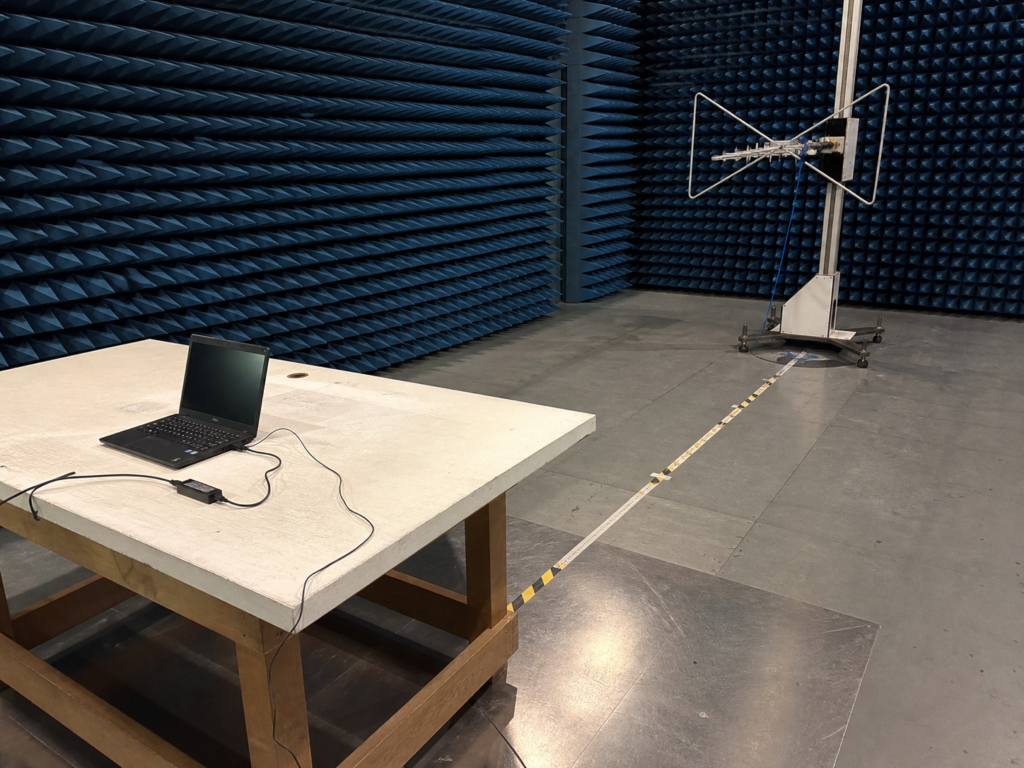
In addition to meeting the above interference requirements, intentional radiators also have additional restrictions: first is frequency band restriction — transmission must be in unlicensed frequency bands designated by the FCC, and other frequency bands cannot be used arbitrarily. For example, the 2.4GHz and 5GHz civilian unlicensed frequency bands are allowed, but if you privately use the frequency band for mobile communication, that is definitely not allowed; second is power restriction — the transmission power must not exceed the upper limit of the corresponding frequency band. Consumer-grade Bluetooth and WiFi are generally in the milliwatt to watt level, and the specific value also depends on the frequency band and antenna gain — the higher the antenna gain, the lower the allowed transmission power, and the total effective radiated power must not exceed the limit; third is spurious and harmonic restriction — that is, those useless transmissions outside the main signal must not exceed the limit. Many unqualified products are not because the main power exceeds the limit, but because the spurious signals exceed the standard; there is another very important point: neither manufacturers nor users can privately modify the device, such as arbitrarily increasing power, adjusting the transmission frequency band, or replacing uncertified antennas — these are all violations.
In addition to technical indicators, Part 15 also has clear requirements for product labeling and documentation, but the labeling content and placement method vary for different device types and different compliance paths, and not all need to be printed on the product body: content such as compliance declarations and contact information of the U.S. responsible party can be placed on product labels, packaging, electronic labels, user manuals, or accompanying documents according to device size and electronic label rules; intentional radiators must be marked with a unique, publicly searchable FCC ID number; the instruction manuals or accompanying materials of all devices must include Part 15 interference notices and the warning that “unauthorized modification is prohibited”.
Compliance Path Judgment: How to Choose Between SDoC and FCC ID
For sellers doing business in the U.S. market, the most concerning question is: which compliance process should my product go through? What is the difference between the commonly heard SDoC and FCC ID? How to choose to avoid being scammed?
Let’s first explain the two mainstream compliance paths clearly, no need to memorize those complicated terms: the first is called Supplier’s Declaration of Conformity (SDoC), which means that the U.S. responsible party (usually the importer or a U.S.-based brand) keeps complete test records and technical documents, and self-declares that the product meets the requirements. There is no need to submit the materials to the FCC or official agencies for review. It is suitable for low-risk unintentional radiators, such as ordinary wired chargers and small home appliances without wireless functions. SDoC does not have an official unique ID that can be searched, and the compliance certification documents are kept by the responsible party for inspection. Testing can be completed by a laboratory with corresponding testing capabilities, and there is no mandatory requirement to use an FCC-recognized laboratory — only the certification path has this requirement. Some e-commerce platforms or large importers may put forward stricter laboratory qualification requirements, which are additional rules at the market level.
The second is called Certification, which is what we often call FCC ID certification, and it is the highest level of compliance: test materials must be submitted to a Telecommunication Certification Body (TCB) recognized by the FCC for review. After passing, a unique FCC ID will be issued, which everyone can search on the FCC official website. All intentional radiators, that is, devices with wireless transmission functions, must go through this path. A supplementary note: before 2017, there were two other paths, Verification and DoC, which have now been basically integrated into the SDoC system, so there is no need to be confused about the old names.
Core Differences Between the Two Mainstream Compliance Paths
SDoC (Supplier’s Declaration of Conformity)
- Review method: Self-declaration by the U.S. responsible party, no need for official agencies to review materials
- Applicable devices: Most unintentional radiators/digital devices, both Class A and Class B are applicable, specifically determined by product category
- Publicly searchable ID: No official unified unique ID for search, compliance materials are kept by the responsible party for inspection
- Testing laboratory requirements: Only corresponding testing capabilities are required, no mandatory FCC recognition requirement; some e-commerce platforms or large importers may put forward stricter qualification requirements, which are additional rules at the market level
- Liability traceability: The U.S. responsible party keeps complete test records and technical documents, and accepts random inspections by the FCC
FCC ID Certification (Certification)
- Review method: Test materials must be reviewed and approved by a Telecommunication Certification Body (TCB) recognized by the FCC
- Applicable devices: Mandatory for all intentional radiators; applicable to a small number of other devices as required by rules
- Publicly searchable ID: Has a unique FCC ID, everyone can query certification information through the FCC official system
- Testing laboratory requirements: Test reports must be issued by an FCC-recognized laboratory
- Liability traceability: Endorsed by the U.S. responsible party + TCB review, certification information is publicly traceable
Knowing the difference between the two paths, how to quickly judge which one your product should take? Just remember four steps: first, first check if it is an intentional radiator — as long as it relies on transmitting wireless signals to achieve its function, without a doubt, it must go through FCC ID certification; second, if it is an unintentional radiator, whether Class A or Class B, it can usually complete compliance through SDoC; only for a few specific device categories, or when encountering higher-level document requirements from platforms or large customers, may additional certification arrangements be needed. “Voluntarily doing a higher level of certification” cannot be understood as all unintentional radiators can freely choose the FCC ID path. The actual requirements need to be confirmed according to 47 CFR 15.101 and the corresponding product category; third, if it is a combined product, such as a speaker with Bluetooth or a desk lamp with WiFi, as long as there is an intentional transmission part, it follows the highest requirement, that is, FCC ID certification is mandatory; fourth, if your product uses a pre-certified wireless module, do not directly think that the whole device does not need to be taken care of. You must first check the certification use conditions of the module to see if the situation of the whole device exceeds the limits, and then judge whether additional testing is needed.
Let’s specifically talk about the module certification issue that many people care about: using a wireless module that has passed FCC ID certification can indeed reduce the workload of whole-device certification, but it is definitely not directly exempt from compliance. Module certification has conditional restrictions — for example, it limits the antenna model and gain, installation method, supply voltage, shell shielding requirements, distance from the human body, etc. If you use it in the whole device and exceed these limits, such as replacing an antenna with higher gain, changing the supply voltage, or installing the module closer to the human body, then the whole device must be re-certified. In addition, the module is only responsible for the wireless transmission part. The digital circuits, power supply and other parts of the whole device still need to meet the requirements for unintentional radiators. You cannot say that with a certified module, the conducted and radiated interference of the whole device does not need to be controlled.
Regarding compliance paths, there are five most common pitfalls that small sellers should pay special attention to: the first pitfall: some people think that SDoC is just writing a random declaration by yourself without keeping test records — wrong. During random inspections by the FCC, the U.S. responsible party must be able to provide complete test records, technical documents and other compliance certification materials. Failure to provide them is a violation; the second pitfall: can different models of the same series share one FCC ID? No. Only derivative models with minimal changes, such as changing the color or changing the silk screen, can apply for sharing. If there are changes to the hardware, circuit, or antenna, separate certification is required. Don’t listen to suppliers saying “our entire series uses one certificate” — it is most likely a fraudulent shared certificate; the third pitfall: can test reports from any laboratory be used for compliance? It depends on the path: FCC ID certification must have a report issued by an FCC-recognized laboratory and then reviewed by the TCB to be valid; although SDoC does not mandate recognized laboratory qualifications, the responsible party must ensure that the test method is compliant, the data is true and searchable, and can prove that the product meets the limit requirements — false reports issued by institutions with no testing capabilities at all also constitute a violation. Some e-commerce platforms or importers may require SDoC to also provide reports from recognized laboratories, which is an additional market requirement, not a unified regulation of federal law; the fourth pitfall: do overseas manufacturers not need a U.S. responsible party? Wrong. All Part 15 devices entering the U.S. market must have a responsible party within the U.S. to bear compliance responsibility. Without one, it is simply non-compliant; the fifth pitfall: do you not need to re-evaluate when changing a part or modifying some circuits during mass production? Wrong. If you replace key components such as the power supply, antenna, or core chip, it is very likely to affect compliance, and you must re-evaluate. Don’t regret it only after the products are detained.
Practical Operation Tools: Daily Judgment Methods for Ordinary Users/Small Sellers
When selecting products or purchasing electronic devices on a daily basis, there are several simple methods to quickly judge the authenticity of Part 15 compliance, which can be used even if you don’t understand technology at all:
First, how to check if the product’s compliance is real? First look at the label: if it is an intentional radiator with wireless functions, the product must have an FCC ID, in the format of “company code + product code”, such as ABC12345, usually a string of letters and numbers. Then you can go to the FCC’s official public query system, enter this FCC ID, and you can check whether the corresponding product model, applicant, and certification status match. Note here: no FCC ID does not necessarily mean non-compliance. For example, ordinary wired chargers, which are unintentional radiators, do not need an FCC ID in the first place, and can go through SDoC; but if it is a product with wireless functions, without an FCC ID, it is definitely non-compliant. Also be alert to two situations: one is ID sharing, that is, one ID corresponds to several completely different models, which is a violation; the other is a fake ID, which cannot be found on the FCC official website at all — this is pure fraud.
Second, many people get a headache when they get a test report, which is full of technical parameters and they can’t understand it at all. In fact, you don’t need to understand everything. Just look at four places, and you can judge with 80-90% accuracy: first look at the product information, whether the model, hardware version, and supporting accessories (such as power supply, antenna, cable) are consistent with the version you actually want to sell — if the power supply in the report is 5V1A, but the one you actually sell is 5V2A, then this report is completely useless; then look at the applicable clauses, whether they match the product type, for example, whether wireless products correspond to 15.247, and whether digital products clearly specify Class A or B; then look at the margin of the results, that is, the gap between the test value and the limit. The closer it is to the limit, the higher the consistency risk during mass production — for example, if the limit is 100 and the test result is 99, then as long as there is a little fluctuation during production, it may exceed the standard. Of course, Part 15 does not mandate a safety margin, which you need to judge by yourself combined with the stability of the product; finally, look at the restrictive conditions, such as whether it is limited to using a certain antenna or only used in a certain scenario — these will affect your actual sales scope.
Third, when encountering radio frequency interference problems in daily life, how to judge whether it is related to Part 15? In fact, the troubleshooting logic is very simple: first turn off the devices you find suspicious one by one to see if the interference disappears; then move the position of the suspicious device to see if the interference changes. For example, if your home radio suddenly has noise, and it gets better when you turn off the nearby LED light, then it is very likely that the radiated interference of this LED light exceeds the standard; if the WiFi keeps disconnecting, and it gets better when you unplug the off-brand charger, then it is a problem of the charger’s conducted or radiated interference. If it is confirmed that the harmful interference is caused by a non-compliant product, you can directly submit a complaint through the FCC official website, and the official will handle it.
Finally, here is a simple product selection checklist for small sellers doing business in the U.S. market. Following it can avoid most pitfalls: for products with wireless functions, you must ask the supplier for the FCC ID, and verify the authenticity on the FCC official website, be alert to shared IDs and fake IDs; for ordinary digital products without wireless functions, ask the supplier for the SDoC declaration and corresponding test reports, don’t just take a self-printed declaration and call it a day; check whether the labels on the product, the compliance notices in the instruction manual, and the U.S. responsible party information are complete — missing any one may cause problems; if the supplier tells you something like “universal FCC certification”, “CE can replace FCC”, “low power doesn’t need to be taken care of”, just turn around and leave — these are all lies.
Common Misconceptions and Boundary Exceptions
The most easily misunderstood parts of Part 15 are concentrated in the scope of application, exemption conditions, and labeling requirements. Many practitioners who have been doing compliance for many years also often fall into pitfalls.
Let’s first talk about a few of the most common macro misconceptions:
Misconception 1: Part 15 only regulates wireless products. Wrong. All active devices with digital circuits, even if they have no wireless transmission function, may be regulated by Subpart B as unintentional radiators.
Misconception 2: If the power is below a certain value, you don’t need to worry about it at all. Wrong. Only products clearly listed in the FCC exemption list are exempt, which has no direct relationship with the power level. No matter how low the power is, as long as it is not in the exemption list, it must meet the requirements.
Misconception 3: Compliant products will never cause interference. Wrong. Part 15 only requires no “harmful interference”, that is, interference that does not cause the service to be unusable. If the environment is particularly complex with many devices piled together, a little slight interference is normal and not a violation.
Misconception 4: Some people think the FCC logo is a mandatory label. Wrong. Since 2017, the FCC logo is no longer mandatory. For intentional radiators, the FCC ID is the mandatory label. Don’t think a product is fake just because it doesn’t have the FCC logo printed on it.
Misconception 5: Using a certified wireless module means the whole device is completely exempt from compliance. Wrong. The FCC ID certification of wireless modules has clear use restriction conditions. The whole device cannot directly apply the module certification to exempt compliance responsibilities. For the specific judgment logic, please refer to the previous explanation of the relationship between module certification and the whole device.
So which products are clearly exempt and do not need to comply with Part 15? There are four main categories: the first category is purely passive electronic components, such as resistors, capacitors, and ordinary wires without chips. They have no active circuits and cannot generate noise by themselves, so they are exempt; the second category is specific functional devices that are fully covered by other FCC special rules, such as cellular communication modules and broadcast television transmitters. Their core transmission functions are regulated by special rules, and there is no need to undergo repeated compliance under Part 15; but for whole devices containing such modules, their unlicensed wireless and digital circuit parts may still need to meet Part 15 requirements; the third category is equipment exclusive to the federal government and specific medical equipment. These have special regulatory rules and are not within the scope of Part 15; the fourth category is DIY products made by individuals for their own use and not for sale. If you make them to sell, then this exemption does not apply, and they must be compliant.
There are also some situations where you can’t just look at Part 15, but also need to comply with additional rules. Everyone should pay attention: first, if the wireless device is used near the human body, such as Bluetooth headsets and smart watches, you also need to evaluate RF Exposure. The commonly used indicators are Specific Absorption Rate (SAR) and Maximum Permissible Exposure (MPE). Which one to test specifically depends on the power of the device and the distance from the human body; second, radio frequency equipment for industrial, scientific, and medical use, such as microwave ovens and wireless charging pads, mainly apply to Part 18, not Part 15. Don’t get confused; third, for automotive, aviation, and children’s products, in addition to Part 15 requirements, there are also special compliance requirements for their respective industries, which must be met together.
Learning Summary
Reading this far, even a beginner starting from scratch can independently complete 5 things: quickly judge whether any product falls within the regulatory scope of FCC Part 15, and understand the exemption boundaries; distinguish between intentional/unintentional/incidental radiators, as well as the scenario classification of Class A/B; select the corresponding compliance path according to the product type, and avoid common scams such as fraudulent shared certificates and fake certificates; query the authenticity of compliance on the FCC official website, and understand the core information of test reports; troubleshoot simple radio frequency interference problems by yourself, and identify common compliance misconceptions.
The core logic of FCC Part 15 is very simple: unlicensed spectrum is a public resource that everyone can use, but must not interfere with other legal radio services.