
If you often shop for American electronics via cross-border e-commerce, or sell goods to the US through cross-border e-commerce, you have definitely seen the “FCC” mark or a string of “FCC ID” numbers printed on products. Many people think this is a US “quality certification”, and believe that having this mark means the product is sturdy and safe — but that is completely not the case.
FCC compliance is one of the core entry requirements for electronic and electromagnetic products in the US, but the vast majority of people have a biased understanding of it: some people think all electronic products need certification with an ID, some confuse it with safety certification, and some sellers have their goods detained or face fines because they do not understand the rules. This article starts with the most basic definitions, to help you understand what the FCC actually regulates, how to judge whether a product needs compliance, the differences between the two types of compliance paths, and how to identify authenticity and avoid common pitfalls. Whether you are an ordinary consumer or a seller new to the US market, you will be able to independently judge most common issues after reading it.
First, Master the Basics: What is the FCC, and What Does It Regulate?
When many people hear “FCC certification”, they think it is a unified certificate issued by the official authority. In fact, this is a common term in the industry. Let’s clarify a few core concepts first, so that there will be no confusion later.
What is the FCC, and what does it regulate?
The full name of FCC is the Federal Communications Commission of the United States. You can think of it as the official US agency specifically responsible for “whether electronic devices interfere with each other”. It has two core regulatory objectives: first, to prevent electromagnetic signals from various electronic devices from interfering with each other — for example, when your microwave oven turns on, the Wi-Fi cuts out or the speaker makes noise, which is essentially electromagnetic interference; second, to maintain the order of the public communication spectrum, meaning that public frequency bands such as broadcasting, mobile communications, and aviation communications cannot be occupied arbitrarily.
What we often call “FCC certification” is not a single unified certificate officially issued, but a general term for two types of statutory electromagnetic/radio frequency compliance paths. The requirements, processes, and costs of the two are very different.
Which products fall under the jurisdiction of the FCC?
The FCC’s jurisdiction logic is not “all electronic products are regulated”, but depends on whether the product generates electromagnetic radiation (whether it is actively transmitted or accidentally leaked). The core judgment criterion is very simple: as long as the product actively transmits radio signals (such as Bluetooth, Wi-Fi, remote control radio frequency), it is basically within the scope of jurisdiction; even if it does not actively transmit, as long as it generates electromagnetic noise when powered on and working, it may also be included in the jurisdiction.
Conversely, several types of common products do not require FCC compliance: purely mechanical/purely manual products without any electronic components (such as ordinary screwdrivers, manual wrenches); passive electronic components sold separately (such as resistors, capacitors, wires); accessories that are only used as parts of complete machines and are not sold separately on the market (such as internal flex cables of mobile phones); and federally exclusive equipment that is statutorily exempt.
Do not confuse the broad and narrow definitions of “FCC certification”
What people usually call “FCC certification” has broad and narrow definitions, which is the most easily confused point:
- Broad definition (industry common term): All forms that meet FCC electromagnetic/radio frequency compliance requirements count, whether they are self-declared or officially reviewed.
- Narrow definition: Only refers to Certification-type compliance that requires review by an FCC-authorized body and carries a unique FCC ID, which is what people often call “FCC certification with an ID”.
It should be particularly noted that the FCC officially has never had a unified name called “FCC certification”. Both paths are statutory compliance methods, with no difference in status, only applicable to different product types.
What is FCC compliance not? Clarify three core misconceptions first
Many people’s cognitive bias about the FCC essentially comes from treating it as a “universal certification”. Let’s clarify these misconceptions first, so there will be no more confusion later:
- It is not a quality certification: It does not cover quality issues such as whether the product is drop-resistant, how long it lasts, or whether its functions work well.
- It is not a safety certification: It does not cover electrical safety issues such as electric shock, fire, or toxic materials — these are within the jurisdiction of safety certifications such as UL/ETL.
- It is not a general term for all US product entry requirements: Different product categories have different US regulatory requirements, and the FCC is only responsible for compliance related to electronics, electromagnetics, and radio frequency.
Why is FCC compliance important?
FCC compliance may seem like an “official requirement”, but it is actually directly related to the interests of ordinary consumers and merchants.
Benefits for ordinary consumers
Compliant products must be tested according to standards to control electromagnetic radiation within statutory limits, which helps reduce the probability of mutual interference between devices in daily use, such as Bluetooth speakers interfering with routers, microwave ovens interrupting Wi-Fi, or speakers producing noise; however, actual usage effects are also affected by many factors such as distance, environmental shielding, and the power of surrounding devices, so 100% no interference cannot be guaranteed. A deeper role is to maintain public communication order and prevent illegal wireless devices from interfering with public frequency bands such as airport communications, radio stations, or emergency channels.
In addition, portable/wearable wireless devices (such as mobile phones, smart watches, Bluetooth headsets) also require human radio frequency exposure assessment during FCC compliance (the corresponding professional indicators are SAR Specific Absorption Rate and MPE Maximum Permissible Exposure) to confirm that they meet the RF exposure limits specified by the FCC; this is a compliance limit assessment, not equivalent to quality certification or medical and health assurance.
Core benefits for merchants/sellers
FCC compliance is an important entry requirement for the US market: compliance documents may be checked during customs clearance, listing on e-commerce platforms such as Amazon, and offline distribution links. The specific requirements depend on the product category, import batch, platform policy, and current law enforcement arrangements. Compliant products are also more likely to gain consumer trust and reduce after-sales disputes caused by interference issues.
How serious are the consequences of non-compliance?
If a product is non-compliant, the FCC may take measures such as detaining goods, ordering a stop to sales, or recalling sold products in accordance with applicable laws, and may also impose fines in serious cases. The amount of the fine will vary depending on the legal basis for the violation, the penalty calculation method (per item or per day), and the statutory limit announced by the FCC in the current period. The specific amount shall be subject to the latest official rules.
It should be noted that US-based importers, brand owners, and authorized representatives are the statutory responsible parties for the retention of FCC compliance documents and law enforcement liaison; although overseas suppliers or cross-border sellers are not directly the primary targets of FCC law enforcement, they may still bear actual commercial consequences due to customs detention of goods, platform delisting, contract claims, sharing of recall costs, payment withholding, etc. The specific division of responsibilities shall be judged in combination with the sales model and the agreement with the US responsible party.
Does your product need FCC compliance? Four-step preliminary screening + boundary identification
Many people ask right away “does my product need FCC certification?” In fact, you can do a quick preliminary screening using the four-step judgment method, which is accessible even with zero prior knowledge.
Four-step preliminary screening method for beginners
Step 1: Does the product enter the US market? Whether it is sold, distributed, or used by US users (such as selling to US consumers through an independent website), it counts as long as it flows to the US market.
Step 2: Does the product contain electronic/electrical components? Plug-in, battery-powered, or products with electronic circuits all count as having electronic components.
Step 3: Is it a controlled device? That is, whether it actively or unintentionally emits electromagnetic signals, excluding purely passive components (such as separately sold resistors).
Step 4: Does it belong to a statutorily exempt category, or is it only a component not sold separately on the market? For example, purely mechanical products and internal accessories not sold separately are within the exemption scope.
These four steps are a quick preliminary screening tool suitable for beginners. If the answers to the first three items are “yes” and the fourth is “no”, it means the product most likely needs to meet FCC compliance requirements. However, the final determination of whether it is subject to regulation and which rules apply requires further verification of whether the device is under the jurisdiction of FCC Part 15, Part 18, or other special rules, whether it meets statutory exemption conditions, whether it is sold separately as a complete machine, as well as parameters such as the specific transmission frequency band and power.
Two core categories of regulated products
The products regulated by the FCC are mainly divided into two categories, corresponding to different compliance paths. You can understand them by remembering a few typical examples:
- Intentional radiators (actively transmit wireless signals): Products that intentionally transmit radio signals, such as mobile phones, routers, Bluetooth speakers, remote control toys, and smart watches. Because these products actively transmit radio frequency, the regulatory requirements are stricter.
- Unintentional radiators (do not actively transmit but leak electromagnetic noise): Products that do not intend to transmit wireless signals, but generate electromagnetic radiation when working, which may interfere with other devices. For example, wired keyboards, monitors, chargers, LED lamps, and desktop computers all fall into this category.
There are also industrial/medical radio frequency products, such as RF heating equipment and some medical electronic devices, which are subject to special rules and have different requirements from ordinary consumer electronics.
How to judge easily confused boundary products?
Many people are unsure about borderline products. Here are a few common examples, and you will understand after reading:
- Purely mechanical keyboard (no lights, no Bluetooth, no electronic functions): No FCC compliance required.
- Wired keyboard with RGB lights: Belongs to unintentional radiators, usually follows SDoC-type compliance.
- Bluetooth wireless keyboard: Belongs to intentional radiators, usually follows Certification-type compliance (with FCC ID).
- Ordinary electric toys (no remote control function, only runs on batteries): Belongs to unintentional radiators, usually follows SDoC-type compliance.
- Remote control toys: Belongs to intentional radiators, usually follows Certification-type compliance.
How to check when you are unsure?
If you encounter complex products and are unsure, there are two formal channels for confirmation: First, check the official equipment authorization related pages maintained by the FCC Office of Engineering and Technology (OET), including product classification rule guidelines, the FCC ID public database, etc. When checking, do not only look at the product name, but also make a comprehensive judgment based on dimensions such as whether the product transmits wireless signals, operating frequency band, transmission power, usage scenarios, and whether it is sold as a module or a complete machine; Second, apply for a preliminary assessment from a laboratory or compliance agency with corresponding qualifications and experience. Whether a fee is charged depends on the agency. When consulting, it is recommended to provide information such as product specifications, wireless frequency band, transmission power, antenna type, module authorization status, and sales form to obtain a more accurate judgment. Do not believe the false claim that “all electronic products need an FCC ID” — many low-risk unintentional radiators do not need to go through the certification process at all.
Two Types of FCC Statutory Compliance Paths: SDoC vs Certification (with FCC ID)
There are only two types of FCC statutory compliance paths, and all controlled products must correspond to one of them. It is not up to the merchant to choose which one to use. The specific path is determined by the applicable FCC regulatory provisions and device category.
Let’s mention the two most common regulatory provisions first — you don’t need to memorize them, just know they exist: Most consumer electronics are subject to Part 15 (regulating unintentional radiators and low-power intentional radiators), and industrial, scientific, and medical radio frequency equipment are subject to Part 18. The specific path must correspond to the regulatory provisions.
Most common consumer electronics that actively transmit wireless signals usually need to follow the Certification path; many low-risk unintentional emission devices usually follow the SDoC path — but this is only an entry-level summary. The final determination must be based on applicable provisions and device categories, and some special equipment may also have special authorization requirements. Multi-functional composite products (such as monitors with Bluetooth) may involve wireless certification, unintentional radiation compliance, and RF exposure assessment at the same time, and must meet the requirements separately according to the corresponding rules.
Type 1: SDoC (Supplier’s Declaration of Conformity)
In plain terms, SDoC is a statutory compliance path where “the US responsible party takes full responsibility for product compliance”: The US responsible party (usually a US-based importer, brand owner, or authorized representative) must ensure that product testing meets the requirements of the corresponding FCC rules. Testing facilities, measurement methods, and report formats must meet the provisions of applicable clauses, which can be specifically confirmed in combination with the requirements of importers or e-commerce platforms; after passing the test, the US responsible party only needs to issue a declaration of conformity. There is no need to submit materials to the FCC or an authorized body for review, nor is there an official certificate issuance process. Overseas manufacturers can cooperate to complete testing and document preparation, but the statutory responsibility for issuing the SDoC declaration, retaining documents, and liaising with law enforcement is borne by the US-based responsible party.
It is mostly applicable to unintentional radiators that do not actively transmit wireless signals, such as the aforementioned wired keyboards, monitors, chargers, and LED lamps. The core feature is no FCC ID. The test report and declaration of conformity must be properly kept by the responsible party, and only need to be produced when the regulatory department conducts random inspections.
Type 2: Certification (certification type, with FCC ID)
This is what people often call “narrow-sense FCC certification”, with much stricter control: Testing must be completed by an FCC-recognized testing laboratory, then all materials are submitted to the FCC-authorized Telecommunication Certification Body (TCB for short) for review. After passing the review, the product will be assigned a unique FCC ID, which can be publicly queried on the FCC official website.
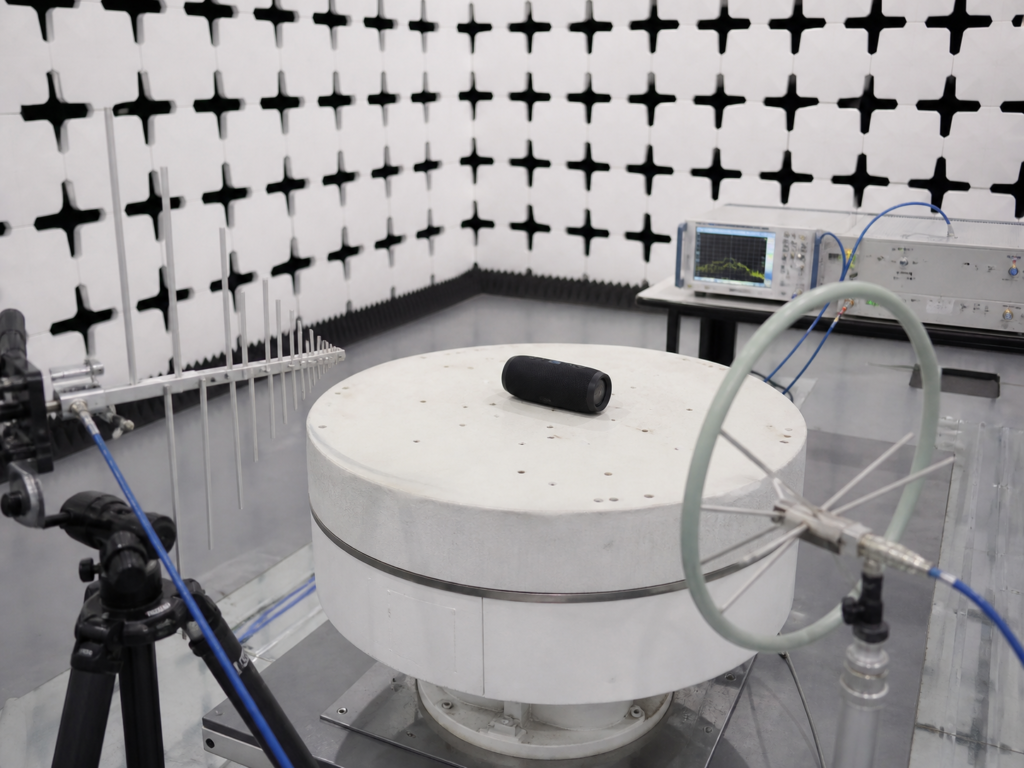
It applies to radio frequency products that require official review according to regulatory requirements, that is, the vast majority of common consumer electronics that actively transmit wireless signals, such as mobile phones, routers, Bluetooth speakers, and remote control toys. The core feature is a unique and queryable FCC ID. In addition, portable wireless devices must also pass human radio frequency exposure (SAR/MPE) assessment to ensure that radiation meets compliance limits.
Core comparison of the two compliance paths
To help you quickly distinguish, I have sorted out the core differences into a table:
| Comparison Dimension | SDoC (Supplier’s Declaration of Conformity) | Certification (certification type, with FCC ID) |
|---|---|---|
| Applicable products | Mostly unintentional radiators (wired keyboards, monitors, chargers, etc.), subject to applicable provisions | Mostly active RF products (mobile phones, routers, Bluetooth speakers, etc.), subject to applicable provisions |
| Official review requirements | No need to submit to FCC or TCB for review; the US responsible party is responsible for compliance on its own | Must pass review by an FCC-authorized TCB |
| Has FCC ID | No | Has a unique, publicly queryable FCC ID |
| Testing requirements | Testing must comply with applicable FCC rules; laboratory qualifications are confirmed according to corresponding provisions/platform requirements | Testing must be completed by an FCC-recognized testing laboratory |
| Core process | Complete testing according to rules → US responsible party issues declaration of conformity → Retain documents | Testing by FCC-recognized laboratory → TCB review → Obtain ID → Retain documents |
| Labeling requirements | No mandatory unified FCC mark required; provide compliance information according to rules | Must mark FCC ID according to rules |
Pitfall reminder for old terms
If you search for old materials online, you may see the two categories Verification and DoC, which are previous FCC rules. In the context of authorization for common consumer electronics and other devices, Verification and DoC in the old rules have been replaced or integrated by SDoC; if you see these two terms in old materials, be sure to go back to the current FCC rules and corresponding product provisions for confirmation, and do not handle them directly according to old materials.
General processing steps and basic materials
No matter which path you take, the basic process logic is the same:
- First determine the product category and confirm the applicable compliance path;
- Complete testing according to requirements: For Certification type, an effective test report must be issued by an FCC-recognized laboratory; for SDoC type, it is necessary to ensure that testing meets the requirements of corresponding rules, and test data can be used as the basis for compliance;
- Complete the compliance procedure: For Certification type, submit to TCB for review and obtain FCC ID; for SDoC type, the US responsible party issues a statutory declaration of conformity;
- Affix compliance marks according to rules, and archive and retain all documents.
The basic materials that need to be prepared include: product model and specifications, circuit schematic diagram, test report, US responsible party information (must be a US-based entity), compliance declaration or certification certificate.
What to Pay Attention to in Compliance Implementation? Labeling, Declaration, and Document Retention
Many people think that getting the report or ID is the end of the matter. In fact, if the requirements of the implementation link are not met, you may still be judged as non-compliant.
Compliance labeling requirements
The labeling requirements for the two types of products are different:
- Certification-type products: Must be marked with a unique FCC ID number according to applicable rules. In principle, it should be preferentially marked on the user-visible position of the device body, or in the form of an electronic label that complies with FCC rules; if it is impossible to mark on the body due to objective reasons such as extremely small product size or special structure, and the exemption conditions specified by the FCC are met, the ID can be marked on the packaging, manual, or other accompanying materials.
- SDoC-type products: No mandatory unified “FCC” mark or logo is required, but product identification information, compliance instructions, contact information of the US responsible party, etc. must be provided according to rules to ensure that consumers or regulators can obtain compliance-related information.
Declaration of conformity requirements
Both types of compliance require ensuring that consumers or regulators can obtain the corresponding compliance certification documents, but the specific forms are different:
- SDoC products must provide a formal supplier’s declaration of conformity, which must include statutory content such as product identification information, the name, address and contact information of the US responsible party, the regulatory provisions complied with, and compliance statements; if required by applicable provisions, platforms, or importers, the test report and its identification information can be provided together.
- Certification-type products do not need to issue a separate SDoC-style declaration of conformity. They only need to include the FCC ID, applicable compliance declaration, and necessary warnings in the accompanying materials and user manuals. The authorization information can be verified through the FCC public database.
Document retention requirements
All compliance-related documents must be properly kept and cannot be lost:
- Documents that need to be retained include: test reports, declarations of conformity, certification certificates (if any), label design drafts, etc.
- The document retention period must be confirmed according to applicable FCC regulatory provisions, and must also meet the retention requirements of platforms, importers, or contractual agreements; the US-based responsible party shall ensure that complete compliance records can be provided within the specified time when the regulatory department conducts random inspections.
- The responsible subject for retention is the US-based responsible party, that is, the importer, brand owner, or authorized representative.
How to Identify the Authenticity of FCC Compliance? A Guide to Avoiding Common Pitfalls
Whether consumers are buying products or sellers are asking suppliers for compliance documents, they must learn to identify authenticity, otherwise it is easy to fall into pitfalls.
How to verify products with FCC ID?
Products with FCC ID are the easiest to verify. Simply enter the FCC ID into the public database on the FCC official website to find the corresponding authorization record. When checking, you need to verify several core pieces of information: whether the applicant/holder can be explained in correspondence with the product’s supply chain (for example, the holder is the manufacturer and the brand owner is the seller, as long as the relationship is traceable), and whether the product model, device type, wireless frequency band, antenna and module usage conditions are consistent with the actually sold product.
There is a very common pitfall here: The FCC ID of a wireless module cannot automatically cover the complete machine. Only when the complete machine fully complies with all usage restrictions of the module certification (for example, no changes to antenna type, installation position, or transmission power range) can the module certification be used; even if the module certification is used, the complete machine may still need to separately complete other compliance assessments such as unintentional radiation and RF exposure.
It should also be noted that one FCC ID cannot by default cover other models, antenna types, transmission powers, installation methods, or revised configurations; whether a variant is within the scope of authorization coverage must be verified against the FCC authorization file, test materials, and change approval scope.
How to verify SDoC products without ID?
SDoC-type products do not have an FCC ID, so verification is a bit more troublesome: you can ask the merchant to provide the test report and declaration of conformity, and check whether the product model and US responsible party information on the report are consistent with the actual product. If it is reviewed by an e-commerce platform, materials such as label photos and declaration documents are usually also required.
5 signs of common pseudo-compliance
If you encounter these situations, it is most likely pseudo-compliance, and you must be vigilant:
- The FCC ID cannot be found on the FCC official website, or the product found is completely different from the actually sold product;
- The model on the test report, the model of the sold product, and the model on the label do not match each other;
- Products that actively transmit wireless signals (such as Bluetooth speakers, routers) only have the word “FCC” but no FCC ID;
- The supplier only gives you a so-called “FCC certificate”, but cannot tell whether it is SDoC or Certification, and there is no test report or queryable ID;
- Using the FCC ID of other products or other configurations without confirmation (commonly known as “certificate borrowing”), which is a clear illegal act with serious consequences.
Common cognitive misconceptions of ordinary users
In addition to the misconceptions about quality, safety, and entry scope that have been clarified earlier, there are several high-frequency misconceptions to pay attention to:
- Misconception 1: Having an FCC mark means genuine compliance: Wrong. The mark can be printed privately, and must be verified through official channels.
- Misconception 2: All FCC compliance has an ID: Wrong. Only Certification type has an ID, SDoC type does not. You cannot judge compliance by whether there is an ID.
- Misconception 3: Having CE certification is equivalent to having FCC certification: Wrong. CE is the EU’s entry requirement, and its regulatory scope, testing standards, and processes are different from those of the FCC, so they cannot replace each other.
- Misconception 4: Low-power/small products/only selling a few units do not need compliance: Wrong. As long as they enter the US market for sale, they are subject to regulation. Low-power products may just follow the SDoC path, not that they do not need compliance.
Core pitfall avoidance points for merchant compliance
If you are a seller doing business in the US market, you must keep these points in mind to avoid the vast majority of compliance risks:
- Never arbitrarily use the FCC ID of other products or configurations. Whether it is within the scope of authorization coverage shall be subject to official files. Unauthorized use is an illegal act.
- Retain the full set of compliance documents as required. The FCC may conduct random inspections at any time, and if you cannot produce them, you will be judged as violating the rules.
- The information of the US responsible party must be true and valid. You cannot make up a random one, otherwise if the FCC cannot contact them, it will be directly treated as a violation.
- When the core components, antennas, or design of the product are changed, be sure to re-evaluate compliance. You cannot think that having done it before is a once-and-for-all solution.
- When using a certified wireless module, check the authorized usage conditions of the module, and re-confirm compliance when product design or parameters are changed.
Intermediate Expansion: Differences Between FCC and Other Common Entry Requirements
Many people easily confuse FCC with entry requirements of other regions or other product categories. Here we compare the most common ones together, and you will be able to distinguish them after reading.
| Requirement Name | Applicable Region | Core Regulatory Scope | Common Applicable Products |
|---|---|---|---|
| FCC | United States and its territories | Electromagnetic compatibility, RF spectrum compliance | Electronic, wireless communication products |
| CE | European Union and European Economic Area | Multi-dimensional: safety, health, environmental protection, electromagnetic compatibility, etc. | Vast majority of products entering the EU |
| UL/ETL | United States (voluntary, generally required by the market) | Electrical safety (electric shock, fire, etc.) | Plug-in and battery-powered electronic and electrical products |
| FDA Regulation | United States | Safety and regulation of food, drugs, medical devices, cosmetics, etc. | Food, drugs, medical devices, electronic products with medical functions |
| ISED | Canada | Electromagnetic compatibility, RF spectrum compliance | Electronic, wireless communication products |
Several core differences to understand
- FCC vs CE: In addition to different applicable regions, the regulatory scope is very different: FCC only regulates electromagnetics and radio frequency, while CE also regulates many aspects such as safety, health, and environmental protection. The certification logic is also different: high-risk RF products under FCC require review by TCB (officially authorized body), while most CE categories are self-declared by enterprises, and only a few high-risk products require review by a notified body. The two cannot replace each other at all, and compliance must be done separately for cross-regional sales.
- FCC vs UL/ETL: Both are US-based, but they regulate completely different dimensions: FCC regulates electromagnetic interference and wireless spectrum, while UL/ETL regulates electrical safety. Electronic and electrical products sold in the US usually need to meet both FCC compliance and UL/ETL safety certification, especially plug-in products.
- FCC vs FDA Regulation: The regulated categories and regulatory logic are completely different: FCC regulates RF and spectrum compliance of electronic and electromagnetic products, while FDA is responsible for the safety regulation of food, drugs, medical devices, and cosmetics. However, some overlapping categories need to meet both sets of requirements. For example, a blood glucose meter with Bluetooth function is both a medical device and has wireless functions, so it needs to meet both FDA medical device related requirements and FCC wireless device compliance requirements; the specific FDA procedures (such as registration, listing, 510(k), etc.) need to be determined according to the product’s use and classification, and cannot be judged solely by the product name.
- FCC vs ISED: ISED is the Canadian regulatory agency, and its regulatory requirements are very similar to those of the FCC, both regulating electromagnetic compatibility and radio frequency. Products for the North American market are generally planned for both FCC and ISED compliance at the same time, which can save a lot of time and cost.
Quick distinction tips
It’s okay if you can’t remember so much, just judge according to this logic: first look at the sales market — for the US, prioritize FCC; for the EU, prioritize CE; then look at the product type — for electronic and electromagnetic products, look for FCC; for food and medical products, look for FDA; for safety products, look for UL/ETL. There is no such thing as “one certification for the whole world”. Different regions have different rules, and you must correspond to the market.
Quick Judgment Template for Beginners
Finally, we have sorted out a five-step beginner judgment template for you. When you encounter products you are unsure about, just follow the steps in order:
- Preliminary screening of product attributes: Confirm whether the product enters the US market and whether it is a controlled electronic device, and preliminarily judge whether FCC compliance is required; if unsure, check official rules or find a professional agency for assessment.
- Compliance path judgment: Check whether the product actively transmits wireless signals, and preliminarily judge the SDoC or Certification path in combination with corresponding regulatory requirements. The final determination shall be subject to applicable provisions.
- Material preparation: Prepare test reports, compliance declarations/certification documents, and US responsible party information corresponding to the path.
- Labeling implementation: Certification-type products are marked with FCC ID according to rules, and SDoC-type products provide compliance information according to rules.
- Authenticity verification: For products with ID, check the authorization record on the FCC official website, and verify whether the model, configuration, frequency band and other information are consistent; for products without ID, check the test report and declaration of conformity.
If you encounter particularly complex products (such as industrial equipment with multiple wireless functions, cross-border medical electronics, etc.), it is best to directly check the FCC’s official rule guidelines or public database, or find a formal qualified third-party compliance agency for assessment. Do not believe false propaganda such as “all-inclusive price” or “quick certification” — the core of FCC compliance is that the product itself meets regulatory requirements, not a paper certificate.