
If you sell electronic products in the US market, or want to bring electronic devices to the US for use, you have most likely heard of “FCC compliance”, but you often encounter people talking about 15B or 15C. They seem like two certification levels, and also seem to regulate different things. If you choose the wrong classification, you may be restricted from selling by e-commerce platforms, have your goods held or refused entry by US Customs, or even be subject to an FCC investigation, recall request, or fine. The specific consequences depend on the facts of the violation, product status, and enforcement procedures.
Actually, both 15B and 15C are subparts under the Part 15 rules of the US Federal Communications Commission (FCC). There is no hierarchy between them; they only differ in the types of device emissions they regulate. Part 15 is a set of operation and market placement rules formulated by the FCC for specific unlicensed radio frequency devices and related digital devices, not a unified certification requirement for all electronic products. Manufacturing, importing, selling, or using related devices within the US may trigger compliance obligations under Part 15, depending on the device type, authorization method, exemption provisions, and whether they are subject to other exclusive rules.
The subparts of Part 15 are not divided by product categories such as home appliances or digital products, but by the emission nature of the device. Several subparts that need to be understood at the introductory stage include: 15A is the general basic rule of Part 15, containing common requirements that all subparts must comply with, such as definitions, general prohibitions, and liability for harmful interference; 15B targets unintentional radiators; 15C targets intentional radiators; 15D mainly regulates specific low-power digital transmission systems, which are rarely involved in ordinary consumer electronics and do not require in-depth study. It should be noted that you cannot directly determine the applicable rules for a product solely by the name of the subpart; you must match them one by one based on the actual functions and technical characteristics of the device.
Before formally explaining the differences between the two, let’s first clarify two core concepts, which are the basis for all judgments:
- Unintentional radiator: A device that is not designed to emit radio waves, but accidentally leaks a small amount of electromagnetic waves from internal digital circuits, switching power supplies, etc. during operation, such as circuit noise generated by a computer motherboard when working.
- Intentional radiator: The core function of the device must rely on active radio wave emission to be realized, and radio emission is a necessary means for it to complete its work, such as a Bluetooth headset that transmits audio by emitting Bluetooth signals.
The core criterion for judgment is very simple: whether radio wave emission is a necessary means for the device to achieve its main function.
In addition, there is a general principle that needs to be clarified in advance: some specific functions of devices have exclusive FCC rules (for example, the cellular communication function of mobile phones is subject to Part 22/24/27, and some industrial, scientific, and medical radio frequency devices are subject to Part 18). Such functions shall be subject to the exclusive rules first, but the wireless modules, digital circuits, and other parts of the whole machine that are not covered by the exclusive rules may still be subject to Part 15. For example, the cellular communication function of a smartphone follows exclusive rules, but the Bluetooth, Wi-Fi modules, and motherboard digital circuits inside still need to be evaluated according to Part 15 requirements. It cannot be assumed that the existence of exclusive rules completely excludes the application of Part 15.
Full Explanation of the Scope of Application of FCC Part 15B
Core Regulated Object: Unintentional Radiators
The regulated object of 15B is unintentional radiators under Part 15, that is, devices whose core functions do not require active radio wave emission to be realized.
There is a very simple auxiliary judgment technique: if all possible wireless functions (Bluetooth, Wi-Fi, remote control, etc.) of the device are turned off or removed, and the main function of the device can still be used normally, then it most likely falls into the category of unintentional radiators. However, it should be noted that whether it is ultimately necessary to perform compliance procedures in accordance with 15B depends on two prerequisites: first, the device contains digital circuits that meet the rule definition or related circuits that generate unintentional radiation; second, the device is not within the scope of exemption and has no other exclusive rules governing the corresponding part.
Common Products Involving 15B
The following categories, if they contain digital circuits or unintentional radiation circuits subject to Part 15B, and do not apply exemptions or other exclusive rules, usually need to be evaluated according to 15B (cases are only for demonstrating the judgment logic, and do not mean that all products of the same category are automatically applicable):
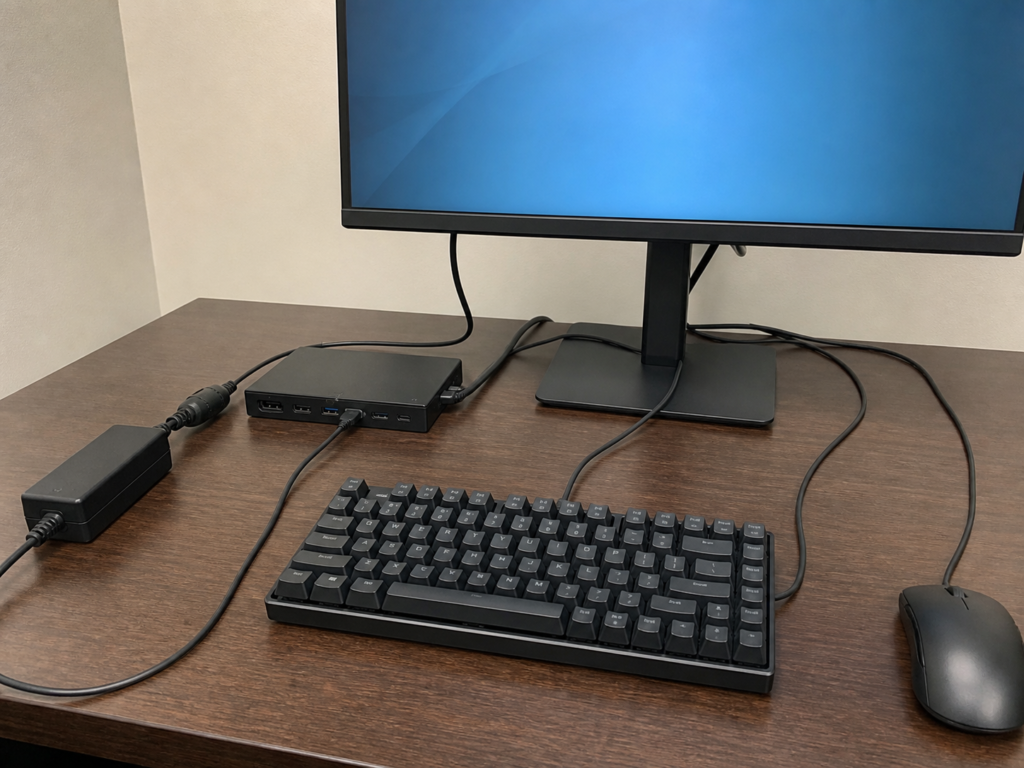
- Wired digital products: wired mice and keyboards, monitors, desktop computer hosts, USB docking stations, wired headsets, etc.;
- Home appliances: refrigerators without wireless functions, washing machines, ordinary LED lamps, power adapters, etc.;
- Other categories: wired set-top boxes, broadcast receiving devices with only receiving functions, etc.
Here is a special note on devices with only receiving functions: devices with only receiving functions are not intentional radiators, so they do not apply to 15C, but this does not mean they are automatically under the jurisdiction of 15B. Whether it is necessary to perform the 15B authorization procedure depends on whether there are regulated digital circuits inside the device, and whether the exclusive rules for receivers or exemption provisions apply — for example, a pure analog FM radio may meet the exemption conditions, while a network radio with digital decoding and a smart display may need to be evaluated according to 15B for its digital circuit part.
Regulatory Focus
The core of 15B regulation is whether the electromagnetic waves leaked by the device will interfere with other legal radio communications, which are specifically divided into two categories:
- Airborne radiation interference: electromagnetic noise directly propagated by the device through space;
- Power line conducted interference: electromagnetic noise from the device enters the power grid along the power line, interfering with the normal operation of other plugged-in devices.
The 15B rules themselves are set for unintentional radiators and do not involve the assessment of wireless transmission performance. These leaked interferences usually come from internal high-speed digital circuits, switching power supplies, high-speed interfaces (such as USB 3.0, HDMI), etc.
Internal Classification: Class A and Class B
Within 15B, according to the expected use environment of the device, it is divided into Class A and Class B, with different limit requirements:
- Class A: Applicable to devices expected to be used in commercial, industrial, or business environments, with relatively lenient interference limits;
- Class B: Applicable to devices expected to be used in residential environments, with stricter interference limits.
The core basis for judging the classification is the manufacturer’s expected use environment and marketing method: if the product is sold for residential environments, or marked as household on the manual/package, even if some users use it in industrial scenarios, it must be implemented in accordance with Class B requirements, and the classification cannot be adjusted solely based on actual sales channels or customer types.
Application Boundaries
Situations where 15B does not have jurisdiction or does not directly apply include:
- The active radio transmission part in the device needs to be evaluated according to 15C or other applicable transmission rules, and is not within the jurisdiction of 15B; however, unintentional radiation sources such as digital circuits, power supplies, and interfaces in the whole machine may still need to be evaluated according to 15B (see the advanced chapter later for the dual requirements of hybrid devices);
- For specific functions governed by exclusive FCC rules, the exclusive rules shall apply first (see the introduction for the principle of exclusive rules);
- Devices that meet exemption provisions such as 15.103 do not need to perform the 15B compliance authorization procedure, and the specific details need to be checked against the current FCC rules.
Full Explanation of the Scope of Application of FCC Part 15C
Core Regulated Object: Intentional Radiators
The regulated object of 15C is intentional radiators under Part 15, that is, devices designed to achieve core functions through active radio wave emission.
The corresponding auxiliary judgment technique is: if all wireless transmission functions of the device are turned off, its core communication, remote control, or data transmission functions will be directly missing, and the designed main purpose cannot be achieved, then it most likely falls into the jurisdiction of 15C. Like 15B, the final applicable conclusion still needs to be confirmed in combination with the device’s circuit design, operating frequency band, and whether it meets exemption or exclusive rules.
Commonly Covered Products
Most products covered by 15C have clear wireless communication, remote control, or data transmission functions. Devices with different functions and different technical parameters are subject to different specific provisions — for example, some remote control devices operating in the 315MHz and 433MHz frequency bands may need to check Section 15.231; 2.4GHz short-range communication devices using frequency hopping or digital modulation may involve Section 15.247; other low-power, narrowband transmission devices may apply to provisions such as 15.249. Which rule ultimately applies needs to be confirmed in combination with all technical conditions such as device purpose, modulation method, bandwidth, and transmission duration. There is no fixed correspondence between frequency bands and provisions, and in particular, 5GHz Wi-Fi cannot be generally classified into a specific provision.
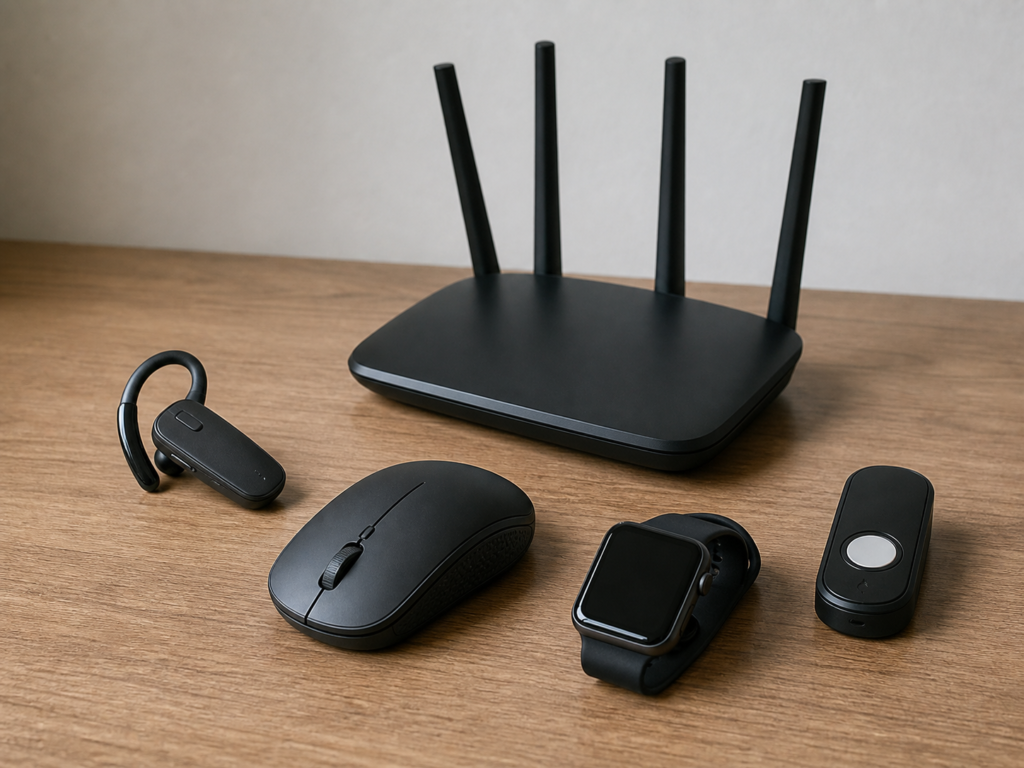
Common product categories regulated by 15C include:
- Short-range communication: Bluetooth headsets, Wi-Fi routers, wireless mice and keyboards, smart watches, wireless speakers, etc. These devices realize core functions such as audio transmission, network connection, and command input by emitting radio signals of corresponding frequency bands;
- Remote control: remote control toys, car remote keys, wireless doorbells, remote control sockets, etc. These devices realize remote control functions by emitting low-frequency radio frequency signals;
- Other categories: RFID card readers, low-power unlicensed walkie-talkies, smart home sensors, etc., which complete identity recognition, short-range intercom, or environmental data collection and transmission by emitting radio signals.
Regulatory Focus
The core regulatory object of 15C is the intentional transmission part. The device must meet all requirements of the applicable Part 15 frequency band and corresponding provisions. The assessment parameters include operating frequency band, transmission power, occupied bandwidth, out-of-band spurious emissions, antenna gain, etc. Some devices also need to meet radio frequency exposure requirements in accordance with the corresponding provisions (not all devices are subject to the same RF exposure rules).
It should be noted that “unlicensed” does not mean that you can transmit arbitrarily in any frequency band. You must fully meet all the conditions of the corresponding provisions to be compliant. You cannot judge whether you meet the 15C requirements solely based on the frequency band or power level.
In addition, the 15C rules do not automatically cover the unintentional radiation requirements of the whole machine: if the device also contains unintentional radiation sources such as digital circuits and switching power supplies, it is necessary to separately confirm the applicable requirements of Part 15B according to the device attributes (see the advanced chapter later for the requirements of hybrid devices).
Basic Rule Logic
The specific requirements of 15C are formulated separately according to radio frequency bands and device types. The limits are jointly determined by multiple factors such as operating frequency band, device type, bandwidth, transmission method, power, and antenna. You must check the applicable FCC regulations one by one, and cannot apply rules across frequency bands.
If the wireless module used by the device has obtained FCC certification separately, the whole machine can use the module’s certification results to simplify part of the transmission tests on the premise of meeting the module’s authorized use conditions, but it cannot directly exempt all 15C-related evaluations. For specific restrictions, please refer to the description in the comparison chapter later.
Application Boundaries
Situations where 15C does not have jurisdiction or does not apply include:
- Functions or components that do not actively emit radio waves at all are excluded from 15C jurisdiction, and it is necessary to further determine whether they fall under 15B, other rules, or the scope of exemption;
- High-power radio devices that require a formal FCC license, such as broadcast transmitters and professional walkie-talkies, are governed by special rules and do not apply to the unlicensed rules of 15C;
- Very short-range micro-power experimental equipment and some scientific research-specific equipment may meet exemption provisions, and the specific details need to be checked against the latest official FCC rules.
Core Difference Comparison: Clarifying the Differences from 6 Dimensions
To make it more intuitive for you to see the differences in the scope of application and related requirements between the two, we have compiled a comparison table of 6 dimensions (all comparisons are based on the basic scenario of single-function devices, and hybrid function devices need to be split and judged according to the method in the next section):
| Comparison Dimension | FCC Part 15B | FCC Part 15C | Special Case Description |
|---|---|---|---|
| Core Judgment Criterion | For unintentional radiators under Part 15, the core function does not rely on active radio transmission | For intentional radiators under Part 15, the core function relies on active radio transmission | For devices that contain both types of emissions, it is necessary to confirm the applicable requirements of both types of rules separately, not a choice between the two |
| Covered Product Logic | Devices that contain circuits generating unintentional radiation and have no active wireless transmission function (need to meet the prerequisites of Part 15 jurisdiction and have no exemption) | Devices with active wireless transmission (communication/remote control/data transmission) functions (need to meet the prerequisites of Part 15 jurisdiction and have no exemption) | If a product adds or removes wireless functions, the governing rules will be adjusted accordingly |
| Regulatory Focus | Only assesses unintentional radiation and conducted interference, does not involve wireless transmission parameters | Core assessment of intentional transmission parameters (frequency, power, bandwidth, spurious emissions, antenna, etc.), if the device contains unintentional radiation sources, the 15B requirements need to be confirmed separately | After a device that originally only applied to 15B adds wireless functions, it needs to add the corresponding 15C transmission parameter evaluation |
| Compliance Authorization Path | Depending on the device category and specific provisions, exemption, SDoC (Supplier’s Declaration of Conformity), or certification may apply; devices within the SDoC scope shall declare compliance by the responsible party and retain technical documents, no FCC ID required | Most intentional radiators need to obtain equipment certification, issued by a TCB (Telecommunication Certification Body) recognized by the FCC, and obtain a unique FCC ID after passing; specific requirements need to be checked against the corresponding frequency band and device provisions | Some specific types of unintentional radiators require third-party certification; using certified wireless modules that meet the integration conditions can simplify the intentional transmission test of the whole machine |
| Exemption Rules | Exemption provisions are found in sections such as 15.103, which may apply to some specific digital devices, custom industrial test equipment, etc., there is no general power threshold | Exemption provisions are found in the corresponding frequency band provisions, which may apply to some specific micro-power, scientific research-specific equipment, etc., need to be checked one by one | The FCC does not have a unified product exemption list that can be applied directly without specific provisions. All exemptions must meet all the conditions of the corresponding provisions, and cannot be judged solely by product type or power level |
| Common Compliance Risks | Interference caused by excessive circuit noise, cable conduction, and housing radiation | Excessive transmission frequency/power, non-compliant wireless configuration changes | Hybrid function devices face both types of risks at the same time, and failure to meet either is a violation |
Supplement on SDoC: The Supplier’s Declaration of Conformity (SDoC) is a compliance liability method under Part 15 for unintentional radiators that meet the specified categories, not a shortcut for “low-risk products to choose casually”. The responsible party must complete the test as required, retain complete technical documents, ensure that the product meets the limit requirements, and must be able to provide complete materials when the FCC conducts spot checks.
Supplement on wireless module certification: For wireless modules that have obtained FCC certification separately, their certification results are bound to specific antennas, installation methods, power, and use conditions. When the whole machine integrates such modules, if it meets the integration conditions of the module authorization, some intentional transmission tests can be simplified, but the host housing, shielding structure, power supply, and surrounding digital circuits may still change the module’s transmission performance. Therefore, the whole machine still needs to complete the corresponding 15B evaluation and confirm that the module installation fully meets the official authorization conditions.
Intermediate Advanced: Hybrid Devices and Change Judgment
The above comparisons are all for simple devices with a single function, but in the actual market, many products have both wireless transmission and ordinary digital circuits, which are hybrid function devices. This is also the scenario where judgment errors are most likely to occur. Next, we will specifically explain the judgment logic of such devices, and which changes will affect the final compliance conclusion.
What is a Hybrid Function Device
A hybrid function device refers to a whole machine that contains both a “wireless transmission part” and an “ordinary digital/power part”. Smart home appliances, laptops, Wi-Fi routers, smart speakers, etc. that we come into contact with daily all belong to this type of device.
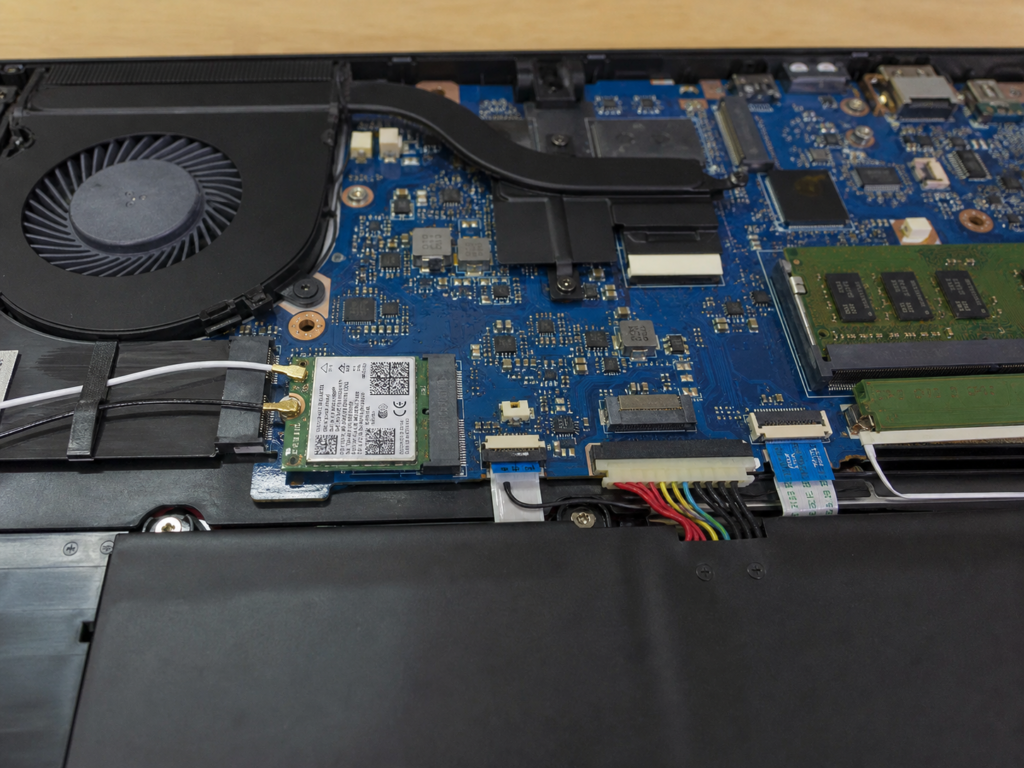
Split Judgment Method
The core logic for judging hybrid devices is “split evaluation and simultaneous compliance”, do not use the “choose one” approach:
- Wireless transmission part: evaluate parameters such as frequency, power, spurious emissions, and antenna according to 15C requirements;
- Ordinary circuit part (motherboard, power supply, interface, display, etc.): evaluate unintentional radiation and conducted interference according to 15B requirements.
The two types of requirements are not inclusive, and must be met at the same time to be compliant.
Many people have the misunderstanding that “if a certified wireless module is used, the whole machine does not need to worry about 15C”. In fact, the FCC certification of the module is completed under specific test conditions. After being installed in the whole machine, the shielding/reflection of the housing, interference from surrounding circuits, and changes in power supply may change the transmission performance of the module. Therefore, even if the module has an FCC ID, the whole machine must confirm that the use conditions of the module fully meet the official authorization requirements, and cannot directly exempt all 15C evaluations.
Which Changes Will Change the Applicable Conclusion
When the hardware, firmware, or positioning of a product changes, the original compliance conclusion may become invalid. You can check according to the type of change:
- Changes affecting 15C compliance: Replace the wireless module, RF chip, or antenna; adjust the transmission power, operating frequency band, or modify the wireless firmware; change the installation position, shielding structure, or power supply method of the module. After such changes, it is necessary to recheck the 15C transmission parameter requirements and the authorized use conditions of the wireless module used, and if necessary, re-perform 15C-related tests.
- Changes affecting 15B compliance: Change the motherboard layout, switching power supply design, or high-speed interface configuration; replace the housing material or shielding structure; add or remove internal circuit modules. After such changes, it is necessary to re-evaluate the level of unintentional radiation and conducted interference to confirm whether it still meets the 15B requirements.
- Changes affecting classification: If the expected use scenario of the product changes from household to industrial/commercial, or the marketing method and packaging labeling change from “household” to “industrial use”, it is necessary to reconfirm the Class A/Class B classification of 15B, and cannot continue to use the original classification conclusion.
Practical Method: 4-Step Quick Judgment of Applicable Rules
After mastering the basic rules and the logic of hybrid devices, you can use the following 4-step process to quickly judge the applicable rules for most consumer electronics. The final conclusion still needs to be confirmed in combination with specific provisions.
Step 1: Split Functions and Prioritize Matching Exclusive Rules
Operation method: First split all functions of the product into independent modules, and check the FCC rules corresponding to each function one by one.
Judgment conclusion: If a function has exclusive rules (for example, cellular communication is subject to Part 22/24/27, and some ISM RF devices are subject to Part 18), the exclusive rules shall apply first to this function, and Part 15 shall not be directly applied. The remaining functions not covered by exclusive rules will then enter the Part 15 judgment process (refer to the smartphone example in the introduction).
Step 2: Determine Whether There is Active Radio Transmission
Operation method: For functions within the scope of Part 15, first confirm whether there is active radio transmission designed to achieve the core function (including communication, remote control, data transmission, etc.). Auxiliary judgment technique: simulate turning off all wireless functions to see if the core function of the corresponding function can be realized normally.
Judgment conclusion: If there is active transmission and there are no applicable exclusive rules or exemptions, it enters the 15C evaluation scope; if there is no active transmission, 15C is usually excluded.
Supplementary note: No active transmission does not mean that 15B is automatically applicable. It is still necessary to further determine whether it falls into the category of unintentional radiators and whether it meets exemptions or other rules. In addition, pay attention to two points: first, modules with only receiving functions are not intentional radiators and do not apply to 15C; second, do not judge by whether there is an external antenna. On-board, built-in, and hidden antennas all belong to active transmission antennas. As long as the active transmission function is designed, even if the antenna is not visible, it is an intentional radiator.
Step 3: Split the Evaluation Dimensions of Hybrid Devices
Operation method: If the second step determines that there is an active transmission function applicable to 15C, split the device into a “wireless transmission part” and an “ordinary circuit part” according to the splitting method in the previous section.
Judgment conclusion: The wireless transmission part corresponds to the intentional transmission parameter requirements of 15C, and the unintentional radiation of ordinary circuits (motherboard, power supply, interface, display, etc.) corresponds to the requirements of 15B. Both types of requirements need to be met.
Supplementary note: If the ordinary circuit part meets the exemption provisions, it is not necessary to perform the 15B authorization procedure, but it is still necessary to ensure that no harmful interference is generated. For example, for a smart refrigerator with Wi-Fi, the Wi-Fi module is evaluated according to 15C, and the unintentional radiation of the refrigeration, control, and lighting circuits is evaluated according to 15B.
Step 4: Check Specific Provisions and Special Situations
Operation method: After completing the preliminary classification of the first three steps, check the details one by one against the current FCC rules.
Judgment conclusion: Focus on confirming two core points: first, whether the device meets the corresponding exemption provisions (if so, there is no need to perform the corresponding authorization procedure, but it still needs to meet the basic requirement of not generating harmful interference); second, if a certified wireless module is used, it is necessary to check the official authorized use conditions of the module to confirm that the installation method, antenna, power supply, etc. all meet the requirements.
Supplementary note: If you encounter boundary situations and are unsure, be sure to consult a third-party compliance agency recognized by the FCC, do not presume on your own, to avoid subsequent compliance risks.
Typical Cases and Pitfall Avoidance Guide
To help you implement the previous rules, we have compiled several common product cases and the most common cognitive misunderstandings, so that you can compare and judge.
Single-Function Device Judgment (Only Applicable to One Type of Rule)
This type of device only has a core single function and no additional wireless transmission module, so the judgment logic is relatively simple:
- Pure wired monitor: Only involves 15B. No active wireless transmission function, the core display function does not rely on radio; the internal driver board and high-speed interface will generate unintentional radiation, which needs to be evaluated according to 15B.
- Wired mechanical keyboard: Only involves 15B. No wireless function, the key input function is realized by wired transmission; the internal digital control circuit will generate a small amount of unintentional radiation, which needs to be evaluated according to 15B.
- Pure analog FM radio: Usually exempt from 15B authorization. Only has receiving function, no active transmission; if there is no regulated digital circuit inside, it may meet the exemption provisions, but it still needs to comply with the basic requirement of not generating harmful interference.
- Ordinary power adapter: Only involves 15B. No active transmission function, the core function is voltage conversion; the internal switching power supply will generate conducted and radiated interference, which needs to be evaluated according to 15B.
Hybrid Function Device Judgment (Applicable to Both 15B+15C)
This type of device has both active transmission and ordinary circuits, and needs to meet both types of requirements at the same time. When judging, you can correspond to the functions of the two parts respectively:
- Bluetooth headset: Applicable to both 15C+15B. Bluetooth audio transmission is the core function, which belongs to intentional radiators and is under 15C; the unintentional radiation of internal audio decoding and battery management circuits needs to be evaluated according to 15B.
- Wi-Fi router: Applicable to both 15C+15B. Wi-Fi network transmission is the core function, which belongs to intentional radiators and is under 15C; the unintentional radiation of internal processors, switching interfaces, and power circuits needs to be evaluated according to 15B.
- Smart light bulb with remote control: Applicable to both 15C+15B. Bluetooth/Zigbee wireless control is one of the functions, which belongs to intentional radiators and is under 15C; the unintentional radiation of internal LED driver and dimming circuits needs to be evaluated according to 15B.
- Laptop with Wi-Fi: Applicable to both 15C+15B. Wi-Fi/Bluetooth modules belong to intentional radiators and are under 15C; the unintentional radiation of the motherboard, display, interface, and power supply needs to be evaluated according to 15B.
Boundary Situations (Need to Check Rules Extra)
Some products have special functions and cannot be judged directly by name. They need to be split into functions and checked one by one:
- Wireless charger: Cannot be directly classified by “wireless charging” alone. If it is a model that only performs near-field energy transmission through magnetic induction/magnetic resonance, without any active communication, pairing, or control transmission, it is necessary to evaluate whether 15B applies according to the unintentional radiation of the internal switching power supply and control circuit; if it has its own Bluetooth pairing, wireless regulation, or data transmission function, its active transmission part needs to be additionally evaluated according to 15C.
- Industrial wireless sensor: Need to split functions first and judge one by one. First confirm the frequency band, modulation method, and power parameters of its wireless transmission part, confirm whether it falls under the jurisdiction of 15C of Part 15, and then check whether the industrial-related exemption provisions apply; the measurement and control circuit part of the sensor is evaluated according to the 15B unintentional radiation rules. If the device is an industrial RF device with exclusive rules, the exclusive rules shall apply first, and it cannot be generally considered that a “higher level certification” is required.
High-Frequency Cognitive Misunderstandings and Pitfall Avoidance Methods
Many people have fixed misunderstandings about the judgment of 15B and 15C. Here are the five most common ones to help you avoid pitfalls in advance:
- Misunderstanding 1: After getting 15C certification, you don’t need to worry about 15B
Truth: 15C only regulates the parameter requirements of the wireless transmission part. The unintentional radiation generated by the digital circuits, power supplies, interfaces, etc. of the whole machine still needs to meet the 15B requirements. The two are not a choice between one or the other.
Pitfall avoidance: Hybrid function devices must confirm both 15C and 15B compliance requirements at the same time, and cannot only do one of them. - Misunderstanding 2: Divided by product category (home appliances belong to 15B, digital products belong to 15C)
Truth: The division standard of Part 15 subparts is the emission nature of the device, which has nothing to do with product categories — whether it is home appliances or digital products, as long as there is an active transmission function, it involves 15C; if not, it only involves 15B.
Pitfall avoidance: Don’t look at the product name or category, directly judge by whether the core function relies on active radio transmission. - Misunderstanding 3: Low-power devices must belong to 15B / do not need certification
Truth: As long as radio waves are actively emitted to achieve the core function, even if the power is very small, it falls within the jurisdiction of 15C; low power does not mean exemption, and whether it is exempt depends on all the conditions of the specific provisions.
Pitfall avoidance: First judge the emission nature (intentional/unintentional), then check the official exemption list, do not draw conclusions solely based on power level. - Misunderstanding 4: If the wireless module has an FCC ID, the whole machine does not need to worry about compliance
Truth: The FCC certification of the module is bound to specific antennas, installation methods, power, and use conditions. After being installed in the whole machine, changes in the housing, surrounding circuits, and power supply may change the transmission performance of the module; moreover, the unintentional radiation of the whole machine still needs to meet the 15B requirements.
Pitfall avoidance: First check the official authorized use restrictions of the module to confirm that the whole machine installation meets the conditions, and at the same time, the 15B evaluation of the whole machine still needs to be completed. - Misunderstanding 5: If there is no external antenna, it only belongs to 15B
Truth: On-board, hidden, and built-in antennas all belong to active transmission antennas. As long as the device is designed with the function of actively emitting radio waves, even if the antenna is not visible, it is an intentional radiator and involves 15C.
Pitfall avoidance: Don’t judge by appearance. Check whether there is a wireless module inside the product, or see if there are active transmission functions such as wireless, remote control, Bluetooth/Wi-Fi in the function description.
Exclusive Pitfall Avoidance Reminder for Cross-Border Sellers
If you are a cross-border seller doing business in the US market, there are several exclusive points to note:
- Do not copy the certification type of peers. You need to judge according to the actual functions and technical parameters of your own products. Even if the appearance is exactly the same, if the internal wireless module or circuit is different, the applicable rules may be different.
- Different regional versions of the same product (such as domestic version and US version) may have different wireless configurations (such as different supported frequency bands and power limits), and the same FCC certification cannot be shared.
- Do not miss 15B or 15C for hybrid function products, otherwise you may face risks such as platform sales restrictions and customs detention. The specific consequences depend on the facts of the violation and enforcement procedures.
Summary
At this point, you have mastered the core judgment logic of the scope of application of FCC Part 15B and 15C. To sum up, after learning these contents, you can:
- Accurately distinguish between intentional radiators and unintentional radiators, and quickly judge the corresponding Part 15 sub-rules for ordinary wired/wireless products;
- Identify the dual compliance requirements of hybrid function devices, and clarify that 15B and 15C are not hierarchical, nor are they a choice between one or the other;
- Initially judge the applicable rules of the product according to the 4-step process, and avoid the five most common classification misunderstandings;
- When encountering boundary situations such as wireless chargers and industrial sensors, know to split functions and check the corresponding rules, and consult a professional agency for verification when unsure.
Since FCC rules are adjusted from time to time, especially the requirements and exemption provisions for specific frequency bands, if it involves special categories or boundary scenarios, it is recommended to refer to the current rules published on the FCC official website and the opinions of professional compliance agencies.