
If you are a cross-border seller operating in the EU market, or are planning to sell electronic products to the EU, you have most likely heard of the term “EPR” — you may have received a notice from the platform requiring you to upload compliance qualifications, or heard from peers that their products were removed from shelves due to non-compliance. Many people who are new to this find the rules complex and full of jargon, unsure whether their products need to comply, and who should be responsible. This article explains the scope of application, responsible entities, and common pitfalls of EPR for EU electronic products from beginner to advanced levels. Even if you have zero prior knowledge, you will be able to make basic judgments on your own after reading it.
First, Understand the Core Logic of EPR for Electronic Products
Let’s first clarify the most basic concepts and logic thoroughly. You don’t need to memorize terms by rote; once you understand the core, you can apply it to other cases.
EPR stands for Extended Producer Responsibility. In plain terms, it means “whoever first places a product on the market shall pay for and be responsible for the recycling and treatment of the product after it is discarded” — this extends the producer’s responsibility from the production and sales links to the end of the product’s life cycle after disposal.
For EPR related to electronic products, there is a unified framework regulation at the EU level: the Waste Electrical and Electronic Equipment Directive (referred to as the WEEE Directive, current version 2012/19/EU). It is important to note that WEEE is a directive at the EU level, not a directly applicable unified regulation. It can only be implemented after each member state transposes it into national law. Therefore, specific registration channels, product classification standards, fee standards, reporting cycles, and labeling requirements may vary among EU member states, which is the core reason many beginners make mistakes.
Many people ask: The wireless headphones I sell come with batteries and packaging, which type of EPR do I need to comply with? In fact, these three are parallel and independent compliance systems, and their responsibilities cannot replace each other: WEEE covers the electronic product itself, that is, the physical parts with electronic functions such as the headphone body and circuit board; Battery EPR covers the lithium battery in the headphones, whether it is built-in, bundled, or sold separately; Packaging EPR covers packaging materials such as the product paper box for the headphones and the outer shipping box, which is triggered by almost all goods sold to the EU. The same product may trigger three types of EPR requirements at the same time, and each needs to be complied with separately.
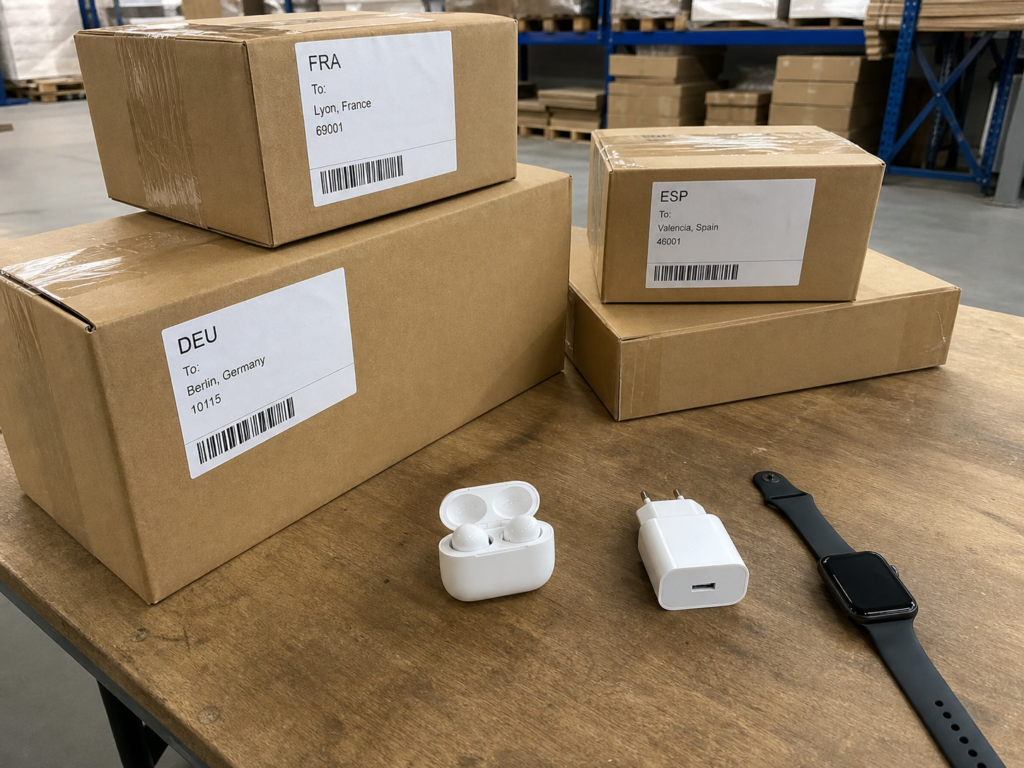
There are three main reasons why electronic products are a high-risk area for EPR compliance: First, electronic products are updated quickly, generate a large amount of waste, and contain many hard-to-recycle or even toxic materials such as lead and mercury, so EU regulatory priority has always been high; Second, cross-border online sales account for a high proportion, and many sellers sell to multiple EU countries at the same time, so it is easy to ignore the differences in rules between countries and think that complying in one country is enough; Third, the review of e-commerce platforms is often implemented earlier than official supervision. As long as you do not upload compliance qualifications, related products will be directly removed from the shelves before the authorities even contact you.
Beginners are most prone to three core misunderstandings, which are corrected here in advance to avoid detours:
First, it is not only EU local enterprises that need to comply — as long as you are a business entity selling applicable products to the EU market, even if your company is registered outside the EU, you must abide by the EPR rules.
Second, not all products with electricity need EPR — WEEE has a clear scope of application and a statutory exclusion list. For example, active medical electronic devices implanted in the human body are excluded, so it is not that any product with electricity needs compliance.
Third, registration in one EU country is not valid across the entire EU — the vast majority of EU member states require separate registration, and there is almost no cross-country mutual recognition mechanism. Usually, you need to register for EPR in as many countries as you sell to.
Quick Judgment: Which Electronic Products Require EPR Compliance
To determine whether an electronic product requires WEEE-type EPR compliance, the core logic is “first check eligibility, then check exclusions”: first look at the three eligibility criteria, then check the statutory exclusion list, and finally confirm with the specific rules of the target member state.
Three Core Eligibility Criteria
The first is the functional criterion: the core function of the product relies on electric current or electromagnetic fields, or the product itself is used to generate, transmit, or measure electric current/electromagnetic fields — for example, power banks store electricity, and chargers transmit electricity, both of which meet the requirement.
The second is the voltage threshold: the rated voltage does not exceed 1000V AC or 1500V DC. Ordinary civilian and commercial electronic products are basically within this range, so this threshold is actually very low, and most common electronic products can meet it.
The third is the behavioral criterion: the product is first placed on the market of the target EU member state through business activities, whether online or offline, whether through sales, free gifts, or other forms of supply — “placing on the market” here refers to the business activity of first introducing the product into the market of that country, and is not equivalent to the physical entry of goods.
Classification of Common Applicable Products
Many people easily mistake daily commercial classifications for statutory classifications. In fact, the WEEE Directive stipulates six major statutory categories, which are basically used as the basis for reporting by member states, with only minor adjustments in details:
1. Temperature exchange equipment: such as refrigerators, freezers, air conditioners, ovens, heat pumps, etc., electronic devices whose core function is to regulate temperature;
2. Screens and display equipment: such as TVs, computer monitors, tablet computers, devices with a screen area larger than 100 cm², all fall into this category as long as their core function is display;
3. Luminaires: such as LED lights, desk lamps, electronic ballasts, smart lighting controllers, etc., electronic devices used for lighting;
4. Large equipment: refers to electronic devices with an external dimension exceeding 50 cm, such as washing machines, large power tools, vending machines, photovoltaic panels, surveillance cameras, etc.;
5. Small equipment: refers to electronic devices with an external dimension not exceeding 50 cm that do not belong to the above categories, such as hair dryers, coffee makers, electric toothbrushes, power banks, air fryers, electric screwdrivers, remote control toys, electronic blood pressure monitors, etc.;
6. Small IT and telecommunications equipment: refers to IT and communication devices with an external dimension not exceeding 50 cm, such as mobile phones, laptops, headphones, chargers, routers, game consoles, smart watches, etc.
In actual reporting, the specific classification shall be implemented in accordance with the official rules of the target member state. Some countries will make more detailed divisions based on product use and weight, so do not directly apply commercial classifications to statutory categories.
Easily Overlooked Applicable Products
There are several types of products that are easily overlooked by sellers, who think they do not need compliance, but in fact most of them are within the scope of application:
For example, portable electronic devices with batteries, such as TWS headphones and smart watches, many people think only battery EPR is needed, but in fact they are electrical and electronic equipment themselves and also require WEEE compliance;
Another example is independently usable electronic accessories, such as separately sold chargers, Bluetooth headphones, and remote controls. As long as they can independently realize electronic functions, they need separate compliance;
There are also independent electronic items in sets or gift boxes, such as smart speakers included in holiday gift boxes. The speaker itself must also meet EPR requirements;
In addition, private label, OEM, and white label electronic products, regardless of whether they have an official brand, need to comply as long as you place them on the market under your own brand;
Even cross-border electronic products sold in small batches for trial, even if only a dozen units are sold as a test, are considered commercial placement and require compliance — the vast majority of member states have no minimum sales threshold.
Judgment Rules for Boundary Products
Some products are on the gray boundary and are not easy to judge directly. You can check them one by one according to the思路 of “first determine the function, then look at the scenario, and finally verify the country”, and do not draw conclusions based on a single characteristic:
• Non-electronic main products with auxiliary electronic functions: such as sofas with electric massage functions, mechanical safes with electronic timing. First look at the core function of the whole machine — if the core function relies on electric current or electromagnetic fields, it directly belongs to electrical and electronic equipment; if the core function is non-electronic and the electronic function is only auxiliary, then check whether the electronic components can be separately disassembled and discarded. The specific judgment standard shall be subject to the rules of the target member state, and some countries will classify according to the use of the whole machine.
• Separately sold cable accessories: Ordinary passive data cables (such as charging cables and USB transmission cables with only copper wires and no electronic chips) only passively transmit current or signals, and usually do not belong to electrical and electronic equipment; active cables (such as HDMI to USB cables with conversion chips, cables with signal amplification functions) may require compliance due to their independent electronic functions, and the specific implementation shall be subject to the interpretation of the target country.
• Repair parts: If they are internal components only used for repairing specific equipment and not placed on the end market as separate finished products (such as motherboards and spare screens for mobile phone repair), they usually do not need separate compliance; if they are finished parts that are individually packaged, sold separately, and have independent electronic functions (such as separately sold Bluetooth modules and power bank motherboards), they may fall within the scope of application, and need to be judged in combination with the placement scenario and target country rules.
• Industrial-specific electronic equipment: Most industrial electronic equipment still falls within the scope of WEEE, and only equipment that meets the statutory definition of “large fixed industrial tools/installations” may be excluded — this type of equipment is usually large, fixed in a specific location, used for a long time, and can only be disassembled and moved by professionals. Not all industrial equipment is exempt, and the specific situation needs to be confirmed according to the rules of the target country.
• Pure software or digital services: such as video memberships, APP download codes, online courses and other products without physical electronic hardware, do not belong to electrical and electronic equipment and will not trigger WEEE-type EPR.
Scope of Statutorily Excluded Products
The WEEE Directive has clear unified exclusion clauses, which are transposed and implemented by member states, and exemptions are not arbitrarily decided. Common exclusions include:
• Equipment specially designed for military use, and components that are part of military equipment and can only work with it (ordinary police and civilian security electronic equipment usually still need to comply);
• Components that are part of excluded equipment (such as aircraft, railway rolling stock, motor vehicles, etc.) and can only work with that equipment;
• Filament light bulbs;
• Large fixed industrial tools and large fixed installations that meet the statutory definition;
• Means of transport such as passenger/cargo vehicles, trains, ships, and aircraft within the scope of the EU Motor Vehicle Directive, as well as some non-road mobile machinery for professional use;
• Prototype equipment used only for research and development purposes and provided only to enterprises;
• Active implantable medical devices (such as pacemakers), as well as some specific medical devices (need to be judged according to the relevant rules of medical devices in the target country).
A special reminder here: photovoltaic panels usually belong to the large equipment category of WEEE and are not within the scope of exemption. Do not mistakenly think that compliance is not required just because they are for “special purposes”.
Who is Responsible? Rules for Determining EPR Responsible Entities
After figuring out whether the product needs to comply, the next step is to determine who is responsible. The core logic for determining the EPR responsible entity is actually very simple: it does not depend on where your company is registered, but on whether you are a business entity that “first places the product on the market of the target member state” as defined by the law of the target member state. The producer identity shall be determined in accordance with the law of the target member state and the specific transaction chain. The same product in the same member state may involve different obligations of multiple entities, but the core producer responsibility is usually borne by the entity that first places it on the market.
According to different sales chains, there are four common types of statutory producers (i.e., entities that bear core EPR responsibilities):
The first type is EU local manufacturers, that is, enterprises that produce their own brand electrical and electronic equipment within the EU. Such entities need to bear the responsibility of the whole process, including all links such as registration, reporting, payment, and recycling.
The second type is own-brand sellers, that is, entities that sell electrical and electronic equipment produced by third parties within the EU under their own brand — even if you do not have a factory and just sell goods under your own brand, you are a statutory producer and need to bear full responsibility.
The third type is EU importers, that is, enterprises that import electrical and electronic equipment from third countries into EU member states for sale. Special attention should be paid here: importers themselves fall within the scope of statutory producers. As long as you import products from outside the EU into a member state and place them on the market for the first time, you must bear full EPR responsibility, not just act as a backstop when the overseas producer is non-compliant.
The fourth type is overseas distance sellers, that is, entities outside the EU that directly sell electrical and electronic equipment to consumers in member states (such as cross-border sellers who run independent sites or use platform self-shipping). Most countries require such entities to appoint a local compliance representative to bear the same responsibilities as local producers.
Responsibility Boundaries of Common Related Entities
There are several related entities that are often asked about, and their responsibility boundaries are actually very clear. Do not confuse them with producer responsibility:
• E-commerce platforms: Platforms usually bear the obligation of compliance review. If a seller fails to upload valid compliance qualifications, the platform has the right to remove the corresponding products; some platforms provide the service of withholding and paying environmental fees, but this only covers the payment link, and core obligations such as registration and reporting are still borne by the seller. The laws of some member states may impose additional verification, information submission, or even performance substitution obligations on platforms, which are the platform’s own statutory responsibilities and do not affect the determination of the seller’s obligations as a producer.
• OEM factories/logistics providers: If they only provide production or transportation services and do not participate in the market placement of products (for example, not responsible for sales, not affixing their own brand), they do not need to bear producer responsibility — for example, if you find a foundry in Shenzhen to make goods, and the foundry is only responsible for production and not for selling to the EU, then the responsibility is still yours.
• Distributors/retailers: If they only resell compliant genuine products, they do not need to bear the core responsibility of producers, but usually need to bear obligations such as verifying upstream compliance qualifications, transmitting recycling information, and cooperating with supervision in accordance with national laws, so they are not completely without responsibility; but if they sell under their own brand, or sell for overseas entities that do not have local compliance entities, they will be recognized as producers and need to bear full responsibility.
• Individual consumers, non-commercial second-hand resellers: For example, if you list your old mobile phone on a second-hand website and sell it to an individual, it is not a commercial placement activity and does not need to bear EPR responsibility.
Determination of Entities with Special Identities
For some entities with special identities, the determination may be a bit complicated, but in fact, you can just apply the core logic:
For example, if multiple brands share the same foundry, no matter how many brands the foundry produces for, the responsible entity is the brand owner. As long as the foundry does not participate in market placement, it does not bear producer responsibility.
If the same entity triggers EPR obligations in different countries and different product categories, it shall perform registration, reporting, and payment responsibilities separately in accordance with the corresponding rules; only within the same country and the same scope of responsibility (such as producer responsibility for the same category in the same country) is it unnecessary to go through the same procedure repeatedly.
There are also pure agency sales: if they only provide intermediary services and do not control the placement of products (for example, only helping overseas brands connect with local channels, not touching the goods, not bearing sales risks), they do not need to bear responsibility; if they actually control the placement of products, for example, you are fully responsible for the sales of overseas brands in the EU market and clear customs and sell in your own name, then you must bear producer responsibility.
Role and Requirements of EU Local Authorized Representatives
Many overseas sellers will hear the term “authorized representative”. It should be clarified here: whether it is necessary to appoint a local authorized representative, and the specific qualifications and responsibilities of the authorized representative, depend on the transposed regulations of the target member state, the sales model, and the requirements of sales channels, and are not mandatory in all countries and all scenarios.
If the target country requires the appointment of an authorized representative, the following conditions usually need to be met: the authorized representative must be a legally registered entity locally, hold a written authorization document from the producer, and clearly specify the geographical scope of authorization, product categories, and specific responsibilities (usually including registration applications, data reporting, fee payment, receiving notices and inquiries from regulatory authorities, etc.). Shell companies that only provide a registered address and do not bear actual statutory liaison and execution responsibilities do not meet the requirements for authorized representatives in the vast majority of member states.
Regarding responsibility allocation, the producer (the entrusting party) is still the primary subject of product environmental responsibility, but the authorized representative shall bear corresponding entrusted responsibilities in accordance with the authorization document and local laws. The specific responsibility allocation shall be subject to the law of the target country and the authorization agreement between the two parties, and it cannot be generalized that “the seller bears all final responsibility”.
Advanced Variables: Key Differences Affecting Compliance Requirements
After understanding the basic judgment rules, to achieve a semi-proficient level, you also need to know several key variables that affect compliance requirements. These are also differences that many beginners easily overlook.
Rule Differences Between Member States
As mentioned earlier, the EU only sets a unified framework for WEEE, and the specific rules are transposed into national laws by each member state. Therefore, product classification, reporting requirements, registration procedures, and labeling rules may all be different. The following are examples of rules for common member states, for reference only. Specific requirements shall be subject to the latest implementation rules issued by the target member state, and cannot be directly extrapolated to all EU countries:
• Germany’s WEEE registration is handled by the official agency Stiftung EAR, product classification is implemented according to the six statutory categories, and the reporting cycle is annual reporting plus quarterly forecasting;
• The French market requires the Triman and Info-tri labels to be affixed to some categories. The location of the label depends on the category, and not all electronic products are required to have the label affixed to the product body;
• The product classification rules of Spain and Italy are slightly different from those of Germany and France, and there are differences in the classification of some small equipment.
A special reminder is that the UK has left the EU and has its own independent WEEE, battery, and packaging EPR regulations, which are not part of the EU EPR system. If you operate in the UK market, you need to comply separately and cannot use registration numbers from other EU countries.
Differences Brought by Product Attributes
Different product attributes lead to different compliance requirements:
• Household vs industrial use: The regulatory rules for household equipment are more unified, and almost all countries require compliance in accordance with conventional procedures; industrial equipment only does not need to comply when it meets the statutory exclusion conditions. Some countries have special classification and reporting rules for industrial equipment, which need to be confirmed separately.
• New vs second-hand refurbished: New products directly trigger responsibility when first placed on the market; if it is ordinary second-hand resale after compliant placement in the country (for example, reselling old mobile phones collected locally in the EU), it usually does not need to bear producer responsibility again, but upstream compliance certificates must be retained; if second-hand equipment is imported from a third country, or refurbished and re-placed on the market as a new product or under its own brand, it is equivalent to a new first placement and needs to comply with the rules for new products.
• Products with batteries/packaging: In addition to WEEE, they must also meet the requirements of battery EPR and packaging EPR at the same time. The three are parallel and cannot replace each other.
Differences Brought by Sales Models
The sales model will directly affect the determination of the responsible entity and the countries that need to comply. Do not apply a single standard to all models:
• Overseas warehouse/FBA model: The determination of compliant countries needs to combine multiple factors: the declaring entity at the time of customs import (who is the importer), the country where the goods are stored, the actual destination country of sales, and the platform’s fulfillment network arrangement. The country where the warehouse is located is usually one of the countries that need to be prioritized for verification, but it is not the only judgment standard — for example, sellers using German FBA warehouses, if the goods are cleared and entered in Germany and placed for the first time, or Germany is the core sales fulfillment location, need to prioritize verifying Germany’s WEEE compliance requirements; if using multi-country warehousing (such as Amazon’s Pan-EU program), goods may be transferred and sold between warehouses in multiple EU countries, which may trigger EPR obligations in multiple countries at the same time, requiring verification one by one.
• Self-shipping direct mail model: Goods are sent directly from outside the EU to consumers in member states. Overseas sellers are producers of distance sales, and need to confirm whether they need to appoint a local authorized representative and perform registration and reporting obligations in accordance with the rules of each target sales country. Compliance cannot be ignored just because the goods have not entered the country in advance.
• B2B sales: The WEEE rules of most member states apply to both B2C and B2B sales. Only some countries have special recycling agreement rules for large industrial equipment in B2B scenarios, but even if both parties agree on recycling responsibility, it cannot exempt the producer’s statutory EPR obligations, and is only the basis for internal responsibility division.
• Platform vs self-operated: If it is a platform self-operated store, the responsible entity is the company that operates the self-operated business; if it is a third-party seller opening a store, the responsible entity is the seller itself, and the platform is generally only responsible for review and does not bear producer responsibility.
Must-Do for Beginners: Core Actions for Basic Compliance
After figuring out the scope of application and responsible entities, the core of entry-level compliance is divided into process obligations and labeling obligations, which are not as complicated as imagined.
Core Process: Registration – Reporting – Payment
The first step is registration: apply for EPR registration qualification in the target sales country according to the statutory product category, which is the main voucher for official and platform compliance inspection. Registration in most member states needs to be handled through a designated Producer Responsibility Organization (PRO), and some countries have official registration channels, depending on the rules of the target country.
The second step is reporting: truthfully report relevant data according to the cycle required by the target country (some are quarterly, some are annual, and some require forecasting) — the reporting content usually includes the quantity placed, weight, statutory product category, household/commercial attribute, etc. The reporting caliber and data requirements vary from country to country, so do not just fill in according to the fixed template of “quantity + category”.
The third step is payment: pay the corresponding environmental treatment fee based on the reported product data, which will be used for the recycling and treatment of products after disposal.
Many beginners care about compliance costs. It needs to be explained here: there is no unified EU-wide standard for the cost of EPR for electronic products, and the composition is also diverse. It usually may include official registration fees, PRO service fees, environmental treatment fees calculated by weight/category, and agency fees for entrusting third-party service providers. The final cost will vary greatly depending on the target country, product category, weight, sales volume, and service plan. It is recommended to consult the official agencies or formal service providers of the target country based on your own actual situation, and do not blindly trust unified quotes.
Mandatory Labeling Obligations
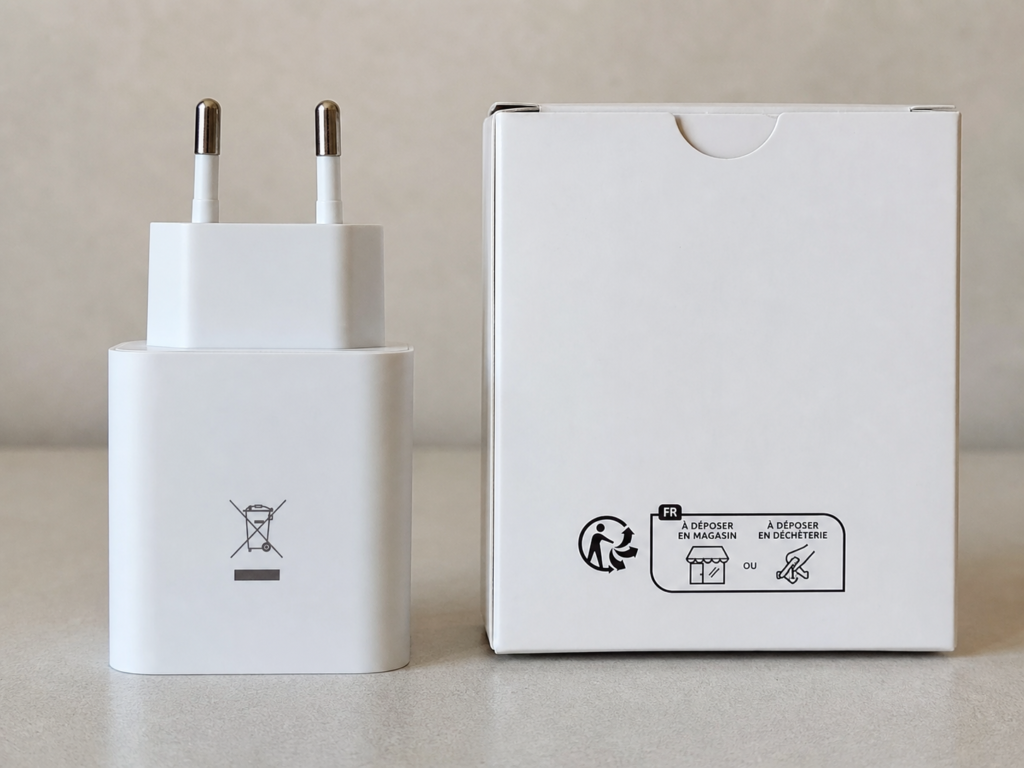
In addition to process obligations, product labeling is also a necessary part of compliance — the labeling obligation is independent of the registration process. It is not that you need to affix the label only after getting the registration number, nor can the registration number replace the label.
The general WEEE recycling label is the pattern of a “crossed-out trash bin”, which applies to electrical and electronic products in most member states; if the product is too small or has a special shape to be affixed to the body, it can be affixed to the outer packaging or accompanying documents. The specific requirements shall be implemented in accordance with the rules of the target country. Some member states such as France have additional labeling requirements for specific categories (such as Triman and Info-tri labels), which only apply to the corresponding categories in that country and are not unified requirements across the EU, so do not apply them blindly.
Compliance Requirements of Mainstream E-commerce Platforms
If you sell through e-commerce platforms, you need to note that some mainstream e-commerce platforms will require sellers to submit EPR registration certificates or registration numbers for specific categories according to the regulatory requirements of different member states. Those who fail to submit as required may be restricted from selling or have their products removed. The specific requirements shall be subject to the latest policy announced by the platform.
The environmental fee withholding and payment service provided by some platforms only covers the payment link of environmental treatment fees. Core compliance obligations such as registration, reporting, and labeling are still borne by the seller themselves, and the seller’s main responsibility will not be exempted as a result.
Pitfall Avoidance Guide: Common High-Frequency Misconceptions for Beginners
Finally, we have compiled the high-frequency misconceptions that beginners are most likely to fall into. All of them are core rules mentioned earlier, and they are reminded here centrally for everyone’s quick self-check:
Misconceptions About Product Scope
Do not think that only large household appliances are electrical and electronic equipment; small digital products and accessories with independent electronic functions may be included in the scope of WEEE; do not think that all electrical accessories need to comply; ordinary passive cables and other components without independent electronic functions usually do not fall into the category of EEE; do not think that small and light products do not need to comply; the vast majority of member states have no weight or volume threshold, and compliance is required if they meet the definition of EEE; do not think that B2B sales do not need to comply; most countries still need to perform statutory EPR obligations in B2B scenarios; do not think that all industrial electronic equipment is exempt; only large fixed industrial facilities that meet the statutory exclusion conditions may not be applicable.
Misconceptions About Entity Responsibility
Do not think that foundries must bear EPR responsibility; foundries that only produce and do not participate in market placement do not fall into the category of producers; do not think that if a supplier has a registration number, you do not need to register yourself; the supplier’s registration number only covers its own first placement behavior, and own-brand or independent placement needs to comply on your own; do not think that if the platform withholds and pays, you do not need to register yourself; the platform only pays part of the fees on your behalf, and core obligations such as registration and reporting are still with the seller; do not think that distributors have no obligations at all; even if they do not bear producer responsibility, they may need to perform obligations such as verification and information transmission in accordance with legal requirements.
Misconceptions About General Rules
Do not think that small sellers with low sales volume can be exempted; the vast majority of member states have no minimum sales threshold, and even selling only 1 unit requires compliance; do not think that the EPR registration number can replace the recycling label; the two are independent compliance requirements and cannot replace each other; do not think that registration in one EU country is valid across the EU; the vast majority of member states require separate registration, and there is almost no cross-border mutual recognition mechanism; do not think that the UK belongs to the EU EPR system; the UK has independent EPR rules after Brexit and requires separate compliance.
Self-Check List and Summary
Finally, we have compiled two simple self-check lists for you. After reading the article, you can compare and sort them out to quickly clarify your compliance direction:
3 Steps for Product Applicability Self-Check
1. Check whether the product meets the definition of Electrical and Electronic Equipment (EEE), whether it meets the functional and voltage standards, and is not on the statutory exclusion list;
2. Confirm whether the product is first placed on the market of the target EU member state through business activities (including online and offline, free or paid provision);
3. Check the special boundary regulations of the target sales member state, such as the specific judgment rules for industrial equipment and products with auxiliary electronic functions.
3 Steps for Entity Responsibility Self-Check
1. Combined with your own sales role and chain, confirm whether you are a “producer who first places products” as defined by the law of the target member state;
2. If you are an overseas entity, check whether the target member state requires the appointment of a qualified local authorized representative, as well as the specific requirements for authorization;
3. Against the rules of the target country, confirm whether the obligations you need to perform, such as registration, reporting, payment, and labeling, match your own products and sales model.
After learning this content, you should have mastered the following basic judgment abilities: you can quickly judge whether a physical electronic product falls within the jurisdiction of the EU WEEE Directive, you can identify who is the responsible entity of EPR in combination with the sales chain, you can distinguish the parallel relationship between WEEE and battery and packaging EPR, you can sort out the compliance points that need to be verified in combination with the target country and sales model, and you can avoid the vast majority of entry-level compliance misconceptions.
In general, the core logic of EPR for EU electronic products is actually very simple: whoever first places a product on the market of a member state shall bear the environmental responsibility for the entire life cycle of the product. Although the rules vary from country to country and there are many boundary scenarios, as long as you first grasp the two core judgment points of “whether the product belongs to EEE” and “who is the first placement entity”, and then check one by one in combination with the specific rules of the target market, you will not take big detours. If you encounter boundary products or special situations that you are not sure about, it is recommended to directly consult the official environmental protection agency of the target member state, or find a formal compliance service provider to confirm, to avoid product removal or fines due to misunderstanding of the rules.