
If you have ever lived in the EU, or done business in electronic products targeting the EU market, you have most likely seen the small trash bin symbol with a cross through it, and you may have heard the term “WEEE” — some say it is a certification, some say it is a recycling label, and others say it is mandatory for anyone selling electrical products to the EU. So what exactly is WEEE? Who needs to comply with it? What specific steps need to be taken? This article will explain it in plain language, covering everything from basic eligibility judgment to key points for avoiding pitfalls.
I. Core Position and Underlying Logic of WEEE
Let’s start with the most straightforward explanation: WEEE is a mandatory recycling rule set by the EU for waste electrical and electronic equipment. Its core requirement is that whoever places electrical and electronic products on the EU market shall bear the recycling responsibility and costs after the product is scrapped; consumers or taxpayers shall not pay for this, and e-waste shall not be discarded as ordinary domestic waste.
Its official name is the Waste Electrical and Electronic Equipment Directive, hence the abbreviation WEEE Directive. The current core framework is Directive 2012/19/EU issued in 2012, which is transposed into national laws by each EU member state for implementation.
Many people confuse WEEE with compliance requirements for product safety and material testing. In fact, its position in the EU regulatory system is very clear: it belongs to mandatory environmental waste management regulations, and only covers the recycling and treatment link of products “at the end of their life”. It is neither a product safety certification nor a material testing standard, and does not involve the quality and performance requirements of the product itself. For example, requirements such as electrical safety and electromagnetic compatibility of a mobile phone fall within the assessment scope of product access regulations; restrictions on harmful substances such as lead and mercury in mobile phone materials are governed by material control regulations; while how to recycle a broken mobile phone and who bears the treatment cost are the contents regulated by WEEE.
The core logic supporting WEEE is called “Extended Producer Responsibility”, abbreviated as EPR. This term sounds professional, but the principle is very simple: in the past, after a product was sold, the merchant no longer had to worry about follow-up matters, and the treatment cost after scrapping was entirely borne by the government (that is, taxpayers); EPR extends the responsibility to the back end of the product life cycle, requiring the party that places the product on the market to pay for the environmental cost after the product is scrapped.
Take the most common example: if you sell electric toothbrushes to Germany, and German consumers need to sort and recycle them when they are broken, the treatment cost shall be borne by you (the merchant placing the product on the market), not paid by the German government from public finances.
The purpose of this system is also very clear: first, to reduce environmental pollution caused by random disposal of e-waste; second, to improve the resource recycling rate so that useful materials can return to the production link; third, to unify the recycling rules of EU countries to avoid increased compliance costs for merchants due to differences in national rules.
Then why should everyone attach importance to WEEE? It has different meanings for different groups:
• For merchants and sellers, WEEE is a basic threshold for entering the EU electrical and electronic equipment market. Non-compliance will bring risks such as regulatory penalties and platform restrictions.
• For ordinary consumers, randomly discarding e-waste may result in penalties, but at the same time, they can enjoy free sorted recycling services without paying for the disposal of old electrical appliances themselves.
• For the entire EU market, the unified WEEE rules break down the recycling barriers of various countries, so that merchants do not have to face completely different recycling system logics when doing business across Europe.
II. Quick Judgment of Applicable Scope: Does Your Product/Business Need to Comply?
The question that most people are most concerned about is: do the things I sell/use need to comply with WEEE? In fact, you can make a quick judgment in just three steps, which we will explain one by one.
Step 1: First determine whether the product is Electrical and Electronic Equipment (EEE)
The electrical and electronic equipment mentioned here is abbreviated as EEE (Electrical and Electronic Equipment). In plain terms, it refers to equipment that operates on electric current or electromagnetic fields, or is used to generate, transmit, or measure electric current/electromagnetic fields. There is a simple beginner’s judgment rule: as long as the core function of the product cannot be separated from electricity, batteries, or electromagnetism, it is most likely EEE.
For a more rigorous legal judgment, you can check at three levels: first, confirm whether the main function of the equipment relies on electric current/electromagnetic fields, or whether the equipment itself is used to generate, transmit, or measure electric current/electromagnetic fields; second, confirm that the equipment is a complete product that can be placed on the market independently, rather than a non-independent component of a large equipment; third, check the voltage range — under the current framework, EEE generally applies to equipment with alternating current not exceeding 1000V and direct current not exceeding 1500V. It should be noted that “relying on electricity/batteries/electromagnetism” is only a preliminary screening rule and cannot be used as the final legal conclusion; complex products need to be judged in combination with more rules.
Common covered categories include mobile phones, computers, home appliances, lamps, electric toys, electric tools, chargers, photovoltaic panels, etc. If a product comes with a battery or is rechargeable, it usually falls under EEE, and may also need to comply with EU battery regulations.
One rule to pay special attention to here: since 2018, the product scope of WEEE has changed from the previous “fixed category list” to an “open scope” — previously, the EU listed 10 categories of products to be regulated, and those not on the list did not need to comply; now it is the other way around: in principle, the vast majority of electrical and electronic equipment are covered, and only those explicitly excluded are exempt. Therefore, judgment cannot be made solely by product name, but must be comprehensively determined based on function, structure, and whether it is sold independently.
Exclusion Scope and Categories Requiring Special Confirmation
WEEE exclusions cannot be simply understood as only a few categories. We can divide them into “typical categories explicitly excluded” and “categories requiring confirmation based on conditions” for judgment:
• Typical categories explicitly excluded: military electronic equipment, active medical implants implanted in the human body (such as pacemakers), and large fixed industrial tools. These are typical examples explicitly excluded under the EU framework, and the complete exclusion scope shall be subject to the national laws transposed by member states.
• Categories requiring confirmation based on conditions:
• Built-in equipment in means of transport: it is necessary to confirm whether it is a specially designed vehicle component that cannot be used independently; if it is an electrical accessory sold separately (such as a car charger), it still falls within the EEE regulation scope.
• Components of large fixed installations: it is necessary to confirm whether they can only be part of large industrial/construction fixed installations and cannot be placed on the market separately; independently sold supporting components still need to comply with regulations.
• Special equipment for scientific research: it is necessary to confirm whether it is customized equipment limited to B2B use by professional scientific research institutions; scientific research electronic equipment sold to the general market is still within the regulation scope.
• Accessory judgment rules: accessories sold independently and with their own electrical functions (such as separately sold chargers, Bluetooth headsets) belong to EEE; passive accessories sold independently but purely mechanical without electrical functions (such as mobile phone cases, computer stands) generally do not belong to EEE.
If you are unsure whether a product falls within the regulation scope, you can verify it through three types of official channels: first, the official website of the competent authority responsible for WEEE supervision in the target member state; second, the official producer registration platform of that country; third, the classification guidelines issued by the producer responsibility organization (i.e., the recycling plan operator) recognized by the local government. The institution names and query procedures vary slightly from country to country, and shall be subject to the latest publicly available local rules.
Step 2: Determine whether you are the responsible entity (producer)
The “producer” here does not refer to the manufacturing factory, but refers to the entity that first places electrical and electronic products on the EU market, regardless of where the factory is located, whether you are a company or an individual, or the size of your business.
Common responsible entities include the following types of roles:
1. EU-based manufacturers of electrical and electronic equipment
2. Brand owners that sell EEE under their own brand (regardless of where the original equipment manufacturer is located)
3. Importers that import EEE into EU member states
4. Non-EU enterprises that remotely sell EEE directly to consumers in member states from outside the EU
It should be added that the determination of responsibility is affected by factors such as the sales destination, whether the enterprise has an entity established in the EU, and whether an EU importer has already assumed responsibility, and is not judged solely by the place of shipment. When a non-EU enterprise conducts remote sales to a member state, if no local importer assumes producer responsibility, it usually needs to fulfill producer obligations for the target member state and appoint an authorized representative in accordance with local rules.
Step 3: Check whether the region and behavior are within the coverage scope
In terms of region, WEEE applies to the 27 EU member states, plus the 3 countries of the European Economic Area (EEA): Norway, Iceland, and Liechtenstein. It should be noted that after Brexit, the UK has implemented its own independent WEEE system and no longer applies the EU WEEE framework. If you sell to the UK, you need to check the UK rules separately.
In terms of behavior, whether it is online or offline sales, gifting, trade-in, or promotional giveaways, as long as it is an act of placing products on the market, it counts. For example, if you give a charger as a gift when buying a mobile phone, although the charger is a free gift, it is also part of the products placed on the market and must meet WEEE requirements.
The only exception is: second-hand products brought into the EU for personal use and not for sale do not need to comply.
Judgment Rules for Common Ambiguous Scenarios
If you encounter special situations that you are unsure about, you can refer to the following general rules:
• B2B products: still need to bear WEEE responsibility. Specific recycling arrangements can be agreed with customers in the contract, but statutory responsibilities cannot be exempted; only the calculation method of recycling fees may differ from B2C.
• Second-hand products: if they are second-hand electrical and electronic equipment for sale, they still need to comply with regulations; except for those brought into the EU for personal use.
• Gifts/promotional items: as long as they belong to the act of placing on the market, even if they are given away for free, they need to comply with regulations.
If the core answers to these three steps are all “yes” — the product is EEE, it will be placed on the EU/EEA market, and you are the responsible entity for the first placement — then you must comply with the requirements of the WEEE Directive.
III. Core Compliance Requirements of WEEE
After confirming that you need to comply, what specific steps do you need to take? The obligations of different roles are different, which we will explain separately.
Core Obligations for Merchants/Sellers (Producers)
Producers are the main responsible entities for WEEE, with four core obligations: registration, labeling, recycling fee payment, and regular declaration.
First is the registration requirement: you need to complete WEEE registration in the target member state where you sell products and obtain an exclusive registration certificate. It should be noted that WEEE is currently managed separately by country, and registration in one country is only valid in that country and cannot automatically cover other EU countries — the EU-level unified registration platform is still under planning and has not been officially launched. If your company is not located in the EU, you usually need to appoint an authorized representative in the target member state to handle registration for you. After registration is completed, you need to submit or display registration information in accordance with the laws of the target member state, the requirements of recycling institutions, and the rules of e-commerce platforms. Do not use registration information from a single country as a EU-wide universal product label.
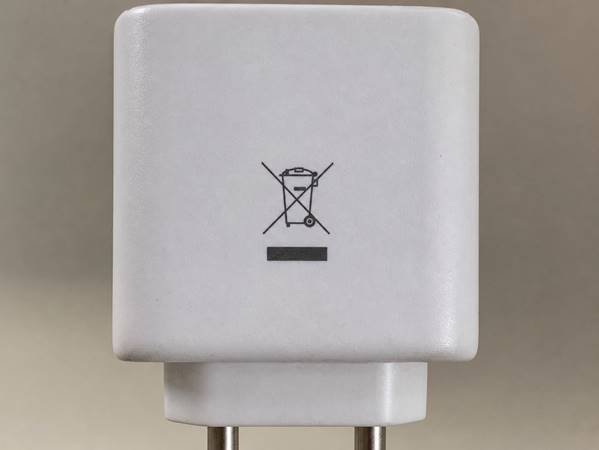
Second is the labeling requirement: it is the common “trash bin with wheels and a cross” symbol, whose function is to remind consumers that this product cannot be discarded as ordinary domestic waste. Many people do not know what the black line under the symbol means — it is not a quality grade, nor a recycling grade, but only indicates that the product was placed on the market after August 13, 2005. The label is usually affixed to the product body, nameplate, instruction manual, or outer packaging, and the specific requirements shall be subject to the rules of the target member state. A special reminder here: simply affixing the WEEE label does not mean that all compliance requirements are met, which is one of the most common pitfalls for beginners.
Third is the recycling and fee payment requirement: you need to join a recycling plan recognized by the target member state, or build your own recycling system that meets the requirements — the vast majority of small and medium-sized merchants choose to join a ready-made recycling plan instead of building their own recycling points. There is no unified EU standard for recycling fees, and the calculation method varies from country to country. Usually, it is calculated based on the product category, weight, sales volume, and whether it is B2C or B2B.
Fourth is the declaration requirement: you need to regularly submit data on product placement and recycling to local recycling institutions or regulatory authorities, including product category, quantity, weight, sales attribute, etc. The declaration cycle varies from country to country, usually including monthly, quarterly, and annual types. You need to cooperate with the competent authority to complete the assessment of recycling targets.
Obligations and Rights of Ordinary Consumers
For consumers, the requirements of WEEE are very simple:
There is only one obligation: waste electrical and electronic equipment shall not be mixed with ordinary domestic waste, and shall be sorted and delivered to special recycling points. If you discard them randomly, you may be fined in some countries.
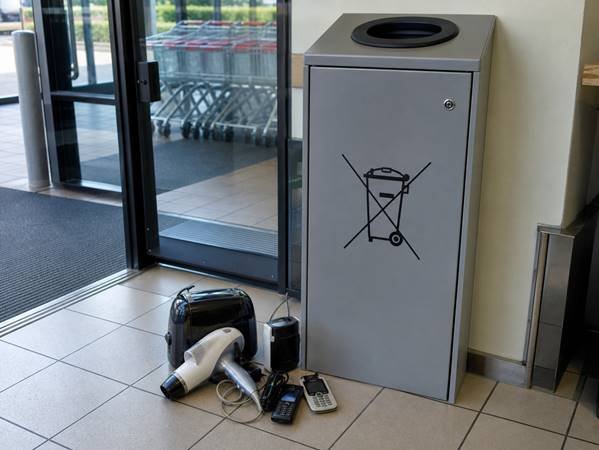
The corresponding rights are also very practical: you can recycle e-waste for free through channels such as municipal recycling points, recycling bins in supermarkets, and merchant trade-in programs. There is also a rule that many people care about: when purchasing new equipment of the same type, you can usually require the merchant to recycle the old equipment for free according to the “one-to-one recycling” rule. However, whether door-to-door recycling is supported, the area threshold for retail stores, the recycling requirements for small electronic products, etc., are all stipulated by the national laws of member states, and do not apply unconditionally in all scenarios. For example, when buying a new refrigerator and requiring the merchant to pick up the old refrigerator at your door, whether this is a mandatory obligation shall be subject to local rules.
Requirements for EU Member States
WEEE also sets obligations for member states: each country must establish a free public e-waste recycling system and recycling points to facilitate consumer disposal; it must also supervise producers within its jurisdiction to implement compliance and investigate and punish violations; at the same time, it must meet the phased minimum recycling targets set by the EU.
Taking the current rules of 2012/19/EU as an example, since 2019, member states can choose one of two calculation methods to meet the collection target: first, 65% of the average weight of EEE placed on the market in the previous three years; second, 85% of the weight of actually generated WEEE. The specific calculation method, statistical method, and implementation details shall be subject to the transposed national laws and official reporting rules of each country. Please do not directly apply a single figure.
IV. Version Evolution and Implementation Differences Among Countries
Many people wonder: since it is a unified EU directive, why are the registration procedures and fees different in each country? This starts with the version evolution and implementation logic of WEEE.
Since its introduction, the WEEE system has mainly gone through two formal development stages, and is still under continuous optimization:
1. 2002 first version directive (repealed): initially established the WEEE system framework. At that time, the applicable scope was defined by a fixed category list, and only products on the list needed to comply with the rules.
2. 2012 revised version (Directive No. 2012/19/EU, current core foundation): this is the core legal framework of the current EU WEEE system. Some rules were subsequently improved through supporting adjustments — for example, since 2018, the product scope has been changed from a “fixed list” to an “open scope”, and core contents such as producer registration requirements, authorized representative rules, and phased recycling targets have been clarified. This directive needs to be transposed into national laws by each member state before it can be implemented locally.
Regarding the new round of revision discussions that people often hear about: the EU has been promoting the optimization and evaluation of the WEEE framework, and the industry sometimes colloquially refers to related discussions as “WEEE III”, but this is not an official legal name. The potential adjustment directions under discussion mainly include adjusting the product classification structure, raising long-term recycling targets, building a EU unified registration platform, and strengthening the statistics and disclosure of recycling data. It should be specially noted that any revision proposals, evaluation documents, or industry colloquial names do not change the current compliance requirements that enterprises must abide by; the effective time and implementation standards of the revised content shall be subject to the final legal text officially released by the EU and the transposition notices of member states.
As for why the implementation details vary from country to country, it is actually the general logic of EU framework directives: WEEE is a framework directive, which only sets unified principles and minimum requirements, and does not fix all details. Each member state needs to transpose the directive into its own national law before it has actual enforcement effect. Therefore, things like who the registration authority is, how fees are collected, how long the declaration cycle is, and how much the fine is, are all determined by each country itself.
Judging from the current implementation status, each country still follows its own transposed national laws. The EU-level unified registration platform has not been officially launched, and small and medium-sized merchants still need to complete registration separately according to the requirements of the target sales country. The compliance obligations for some new categories shall also be subject to the actual transposition progress of each country.
V. Differences Between WEEE and Other EU Compliance Requirements
People who do business in the EU market often hear terms such as WEEE, RoHS, CE, and EPR at the same time, and many beginners get confused. We have compared the most easily confused ones together, so you can understand them at a glance:
| Name | Core Function | Category | Common Misconceptions |
| WEEE | Clarify the recycling and treatment responsibility and cost bearer after product scrapping | Waste management regulation (specific implementation of the EPR principle in the electrical and electronic equipment field) | Thinking that labeling equals compliance, or confusing it with the CE mark |
| RoHS | Restrict the use of harmful substances such as lead, mercury, and cadmium in products | Material safety control regulation | Thinking that it is the same thing as WEEE, and that completing one means no need for the other |
| CE mark | Conformity mark indicating that a product meets applicable EU harmonized regulations, covering basic access requirements such as safety, health, and environmental protection | Product access conformity mark | Thinking that it is a unified third-party safety certification, or that the WEEE label is part of CE compliance |
| EPR (Extended Producer Responsibility) | General environmental protection principle requiring producers to be responsible for the environmental costs of products after scrapping | Environmental protection system framework | Thinking that EPR is WEEE, when in fact WEEE is only one implementation category of EPR |
Supplementary explanation on CE: CE is not a unified third-party safety certification. Whether a notified body (third-party certification body) is required to participate in the assessment depends on the risk level of the product and the specific applicable regulations. For low-risk products, the manufacturer can complete the conformity assessment by itself and then affix the CE mark. CE compliance cannot replace WEEE obligations such as registration and recycling, as the two have completely different regulatory directions.
In short, both WEEE and RoHS are mandatory requirements for electronic products, but one regulates “post-scrapping treatment” and the other regulates “materials during production”, and they cannot replace each other. EPR is a broad principle. In addition to electrical and electronic equipment (WEEE), categories such as packaging, batteries, textiles, and furniture all have their own EPR rules.
Therefore, if you sell electronic products to the EU, the most basic compliance combination is: CE compliance (complete conformity assessment according to applicable regulations) + RoHS compliance + WEEE compliance; if the product comes with a battery, it must additionally comply with EU battery regulations; if it is sold with packaging, it must additionally meet the requirements of packaging EPR.
VI. Beginner Compliance Path and Checklist for Small and Medium Sellers
If you have confirmed through the previous judgment that the product is EEE, will be placed on the EU/EEA market, and you are the responsible entity for the first placement, you can complete the initial compliance according to the following path.
Basic Process for Initial Compliance
If you are a newly started small and medium seller and have confirmed that you need to do WEEE compliance, you can follow this basic process:
1. First confirm your product category and target sales country, and check whether it falls within the explicitly excluded scope; for categories you are unsure about, consult the official recycling institution or competent authority of the target country in advance.
2. If your company is not located in the EU, first appoint an authorized representative in the target member state.
3. Complete WEEE registration in the target country and obtain an exclusive registration certificate.
4. Join a locally recognized compliant recycling plan, and confirm the fee standard and payment method.
5. Affix the WEEE label on the product, packaging, or instruction manual as required.
6. Check the display requirements for registration information, the entity responsible for declaration, and the record retention rules.
7. Declare product placement data and pay recycling fees according to the cycle specified by local regulations.
Initial Compliance Checklist
You can also self-check against the list below to ensure nothing is missed:
• □ The product meets the EEE definition and is not within the explicitly excluded scope
• □ The WEEE implementation rules of the target sales country have been clarified
• □ It has been confirmed that you are a WEEE responsible entity
• □ Non-EU enterprises have appointed an authorized representative in the target country (if applicable)
• □ WEEE registration has been completed in the target country and a registration certificate has been obtained
• □ Have joined the local recycling system and clarified the fee payment rules
• □ The product has been affixed with the WEEE label as required
• □ The registration information display requirements and record retention rules have been clarified
• □ The declaration cycle and data submission requirements have been understood
VII. Common Cognitive Misconceptions and Violation Risks
Finally, we have sorted out 6 cognitive misconceptions that beginners are most likely to fall into, as well as the actual consequences of non-compliance, to help you avoid pitfalls in advance.
6 Most Common Cognitive Misconceptions
1. Affixing the WEEE label means compliance: Wrong. The label is only one of the compliance requirements. You also need to complete registration, join the recycling system, pay fees, and make regular declarations to be fully compliant.
2. One EU WEEE registration number is valid across the EU: Wrong. Currently, WEEE is still managed separately by member states, and the unified registration platform has not been launched. You need to register in each country where you sell products.
3. Only large companies need to comply, individuals/small sellers do not: Wrong. As long as you are the responsible entity placing products on the market, whether you are a large company or an individual seller, you need to comply with WEEE requirements. Mainstream e-commerce platforms will also require sellers to submit compliance certificates.
4. If you have completed CE/RoHS, you don’t need to worry about WEEE: Wrong. The three have completely different regulatory directions. CE covers basic access requirements, RoHS restricts the use of harmful substances in products, and WEEE is responsible for the recycling responsibility of products after scrapping. Electronic products usually need to meet all three at the same time, and they cannot replace each other.
5. B2B products do not need to bear WEEE responsibility: Wrong. B2B products also have compliance obligations, except that the calculation method of recycling fees may differ from B2C, and responsibility cannot be completely exempted.
6. Gifts/promotional products do not need to comply with WEEE: Wrong. As long as it is an act of placing products on the market, whether for sale or for free, compliance is required, and gifts are no exception.
Common Consequences of Non-Compliance
If WEEE compliance is not completed as required, you may face different levels of penalties, which shall be subject to the national laws of the target member state:
• The regulatory authorities of member states may order you to make up registration, supplementary data declaration, and supplementary payment of recycling fees within a time limit. In serious cases, administrative fines may be imposed, sales may be ordered to stop, and even non-compliant products may be confiscated.
• E-commerce platforms such as Amazon, eBay, and AliExpress may require sellers to submit WEEE compliance certificates according to rules, and products that fail the review may be restricted from being listed or removed from the shelves.
• Customs of some member states may cooperate with regulatory authorities to verify WEEE compliance qualifications when goods enter the country, and non-compliant goods may be detained or returned.
WEEE is a basic environmental protection requirement for market access of electrical and electronic equipment in the EU. Its core is to let the entity that first places products on the market bear the recycling responsibility after scrapping, so as to reduce the environmental impact of e-waste from the source. To judge whether you need to comply, you can quickly screen from three dimensions: product attributes, target market, and responsible entity, and then implement core actions such as registration, joining the recycling system, affixing labels, and regular declarations according to the specific rules of the target member state. When encountering ambiguous categories or rule questions, priority shall be given to the latest requirements of the competent authorities and official recycling institutions of the target member state.