
If you sell products like chargers and charging cables to the UK, or buy electronic accessories in the UK, you have most likely heard the term “UK REACH”. Some say it is the UK version of RoHS, some say it is no different from EU REACH, and some small sellers think “I don’t need to care because my volume is small” — most of these statements are inaccurate.
UK REACH is the core chemical safety management regulation for Great Britain (GB) in the UK. It sets different levels of obligations for chemical substances in different forms. All products involving chemical materials may be subject to relevant requirements, but the specific obligations depend on the legal attributes, placement methods, uses and specific regulatory provisions of the substance, mixture or article, and not all products bear the same responsibilities. Due to the wide variety of materials and components, charging products have relatively more entries to verify, making them an electronic category that requires special attention. This article sorts out the UK REACH rules and implementation methods related to charging products, from basic definitions to practical judgement.
Basic Definitions and Applicable Boundaries
The full name of UK REACH is the . Its core is to protect consumer health and the environment by controlling the production, placement and use of chemical substances in different forms. It was not created out of thin air by the UK: before Brexit, the UK applied EU REACH; after Brexit, it was revised on the basis of the EU framework and officially applied to Great Britain (England, Scotland, Wales, referred to as GB) from 1 January 2021. It should be noted that the substance list, transition periods and implementation details of this set of rules have been dynamically adjusted. All requirements shall be subject to the latest official version of the UK, and old materials from many years ago should not be used as the basis.
Many people are confused about the scope of “the UK” and the applicability of UK REACH. Here is a clear clarification: UK REACH only applies to England, Scotland and Wales (GB); Northern Ireland (NI) still applies EU REACH due to the special arrangements of Brexit.
If your charging products are sold to both GB and NI customers, you must check the requirements of the two systems separately, and one set of materials cannot be used universally. A common pitfall in practice is that sellers on UK sites assume that all UK orders are implemented in accordance with UK REACH, but in fact, orders shipped to Northern Ireland must comply with EU REACH. Be sure to confirm the final destination of the goods before shipment to avoid goods being detained due to incorrect application of rules.
UK REACH divides control objects into three categories according to the existing form of chemical materials. We will explain them with examples of charging product components:
The first category is substances, that is, individual chemical components. For example, lead contained in solder, and phthalate plasticizers added to the PVC material of charging cables, all belong to single chemical substances. Such substances usually exist as components in materials or finished products.
The second category is mixtures, which are composed of multiple substances mixed together and have no fixed shape. For example, glue for bonding circuit boards, ink for printing logos on charger housings, and solder paste for welding all belong to mixtures.
The third category is articles, which refer to finished products or components that obtain a fixed shape, appearance or design during the production process, and whose shape attribute takes priority over chemical composition during normal use. For example, the plastic housing of a charger, the outer sheath of a charging cable, and the metal contacts of a USB interface all belong to articles. It should be noted that a complete finished product (such as a whole charging cable) is also an article itself. Whether its internal components are separately counted as “articles” shall be judged in combination with the actual supply form and the official guidance on the splitting of complex articles, and cannot be arbitrarily split mechanically according to function or material layers.
There is also a special situation: if an article is designed to release a certain chemical substance contained in it under normal or reasonably foreseeable use conditions (such as the fragrance released by charging accessories with aromatherapy function), and the release amount reaches the relevant threshold, then these released substances cannot be managed only according to the rules for articles, and need to be additionally evaluated according to the corresponding obligations for substances or mixtures.
It should be specially noted that the various obligations of UK REACH are not uniformly applicable to all chemical substances and all finished products: the regulation has clear statutory exclusion scenarios (such as some naturally occurring low-risk substances, trace samples for specific scientific research purposes, transit goods under customs supervision, etc.), and there are also separate management systems for special categories and specific uses. Whether a certain type of substance or product is subject to a certain obligation needs to be checked one by one in combination with the officially released entries, scope of application and exemption rules, and it cannot be assumed that all products bear exactly the same responsibilities.
The core regulatory enforcement agency of UK REACH is the UK Health and Safety Executive (HSE for short), which is mainly responsible for registration and notification management, risk assessment, law enforcement coordination, issuance of operation guidelines and public queryable substance list databases; while statutory decisions such as revision of regulatory texts and formal legal adjustments to the restriction/authorisation list need to be officially announced by the UK government through GOV.UK in accordance with statutory procedures to take effect. In the actual law enforcement link, in addition to HSE, environmental agencies, local law enforcement departments, and the UK Office for Product Safety and Standards (OPSS) will all participate in random inspections according to their responsibilities, covering customs entry goods, offline markets and products sold on e-commerce platforms. To query the most accurate rules and lists, you can refer to the UK REACH guide and list page on the HSE official website, as well as the statutory documents and announcements issued by GOV.UK.
Why Charging Products Require Special Attention
UK REACH is a chemical management system covering all categories, not specifically targeting charging products. However, electronic accessories such as chargers and charging cables have many types of materials and components, involving various forms such as plastics, metals, solders, coatings, and packaging, and the entries of chemical substances that need to be verified are relatively complicated. Therefore, both sellers and consumers need to pay special attention to relevant compliance requirements.
The following table sorts out the common chemical substance risk points of charging products that need to be verified, involving multiple sets of parallel rules such as UK REACH, UK RoHS, and UK packaging regulations. They need to be checked separately in combination with applicable scenarios, and the exemption rules of different regulations are not interchangeable, and cannot be generally regarded as mandatory requirements of UK REACH:
| Component | Common High-Risk Substances | Corresponding Core Rules | Applicable Conditions / Verification Boundaries | Common Compliance Evidence |
| Cable outer sheath / plug overmolding | Phthalates, short-chain chlorinated paraffins (SCCP), lead | UK REACH restricted substance limit requirements, SVHC-related obligations (if thresholds are met) | Falls under the regular control scope of UK REACH; it is necessary to check restricted entries, SVHC candidate list and authorisation list status by the specific substance CAS number; there is no sales/tonnage threshold | Material declarations, third-party test reports |
| Circuit board solder | Lead, cadmium, mercury | UK RoHS Directive limit requirements (including applicable exemptions); UK REACH restricted entries (require separate verification) | Lead, cadmium and mercury in electrical and electronic products are subject first to the UK RoHS Directive and corresponding exemptions; note that UK RoHS exemptions only apply to the RoHS scope and do not automatically exempt corresponding restriction obligations under UK REACH. If a substance is exempted under RoHS, it is still necessary to separately check whether there are control requirements for that scenario in the UK REACH restriction list | Solder material certificates, solder joint test reports |
| Plastic housing | Specific brominated flame retardants, phthalates | UK REACH restricted substance limit requirements, SVHC/authorisation-related requirements (judged based on substance list status) | Falls under the regular control scope of UK REACH; it is necessary to check restriction, SVHC or authorisation list status by the specific substance CAS number; control requirements cannot be directly determined solely based on categories such as “flame retardants” or “plasticizers” | Raw material safety data sheets, housing material test reports |
| Charging contacts / plating | Nickel, lead, cadmium | UK REACH nickel release restriction entry; heavy metal-related restriction entries (require separate verification); UK RoHS Directive limit requirements | The UK REACH nickel release restriction only applies to components specified in the entry that are in direct long-term contact with skin during normal use; judgement must be made against applicable scenarios such as contact duration and contact area defined in official entries (you cannot rely solely on experience to determine whether ordinary USB contacts meet the requirements); heavy metals such as lead and cadmium need to be checked against the corresponding requirements of UK RoHS and UK REACH respectively, and the exemption rules of the two are not interchangeable | Plating composition declarations, nickel release test reports (as needed) |
| Product packaging | Lead, cadmium, mercury, hexavalent chromium, harmful substances in printing inks | UK Packaging (Heavy Metals) Regulations requirements; UK REACH restriction/SVHC related entries (require separate verification) | Packaging heavy metal limits are subject first to UK packaging-related regulations; specific substances such as inks, additives, and plasticizers contained in packaging materials still need to be separately checked against the corresponding requirements of the UK REACH restriction list and SVHC candidate list; compliance with packaging regulations does not mean default compliance with UK REACH | Packaging material declarations, packaging heavy metal test reports |
If the product does not meet relevant compliance requirements, it may face risks of varying degrees: at the legal level, depending on the illegal circumstances and law enforcement decisions, it may be required to rectify, fined, subject to mandatory recall, or even prohibited from entering the GB market; at the platform level, some e-commerce platforms will require sellers to provide relevant compliance certificates, and product links that do not meet platform rules may be removed; at the logistics and commercial level, if problems are found in random inspections by customs or regulatory authorities, the goods may be temporarily detained, resulting in additional costs such as port detention and destruction. If losses are caused to downstream customers due to product non-compliance, contract claims may also be involved. The specific consequences shall be subject to the formal decision of the law enforcement agency, platform rules and contract agreements.
For different groups of people, the meaning of relevant requirements is also different: for cross-border sellers and suppliers, sorting out compliance requirements in advance and retaining complete evidence can avoid unnecessary economic and reputation losses; for local UK consumers, charging products that meet chemical management requirements have more guaranteed control of harmful substances and are more reassuring to use.
Plain-Language Breakdown of the Four Core Mechanisms
The four words in the name of UK REACH — Registration, Evaluation, Authorisation, Restriction — are its four core mechanisms. You don’t need to memorize them by rote, just understand what each mechanism controls and whether it has anything to do with you.
Registration: Access Requirements for Large-Tonnage Substances/Mixtures
Many people confuse “total weight of finished products” with the registration threshold. In fact, the core judgement standard for registration obligations is: manufacturers or importers within GB need to complete registration for the single chemical substance they manufacture or import, if the annual manufacturing/import volume reaches 1 tonne or more. The judgement paths for substances in different forms are different:
• Pure substances imported/produced separately: directly calculate whether the 1 tonne threshold is reached based on the annual total weight;
• Imported/produced mixtures: it is necessary to convert the annual total placement weight according to the actual content ratio of each single chemical substance in the mixture, and then judge whether the registration obligation is triggered in combination with the role of the import entity, the use of the substance and exemption conditions, rather than directly calculating based on the total weight of the mixture;
• Chemical substances in finished products (articles): the total weight of ordinary finished products is not equal to the substance registration tonnage. In general use scenarios, the probability that chemical substances contained in articles trigger general registration obligations is low; if there are substances designed to be intentionally released in articles, it is necessary to calculate whether registration is triggered based on conditions such as the annual total amount of the released single substance and applicable scenarios, and you cannot directly assume that registration is not required.
In terms of transitional arrangements, some original EU REACH registrations can be converted into UK REACH registrations according to the officially specified entities, substance scope and time limits. The specific rules shall be subject to the latest guidelines issued by HSE.
Tips for charging product practitioners: if ordinary small and medium-sized sellers only involve the sale of finished products (articles), there are fewer scenarios that trigger registration obligations. They can focus on restrictions and SVHC-related requirements, but still need to judge one by one in combination with specific conditions such as whether the product contains intentionally released substances, and there is no need to blindly apply for registration.
Evaluation: Government-Level Risk Verification
Evaluation is the work carried out by HSE on behalf of the UK regulatory authority. It mainly checks whether the risk data submitted for registered substances is reliable. If it is found that the actual risk of the substance is higher than the original assessment, it may promote its entry into the restriction list or authorisation list process. Ordinary practitioners only need to pay attention to the changes in the officially released final list and do not need to participate in the evaluation process.
Authorisation: Use Permit System for Very High-Risk Substances
For some chemical substances with extremely high risks, the regulation does not directly ban them comprehensively, but requires users to apply for permission from the regulatory authority, and can only place or use them according to the approved use and period after obtaining authorisation. This is the authorisation mechanism. The authorisation obligation is not triggered as long as the relevant substance is contained, but needs to be judged item by item in combination with the specific CAS number of the substance, the applicable scope specified in the Annex XIV entries, specific uses, sunset dates and exemption conditions. There are two lists that are easy to confuse, which need to be clearly distinguished:
The first is the SVHC Candidate List, that is, the “Candidate List of Substances of Very High Concern”, which is equivalent to the pre-screening list of the authorisation mechanism. Substances included in the list usually have properties such as carcinogenicity, teratogenicity, reproductive toxicity, or long-term persistent harm to the environment, but being included in the candidate list does not mean a ban, nor does it mean that an application for authorisation is required immediately; it only triggers supporting obligations such as information provision and notification.
The second is the Authorisation List (Annex XIV), which is the list of substances that truly require authorisation to be placed on the market or used. Each substance included in Annex XIV has a corresponding “sunset date”, that is, the latest legal use period. After that date, those who have not obtained authorisation for the corresponding use shall not continue to place or use it.
For substances such as plastic additives and flame retardants that may be involved in charging products, the control status needs to be checked according to the specific CAS number, list entries and actual uses. It is not possible to directly infer whether authorisation is required solely based on substance categories such as “brominated flame retardants” and “phthalates”.
Restriction: Hard Red Line All Applicable Products Must Comply With
The restriction mechanism is the core rule that all practitioners need to focus on. It is issued in the form of separate entries, which prohibit or limit the use of specific substances, with no annual placement tonnage threshold — as long as the product falls within the applicable scope of a certain restriction, it is non-compliant if it exceeds the limit, regardless of the sales volume. Each restriction entry has clear applicable scenarios, thresholds and exemption conditions. For example, some restrictions only apply to toys, and some apply to specific categories of electrical and electronic products, which need to be checked item by item.
UK REACH restricted substances that may be involved in charging products include short-chain chlorinated paraffins (SCCP), specific phthalates, etc.; the requirements for heavy metals such as lead, cadmium and mercury in electrical and electronic products are mainly regulated by UK RoHS, but UK RoHS exemptions do not automatically apply to UK REACH, and the specific situation needs to be judged one by one in combination with applicable regulatory entries.
Core Compliance Obligations and Responsibility Allocation
After understanding the mechanism, let’s talk about what needs to be done specifically, divided into two parts: basic requirements and advanced judgement.
Basic Requirements for All Applicable Products
Restricted Substance Requirements
Restricted substances are harmful chemical substances that are explicitly prohibited or strictly limited by the regulation. As long as the product falls within the applicable scope of the corresponding entry, it shall not be sold in the GB market if it exceeds the limit. This requirement has no scale or sales threshold; even if only 1 applicable product is sold, it needs to meet the requirements.
Verification method: combine the components, materials and uses of the product, check against the officially released restriction entries, and verify one by one whether high-risk components meet the limit requirements. At the same time, pay attention to distinguishing the applicable scope of UK REACH restrictions from parallel rules such as RoHS and packaging regulations, and the exemptions of different regulations are not interchangeable.
SVHC Information Obligation
SVHC, or “Substances of Very High Concern”, is the collective term for substances included in the SVHC Candidate List. Although such substances are not generally banned, as long as their content in articles reaches the threshold, the information provision obligation needs to be fulfilled.
Trigger threshold: by weight, the content of SVHC in the article is ≥0.1%. It should be noted that the calculation caliber: the threshold is judged at the “article” level, and the problem of excessive content in a single component cannot be covered up by the average content of the entire finished product; however, the component splitting of complex finished products needs to be judged in combination with the actual supply form and the official guidance on the splitting of complex articles, and cannot be arbitrarily split mechanically according to functional components or material layers.
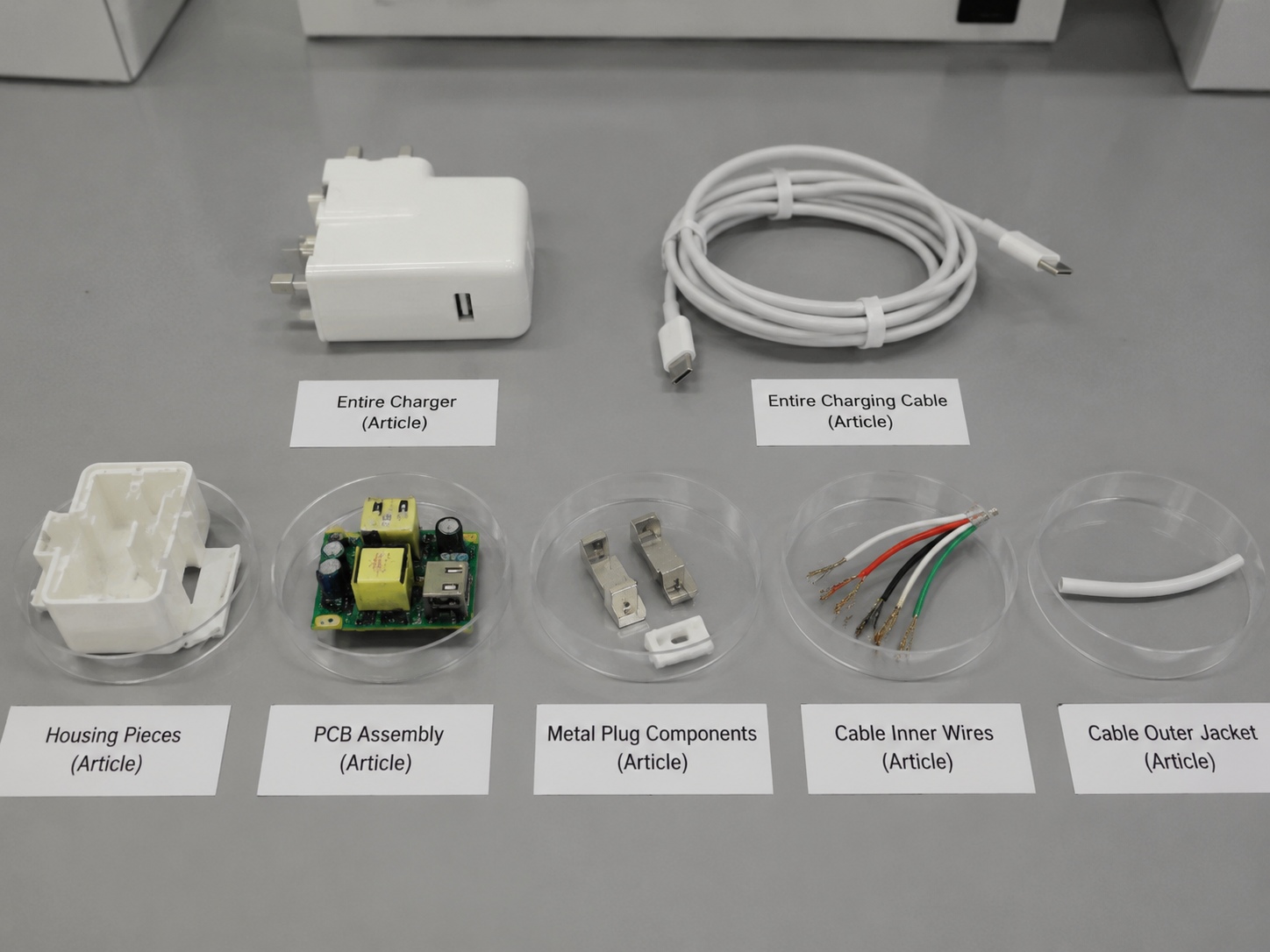
The above conclusions must be based on the correct article level division and the corresponding substance has been included in the current version of the SVHC Candidate List: if the content of a certain SVHC in the article is less than 0.1%, it only means that the information and notification obligations for this SVHC are not triggered by this weight threshold, and it is still necessary to independently check whether the substance is under the control of the restriction list or authorisation list, or whether it meets the requirements of other regulations such as RoHS.
Obligation content: first, proactively provide information related to the safe use of the substance to downstream buyers (such as wholesalers, purchasers), which must at least include the name of the SVHC; second, if ordinary consumers ask whether the product contains SVHC, a reply must be given free of charge within 45 days.
Advanced Judgement and Responsibility Allocation
Core Differences Between SVHC and Restricted Substances
Many people confuse SVHC with restricted substances. There are three core differences between the two:
First, different nature: SVHC corresponds to information provision and notification obligations, not a general ban — as long as the corresponding obligations are fulfilled, and the substance is not included in the restriction list or authorisation list at the same time, the product can still be sold; restricted substances are a hard red line, as long as they fall within the applicable scope and exceed the limit, they cannot be sold.
Second, different thresholds: the SVHC information obligation has no tonnage threshold, and it needs to be fulfilled as long as the content in the article is ≥0.1%; the SVHC notification obligation has a threshold of 1 tonne per year of placement. Restricted substances have no tonnage threshold, but each entry has a clear scope of application and exemption conditions, and not all products are applicable.
Third, different update rules: the update of both the SVHC Candidate List and the Restriction List must follow UK statutory procedures, with no fixed update cycle. All control requirements are subject to the latest officially released version and effective date, which need to be checked corresponding to the time when the product is placed on the market.
Supply Chain Roles and Responsibility Allocation
The responsibilities of UK REACH are divided according to different roles in the supply chain. Different roles have different scopes of obligations, which need to be judged in combination with their own positioning:
• UK-based manufacturers: bear primary responsibility for UK REACH compliance of the substances, mixtures or articles they produce.
• UK-based importers: are the primary compliance responsible party for products imported into GB — if products enter the GB market from outside, the UK-based importer shall bear primary responsibility for the UK REACH compliance of the products, including restricted substance compliance, SVHC information transfer, evidence retention, etc. Importer status cannot be judged solely based on the location of the platform store; it needs to be determined in combination with actual transaction arrangements such as who is responsible for customs clearance of the product into GB, who acts as the import declaration entity, and who places the articles on the GB market; if an overseas seller is responsible for customs clearance and placing on the GB market on its own, it also needs to bear the corresponding importer responsibilities.
• Overseas suppliers/exporters: do not directly bear the importer obligations under UK REACH, but can appoint a “Only Representative (OR)” based in GB to perform part of the obligations that should be borne by the GB importer as stipulated in UK REACH. It should be noted that the scope of responsibility of the OR is limited to the content explicitly specified in the UK REACH regulation, and cannot automatically cover other compliance requirements such as RoHS, packaging regulations, and product safety, nor can it replace all the legal responsibilities of the importer. The specific details shall be subject to the entrustment agreement between the two parties and the provisions of the regulation.
• Distributors/e-commerce sellers: need to retain compliance certification documents for the products they sell, and must not sell products that they know do not meet UK REACH requirements; if an e-commerce seller is also the importer (for example, the seller is responsible for customs clearance and import under the self-fulfillment model), they also need to bear the corresponding importer responsibilities.
Judgement Logic for SVHC Notification
Many people confuse “information provision” with “notification”. Notification is a heavier statutory obligation than information provision, requiring the submission of formal notification documents to HSE, and it needs to meet all of the following 4 conditions before it needs to be fulfilled:
1. The content of SVHC in the article is ≥0.1% by weight;
2. The total annual weight of the substance placed on the GB market is ≥1 tonne;
3. The substance has not completed UK REACH registration for the corresponding use;
4. The exposure risk of the substance to humans or the environment under normal or reasonably foreseeable use conditions cannot be excluded.
The judgement of the above conditions needs to be combined with specific scenarios: statutory exemptions, completed registration for corresponding uses, complete exclusion of exposure and other situations all require the responsible party to provide valid proof; factors such as the splitting method of complex articles, whether the placement volumes of multiple entities in the supply chain are combined, and role changes (such as an overseas seller appointing an Only Representative) may affect the judgement of notification obligations, and general conclusions cannot be directly applied.
Tips for small and medium-sized sellers: for small and medium-sized sellers of ordinary charging products, the annual placement volume of a single SVHC generally cannot reach 1 tonne, so there are fewer scenarios that trigger the notification obligation. But as long as the SVHC content in the article meets the 0.1% threshold, the information obligation must be fulfilled, and the two cannot be confused; if the annual placement volume is close to 1 tonne, it is necessary to calculate and confirm whether notification is required in a timely manner.
Parallel Compliance Boundaries
Many practitioners confuse the requirements of UK REACH with RoHS and UKCA. In fact, the three are independent compliance requirements and cannot replace each other:
• UK REACH: a management system for chemical substances of all categories, covering different obligations for substances, mixtures and articles, with responsibilities divided according to supply chain roles.
• UK RoHS: only targets specific hazardous substances in electrical and electronic products, with a narrower scope than UK REACH. For example, short-chain chlorinated paraffins and most phthalates are not within the regular control scope of RoHS, but may be within the control scope of UK REACH.
• UKCA: a compliance mark used under some UK product regulations (such as product safety, electromagnetic compatibility, etc.). Its scope of application and whether it is mandatory depend on the specific UK technical regulations corresponding to the product and the current marking arrangements. It is neither equal to UK REACH nor covers all chemical control obligations.
In short, charging electrical and electronic products need to meet the applicable requirements of all three at the same time, and one compliance cannot replace another.
Practical Compliance Judgement Steps
If you are new to UK REACH and don’t know where to start, you can sort it out in the following five steps to avoid missing core requirements:
Step 1: Confirm the applicable scope and your own role. First clarify three core questions: first, is the final sales destination of the product GB? If it also covers the NI market, NI orders need to be separately compliant under EU REACH. Second, is the product a charging finished product or accessory (such as a charger, charging cable, car charger, etc.), which falls into the category of electrical and electronic products. Third, what is your role in the supply chain? Are you a UK-based importer, overseas supplier, distributor, or ordinary consumer? Different roles bear different obligations — ordinary consumers who buy for their own use only need to know that compliant products are safer, and do not need to perform compliance obligations themselves. If you are an overseas seller, you need to first confirm whether you bear the responsibility of the GB importer in the transaction, and then judge whether you need to appoint an Only Representative (OR).
Step 2: Screen high-risk parts and applicable regulations. Refer to the previous high-risk parts comparison table, sort out each component of the product, corresponding materials, and possible high-risk substances. At the same time, clarify whether each risk point corresponds to UK REACH, RoHS or packaging regulations to avoid misattribution, and note that the exemption rules of different regulations are not interchangeable.
Step 3: Match corresponding compliance actions. After sorting out the components and applicable rules, correspond to the work to be carried out according to the following situations:
• All products: first check all applicable restriction requirements (including UK REACH restrictions, RoHS limits, packaging heavy metal requirements, etc.) to ensure compliance with corresponding thresholds, and retain compliance evidence at the same time.
• If after verification, the corresponding SVHC content in all applicable articles is less than 0.1% (must comply with the official article splitting rules and correspond to the current version of the candidate list): the information and notification obligations for this SVHC are not triggered by this weight threshold, but it is still necessary to independently check whether the substance is subject to the control of the restriction list or authorisation list, and whether it meets the requirements of other applicable regulations such as RoHS.
• If the SVHC content in applicable articles is ≥0.1%, and the annual placement volume of the substance is <1 tonne: priority should be given to fulfilling the SVHC information obligation and retaining relevant records; at the same time, it is still necessary to check whether the substance is also included in the restriction list or authorisation list, and if so, meet the corresponding control requirements.
• If the SVHC content in applicable articles is ≥0.1%, and the annual placement volume is ≥1 tonne: further judgement of exposure risk, registration status and exemption conditions is required; if the notification requirements are met, the corresponding responsible party shall complete the notification.
Step 4: Retain a complete compliance evidence chain. Don’t wait until you are inspected to find that you can’t produce evidence. The following documents should be properly retained to form a complete evidence chain: the product’s Bill of Materials (BOM) and corresponding substance concentration records; material declarations issued by suppliers, supply chain questionnaire responses; third-party test reports for high-risk components — note that the report must indicate the list version used, test scope and applicable regulations, and RoHS test reports cannot directly replace UK REACH test certificates; if an overseas supplier has appointed an OR, the OR’s authorisation document and service scope description should be retained; if consumers consult about SVHC-related issues, reply records should be retained; importers need to retain responsibility agreement documents with upstream suppliers, for example, the contract clearly states that the supplier must ensure that the product meets relevant chemical compliance requirements, otherwise bear corresponding losses.
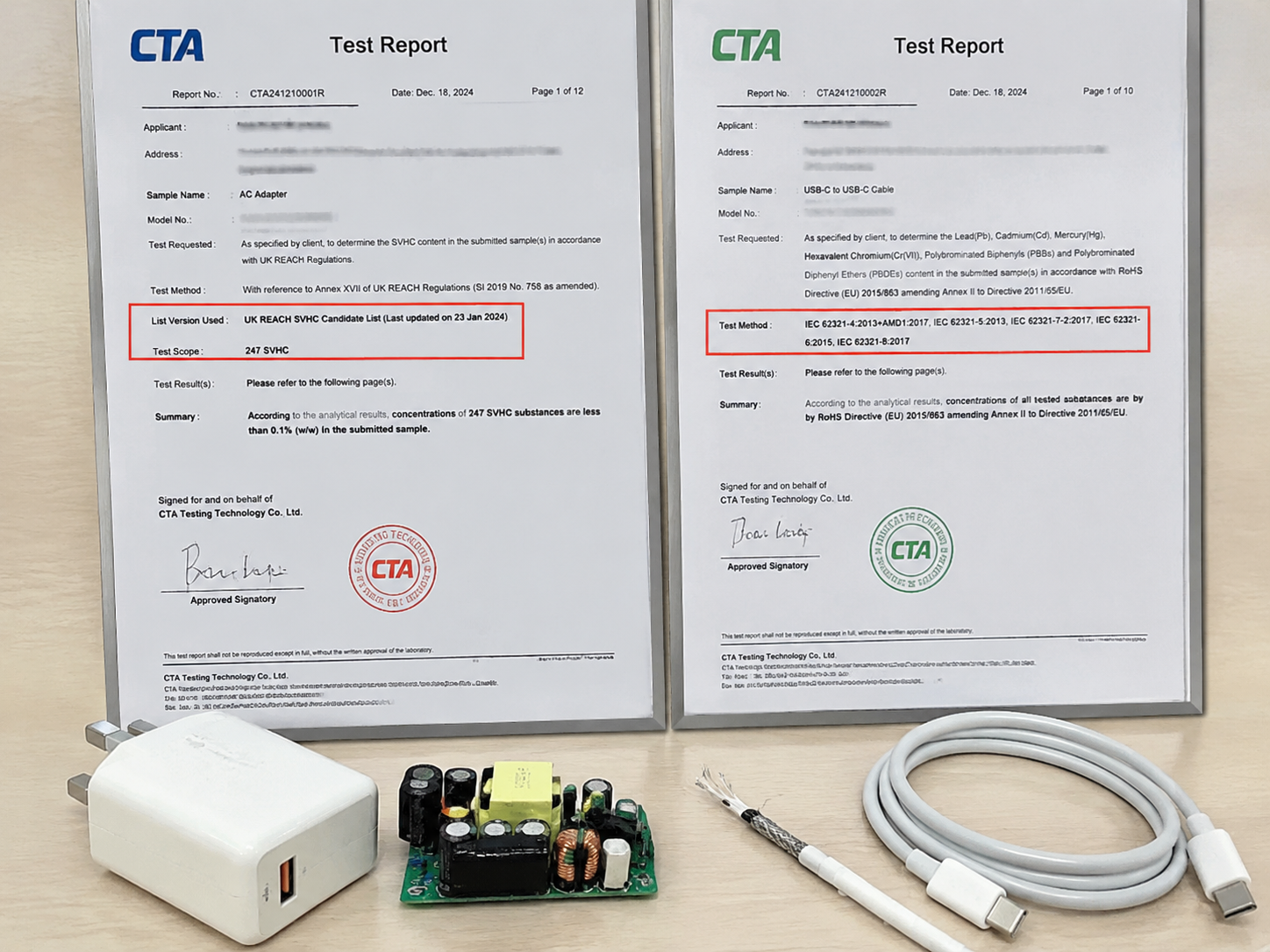
Step 5: Official list verification and dynamic tracking. All compliance judgements must be based on the latest version of the list officially released, including the SVHC Candidate List, Authorisation List, Restriction List, and corresponding statutory announcements. When checking, note that the effective date of the list must correspond to the time when the product is placed on the market; you cannot use rules that have not yet taken effect, nor can you use old versions that have been abolished. Before each restock or new product launch, you need to re-check the latest requirements, and you cannot assume that a single test is valid for a long time.
Common Misconceptions and Pitfall Avoidance Tips
We have sorted out 6 most common cognitive misconceptions. For each misconception, we directly give the core correction and verification action. For specific rules, you can go back to the corresponding chapters above to check:
Misconception 1: UK REACH and EU REACH are interchangeable
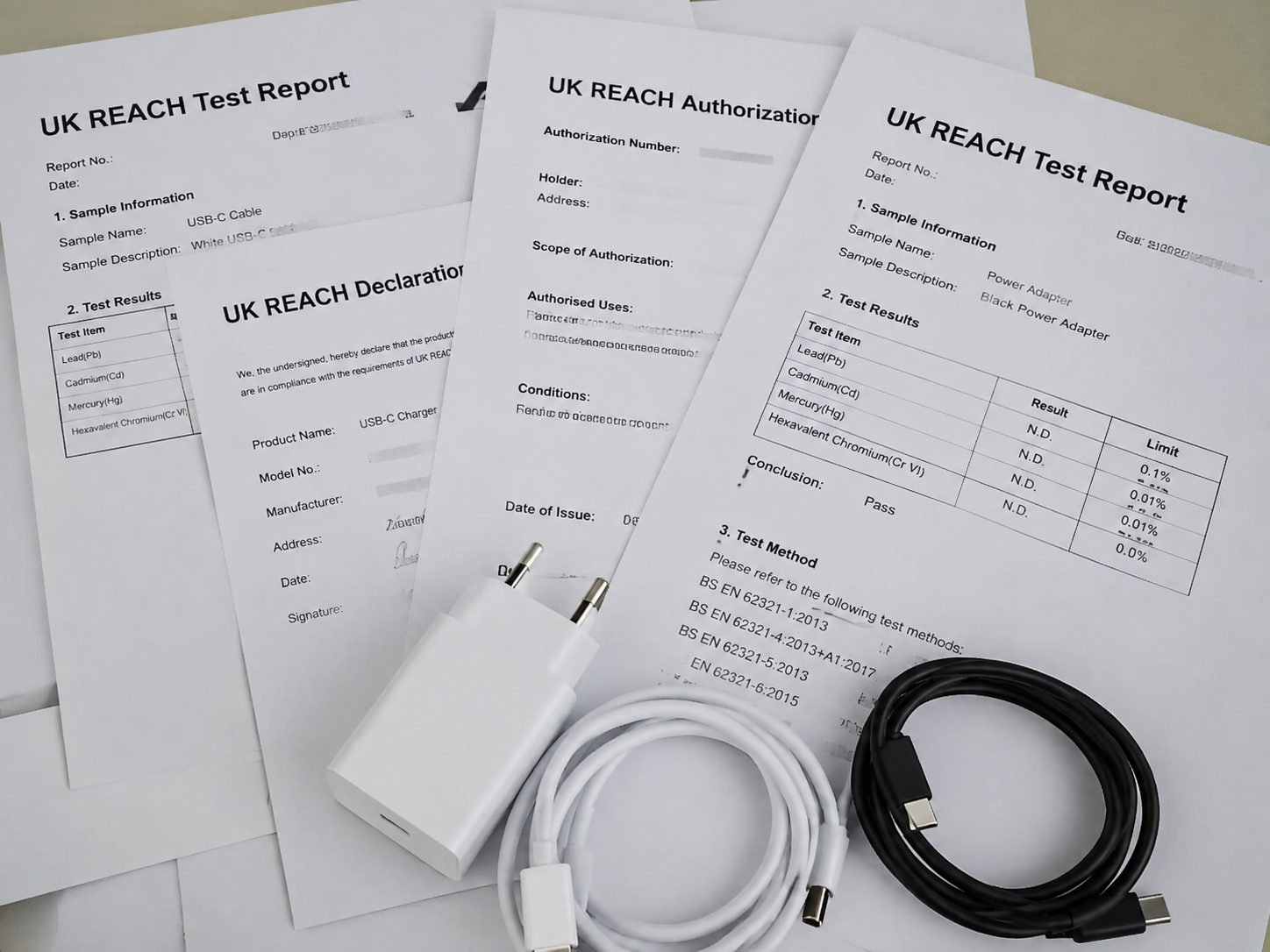
• Wrong statement: EU REACH compliance materials can be directly used for the UK GB market
• Key correction: The two systems are independent; EU regulatory conclusions such as registration and authorisation cannot be automatically converted into UK REACH compliance; only when the test report’s items, methods, CAS numbers, thresholds, and list versions are completely consistent with UK requirements can it be used as part of the evidence
• Verification action: For products sold to GB, uniformly follow the latest UK REACH list on the HSE official website
Misconception 2: If you have RoHS/UKCA, you don’t need to worry about UK REACH
• Wrong statement: RoHS or UKCA compliance can replace UK REACH
• Key correction: The three are independent compliance requirements, with non-overlapping control scopes and non-interchangeable exemption rules
• Verification action: Separately check UK REACH, UK RoHS and corresponding product marking requirements
Misconception 3: Small sellers/small batches don’t need to worry about UK REACH at all
• Wrong statement: Low sales volume means no UK REACH obligations are triggered
• Key correction: Restricted substance requirements and SVHC information obligations have no tonnage/sales threshold; only SVHC notification has a 1 tonne annual placement threshold
• Verification action: Regardless of sales volume, first check restricted substance requirements and SVHC information obligations
Misconception 4: Testing the total content of the finished product is enough
• Wrong statement: Grinding the whole finished product to test the average content and meeting the standard means complying with SVHC requirements
• Key correction: The SVHC threshold is judged at the “article” level, and the average of the whole machine cannot be used to hide non-compliance of a single component
• Verification action: Determine the test unit according to the official complex article splitting guidance before sending for testing
Misconception 5: Having a “UK REACH certificate” means full compliance
• Wrong statement: Getting a document marked “UK REACH certificate” means full compliance
• Key correction: UK REACH has no unified mandatory conformity certificate; so-called certificates on the market are mostly test reports, declarations or OR authorisation documents, which only cover specific items
• Verification action: Check the test scope, applicable regulations, list version and sample information of the document
Misconception 6: Importing 1 tonne of charging products triggers the registration obligation
• Wrong statement: Importing 1 tonne of finished products (e.g. charging cables) requires UK REACH registration
• Key correction: Registration targets the annual manufacturing/import volume of a single chemical substance; the total weight of finished products is not equal to the tonnage of the substance, and ordinary article imports usually do not trigger general registration obligations
• Verification action: Only when involving separate substances/mixtures or intentionally released substances in articles, is it necessary to calculate the registration threshold
Conclusion
The core of UK REACH compliance judgement is “layered matching”: first clarify the final destination of the product and your own supply chain role, then match corresponding obligations according to substance form and article level, and finally retain a complete evidence chain based on the latest official list. For charging products, there is no need to panic excessively nor take it lightly — small and medium-sized sellers can focus on restricted substance compliance and SVHC information obligations, while products with large tonnage or containing specially released substances require further verification of registration, authorisation and notification requirements. For scenarios where you are unsure, such as complex article splitting, authorisation use judgement, and multi-market compliance, it is recommended to seek support from professional compliance institutions to avoid losses caused by misjudgement.