
If you buy electronic products in Europe, or run a cross-border business selling goods to the EU, you have most likely heard the term “RoHS”. Some say it is an environmental certification, some call it a quality threshold, and others think sticking a small green label counts as compliance — in fact, many people have a biased understanding of it. Starting from the basic definition, this article systematically introduces the scope of application, regulated substances, limit rules, exemption mechanism, and compliance requirements of the EU RoHS Directive, to help different groups establish a clear compliance judgment framework.
1. Basic Understanding: Core Essence and Role of RoHS
Plain Language Definition and Core Attributes
You can think of RoHS as a mandatory environmental access threshold set by the EU for electronic products — it is not a voluntary selection, but a hard rule: only products that meet the requirements can be sold in the EU market. It only regulates the content of toxic and hazardous substances in products, and does not cover product functions, performance, or electrical safety, which fall under the scope of other regulations.
RoHS is the abbreviation of “Restriction of Hazardous Substances” in English, and its full Chinese name is “Directive on the Restriction of the Use of Certain Hazardous Substances in Electrical and Electronic Equipment”. The commonly used terms “RoHS standard” and “RoHS regulation” actually refer to this set of EU directive requirements.
Purpose of Introduction and Practical Significance
The core purposes of this set of rules are threefold:
First, reduce e-waste pollution at the source. In the past, e-waste was randomly dismantled and landfilled, and the toxic substances in it seeped into soil and water sources, causing long-term environmental damage.
Second, protect human health. Substances such as lead and mercury accumulate in the human body; long-term exposure can damage the nervous system and affect the reproductive system, with particularly significant harm to children.
Third, unify the rules of the EU internal market. Previously, environmental requirements varied from one EU country to another, and selling a pair of headphones might need to meet different standards of more than a dozen countries. After the introduction of RoHS, the rules are unified across the EU, eliminating trade barriers between member states.
Relevance to Different Groups
For ordinary consumers, there is no need to test product compliance by themselves; the relevant legal responsibilities are borne by merchants and manufacturers. The RoHS rules reduce the environmental and health risks caused by excessive levels of some restricted substances, but this does not mean that the product is entirely harmless, recyclable, or qualified in all safety indicators — it only regulates the content of the 10 listed hazardous substances.
For sellers and purchasers, RoHS is a mandatory requirement for products to enter the EU market, and violations may face penalties such as cargo detention, fines, and even platform sales bans.
Four Core Basic Understandings
Here we first clarify the most easily confused core rules; the following content will be expanded around these rules, and you can check the corresponding chapters for detailed explanations:
- Not completely free of hazardous substances: Compliance is achieved if the content of hazardous substances in homogeneous materials is within the limit, not “zero tolerance” (see Chapter 3 Limit Rules for details).
- Not a quality/energy-saving/recyclability certification: RoHS only regulates the content of hazardous substances, and has no direct relationship with product quality, energy consumption, or recyclability.
- No official unified “RoHS certification certificate”: The core document for compliance is the Declaration of Conformity (DoC) signed by the responsible party; third-party test reports are only supporting evidence, and there is no RoHS certificate issued by the EU official (see Chapter 4 Compliance Document Chain for details).
- Not an independent CE certification project: RoHS falls under the category of EU harmonized legislation that requires the affixing of the CE mark. The CE mark means that the product complies with all applicable EU harmonized legislations that require the CE mark, not only that it meets RoHS requirements, nor does it represent a quality grade (see Chapter 6 Boundary Distinction for details).
2. Scope of Application: Which Products and Entities Must Comply with RoHS
To judge whether a product needs to comply with RoHS, you can check step by step according to the following four steps, and you cannot draw a conclusion only by looking at the product name:
Step 1: Confirm whether it is Electrical and Electronic Equipment (EEE)
The plain language definition of electrical and electronic equipment is: equipment that operates by electric current or electromagnetic fields, or is used to generate, transmit, and measure electric current and electromagnetic fields, and must also meet the voltage requirements: alternating current ≤ 1000V, direct current ≤ 1500V.
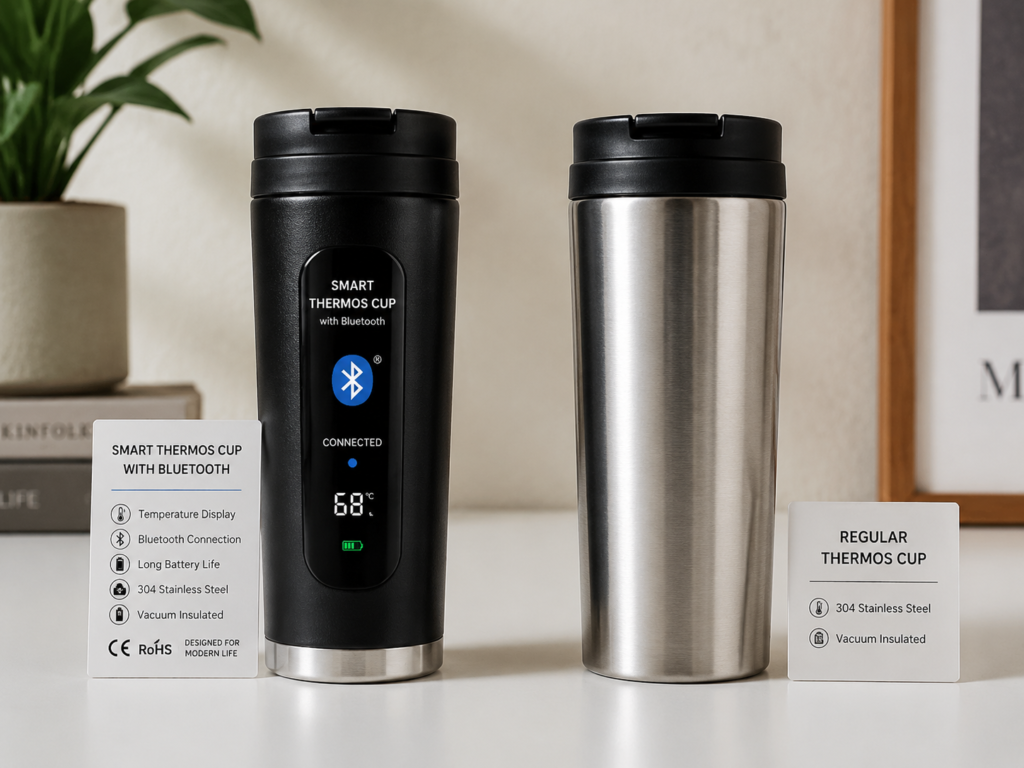
The judgment should be made comprehensively in combination with function, power supply method, and purpose. For example, a thermos cup with Bluetooth function is named a water cup, but it has a built-in Bluetooth module and operates on electricity, so it belongs to electrical and electronic equipment and needs to comply with RoHS requirements.
Step 2: Check whether it falls into the 11 statutory regulatory categories
The EU divides electrical and electronic equipment into 11 categories, which are functional classifications at the regulatory level, not a list of daily product names. When judging the ownership of a product, you must first confirm that the equipment meets the definition of EEE, and then make a comprehensive judgment based on the core function and the way it is placed on the market; products with the same name may fall into different categories due to different functions and uses.
- Large household appliances
- Small household appliances
- IT and telecommunications equipment
- Consumer equipment
- Lighting equipment
- Electrical and electronic tools
- Toys, leisure and sports equipment
- Medical devices
- Monitoring equipment
- Automatic vending machines
- Other electrical and electronic equipment not covered by the above 10 categories
Among them, Category 11 “Other EEE” was officially brought under regulation on July 22, 2019, which is equivalent to bringing all electrical and electronic products not listed in the first 10 categories into the scope of regulation. It should be noted that even if a product falls into these 11 categories, it is necessary to check whether there are statutory exclusions; it is not necessarily regulated just because it is in the category.
Most electronic products in daily contact are within the scope of regulation, such as:
- Consumer electronics: mobile phones, computers, chargers, routers, headphones, smart watches
- Home appliances and lighting: refrigerators, washing machines, microwave ovens, LED lights, desk lamps
- Other categories: electric tools, electronic toys, vending machines with electronic modules, ordinary household medical electronic equipment (such as blood pressure monitors, which usually belong to Category 8 medical devices, and need to further check the applicable date, exclusive exemptions and other medical-related regulatory requirements of the corresponding category), surveillance cameras (which usually belong to Category 9 monitoring equipment, and need to check the applicable rules and exemption requirements of the corresponding category)
There is another easily overlooked point: separately sold cables, accessories, and electronic modules, if they are placed on the EU market separately as electrical and electronic equipment, need to comply with regulations separately; it is not only finished products that need to meet the requirements.
Step 3: Check whether the product is a statutorily excluded product
Several categories of products are statutorily excluded from the scope of RoHS regulation, but all have clear applicable conditions and cannot be applied arbitrarily:
- Military/national security/aerospace equipment: Must be equipment specifically used for these purposes; this exclusion does not apply to civilian products modified for military scenarios.
- Large-scale fixed industrial installations: Must simultaneously meet conditions such as large scale, fixed installation in specific industrial premises, dedicated industrial use, and installation by professionals in accordance with specifications; ordinary industrial electronic equipment cannot automatically apply this exclusion.
- Large-scale fixed industrial tools: Refers to large-scale special tools fixedly installed in industrial premises, operated by professionals, and used for industrial production; they must meet conditions such as fixed installation, immovability, and dedicated industrial use. Ordinary hand-held or movable electric tools are not within the scope of this exclusion.
- Non-road mobile machinery: Refers to professional mechanical equipment specifically used in non-road scenarios and driven by external power sources; it must simultaneously meet statutory conditions such as professional use, dedicated non-road use, and external power supply. Ordinary movable industrial equipment is not within the scope of this exclusion.
- Prototype equipment exclusively for R&D: Limited to internal test prototypes that are not placed on the market; once mass-produced and sold, they must comply with regulations.
- Active medical devices implanted in the human body: For example, pacemakers, which are governed by special medical regulations and do not need to be implemented in accordance with RoHS requirements.
- Second-hand and refurbished electrical and electronic equipment: Second-hand EEE that has been legally placed on the market for the first time within the EU usually does not need to re-comply with RoHS requirements when it enters the market only for reasons such as resale or re-supply; however, if the product is refurbished or modified to constitute a new placement on the market, or is a newly produced product entering the EU market for the first time, it still needs to comply with the RoHS requirements applicable at the time of placement.
- Separately sold independent batteries: Usually do not fall within the scope of electrical and electronic equipment applicable to the RoHS Directive, and are mainly governed by special rules such as the EU Battery Regulation; however, batteries as components of electrical and electronic equipment need to be included in the RoHS material and supply chain assessment of the whole machine. Whether a battery pack with a battery management system constitutes an independent EEE needs to be comprehensively judged in combination with its independent function, power supply method, and the form of separate placement on the market, and cannot be directly determined just because it contains electronic modules.
Step 4: Confirm the corresponding responsible entity for compliance
RoHS responsibilities do not fall solely on one party; different roles have different legal obligations:
- Manufacturer/brand owner: Bears primary legal responsibility. Even if production is outsourced to a foundry, the responsibility will not be transferred, and complete technical documentation and Declaration of Conformity (DoC) need to be prepared.
- EU authorized representative: Manufacturers outside the EU can entrust an authorized representative within the EU through written authorization to be responsible for keeping compliance documents and cooperating with inspections by regulatory authorities; regardless of whether an authorized representative is entrusted, the manufacturer itself must perform core obligations such as conformity assessment, technical documentation preparation, and DoC signing.
- Importers within the EU: Must independently perform legal obligations such as compliance document verification, label inspection, and product traceability, and will not be exempted from responsibility because the manufacturer has entrusted an authorized representative.
- Distributors: Need to verify the compliance labels of products and cannot sell obviously non-compliant products.
- Cross-border e-commerce sellers: The responsible identity depends on the specific situation. If it is their own brand, or they are responsible for importing goods into the EU by themselves, they may need to bear the responsibility of the manufacturer or importer; it is not that they have no responsibility just because they sell on the platform.
3. Regulatory Requirements: 10 Hazardous Substances and Limit Rules
After confirming that the product is within the scope of RoHS regulation, the next step is to check the regulated substances, applicable time, and limit rules. The core is “limits are calculated based on homogeneous materials, with exceptions for valid exemptions”.
10 Regulated Substances and Common Scenarios
RoHS currently regulates a total of 10 hazardous substances, divided into the first batch of 6 classic substances and 4 phthalates added later:
| Substance Category | Specific Substance | Common Application Scenarios | Homogeneous Material Limit |
|---|---|---|---|
| First batch of 6 classic substances (applicable to the first batch of regulated products since 2006) | Lead (Pb) | Solder, glass, ceramics, battery contacts | ≤0.1% (1000ppm) |
| Mercury (Hg) | Switches, fluorescent lamps, sensors | ≤0.1% (1000ppm) | |
| Cadmium (Cd) | Batteries, pigments, metal coatings | ≤0.01% (100ppm) | |
| Hexavalent chromium (Cr⁶⁺) | Metal anti-rust coatings, surface treatment | ≤0.1% (1000ppm) | |
| Polybrominated biphenyls (PBB) | Plastic flame retardants | ≤0.1% (1000ppm) | |
| Polybrominated diphenyl ethers (PBDE) | Plastic flame retardants | ≤0.1% (1000ppm) | |
| 4 newly added phthalates (plastic plasticizers) | DEHP, BBP, DBP, DIBP | Plastic housings, cable insulation layers, coatings, electronic component encapsulation | Each ≤0.1% (1000ppm) |
The 4 newly added phthalates were included in the regulation through the (EU) 2015/863 amendment (commonly known as RoHS 3). Different product categories are brought under RoHS regulation at different times, so it is necessary to judge the applicable substance scope in combination with the product category and the date of placement on the EU market:
- Categories 1 to 7 and Category 10 EEE: The 6-substance requirement has been applicable since July 1, 2006, and the 4 phthalate requirements (total 10 substances) must be met simultaneously since July 22, 2019.
- Category 8 medical devices and Category 9 monitoring equipment: The 6-substance requirement has been applicable since July 22, 2014, and the 4 phthalate requirements (total 10 substances) must be met simultaneously since July 22, 2019.
- In vitro diagnostic medical devices (subcategory of Category 8): The 6-substance requirement has been applicable since July 22, 2016, and the 4 phthalate requirements (total 10 substances) must be met simultaneously since July 22, 2019.
- Industrial monitoring and control equipment (subcategory of Category 9): The 6-substance requirement has been applicable since July 22, 2017, and the 4 phthalate requirements (total 10 substances) must be met simultaneously since July 22, 2019.
- Category 11 other EEE: Brought under regulation on July 22, 2019, and directly subject to all 10 substance requirements.
The applicable time for independent cables needs to be comprehensively judged according to the category of electrical and electronic equipment they belong to and the time of separate placement on the market; there is no unified “cable delay” rule.
Core Judgment Criterion: Homogeneous Materials
Many people do not understand the calculation basis of the limit. Here it is clarified: the limit is the mass concentration for “homogeneous materials”, not the total weight of the whole machine.
The plain language explanation of homogeneous materials is: the smallest uniform material that cannot be further split by mechanical means. For example, a USB cable with a PVC insulation layer cannot be tested as a whole; it must be split into different homogeneous materials such as copper conductor, surface coating, PVC insulation layer, outer sheath, and metal terminals, each of which is evaluated separately.
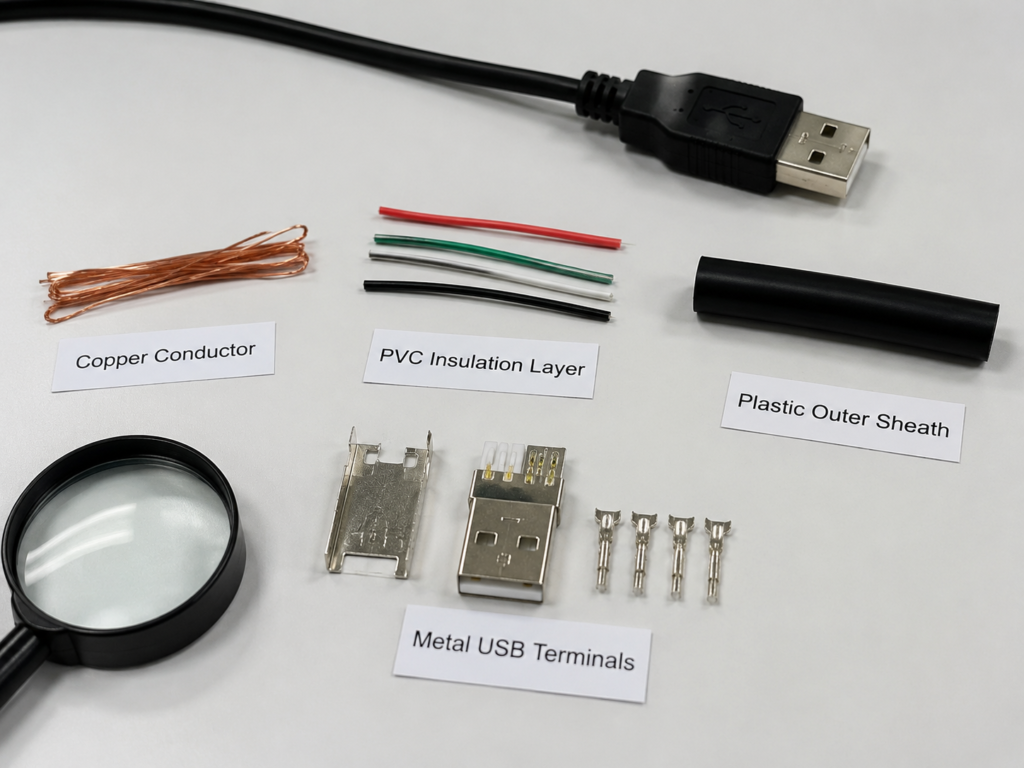
The judgment rule is: when there is no applicable and valid exemption, if the restricted substance in any homogeneous material exceeds the corresponding limit, the product cannot be deemed to comply with RoHS; if there is an applicable exemption, it is also necessary to check whether the substance, use, product category, and validity period match. It is absolutely impossible to use the total weight of the whole machine to average and dilute hazardous substances — for example, if the DEHP in the insulation layer exceeds the standard, you cannot use the total weight of the entire cable or the whole machine to lower the average value to judge compliance, which is completely inconsistent with the rules.
Boundaries of Testing and Judgment
Testing and judgment cannot only look at the values, but must be comprehensively judged in combination with the method detection limit, sample representativeness, rationality of material splitting, and measurement uncertainty. Rapid screening methods such as X-ray fluorescence spectroscopy (XRF) are suitable for preliminary risk identification of elemental substances such as lead, mercury, and cadmium, but they cannot cover all 10 regulated substances alone, nor can they accurately identify the valence state of hexavalent chromium, phthalates and other organic substances; for such items, applicable laboratory chemical analysis methods are usually required. A report that only conducts whole-machine screening cannot prove product compliance; testing or risk assessment at the homogeneous material level must be implemented.
4. Compliance Rules: Legislative Evolution, Exemptions, and Document Requirements
After confirming the substance and limit requirements, it is also necessary to understand the evolutionary logic of the regulation, the exemption mechanism, and the necessary compliance document chain to complete a complete compliance judgment.
Legislative Evolution and Phased Application Logic
Since its introduction, RoHS has undergone three major updates. The core changes are the gradual expansion of the scope of regulated products and the gradual increase of regulated substances. When judging compliance, it is necessary to correspond to the applicable requirements in combination with the product category and the date of placement on the EU market:
- RoHS 1 (2002/95/EC): Officially released in 2003, EU member states should in principle complete the transposition of national regulations in 2004; the restriction on 6 hazardous substances for Categories 1 to 7 and Category 10 EEE was officially applicable on July 1, 2006, that is, products that do not meet the requirements shall not be placed on the EU market; Category 8 medical devices and Category 9 monitoring equipment were not included in the first batch of regulation at that time.
- RoHS 2 (2011/65/EU): Released in 2011, replacing the original RoHS 1 Directive. Member states should complete national transposition before January 2, 2013; this version expanded the scope of product regulation, incorporated RoHS into the EU harmonized legislation framework applicable to the CE mark, clarified the requirements for the compliance document chain, and different categories of products are applied in phases (see the timeline in the regulated substances section of Chapter 3 for specific applicable dates).
- RoHS 3 ((EU) 2015/863 amendment): Released in 2015, adding 4 phthalates on the basis of the original 6 substances. All RoHS-regulated products must meet the requirements of 10 substances since July 22, 2019 (product categories newly brought under regulation after July 22, 2019, will be directly subject to the 10-substance requirement from the date of inclusion).
Exemption Mechanism: Legal Exceptions
For some products for specific uses, if technically feasible, safe and reliable alternative materials cannot be found for the time being, the EU will set up exemptions to allow the use of restricted substances under specific conditions.
Exemption items are mainly included in Annex III (General Exemptions) and Annex IV (Special Exemptions for Medical/Monitoring Equipment) of the RoHS Directive. It should be noted that exemption does not mean that the entire product does not need to comply with the rules, but is set for “specific substance + specific use + specific product category”, and each exemption has a unique number. Common exemption scenarios include lead in high-temperature solder, small amounts of mercury in specific energy-saving fluorescent lamps, restricted substances in some industrial sensors, etc. — these are just examples of common uses, and it does not mean that automatic exemption is granted as long as it falls into such scenarios. In actual use, it must correspond to the specific exemption items issued by the EU official, confirm that it clearly covers the corresponding substance, use, and product category, and the item is still within the validity period before it can be applied.
Precautions for Using Exemptions
- Dynamic update: The EU regularly revises the exemption list, which has no fixed validity period and may be renewed, modified or even cancelled. Be sure to check the current valid latest version before use.
- Sunset clause: Some exemptions have a clear expiration date (sunset date), which will automatically expire after the date, and alternative solutions need to be prepared in advance.
- Self-exemption is prohibited: Must correspond to the official clear exemption items, and cannot self-identify compliance based on “industry practice” or “everyone uses it this way”.
- Geographical restriction: The exemptions of EU RoHS only apply to the EU. RoHS-like regulations in other countries have their own exemption rules and cannot be used universally.
Conformity Assessment and Document Chain Requirements
RoHS adopts the manufacturer’s self-declaration mode, and there is no RoHS certification certificate uniformly issued by the EU official. A complete compliance document chain includes three parts:
- Technical documentation: Includes product bill of materials (BOM), homogeneous material splitting table, supplier material declaration, test report/risk assessment report, internal production control records, etc. It is a collection of technical supporting evidence formed based on product risks.
- EU Declaration of Conformity (DoC): In principle, the manufacturer is responsible for completing the conformity assessment, drafting and signing the DoC, and bearing the ultimate legal responsibility for the product’s compliance with RoHS requirements. The EU authorized representative can only perform designated tasks (such as keeping documents and cooperating with supervision) based on the manufacturer’s written authorization, and will not automatically assume the core responsibilities of the manufacturer.
Importers or sellers only need to bear the DoC signing obligation at the manufacturer level in the following situations: selling products under their own brand, making substantial changes to the products, or being deemed as a manufacturer according to law. Importers need to verify the authenticity and completeness of the DoC and technical documents. - CE mark: Must be marked on the product body, packaging or accompanying documents in accordance with the rules, and the size and position must meet the specification requirements of the CE mark.
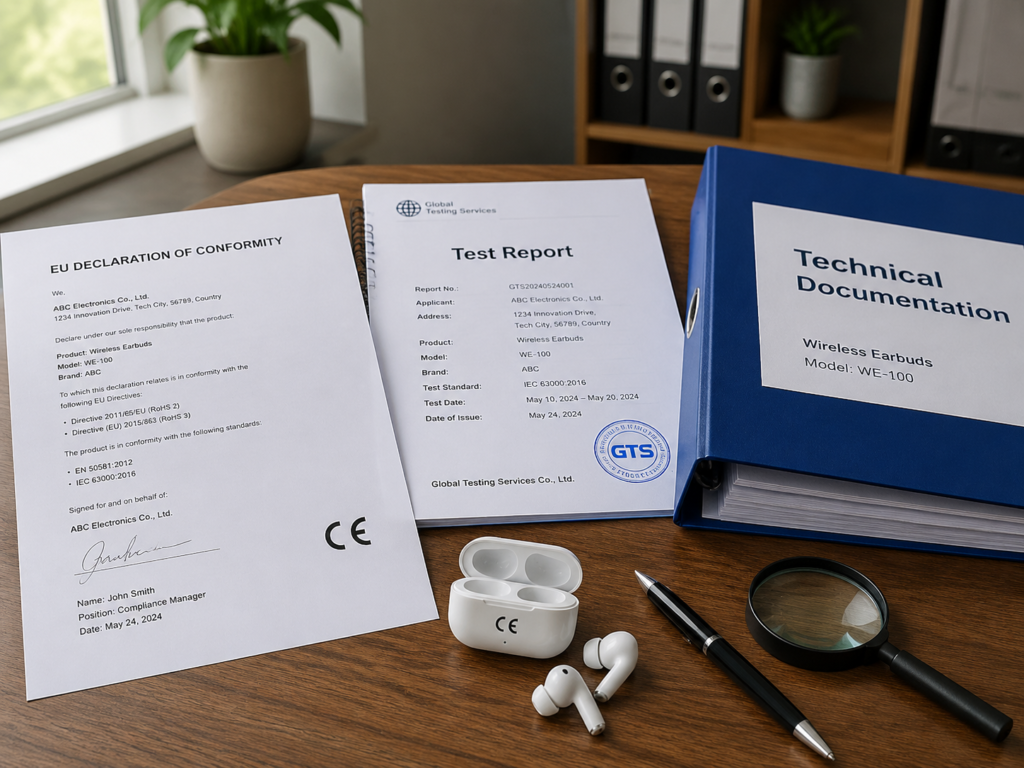
Document retention obligations also vary for different entities:
- Manufacturers need to keep complete technical documentation and DoC for at least 10 years after the product is placed on the market, and must be able to provide them when required by regulatory authorities.
- Importers and distributors need to verify the DoC and CE mark, keep product traceability records, and cooperate with supervision to retrieve documents.
Third-party test reports are only responsible for the submitted samples, cannot replace the DoC, and do not represent 100% compliance of the product — the report has compliance reference value only when the sample is completely consistent with the mass-produced product, the materials and processes have not changed, and the testing covers all homogeneous materials and regulated substances.
5. Quick Judgment: Compliance Verification Methods for Different Groups
Ordinary Consumers: Can Only Do Preliminary Identification
Ordinary consumers have no way to directly test the substance content of products, and can only make preliminary risk judgments through several points:
- Check whether the product is marked with manufacturer/importer information, product model, and CE mark.
- You can request the merchant to provide the Declaration of Conformity (DoC).
It should be noted that: the CE mark may be forged, and the mark alone cannot prove core compliance points such as material limits and exemption validity; the green RoHS icon printed by merchants themselves has no legal effect and cannot be used as a basis for compliance; products without the CE mark may have overall EU compliance risks, but cannot alone prove that RoHS restricted substances exceed the standard, so you need to be cautious when purchasing.
Small Sellers/Purchasers: 4-Step Basic Compliance Verification
If you are a small seller or purchaser and need to verify whether the supplier’s products comply with RoHS, you can follow these four steps:
- Scope judgment: First confirm whether the product is electrical and electronic equipment, whether it meets the voltage and category requirements, and whether it meets the conditions of statutory exclusions; even if RoHS is not applicable, it is also necessary to check other applicable EU regulations and keep the judgment basis for exclusions to avoid subsequent regulatory disputes.
- Document verification: Request the DoC from the supplier, and check whether the product model, scope of regulated substances, and signing entity are valid (for example, whether it is the manufacturer or its authorized representative).
- Report verification (when necessary): If you have doubts about the supplier’s qualifications, you can request a test report to check whether the report covers all 10 regulated substances and all homogeneous materials, and whether the submitted sample is consistent with the mass-produced product.
- Exemption verification: If the supplier claims to use an exemption, check the exemption number, applicable product category, and whether it is within the validity period.
Some cross-border e-commerce platforms or specific categories may require RoHS-related compliance documents during listing, spot checks or appeals. The actual requirements shall be subject to the current platform rules of the corresponding site.
6. Boundary Distinction: Differences Between RoHS and Other EU Environmental Regulations
Many people confuse RoHS with other EU environmental and certification rules, but in fact they regulate completely different content.
Differences from the WEEE Directive
RoHS regulates the production end, that is, when the product is produced, the content of hazardous substances inside must not exceed the standard.
WEEE (Waste Electrical and Electronic Equipment Directive) regulates the waste end, that is, how to recycle, treat, and reuse products after they are used up, corresponding to the “crossed-out trash bin” mark on the product.
The same electronic product may need to meet both RoHS and WEEE requirements, because they regulate different stages of the product life cycle.
Differences from the REACH Regulation
RoHS only targets 10 specific substances in electrical and electronic equipment, and is managed according to homogeneous material limits.
REACH (Registration, Evaluation, Authorization and Restriction of Chemicals) is a dynamic EU chemical management system that covers different objects such as substances, mixtures, and articles, and controls chemical risks through various mechanisms such as registration, restriction, authorization, and supply chain information transmission; specific obligations depend on the substance state, use, and supply chain role.
Compliance with RoHS does not mean automatic compliance with REACH. The two are independent regulatory systems and require separate compliance judgments.
Relationship with the CE Mark
RoHS is one of the EU harmonized legislations that require the affixing of the CE mark, and there is no independent “RoHS CE certification”. The CE mark on a product means that it complies with all applicable EU harmonized legislations that require the CE mark (such as RoHS, LVD electrical safety, EMC electromagnetic compatibility, etc.). CE is an EU market access mark, not a quality grade certificate, and only represents that the product meets the corresponding minimum EU access requirements. For relevant core rules, please refer to the explanations in Chapter 1 Basic Understanding and Chapter 4 Compliance Document Chain.
7. Common Misconceptions and High-Risk Scenarios
Misconceptions About Scope of Application
- Misconception: Only finished products need to comply with RoHS
Correct conclusion: If parts and materials are placed on the market separately as electrical and electronic equipment, they need to comply with regulations separately; even if they are not sold separately, they need to support the compliance requirements of the whole machine. See Chapter 2 Scope of Application for details. - Misconception: All electronic products must comply with RoHS
Correct conclusion: Statutorily excluded categories (such as military equipment, R&D prototypes, eligible second-hand products, etc.) do not need to comply, and the exclusions must meet the corresponding judgment conditions. See the statutory exclusion section of Chapter 2 for details. - Misconception: Products without metal do not need to worry about RoHS
Correct conclusion: Flame retardants and phthalate plasticizers in plastics are all within the scope of regulation, and all-plastic electronic accessories may also have the risk of exceeding the standard. See Chapter 3 Regulated Substances for details. - Misconception: EU RoHS is recognized globally
Correct conclusion: Many countries and regions have their own RoHS-like regulations (such as China RoHS, California RoHS in the United States), with different scopes, limits, and exemption rules, which cannot be used universally.
Misconceptions About Limit Rules
- Misconception: A product is compliant if the hazardous substances in the whole machine do not exceed the standard
Correct conclusion: RoHS is judged by the limit of homogeneous materials. The average value of the whole machine cannot dilute the excess of a single material. Excess of any homogeneous material (when there is no valid exemption) may lead to product non-compliance. See the homogeneous materials section of Chapter 3 for details. - Misconception: Detection of hazardous substances means violation
Correct conclusion: As long as the content is within the limit, or meets the valid official exemption requirements, it is compliant. RoHS is not zero-tolerance for restricted substances. See Chapter 3 Limit Rules and Chapter 4 Exemption Mechanism for details. - Misconception: RoHS regulates all toxic substances
Correct conclusion: RoHS only regulates the 10 listed substances, and other toxic substances are governed by other regulations such as REACH.
Misconceptions About Compliance Certification
- Misconception: Having a “RoHS certificate of conformity” means compliance
Correct conclusion: There is no unified official RoHS certification certificate in the EU. The core compliance document is the Declaration of Conformity (DoC). See the explanations in Chapter 1 and Chapter 4 for details. - Misconception: Having a third-party test report means full compliance
Correct conclusion: The test report is only responsible for the submitted samples. It needs to match the mass-produced products, cover all homogeneous materials and regulated substances, and have a complete document chain to have compliance reference value. See Chapter 4 for details. - Misconception: The CE mark represents good product quality
Correct conclusion: CE is an EU market access mark, not a quality grade certificate, and only represents that the product meets the corresponding minimum EU access requirements. See the explanations in Chapter 1 and Chapter 6 for details.
Easily Overlooked High-Risk Scenarios
In addition to the above common misconceptions, there are several types of practical operation pitfalls that easily lead to the failure of compliance judgment:
- The test report only covers some materials or some regulated substances, and does not test all homogeneous materials and 10 restricted substances.
- The product model and version on the DoC are inconsistent with the actually sold product.
- The claimed exemption has expired, or is not applicable to the product category and use at all.
- After the product’s materials, suppliers, and production processes are changed, the compliance documents are not updated, and the old test reports and DoC are still used.
Summary
Through the introduction of this article, you can master the core judgment logic of the RoHS Directive: First, you can identify step by step which products and which entities must comply with the EU RoHS Directive, and clarify the core standards for scope judgment and the applicable conditions of statutory exclusions; second, you can sort out the limit rules of the 10 regulated substances and the judgment method of homogeneous materials, and avoid common cognitive biases such as “the whole machine average is enough for compliance”; third, you can initially verify the RoHS compliance of products through the CE mark, Declaration of Conformity, and test reports, and distinguish the applicable boundaries between RoHS and WEEE, REACH, and the CE mark.
It should be noted that ordinary consumers can only do preliminary risk identification through public information and cannot directly determine that the product is fully compliant; sellers and purchasers still need to complete the final compliance verification in combination with the product category, date of placement on the market, exemption validity, material supply chain situation, and complete document chain, and can consult professional compliance institutions when necessary.