
If you frequently buy products from the EU market, or work in the field of exports to the EU, you have most likely heard of the CE mark, and may also have come across terms such as “GPSD certification” and “GPSR compliance”. Many people mistake GPSD for a specific type of certification, but in fact it is the most basic fallback rule in the EU consumer product safety system — however, it is no longer a currently valid rule, having been replaced by the new GPSR. This article explains the general safety rules for EU consumer products centered on the currently valid EU General Product Safety Regulation (GPSR); the old General Product Safety Directive (GPSD) is only used to explain the compliance basis for products placed on the market before December 13, 2024 and the interpretation of historical materials. Whether you are an ordinary consumer or a new practitioner, you can learn the core logic and practical judgment methods of EU product safety from this article.
1. Core Position of GPSD: The EU Consumer Product Safety Fallback Rule Replaced by GPSR
Plain-Language Definition: The General Safety Baseline for Consumer Products
The full Chinese name of GPSD is the General Product Safety Directive, which was the minimum safety baseline set for all tangible physical products intended for ordinary consumers in the old version of EU rules. If a certain type of product does not have a dedicated safety regulation (for example, food has food law, pharmaceuticals have pharmaceutical law), it must comply with this baseline requirement. Its core function is not to require products to be completely risk-free, but to avoid unreasonable dangers that consumers cannot accept.
Official Status and the Transition from Old to New
There is a clear difference between “directives” and “regulations” in the EU: a directive is a target requirement set by the EU for each member state, and each country must transpose it into its own national law before implementation, so there may be minor differences in implementation details between different countries; a regulation is a unified rule directly formulated by the EU, with core obligations directly applicable across the entire EU, no need to be transposed into national law, and higher consistency of rules.
- Old rule: The General Product Safety Directive (GPSD for short, Directive 2001/95/EC) is a directive that entered into force in 2002 and was implemented by member states after transposition into national law.
- Current rule: The General Product Safety Regulation (GPSR for short, Regulation (EU) 2023/988) is a regulation that is directly applicable across the entire EU.
- Transition time: GPSR fully entered into force on December 13, 2024, officially repealing GPSD.
Why We Still Need to Understand GPSD
Since GPSD has been replaced, there are still three types of practical scenarios where relevant knowledge is used:
- For ordinary consumers, understanding the logic of GPSD helps to grasp the underlying thinking of EU product safety, and provides a clear reference basis when safeguarding rights.
- For new practitioners, the core requirements of GPSD are in the same line as those of GPSR, and mastering them can help quickly understand the underlying logic of the current rules.
- When handling products placed on the market before December 13, 2024, or old compliance documents, contracts, and regulatory announcements formed during the same period, it is still necessary to judge against the GPSD rules to avoid applying new standards to old scenarios.
2. Scope of Application and Responsible Entities: Quickly Judge Whether It Is Regulated and Who Is Responsible
The following scope of application and compliance obligations are mainly formulated based on the current GPSR; for historical products placed on the market before December 13, 2024, the requirements of the applicable GPSD and member states’ transposed laws at that time should be checked. The core safety logic of the two is in the same line, but the specific obligations are subject to the rules of the corresponding period.
Core Judgment Conditions for Regulated Products
Products that meet three conditions at the same time fall within the scope of GPSR regulation:
First, they are tangible physical products — digital courses, virtual goods, and pure services (such as haircuts, cleaning) are not within the scope of regulation.
Second, they are intended for ordinary consumers in the EU, or will be used by consumers under reasonably foreseeable circumstances — for example, a drill nominally labeled “professional-grade” that ordinary people can buy in a supermarket and use at home falls into the category of consumer products.
Third, all channels are covered — whether it is offline physical stores, e-commerce platforms, live-streaming sales, mail order, cross-border direct mail, or free gifts, promotional items, and trial samples provided by merchants, all are included in the regulation.
Categories That Are Not Applicable or Where Other Rules Take Precedence
Not all products are subject to general safety rules, which can be quickly judged according to a three-layer logic:
Completely Excluded Categories
This type of product is explicitly not subject to general safety rules, including:
- Products sold as antiques and recognized in accordance with relevant rules (whether an item is an antique cannot be judged solely by its age, but also needs to be confirmed in combination with the way it is presented for sale, the nature of the product, and the practice of member states)
- Second-hand goods resold privately by individuals (for example, an individual selling a used hair dryer to a neighbor in a local community)
- Second-hand goods clearly marked “requiring repair/refurbishment before use”
Categories Where Special Regulations Take Precedence
Categories such as food, pharmaceuticals, cosmetics, and live animals and plants already have dedicated safety regulations. For such products, it is necessary to first check the corresponding special regulations and GPSR provisions to confirm whether they fall within the exclusion scope; if they fall into the category of consumer products and have clear special safety requirements, the special rules shall apply first. For the specific relationship between the rules, please refer to the explanation in Chapter 5.
Boundary of Industrial/Professional Products
Products for industrial or professional use are not subject to general rules only when they are completely intended for professionals and are reasonably foreseeable not to be purchased and used by ordinary consumers. For example, large cranes used on construction sites are not accessible to ordinary people and do not fall into the category of consumer products.
Rules for Confirming Responsible Entities Within the EU
The following order of responsible entities is mainly understood in accordance with the current GPSR; during the GPSD period, the specific responsibility arrangements need to be confirmed in combination with the transposed laws of member states. For products placed on the EU market, there must be a responsible economic operator within the EU. The conditions for the establishment of each role are as follows:
- EU-based manufacturer: If the product is produced within the EU, the manufacturer is the responsible entity and bears the corresponding safety compliance obligations.
- EU-based importer: If the product manufacturer is outside the EU and there is an EU-based importer that introduces the product into the EU market, the importer bears the main compliance obligations, and no additional authorized representative needs to be designated.
- EU authorized representative: Only when there is no responsible manufacturer or importer within the EU can an overseas manufacturer, through written authorization, designate an authorized representative within the EU to perform relevant compliance obligations.
- Fulfillment service provider: Only when none of the above three types of entities exist, and the fulfillment service provider (such as overseas warehouse, drop-shipping service provider) participates in the process of placing the product on the market, does it need to bear the corresponding compliance responsibility.
Exclusive Statutory Obligations of E-commerce Platforms
GPSR clearly stipulates the obligations of online marketplaces, which is also one of the important differences between the old and new rules:
- Platforms must set up a single regulatory contact point, register in the EU Safety Gate system, and cooperate with regulatory authorities in risk disposal work.
- Platforms must establish an internal mechanism for handling product safety notifications and regulatory orders, require settled merchants to publicize product safety information and responsible entity information, and ensure that consumers can directly obtain it on the product page.
- When a platform receives information sufficient to identify dangerous goods, orders from competent authorities, or recall requirements, it must promptly take disposal measures such as removing from shelves and stopping sales, cooperate in transmitting risk warnings to affected consumers, and publicize information about confirmed dangerous products as required by regulation.
3. Core Safety Requirements and Pre-Market Compliance Actions
Core Principle: Only “Reasonable Safety” Is Required, Zero Risk Is Not Required
The EU general safety rules do not require products to be “absolutely safe”, but only require that products will not present unreasonable dangers under normal use or even foreseeable misuse — for example, a glass cup bursting when normally used to hold hot water is an unreasonable risk; but deliberately breaking a glass cup causing cuts is a normal risk and does not constitute a product violation.
As long as there is an unreasonable risk, it constitutes a violation, and no actual harm is required. The dimensions to be considered when conducting a safety assessment include: the characteristics of the product itself, the impact of use in combination with other products, appearance and packaging, installation/maintenance/disposal instructions, usage scenarios of vulnerable groups such as children and the elderly, cybersecurity risks of smart connected products, usage environment, etc.
Two Types of Bases for Compliance Judgment
The bases for proving that a product is “reasonably safe” are mainly divided into two categories, and the legal application frameworks of different standards are different:
The first category is the presumption of compliance standards under the GPSR framework: only European standards that are published in the Official Journal of the European Union in accordance with GPSR-related procedures and cover the corresponding safety risks will have the corresponding effect of presumption of compliance within the scope of GPSR, that is, during regulatory verification, the risk points covered by the standard will be deemed to meet the requirements by default. However, this presumption is not an absolute exemption, and operators still need to bear compliance responsibility for risks not covered by the standard.
The second category is harmonized standards under special regulations: for products subject to special regulations such as low voltage and toy safety, CE-related compliance should be judged according to the harmonized standards cited by the corresponding special regulations. The presumption of compliance effect of such standards applies to the corresponding special regulations, not directly to GPSR.
If there is no applicable standard, it can be judged whether the product meets the general safety requirements by referring to industry practices, consumers’ general safety awareness, and the requirements of relevant special regulations.
Product Information and Labeling Requirements
Products must provide sufficient information to ensure the safe use of consumers and facilitate regulatory tracing of the responsible party:
- Traceability information: The manufacturer must mark its name, registered trade name or trademark, postal address and electronic contact address, as well as traceability information such as product identification code and batch number on the product; if the manufacturer is outside the EU, the product must also be marked with the relevant information of the responsible entity within the EU (importer or authorized representative) in accordance with the rules, and the importer must also perform its own labeling obligations.
- Instructions and warnings: They must be in a language prescribed by the target member state that is easy for consumers to understand. For example, products sold to Germany need to provide German instructions, and products sold to France need to provide French instructions. It is not allowed to only provide an English version. The specific language requirements need to be checked against the rules of the target member state.
- Exclusive online requirements: The product page for distance sales should at least display manufacturer information, EU responsible person information when necessary, product identification information, as well as safety warnings, applicable restrictions and other content, and it is not allowed to only print relevant information inside the product packaging.
Necessary Pre-Market Compliance Actions
Before placing a product on the EU market, at least the following compliance work must be completed:
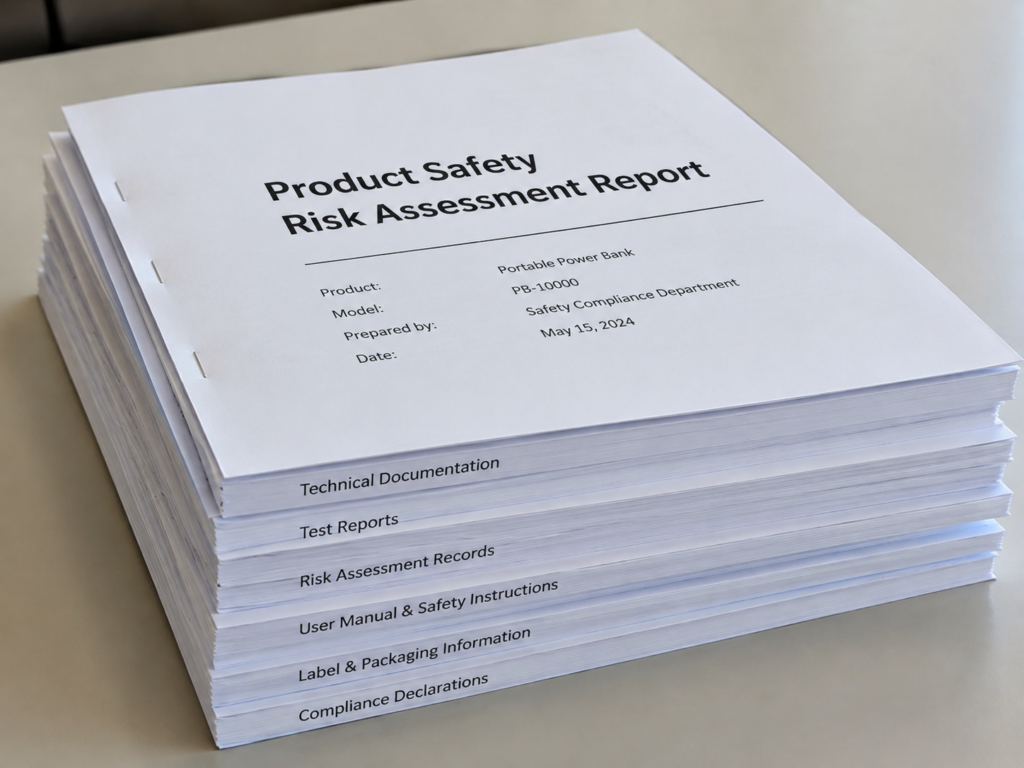
- Complete the product safety risk assessment and prepare complete technical documentation. The manufacturer should usually keep the technical documentation for at least 10 years after the product is placed on the market, and must be able to provide it during regulatory verification.
- Confirm that the product labeling, instructions, and warnings meet the language and content requirements of the target member state.
- Conduct sampling tests, control the compliance capabilities of suppliers, and prevent upstream supply chain risks.
- If selling through online channels, confirm that the information on the product page meets the publicity requirements.
4. Post-Market Obligations and Regulatory Penalties
Core Post-Market Compliance Obligations
- Risk monitoring: Economic operators must track consumer complaints, returns, and accident feedback, timely identify potential safety risks, and must not neglect their monitoring obligations.
- Dangerous product notification: If a product is considered to be dangerous, the regulatory authority must be notified without undue delay through the EU Safety Business Gateway, and the corrective measures to be taken must be explained.
- Accident reporting: After economic operators become aware of an accident related to the use of the product that causes death or serious adverse health and safety effects, they shall report to the competent authority through the Safety Business Gateway, usually within 2 working days after becoming aware of it. The specific time limit is subject to official provisions and member state procedures. It should be noted that the accident report at the GPSR level focuses on serious effects related to personal health and safety; if it involves major property losses, it needs to be judged in combination with the regulatory procedures of specific member states, product liability, and civil compensation rules, which is not equivalent to the unified mandatory reporting obligation under GPSR.
- Corrective measures: Take measures such as stopping sales, removing from shelves, withdrawing, and recalling according to the severity of the risk, and provide consumers with effective, free, and timely remedies; when recalling, in principle, consumers can choose at least two remedies among repair, replacement, and appropriate refund, unless a certain remedy is objectively impossible or the implementation cost is seriously disproportionate to the product value and risk level.
EU Two-Level Regulatory System
EU product safety supervision is divided into two levels, implemented in linkage:
- Local regulatory authorities of member states: responsible for daily market spot checks, law enforcement, and accepting consumer complaints, and are the most frequently contacted regulatory entities.
- EU Non-Food Consumer Product Warning System (Safety Gate, formerly known as RAPEX): The entire EU shares risk information on problematic products. After one member state discovers and reports a problem, other member states can use this to investigate the same product in their own markets and take corresponding measures; whether to take a sales ban, recall, or public warning depends on the risk level and the law enforcement assessment of each member state, and the same measures are not uniformly adopted.
Common Regulatory Trigger Scenarios
Regulatory trigger scenarios cover all online and offline channels, mainly including three categories:
- Random market spot checks: Both online and offline products may be selected, and regulatory authorities can directly place orders to buy samples for testing.
- Special inspections after consumer complaints and reports: If a certain product has a high number of complaints, the regulatory authority will launch a special verification.
- EU-wide joint investigation after Safety Gate issues a warning: As long as one member state reports a problematic product, all other member states will investigate whether the same product exists in their own markets.
Violation Disposal and Penalties
Violation disposal measures are divided into multiple grades from light to heavy according to the degree of risk: mild ones include rectification within a time limit, removal of problematic products from shelves, and public warnings; moderate ones include fines and mandatory recalls; severe ones include product destruction, and criminal liability may also be involved in serious cases.
It should be noted that the specific penalty rules are formulated by the national laws of each member state, and only need to meet the principles of “effective, proportionate, and dissuasive”. There is no unified minimum fine standard across the EU, and the penalty rules of a single member state cannot be used to infer the penalty standards of the entire EU.
The competent authorities of member states can take measures such as sales bans, removal from shelves, recalls, and destruction according to the degree of risk; Safety Gate notifications will prompt other member states to investigate the same product in their own markets and take corresponding disposal measures in accordance with the law, but this does not automatically equate to a unified EU-wide ban that takes effect automatically.
Differences Between Three Types of Regulatory Actions
The common “withdrawal”, “recall”, and “public warning” are three different regulatory actions, with different applicable scenarios:
- Withdrawal: Remove products in the supply chain that have not yet reached consumers (such as products in warehouses and distributors) from the market, and the products have not been sold to end users.
- Recall: Notify consumers who have purchased the product to return, repair, or replace it, and the product has reached the end user.
- Public warning: Remind consumers of product risks through official channels. For example, if a certain power bank has a fire risk, the official issues a notice to remind consumers to stop using it.
The three actions can be used alone or in combination, depending on the severity of the risk — for example, for products with extremely high risks, both recall and public warning measures may be taken at the same time.
5. Rule Application Judgment: The Relationship Between Special Regulations/CE/GPSR
Core Rule: Special Regulations Take Precedence, GPSR Supplements Without Duplication
If a certain type of product has a corresponding special safety regulation, the special requirements shall apply first, but this does not mean that the general rules do not need to be complied with — general safety risks not covered by the special regulations (such as some chemical risks, misuse risks, general labeling requirements) still need to meet the requirements of GPSR. The same product may be subject to multiple regulations at the same time, not an either-or relationship.
Relationship with the CE Mark
The CE mark is a mark that the product meets the requirements of EU special harmonization regulations, usually based on the EU declaration of conformity issued by the manufacturer, but the special regulations for some high-risk categories require the participation of a notified body in the conformity assessment. Regarding the relationship between CE and GPSR, three points need to be clarified:
- GPSR itself does not require the CE mark, nor does it issue the CE mark.
- The CE mark only covers the requirements specified in the corresponding special regulations, and is not a “full safety certification”.
- Products with the CE mark still need to meet the general safety requirements of GPSR — for example, the CE mark of a household electric kettle is a manufacturer’s declaration that the product meets the applicable EU harmonization regulations, usually covering at least low-voltage related requirements, and may also involve special rules such as electromagnetic compatibility and RoHS depending on the function; but if the shell plastic has chemical risks not covered by the special regulations, or the manual does not specify general safety precautions, it may still be in violation of GPSR requirements.
Four-Step Quick Judgment Method
For a given product, you can quickly judge its applicable rules through the four-step method:
Step 1: Is it a tangible product used by (or reasonably foreseeable to be used by) ordinary EU consumers? If not, the general safety rules do not apply.
Step 2: Does it belong to completely excluded categories such as antiques, private second-hand resale by individuals, or categories where the same safety risk and the same regulatory objective are already fully covered by special EU rules? If yes, the general rules do not apply, or the special law applies first.
Step 3: Is there a corresponding special safety regulation? If yes, the special regulation applies first, and GPSR supplements the uncovered risks; if not, GPSR applies in full.
Step 4: Confirm the responsible economic operator within the EU, as well as the information publicity requirements corresponding to online/offline channels.
Examples of Applicable Rules for Common Products
For ease of understanding, the following uses common products as examples:
| Product Type | Applicable Rule Logic | Is CE Required? |
|---|---|---|
| Ordinary cotton T-shirt | There is no dedicated special regulation for product safety, and the general safety requirements are fully subject to GPSR; at the same time, it must still comply with other applicable EU special rules such as REACH chemical control and textile composition labeling | No |
| Household electric kettle | Special regulations such as low voltage, electromagnetic compatibility, and RoHS take precedence | Yes |
| Children’s plush toy | The special regulation on toy safety takes precedence | Yes |
| Industrial heavy-duty wrench | Usually not subject to GPSR only when it is indeed only intended for professionals and consumer use is not reasonably foreseeable | No |
6. Connection Between GPSD and GPSR: When to Still Check the Old Rules
Core Differences Between the Old and New Rules
GPSR is not a simple name change. Compared with the old GPSD, it mainly has the following important changes:
- Different legal nature: GPSD is a directive that requires member states to transpose it into national law, and the rules of each country may be different; GPSR is a regulation that is directly applicable across the entire EU, with more unified rules.
- New e-commerce requirements: The statutory obligations of online marketplaces and the information publicity requirements for online products are clearly defined, while the old GPSD had relatively vague provisions on this part.
- New product type requirements: Software updates for smart connected products must not introduce new safety risks. For example, if a smart watch overheats after a system update, it may constitute a violation.
- New subject responsibilities: Fulfillment service providers need to bear compliance responsibilities under specific conditions, which was not clearly required in the old GPSD.
- More clear consumer remedies: Consumers must be provided with free and effective remedy options when recalling, while the requirements of the old GPSD were relatively general.
It should be noted that compensation for personal injury and property damage is still subject to the EU Product Liability Directive and the civil rules of each member state, and does not fall within the scope of GPSR regulation.
Transition Rules for Existing Products
The transition between the old and new rules is bounded by the time of “placing on the market”: products that have been placed on the market before December 13, 2024 and meet the requirements of GPSD can continue to be made available on the market (i.e., continue to be sold, given as gifts, etc.) on the premise that no major changes that require re-compliance have occurred, and they have not been identified as dangerous products or required to take corrective measures by regulation.
To judge whether a product has been placed on the market, the core is to see whether it has entered the supply chain of the EU market for the first time for distribution, consumption or use; only completing import customs clearance, storing in its own warehouse, or internal planning for distribution is not sufficient to directly determine that it has been placed on the market. Enterprises need to retain supply chain documents, first distribution contracts and other documents to prove the time of placing on the market.
Here, it is necessary to distinguish three easily confused concepts:
- Placing on the market: The first introduction of a product into the EU market for sale or use, which is an action at the supply chain end, and the core is that the product has entered the distribution/use chain of the EU market.
- Making available on the market: Supplying products to consumers through any channel, including sales, gifts, trials, etc., which is a consumer-facing action.
- First sale: The first purchase of a product by a consumer, which is not the same concept as placing on the market.
Products that are placed on the market after December 13, 2024 must meet the requirements of GPSR.
Scenarios Where GPSD Still Needs to Be Referenced
At present, there are mainly three types of scenarios where GPSD still needs to be referenced:
- When reviewing old compliance contracts signed before December 13, 2024, the GPSD requirements agreed in the contract have corresponding effect.
- To judge whether old products placed on the market before the end of 2024 are compliant, the GPSD rules at that time need to be applied.
- When interpreting old version compliance materials and historical regulatory announcements, it is necessary to correspond to the old rules to avoid applying new standards to old problems.
Practical Notes
When consulting compliance materials, you can first confirm the release time. If the material was released before December 2024, you need to note that it may be formulated based on the old GPSD rules and cannot be directly used to guide new products placed on the market after the end of 2024. Products placed on the EU market after December 13, 2024 shall all refer to the requirements of GPSR.
7. Common Misconceptions and Practical Tools
Correction of High-Frequency Cognitive Misconceptions
The following are four common cognitive misconceptions:
- Misconception: There is an officially issued “GPSD/GPSR certification”. Reality: Both GPSD and GPSR are EU legal rules, and there is no official compliance certification certificate. Enterprises can prove product compliance through test reports, risk assessment reports, technical documents, etc. that meet the corresponding standards. Please do not believe the “official certification” promoted by bad service providers.
- Misconception: Only producers need to bear safety responsibilities. Reality: Importers, distributors, e-commerce platforms, and fulfillment service providers all need to bear compliance responsibilities within their corresponding scopes, not only producers.
- Misconception: Free gifts and commercial second-hand goods do not need to meet safety requirements. Reality: Free gifts for consumers and commercially sold second-hand goods all need to meet safety requirements, with the exception of only antiques, private resale by individuals, and second-hand goods clearly marked as requiring repair and refurbishment.
- Misconception: GPSR regulates all product damage compensation matters. Reality: GPSR regulates pre- and post-market safety obligations and recall remedies (repair, replacement, refund). If a product causes personal injury or property loss requiring compensation, the product liability law and the civil rules of each member state apply, which do not fall within the scope of GPSR regulation.
Practical Tips for Ordinary Consumers
Ordinary consumers can avoid risks and protect their own rights and interests through the following methods:
- Pre-purchase check: Confirm whether the product has clear safety warnings, instructions for use, manufacturer/importer information, and batch number. It is recommended to choose carefully for products with incomplete information.
- Risk inquiry: You can use the EU Safety Gate public database to enter the brand or product name to query reported problematic products.
- Rights protection methods: If you buy a high-risk product, stop using it first, then contact the seller for negotiation, or complain to the local regulatory authority. Be careful to keep evidence such as orders, product photos, and communication records.
- Cross-border online shopping reminder: Being able to place an order does not mean the product is compliant. Some cross-border small sellers’ products have no labels, no instructions, and unclear seller information, with high safety risks. It is recommended to choose carefully.
Quick Self-Inspection Checklist for New Practitioners
New practitioners can carry out quick self-inspection against the following items, covering core compliance requirements:
- Does the product fall into the category of EU consumer products, and are there clear exclusion situations?
- Is there a clear responsible economic operator within the EU?
- Has the safety risk assessment been completed and the technical documentation retained (kept for at least 10 years)?
- Do the product labeling, instructions, and warnings meet the language requirements of the target member state?
- If sold online, does the information on the product page meet the publicity requirements?
- Has a risk monitoring and corrective measure mechanism been established to timely handle consumer safety feedback?
Official Inquiry Channels When in Doubt
If you have doubts about the application of rules, you can confirm through the following official or professional channels:
- The EU’s officially published guidance on applicable categories of general product safety, which has clear category division explanations.
- The EU Safety Gate public database of problematic products, where you can query historically reported problematic products.
- Consult compliance service providers or importers within the EU, who have a more in-depth understanding of local rules.
3 Abilities You Can Master After Learning
After reading this article, you can master three practical EU consumer product safety judgment abilities:
First, you can quickly judge whether a product intended for the EU market needs to comply with the current GPSR rules, or falls into the applicable scenario of the old GPSD;
Second, you can clearly explain the core requirements of EU general product safety, the two-level regulatory mechanism, and the possible disposal consequences of violations;
Third, you can accurately distinguish the relationship between GPSR and the CE mark, special safety regulations, and avoid common cognitive misconceptions.