
For friends in the cross-border charging product industry, whether you sell charging cables, chargers, or engage in R&D of power adapters, you’ve most likely heard the line “We have ISO 17025 accreditation” when looking for laboratories to conduct testing. Is it a “golden signature” for laboratories, or a dispensable marketing gimmick? Do all tests have to be done by laboratories with this accreditation? Today, we’ll explain this thoroughly from basics to pitfall avoidance tips.
Must-read for Beginners: First Understand 4 Core Conclusions
If you’re new to this, you don’t need to dig into complex clauses first. Just memorize the most critical conclusions, which can help you avoid 80% of common pitfalls.
Plain-language Definition: It is a “Capability Yardstick” for Laboratories
ISO/IEC 17025 is an internationally applicable standard jointly issued by the International Organization for Standardization (ISO) and the International Electrotechnical Commission (IEC), specifically targeting the testing and calibration capabilities of laboratories. Simply put, it is a yardstick for measuring “whether the test results from a laboratory are accurate and reliable”, evaluating the laboratory’s technical competence, impartiality, and ability to consistently produce reliable results over the long term.
Here we must clarify the most commonly misunderstood point: ISO 17025 is a capability standard for laboratories, **not a product certification**. It will not directly issue a “certificate of conformity” for your charger. However, test/calibration results issued by an accredited laboratory can serve as credible evidence for judging whether a product meets requirements.
Is It Mandatory? No Uniform Global Mandatory Requirement
Many people are most concerned about “whether it is necessary to use a laboratory with 17025 accreditation”, and the answer is clear: **there is no uniform global mandatory requirement**. Whether to use it depends entirely on the purpose of the report, and whether the corresponding regulations, platforms, or customers have explicit requirements.
Also note: 17025 accreditation itself does not endow a report with legal effect. Whether a report has legal effect is determined by the local regulations of the target market; having accreditation does not mean the report is globally valid or can be directly used as legal evidence.
Key Pitfall Avoidance: Two Most Common Traps
People new to this are most likely to fall into traps on these two matters, so memorize them in advance:
First, 17025 accreditation is **divided by specific test items/parameters**; getting one accreditation does not mean the laboratory can test everything. For example, if a laboratory’s accreditation covers bending resistance testing of wires, it cannot use this qualification to prove the reliability of charger power testing — the two are completely non-interchangeable.
Second, “complying with ISO 17025” is not the same as “obtaining official accreditation”. Phrases such as “operating in accordance with ISO/IEC 17025” and “meeting ISO/IEC 17025 requirements” do not in themselves equal obtaining ISO/IEC 17025 accreditation; unless the laboratory can provide an accreditation certificate issued by an accreditation body that is valid and covers the relevant activities, these statements cannot be regarded as accreditation qualifications. When looking for a laboratory, don’t be fooled by vague claims like “operating with reference to 17025” or “meeting 17025 requirements”.
Current Valid Version: There Is No So-called “2025 New Version”
The currently valid version in global use is **ISO/IEC 17025:2017**. ISO completed the review of this version in 2023 and confirmed it remains valid. There is no such false claim as a “2025 new version”, so don’t let unscrupulous institutions raise prices under the pretext of a “new version”.
Basic Understanding: What Does It Cover? Which Laboratories Are Applicable?
After understanding the core conclusions, if you want to further clarify its boundaries, know what it covers and what it doesn’t, and which laboratories can apply, you can continue reading this section.
Core Scope of Governance: Only Three Types of Matters
The scope of governance of ISO 17025 is very clear, with only three categories; anything beyond these is unrelated to it:
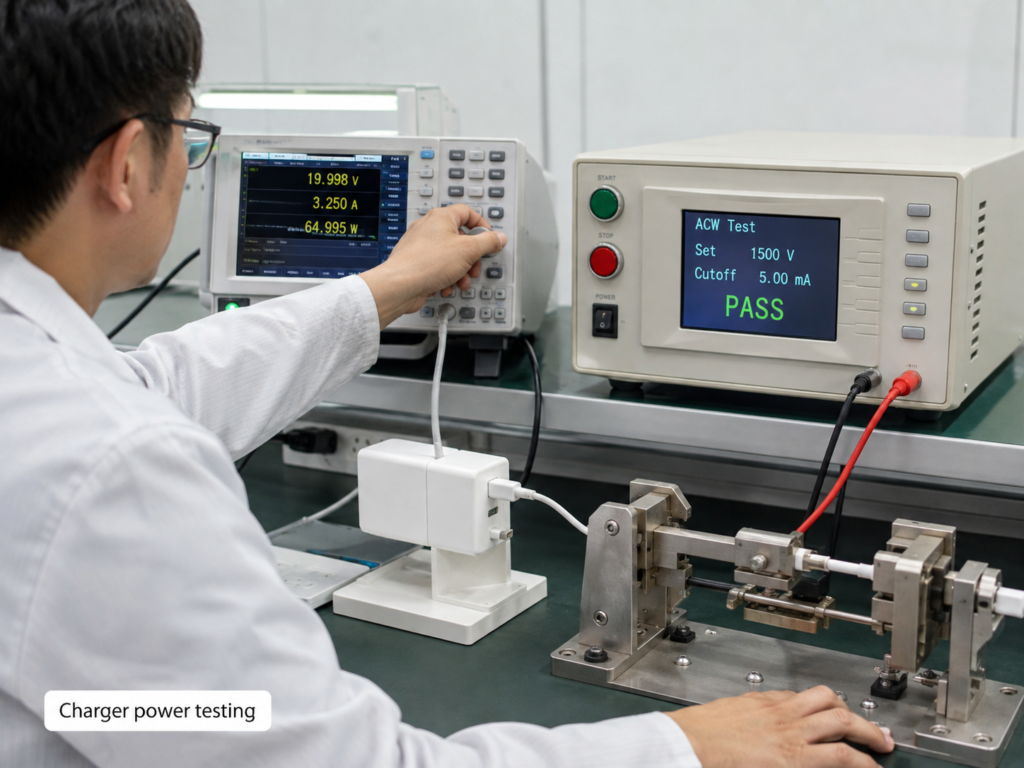
First is **testing capability**: that is, whether the laboratory’s testing methods are correct and whether the results are stable. For example, testing the output power and withstand voltage performance of chargers, and testing the wire resistance and plug-unplug life of charging cables all fall under the category of testing capability. The standard requires laboratories to use compliant methods and ensure that result deviations are within the allowable range.
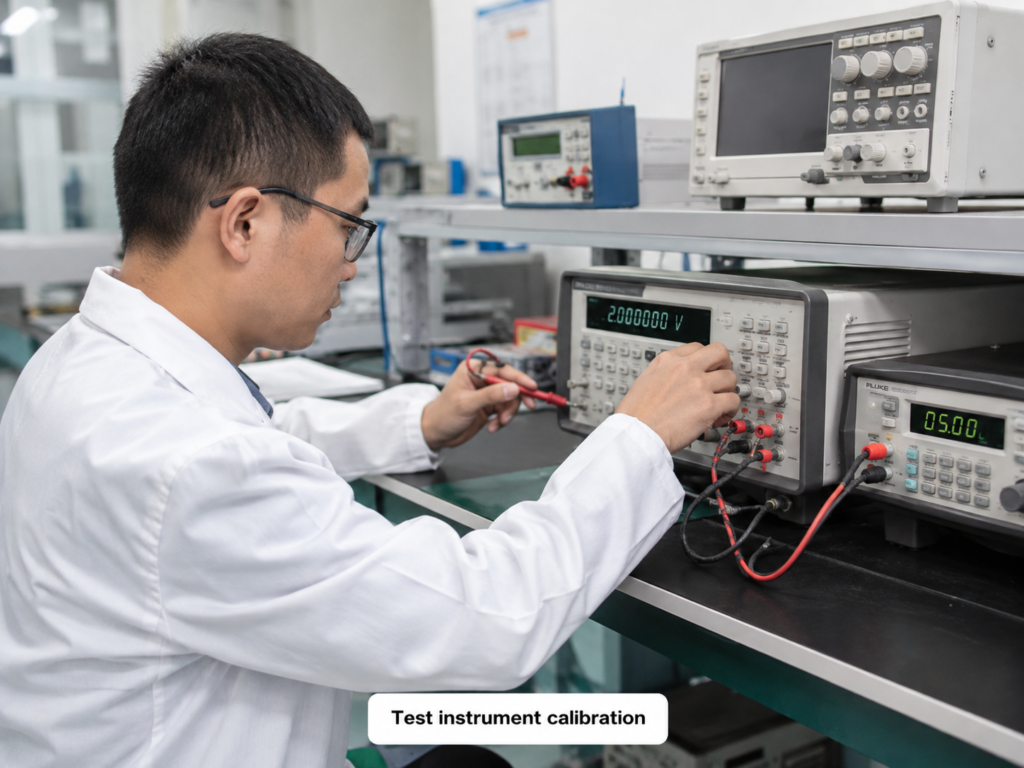
Second is **calibration activity capability**: that is, the laboratory’s ability to calibrate measuring instruments or measurement standards and issue calibration results. In addition, in all laboratory activities, the laboratory must also properly manage its own equipment that affects the validity of results, and establish metrological traceability where applicable — simply put, the measured values of instruments can be traced step by step to internationally recognized standard units (such as the international standard for the voltage unit “volt”), ensuring that the measured values are not “decided by the laboratory itself”. For example, electronic loads used for power testing and thermometers used for temperature testing may need to undergo appropriate calibration or verification according to their intended use.
Third is **sampling directly related to testing/calibration**: note that it is “directly related”. For example, if you send 100 charging cables for plug-unplug life testing, and the laboratory draws 10 of them for testing, this sampling tied to the testing is covered by 17025; but if you ask the laboratory to randomly buy products on the market for an independent sampling survey, this kind of sampling detached from the testing purpose is not within the scope of governance.
Two Core Requirements: Both Technical and Management Must Meet Standards
To obtain 17025 accreditation, a laboratory must meet two sets of requirements, neither of which is dispensable:
One set is **qualified technical capability**, which in plain terms means “personnel, equipment, methods, and environment” are all up to standard: testing personnel must be authorized and familiar with methods; equipment must be regularly calibrated and have sufficient accuracy; testing methods must meet standard requirements; the testing environment (temperature, humidity, electromagnetic interference, etc.) must meet testing conditions — for example, when testing fast charging power, if the ambient temperature is too high, the charger will overheat and reduce power, resulting in inaccurate results, so the standard has clear requirements for the environment.
The other set is **standardized and traceable management**, meaning the entire process of the laboratory must be recorded and accountable: for example, submitted test samples must be labeled with a unique number and cannot be confused with samples from other customers; all test data must be kept on file and can be queried even after many years; there must be a rectification mechanism when problems occur; and regular external audits must be accepted to ensure continuous compliance with requirements.
Applicable Laboratory Types: Not Only Third-Party Laboratories Can Apply
Many people think only third-party laboratories can obtain 17025 accreditation, but that is not the case. Whether it is an independent third-party laboratory, an in-house corporate laboratory, or a laboratory operated by the government or industry, as long as it carries out testing, calibration, or related sampling activities, it can apply for accreditation or operate in accordance with this standard. Conversely, if an institution does not do testing or calibration at all, but only provides consulting and training, it has nothing to do with this standard.
Boundary Clarification: Don’t Confuse It with These Concepts
Many people confuse 17025 with other qualifications and certifications they have heard of. Next, we will sort out the most easily confused groups of concepts to help you avoid cognitive misunderstandings.
Core Differences from ISO 9001
The most commonly confused one is ISO 9001. Many laboratories will say that having passed 9001 is equivalent to having testing capability, which is completely wrong.
ISO 9001 is a general corporate quality management system certification that enterprises in any industry can apply for. It covers the quality management of the overall enterprise process, such as whether there is a quality policy and a customer complaint handling mechanism. It is not an accreditation criterion for technical capabilities such as a laboratory’s specific testing/calibration methods, measurement uncertainty, and result validity, and cannot replace ISO/IEC 17025 accreditation; however, its quality management system also involves the organization’s management requirements for monitoring and measurement resources. ISO/IEC 17025, on the other hand, is a standard specifically targeting the technical testing and calibration capabilities of laboratories. It only focuses on whether the testing is accurate, regardless of how well the laboratory manages other businesses.
In one sentence: a laboratory that has passed ISO 9001 does not necessarily have the testing capability accredited by 17025. Don’t use the 9001 certificate as a testing qualification.
Difference Between Complying with the Standard and Obtaining Accreditation
We mentioned this briefly earlier, and here we will explain it thoroughly — it is the most common misleading tactic:
“Complying with ISO 17025” is a laboratory’s statement of its own operation mode, and does not mean it has obtained 17025 accreditation. A laboratory may accept customer audits, regulatory inspections, or other second-party or third-party assessments, but these are not equivalent to an accreditation body conducting an audit in accordance with ISO/IEC 17025 and granting accreditation. Unless an accreditation certificate issued by an accreditation body that is valid and covers the relevant activities can be provided, it cannot be regarded as accreditation qualification.
“Obtaining 17025 accreditation” means that authoritative accreditation bodies — such as A2LA in the United States, UKAS in the United Kingdom, DAkkS in Germany, and CNAS (China National Accreditation Service for Conformity Assessment) in China — send experts to conduct on-site audits of the laboratory, and after confirming that it does meet the standard requirements, issue an accreditation certificate. It is equivalent to having an authoritative teacher grade you and issue a graduation certificate, which is much more credible.
When looking for a laboratory, you must look for “obtained accreditation”, and don’t believe vague expressions like “referenced” or “compliant”.
Four-Tier Qualification Relationship for the Chinese Market
If your business involves the Chinese market (such as purchasing from Chinese suppliers, or planning to sell to mainland China), you can refer to these four tiers of relationships to sort out the logic of different qualifications and not get confused by various abbreviations:
First tier: ISO/IEC 17025 is an internationally applicable laboratory capability standard and the basic basis for all accreditations.
Second tier: Accreditation bodies such as CNAS audit laboratories in accordance with the 17025 standard and grant accreditation qualifications to institutions that meet the requirements.
Third tier: CMA is China’s qualification accreditation for inspection and testing institutions. It is a completely different system from CNAS and the two cannot replace each other — for statutory fields and capability items included in the current “one list, one catalog”, institutions must obtain the corresponding CMA qualification before issuing data and results with probative effect to the public; for items outside the catalog and other special fields, applicable laws and regulations should be checked separately.
Fourth tier: Common ones like CE, FCC, and UL are all **product conformity assessment pathways**, not laboratory qualifications. Whether a laboratory is required to have 17025 accreditation is determined by the rules of these product certifications, and there is no uniform requirement.
Third-Party Laboratories ≠ Having 17025 Accreditation
There is another common misunderstanding: many people think third-party laboratories are definitely more reliable than in-house corporate laboratories, and that as long as it is a third party, it has 17025 accreditation. This is also wrong.
“Third-party” only means the laboratory is independent of both the buyer and the seller, and has nothing to do with technical capability. Some small third-party laboratories may not even have formal equipment, let alone 17025 accreditation; conversely, the in-house laboratories of many leading consumer electronics brands have obtained 17025 accreditation, and their test results are as credible as those of third parties.
The core factors for judging whether a laboratory is reliable are testing capability, equipment status, and record traceability. There is no inevitable connection with whether it is a third-party or in-house corporate laboratory.
Decision Logic: Should You Use an Accredited Laboratory? Judge by These Steps
After understanding the concepts, what everyone is most concerned about is “For my test this time, do I really need to use a laboratory with 17025 accreditation?” Next, we will give you a set of judgment methods so you don’t have to guess blindly.
General Principle: Everything Depends on the Requirements of Interested Parties
As we said before: there is no uniform global mandatory requirement, and everything depends on the **explicit requirements of interested parties**. Specifically, it can be judged from four core elements: product category, sales region, conformity assessment pathway, and special requirements of platforms/customers.
Scenarios Where You Need a Laboratory with Corresponding Accreditation Scope
Generally speaking, the following scenarios require a laboratory with the corresponding accreditation scope:
The first is when a report with probative effect is needed, such as rights protection against suppliers, judicial arbitration, or responding to market supervision spot checks — of course, whether it is mandatory specifically depends on local regulatory requirements.
The second is to meet compliance/access requirements, such as export customs clearance, listing on cross-border e-commerce platforms, or product certification — for example, some platforms require test reports from 17025-accredited laboratories for chargers to be listed, and some certification bodies accept laboratory reports under ILAC mutual recognition. All these must follow the corresponding rules.
The third is undertaking formal projects, such as procurement verification by the government or large enterprises. Generally, the contract will explicitly require the test report to have 17025 accreditation.
The fourth is when calibration results are used for formal judgment. For example, if you need to issue a compliance report to a customer, whether the calibration service for your own test instruments needs to come from a laboratory with the corresponding accreditation scope should be determined according to regulations, certification schemes, customer contracts, or applicable accreditation rules; when there are no explicit requirements, you should also evaluate the technical capability, traceability, and whether the calibration service meets the intended use, and cannot make an absolute judgment solely based on whether it is accredited.
Scenarios Where Mandatory Accreditation Is Not Required
Conversely, there is no need to spend extra money on an accredited laboratory for the following scenarios; ordinary laboratories or even self-testing are acceptable:
The first is testing for internal enterprise use, such as R&D preliminary testing, incoming material sampling inspection, and production line patrol inspection, where the results are only for internal reference and not claimed externally — no accreditation is required.
The second is personal/informal testing, such as buying a charging cable yourself and testing its charging speed and bending resistance — no qualification is needed at all.
The third is pre-testing/debugging, such as testing halfway through product R&D to find problems, and then doing formal testing after modifications. For this kind of testing that does not issue a formal external report, no accreditation is required.
The fourth is when the lack of qualification is notified in advance. For example, providing reference test results to customers, clearly stating that there is no 17025 accreditation and it is for reference only, and the other party agrees — then there is no problem.
3-Step Quick Judgment Method
If you find the above scenarios too complicated, you can use these 3 steps for quick judgment, and you will basically be right:
Step 1: **Look at the purpose of the report**: If it is for external use (for customers, platforms, regulators), then check the requirements; if it is for internal reference, no accreditation is needed at all.
Step 2: **Look at mandatory requirements**: If regulations, platforms, or contracts explicitly require it, then it is necessary; if there are no explicit requirements, you can choose as needed.
Step 3: **Look at the type of test**: Formal compliance testing/calibration requires checking qualifications; internal debugging/preliminary testing does not.
Exclusive for Charging Products: Overview of Qualification Requirements for Each Scenario
For friends in the charging product industry, the qualification requirements for different scenarios are actually very clear. We have sorted out the four most common scenarios for your direct reference.
R&D/Internal Quality Control Scenario
This is the most common internal scenario. For example, testing the wire resistance of charging cables, the output stability of chargers, the interface plug-unplug life, and compatibility debugging with different devices all fall into this category.
The key to this type of testing is **unified test conditions**: such as the fast charging protocol version (whether it is PD3.0 or QC5), test power levels, length and wire gauge of the charging cable, input voltage, ambient temperature, and test method — if these conditions are not unified, the test results will have no reference value at all.
The qualification requirement is very simple: as long as it is for internal use and no qualification is claimed externally, 17025 accreditation is not needed at all.
Here is a reminder: such internal test results are only for R&D and quality control reference, **and do not mean they can be used to apply for official logos such as USB-IF**. To get an official logo, you still have to follow the corresponding rules.
External Claim/Customer Acceptance Scenario
If you want to promote “200W fast charging” or “compliant with USB PD standard” on the product detail page, or provide an acceptance report when supplying goods to customers, this falls into this scenario.
The key to this type of testing is to implement it in accordance with the standard version, protocol level, environmental parameters, and load duration agreed by both parties, and you cannot change the conditions at will — for example, if you promote 200W power at 25°C ambient temperature, you cannot test at 10°C and use that for promotion.
Qualification requirement: If the customer or contract explicitly requires 17025 accreditation, you must use a laboratory whose accreditation scope covers the corresponding test items.
When checking, pay attention to two points: first, whether the customer has designated an accreditation body (for example, some US customers only recognize A2LA); second, whether the item you want to test (such as 200W power testing) is really within the laboratory’s accreditation scope. Don’t send samples just because they have a 17025 certificate.
Compliance/Market Access Scenario
If the testing is for export customs clearance, product conformity assessment, or cross-border platform listing review, it falls into this scenario, which is also what everyone is most concerned about.
The key to this type of testing is that it must be implemented strictly in accordance with the regulations of the target market, the corresponding standard version, and test parameter requirements; you cannot choose the method yourself.
Qualification requirement: It only needs to be provided when regulations, platforms, or certification schemes **explicitly require in writing** 17025 accreditation; not all compliance testing is mandatory.
When checking, pay attention to two points: first, whether the accreditation body that issued the accreditation is accepted by the target market — for example, some countries only recognize local accreditation bodies, even if it is under ILAC mutual recognition; second, whether the test items and the standard version used are all within the laboratory’s accreditation scope.
Test Instrument Calibration Scenario
Whether instruments used to test charging products — whether used in your own laboratory or in a third-party laboratory, such as electronic loads, multimeters, temperature testers, and plug-unplug life testers — need calibration or verification cannot be generalized. For equipment that affects the validity of test results or metrological traceability, appropriate calibration or verification arrangements should be established based on the intended use, test methods, regulatory requirements, equipment stability, and usage conditions; not every piece of equipment necessarily needs calibration, and the calibration cycle cannot be generalized either.
The key to such arrangements is that the calibration range must cover your commonly used test range, and the parameters must also match — for example, if you usually test power at 20V/10A, you cannot only calibrate the 5V/2A range, otherwise no one can guarantee the accuracy of readings at high power.
Qualification requirement: If regulations, certification schemes, customers, or applicable accreditation rules explicitly require the use of accredited calibration services, a calibration laboratory whose accreditation scope covers the corresponding parameters, ranges, and uncertainty requirements should be selected. When there are no such explicit requirements, you should still evaluate the technical capability, traceability, and whether the calibration service meets the intended use, and cannot make an absolute judgment solely based on whether it is accredited.
When checking, focus on: whether the calibration range and parameters are really within the laboratory’s calibration accreditation scope. Don’t take a general calibration certificate as valid.
Practical Pitfall Avoidance: Three Steps to Verify Laboratory Accreditation Qualification
Now that you know when it is needed, how do you judge whether a laboratory’s 17025 accreditation is real or fake? Whether it is beyond the scope? Next, we will teach you a three-step verification method to avoid 90% of qualification pitfalls.
Step 1: Check the Authenticity and Status of the Qualification
First, ask the laboratory to provide the accreditation certificate number, then check the laboratory’s accreditation status and scope in the official directory of the accreditation body stated on the certificate; if you need to verify whether the accreditation body is part of the ILAC mutual recognition system, you can search for the accreditation body in the ILAC MRA signatory search, and enter the corresponding laboratory directory through its link.
When checking, verify three points: first, the certificate status, which shall be subject to the official directory, to see if it is within the validity period and whether it has been suspended or revoked; second, the laboratory name, to see if it is exactly the same as the one you are dealing with, and make sure it is not impersonating with another company’s certificate; third, whether the actual testing site is included in the accreditation scope, or belongs to accredited multi-site, on-site, or non-fixed site activities, and confirm that the site, equipment, and environmental conditions meet the corresponding accreditation requirements. It is only when only the headquarters is accredited, while the actual testing site is not within the coverage scope and does not comply with relevant rules, that the activity cannot be claimed as an activity within the accreditation scope.
Step 2: Check the Accreditation Scope (Most Critical)
This step is the most easily overlooked and the most critical: **you must never only look at the first page of the certificate; you must check the list of accredited testing/calibration scopes in the certificate annex**.
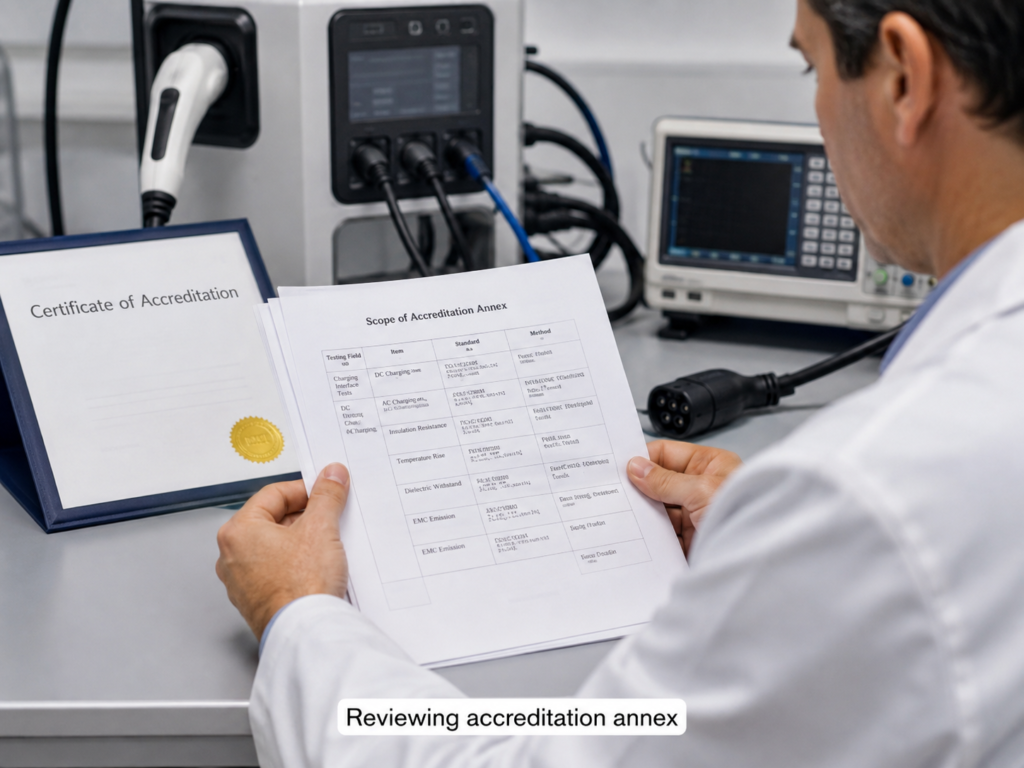
Many laboratories will only show you the first page of the certificate with a big logo, but the first page does not state what can be tested at all. What is really useful is the dozens of pages of annexes at the back, which list all accredited test items, standards, ranges, and product scopes.
When checking, look at these dimensions: whether the laboratory and testing site are correct, whether the test method/standard version is correct, whether the test items/parameters/ranges are correct, whether the test product object is of your type (for example, some accreditation scopes are for food testing and cannot be used for electronic and electrical products), whether the signatory is authorized, and whether the items are subcontracted to an unqualified laboratory.
Remember one sentence: Items not covered by the accreditation scope (including approved flexible scopes) shall not be declared as items within the accreditation scope or have the accreditation mark used accordingly. For reports containing multiple items or subcontracted items, the accreditation status, marking/declaration method of each item, and the rules of the accreditation body shall be checked, and conclusions cannot be drawn solely based on whether the entire report has a mark.
Step 3: Verify the Accreditation Status Declaration on the Report
After receiving the report, you also need to verify whether the accreditation status declaration on the report complies with the rules.
Generally speaking, reports claimed to be within the accreditation scope will be marked with the accreditation mark (such as the logos of CNAS and A2LA) as required, or have clear written explanations.
When verifying, focus on three points: first, whether the items within the accreditation scope marked on the report are really in the annex; second, whether the issue date of the report is within the validity period of the laboratory’s qualification; third, whether the signatory, testing site, and test method are all consistent with those in the accreditation scope.
Some reports may not have the accreditation mark affixed, but have a formal accreditation declaration. In this case, it is necessary to judge whether it is valid in combination with the rules of the corresponding accreditation body, and you cannot just look at whether there is a logo.
Common Qualification Fraud/Misleading Situations
Finally, we list several of the most common qualification fraud or misleading situations. If you encounter them, just avoid them directly:
• Using an ISO 9001 certificate to impersonate 17025 testing qualification, a concept substitution trick;
• Affixing the accreditation mark beyond the accreditation scope, for example, only having wire testing accreditation but stamping the accreditation seal on power test reports;
• Using expired or revoked qualifications for promotion, when in fact the accreditation has long been lost;
• Muddling through with “cooperative laboratory” or “affiliated qualification” claims, saying they cooperate with qualified laboratories, but the actual testing is done in their own facility, not through the accredited laboratory at all;
• Only claiming to “comply with ISO 17025”, unable to produce a formal accreditation certificate and scope annex, relying solely on verbal claims.
Clarification of Common Misconceptions
In addition to what we mentioned above, there are several widely circulated misconceptions that we will clarify all at once.
Misconception 1: Products Tested by 17025-Accredited Laboratories Must Be of Good Quality
Clarification: They are completely different things. 17025 only proves that the laboratory has the ability to measure data accurately, and has nothing to do with the quality of the product itself. For example, if a laboratory tests your charger with very accurate equipment and finds that the power does not meet the standard, the product is still unqualified. Whether a product is of good quality depends on whether the test results meet all the requirements of the corresponding standard, not on whether the laboratory has qualifications.
Misconception 2: Reports with 17025 Accreditation Are Globally Valid
Clarification: Not necessarily. Whether a report can be accepted depends on three factors: first, whether the accreditation body that issued the report has joined the ILAC Mutual Recognition Arrangement; second, whether the regulations of the target market recognize it; third, whether the customer has special requirements. Some countries only recognize the qualifications of local accreditation bodies, even if it is under ILAC mutual recognition. So be sure to confirm clearly before submitting samples, don’t waste money.
Misconception 3: 17025 Accreditation Equals China’s CMA Qualification
Clarification: The two belong to completely different systems and cannot be equated. 17025 is an internationally applicable laboratory capability accreditation, applied for voluntarily; CMA is China’s qualification accreditation for inspection and testing institutions. For statutory fields and capability items included in the current “one list, one catalog”, institutions must obtain the corresponding CMA qualification before issuing data and results with probative effect to the public; for items outside the catalog and other special fields, applicable laws and regulations should be checked separately. CMA and CNAS accreditation cannot replace each other.
Misconception 4: 17025 Accreditation Qualification Is Permanently Valid
Clarification: No. The accreditation certificate has a validity period, and regular supervision audits are required during the validity period. If the laboratory changes its site, adds new items, or has serious problems, it may need to be re-audited, or even have its qualification revoked. Therefore, when using a report, be sure to check whether the laboratory’s qualification was valid at the time the report was issued; you cannot use a qualification from several years ago to prove that a current report is valid.
Misconception 5: Third-Party Laboratories Are Definitely More Reliable Than In-House Corporate Laboratories
Clarification: Whether a laboratory is reliable depends on technical capability and management specifications, and has nothing to do with whether it is a third party. The in-house laboratories of many big brands, because they test their own products every day and are more familiar with standards and methods, may instead be more professional than small third-party laboratories. In-house corporate laboratories can also obtain ISO/IEC 17025 accreditation, and results within their accreditation scope can have corresponding credibility at the technical capability accreditation level; however, whether the report can be used for certification, supervision, platform or customer acceptance still requires checking whether relevant rules require an independent third party, designated laboratory, or specific accreditation body.
Summary and Pre-Submission Confirmation Checklist
At this point, I believe everyone has a relatively comprehensive understanding of ISO 17025: it is neither an unattainable “high-end qualification” nor a dispensable marketing gimmick. It is just an internationally applicable yardstick for measuring whether a laboratory’s testing is accurate. Whether you want to use this yardstick depends entirely on whether the thing you are testing is for your own viewing, or for others to see, and whether anyone requires you to use this yardstick.
Now you should be able to clarify the positioning of 17025, distinguish its differences from other qualifications, judge whether an accredited laboratory is needed based on the scenario, verify the authenticity and scope of qualifications by yourself, and also master the qualification requirements for various scenarios of charging products, so you don’t have to waste money anymore.
To prevent everyone from finding out that the qualification is wrong after submitting samples, we have sorted out 7 items that must be confirmed before sample submission. You can check them off one by one:
| Confirmation Item | Specific Explanation |
| Target sales market/region | Regulations and acceptance of accreditation bodies vary by region; clarify in advance |
| Product model, version and key parameters | Such as rated power and supported fast charging protocol version, to avoid testing the wrong product |
| Applicable test standard and year/version | Confirm that the valid standard required by the target market is used, do not use an expired version |
| Specific test items/parameters, ranges | For example, whether testing 20V/10A power or 3000V withstand voltage, the more specific the better |
| Specific purpose of the report | Internal reference / external claim / compliance access, different purposes have different qualification requirements |
| Whether CMA or specific accreditation body qualification is required | For example, whether the customer designates A2LA or UKAS, or only ILAC mutual recognition is acceptable |
| Laboratory accreditation scope matches, no out-of-scope subcontracting | Confirm that the test items are within the accreditation scope and not outsourced to unqualified institutions |
As long as you confirm one by one according to this checklist, you can avoid the vast majority of qualification problems, neither wasting extra money nor delaying product listing due to insufficient qualifications.