
If you often purchase chargers sold in Taiwan region of China on cross-border platforms, or run a small business selling charging accessories to the Taiwan market, you have definitely heard the term “BSMI certification”. Many people think it is just an ordinary quality certificate, but in fact, it is the first threshold for the legal sale of charging products in Taiwan region, and is directly related to the safety of the chargers we use daily. Today, we will explain BSMI certification clearly around common charging products such as chargers, power adapters, charging cables, USB/USB-C accessories, and plugs.
BSMI is the statutory access threshold for charging products in Taiwan region
BSMI is the abbreviation of the Bureau of Standards, Metrology and Inspection, Ministry of Economic Affairs of Taiwan region. It is the commodity inspection authority under the Ministry of Economic Affairs of Taiwan region, not a third-party certification body. The “BSMI certification” we often refer to is actually a general term for the “access system for commodities subject to inspection” in Taiwan region — it is not a fixed certificate, but a set of safety supervision rules for products on the list. Its core function is to control the electrical safety and electromagnetic compatibility risks of charging products, so as to prevent unqualified products from harming consumers.
The binding force of this set of rules is very clear: if a product is included in the mandatory inspection list, it cannot be sold in Taiwan region without a compliance certificate, and may be detained, fined, or even directly destroyed during import. For low-risk products not on the mandatory list, you can also voluntarily apply for BSMI certification, which is mainly used to enhance consumer trust or serve as an endorsement for entering high-end channels. Special reminder here: BSMI mainly confirms that specific commodities meet applicable safety, EMC and other statutory technical and labeling requirements, but it is not equivalent to rating the overall quality, durability or charging experience of the product.
Specifically for charging products, some items such as chargers, power adapters, power cord sets, extension cords or socket sets may be included in the scope of inspection; whether USB charging accessories and USB cables are subject to mandatory inspection must be confirmed item by item according to specific product categories and official announcements. For charging products with communication functions (such as smart fast charging power strips with WiFi), BSMI mainly involves applicable safety and electromagnetic compatibility requirements, and the communication radio frequency part also requires additional NCC certification in Taiwan region. As for non-safety indicators such as charging speed and appearance texture, they do not necessarily fall within the unified inspection scope of BSMI, and still depend on specific product categories and applicable standards.
2-step quick judgment on whether your charging product needs BSMI certification
Many people get a headache when they see the thick official inspection catalog. In fact, there is no need to memorize it by rote. Ordinary people can first use the 2-step quick judgment method to narrow down the scope, but it can only be used as a preliminary screening and cannot replace the official product category judgment.
Step 1: First check whether the product is a commercial product intended for ordinary consumers in Taiwan region. Whether personal use, samples or specific industrial uses can be exempted from inspection shall be confirmed according to specific exemption regulations and application conditions; personal carrying or industrial use does not automatically mean exemption, and it still depends on the quantity, value, import method, end user and specific announcement conditions.
Step 2: Check whether it is directly connected to AC mains power, that is, whether it can be directly plugged into household sockets in Taiwan region. Whether it is connected to mains power can only be used as a preliminary clue. The final judgment must be made against BSMI announcements based on the product category, purpose, input method, sales and import situation.
Therefore, whether mandatory inspection is required cannot be judged solely by whether it is intended for consumers and whether it is connected to 110V/60Hz. The final result shall be subject to the latest official announcement of BSMI, and specific exemption conditions shall be confirmed when necessary.
Common mandatory certification products
Specifically, fast charging heads directly connected to 110V mains power, external power adapters for laptops/monitors, etc., may fall within the scope of inspection. Charging cables with Taiwan-standard plugs, power cord sets, USB-C adapter chargers, etc. sold separately shall also be judged in combination with the product name, purpose, structure and input method.
Power cord sets, extension cords, socket sets, car chargers, etc. shall be checked against specific BSMI product categories and applicable standards respectively, and cannot be judged as requiring certification solely by “having charging function”. In actual judgment, it is also necessary to confirm against the official catalog of commodities subject to inspection in combination with the product name, purpose, input voltage, and even the customs HS code.
Scenarios for voluntary application and no certification required
Low-risk accessories not included in the mandatory catalog (such as niche special interface adapters) can voluntarily apply for BSMI certification to enhance market competitiveness under the condition of complying with relevant regulations. Whether a small amount of personal use items, industrial non-consumer grade products, experimental samples, etc. can be exempted from inspection cannot be generalized, and shall be confirmed according to specific exemption regulations, purpose, quantity, import method and application conditions.
Whether pure data transmission cables fall within the exemption or non-mandatory scope shall also be subject to the announcement of specific product categories. The scope of exemption and voluntary application is not static, and shall be subject to the latest official announcement of BSMI.
Special judgment rules for USB-C products
USB-C products are the category that is most easily confused. Many people think that as long as a product has a USB-C interface, it must undergo BSMI certification. In fact, you cannot only look at the interface; you must judge in combination with the purpose, structure and sales method:
• USB-C cables sold separately with power transmission function need to be checked against the mandatory catalog to confirm whether certification is required;
• For USB-C cables provided with chargers as accessories, whether they can be covered by the main product certification shall be confirmed by checking the certification scope and declaration method;
• Whether USB-C cables are commodities subject to inspection shall be confirmed according to specific purpose, structure, sales method and official product category, and cannot be judged solely by the interface or whether it supports charging.
4 types of BSMI inspection and selection methods
After confirming that the product requires certification, you also need to confirm the corresponding inspection type. Different types have great differences in applicable scenarios, requirements and costs, but the inspection method cannot be chosen by the seller independently based on power. I have organized several common types into a table for easy comparison:
| Inspection Type | Applicable Charging Products | Core Requirements | Certificate Number Prefix |
| Registration of Product Certification (RPC, mandatory) | Products specified by specific inspection items and announcements | Complete sample testing, factory inspection and subsequent supervision requirements as required | Check according to specific systems and regulations |
| Type Approval (mandatory) | Products specified by specific inspection items and announcements | Complete procedures such as sample testing and document review as required | Check according to specific systems and regulations |
| Batch-by-batch Inspection | Products for small-batch trial sale | Inspect each batch of imported commodities as required | Check according to specific systems and regulations |
| Declaration of Conformity (DoC) | Commodity categories designated as applicable by announcements | The responsible entity for application or manufacturing shall complete testing, keep technical documents and declaration of conformity as required, and bear corresponding compliance responsibilities | Check according to specific systems and regulations |
| Voluntary Mark of Good Quality | Products that meet specific Mark of Good Quality categories and standards | Obtain voluntary product certification according to specific product standards and application rules | Check according to specific systems and regulations |
The applicable scope of RPC, Type Approval, batch-by-batch inspection or Declaration of Conformity is announced by BSMI for specific product categories. It cannot be judged by 65W or other single power thresholds, nor can the inspection method be chosen independently. Whether for long-term mass production or small-batch trial sale, products should first check the corresponding product category, and then handle it in accordance with the announcement regulations.
The Mark of Good Quality is a voluntary product certification obtained in accordance with specific product standards and application rules; its applicable scope and requirements shall be confirmed in accordance with the BSMI Mark of Good Quality system and corresponding standards. It cannot be generally regarded as higher than mandatory standards, nor can it be assumed that all charging products can be added with it at will.
Core compliance requirements of BSMI
Many people are curious about what BSMI actually tests. From the perspective that ordinary consumers can perceive, we break down the core requirements into several parts:
Electrical Safety (the core of the core)
To put it simply, it is to reduce the risks of electric shock, fire, etc., which specifically includes four aspects:
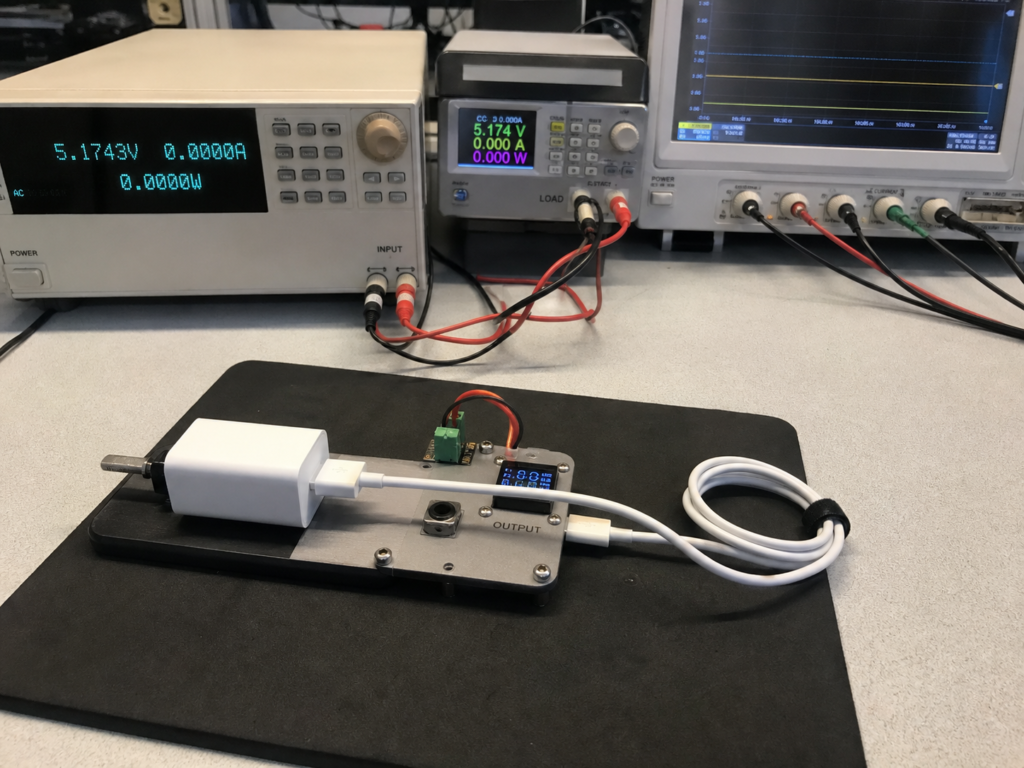
• **Leakage protection**: The insulation performance between the input of the charger and the USB output must meet applicable standards, and unqualified breakdown shall not occur in specified tests such as withstand voltage;
• **Overheat protection**: Under specified working conditions, the temperature of the casing, plug, interface and other parts shall not exceed the applicable safety limit;
• **Fault protection**: It shall have protection measures such as short circuit, overload and applicable overcharge according to specific product standards, and meet fire protection and electrical safety requirements under specified test conditions; it cannot be stated that it will absolutely not catch fire or explode under any circumstances;
• **Reliable structure**: Wire diameter, solder joints, internal electrical isolation distance, casing material and interface structure, etc., shall meet the requirements of corresponding product standards.
Among them, “overcharge” is mainly applicable to products with batteries or battery management functions, and not all chargers and power adapters have the same overcharge protection requirements.
Electromagnetic Compatibility Requirements
Electromagnetic compatibility, simply put, is the ability of a product to not excessively interfere with other electrical appliances nearby while charging, and to work normally under a specified electromagnetic environment. It is usually called EMC in the industry. It includes two parts:
• **Emission requirements**: The electromagnetic interference generated by the product shall be within the frequency bands and limits specified by applicable standards;
• **Immunity requirements**: The product shall achieve the working performance required by applicable standards under the specified electromagnetic interference test level.
Emission and immunity shall meet the requirements within the frequency bands, limits and test levels specified by applicable EMC standards; this does not mean that there will absolutely be no interference or charging interruption under any complex electromagnetic environment. Because fast charging products use high-frequency switching circuits, more attention is usually needed in electromagnetic compatibility design and testing.
Labeling and Packaging Requirements
In addition to the product itself, there are also clear requirements for labeling and packaging. However, the specific labeling method, whether it must be marked on the product body, applicable rated parameters, and the location and content of importer information all depend on the specific product category and relevant regulations:
• Commodity inspection marks, inspection or certification numbers, rated electrical parameters, model, place of origin, and manufacturer or importer information required by law shall be marked in accordance with the provisions of specific product categories;
• The power grid in Taiwan region is usually 110V/60Hz, but the rated input of the product shall be subject to the actual approved specifications and labeling regulations, and the rated input may also be expressed as a voltage range;
• The label shall be clear, durable, and comply with the labeling provisions of the corresponding product category.
CI Mark, certificate number, 110V/60Hz and local responsible entity information cannot be applied to all charging products in exactly the same way.
Special requirements for USB-C fast charging products
For the currently popular USB-C fast charging products, the key point is that the rated values and labels must be true and comply with specific applicable standards:
• Power cannot be falsely marked. Multi-port products shall truthfully mark the rated output limits of each port and when used in combination, and comply with applicable safety, EMC and labeling standards;
• Interface safety, insulation and structure, etc., shall comply with corresponding product standards to avoid damage to the charged device under specified use conditions;
• Whether specific PD/QC gears are inspected shall be confirmed according to specific product categories and applicable standards, and cannot be generalized as a unified additional requirement for all BSMI products.
Compliance rules for product changes
This is a pitfall that many sellers easily fall into: BSMI-related documents and certificates usually correspond to the specific model and configuration at the time of declaration or submission for inspection. If the product replaces key components such as the core chip, transformer, or plug, the compliance shall be re-evaluated; if ports are added, power is increased, or a new fast charging protocol is added, supplementary testing may also be required, or even re-application for certification.
Old certificates do not automatically cover new products after modification. Whether it falls within the scope of permissible changes, and whether reporting or re-application is required, shall be confirmed according to the specific inspection system and certificate conditions.
How to distinguish the authenticity of BSMI marks
For ordinary consumers, the biggest concern is whether the BSMI mark on the charger they buy is real. Mastering the basic verification method can reduce the risk of encountering fake certification or stolen certificates.
Basic identification points for qualified marks
For different inspection systems and commodity categories, the pattern of the commodity inspection mark, the format of the inspection number and the labeling position may be different. The commodity inspection mark and inspection number shall be checked in accordance with the specific inspection system and product category regulations, and the product, model, certificate or registration information shall be verified through the official BSMI system.
The authenticity cannot be judged solely by whether the word “BSMI” is printed on the product, the number prefix, the number of digits of the number, or the position of the mark. Only writing “BSMI certification” without any information available for official inquiry is of course not sufficient to prove compliance, but it shall still be subject to official inquiry results and specific product category regulations.
Key points for checking the nameplate of charging products
You can carefully look at the nameplate with parameters printed on the charger, and focus on checking the following items:
• Entity information: whether there is brand, model, place of origin, and manufacturer, importer or agent information that should be marked according to law;
• Electrical parameters: whether the input and output parameters are clear, whether they are consistent with the actual product specifications and use conditions in Taiwan region, and whether multi-port products indicate the total power or combined use restrictions;
• For USB-C fast charging products, additional checks are needed: whether the single-port maximum output, multi-port shared power, and fast charging gears are clear;
• Certification information: whether the commodity inspection mark and inspection number can correspond to the official inquiry information.
Steps for authenticity inquiry through official channels
If you are still unsure, you can inquire through the “Commodity Inspection Inquiry System” on the official BSMI website. This system is public and accessible to everyone. You can enter the certificate number, brand, model or other information according to the inquiry conditions supported by the system, and then check whether the model, brand, certificate holder, product status in the inquiry results are consistent with the actual product.
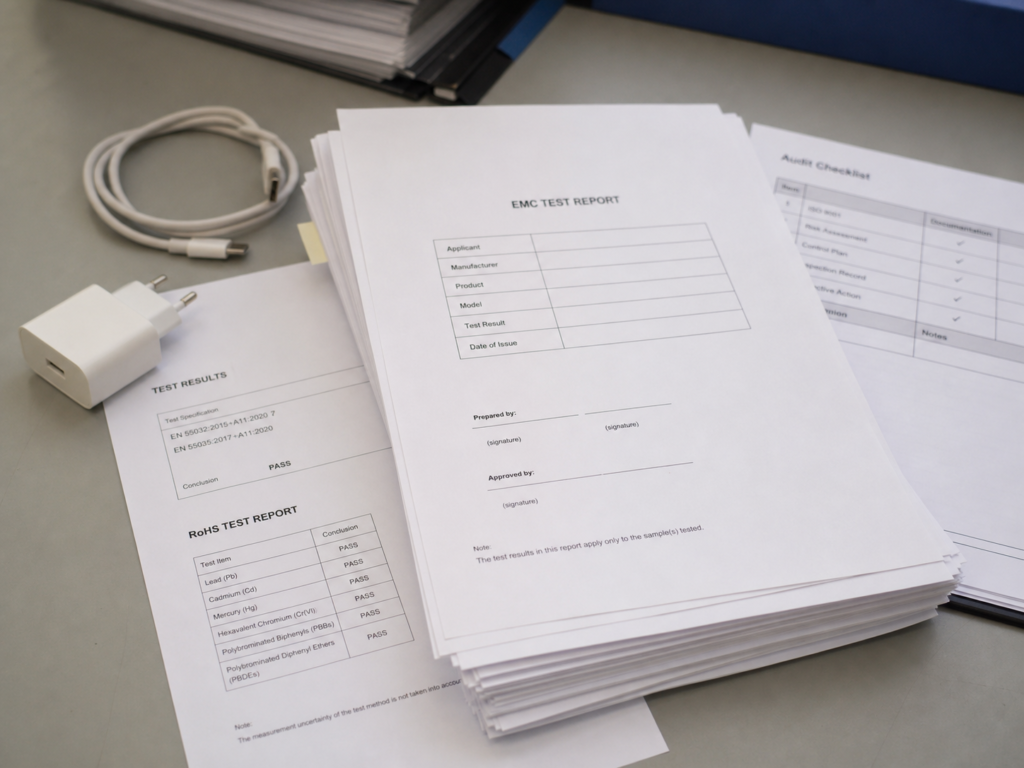
When inquiring, do not only check whether the number exists, but also confirm whether the registration information really corresponds to the product in hand. If the number is stolen by others, the model is different, or the responsible entity is inconsistent, it may mean that the product cannot directly use the compliance information.
Typical characteristics of common fake certifications
You should be vigilant when encountering the following situations, but these phenomena themselves cannot be used as the final conclusion alone:
• The certificate number cannot be found in the official BSMI system, or the inquiry result is inconsistent with the product model and brand;
• The mark only appears in the pictures on the product detail page, not on the actual product or packaging, and the labeling position cannot be explained by specific product category regulations;
• There is no manufacturer, importer or agent information that should be marked according to law, or the information is inconsistent with the inquiry results;
• Using others’ certificates without authorization, and the model, brand, and certificate holder in the inquiry results do not match the actual product.
BSMI application process and common pitfalls to avoid
If you are a seller operating in the Taiwan market, you must be concerned about how to apply for BSMI and what pitfalls to avoid. Here we will briefly sort it out.
Prerequisites before application
Before formal application, three basic conditions must be met first:
• First confirm the scope of the product, clarify which inspection type is applicable, to avoid wasted effort;
• The qualifications of the applicant and the responsible entity shall be handled in accordance with the provisions of the specific inspection system; overseas manufacturers usually must designate a Taiwan region agent as required, or be handled by a qualified entity such as an importer, which cannot be simply generalized as all overseas enterprises are not allowed to apply;
• Prepare product specifications, nameplate design drafts, key component lists, appearance photos and other materials in advance. The specific documents shall be subject to the requirements of the applicable system.
Simplified application process for mandatory products
The application process for mandatory products varies by product category and system. Simplified, it usually includes the following links:
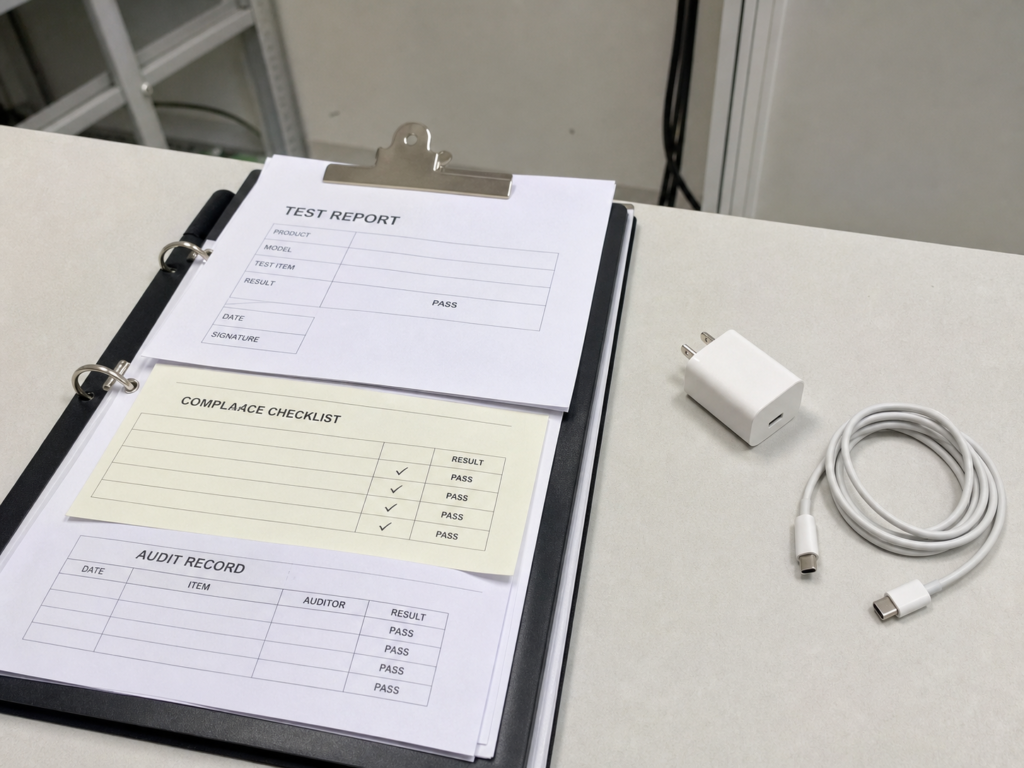
1. Complete applicable sample testing, factory inspection or other specified procedures according to specific product categories and inspection systems. The test items are not necessarily all the same;
2. Prepare test reports, technical documents, application materials and other certificates according to system requirements;
3. Submit application, review or registration to BSMI or the corresponding system as required;
4. After passing the review, use the commodity inspection mark, inspection number or other compliance labels in accordance with the provisions of specific product categories;
5. During import, the importer shall declare inspection-related materials in accordance with customs declaration and commodity inspection regulations, and cooperate with the inspection of the competent authority.
Common pitfalls in application
There are several high-frequency pitfalls in the application process that must be avoided:
• The sample power is falsely marked, and the fast charging gear is inconsistent with the label, which directly leads to test failure and wastes time;
• Choosing a laboratory without BSMI accreditation may result in the test results not being recognized, which is a waste of money;
• The plug specification does not meet the standards of Taiwan region, and the application is directly rejected;
• Failure to conduct evaluation or reporting as required after key components are changed may result in the original compliance information being inapplicable;
• Different models of the same series share one certificate, which exceeds the certification scope, and will be punished if found.
Reference for cycle and cost
Generally speaking, the BSMI processing cycle varies depending on the product category, inspection system, test items and the completeness of materials, and cannot be simply judged by a unified time. Whether Type Approval is faster than Registration of Product Certification also depends on the specific product category and application arrangement. The cost depends on the product power, test items and inspection type, which varies greatly among different products. The specific cost shall be subject to the quotation of the accredited laboratory or handling agency.
Another reminder: overseas certifications such as CE, UL, and FCC cannot automatically replace BSMI requirements; however, for some product categories, when they meet BSMI recognition conditions, specific overseas laboratory reports, IEC/CB reports or other materials may be accepted, which must be confirmed according to specific announcements and application regulations. CE, UL, and FCC themselves correspond to different jurisdictions and technical scopes, and cannot be directly equated with BSMI compliance.
Common misconceptions and summary
Many people have misunderstandings about BSMI. Here are 7 most common misconceptions to help you avoid detours:
1. **Overseas certifications can directly replace BSMI**: The certification systems and technical scopes of different regions are not the same, and overseas certifications cannot automatically replace BSMI requirements. However, for some product categories, when they meet BSMI recognition conditions, specific overseas test reports, IEC/CB reports or other materials may be accepted. It cannot be generalized that all overseas reports can only be used as reference.
2. **All charging cables and USB-C products need BSMI**: Whether mandatory inspection is required depends on the official catalog of commodities subject to inspection and specific product categories, and cannot be judged solely by the name “charging cable” or “USB-C”. Whether personal use, pure data cables, etc. are exempt from inspection shall also be confirmed according to specific regulations.
3. **BSMI certification is valid for life**: The validity period, renewal and regular factory inspection requirements of the Registration of Product Certification certificate shall be implemented according to specific product categories and issuance conditions; many product categories have time limits and regular supervision requirements, but shall be subject to the certificate and the latest announcement.
4. **Charging products with wireless functions only need BSMI**: For charging products with communication functions such as Bluetooth and WiFi, in addition to applicable BSMI safety and EMC requirements, the communication radio frequency part also needs to confirm the NCC certification requirements of Taiwan region.
5. **Products of the same series can share one certificate**: BSMI-related documents usually correspond to specific models, specifications and configurations. Whether products of the same series can share or be included in the same certificate shall be confirmed according to the specific system and certificate scope, and cannot be shared directly just because the names are similar.
6. **Having a BSMI mark means compliance**: Formal labeling shall comply with specific inspection systems and product category regulations, and relevant information such as number, product model, brand, and responsible entity shall correspond to official inquiry results. Random printing or stolen numbers cannot prove product compliance.
7. **Passing BSMI means meeting all compliance requirements in Taiwan region**: BSMI mainly deals with safety, EMC and other statutory technical and labeling requirements for specific commodities subject to inspection. Other matters such as environmental protection, packaging recycling, and communication radio frequency need to be confirmed separately according to product functions and relevant regulations.
In general, BSMI is an important system for market access and compliance management of some commodities subject to inspection in Taiwan region; whether charging-related products are applicable and which inspection method is applicable must be confirmed according to specific product categories and the latest announcements. If you are an ordinary consumer, after reading this article, you should understand the basic function of BSMI, use the preliminary judgment method to narrow down the scope, identify compliance labels, and use the official system to check information, so you can avoid many fake certifications and safety hazards when buying chargers. If you are a seller operating in the Taiwan market, you can also distinguish the applicable boundaries of different inspection systems, avoid common pitfalls in application, know when product modifications need to be re-evaluated, and clarify the boundaries between BSMI and systems such as NCC, CE, and FCC, so you will not step on pitfalls due to compliance issues.