
If you have done business in electronic products in the Indian market, or bought an Indian version of a charging adapter, you must have heard of the term “BIS certification”. But many people either confuse it with the ISI mark, or do not know whether their products need it or how to verify its authenticity.
This content is compiled from the official public rules of BIS in early 2025; if there are subsequent adjustments, please refer to the latest official documents. Whether you are an ordinary consumer, cross-border seller, importer, or entry-level staff of a brand, you can understand it — about 70% of the content helps you quickly understand how to use and choose, and 30% covers compliance judgment and pitfall avoidance tips, suitable for people who need practical implementation.
Basic Understanding: What Exactly is BIS CRS?
What many people call “BIS certification for USB chargers” actually mostly refers to CRS registration under BIS. Let’s first clarify a few core concepts:
BIS is the official Indian agency responsible for product standard formulation and market access management, with the full name Bureau of Indian Standards, and its role is similar to the official competent authorities for standards and conformity assessment in various countries. The full name of CRS is Compulsory Registration Scheme, which is a registration system. For USB chargers or power adapters that fall under BIS’s current compulsory product list and corresponding product definitions, CRS registration is a mandatory compliance requirement for their legal import and sale in India; products not included in the list cannot be concluded to require registration just because they have a USB interface. Its core function is to unify product safety requirements and reduce the risks of electric shock, fire, and equipment damage.
For different groups of people, the value of CRS is also different: ordinary consumers can use it as a reference for choosing safe charging adapters, filtering out inferior products without compliance qualifications; sellers, importers, and brands need it to meet the requirements of customs clearance and e-commerce listing, and avoid compliance penalties.
Many people confuse CRS with ISI mark certification. Both are compliance systems led by BIS, but the core differences are clear:
| Comparison Dimension | BIS CRS Registration (commonly used for USB chargers) | ISI Mark Certification |
| Access Mechanism | Mainly based on testing + document review, no pre-factory inspection required, with follow-up supervision and random inspection retained | Requires pre-factory inspection, with regular supervision and audit afterwards |
| Authorized Mark | Issues a unique registration number starting with R, which is directly marked on the product body | Uses the diamond-shaped official mark with the letters ISI |
| Application Logic | Led by BIS, the specific applicable product categories are subject to the official compulsory list | Led by BIS, the specific applicable product categories are subject to the official compulsory list |
| Market Common Name | What is commonly referred to as “BIS certification for USB chargers” in daily life mostly refers to this | Generally directly called ISI certification |
Some people also use certifications from other countries and regions such as CE, FCC, and CCC to replace CRS, which is also a misunderstanding: CRS only applies to the Indian market, has no mutual recognition relationship with certifications from other countries, and cannot replace each other at all. CRS is evaluated based on applicable Indian standards, some of which are formulated or adopted based on international standards such as IEC. Specific requirements involve electrical safety, structure, insulation, temperature rise, marking, and performance under specified input conditions; input voltage and frequency are both rated parameters and necessary information for determining test conditions and applicability to the Indian market.
Does Your USB Charger Need CRS? Method for Judging the Scope of Application
After understanding the basic concepts, what everyone is most concerned about must be: does this USB charger I have need CRS after all?
Entry-level Quick Preliminary Screening: 3 Clue-based Conditions
First, let’s give you a reference for quick judgment. Products that meet these 3 conditions have a high probability of requiring further CRS verification, but note that this is only a preliminary screening clue, not a final legal judgment:
First, input type: independent power adapters with AC mains input (that is, directly plugged into wall sockets) should be prioritized for verification, but input type, rated voltage and frequency, purpose, product definition, and sales form must be comprehensively judged in combination with the BIS compulsory list, and any single parameter cannot replace formal classification;
Second, product form: they are independent external charging adapters and power adapters, not modules built into the device;
Third, core function: they have interfaces such as USB-A and USB-C, and their main purpose is to charge electronic devices.
Preliminary screening can only make a general judgment, and the final compliance must be subject to the latest official BIS compulsory list, product classification conclusions, and confirmation from accredited laboratories.
Intermediate Compliance Judgment: Three-step Method for Final Confirmation
If sellers or importers need to make compliance decisions, they cannot rely solely on preliminary screening, but must follow the three-step method for final confirmation:
Step 1: First check the latest compulsory product list released by BIS to confirm that your product category is within the scope of the list;
Step 2: Identify the product identity from 6 core dimensions. The core judgment points include whether it is sold independently, whether it has mains input, and whether the main function is charging or power conversion. The remaining dimensions need to be confirmed against official rules in combination with product form, plug type, etc.;
Step 3: Consult a BIS-accredited laboratory, and let professionals confirm the product classification and corresponding registration path.
Special attention should be paid here to boundary issues related to plugs: chargers with fixed plugs, detachable plugs, and travel converter products need to be checked against corresponding standards and product classifications respectively, and the CRS rules for ordinary USB chargers cannot be directly applied.
These Products Cannot Be Judged Directly as Ordinary USB Chargers
There are several types of products that are easily misjudged, and CRS cannot be applied for or excluded directly under the category of ordinary USB chargers:
Individually sold USB cables, data cables, plug converters, and travel converters should be checked against their respective product definitions and the current compulsory list, and all “adapters” cannot be uniformly regarded as exempt from CRS or only handled according to cable rules;
Low-voltage input devices such as vehicle-mounted and solar-powered devices cannot be excluded from CRS just because they do not have mains input; they should be checked against specific product definitions, purposes, and the current BIS compulsory list to see if they belong to other compulsory categories or require other compliance paths;
Power strips with USB charging and wireless chargers should be checked against the corresponding compulsory categories according to the main function of the product, not counted as ordinary chargers;
Charging circuits integrated with the whole machine and not sold as independent products should usually be judged in combination with the whole machine and the applicable list; if the module or power adapter is sold as an independent product, or is separately included in the compulsory category, it may need to meet the corresponding requirements separately, and cannot be exempted in general;
Industrial-specific power supplies should be checked against the compulsory list separately according to specific categories and purposes. There is no automatic exemption rule, so don’t take it for granted that industrial use does not require it.
Pitfall Avoidance Rules for Special Scenarios
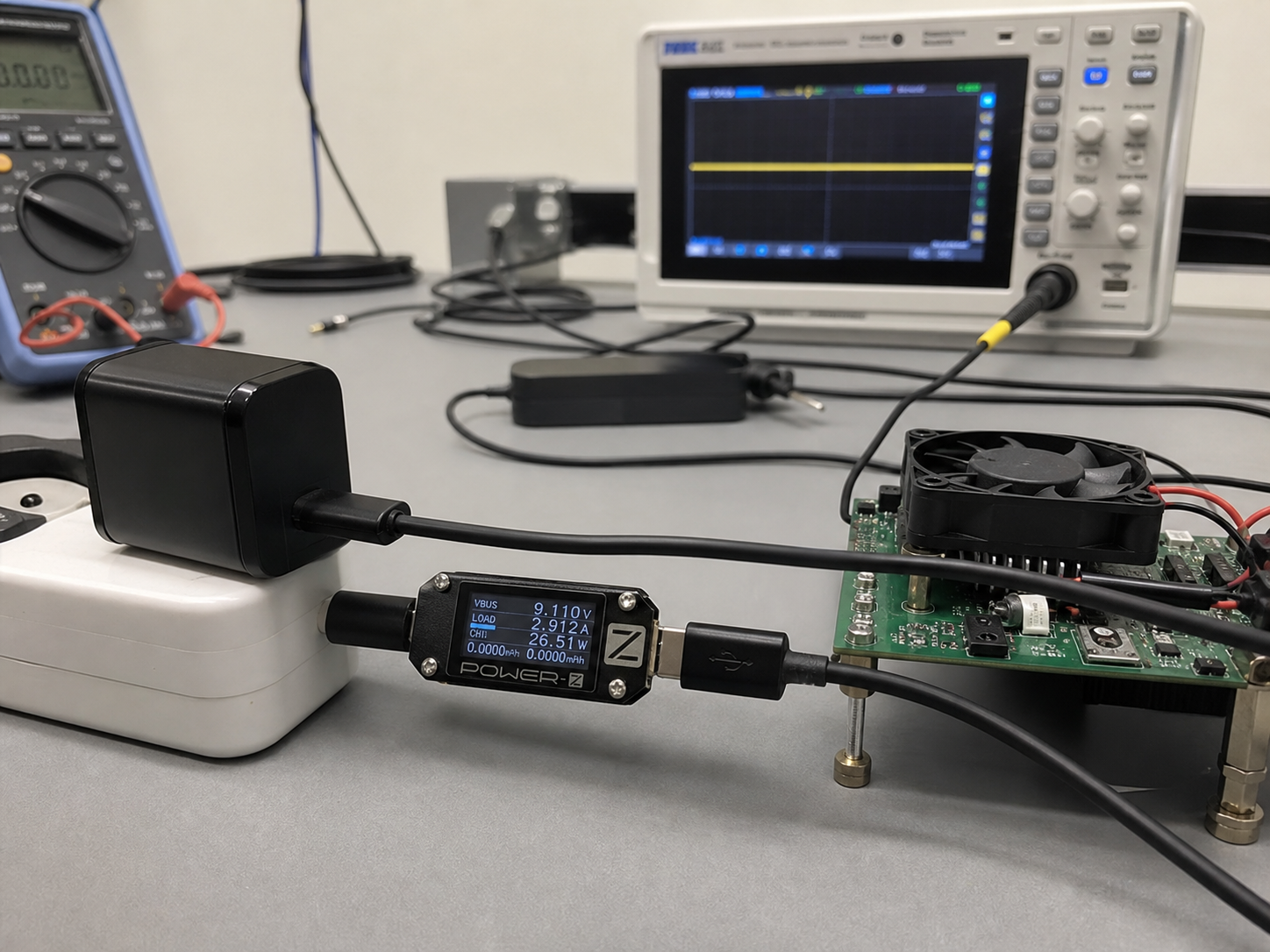
There are also several special scenarios where it is easy to fall into pitfalls, which are clearly explained in advance:
First, parameters such as 5W, above 100W, USB-A, USB-C, or PD themselves cannot determine whether CRS is required. Products of various powers and interfaces should first check the compulsory list, but only products that fall into the corresponding compulsory categories need registration;
Second, combination products such as USB chargers with wireless charging function and chargers with display screens should be checked against the compulsory list according to the main function, and cannot be directly counted as ordinary chargers just because they have a USB port;
Finally, if a charger and a charging cable are sold as a set, the charger needs to meet CRS requirements separately, and the cable is judged according to its own rules, which cannot be confused.
What Does CRS Assess? Core Requirements and Standards
The core of CRS assessment always revolves around safety and consistency, and specific requirements can be divided into several categories:
The Core Electrical Safety Requirements
Electrical safety is the top priority of CRS assessment, mainly focusing on several aspects:
First, abnormal condition protection: that is, under abnormal conditions such as short circuit, overload, and overvoltage, the product must not catch fire, leak electricity, or cause danger to people and equipment;
Second, temperature rise requirements: when the product operates at full load, the temperature of the enclosure and internal components must meet the threshold of IS standards. This threshold is adjusted according to product power and test ambient temperature, and is not a fixed value;
Third, structure and insulation requirements: for example, plug specifications, grounding methods, and insulation levels must meet the standards. Class I mainly relies on basic insulation plus protective grounding to achieve electric shock protection; Class II mainly relies on double insulation or reinforced insulation, and does not depend on protective grounding. The final classification should be determined according to applicable IS standards and product structure, not just the number of plug pins. Many small mobile phone charging adapters we usually use belong to Class II, but the specifics are still subject to product structure and applicable standards.
The specific test items, limit values, and required number of samples are subject to the applicable IS standards and the laboratory’s test plan, so there is no need to guess blindly.
Output and Consistency Requirements
In addition to safety, output and product consistency are also assessed:
Rated output verification is to check whether the actual test fluctuations of the product’s nominal power, voltage, and current are within the range allowed by the standard. Simply put, there must be no false labeling;
Whether fast charging protocols and multi-output capabilities are tested, and to what depth, shall be subject to applicable IS standards, product declarations, and laboratory test plans. Registration cannot be understood as automatic performance certification for all protocol functions or all output combinations; the core is still to confirm that the product meets applicable requirements;
Product consistency is one of the core rules of CRS: mass-produced products must be completely consistent with the test samples in terms of circuit, key components, and structure, and cannot be replaced at will. For example, if the main capacitor of brand A is used during testing, but it is replaced with brand B during mass production without reporting, it is a violation.
Marking and Labeling Requirements
CRS also has clear requirements for marking:
The BIS standard mark and registration number shall be used as required on the product body, packaging, and necessary instruction materials in accordance with the applicable CRS marking guidelines. The specific location, format, and whether marking on packaging or accompanying materials is allowed shall be subject to the current BIS guidelines and approved label styles, and cannot be handled solely based on experience;
For markings on packaging and manuals, it is also necessary to distinguish between BIS requirements, Indian consumer protection regulations, and the e-commerce platform’s own rules. Whether Hindi must be used shall be judged according to specific products, packaging methods, and applicable Indian labeling regulations. It may not be a separate requirement for the CRS standard mark, but it cannot be assumed that it is not bound by other compulsory Indian labeling regulations.
Intermediate: Test Item Adjustment Rules
Many people will ask: why are the test costs so different for the same USB charger? Test items, limit values, and number of samples must be determined according to applicable IS standards, product structure, and laboratory test plans. Whether temperature rise, withstand voltage, insulation, abnormal conditions, etc. are applicable, as well as the scope of no-load power consumption, multi-output, and protocol testing, cannot be presumed solely based on product power or interface type.
Intermediate: Verification of Applicable IS Standard Versions
Before applying, be sure to check the applicable standard version clearly, otherwise the test may be done in vain. When verifying, pay attention to these dimensions: product name in the compulsory list, product definition, applicable standard, version/revision number, implementation/transition date, and validity of old version reports.
At present, standards that may be involved in USB chargers include the IS 13252 series, IS 62368-1, etc. The specifics are subject to the latest compulsory list, and standards cannot be applied arbitrarily. If there is a standard update, the requirements of the old and new versions may be different. Before applying, be sure to confirm the current valid version and transition rules to avoid that the test done with the old standard is not recognized.
What to Prepare Before Applying? Rules for Entities, Documents, and Samples
After understanding the requirements, let’s talk about the preparations before applying.
Binding Rules for CRS Registration
First of all, it must be clear that the CRS registration certificate cannot be used arbitrarily. It is deeply bound to the following information: manufacturer, production factory, brand/trademark, product model/model family, key design, and applicable IS standard. Products produced by different factories or products with different core circuits must never share the same registration, otherwise it is a violation of certificate misappropriation.
Responsibilities of Each Applicant Entity
CRS applications involve multiple entities, and their respective responsibilities must be clearly distinguished:
Overseas manufacturers are responsible for providing technical documents and test samples, and bear ultimate responsibility for product quality and consistency;
Foreign manufacturers shall designate an Authorized Indian Representative (AIR for short) in India in accordance with BIS rules, who shall handle applications and compliance liaison on behalf of the manufacturer. Manufacturers in India shall follow the applicable application process, and AIR obligations cannot be uniformly applied to all applicant entities;
Brands and importers shall ensure that the imported and sold products are completely consistent with the registration information, and bear compliance responsibilities on the market side;
BIS-accredited laboratories are responsible for completing tests in accordance with corresponding IS standards and issuing true and valid test reports.
Documents and Samples to Prepare
The documents required for the application can be divided into three categories:
The first category is entity qualification documents, including the manufacturer’s business license, factory qualifications, trademark registration/authorization documents, and AIR authorization letter;
The second category is product technical documents, including model list, rated parameters, key component list (also called BOM list, which is the detail of all core safety parts of the product), circuit schematic diagram, PCB layout, and certification documents of safety critical parts;
The third category is samples. Test samples of representative models need to be provided, the specific quantity is subject to the laboratory’s requirements, and sample nameplates and appearance photos also need to be prepared.
How to Apply? Process, Cost, and Certificate Management
Main Process of Regular Application
The regular process for CRS application is divided into four steps, with a clear logic:
Step 1: Send samples of representative models to a BIS-accredited laboratory and complete the test in accordance with applicable IS standards;
Step 2: Submit the application through BIS’s online system, and upload the test report and all application documents;
Step 3: BIS reviews the consistency of the documents and the test report, and will issue a registration certificate and a unique R number after approval;
Step 4: After BIS approval and obtaining the registration number, the standard mark and registration number shall be used as required, and it shall be ensured that the mass-produced products, labels, manufacturing factory, and registration information are consistent; after meeting other applicable import, labeling, and market supervision requirements, the products can legally enter the Indian market.
Test Failure and Rectification Closed Loop
If the test fails, don’t panic. The reasons for non-conformity are usually divided into several categories: structural problems, electrical safety problems, marking problems, parameter non-compliance, etc. When rectifying, pay attention: if it involves design revision or key component replacement, the impact on overall safety must be evaluated simultaneously, and you cannot only fix the problematic part. After the rectification is completed, samples shall be re-sent for retesting, and the report shall be revised before being submitted to BIS for review.
Intermediate: Tips for Cost Saving with Series Registration
Many sellers do not know that products of the same series may be able to apply jointly under certain conditions, which can save some costs. However, whether series application is possible and how to select representative models shall be evaluated for coverage by the accredited laboratory based on applicable standards and specific model differences, and submitted in accordance with BIS requirements; it cannot be presumed that one test can cover the entire series, all output combinations, or all fast charging protocols just by selecting the highest power or most complex model.
Usually, it is necessary to focus on comparing information such as manufacturer and production factory, applicable IS standards, core circuit structure, key safety design, output combination, and protocol configuration. When the number of interfaces, power levels, output combinations, or protocol configurations change, the laboratory should be asked to evaluate the coverage, and you cannot decide on your own. If the core circuit/PCB is different, the factory is different, or the applicable standards are different, combined registration cannot be taken for granted, and separate applications may be required.
Cost Composition and Quotation Verification
The cost of CRS is not fixed and is affected by many factors: the number of test items, number of models, sample logistics fees, translation/notarization fees, AIR service fees, BIS official registration fees, etc., all affect the final cost.
So when asking for a quotation, be sure to check clearly: what service items are included in the quotation, whether retesting is included, and whether AIR service is included, to avoid being charged extra midway.
Cycle and Full Life Cycle Management of Certificates
The regular application cycle is generally 4-8 weeks, which is specifically affected by the test pass rate, document completeness, and BIS review progress. It is recommended to leave enough margin and not apply just before the listing time.
The validity period and renewal rules of the certificate are subject to the validity period stated on the certificate and the current BIS rules. Renewal requires submission of documents in advance and must comply with current standards, and cannot be renewed casually.
If there are subsequent product changes, they cannot be simply classified and handled as “minor” or “major” on your own. Any change in model, brand, manufacturing factory, address, key components, structure, or rated parameters shall be evaluated by the laboratory and BIS in accordance with BIS’s current change or extension procedures before implementation, to determine whether supplementary testing, registration modification, model extension, or re-application is required.
If there is a standard update, the standard conversion shall be completed in accordance with the transition period requirements.
Even if the product is already on the market, compliance must be maintained: cooperate with BIS’s market random inspection and import batch random inspection to ensure that mass-produced products are completely consistent with registration information, otherwise you will face penalties.
How to Check if CRS is Real? Four-step Verification Method
Whether consumers buy charging adapters, or sellers purchase goods or import, they need to know how to check the authenticity of CRS. Just follow the four steps, gradually deepening from entry to advanced level.
Step 1: Appearance Preliminary Screening (Entry-level Quick Check)
First look at the product itself: whether there is a clear BIS standard mark and R registration number, model, input and output parameters, and whether the marking meets conventional requirements; then look at the plug and structure: whether the plug specification and insulation level are consistent with the product marking, and whether there is any illegal installation of adapters.
But note: it is impossible to judge the authenticity 100% by appearance alone. Stickers and printing can be faked, so this step is only a quick preliminary screening and cannot be regarded as the final conclusion.
Step 2: Official Database Query (Core Verification Channel)
This is the most core verification method: go directly to the CRS public database on the official BIS website of India, and enter the R registration number, product model, or manufacturer name to search.
When checking, focus on: whether the certificate is within the validity period, and whether the model, power, manufacturer, and factory information completely match the product. If the information found is inconsistent, don’t rush to draw conclusions first. First check the model format, entity information, certificate status, and data update time — the database may have update delays, or there may be differences in model writing (for example, some have suffixes and some do not). After eliminating these problems, verify with the official or the certificate holder.
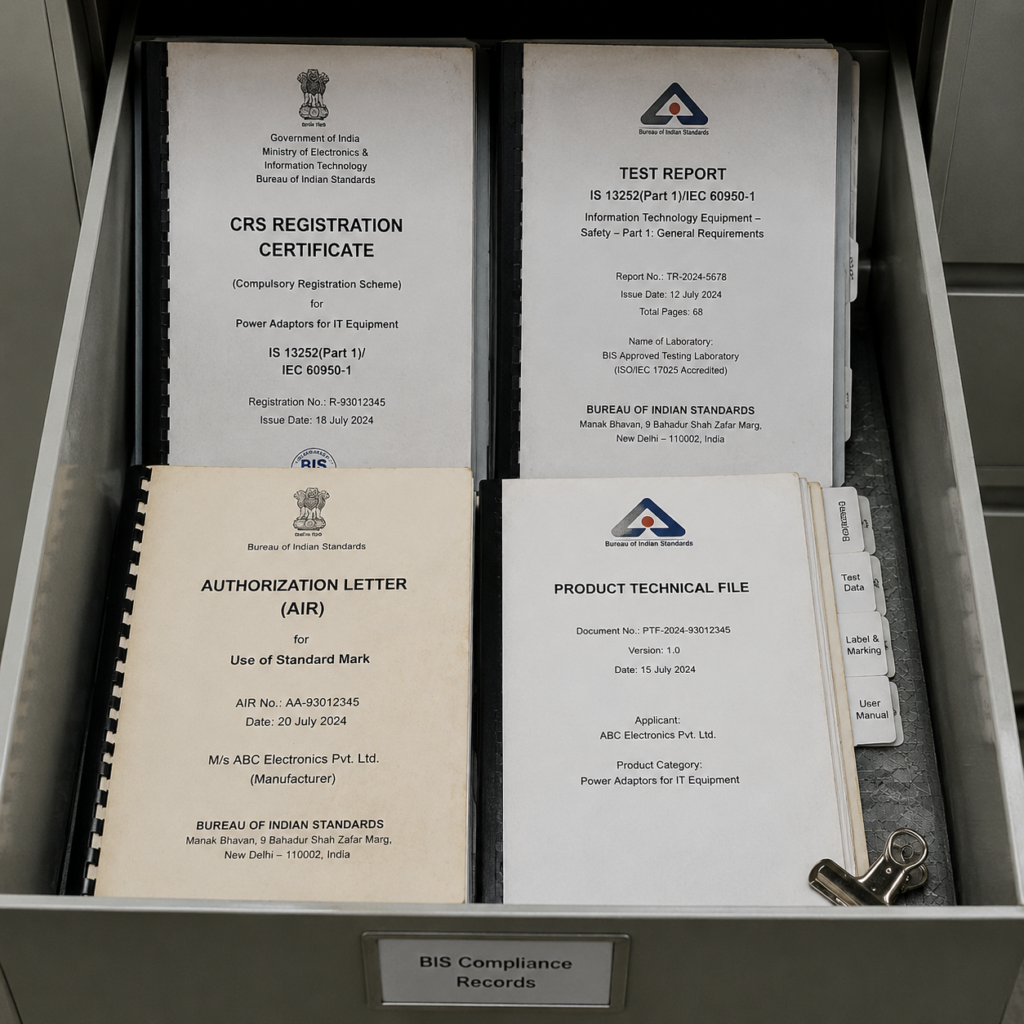
This method also has limitations: there may be data update delays and model format differences. In case of abnormal situations, further verification is required, and you cannot conclude that it is fake as soon as you see a difference.
Step 3: Document Consistency Check (Intermediate)
If it is a bulk purchase or cooperation, you can also ask the merchant to provide scanned copies of the BIS registration certificate and test report, and check whether the R number, model, manufacturer, and applicable standards on the certificate are completely consistent with the information in the product and the database.
If there is inconsistency in the brand name or model abbreviation, ask the other party to provide brand authorization documents and model correspondence certificates, and you cannot just feel that it is “almost the same”.
Step 4: Sampling Verification (for High-risk Scenarios)
In high-risk scenarios such as large-volume procurement and import, you can take a few samples and send them to a BIS-accredited laboratory to check whether the key structure and components of the product are consistent with those in the test report. If you find certificate misappropriation or inconsistent information, you can complain to the official BIS for verification.
When verifying on a regular basis, you can use several official BIS resources: BIS compulsory product list, CRS official operation guide, registration database, and list of accredited laboratories. When querying, it is best to record the query date and page version number, and save screenshots if necessary, so as to avoid being unable to explain clearly when the rules change later.
5 Most Common Pitfalls to Avoid
Finally, let’s talk about several most common misunderstandings, which both consumers and practitioners are prone to fall into:
The first category is misunderstandings about the scope of application. Many people think that as long as there is a USB interface, CRS is required, or that low-power products do not need it, and industrial power supplies are necessarily exempt. These are all wrong. The compulsory scope is always subject to BIS’s latest list, product category, and purpose, and there is no general exemption rule. The correct approach is to verify according to the “3 preliminary screening conditions + three-step confirmation method”, and consult an accredited laboratory if necessary, don’t make decisions on your own.
The second category is misunderstandings about certificate misappropriation/forgery. For example, using someone else’s R number, sharing an R number for products with the same appearance but different circuits, and using overseas certifications to impersonate CRS are all violations. Common scenarios include: using a low-power R number for high-power fast charging, replacing the core transformer without reporting, and changing the fast charging protocol without safety assessment. Once inspected, you will face the risk of goods being detained, fines, and products being removed from shelves. The correct approach is to verify the authenticity according to the four-step method and confirm that the product is completely consistent with the registration information.
The third category is misunderstandings about change management. Many people think that after getting the registration, they can change key components, adjust power, and change factories at will, and as long as the appearance remains the same, there is no need to re-apply. This is completely wrong. Product consistency is the core requirement of CRS. Changes in core parameters will directly affect safety, and changes without approval are violations. The correct approach is: before changing the core design, components, or factory, consult the laboratory first to confirm whether supplementary testing or re-registration is required.
The fourth category is misunderstandings about labeling and marking. For example, only printing the R number on the outer packaging, sticking the R number casually with self-adhesive labels, and thinking that Hindi marking is a mandatory requirement of BIS, these statements cannot be directly applied. The BIS standard mark and registration number shall be used as required on the product body, packaging, and necessary instruction materials in accordance with the applicable CRS marking guidelines; the specific location, format, and packaging marking method shall be subject to the current BIS guidelines and approved label styles. Whether Hindi must be used shall be separately judged in accordance with Indian legal metrology, consumer protection, and other applicable labeling regulations. It is not a separate requirement for the CRS standard mark, but it does not mean that it has nothing to do with other compulsory Indian labeling rules. The correct approach is to make labels according to applicable requirements, and distinguish between BIS mandatory requirements and other local regulations.
The fifth category is misunderstandings about customs clearance and listing. Many people think that with a registration certificate, they can definitely clear customs and list products, without checking the consistency of the product and registration information. This is also a misunderstanding. Common scenarios include: adding an Indian adapter to a charger with a non-compliant plug, resulting in customs detention of goods; e-commerce platforms randomly inspecting products with misappropriated certificates and directly removing all products from the store. The correct approach is to check one by one whether the product model, parameters, R number, and registration information are consistent before import and listing, and don’t take chances.
Overall, BIS CRS registration for USB chargers seems to have many items, but the core logic always revolves around the two key points of “safety” and “consistency”. After reading this content, you should be able to distinguish the core differences between BIS CRS and ISI certification, and know their respective applicable scenarios; be able to judge whether a product needs CRS through preliminary screening plus the three-step confirmation method; be able to explain the core requirements of CRS and know how to evaluate series applications to control costs; be able to judge authenticity through the four-step verification method; and also be able to avoid the 5 most common compliance pitfalls, and be able to cope with basic compliance risks whether it is purchasing, importing, or selling.