
If you have ever bought home appliances, light bulbs, or laptops in the U.S., you have most likely seen the “Energy Star” label with a white star on a blue background. Many people’s first reaction is “Is this a mandatory certification required by the U.S.? Can’t products be sold without the label?” Actually, it is not — it is a voluntary energy-saving label, but its value is higher than many mandatory certifications. Whether for consumers choosing energy-saving products or brands building differentiation in the U.S. market, it is unavoidable.
The following explains from basic definition, pre-application self-check, role division, certification steps, post-certification maintenance to authenticity verification, which is suitable for novice sellers new to the U.S. market and ordinary users for reference.
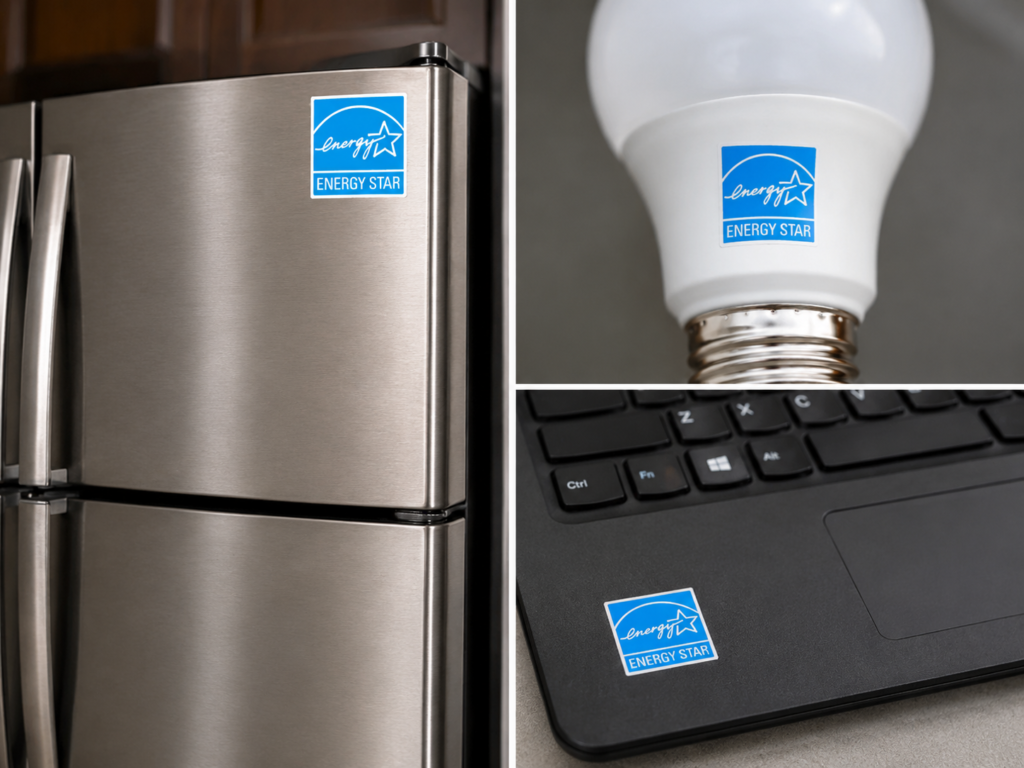
First, Understand: What is Energy Star Product Certification
Plain Language Definition: A Voluntary “Top Energy-Saving Performer” Label
Energy Star is a voluntary energy-saving label led by the U.S. Environmental Protection Agency (EPA), with the U.S. Department of Energy (DOE) participating in the formulation of technical rules for some categories. Simply put, for categories with mandatory energy efficiency requirements, the U.S. has a statutory “passing line” — products of corresponding categories that fail to meet the requirements cannot be legally sold in the U.S. market; while Energy Star is an “excellence line” higher than this passing line. Obtaining this label means that the model has passed third-party testing and audit in accordance with the Energy Star specifications of the corresponding category and completed official website listing, and its energy efficiency meets the Energy Star requirements of that category.
Its core role is also very clear: for consumers, they do not need to calculate annual power consumption by themselves against parameters, and can quickly identify energy-saving models by looking at the label; for manufacturers, it can not only achieve market differentiation, but also meet the access requirements of some specific channels.
This Article Only Covers Physical Product Certification
Energy Star is actually a very large system. In addition to the physical product certification we focus on today (covering common physical products such as home appliances, lighting, consumer electronics, doors and windows, commercial refrigeration, office equipment, etc.), there are three completely different programs. Here we only make conceptual distinctions and will not expand on the processes:
- Residential Certification: for construction energy efficiency acceptance of new residential buildings
- Commercial Building Certification: building evaluation based on energy efficiency scores
- Industrial Facility Certification: evaluation of the overall energy efficiency performance of factories
In addition, industrial special equipment, customized niche products, and categories without corresponding official energy efficiency specifications are also not covered by product certification and cannot be applied for.
Core Differences from Mandatory Access
Many people confuse Energy Star with U.S. mandatory energy efficiency requirements, but in fact the two are completely different in nature. We use a table to clarify:
| Comparison Item | U.S. Mandatory Energy Efficiency (e.g., DOE Minimum Standards) | Energy Star Certification |
|---|---|---|
| Nature | Market access threshold for corresponding product categories, mandatory requirement | Voluntary energy-saving label, a “bonus item” |
| Requirement Level | Passing line: products in corresponding categories that do not meet the requirements cannot be legally sold | Excellence line: requirements are generally higher than mandatory standards for the same category |
| Core Function | Basic condition for legal sale (only applicable to covered categories) | Reference for consumers to select products, market differentiation, compliance with specific subsidy/procurement requirements |
| Can It Replace Other Certifications? | Only covers energy efficiency access requirements for corresponding categories | Cannot replace other mandatory certifications such as UL safety and FCC electromagnetic compatibility |
It is worth mentioning in particular: although Energy Star is voluntary, in some government procurement projects, state-level energy-saving subsidies, large supermarkets, and even specific categories or activities on e-commerce platforms such as Amazon, it is regarded as a de facto access threshold — without this label, you may not even be eligible to sign up for participation. Specific requirements are subject to the latest rules of the corresponding projects and platforms, so its actual role is far more than a “marketing symbol”.
3 Basic Misconceptions Beginners Most Easily Fall For
People who are new to it easily fall into these three pitfalls in basic cognition, which are clarified in advance:
First, it is not a mandatory certification for the U.S. market. It is only explicitly required in specific scenarios (such as government procurement, applying for energy-saving subsidies). There is no mandatory regulation for ordinary retail, but having the label is usually more competitive.
Second, sticking a label does not count as certification. It is valid only after testing and audit by a third-party institution recognized by the EPA and being queryable on the official website. Privately printing and using the label is a violation.
Third, one certification is not valid for life. If the energy efficiency standard is updated later, the market spot check fails, or the product is modified in a way that affects energy efficiency, the certification may become invalid.
Pre-Application Self-Check: Can You Do It, Is It Worth Doing
Before officially starting the application, you can first complete several basic self-checks to avoid wasting time and cost.
Basic Requirements for Applicant Entities
First, who can apply? Usually the product’s Brand Owner; if an OEM or distributor wants to apply, they must obtain formal authorization from the brand owner.
The prerequisite for application is to first register as an Energy Star Partner and sign a compliance commitment agreement — which is equivalent to you promising the official that you will abide by all rules.
Many overseas sellers will ask: I don’t have a U.S. local company, can I apply? The answer is yes. Non-U.S. brands and factories can apply directly, no U.S. local entity is required.
3-Step Self-Check to See If Your Product Qualifies for Certification
After confirming that the entity is fine, next check the product itself:
Step 1, check the official product category directory. Go to the product directory page on the Energy Star official website to see if your product is within the coverage — for example, ordinary household LED bulbs are within the scope, but industrial special bulbs are not.
Step 2, find the latest version of the energy efficiency specification for the corresponding category. Each category’s specification has an effective date. The old version becomes invalid after expiration, and test reports made with the old specification are not recognized by the official. Be sure to check the effective time of the latest version.
Step 3, roughly estimate the probability of meeting the standard. You can first do a simple test by yourself, or find a laboratory to do a pre-test, to see if the energy efficiency data can meet the requirements. Here is a small tip: it is best to be about 5% higher than the passing line required by the specification, because there are inevitable fluctuations during mass production, and if you just meet the line, it is easy to have problems later.
Logic for Deciding Whether to Get Certified
Being able to do it is one thing, whether it is worth doing is another. You can judge against these scenarios:
Situations suitable for doing: focusing on the U.S. market, channels or customers clearly value the energy-saving label, needing to enter supermarkets/government procurement/apply for energy-saving subsidies — in these scenarios, the premium and access value of Energy Star can cover the cost.
Situations not suitable for doing: energy efficiency itself does not meet the standard, only doing niche industrial channels (customers do not care about energy saving), sales volume is too low to even earn back the certification fee — in this case, there is no need to force it.
The specific cost and cycle of certification can refer to the conventional industry range later, and be judged in combination with the expected product revenue.
3 Most Common Mistakes Before Applying
These pitfalls are all experienced by many people after spending wasted money, and are operational errors in the application stage. Avoid them in advance:
First, choosing the wrong specification version. For example, the new specification of a certain category has taken effect, but you still test according to the old version, and finally the report is directly invalidated, and the money is wasted.
Second, wrong category judgment. Especially for cross-category products, such as smart speakers with screens, water dispensers with cooling function, which category do they belong to? If you choose the wrong test specification, the work is in vain.
Third, ignoring partner requirements. Starting to use the Energy Star label in publicity before registering as a partner and signing the agreement is a violation, and may be warned or even punished by the official.
Roles of All Parties in Certification: Who to Contact for What
Many people think that you can directly contact the EPA for certification, but actually it is not — there is a clear division of labor in the entire system. Figuring out who is in charge of what will prevent you from contacting the wrong person.
EPA (U.S. Environmental Protection Agency): Rule-Making and Supervisory Body
The EPA is the rule-making and supervisory body of the entire Energy Star system, responsible for issuing energy efficiency specifications and label usage rules for various categories, recognizing the qualifications of laboratories and certification bodies, maintaining the qualified product database, and carrying out market spot checks. It does not directly receive certification applications from brands, nor does it undertake specific testing work.
EPA-Recognized Laboratories: Responsible for Testing and Issuing Reports
Laboratories are equivalent to “exam sites”, and must be officially recognized by the EPA and have testing qualifications for the corresponding category — for example, a laboratory with lighting qualifications cannot test refrigerators.
The job of the laboratory is to conduct energy efficiency tests on samples according to specifications and issue a formal test report. Note: the laboratory is only responsible for testing, and cannot directly issue certification, just like an exam site cannot directly issue you a graduation certificate.

Certification Body (CB): Audit and Listing Party
A Certification Body (CB for short) is a third-party audit institution recognized by the EPA, equivalent to the “score reviewer”.
Its job is to review the test reports and product materials you submit, and judge whether they really meet the specification requirements. After passing the audit, it will submit the product information to the EPA system to complete the official listing — that is, add your product to the qualified product directory.
Only EPA-recognized CBs are eligible to submit certification, and brand owners cannot directly submit materials to the EPA.
Brand Owner: Ultimate Compliance Responsible Party
Whether the testing is done by the laboratory or the audit is done by the CB, the brand owner itself is ultimately responsible for the consistency of product energy efficiency and the compliance of label use.
The brand owner needs to prepare samples, organize materials, follow up the entire certification process, and is also responsible for subsequent compliance maintenance after obtaining the certificate — for example, reporting if the product is changed, and not misusing the label.
Core Process Step by Step: From Application to Getting the Label
After figuring out the basics and roles, the next is the specific certification process, which has a total of five steps. Each step has clear checkpoints, and you will not go wrong if you follow them.
Step 1: Sign the Partner Agreement + Confirm Applicable Specifications
Before officially starting, do two things first:
First, the brand owner registers a partner account on the Energy Star official website and signs the compliance commitment agreement — this is the prerequisite for the application, and you cannot submit later without signing.
Second, reconfirm the latest version of the energy efficiency specification and test method corresponding to the product, don’t wait until the test is completed to find that the specification is wrong.
If there are multiple models of the same series, you can evaluate in advance whether they can be applied for jointly as a “product family” — that is, multiple models with consistent energy efficiency performance share one test report to reduce certification costs. Whether they can be combined must be confirmed by the EPA-recognized Certification Body (CB) according to the corresponding category specifications and configuration differences, and the brand owner cannot decide solely based on similar appearance or internal judgment. For example, different colors of the same desk lamp can usually be included in the same product family as long as the internal core energy efficiency configuration remains unchanged.
✅ Check point: The specification version is within its validity period, and the product clearly falls within the scope of this specification.
Step 2: Screen Laboratories and Certification Bodies with EPA Qualifications
Choosing the right institution is the most critical step. If you choose an unqualified one, you spend money but the certificate is useless.
The screening method is very simple: directly check the EPA’s official recognition directory. Whether it is a laboratory or a CB, you must confirm that it has the corresponding qualification for your category — for example, if you make refrigerators, you must confirm that the institution has the qualification for the household refrigeration category, and you cannot choose it just because it has EPA recognition.
When selecting, you can refer to these dimensions: experience with the category, quotation, testing/audit cycle, after-sales support (such as whether suggestions can be given for rectification).
✅ Check point: Reports and certifications issued by institutions without corresponding EPA category qualifications are not officially recognized, and cannot be chosen no matter how cheap they are.
Step 3: Send Mass-Production Samples to Complete Energy Efficiency Testing
After selecting the laboratory, you can send samples for testing.
Sample requirements: generally 2-3 brand new mass-production samples. The quantity may vary for different categories, subject to the laboratory’s requirements. Special attention should be paid here: never use high-configuration engineering prototypes, they must be exactly the same as the version sold in the final mass production, otherwise even if the test passes, there will be problems in subsequent spot checks.
The test is based on the latest version of the Energy Star energy efficiency specification for the corresponding category. The test content varies by category, and common ones include operating power, standby power, energy efficiency ratio, annual power consumption, etc.
The result judgment is “all items meet the standard to pass” — it is not enough if the average is sufficient. As long as one mandatory indicator is not met, it is considered unqualified and needs to be rectified before retesting.
✅ Check point: Samples must be exactly the same as the mass-production version, and specially tuned engineering machines cannot be used.
Step 4: Organize Documents and Submit to Certification Body for Audit
After passing the test and getting the report, you need to organize all materials and submit them to the CB (Certification Body) you selected for audit.
Core materials generally include: formal test report, product parameter sheet, model list, manufacturer information, label usage draft.
Note here: the brand owner cannot directly submit materials to the EPA, and must submit them uniformly through the authorized CB.
The audit cycle is generally 1-4 weeks. There are three common reasons for rejection: incomplete materials, product parameters do not match the test samples, and test methods do not meet the specification requirements.
✅ Check point: The models, parameters, and configurations in all materials must be completely consistent before and after, and there must be no contradictions.
Step 5: Official Website Listing + Obtain Label Usage Rights
After passing the audit, the CB will submit the product information to the EPA system. After the entry is completed, your product will appear in the Energy Star Qualified Products List (QPL for short).
The sign of certification taking effect is that the product model can be queried in the official website QPL, and the paper certificate is only for reference.
After obtaining the right to use the label, you must abide by the rules: it can only be used on the specific models covered by the certification, you cannot modify the style, proportion, color of the label, nor can you imply that the EPA endorses your entire brand.
✅ Check point: You must wait until it is queryable on the official website before using the Energy Star label on products, packaging, and promotional materials. Early use is a violation.
Key Details Affecting Results (Advanced)
If you have already understood the basic process, these details can help you avoid pitfalls and save costs, which are semi-proficient level knowledge.
Coverage Rules for Product Families/Series Models
When applying for certification, the core judgment standard for whether multiple models of the same series can share test data and be applied for jointly as a “product family” is whether the change affects energy efficiency.
Small changes that do not involve core energy efficiency components and control logic, such as differences in appearance, color, packaging copy, and sales channels, can usually be included in the same product family, such as the white and black versions of the same fan.
If the change involves core energy efficiency components or control logic, such as replacing the compressor, power supply, control board, adjusting lamp driver parameters, or updating energy efficiency-related firmware, it will directly affect energy efficiency performance, and separate testing or re-evaluation is required.
Whether they can be combined specifically needs to be communicated and confirmed with the EPA-recognized certification body in advance. Do not judge by yourself to avoid subsequent non-recognition and supplementary testing, which will increase costs instead.
Impact of Test Conditions on Results
The results of energy efficiency tests are strongly related to test conditions, and cannot be tested casually:
First, different test modes may have indicator requirements respectively — such as standby, operating, sleep, cooling/heating modes, and the power consumption of each mode may have a separate limit, not just testing one operating mode.
Second, test conditions such as ambient temperature, voltage, and load will directly affect energy consumption data — for example, the cooling power consumption of an air conditioner tested at 35°C is definitely higher than that at 25°C, so the test must be strictly carried out according to the specified conditions.
In addition, note that the power-saving data measured by the laboratory is under ideal conditions. When users actually use it, the actual power-saving effect will vary due to different usage habits, electricity prices, and installation conditions. Don’t make too absolute claims in publicity.
Pass Judgment Logic for Test Data
Many people think “almost meeting the standard is enough”, but actually it is not:
First, all mandatory indicators must meet the specification limits, not that the total score is enough or the main indicators are enough — for example, if the standby power consumption exceeds the limit, even if the operating power consumption is very low, it does not count as passing.
Second, critical values are risky: if your test data is just stuck at the passing line, a slight fluctuation during mass production, or normal test error during EPA spot checks, may lead to failure. This is also the reason why it was previously recommended that the pre-test should exceed the passing line by 5%.
Third, a valid test report must include the following: laboratory qualification certificate, test equipment calibration records, detailed test conditions, and original test data. If any one is missing, the certification body may not recognize it.
Impact of Document Consistency
Don’t think that documents are trivial. Many certifications are rejected due to inconsistent documents:
The model name, rated parameters, and configuration description must be completely consistent in the test report, application materials, and product packaging — for example, the model on the report is “LED-BULB-5W”, and the one printed on the packaging is “LED5W Bulb”, which may be rejected due to mismatch.
In addition, the certification scope cannot be expanded during publicity — for example, if you have certified the TV but not the matching remote control, you cannot say “the whole set of products has obtained Energy Star certification”, and uncertified accessories cannot take advantage of the main product’s certification.
How to Maintain After Certification: Avoid Certification Expiry
Many people think that everything is fine after getting the certificate, but actually it is not — if the subsequent maintenance is not done well, the certification may become invalid at any time, and the previous money will be wasted.
Compliance Boundaries for Label Usage
You must follow the rules when using the label, and these points cannot be touched:
- It can only be used on specific models that have been certified and are within the validity period, and cannot be pasted on uncertified models.
- You cannot modify the color, proportion, or style of the label, nor can you use the label to imply that the EPA endorses your entire brand or other properties of the product (such as safety and quality).
- Accessories in a combo set cannot automatically inherit the certification of the main product — for example, the crisper given as a gift with a refrigerator, if not separately certified, cannot be said that the whole set is an Energy Star product.
Market Spot Check Rules and Consequences
The EPA will from time to time purchase certified products from the market for re-inspection, which is called “market spot check”.
The focus of spot checks is on popular civilian products such as lighting, major home appliances, and consumer electronics, because they have large sales volume and high attention.
If the spot check fails, rectification will be required first. If the re-inspection after rectification still fails, the product will be directly removed from the qualified directory; if there is intentional fraud, illegal label use, etc., it may also be handed over to the Federal Trade Commission (FTC) for handling. Those involved in violations need to stop using the label and complete rectification as required. In serious cases, they may face penalties. The specific consequences are subject to the official handling results of the EPA and FTC.
Certification Handling for Product Changes
If the product is adjusted after certification, the core judgment logic of the handling method is the same as the product family judgment in the application stage — that is, whether the change affects energy efficiency performance, which is divided into two categories:
- Situations that only require reporting: small adjustments related to appearance, packaging, and non-energy efficiency, without changes to core energy efficiency components or control logic, can be reported to the original certification body.
- Situations that require re-certification/testing: if the change affects energy efficiency performance, the testing and audit process needs to be completed again, and the qualified directory information needs to be updated.
If you are not sure, directly contact the original certification body for evaluation. Do not continue to use the label on your own to avoid violations.
Transition Requirements for Standard Updates
Energy Star’s energy efficiency standards are not static. Different categories are usually updated every 2-5 years, and the threshold is gradually increased with the popularization of energy-saving technologies. The specific update cycle and effective date are subject to the official announcement of the EPA for the corresponding category.
Each standard update usually sets a transition period, and the specific duration is subject to the official announcement of the EPA for the corresponding category. Certifications obtained under the old standard during the transition period are still valid; after the transition period, whether re-testing is required and whether a sales buffer period for old products is set are all subject to the latest official rules and the real-time status of the QPL. Products that do not meet the new standard cannot continue to use the Energy Star label.
Real Rules for Certification Validity Period
Many people ask “How many years is the Energy Star certification valid?” The answer is there is no fixed validity period: as long as your product has no changes that affect energy efficiency, the corresponding energy efficiency standard has not been updated, and all market spot checks are qualified, the certification will remain valid.
Common invalidation scenarios include the following: the brand voluntarily cancels, the spot check fails, the certification is not re-applied as required after the standard is updated, and the product has changes that affect energy efficiency but is not reported.
To find out if the certification is valid, you can search for the model in the qualified product directory on the Energy Star official website at any time. The status is updated in real time, and the specific valid status is subject to the query result on the official website.
Pitfall Avoidance Guide: Authenticity Identification and Common Failure Reasons
Common Core Reasons for Certification Failure
From the actual application situation, the common core reasons for certification failure are mainly three categories, most of which are caused by insufficient pre-preparation:
First, energy efficiency does not meet the standard. Many applicants directly send for formal testing without doing a pre-test, and as a result the data fails to meet the specification requirements, wasting testing fees and time.
Second, the test samples are inconsistent with the mass-produced products. The test samples use high-configured parts or specially tuned programs, but the mass-produced version has lower configuration, either it is found to be unqualified during the testing phase, or it fails the subsequent market spot check.
Third, chose an institution without corresponding EPA qualifications. Some institutions claim that they can quickly obtain certificates, but they actually do not have the corresponding category testing or audit qualifications recognized by the EPA. In the end, the product cannot be entered into the official qualified product directory, which is equivalent to wasting money.
Quick Method to Identify Real vs. Fake Certification
How to judge whether the certification you got is real? The only reliable method is to search for the model in the Qualified Products List on the Energy Star official website. If it can be found and the status is normal, it is real.
Fake certifications usually have several typical characteristics: promising a certification time far shorter than the conventional cycle, a quotation far lower than the normal industry level, only providing paper certificates or authorization plaques but unable to provide an official website query entry. Remember: paper certificates and cooperation authorization plaques are not valid credentials officially recognized. The only valid basis is the real-time records of the Energy Star official QPL.
Reasonable Reference Range for Cost and Cycle
Many people are easily scammed when asking for prices. Here is a common industry estimated range, for reference only. The specific cost and cycle will vary greatly due to factors such as category complexity, number of models, whether rectification is required, and the selected institution, subject to the formal quotation of the cooperative institution:
- Cost: There is no unified pricing. Small categories (such as ordinary light bulbs) usually cost thousands of US dollars, and complex categories such as major home appliances and commercial equipment usually cost tens of thousands of US dollars. The specific amount depends on the testing complexity of the category and the number of models.
- Cycle: Simple products generally take 1-2 months, and complex products take 3-6 months. This does not include the time for rectification — if rectification is required, the cycle will be extended accordingly.
Anyone who says “guaranteed pass” or “has internal channels” is a scam. Formal institutions must conduct actual tests according to specifications, and it is impossible to promise a guaranteed pass.
Special Notes for Cross-Border Applicants
If you are an overseas (non-U.S.) brand or factory, pay special attention to the following points:
First, you don’t need to find a U.S. local company to apply on your behalf. You can apply directly by yourself, as long as you find an EPA-authorized institution.
Second, some categories or activities on U.S. e-commerce platforms such as Amazon have clear requirements: if the product page is marked with the Energy Star label, the corresponding record must be found in the official qualified product directory, otherwise it may be removed from the shelves. The specific rules are subject to the latest requirements of the platform. Don’t take chances and label randomly.
Third, certification is based on specific approved models or product families confirmed by the certification body. Models not included in the certification scope cannot use the label. For example, if the 5W bulb of the same series has been included in the product family and can share the label, but the 10W model is not covered due to different energy efficiency parameters, it cannot be labeled without authorization, let alone mixed use across categories.
Most Easily Confused Compliance Boundaries
Finally, clarify the three most easily confused compliance boundaries to avoid errors in actual operation:
- Energy Star ≠ U.S. Market Access: It is a voluntary energy-saving bonus item, only required in some specific scenarios, and cannot replace various mandatory certifications such as DOE mandatory energy efficiency (only applicable to its covered categories), UL safety, and FCC electromagnetic compatibility. The mandatory certifications required for products entering the U.S. market need to be confirmed according to the product category.
- Laboratory Testing ≠ Certification Passed: The test report is only one of the necessary materials for applying for certification. It must be audited and approved by an EPA-recognized certification body and completed official website listing before you truly obtain Energy Star certification. Only getting the test report does not mean you can use the label.
- Same Brand Same Series ≠ All Can Be Labeled: Only specific models or product families clearly covered in the certification documents can use the label. Even for products of the same brand and same appearance series, as long as they are not within the certification scope, they cannot be labeled without authorization, otherwise it is a violation.
Summary and Action Checklist
At this point, the entire process of Energy Star product certification has been sorted out. Finally, a quick judgment method, core execution checklist and ability sorting are organized for your direct reference.
30-Second Quick Judgment on Whether to Get Certified
If you are not sure whether your product needs to be certified, just ask yourself three questions:
- Is the product sold for the U.S. market?
- Is the product in the Energy Star covered categories, and can its energy efficiency meet the standard?
- Can the product sales cover the certification cost, or do channels/customers explicitly require this label?
If the answer to all three questions is “yes”, it is worth starting certification preparation.
Core Certification Execution Checklist
If you decide to do it, just follow this checklist to proceed:
□ Confirm that the product belongs to Energy Star covered categories
□ Find the latest version of the energy efficiency specification for the corresponding category, and use a pre-test to roughly estimate the pass probability (recommended to be 5% above the passing line)
□ Register as an Energy Star Partner and sign the compliance commitment agreement
□ Screen laboratories and certification bodies with corresponding category qualifications from the EPA official directory
□ Send mass-production samples for testing, and confirm that all indicators meet the standard
□ Organize consistent materials and submit them to the certification body for audit, wait for official website listing
□ Confirm that the product is queryable in the official QPL before using the Energy Star label
□ Regularly check the certification status after obtaining the certificate, and contact the certification body for evaluation before product changes
What You Can Do Independently After Learning
After sorting out the entire process, you can not only understand the basic logic of Energy Star product certification, but also independently complete these practical judgments: distinguish the difference between Energy Star physical product certification and residential, commercial building, and industrial facility projects; judge whether the product is within the covered category and whether it is worth applying for certification; verify the authenticity of certification through the Energy Star official Qualified Products List (QPL); reasonably estimate the cost and cycle range of certification combined with category complexity; identify common risks that may lead to certification invalidation such as product changes, standard updates, and market spot checks.