
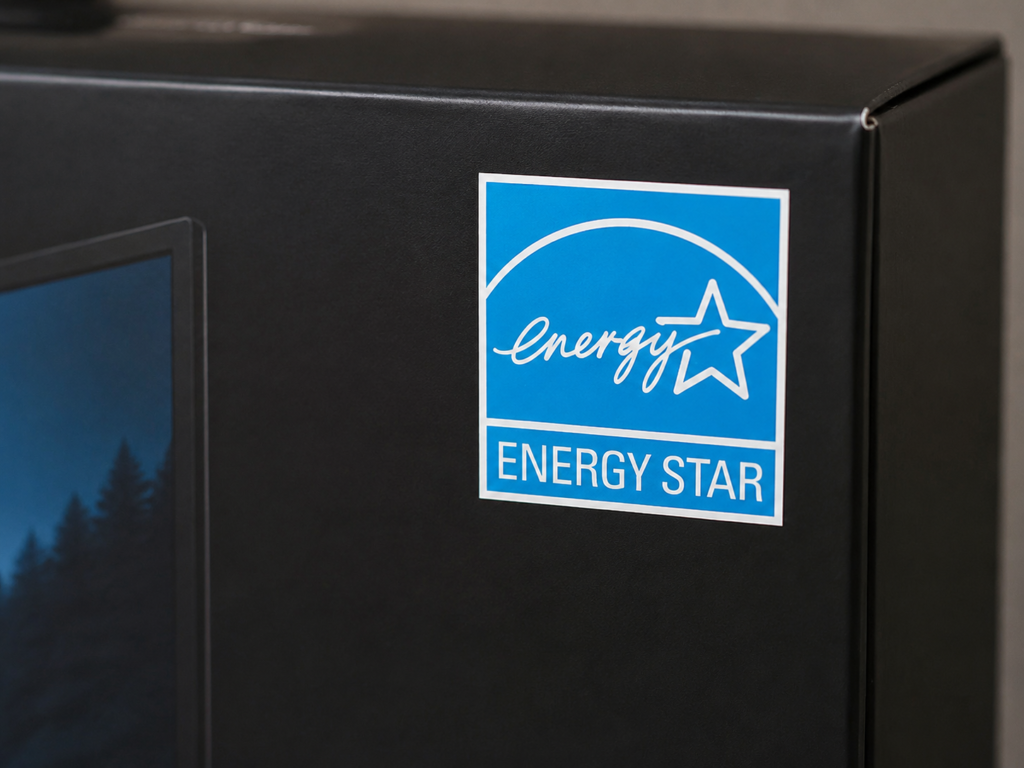
If you shop for electronic products in the U.S. and Canadian markets, you have most likely seen the ENERGY STAR label with a white star on a blue background on packaging. Some people say it is a mandatory certification required by the United States, and all electrical products must have it; others say any energy-saving product can be labeled with it. The actual situation is that the eligibility scope of ENERGY STAR has clear official boundaries. Many electronic products you are familiar with — such as smartphones and power banks — are not within the coverage scope at all, and even many labels affixed by merchants are invalid or counterfeit.
Introductory Basics: Core Logic of the Eligibility Scope
Let’s first clarify the most basic concept: ENERGY STAR is not a mandatory regulation, but a voluntary high-efficiency labeling program led by the U.S. Environmental Protection Agency (EPA) with the participation of the U.S. Department of Energy (DOE). You can think of it as a “top energy-saving student” label for products of the same type — only regular mass-produced models with better energy consumption performance than most similar products can obtain this label, helping ordinary users pick more energy-efficient models at a glance without calculating power consumption or checking parameters themselves.
Many people confuse it with DOE energy efficiency standards, but in fact, the positioning of the two depends on the situation: For electronic categories that already have mandatory DOE energy efficiency standards, the DOE standard is more like a “passing line” for market access, which is a mandatory requirement — products that do not meet the line cannot be sold in the U.S. market; while ENERGY STAR is an “excellence line” above that, with requirements much higher than the DOE minimum threshold. For some electronic categories without corresponding mandatory DOE standards, ENERGY STAR only exists as a voluntary high-efficiency reference program. Although it is voluntary in itself, its value is not low: U.S. federal government procurement, energy-saving subsidies in many states, and procurement tenders for schools and public institutions all list ENERGY STAR as a hard requirement, which is equivalent to “voluntary registration, but you must meet the requirements to get benefits.”
Clarifying the eligibility scope has three very practical benefits for you: First, when shopping in the U.S. and Canadian markets, you don’t have to listen to merchants’ empty claims of “energy saving”, and you can quickly screen products with official endorsement against the official scope; second, when purchasing for schools, governments, or applying for subsidies, confirming in advance can avoid buying models that do not meet the requirements; third, you can avoid publicity traps such as “all brands have certification” and “all products are energy-saving” — many categories are not within the official coverage at all, and no matter how energy-efficient they are, they cannot get certification.
Before formally talking about covered categories, let’s first draw two most basic boundaries for beginners to avoid going astray at the start: First, the core application markets of ENERGY STAR are the United States and Canada. Canada, with the participation of Natural Resources Canada (NRCan), adopts rules that are basically consistent with those of the United States; other countries and regions have their own energy efficiency labeling systems, which cannot be directly applied. Second, not all electrical and energy-saving products are within the coverage scope. The EPA gradually formulates rules based on category popularity and energy-saving potential, and categories that are not included cannot obtain certification no matter how low their power consumption is.
To determine whether an electronic product is truly within the effective eligibility scope, there are three indispensable core conditions, which are also the basis for all subsequent judgment methods:
First, there is a corresponding current and valid product specification — that is, the energy consumption requirement document formulated by the EPA for a certain type of product that must be met to obtain certification, equivalent to an exam syllabus. Without a syllabus, you cannot participate in the “top energy-saving student” selection;
Second, the specific model is in a valid listed status in the EPA’s official Product Finder database. Many people think that certification is applied directly to the EPA, but in fact, the complete process is: first, an EPA-recognized laboratory completes energy consumption testing in accordance with the corresponding specification, then submits it to an EPA-recognized certification body for review. After passing the review, the model will be entered into the Product Finder database, which is commonly referred to as “listing”. Product Finder is the EPA’s official certified model query tool, equivalent to a public “top student list”. Only models displayed as valid in the database are considered to have truly obtained ENERGY STAR certification;
Third, the entity using the label is completely consistent with the listed brand and sales model — you cannot misattribute things; certification for Brand A cannot be applied to Brand B, and certification for Model X of the same brand cannot be used for Model Y.

Officially Covered Core Electronic/IT Categories
Now that we understand the basic logic, let’s take a look at the core categories officially included in electronic/IT certification by the EPA. The following EPA officially covered categories are compiled based on current and valid electronic/IT product specifications, and only discuss electronic/IT products; home appliances with electronic functions such as refrigerators, air conditioners, and washing machines belong to the ENERGY STAR home appliance category, which is not within the scope of this article.
The following are typical coverage and exclusion examples for introductory judgment, and do not equal the complete official list; actual eligibility shall be subject to the EPA product category page, the defined scope of the corresponding product specification, and the official listing status of the specific model. For quick comparison, the core categories are organized as follows:
| Product Category | Common Covered Products | Eligibility Prerequisites | Clearly Excluded Items |
|---|---|---|---|
| Home Audio/Video and Consumer Electronics | Flat-panel TVs, streaming media players, home game consoles, smart speakers, portable Bluetooth speakers, AV receivers | Consumer-grade, size/power meet specification thresholds | Professional stage/recording equipment, car audio, passive speakers |
| Computers and Display Devices | Desktops, laptops, 2-in-1 tablets, all-in-one computers, thin clients, workstations, monitors | Consumer/general commercial-grade, non-specialized equipment | Smartphones, e-readers, industrial control computers, input peripherals such as keyboards and mice |
| Imaging and Printing Equipment | Printers, scanners, copiers, multi-function printers, fax machines | General office/home use, parameters meet the scope | Large-format industrial printers, 3D printers, special printing equipment |
| Small Network and Communication Equipment | Home routers, modems, small switches, wireless access points, cordless phones | For home or small office scenarios | Carrier-grade core equipment, enterprise-grade core switches, professional dispatching communication equipment |
| Commercial and Data Center IT Equipment | Rack/tower servers, small data storage devices, small and medium-capacity uninterruptible power supplies (UPS) | Meet the performance and energy consumption requirements of commercial product specifications | Hyperscale data center core clusters, industrial-grade high-power UPS |
Not all products belonging to the above categories can obtain certification; they also need to meet the size, power, and performance thresholds of the corresponding specifications, and the product positioning meets the requirements. The “consumer-grade/general commercial-grade” here usually refers to standardized mass-produced products for home, ordinary office, and general commercial environments; equipment for specialized scenarios such as industrial, medical, and carrier core networks, even if they look similar to consumer models, are mostly excluded as specialized equipment.
It should be specially reminded that category attribution cannot be judged solely based on appearance, and specific specification thresholds shall be subject to the definitions of the corresponding official product specifications: For imaging and printing equipment, it is necessary to check whether the product type, format, printing speed, imaging technology, etc. meet the specification scope. Large-format industrial printers, production-type high-speed industrial printers, 3D printers, and special printing equipment are usually not eligible for electronic category coverage; for small data storage devices, it is necessary to confirm whether they are commercial/data center-grade storage categories defined by the specification. Home consumer-grade NAS and hyperscale distributed storage clusters do not yet have corresponding electronic category specifications; for servers and UPS, it is necessary to first confirm whether they are general commercial positioning. Industrial-grade specialized equipment and customized cluster solutions are not within the coverage scope. Parameters such as rated capacity, topology type, and input/output form of UPS must meet the requirements of the corresponding specifications.
Boundary Clarification: Three Categories of Situations Not Within the Effective Eligibility Scope
After reading the officially covered categories, you may still encounter many ambiguous situations — some products seem to belong to the above categories, but in fact they are not within the effective eligibility scope at all. Generally speaking, there are three categories of situations that do not fall within the effective ENERGY STAR eligibility scope, which you can check against to exclude:
Category 1: No corresponding official category, completely not within coverage scope
Even if these products are more energy-efficient and merchants promote them vigorously, they cannot obtain ENERGY STAR certification.
First are specialized equipment for industrial, medical, scientific research, and broadcast grades, such as industrial oscilloscopes, medical monitors, laboratory test instruments, and broadcast-grade cameras. Such products are usually judged according to industry specifications, procurement requirements, or other special regulatory rules, and do not fall within the coverage of the ENERGY STAR electronic/IT specifications discussed in this article.
Second are non-regular mass-produced products, such as DIY assembled complete machines, self-made circuit board products, customized specialized equipment, and counterfeit imitations. Without unified model specifications, standardized energy consumption testing cannot be carried out, so naturally they cannot pass certification.
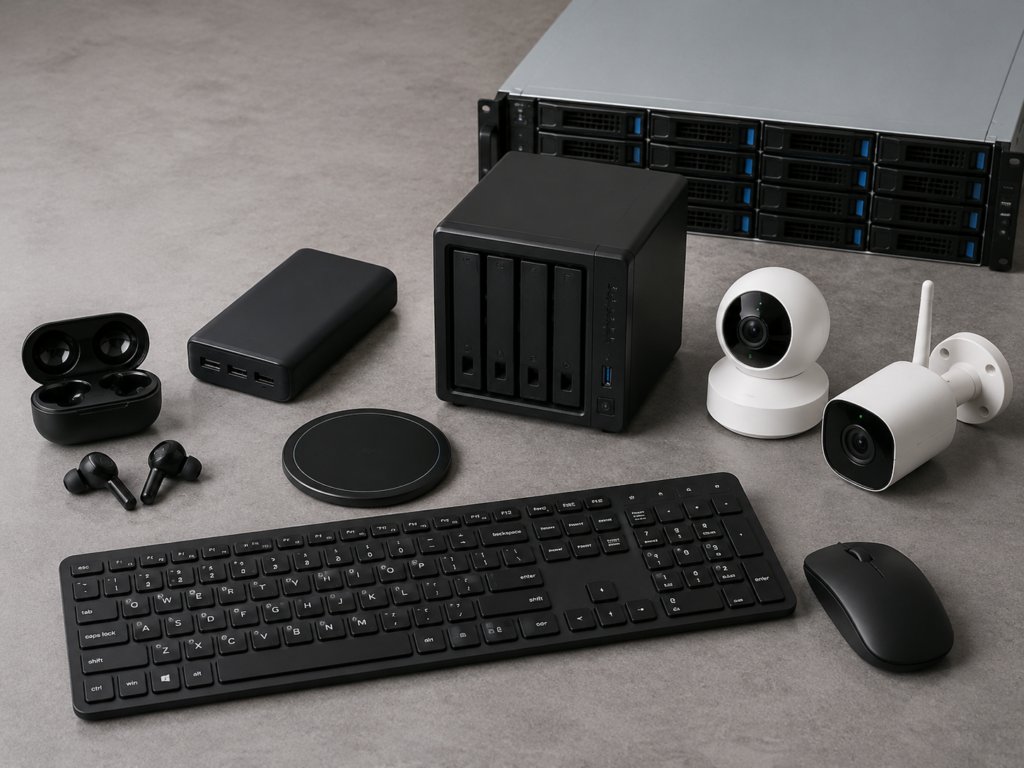
There is another category of consumer electronics that people encounter daily, which is also not within the coverage scope at present, such as true wireless earbuds, power banks, wireless chargers, keyboard and mouse peripherals, home NAS, and home security cameras. At present, the EPA has not yet formulated corresponding electronic product specifications, which are completely different from the eligibility rules for commercial-grade small data storage devices.
In addition, accessories or modules that are not sold independently are also not within the coverage scope, such as built-in computer power supplies, built-in mobile phone batteries, and built-in printer cartridges. These are only components of the complete machine and will not obtain ENERGY STAR certification alone.
Finally, home appliances with electronic functions such as smart refrigerators, washing machines, and air conditioners belong to the ENERGY STAR home appliance category and do not fall within the electronic/IT category discussed in this article.
Category 2: Corresponding category exists, but cannot be listed due to failure to meet certification requirements
These products belong to the officially covered categories, but do not meet the specification thresholds or valid listing requirements among the core conditions, and cannot obtain valid certification.
For example, products with specifications exceeding category thresholds, such as oversized commercial video walls, industrial-grade high-power routers, and large-format industrial printers, although they seem to belong to the same category as consumer models, their size and power exceed the upper limit of the specification and are not within the coverage scope.
Another example is products with mismatched positioning, such as industrial control computers, enterprise-grade core switches, and carrier-grade core communication equipment, which are all specialized-grade products, not consumer or general commercial-grade, and are also not within the scope.
There is also a common situation where the complete certification process is not completed: many merchants will produce “energy efficiency test reports” claiming that the product meets ENERGY STAR requirements, but have not completed official valid listing, and test reports are not equivalent to certification.
Category 3: Label affixed but certification is invalid or counterfeit
This category involves rule-violating practices by merchants, which also do not meet valid listing or consistency requirements, and ordinary users can easily fall into the trap.
The first is products with expired old specifications — ENERGY STAR product specifications are regularly updated with increasingly strict requirements. After the old specifications expire, if the original certified models have not been re-tested to pass the new specifications and maintain valid listing, the certification will become invalid, and continuing to affix the label is a violation.
The second is unlisted SKUs in the same series — many brands have products of different sizes and configurations in the same series, and maybe only some models have obtained certification, but merchants will promote “full series ENERGY STAR”. For example, a brand’s 55-inch TV has certification, but the 75-inch one does not, but they claim both do.
The third is directly counterfeiting or misusing the label — the product is not validly listed in the official database at all, and the merchant prints a label and sticks it on, even distorting the label or adding extra text to deceive consumers.
Practical Judgment: 3 Steps to Confirm Effective Eligibility Scope
Since there are so many boundaries and traps, how to judge whether an electronic product is truly within the effective eligibility scope? You can choose judgment methods of different accuracy according to your own needs, from quick preliminary screening to official authoritative verification, step by step.
Step 1: 30-second Quick Preliminary Screening (Entry-level)
It is completely sufficient for ordinary consumers’ daily shopping, just look at three points:
First, look at the sales market: whether it is an officially recognized sales region in the United States or Canada, and products in other regions shall be subject to local energy efficiency rules;
Second, look at the product use: whether it is consumer/general commercial use, or specialized for industrial, medical, or scientific research use; specialized ones are basically not within the scope;
Third, look at the product category: whether it is one of the five major categories listed above. For example, if you are buying a smartphone, you can directly exclude it without further checking.
Step 2: Verify Category and Specification Thresholds (Intermediate-level)
If the preliminary screening is passed and you have higher requirements (such as procurement, or are unsure), you can perform an intermediate verification:
First, verify core parameters, such as whether size, power, and performance are within the thresholds of the corresponding category specification. The specific thresholds of different categories can refer to the common judgment standards in Chapter 2, or directly consult the official specifications of the corresponding category;
Then verify functional attributes. If it is a multi-function device (such as a print-copy-scan all-in-one), judge according to the category specification corresponding to the main function;
Also verify product positioning. Some products look similar in appearance, but the positioning of home models and industrial/enterprise-grade specialized models is completely different, one may be within the scope and the other not. For example, ordinary commercial monitors and industrial surveillance monitors look very similar, but the latter does not belong.
Step 3: Official Database Authoritative Verification (Most Accurate)
For scenarios that require 100% accuracy (such as government procurement, cross-border sourcing), you must use the official database for verification, which is also the most reliable method:
The verification tool is the EPA’s official Product Finder database, which can be accessed directly from the ENERGY STAR official website;
When querying, be sure to enter the full brand name and full model number — including configuration suffixes. For example, for the same laptop, the model suffix with a discrete graphics card is different from that without, and one may have certification and the other not; a single letter difference may lead to a wrong query;
After finding it, you need to verify several key fields: whether the certification status is valid, whether the corresponding specification version is current, whether the listing has a validity period, and whether it has been deactivated or delisted.
It should be noted that Product Finder may have a synchronization delay of about 1-2 weeks when new products are certified or listings are changed; if status inconsistencies are encountered in procurement, bidding, or import compliance scenarios, you should retain the query screenshot and confirm with the brand, certification body, or official EPA channels.
Different scenarios require different judgment accuracy, so you don’t have to check the database every time: For ordinary consumers’ personal use, preliminary screening plus checking the label on the product packaging is enough, and check the database if you have questions; for office, school, and government procurement, you must use the official database to verify the specific model and configuration, and absolutely cannot only look at the merchant’s series promotion; cross-border sellers or importers need to check two more things: first, whether the specification of the corresponding category is current and valid, and second, whether there are differences in the label rules of the target market, and it must be remembered that supplier test reports alone are not equivalent to valid certification.
Dynamic Rules: Adjustment Logic and Query Methods of Eligibility Scope
Many people think that the eligibility scope of ENERGY STAR is static, but in fact it is not. It is constantly adjusted with changes in technology and the market. Understanding the logic of adjustment can help you avoid judging new products with old experience.
There are three core driving factors for scope adjustment: First is technological iteration. Old product categories will be gradually removed from the scope. For example, old cathode ray tube (CRT) TVs in the past have now been completely eliminated, so naturally they are no longer within the coverage scope; second is energy efficiency upgrading. With technological progress, the overall energy consumption of products is getting lower and lower, and the EPA will tighten the energy consumption threshold of existing categories, and models that do not meet the new standards will be removed from the certification scope; third is the popularization of new products. When the installed base of a certain type of emerging electronic product is large enough and the energy-saving potential is high enough, the EPA will first formulate exclusive product specifications and then include it in the coverage scope. For example, some consumer electronics categories will have exclusive specifications formulated and included after the market is mature and the energy-saving potential is clear.
There are two common types of adjustments: one is category adjustment, which means adding or removing entire product categories; the other is threshold adjustment, which means that the energy consumption requirements of the same category become stricter, and fewer models can obtain certification.
Adjustments have different impacts on different people: For ordinary consumers, already purchased old certified products can continue to be used normally, and the actual energy consumption performance of the product itself will not change due to specification updates; however, the current certification status of the model, whether it still represents the high energy efficiency level of similar products, and whether it meets the current eligibility requirements for procurement or subsidies, shall be subject to the current valid listing status. For merchants and manufacturers, specification updates usually set an effective date and a transition period. After the transition period ends, if old models are not re-certified according to the new specifications and maintain valid listing, they shall not continue to conduct commercial promotion with valid ENERGY STAR certification, otherwise they may violate the ENERGY STAR label use rules and face consequences such as removal from shelves, revocation of cooperation qualifications, rectification, or regulatory handling, subject to official rules and law enforcement results; for purchasers, they must be subject to the valid listing status in the official database on the day of query. Previous old certification lists cannot be used as the basis for current procurement, as it is very likely that some models have become invalid.
If you want to check the latest eligibility scope, three official channels are the most reliable: First, the “Product Categories” page on the EPA ENERGY STAR official website, where you can see all current covered categories and corresponding specification versions; second is the specification effective announcement for the corresponding category, which clearly states the transition period between the old and new versions and when the old specification expires; third is the Product Finder database, which is used to check the current valid status of specific models.
Trap Avoidance Guide: Clarification of Common Cognitive Misconceptions
After talking about the judgment methods, let’s talk about the 8 cognitive misconceptions that people are most likely to fall into, divided into two categories: ordinary users and procurement/sellers. You can check against them to see if you have fallen for them.
Common Misconceptions for Ordinary Users
Misconception 1: All electronic products sold in the United States must have ENERGY STAR
Clarification: ENERGY STAR itself is a voluntary label, not a mandatory requirement. Only government procurement, energy-saving subsidies, and some platform rules list it as a hard requirement. Many legally sold electronic products on the market do not have ENERGY STAR certification.
Misconception 2: All electronic products with energy-saving functions are within the eligibility scope
Clarification: The three core conditions of “belonging to officially specified categories, meeting energy consumption standards, and completing official valid listing” must be met at the same time; missing any one does not count as valid eligibility.
Misconception 3: The eligibility scope of ENERGY STAR is globally applicable
Clarification: It is led by the U.S. EPA, and its core application markets are the United States and Canada. Other countries and regions have their own energy efficiency labeling systems, which cannot be directly applied.
Misconception 4: All products in the same series are within the eligibility scope
Clarification: For models of different sizes, configurations, and functions in the same series, maybe only some have completed official listing, which does not meet the consistency requirement.
Misconception 5: The ENERGY STAR label is valid forever once affixed
Clarification: Certification has a validity period. If there is no re-certification after the specification is updated, the model’s certification will become invalid and cannot continue to be promoted.
Common Misconceptions for Procurement/Cross-border Sellers
Misconception 6: The energy efficiency test report provided by the supplier is equivalent to the product having obtained ENERGY STAR certification
Clarification: It is only valid after completing the complete official certification process, testing by an EPA-recognized laboratory, review by a certification body, and completing official valid listing. Ordinary third-party test reports do not count.
Misconception 7: Products belonging to covered categories can use the ENERGY STAR label
Clarification: Only specific models that have completed official valid listing can use the label. Unauthorized labeling is a violation, which may violate the ENERGY STAR label use rules and face consequences such as removal from shelves, revocation of cooperation qualifications, rectification, or regulatory handling, subject to official label rules and law enforcement results.
Misconception 8: Old models that were once certified can always be promoted
Clarification: If there is no re-certification after the specification is updated, or the listing is deactivated, the ENERGY STAR label cannot be used for commercial promotion of the model.
In fact, there are two very simple ways to quickly identify fake certifications: First, look at the label. The standard ENERGY STAR label has a blue background with a white star, with clear “ENERGY STAR” text next to it, no distortion, and no additional custom text such as “super energy saving” or “upgraded version”; second, check the database. Use the official Product Finder to search for the full brand plus full model. If valid listing information cannot be found, it is most likely a fake certification.
Practical Exercise: Judgment Cases for 6 Common Product Types
After talking about so much theory, let’s take 6 of the most common electronic products for practical judgment to help you put the previous knowledge into use.
Home laptop: Within coverage scope
The basis for judgment is that it belongs to the official category of computers and display devices, and consumer-grade meets the coverage prerequisite. When verifying, pay attention to checking the configuration suffix of the specific model to avoid unlisted SKUs with different configurations in the same series.
General commercial monitor: Within coverage scope
The basis for judgment is that it belongs to the computers and display devices category, and general commercial-grade is within the coverage scope. When verifying, pay attention to distinguishing between ordinary commercial monitors and industrial-grade surveillance monitors; the latter are specialized equipment and are not within the coverage scope.
Home gigabit router: Within coverage scope
The basis for judgment is that it belongs to the small network and communication equipment category, for home scenarios. When verifying, note that enterprise-grade core routers are not within the scope, and you must check the product positioning.
Smartphone: Not within coverage scope
The basis for judgment is that the EPA has not yet formulated ENERGY STAR electronic product specifications corresponding to smartphones, so any mobile phone on the market that promotes “having ENERGY STAR certification” does not fall within the official certification category.
Power bank: Not within coverage scope
The basis for judgment is that there is currently no corresponding electronic product specification, and it is impossible to apply for ENERGY STAR certification at all. Therefore, power banks marked with “energy-saving certification” are not official ENERGY STAR certifications.
General rack server: Partially within coverage scope
The basis for judgment is that it belongs to the official category of commercial and data center IT equipment. Only general rack/tower servers that meet the definition of server specifications and whose specific models have completed official listing are within the coverage scope. It should be noted that hyperscale data center core clusters and customized system solutions cannot be directly regarded as listed products as a whole solution, and industrial-grade specialized servers are also not within the scope. When verifying, it is necessary to check the valid listing status of the specific model, and distinguish between general commercial servers and industrial-grade, customized cluster products.
Summary
Overall, after reading this content, you can already independently complete several core judgments: quickly preliminary screen whether electronic products belong to the official coverage category of ENERGY STAR electronics, distinguish three types of invalid eligibility situations to avoid publicity traps, choose judgment methods of corresponding accuracy according to different scenarios such as personal use, procurement, and cross-border, also use the official database to verify the certification status of specific models, and know that the eligibility scope will be dynamically adjusted, so you will not apply old experience to new situations. The core judgment logic always revolves around three points: check category attribution, check specification matching, and check valid listing on Product Finder.