
Cross-border e-commerce sellers operating in the Japanese market, or anyone planning to sell electrical products to Japan, have most likely heard of “PSE certification”, but the most confusing part is the difference between “Diamond PSE” and “Round PSE” — since both are PSE certifications, why do some require third-party testing while others can be tested in-house? More importantly, does my product need Diamond PSE certification? Choosing the wrong certification type may lead to customs detention, cargo return, unnecessary certification costs, or even penalties such as store closure on e-commerce platforms. This article will thoroughly explain the scope of application of Diamond PSE, covering basic concepts, practical judgment methods, and common pitfalls, to help you systematically sort out the compliance requirements for electrical products in Japan.
1. First, Understand What Diamond PSE Is
Diamond PSE is a mandatory safety compliance system for high-risk electrical products under Japan’s (abbreviated as “DENAN Law”). It is commonly known as “Diamond PSE” because its compliance mark is diamond-shaped, and its corresponding official concept is “Specified Electrical Appliances and Materials”. It is not a single certificate, but a set of full-chain compliance obligations: including product compliance with technical standards, conformity assessment conducted by officially accredited bodies, notification by the responsible entity to the competent authority, continuous self-inspection, affixing of the PSE mark on products, and retention of compliance documents, all of which are indispensable.
There are three core roles in this system: the competent authority is the Ministry of Economy, Trade and Industry (METI) of Japan, which is responsible for formulating the controlled catalog and compliance rules, and managing the qualifications of assessment bodies; the specific inspection work is carried out by “Registered Conformity Assessment Bodies” registered with METI, which are responsible for testing and auditing specified electrical appliances and materials and issuing conformity certificates; the ultimate legal liability is borne by Japanese importers or domestic manufacturers (officially called “Notifying Business Operators”), who are responsible for completing notification, self-inspection, mark affixing, document retention and other work.
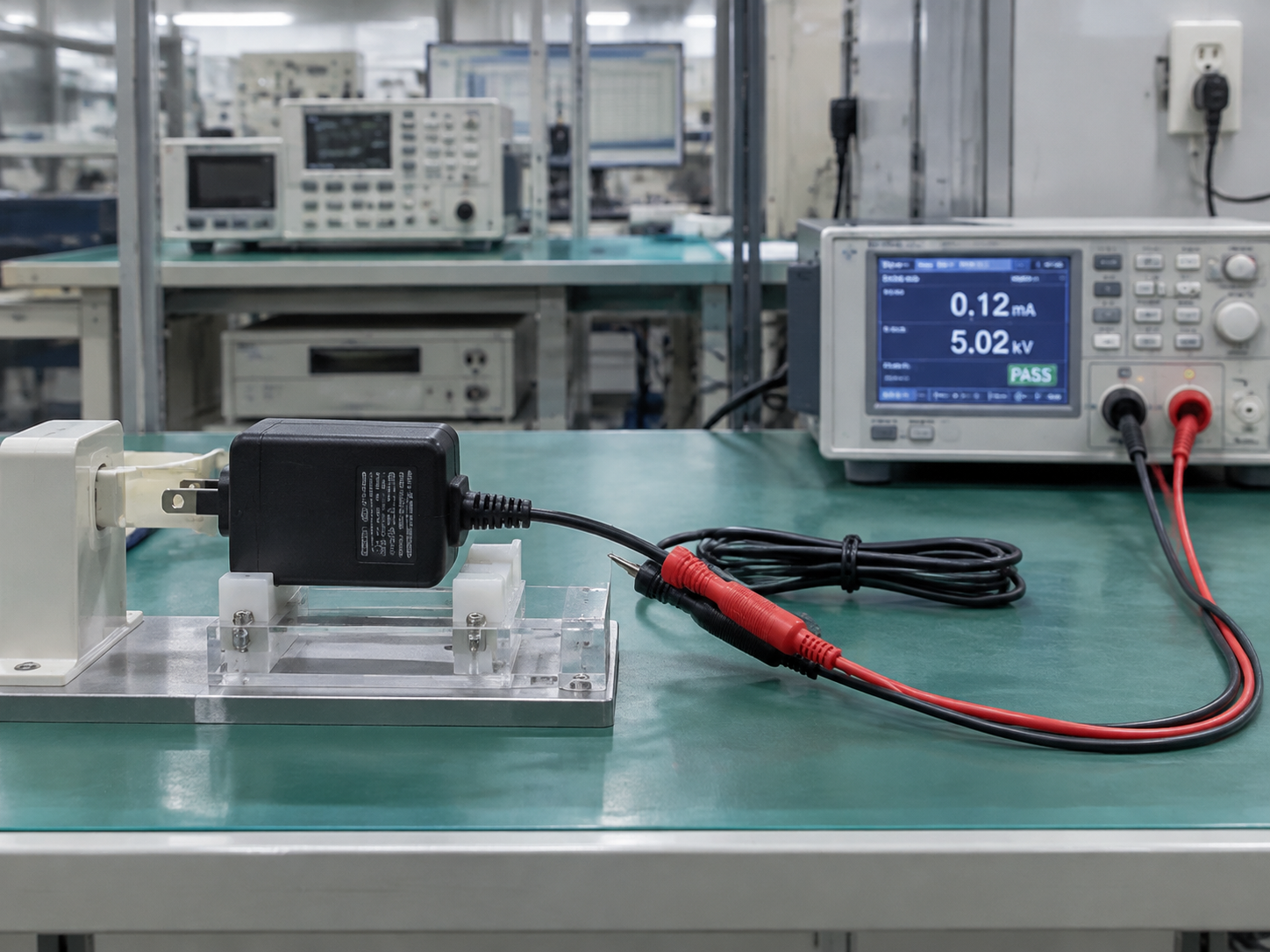
The Diamond PSE and Round PSE that many people confuse are essentially different control requirements of the DENAN Law for two types of electrical products with different risk levels: Diamond PSE corresponds to Table 1 (Specified Electrical Appliances and Materials, high risk) in the , which must undergo conformity assessment by a third-party registered body; Round PSE corresponds to Table 2 (Non-specified Electrical Appliances and Materials, low risk), which usually only requires the business operator to self-confirm according to standards and retain inspection records. The two are mandatorily corresponding according to the official catalog, cannot be independently selected, and cannot replace each other.
2. Core Rules for Official Scope Determination
After understanding the basic concepts, the core question is: how to judge whether a product needs Diamond PSE? All judgments must be based on official rules, and conclusions cannot be drawn solely based on experience or online rumors.
The Only Official Basis for Judgment
The only standard for determining the scope of application of Diamond PSE is “Table 1 (Catalog of Specified Electrical Appliances and Materials)” in the latest version of METI’s . Currently, this catalog contains about 116 product items, divided into 10 major categories, and is revised irregularly with technological development. For example, newly emerging product types may be included, and requirements for some categories may also be adjusted. Therefore, all judgments must be based on the latest original Japanese catalog, and old Chinese translations circulating online can only be used as a preliminary reference and cannot be used as the final basis.
It should also be noted that the classification logic of the catalog is based on the function, structure, voltage, and purpose of the product, not the literal meaning of the product name. For example, products also called “chargers” with different power supply methods and structures may belong to different categories, and conclusions cannot be drawn just by looking at the name.
Three Conditions for Catalog Determination
To confirm that a product falls within the scope of Diamond PSE, three conditions must be met simultaneously, and none can be missing:
The first is the prerequisite: first confirm whether it falls within the scope of “electrical appliances and materials” as referred to in the DENAN Law. Usually, it is judged by combining the power supply method, purpose, risk attributes, and whether it is covered by other special regulations; low-risk small battery products usually do not enter the PSE judgment process, but conclusions cannot be drawn directly solely based on “charged/uncharged” or “risk level”. For example, low-risk small items such as ordinary electronic watches and dry battery remote controls usually do not fall into the category of electrical appliances and materials and do not require PSE certification.
The second is the core: the product must be explicitly included in METI’s catalog of specified electrical appliances and materials (i.e., Table 1).
The third is final confirmation: the parameters, structure, and purpose of the product all meet the limiting conditions in the catalog. For example, for products also called “chargers”, AC adapters with mains input, car chargers, and charging modules with low-voltage input may have completely different judgment results due to different power supply methods, structures, and purposes, and must be checked one by one against the catalog entries.
Risk Logic for Inclusion in the Diamond PSE Scope
Some people may ask, why are some products in Table 1 and some in Table 2? The core judgment standard is risk level: the higher the risk of electric shock and fire, the more likely it is to be included in specified electrical appliances and materials (Diamond PSE).
Generally speaking, products with the following characteristics have higher risks and are more likely to be included in Table 1: those directly plugged into Japanese mains power, those with internal heating/high-voltage/transformer components, and those frequently used by ordinary consumers in daily life. These risk characteristics can only help with rapid preliminary screening, and the final judgment must be based on the specific entries and limiting conditions of METI’s classification table.
3. Reference of Categories Covered by Diamond PSE
After talking about the rules, everyone must want to know which specific products need Diamond PSE. I have divided common categories into three types: those that definitely require Diamond PSE with high confidence, those that need to be checked item by item, and those that are often misjudged, to make it easy for everyone to match their own products.
Categories That Definitely Require Diamond PSE with High Confidence
The following are common category directions clearly included in Table 1, but specific models still need to be checked against the voltage, structure, purpose, and sales form in the catalog entries, and cannot be directly applied only by product name:
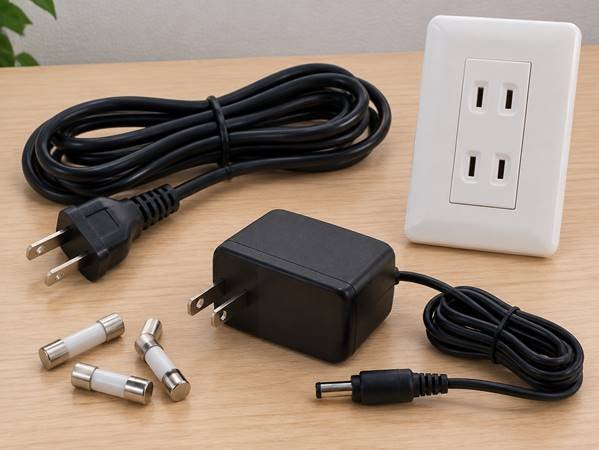
• Wires and wiring devices: Power cords with plugs, wall sockets, switches, terminal blocks, etc. These products are directly connected to the power grid and are key categories for customs clearance inspection. When sold separately, they need to obtain a separate compliance certificate and cannot be exempted together with the complete machine.
• Protection devices: Residual current protectors, fuses, thermal fuses, etc. These products are safety protection components, and their failure can easily directly cause electric shock or fire accidents, so control requirements are strict.
• Small transformers and power conversion products: Small power transformers, AC power adapters, mobile phone chargers with mains input, etc. These products have a transformer structure and are directly connected to the mains, with high risks, and are frequently inspected by platforms and customs.
The core common risk of the above categories is that they are directly connected to the power grid or undertake safety protection functions, and have a high probability of causing electric shock and fire after failure, so they are included in the highest level of mandatory control.
Categories That Need to Be Checked Item by Item Against the Catalog
The following categories cannot be directly judged as belonging to Diamond PSE, and must be checked against catalog entries one by one in combination with the power, structure, and purpose of the specific product:
• Electric heating/electric finished appliances: Electric kettles, hair dryers, electric irons, vacuum cleaners, electric heaters, etc. Many finished home appliances are commonly non-specified electrical appliances and materials (Round PSE), but they cannot be classified as a whole under “home appliances”, and still need to be checked against the table according to specific category, power, structure and purpose.
• Light sources and lighting fixtures: Incandescent bulbs, integrated LED lamps, LED drivers, etc. Bulbs, drivers, and complete lamps need to be classified and checked separately, and cannot be uniformly judged as “lamps” — for example, some LED drivers may belong to Diamond PSE, while ordinary LED bulbs may belong to Round PSE.
• Products with energy storage batteries: Need to be checked one by one according to battery type, capacity, and input method, and cannot be directly classified as Diamond or Round PSE.
Categories Frequently Misjudged as Requiring Diamond PSE
The following categories are often mistakenly considered to require Diamond PSE, but most actually do not. They can be preliminarily excluded first, and the specific situation needs to be confirmed against official catalog entries:
• Power banks: Usually need to be checked according to PSE rules related to lithium-ion storage batteries, and comprehensive judgment is required based on cell/battery pack type, capacity/energy level, whether the battery is sold separately, the input and output methods of the complete machine, and METI catalog entries. Common situations may involve Round PSE or battery-level compliance requirements, and cannot be directly applied for as Diamond PSE.
• Ordinary LED bulbs: Most belong to non-specified electrical appliances and materials (Round PSE) and are not within the control scope of Diamond PSE.
• Pure low-voltage DC/dry battery powered products: Such as dry battery electric toothbrushes, remote controls, ordinary electronic watches, etc., usually do not fall into the category of electrical appliances and materials and do not require PSE certification.
4. Application Boundaries: Which Conditions Will Change the Judgment Result
In many cases, the same product may have completely different judgment results due to different parameters, sales methods, and usage scenarios. This part is advanced content to help you handle judgments in complex scenarios.
Boundaries in Terms of Product Parameters
• Power supply method: Products directly connected to Japanese mains power are more likely to fall within the scope of Diamond PSE; pure low-voltage DC products without mains access have lower risks and need to be judged in combination with specific parameters.
• Parameter thresholds: Different categories have their own power, capacity, and structure requirements. There is no universal standard of “below how many watts Diamond PSE is exempted”, and it must be checked against the catalog entries of specific categories.
• Power supply type: Small low-risk products powered only by disposable dry batteries or low-voltage button batteries usually do not fall into the category of electrical appliances and materials.
Rules for Product Form and Split Judgment
• Complete machine sales: The complete machine must meet the PSE certification requirements of the corresponding category.
• Individually sold components: If the component itself is in the catalog, it needs to obtain a separate compliance certificate and cannot be attached to the complete machine.
• Sets/accessories/built-in components: Components in the catalog that are given away with the complete machine, and built-in power supply/protection components of equipment (such as adapters, power cords, plugs, fuses, switches) need to be judged for their respective PSE categories, and cannot be automatically exempted just because they are gifts or built-in.
Boundaries in Terms of Sales and Circulation
• Offline/e-commerce retail in Japan: Products in the catalog must meet the corresponding PSE requirements. E-commerce platforms such as Amazon Japan and Rakuten will check the consistency of product models, parameters and certifications, and inconsistent products will be removed from the shelves.
• Cross-border direct mail: It is a commercial sales behavior, and products in the catalog need to be compliant in principle; actual implementation requirements may vary depending on the transaction mode (small quantity sent in the name of an individual / shipped from the merchant’s bonded warehouse), identity of the importer, and platform rules. It cannot be assumed that compliance is not required just because it is directly mailed to individual buyers; for products in the catalog, the responsible entity and the compliance materials to be submitted should still be confirmed in combination with the importer’s identity, transaction mode and platform rules.
• Import customs clearance: Japanese customs focuses on checking PSE compliance for high-risk categories such as power cords and adapters, and non-compliant products will be directly detained and returned.
Boundaries in Terms of Usage Scenarios
• Ordinary household/commercial office scenarios: Products in the catalog sold to end users must be fully compliant.
• Industrial/professional use scenarios: Cannot be automatically exempted just because they are B2B or industrial use. Exceptions may apply only if three conditions are met simultaneously: “not sold separately to consumers”, “managed by professional electrical personnel”, and “not entering ordinary circulation channels”.
5. Exceptions: In Which Cases Diamond PSE Is Not Required
After talking about the cases where Diamond PSE is required, let’s talk about the cases where Diamond PSE is not required, which are divided into three categories, and you can check and exclude them accordingly.
Products That Are Not Electrical Appliances and Materials at All (Definitely Not Required)
These products are not even considered electrical appliances and materials, so naturally they do not need any PSE certification:
• Pure mechanical non-electrical products: Hand tools, ordinary furniture, bicycles, etc., which are completely non-electrical and not subject to the DENAN Law.
• Small low-risk products powered only by disposable dry batteries/low-voltage button batteries: Remote controls, electronic watches, dry battery electric toothbrushes, etc., with extremely low risk, usually do not belong to electrical appliances and materials.
• Non-electrical accessories for electrical products: Plastic lamp holder shells, power cord protective sleeves, etc., which are not electrified themselves and have no risk of electric shock or fire.
Cases Where Products Are Electrical Appliances and Materials But Do Not Require Diamond PSE (Round PSE Is Sufficient)
If the product is an electrical appliance or material but is a low-risk product listed in Table 2 (Catalog of Non-specified Electrical Appliances and Materials) of the , only Round PSE is required, such as ordinary USB small fans, ordinary digital peripherals, etc. The specific situation shall be subject to the catalog.
Scenarios Where Products Belong to Specified Categories But Meet Statutory Exceptions (Corresponding Certificates Are Required)
Products that originally belong to Table 1 specified electrical appliances and materials but meet statutory exceptions may be exempted from Diamond PSE requirements, and corresponding supporting materials need to be provided:
• Personal use entry: Reasonable quantity and non-sales purpose, exempt from compliance.
• Temporary import: Used for exhibition and testing and shipped out of Japan after use, relevant guarantees and certificates need to be provided.
• Products governed by special regulations: Medical equipment (governed by the Pharmaceutical and Medical Device Act), wireless equipment (governed by the Radio Act), auto parts (governed by the Road Vehicle Act), etc., are managed according to corresponding regulations; however, it should be noted that being governed by special regulations does not mean that all components of the entire product are automatically excluded from PSE. It is still necessary to confirm whether accompanying components such as power adapters, power cords, plugs, and chargers separately fall into the DENAN Law catalog.
• Built-in components of industrial equipment: Exceptions may apply only when the three conditions of “not sold separately to consumers”, “managed by professional electrical personnel”, and “not entering ordinary circulation channels” are met at the same time; supporting materials such as purpose description, circulation path, and installation management method need to be prepared, and confirmed on a case-by-case basis by the Japanese importer or a METI-registered conformity assessment body.
• Personal second-hand idle item transfer: Personal idle item transfer that is not a commercial operation has no statutory mandatory certification obligation; however, e-commerce platforms may have additional requirements, which must also be complied with.
6. Practical Judgment Method: Quickly Confirm Whether a Product Requires Diamond PSE
After talking about so many rules, some people may still feel confused. It doesn’t matter. With this practical five-step judgment method, you can basically get a preliminary conclusion by checking step by step in order.
Five-Step Judgment Method (Check in Order)
Step 1: Judge whether it is an electrical appliance or material. Confirm whether the product works on electric energy, whether it falls within the jurisdiction of the DENAN Law, and whether it is subject to the priority jurisdiction of other special regulations; if it is not an electrical appliance or material, there is no need to consider PSE. It should be noted here that even if the complete machine is subject to the priority jurisdiction of special regulations such as the Pharmaceutical and Medical Device Act, the Radio Act, and the Road Vehicle Act, accompanying or separately sold components such as power adapters, power cords, plugs, and chargers still need to be separately checked for compliance requirements in the DENAN Law catalog.
Step 2: Judge whether it is for commercial sale in the Japanese market. Non-commercial uses such as personal use and temporary import for exhibition and testing do not require compliance; commercial sales (including offline, e-commerce, and cross-border direct mail) require further investigation.
Step 3: Check METI’s official classification table. Confirm whether the product belongs to Table 1 (specified/Diamond), Table 2 (non-specified/Round), or is not in the catalog.
Step 4: Check product parameters and structure. Compare the voltage, power, structure, and purpose of the product with the limiting conditions of the corresponding catalog entries one by one to confirm whether they meet the requirements.
Step 5: Exclude exceptions. Check against application boundaries and statutory exception conditions to confirm whether the exemption scenario applies.
List of Materials Required for Judgment
To make an accurate judgment, the following materials need to be prepared in advance:
• Basic product information: Name, model, rated input/output parameters, nameplate photo
• Technical materials: Circuit diagram, internal structure diagram, list of key components
• Scenario materials: Product purpose description, sales form (sold separately/set/built-in), target sales channel
• Accessory materials: Parameters and compliance status of accompanying accessories such as power adapters, power cords, and plugs
Practical Tips for Checking the Official Catalog
Many readers are worried that they cannot check the official catalog because they do not understand Japanese. You can refer to the following tips:
• In the preliminary inspection stage, you can use the English version of the catalog on METI’s official website, or refer to the Chinese category comparison table compiled by compliance service providers, but you need to pay attention to checking the update time of the materials, which are only for preliminary reference.
• The final judgment must be based on the latest original Japanese catalog released by METI, and the release date or revision notice of the official page must be checked.
• For products that are uncertain, you can submit complete materials to a METI-accredited registered conformity assessment body for pre-assessment, which is more reliable than self-judgment.
Standardized Judgment Output Template
After completing the judgment, it is recommended to organize it into a standardized conclusion to facilitate docking with Japanese importers, certification bodies or platform audits. The core content includes:
• Core information: Product name, model, rated input and output values
• Judgment conclusion: Corresponding catalog entry, PSE type (Diamond/Round/Not required)
• Basis description: Catalog version used, applicable exception conditions (if any)
• Items to be confirmed: Materials to be supplemented or content to be further verified
Decision Logic When Uncertain
When encountering new categories or doubtful judgments, handle them according to the following priorities to avoid misjudgment:
• Prioritize the latest official Japanese catalog, do not judge based on experience — the catalog and interpretation guidelines may be revised irregularly, and old experience may not meet the latest requirements.
• Prioritize finding a METI-accredited registered conformity assessment body for pre-assessment, do not guess on your own — the losses from cargo detention and store closure caused by misjudgment are far higher than the cost of pre-assessment.
• For new categories, you can consult Japanese importers or professional compliance service providers in advance to confirm requirements in combination with actual sales scenarios.
7. Avoiding Common Misconceptions and Pitfalls
Finally, we have sorted out several types of the most common pitfalls, which are lessons summed up by sellers in actual operation. Avoiding them in advance can save a lot of costs.
Misconceptions in Scope Judgment
• Misconception: All electrical products entering Japan need Diamond PSE
Correct answer: Only high-risk specified electrical appliances and materials in Table 1 require it, and most electrical products only need Round PSE or no PSE at all.
• Misconception: Low-power/low-voltage products definitely do not need Diamond PSE
Correct answer: Products such as low-power AC adapters and LED drivers may still belong to specified categories as long as they are connected to the mains and meet the requirements of catalog entries. There is no universal exemption power.
• Misconception: Industrial/B2B products are definitely exempt
Correct answer: Exceptions may only apply to industrial built-in components that meet the three conditions of “not sold separately, managed by professionals, and not entering ordinary circulation” at the same time.
Misconceptions in Certification Rules
• Misconception: Diamond/Round PSE can be chosen arbitrarily and replace each other
Correct answer: They are mandatorily corresponding according to the catalog the product belongs to, and cannot be independently selected. If a product that should have Diamond PSE only has Round PSE, it cannot pass customs clearance; if a product that should have Round PSE has Diamond PSE, it cannot replace the compliance requirements either.
• Misconception: With certifications from other countries/regions, PSE is not required
Correct answer: The standards and systems of certifications such as China’s 3C, EU’s CE, and US’s UL are different from PSE and cannot replace it. Entering the Japanese market requires compliance with the requirements of the DENAN Law.
• Misconception: The same product with different models can share the certification conclusion
Correct answer: Products with different ratings, structures, and purposes may have different scopes of application, and cannot directly share the certification conclusion.
Misconceptions in Circulation Practice
• Misconception: Small-sized accessories do not need to be concerned about PSE
Correct answer: Power supply chain components such as power cords, plugs, and chargers are the focus of customs and platform inspections. Even a small plug sold separately needs to be compliant as long as it is in the catalog.
• Misconception: Cross-border direct mail to individual buyers does not require compliance at all
Correct answer: For cross-border direct mail of a commercial sales nature, products in the catalog need to be compliant in principle. The specific implementation requirements vary depending on the transaction mode and platform rules, and it cannot be taken for granted that direct mail does not require compliance.
• Misconception: Second-hand products do not require compliance at all
Correct answer: Merchants selling second-hand products in the catalog still need to be compliant; although personal idle item transfer has no statutory obligation, the platform may have additional requirements.
• Misconception: Platform requirements are equal to statutory requirements
Correct answer: Platform rules may be stricter than statutory requirements, and both statutory compliance and platform rules must be met.
8. What You Can Do After Learning
After reading this content about the scope of application of Diamond PSE, you can master these practical abilities:
First, you can clearly distinguish the core differences between Diamond PSE and Round PSE, and will not confuse the control requirements and applicable scenarios of the two types of certification;
Second, you can use the five-step judgment method combined with the corresponding material list to preliminarily check whether your own products need Diamond PSE;
Third, you can identify more than ten common compliance misconceptions, and avoid unnecessary losses such as customs detention, cargo return, platform store closure, and fines caused by misjudgment;
Fourth, you know the formal channels for querying the official PSE product catalog, and also know which institutions or parties to contact for further confirmation when you are uncertain;
Fifth, you can output a standardized judgment conclusion, clarifying whether the product requires Diamond PSE, Round PSE, or no PSE at all.