
Many cross-border electronics sellers entering the South Korean market for the first time most frequently ask questions like “What certifications does my charger need?” “Is a single KC certificate enough?” In fact, there is no universal “one-size-fits-all checklist” for South Korean market access compliance. Requirements vary completely depending on the product’s structure, function, and sales method. This article focuses on charging products (chargers, USB/USB-C cables, wireless chargers, connectors, etc.) to help you go from beginner to independently completing preliminary compliance judgments and avoiding common pitfalls.
First, Understand the Basic Boundaries: There Is No Universal Certification Checklist
Core Conclusion
First, it must be clear: **there is no unified certification list applicable to all charging products**. All compliance requirements must be judged item by item against the currently effective catalogs officially released by South Korea, combined with the product’s structure and function. You cannot directly copy the approach just because “my friend’s similar product has XX certification”.
Scope of Application
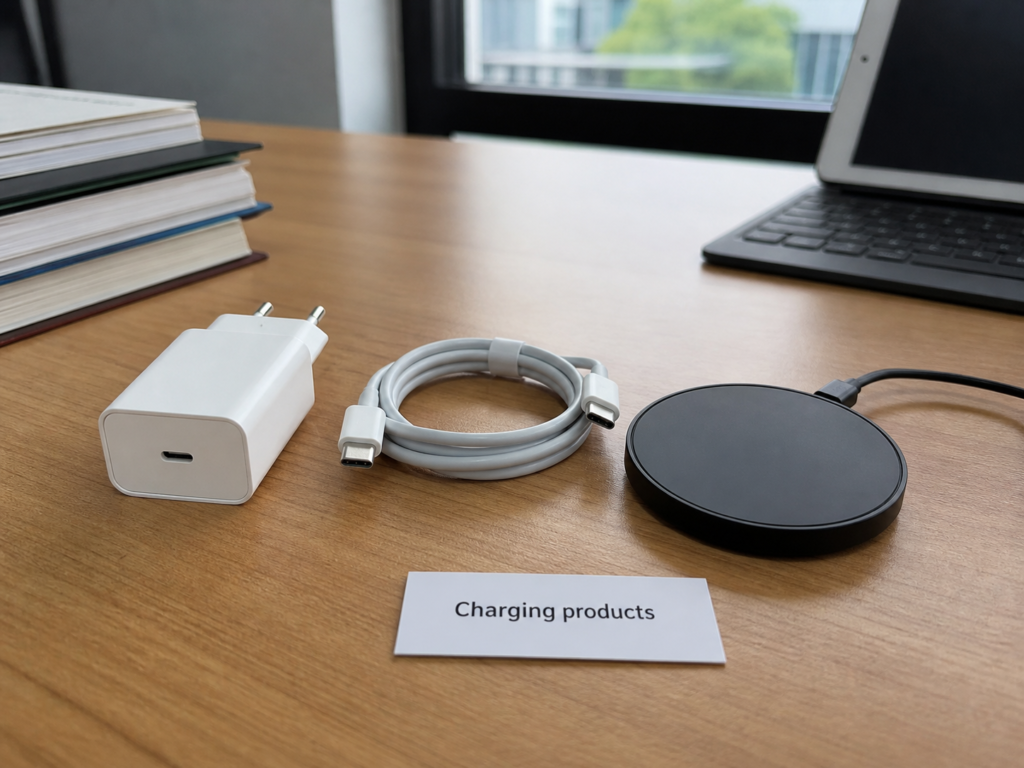
The compliance requirements discussed in this article mainly cover common consumer electronic accessories: **independently sold chargers/power adapters, USB/USB-C cables, connectors, and wireless chargers**. Car chargers, built-in power modules of equipment, industrial-specific power supplies, and samples for purely personal use or testing are not within the scope of regular sales products discussed in this article.
Note: This article is for introductory reference only and does not constitute legal advice. All requirements are subject to the currently effective laws and regulations of South Korea.
Four-Step Judgment Method (Check in Order)
You can gradually confirm the compliance requirements of your product in the following four steps, and you will eventually get one of three conclusions: confirmed to be subject to a certain type of compliance, pending official classification (requires a pre-assessment by an institution), or generally not applicable.
1. Match the product type preliminarily against the preliminary screening quick reference table below
2. Collect 7 core preliminary screening information items
3. Query four types of official compliance catalogs by product category
4. Handle according to the process, and complete the final verification with the self-check list before going online
Product Preliminary Screening Quick Reference Table (For Preliminary Reference Only)
To help you quickly find the corresponding category, we have compiled preliminary screening references for the three most common types of products. Specific requirements are still subject to official catalogs:
| Product Type | Mains-powered? | Contains wireless transmission? | Contains active circuits? | Priority verification items | Conditions to be confirmed |
| Ordinary mains-plug charger | Yes | No | Yes | KATS safety items, and applicable catalogs such as KEMCO energy efficiency labels and standby power reduction programs | Whether RRA electromagnetic wave suitability requirements apply |
| Ordinary passive USB-C charging cable | No | No | No | KATS safety items | Whether it is included in the K-RoHS catalog |
| USB-C fast charging cable with E-Marker | No | No | Yes (only E-Marker chip) | KATS safety items, and query the RRA suitability catalog according to product nature | Whether it is an RRA assessment object, and whether other energy efficiency systems are involved |
First Avoid These 5 Most Common Cognitive Misconceptions
Many sellers take detours at the beginning because of wrong preconceived notions about South Korean compliance. Let’s clarify these misconceptions first:
1. **KC is not a universal certificate, but a unified labeling system used by multiple mandatory compliance systems in South Korea**. Each system has its own assessment, numbering, and labeling rules. Whether a product requires the KC mark and how to label it specifically should be confirmed according to the product catalog and assessment path; you cannot judge that the product is exempt from labeling just because its risk is low.
2. **Overseas certifications such as CE/FCC/UL/USB-IF/Qi cannot replace South Korean mandatory compliance**. Even if the product has passed EU or US certifications, or obtained industry certifications such as USB-IF or Qi, it must be re-assessed according to South Korean rules when entering the South Korean market, and cannot directly “exchange certificates”.
3. **Compliance with international standards does not equal passing South Korean compliance assessment**. Although many South Korean standards reference international standards, they have their own differentiated requirements, such as plug specifications and electromagnetic compatibility limits. You cannot use “compliant with IEC standards” directly as proof of compliance.
4. **Not all charging products require the same type of certificate-based compliance**. Specific products may be subject to different paths such as safety certification, safety confirmation, or supplier suitability confirmation, or may not belong to the corresponding safety management items. Judgment should be made according to catalogs and applicable regulations. You cannot assume on your own that no assessment is needed to save money, nor should you repeatedly apply for items that do not apply.
5. **Having circuits/chips does not necessarily mean RRA assessment is required**. For example, a USB-C cable with an E-Marker chip has a chip, but it is only used for parameter identification and has no radio transmission function. Whether it involves RRA still needs to be confirmed based on whether the product is subject to the and RRA electromagnetic wave suitability assessment. You cannot default to needing assessment just because there is a chip, nor can you rule out RRA just because there is no obvious wireless function.
Four Core Compliance Lines: Build the Framework First
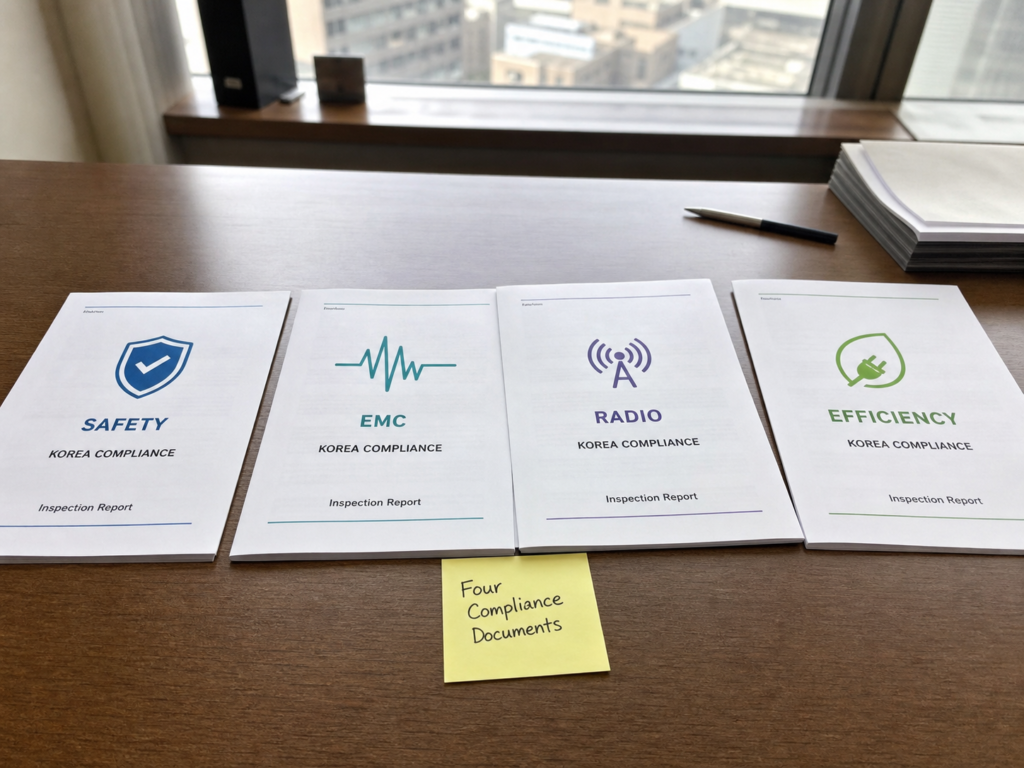
Mandatory compliance for electronic products in South Korea is mainly divided into four lines, each responsible for by different competent authorities. You can understand them as four independent “inspection items”: whichever control scope the product falls under, it must meet the requirements of that line:
1. **Safety Compliance (Authority: Korea Agency for Technology and Standards, KATS)**: For products in the catalog that are mains-powered and have electrical safety risks, the core is to prevent safety risks such as electric shock and fire.
2. **Radio and Electromagnetic Wave Compliance (Authority: National Radio Research Agency, RRA)**: For radio transmission equipment, and objects of electromagnetic wave suitability assessment in the and current RRA catalogs. The core is to avoid interfering with local communications and comply with electromagnetic compatibility and electromagnetic wave-related requirements.
3. **Energy Efficiency and Standby Power Consumption (Authority: Korea Energy Management Corporation, KEMCO)**: You should separately query KEMCO’s current energy efficiency labels, standby power reduction programs, and other applicable catalogs to confirm which system the product belongs to, as well as the corresponding testing, reporting, declaration, and labeling obligations. External power supplies and chargers do not automatically apply the same energy efficiency requirements.
4. **Environmental Compliance (Authority: Ministry of Environment of South Korea)**: For legally controlled categories, covering requirements such as hazardous substance restriction, recycling obligations, battery compliance, and packaging environmental protection.
Access Preliminary Screening: Collect Information First, Then Judge Step by Step
Before specifically checking the catalogs, you need to collect 7 core pieces of information first, which are the basis for judging all compliance requirements:
1. **Electrical parameters**: Input voltage/current, output power, supported fast charging protocols
2. **Connection method**: Whether connected to South Korean mains (220V/60Hz), interface type
3. **Internal structure**: Whether it contains chips/circuits, batteries, wireless charging modules
4. **Communication function**: Whether it has wireless modules such as Bluetooth/Wi-Fi/NFC
5. **Sales form**: Sold separately or sold with the main unit, what accessories are included in the set
6. **Entity information**: Who is the overseas manufacturer, whether there is a South Korean importer/local responsible person
7. **Estimated scale**: Annual import volume/sales volume (used to judge possible registration, recycling, and declaration obligations in combination with specific environmental protection systems)
After collecting the information, you can conduct a preliminary screening in the following five steps. The final result is subject to the official pre-assessment:
Step 1: First judge whether the product is subject to South Korea’s electrical and electronic product regulations — if it is for industrial use or purely personal use, it is generally not applicable; if it is sold to ordinary consumers, proceed to the next step.
Step 2: Check whether the product is directly connected to South Korean mains — if yes, you must first check KATS safety items; if not, mains-related safety assessment can be skipped for now.
Step 3: Check whether the product may be in RRA’s assessment catalog — whether RRA applies should be confirmed item by item based on whether the product is subject to the and RRA electromagnetic wave suitability assessment, equipment category, digital circuits, and wireless functions. You cannot draw a direct conclusion solely based on the presence or absence of chips, active circuits, or visual judgment of electromagnetic emission.
Step 4: Check whether the product may be in KEMCO’s related catalogs — you should separately query energy efficiency labels, standby power reduction programs, and other applicable systems to confirm whether the product is a corresponding management object, and whether it needs to perform testing, reporting, declaration, or labeling obligations. Whether pure cables and adapters apply is also subject to specific catalogs.
Step 5: Check whether the product is a category controlled by environmental protection regulations — you should separately confirm EPR registration, recycling performance, and declaration obligations based on whether the product is in the statutory recycling catalog, the identity of the producer or importer, annual scale, and specific exemption clauses; you cannot use the annual sales volume threshold as a unified judgment standard for all products.
Match Compliance Requirements by Product: Breakdown of Common Categories One by One
To give you a more intuitive understanding, we will break down the corresponding compliance judgment logic for the most common charging product categories.
Chargers/Power Adapters
Chargers are the category with relatively the most complete compliance requirements, and can be divided into three types according to sales method and use:
1. **AC input, independently sold chargers**
Verification dimensions: Rated input voltage/frequency, maximum output power, product function
Catalogs to check: KATS safety items, RRA electromagnetic wave suitability assessment objects, and applicable catalogs such as KEMCO energy efficiency labels and standby power reduction programs
Boundary tip: Low-power, specific-purpose products may not be within the control scope of some catalogs, and need to be verified specifically.
2. **External power adapters**
Verification dimensions: Output type, rated power, whether it is a general-purpose accessory
Catalogs to check: KATS safety items, RRA suitability assessment objects, and the scope of application of KEMCO’s related energy efficiency systems
Boundary tip: Special-purpose low-power adapters may not be subject to certain energy efficiency systems, and cannot be judged solely by the name “adapter”.
3. **Adapters sold with the main unit**
Verification dimensions: Whether it is within the compliance coverage of the main product, whether it has a separate model number, whether it will be sold separately
Catalogs to check: Coverage scope of the main product’s compliance documents, KATS classification rules for supporting accessories
Boundary tip: If the accessory is not covered by the main product’s compliance documents, a separate compliance assessment is required. You cannot default to “if the main product passes, the accessory doesn’t need to be handled”.
USB/USB-C Cables and Connectors
Compliance requirements for cables are the most easily misjudged. The core principle is: **first check KATS safety items, then verify the RRA suitability assessment catalog according to product structure and function, and finally determine specific obligations**. Don’t just say “cables don’t need certification” or “all cables need certification” right away.
According to internal structure, cables can be divided into four types, with different judgment logics:
• **Ordinary passive cables (pure copper, no chip)**: First verify whether they are subject to KATS safety management, and judge other compliance requirements based on their function, structure, and applicable standards.
• **USB-C cables with E-Marker chip**: Judged based on rated voltage/current, whether they contain power conversion or control circuits, and whether they are RRA suitability assessment objects. Having only an E-Marker chip does not automatically trigger RRA, nor can RRA obligations be ruled out or confirmed solely by “having a chip”.
• **Cables with signal conversion chips (such as USB-C to HDMI/DP)**: Need to verify KATS safety classification, and query the RRA suitability assessment catalog based on digital circuits and product categories.
• **Cables with lights/digital displays/control circuits**: Need to verify KATS safety classification, and confirm corresponding requirements based on whether the product is an RRA electromagnetic wave suitability assessment object. Conclusions cannot be drawn solely based on whether there are active circuits.
We have compiled four typical judgment examples for you to directly compare:
• Pure passive USB-C charging cable: Usually first verify the KATS safety catalog, and confirm whether RRA and environmental protection requirements are involved based on product category.
• 5A fast charging cable with E-Marker: Verify KATS classification according to rated parameters, and confirm whether suitability assessment is required based on digital circuits, product category, and RRA catalog.
• Active USB-C to HDMI cable: Need to verify both KATS safety classification and RRA suitability assessment catalog.
• USB-C charging cable with digital display: Need to verify KATS safety classification and confirm whether it is an RRA suitability assessment object.
There are two more boundary tips to note: First, for cables sold in a set, you need to confirm whether they are covered by the main product’s compliance documents; second, for cables only used for data transmission without charging function, you need to separately verify KATS classification, and cannot directly apply the conclusion of charging cables.
Wireless Chargers
For compliance judgment of wireless chargers, remember a core principle: **wireless charging function and additional communication modules are judged separately, and the transmitter and receiver are assessed separately**. Don’t mix them up.
First, the judgment dimensions of the wireless charging function itself:
• Device type: The transmitter (such as a charging base) and receiver (such as a charging module in a mobile phone) need to have their product attributes verified separately
• Technical parameters: Operating frequency, transmission power, field strength, transmission method
• Power supply method: Mains-powered or USB-powered, corresponding to different safety classifications
If the product also has additional communication modules, such as Bluetooth, Wi-Fi, NFC, separate judgment is also required:
• Module type: Different communication modules correspond to different RRA radio transmission equipment classifications
• Integration method: Even if a certified built-in module is used, the whole machine still needs to confirm whether additional whole-machine assessment is required. It’s not that “if the module passes, the whole machine doesn’t need to be handled”
• Impact of changes: Changes to antennas, enclosures, software, and RF parameters may all trigger re-assessment
The main statutory paths for RRA suitability assessment include **suitability certification, suitability registration, and provisional suitability certification**. Radio transmission equipment and EMC are specific equipment and technical classifications, not independent statutory assessment types parallel to the above paths. After a certified module is integrated into the whole machine, it is also necessary to verify whether the module’s use conditions, antennas, and RF parameters have changed, and whether the whole machine triggers the corresponding assessment.
Catalogs that need to be queried for wireless chargers include: KATS safety items, RRA radio/electromagnetic wave suitability assessment catalogs, and applicable catalogs such as KEMCO energy efficiency labels and standby power reduction programs.
Boundary tip: The receiver of wireless charging does not need to apply for the radio certification of the transmitter, but may involve safety or EMC obligations. You cannot directly assume that the receiver has nothing to do.
Quick Judgment of Other Charging Peripherals
There are several other types of common peripheral products that can be quickly judged according to the following logic:
• **Pure passive adapters**: Judged according to the logic of ordinary passive cables. First verify the KATS safety catalog, and confirm other requirements based on specific product categories.
• **Power banks with batteries**: Need to add South Korea’s battery safety requirements and battery recycling obligations; note that UN38.3 is a transport test, not equivalent to market access requirements, don’t confuse them.
• **Smart charging devices with wireless communication**: Additionally verify the corresponding communication category RRA suitability assessment catalog.
• For relatively niche categories, be sure to follow the latest official catalog, don’t judge based on experience.
Detailed Explanation of Core Compliance Matters: What Each Type of Requirement Specifically Is
Earlier we talked about which compliance requirements different products generally need to meet. Next, we will explain the details of each type of core compliance thoroughly, so you know what to do and how to do it.
KC Safety Compliance (Administered by KATS)
South Korea’s electrical safety compliance includes paths such as safety certification, safety confirmation, and supplier suitability confirmation. Which one applies specifically is not judged by enterprises on their own according to “high risk, medium risk, low risk” without reference to catalogs, but is determined by KATS statutory safety management items and specific classification regulations:
1. **Safety Certification (안전인증)**
Applicable to: Products specified in relevant safety management item regulations
Requirements: Usually requires testing by a South Korean accredited institution, and some products also involve factory inspections and declarations
Supporting document: Safety certification certificate
2. **Safety Confirmation (안전확인)**
Applicable to: Products specified in relevant safety management item regulations
Requirements: Usually requires testing by an accredited institution, and declaration by the manufacturer or importer in accordance with regulations
Supporting documents: Test report and declaration documents
3. **Supplier Suitability Confirmation (공급자적합성확인)**
Applicable to: Products specified in relevant safety management item regulations
Requirements: The supplier conducts testing on its own or entrusts testing according to applicable standards, and retains materials as required
Supporting document: Conformity materials retained by the supplier
The testing focus of different products is also different. Chargers may involve items such as rated parameter matching, whether the plug meets South Korean specifications, insulation withstand voltage, temperature rise, overheat protection, flame-retardant materials, and safety under abnormal working conditions; however, specific test items shall be subject to the safety items the product is included in and applicable South Korean safety standards.
Cables may involve tests such as interface mechanical strength, insulation performance, and current carrying capacity, but interface tensile resistance, insulation layer wear resistance, short-circuit protection, etc. are not a unified statutory test list applicable to all USB/USB-C cables. The final confirmation still needs to be based on specific product categories and applicable standards.
RRA Radio and Electromagnetic Wave Compliance (Administered by RRA)
The National Radio Research Agency (RRA) of South Korea is responsible for the implementation and technical management of relevant radio wave compliance systems. The main statutory paths for RRA suitability assessment include:
1. **Suitability Certification (적합인증)**
2. **Suitability Registration (적합등록)**
3. **Provisional Suitability Certification (잠정인증)**
Specific equipment may involve both wireless transmission technical requirements and electromagnetic wave suitability requirements. Which path ultimately applies depends on RRA’s current equipment classification and relevant technical standards. For radio transmission equipment, non-wireless digital equipment, power supply equipment, and products containing digital circuits, you cannot simply judge whether they apply based solely on “whether there is wireless function”.
If the product uses a certified wireless module, after integration into the whole machine, it is also necessary to verify whether the module’s use conditions, antennas, and RF parameters have changed, and whether the whole machine triggers the corresponding suitability assessment. Module certification does not automatically cover the whole machine.
Applicable boundaries: Whether RRA assessment is required depends on product category, function, digital circuits, wireless functions, and RRA’s current classification. Pure passive cables usually do not involve RRA, but you cannot draw an absolute conclusion solely based on “no obvious electromagnetic emission”. In addition, RRA compliance and safety compliance are independent of each other and cannot replace each other.
Common failure reasons include circuit design defects, insufficient shielding, wireless transmission parameters exceeding requirements, or digital circuit products failing to complete electromagnetic wave suitability assessment according to applicable classifications.
Energy Efficiency and Standby Power Consumption (Administered by KEMCO)
Energy efficiency requirements cannot be simply summarized as all external power supplies or chargers needing to apply for the same “energy efficiency filing”. When judging, you should separately query KEMCO’s current energy efficiency labels, standby power reduction programs, and other applicable catalogs:
Step 1: Check KEMCO’s current catalog to confirm whether the product is a management object of energy efficiency labels, standby power reduction programs, or other energy efficiency systems.
Step 2: Confirm the specific system applicable to the product, and verify conversion efficiency, standby power consumption, or other technical limits.
Step 3: Confirm whether the obligation to be fulfilled is testing, reporting, declaration, or other registration obligations.
Step 4: Confirm whether it is necessary to affix an energy efficiency grade label, or apply other specified labeling methods.
Not all chargers need to have energy efficiency labels, nor can their energy efficiency filing obligations be determined solely by product name, output power, or “being a charger”. Specific requirements shall be subject to KEMCO’s current catalogs and system regulations.
Compliance Mark and Label Requirements
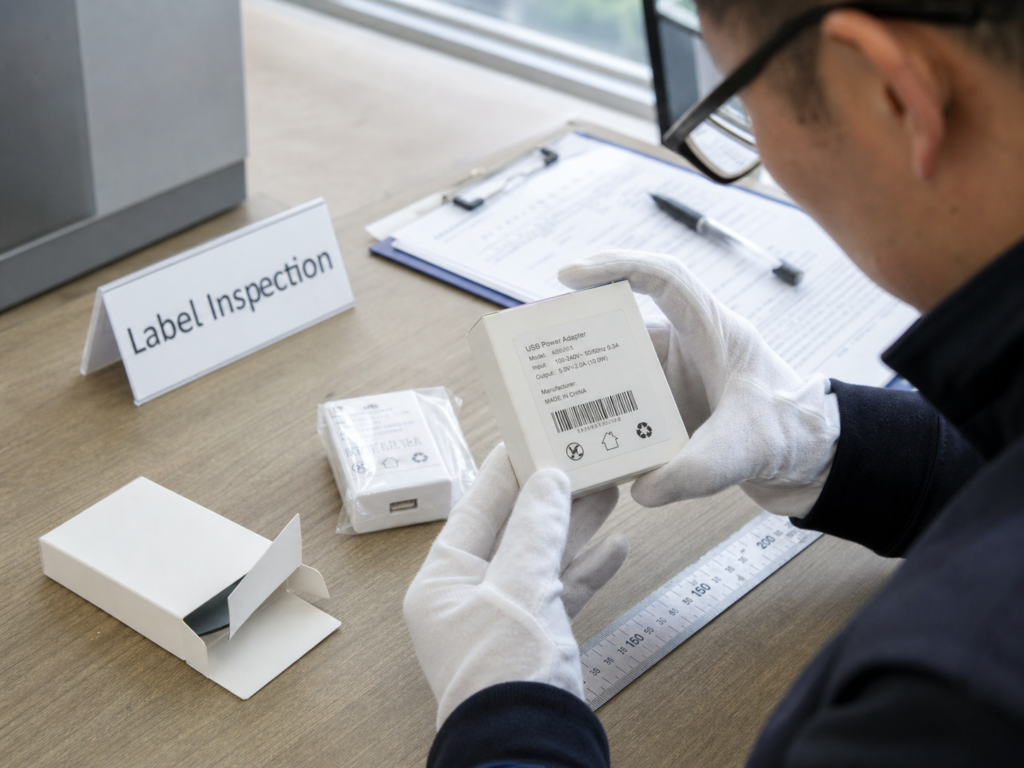
Many sellers think that all products need to have the same KC mark. In fact, **the requirements for marks, numbers, and labeling positions of different mandatory compliance systems are different, and there is no universal mandatory labeling list**.
Common labeling content that needs to be verified includes:
• Corresponding compliance marks and their labeling methods
• Compliance number/declaration number, product model, rated input and output parameters
• Manufacturer information, information of the responsible party within South Korea
• Safety warnings must be labeled in Korean, and key information cannot only be in English
Whether the KC mark is required, which number to use, and where to place the mark should be confirmed according to the specific product catalog and assessment path. You cannot automatically judge that no marking is required just because the product belongs to a low-risk path.
Common label errors include: mark size is too small, information is incomplete, model is inconsistent with compliance documents, only the outer carton is labeled but the minimum sales package is not. These may cause the product to be unable to be listed or be required to rectify.
Environmental Compliance (Administered by the Ministry of Environment of South Korea)
Environmental compliance is divided into four parts, each with different scope of application and requirements:
1. **Hazardous Substance Restriction (K-RoHS)**
Applicable objects: Products within the statutory electrical and electronic product catalog, restricting the content of hazardous substances such as lead and mercury
Responsible entity: Manufacturer/importer
Scale threshold: Whether there are scale conditions and specific obligations shall be confirmed according to product catalogs and current regulations
Materials to be retained: Technical materials, supply chain certificates, test or self-certification documents that can prove conformity of hazardous substances shall be prepared and retained according to applicable product categories and regulatory requirements. Whether a specific format of declaration of conformity is required shall be confirmed according to current regulations.
2. **Electrical and Electronic Product Recycling (EPR)**
Applicable objects: Electrical and electronic products within the statutory recycling catalog
Responsible entity: Producer/importer
Scale conditions: Shall be confirmed in combination with the identity of the producer or importer, product catalog, annual scale, and specific exemption clauses
Materials to be retained: Recycling responsibility certificates, annual declaration materials, etc., subject to the requirements of applicable systems
EPR registration, recycling performance, and declaration obligations shall be confirmed separately based on whether the product is in the statutory recycling catalog, the identity of the producer/importer, annual scale, and specific exemption clauses; the annual sales volume threshold cannot be used as a unified judgment standard for all products.
3. **Battery Compliance**
Applicable objects: Charging products with batteries, such as power banks
Responsible entity: Battery producer/product importer
Scale conditions: Some obligations may have scale or other applicable conditions, which shall be verified according to specific rules
Materials to be retained: Battery safety test reports, recycling responsibility certificates, etc., subject to applicable systems
4. **Packaging Environmental Protection Requirements**
Applicable objects: Packaging within the scope of statutory packaging materials, packaging methods, and relevant responsible entities, specifically confirmed by material, catalog, and exemption clauses
Responsible entity: Importer/seller or other responsible entities specified by laws and regulations
Scale conditions: Some requirements may have scale or other applicable conditions, which shall be verified according to specific rules
Materials to be retained: Packaging material descriptions, recycling label conformity materials, etc., subject to applicable systems
Packaging environmental protection obligations are mainly aimed at statutory packaging materials and packaging methods, and are judged based on the identity of the producer/importer and relevant exemption conditions. Not all packaging entering the South Korean market automatically assumes the same set of obligations.
Voluntary Market Certifications: Not Access Thresholds, But Can Enhance Competitiveness
In addition to mandatory compliance, there are some voluntary certifications that, although not required for entering the South Korean market, are very helpful for improving product compatibility, reducing after-sales issues, and enhancing market competitiveness. However, special attention should be paid: **these certifications absolutely cannot replace mandatory compliance**.
1. **USB-IF Certification**
Applicable products: USB/USB-C cables, chargers with USB interfaces
Function: Prove that the product meets the corresponding USB specifications, improve compatibility between different devices, and reduce after-sales compatibility issues
Boundary tip: It’s not that having USB-IF certification will definitely be compatible with all devices and fast charging combinations. You also need to verify whether the certification version matches the product function.
2. **Qi Wireless Charging Certification**
Applicable products: Wireless chargers (transmitter/receiver)
Function: Prove that the product meets the corresponding Qi specifications and improve compatibility with other Qi devices
Boundary tip: It cannot guarantee compatibility with all brands, models, protective cases, and fast charging combinations, nor can it absolutely replace RRA mandatory compliance.
3. **Other Voluntary Certifications**
For example, the Korea Eco-Label can be applied for some categories, and some buyers or channels may require it; in addition, different platforms and buyers may have their own exclusive requirements, just prepare according to the corresponding settlement or procurement rules.
Full Compliance Handling Process: From Assessment to Post-Certification Maintenance
Now that you have figured out which compliance requirements to meet, next we will go through the complete handling process, clarifying the key points and pitfalls of each link.
Step 1: Pre-Assessment and Matching with Sales/Entry Mode
First, product pre-assessment is required, that is, initially matching the catalogs to be queried according to the product classification and 7 core information items mentioned earlier.
For different sales models, the certification requirements themselves are the same, but the declaration entities and inspection rules are different:
• **Bulk import by South Korean importer**: The importer is the declaration entity, and compliance documents may need to be submitted during customs clearance. All mandatory requirements must be met.
• **Cross-border e-commerce direct mail**: All commercially sold goods need to meet mandatory compliance; entry inspection will check the nature of the goods and purchase quantity, with a certain random inspection probability.
• **Shipped from platform local warehouse/bonded warehouse**: Certification requirements are exactly the same as local sales in South Korea, and must also comply with platform rules, tax, and consumer protection requirements.
It should be noted that different regulations have different allocations of responsibilities for manufacturers, importers, sellers, and local responsible persons. Be sure to clarify the responsible entity in advance.
If the product classification is unclear, you should consult with safety certification/testing institutions, RRA designated institutions, or energy efficiency system accredited entities that have the corresponding system authorization or designated qualifications, and the final classification of the competent authority or official catalog shall prevail. There is no unified “accredited qualification” institution category that can cover all systems for KATS, RRA, and KEMCO.
Step 2: Select Compliance Institutions and Official Verification
When selecting a compliance institution, the core requirement is: **you should confirm whether it has the authorization or designated qualification required by the corresponding system**. Do not look for intermediaries without corresponding qualifications.
Each competent authority in South Korea has official verification entrances. You can verify publicly available certificates, declarations, or suitability assessment information through these entrances:
• Safety compliance: Safety Korea certification database, which can verify some certificate/declaration information, product models, entity information, and status
• Radio/electromagnetic wave: RRA compliance database, which can verify public suitability assessment information, product parameters, and status
• Energy efficiency: KEMCO Energy Efficiency Management System, which can query relevant energy efficiency filing or management information
• Environmental protection: Corresponding management systems of the Ministry of Environment of South Korea (K-RoHS/EPR/battery/packaging)
• Regulation version: Korea National Legal Information Center, which can verify currently effective laws and regulations
Public certificates, declarations, or suitability assessment information can be verified through official systems such as Safety Korea and RRA; test reports, technical documents, self-conformity materials, and environmental documents should also be checked for originals, issuing entities, and scope of application with the declaration entity, manufacturer, or assessment institution. Not all compliance documents will be fully disclosed or support online verification.
It is recommended that every time you query regulations or verify certificates, you record the query date, official link, product model, applicable catalog/standard, conclusion, handling institution, and regulation version number for future traceability.
Pitfall avoidance tip: Do not believe intermediaries who claim “no test required”, “guaranteed pass”, or “instant certificate”. For public information, you can verify through official systems; for test reports, technical documents, and self-conformity materials that cannot be publicly queried, you should check the originals and issuing entities. If fake certificates or documents with inconsistent scope of application are found, it may lead to goods detention or even penalties.
Step 3: Prepare Test Samples and Full Set of Materials
The materials needed for compliance handling are mainly divided into several categories:
• Basic materials: Korean product manual, specification sheet, circuit schematic, bill of materials (BOM), certification application form
• Key component materials: Compliance certificates for transformers, power chips, wireless modules, and key safety components
• Entity materials: Manufacturer information, South Korean declaration entity information, factory production-related materials
• Auxiliary materials: Existing overseas test reports, BOM change records, label design drafts
Sample requirements: The submitted test samples must be completely consistent with the mass-produced products. The quantity is subject to the institution’s requirements. Do not use engineering prototypes for testing, otherwise even if you pass, it will be useless.
Step 4: Reference for Cycle and Cost
The following cycles and costs are market experience ranges, excluding additional costs such as rectification, factory inspection, and translation, and do not constitute a commitment. The specific amount is subject to the institution’s quotation:
• Safety confirmation: For ordinary low-power chargers, the reference cycle is 2-4 weeks. Influencing factors include product power, test items, and number of rectifications
• Safety certification (including factory inspection): For high-risk high-power chargers, the reference cycle is 6-8 weeks. Influencing factors include factory inspection arrangements and number of rectifications
• RRA assessment: For single-function wireless chargers, the reference cycle is 1-3 weeks. Influencing factors include functional complexity and module certification status
• Energy efficiency-related matters: The cycle for products in the catalog depends on the specific applicable system, test data, and report/declaration process, and cannot be uniformly estimated as “charger energy efficiency filing”
Cost tip: Because there are great differences in products, test items, and institutions, it is recommended to compare the quotations of 2-3 formal institutions. Don’t just look at the cheapest one, nor blindly choose the most expensive one.
Step 5: Post-Certification Maintenance and Change Management
Obtaining compliance documents is not a once-and-for-all matter. You also need to do a good job in maintenance and change management:
• Validity period and maintenance: The validity period and regular inspection requirements of different compliance types are subject to product categories and current regulations. Pay attention to renewal in advance.
• Change judgment rules (final confirmation by the original assessment institution shall prevail):
• Situations requiring re-assessment: Replacing input plugs, adjusting rated power, replacing main control chips/wireless modules, changing production factories, modifying core circuit designs
• Situations requiring declaration change: Changing model names, replacing enclosures, replacing non-critical components
• Situations only requiring updating of retained materials: Modifying packaging/manuals (no change in core information), adjusting sales sets (no new non-compliant accessories added)
Before bulk import, it is recommended to sample and verify the consistency between the product and compliance documents to avoid the entire batch being detained. In addition, relevant departments may conduct random market inspections from time to time. If unqualified, compliance qualifications may be revoked. Be sure to ensure that mass-produced products are consistent with test samples.
Common Risk Pitfall Avoidance Comparison Table
We have compiled the 10 most common pitfalls for sellers into a comparison table, so you can quickly check if you have fallen into any:
| Common Misconception | Consequence | Correct Practice |
| Only doing safety compliance, not checking RRA/energy efficiency/environmental catalogs | Blocked in customs clearance and listing | Conduct full-dimensional assessment based on product functions and official catalogs |
| Thinking all charging cables don’t need/need compliance assessment | Judged as non-compliant or incurring extra costs | Classify and assess according to cable structure, rated parameters, and official catalogs |
| Directly exchanging overseas certifications such as CE/FCC for KC compliance | Not recognized, treated as no compliance | Conduct separate testing and assessment according to South Korean standards |
| Product model is inconsistent with compliance documents | Judged as uncertified product | Model changes require advance declaration of change |
| Compliance marks/labels are printed irregularly | Required to rectify, unable to be listed | Make labels according to the requirements of the corresponding compliance path, and verify all information |
| Assuming all wireless chargers need/don’t need RRA assessment | Missing assessment or incurring extra costs | Assess separately according to transmitter/receiver, operating frequency, power, communication function, and RRA classification |
| Finding unqualified intermediaries to handle fake certificates | Verifiable by official authorities, goods detained and penalized | Select institutions with corresponding system authorization or designated qualifications, and verify public information through official systems |
| Assuming main product compliance covers accessories in set sales | Accessories judged as non-compliant | Confirm in advance whether accessories in the set are within the compliance coverage of the main product |
| Mistakenly thinking all products need K-RoHS/EPR | Incurring extra costs or missing obligations | Verify applicable boundaries according to product category, import volume, entity identity, and specific exemption clauses |
| Thinking energy efficiency labels are standard for all chargers | Wrongly labeled or missing label | Separately query KEMCO’s relevant catalogs to confirm the applicable system, label type, and specific obligations |
Pre-Launch Self-Check and Result Verification
Finally, we have prepared a pre-launch self-check list and compliance examples of three typical products to help you put the previous knowledge into practice.
Pre-Launch Self-Check List
General Compliance Self-Check
• KC safety compliance assessment of the corresponding category has been completed
• Products within RRA’s control scope have completed corresponding assessments
• Products within KEMCO’s relevant catalogs have met the requirements of applicable systems, and those requiring labeling have been labeled as required
• Labels on the product/minimum sales package meet the requirements of the corresponding compliance path
• Products within environmental control scope have completed corresponding obligations such as hazardous substance restriction and recycling
• All compliance documents are within the validity period, and public information can be verified through South Korean official systems
• Product model, specifications, and parameters are completely consistent with compliance documents
• Product packaging and manuals have Korean warnings and South Korean responsible party information
• Promotional parameters on e-commerce pages are consistent with compliance document information
• The declaration entity and responsibility division under the corresponding sales model have been clarified
Supplementary Self-Check for Specific Products
• Wireless chargers/products with wireless communication function: Corresponding RRA suitability assessment has been completed
• USB-C cables with E-Marker/conversion chip/control circuit: Corresponding safety and RRA assessments have been completed according to specific classification (if applicable)
• Products with batteries: Have met South Korean battery safety, recycling requirements, and transport-related regulations
• Accessories sold with the main unit: Have been confirmed to be covered by the main product’s compliance documents, or have completed separate assessments
Typical Product Compliance Examples
We have selected three of the most common products for your reference:
1. **65W USB-C single-port wall charger**
Product features: Independently sold, connected to 220V mains, single C-port output, PD fast charging, no wireless function
Catalogs to check: KATS safety items, RRA electromagnetic wave suitability assessment catalog, applicable catalogs such as KEMCO energy efficiency labels and standby power reduction programs, and K-RoHS catalog
Possible applicable obligations: KC safety confirmation, RRA suitability assessment (if applicable), testing/reporting/declaration or labeling obligations under KEMCO related systems (if applicable), K-RoHS related obligations, and recycling obligations confirmed according to specific EPR catalogs, responsible entities, scale, and exemption clauses
Uncertain points: Need to confirm the KATS classification corresponding to the specific power, whether it is an RRA suitability assessment object, and which KEMCO energy efficiency system applies. Energy efficiency filing or energy efficiency grade labeling obligations cannot be determined solely by 65W
Required documents for launch: Safety assessment documents, RRA assessment documents (if applicable), KEMCO related documents (if applicable), environmental compliance materials (if applicable), Korean labels and manuals
2. **Chip-free passive USB-C charging cable (3A)**
Product features: Independently sold, pure copper, no chip, no extra functions, supports 3A charging
Catalogs to check: KATS safety items, RRA suitability assessment catalog (confirmed by product category), K-RoHS catalog
Possible applicable obligations: Supplier suitability confirmation, or confirm whether no corresponding safety assessment is required according to the catalog; RRA suitability assessment (if applicable); K-RoHS related obligations (if in the catalog)
Uncertain points: Need to verify whether KATS’ latest items include this type of cable in safety management, and confirm whether it is an RRA suitability assessment object according to product category
Required documents for launch: Compliance materials (retained according to applicable path), Korean labels (if required)
3. **Wireless charging base with Qi and Bluetooth**
Product features: Independently sold, USB-powered, 15W Qi transmission, with Bluetooth device-finding function
Catalogs to check: KATS safety items, RRA radio/electromagnetic wave suitability assessment catalog, KEMCO related energy efficiency catalogs, and K-RoHS catalog
Possible applicable obligations: KC safety assessment, RRA suitability assessment. For those involving wireless transmission and electromagnetic wave suitability requirements, they shall be handled according to specific classifications; KEMCO related system obligations (if applicable); K-RoHS and other environmental obligations (if applicable)
Uncertain points: Need to confirm the RRA classification corresponding to the frequency and power of wireless charging, the whole-machine assessment requirements for Bluetooth modules, and whether KEMCO’s specific system applies
Required documents for launch: Safety assessment documents, RRA assessment documents, KEMCO related documents (if applicable), Korean labels and manuals, environmental and other compliance materials
What You Can Gain
After reading this article, you should be able to:
• Quickly match the South Korean official compliance catalogs that need to be queried for charging products
• Distinguish different paths of KC safety, RRA suitability assessment types, and the applicable boundaries of energy efficiency and environmental protection obligations
• Prepare compliance materials according to the process, and avoid common pitfalls such as fake certificates, cycle delays, and label errors
• Judge the impact of product modifications and sales model changes on compliance requirements
• Complete preliminary compliance verification before South Korean market access against the self-check list
• Verify publicly available institutions, certificates, and suitability assessment information through South Korean official systems, and further check the originals and scope of application for materials that cannot be publicly verified online
Finally, we would like to remind you again: The relevant rules of KATS/Safety Korea, RRA, and KEMCO are all subject to the currently effective laws and regulations of South Korea. Before handling, be sure to check the latest version through the Korea National Legal Information Center and the official databases of each competent authority. This article is for introductory reference only and does not constitute legal advice. Specific requirements are subject to the final classification of institutions with authorization or designated qualifications under the corresponding system and the competent authority.
Although the compliance requirements of the South Korean market seem complicated, as long as you check them step by step, you can sort out your ideas and avoid unnecessary losses.