
Almost everyone in the business of charging products and 3C accessories in Southeast Asia has heard of “Singapore PSB Certification”, but many people’s understanding of it is either too vague — thinking that all products with charging functions require it, or too taken for granted — thinking that a test report is sufficient. Many people have even fallen into the trap of “spending money on a certificate that is not officially recognized”. In fact, the commonly referred to “PSB Certification” is essentially Singapore’s mandatory product safety registration, with the official name Safety Mark. The market often refers to Singapore Safety Mark registration as “PSB Certification”, but the current statutory mechanism is Safety Mark registration for controlled goods; specific testing or conformity assessment must be carried out by designated conformity assessment bodies with qualifications for the corresponding product scope. Today, we will thoroughly explain the Singapore safety certification rules related to charging products, from entry-level judgment to the full application process, which can be directly referenced whether you are a new seller or a brand looking to expand into the Singapore market.
Entry-Level Literacy: First Understand Singapore’s Core Access Rules
The legal basis of this safety supervision system is the (abbreviated as CPSR), which is administered by Enterprise Singapore (EnterpriseSG). The implemented mandatory scheme is called the Mandatory Consumer Product Safety Scheme (abbreviated as CPS). All products listed in the CPS list must complete official Safety Mark registration before they can be legally sold in Singapore — this is the essence of “PSB Certification”: it is not a certificate issued by a single institution, but an official registration and filing. Specific testing or assessment must be carried out by conformity assessment bodies designated by EnterpriseSG and qualified for the corresponding scope.
The reason why charging products are the focus of supervision is that such products are directly connected to Singapore’s 230V/50Hz mains power supply. If something goes wrong, safety accidents such as electric shock, fire, and overheating are very likely to occur. If non-compliant products are sold illegally, the consequences range from sales suspension, rectification, and confiscation of goods to fines and recalls, which are not minor. Conversely, compliant products have higher consumer trust due to official endorsement, and it is smoother to settle on local e-commerce platforms.
Let’s clarify a few core concepts first, which will be used repeatedly later:
• Controlled goods: Products that are clearly required to be mandatorily registered in the CPS list, not all charging products count;
• Safety Mark: A compliance mark officially allowed to be used after controlled goods complete registration, with a unique registration number;
• Registered supplier: Must be a company registered locally in Singapore; overseas brands or factories cannot directly apply for registration, and a local entity must act as the responsible party;
• Designated certification body: An institution authorized by EnterpriseSG that can conduct testing and assessment; reports issued by any random laboratory are not valid.
Supervision Boundaries and Common Misconceptions
It should be clear that the Safety Mark only covers parts directly related to electrical safety: electric shock protection, overheating protection, short circuit protection, fire protection, and the compliance of plugs and cables on the mains side; it does not cover fast charging speed, USB protocol compatibility, product durability, nor does it directly replace regulatory procedures for wireless communications. If the product has Bluetooth, Wi‑Fi or other radio communication functions, it should be confirmed according to IMDA rules whether it is a controlled device, whether an exemption applies, and whether a local distributor needs to complete device registration or other compliance procedures. In addition, non-CPS products are not automatically subject to the same set of Safety Mark requirements just because they contain lithium batteries; it should be confirmed separately whether they are subject to other product safety rules. When transportation is involved, applicable dangerous goods requirements should also be met according to the mode of transport and carrier rules, such as lithium battery testing, packaging, marking and declaration requirements.
There are three most common cognitive misconceptions to help you avoid pitfalls in advance:
First, it is not a Southeast Asia-wide certification, it is only valid in Singapore, and is not mutually recognized with certifications from Malaysia and Thailand. Don’t think that getting one will allow you to sell all over Southeast Asia;
Second, having a test report does not mean compliance. Official Safety Mark registration must be completed, and reports issued by laboratories found on your own have no market entry effect;
Third, international certifications cannot be directly substituted. Reports such as CE and CB can at most be submitted to designated bodies for assessment to apply for simplified processes or reduced test items, but the registration process must be followed, and direct conversion of certificates is impossible.
Quick Judgment: Whether Your Charging Product Is Subject to Mandatory Control
Singapore manages by product category. Not all products with “charging” functions require mandatory registration. The only mandatory basis is the official . When making a judgment, four dimensions are mainly considered: whether the product is connected to mains power, what its core function is, whether it is sold separately or as a set, and whether there are exemption scenarios.
Whether connected to mains power can be used as a risk screening clue first, but ultimately, the product definition, rated range and exclusions in EnterpriseSG’s latest must be compared item by item. When classification is in doubt, written confirmation should be sought from the designated conformity assessment body or EnterpriseSG. When confirming, information such as product name, core function, power supply method, sales form, and target users can be provided, and the written reply shall prevail.
For quick comparison, we have organized the judgment results of high-frequency charging products into a table, divided into three categories: A (high probability of being mandatory), B (requires official confirmation), and C (generally non-mandatory):
| Product Type | Corresponding Official Category | Risk Classification | Verification Conditions | Common Misjudgment |
| Wall/desktop chargers, power adapters | AC adapters (external power supplies for information/consumer electronics) | Category A | Whether it is an external power supply for consumer electronics, whether it is directly connected to mains power | Low-power (e.g. 5W) chargers do not require registration (wrong: registration is required if they meet the category) |
| Wireless charging products | To be confirmed according to specific structure and official category definition | Category B | Confirm separately whether the whole product meets the relevant category definition; if the set includes an independent external AC adapter, the controlled status of the adapter should also be confirmed separately | All wireless chargers require/do not require registration (wrong: cannot be judged only by name or whether there is an AC plug) |
| Power banks | To be confirmed according to specific structure and official category definition | Category B | Confirm separately whether the whole product meets the relevant category definition; if the set includes an independent external AC adapter, the controlled status of the adapter should also be confirmed separately | All power banks require/do not require registration (wrong: cannot be judged only by name or whether there is an AC plug) |
| Charging cables/data cables, low-voltage charging accessories | No direct mandatory category (pure low-voltage products) | Category C | Whether it has mains conversion function, whether it is declared separately as a supporting component of controlled goods | USB cables and chargers follow exactly the same rules (wrong) |
| Power strips with USB ports, UK standard plugs/power cords | Sockets/plugs/flexible cords category | Category A | Whether it is for civilian use, whether it has mains input, whether USB output meets standards | Power strips with USB only need to comply with ordinary power strip rules (wrong) |
Non-Mandatory Scenarios Requiring Confirmation (Shall Not Self-Judge Exemption)
There are several types of special situations that are easy to confuse, and you must never casually assume exemption on your own:
The first type is charging accessories sold together with the complete product, such as chargers given with mobile phones, power supplies given with laptops. Accessories supplied with the complete product are not automatically exempt, and there are no fixed exemption conditions applicable to all products; confirmation should be made based on whether the complete product and accessories each meet the definition of controlled goods, list exclusions, and the requirements of the designated conformity assessment body for combined supply materials. If the supporting accessories are split out and sold separately, they must be re-judged as independent products.
The second type is special charging equipment for industrial and medical use: only those completely used in non-consumer scenarios such as industrial production and medical diagnosis and treatment may be exempted. Products sold to ordinary consumers under the banner of “industrial grade” are still within the scope of supervision.
The third type is personal use, entrepot, and repair replacement parts: for small quantities for personal use and not for sale, or only for entrepot without entering Singapore’s local retail market, whether exemption is applicable shall be subject to the current law enforcement caliber; whether repair replacement parts are exempt shall be subject to CPSR regulations and written confirmation from EnterpriseSG, and cannot be judged solely by “original factory accessories”. Bulk import or sales to the public are not eligible for exemption.
Must-Know Before Registration: Core Requirements and Division of Responsibilities
Responsible Entities and Division of Labor
The hard threshold for applying for the Safety Mark is that a company registered locally in Singapore must act as the registered supplier; overseas brands, factories, and cross-border sellers cannot apply directly. The registered supplier is the first responsible party, bearing full legal responsibility for product safety, label compliance, rectification and recall, and can be a local importer, distributor or authorized agent in Singapore. All parties need to clarify the division of labor in advance.
The responsibility division of specific roles is very clear: the manufacturer is responsible for product design consistency and providing complete technical documents; the brand owner is responsible for brand/model authorization and controlling publicity claims; the registered supplier is responsible for submitting registration, post-launch compliance maintenance, and liaising with the authorities; importers and sales channels can only sell models that have been confirmed to be compliant; designated certification bodies conduct testing and report/document assessment within the scope of authorization.
Registration Unit Division Rules
Products in the same registration unit can share one registration, without needing to apply separately for each model, which can save a lot of time and cost. The core principle is: products in the same unit must have exactly the same safety structure and key parameters.
Whether a model can be included in the same registration or the same conformity document shall be confirmed by the designated conformity assessment body based on the safety structure, rated parameters, differences in key components, and the coverage of the certificate or report. For changes involving power, interfaces, key safety components or manufacturing locations, it should be assessed before shipment whether registration needs to be updated, supplementary testing is required, or re-registration is needed. For example, for chargers with the same appearance, one is 20W and the other is 65W. Even if the casing is exactly the same, it should first be confirmed whether the power difference affects the safety structure and the coverage of the original registration.
Conformity Assessment Paths and Standards
The Safety Mark does not have a unified assessment model. Products of different risk categories have different assessment processes. The specific details need to be confirmed through the local registered supplier, the latest EnterpriseSG guidelines or designated bodies, to clarify the assessment process, required test reports, whether existing reports can be reused, validity period and scope of application. Do not guess on your own.
Applicable safety standards are distinguished by product category: external AC adapters match the power safety standards for information technology/consumer electronics; plugs/power cords/power strips match Singapore’s local plug, socket and cable standards. Products with batteries need to first confirm whether they are subject to CPS control, then match the corresponding standards; non-CPS products are not automatically subject to the same set of Safety Mark requirements just because they contain lithium batteries, and it should be confirmed separately whether they are subject to other product safety rules; when transportation is involved, applicable dangerous goods requirements should also be met according to the mode of transport and carrier rules.
The correct process for confirming standards is: first lock the controlled goods category corresponding to the product, then the designated certification body confirms the applicable standard and version, and finally checks the standard version, national differences, rated parameters, key components, and model consistency of the test report. It is prohibited to apply standards solely based on product name or old reports.
Safety Mark Usage Rules and Document Requirements
The Safety Mark is an official compliance mark with a unique registration number, and can only be used after registration is completed. The Safety Mark must use the official pattern specified by EnterpriseSG, and be marked according to its specified registration number format, proportion, size, color or monochrome usage conditions and position requirements; it is not allowed to redraw, deform, or use unregistered numbers. The mark must be clear, durable and visible to consumers. For small-volume products, it can be placed on the packaging/manual, and the specific requirements shall be subject to official requirements. Acts such as fraudulent use, expired use, and pre-printing before registration are prohibited.
The minimum list of labels and technical documents to be prepared before registration includes:
• Product nameplate: rated input/output parameters, brand, model, manufacturer/responsible party information;
• Manual: safety warnings, usage precautions, multi-port products need to mark power distribution rules;
• Language requirement: must include English instructions;
• Technical documents: circuit diagrams, specifications, list of key components, test reports, registration documents, which need to be kept for a long time for verification.
Full Process Breakdown: Safety Mark Registration Application Steps
Many people think the registration process is complicated, but in fact it is very clear when broken down into several steps. The more sufficient the preliminary preparation, the more time and cost will be saved later.
Preliminary Preparation (Key to Saving Time and Cost)
First, confirm the basic product information: clarify whether it is subject to mandatory control, model specifications, and sales scenarios against the judgment rules; second, prepare a full set of materials: manual, specification sheet, circuit diagram, nameplate label drawing, key component parameters, brand qualifications; then select a certification body, be sure to choose from designated bodies that can be found on the official EnterpriseSG website, do not believe in so-called “internal channels”; then implement the local registered supplier in Singapore; finally, conduct a self-check before submission: brand, model, rated parameters, plug, cable, PCB version, key safety components, casing flame retardant grade, and production location must all be consistent with the subsequent mass-produced goods, to avoid repeated rectification later.
Submission for Inspection and Testing
The number of samples submitted, sample status and whether engineering samples are acceptable shall be confirmed by the designated conformity assessment body according to applicable standards and assessment plans. Samples used for registration and mass-produced products shall be consistent. Products with batteries need to additionally provide battery specifications and protection circuit documents.
The core test items are centered around electrical safety: plug/cable compliance, insulation and leakage protection, overheating/short circuit protection, output parameter consistency, and material flame retardancy. If there are existing internationally recognized reports such as CB reports, they can be submitted to the body for assessment. Whether they are accepted, whether supplementary testing is required, and whether the process can be simplified are all decided by the body, and no exemption from testing is promised. It should be noted that CE declarations of conformity and FCC reports usually cannot be directly used as safety proof.
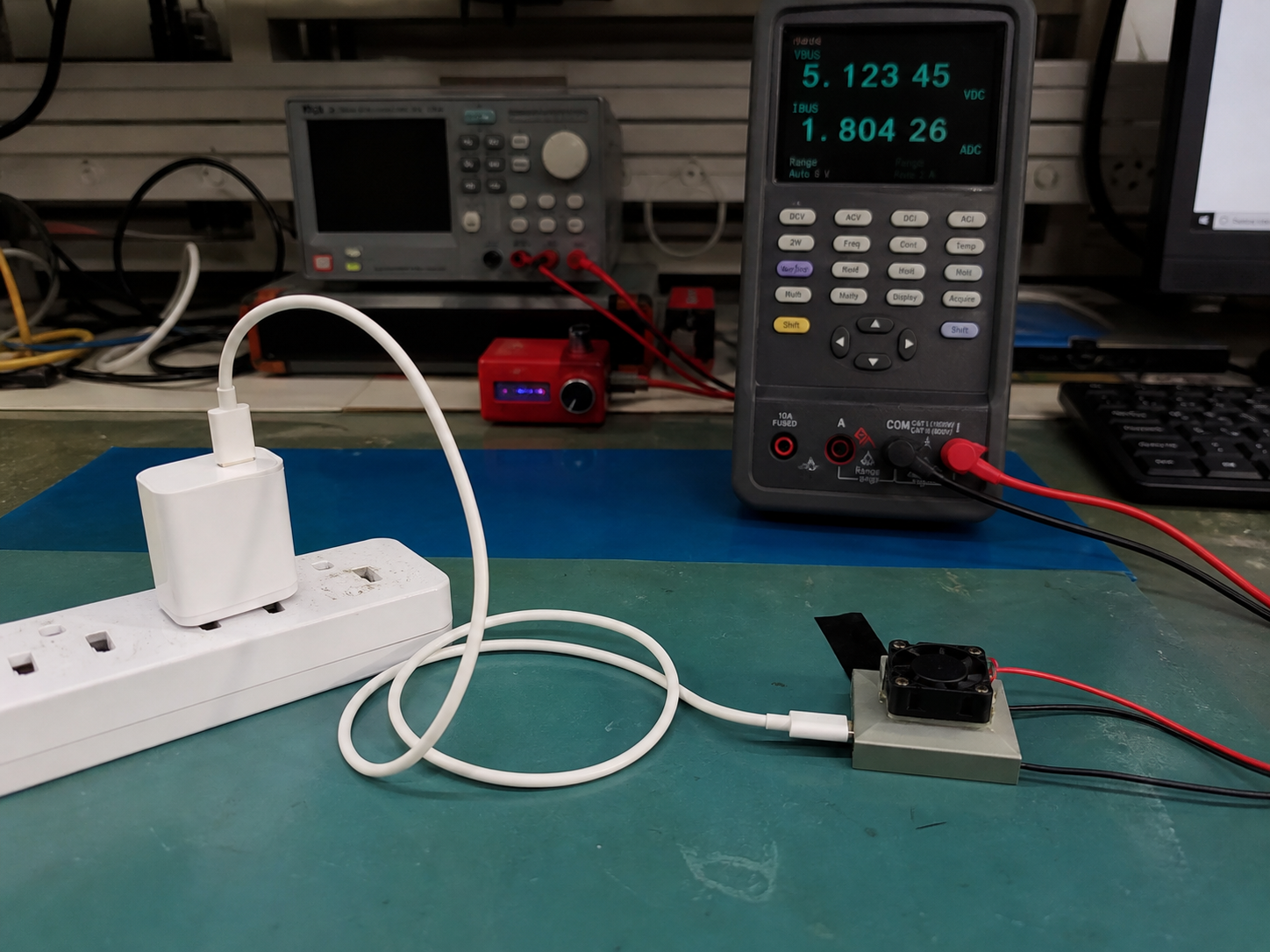
If the test fails, just adjust according to the rectification opinions and retest. The most common rectification problems are replacing compliant plugs and optimizing the protection circuit. There is a red line here: samples used for registration and mass-produced goods must be consistent, and “special samples” must never be submitted. If the products on the market are inconsistent with the registered model or technical documents, it may constitute a violation, and the competent authority may take measures such as sales suspension, rectification, recall, fines or other measures in accordance with the law.
Submission of Registration and Review
The submitting entity must be a local registered supplier in Singapore, submitting through the EnterpriseSG online system. Submitted materials include application form, product photos, drafts of nameplate/packaging/manual, list of model variants, qualified test reports/certificates.
Before submission, the consistency of documents needs to be checked again: brand, model, rated input, rated output, plug/power cord, manufacturer/factory information must match completely, otherwise it is easy to be rejected for supplementary materials. The review cycle is affected by factors such as data completeness, product category, and official queuing, and shall be subject to the current progress. If the review is passed, an official registration number will be issued; if not, supplementary materials/retesting are required before resubmission.
Labeling and Launch
After obtaining the registration number, affix the Safety Mark and unique registration number as required, and the position must comply with the display rules. Mass-produced goods must be exactly the same as the submitted samples, and structures, key components, plugs, etc. shall not be changed without permission. The full set of registration documents, test reports, and supply chain records must be properly kept for official verification.
It is recommended to do a final self-check before launch: labels meet requirements, and there is no false publicity of parameters; if the product has Bluetooth, Wi‑Fi or other radio communication functions, it should be confirmed according to IMDA rules whether it is a controlled device, whether an exemption applies, and whether a local distributor needs to complete device registration or other compliance procedures.
Factors Affecting Cycle and Cost, and Project Planning
There is no fixed standard for the cycle and cost of the Safety Mark, which is mainly affected by three dimensions:
• Product dimension: products with batteries, high power, and multiple ports are more complex, with large differences in applicable standards, higher costs and longer cycles;
• Preparation dimension: projects with high reusability of existing reports, complete materials, and no need for rectification are faster and cheaper; multiple rounds of rectification will greatly increase cost and time;
• External dimension: sample transportation cycle, scheduling of designated bodies, and official review queuing will all affect the progress.
If you want to schedule the project backwards, it is recommended to proceed in this order: classification confirmation → data gap review → sample confirmation → testing/report assessment → registration → labeling and mass production → channel launch. Do not readily believe claims of “guaranteed pass” or “ultra-low price”, everything shall be subject to the written quotation of formal institutions.
Exclusive for Charging Products: Core Technical Review Points for Registration
Charging products have several exclusive review focuses, which are also the most frequent pitfalls. Understanding them in advance can save a lot of detours.
Input Side: Mains Adaptation and Plug/Cable Compliance
Products must be compatible with Singapore’s 230V/50Hz mains power supply. Wide-voltage products need to cover this range, and fixed-input products need to be clearly marked and meet requirements. Plugs and cables on the mains side must comply with corresponding Singapore standards and be verified by designated bodies. It is prohibited to use Chinese/American standard plugs with adapters to replace compliant plugs. Detachable plugs and power cords also need to comply with corresponding standards and cannot be matched arbitrarily.
Output Side: Fast Charging Parameters and Multi-Port Distribution Rules
The required rated input, rated output and safety information shall be marked on the product and accompanying documents in accordance with applicable safety standards. For performance claims such as multi-port power and PD/PPS gears, it should be ensured that technical documents, product markings, packaging and marketing information are true and consistent; whether specific distribution rules need to be displayed shall be confirmed according to applicable standards, product design and channel requirements. Fast charging protocols such as PD/QC are not certified separately, but the safety of all output gears must be covered. A common misconception is that the “65W” and “100W” marked on products are usually the maximum single-port power, which does not mean that each port can reach it. Unclear marking may be inspected due to parameter inconsistency.
Safety Protection: Reliability Under Abnormal Conditions
Products shall pass relevant requirements or tests such as abnormal operation, short circuit, temperature rise, insulation, and component failure according to the product structure and applicable safety standards. Products with batteries or battery management functions shall also assess charging control, protection circuits and abnormal charging risks according to applicable standards. For high-power, small-volume products such as GaN fast chargers, temperature rise needs to be focused on and must not exceed the standard limit — do not think that GaN, as a component technology, automatically meets safety requirements; it still needs to be verified through testing.
Key Technical Compliance Points for Combined Sales (High-Frequency Pitfalls)
Many sellers tend to ignore compliance requirements when making sets, and the rules for different combinations are different:
• USB-C cable sold separately: pure cable without mains conversion is usually not mandatory under CPS; but if it is an accessory accompanying a controlled product, the designated conformity assessment body may require confirmation of its rated capacity, structure and safety adaptability in the applicable safety assessment of the whole product or adapter. Whether separate assessment or compliance with specific cable standards is required shall be confirmed according to the specific product;
• Charger + USB cable set: the charger needs to complete compliance registration first; pure low-voltage USB cables are usually not treated as independent CPS controlled goods, but when they are accompanying accessories, it may be necessary to confirm the rated capacity, structure and safety adaptability in the applicable safety assessment of the whole product or adapter;
• Wireless charging base + external adapter set: the adapter is a controlled AC category and needs to be compliant first, and the base is judged separately according to its own category;
• Combined supply of laptop and adapter: first identify separately whether they are controlled; if the adapter is controlled, the requirements for registration and combined supply materials need to be confirmed;
• Power strip with USB charging port: needs to comply with both power strip category and USB charging output safety standards, and cannot be judged only as an ordinary power strip.
Consistency Review: Samples and Mass-Produced Goods Must Match
Submitted samples and mass-produced goods must be exactly the same. Replacement of key components (transformers, plugs, protection components, casing materials, etc.) and changes in production locations require re-assessment of whether they affect the validity of the original registration. All changes that affect safety must be confirmed in writing by the designated body before the original registration can be continued, and materials shall not be replaced without permission.
Post-Certification Maintenance: Compliance Pitfall Avoidance and Daily Management
Obtaining the registration number is not a once-and-for-all matter. If subsequent maintenance is not in place, the certificate may become invalid, and you may even face penalties.
Validity Period and Renewal Rules
The registration status and expiration date in the EnterpriseSG system shall prevail. The validity period of Safety Mark registration is usually 3 years; the registered supplier shall apply for renewal in accordance with EnterpriseSG regulations before expiration, and at the same time confirm that the supporting conformity documents are still valid and cover the actual product. Do not readily believe the verbal promises of intermediaries.
Product Change Handling Rules
The core principle is: for any change that may affect electrical safety, assess first, then ship.
Non-safety-related changes (such as appearance color, packaging text, non-safety parts): report to the local registered supplier, and be assessed by the body if necessary;
Safety-critical changes (such as changes in circuits, plugs, key safety components, power, structure): need to be re-tested/assessed before the change.
It is recommended to establish a change assessment ledger to record change items, old/new material numbers, involved models, change batches, impact on safety, written opinions of the designated body, and approval date. For safety-related changes that have not been confirmed by the body, the original registration shall not be continued.
Spot Checks, Complaints and Channel Management
EnterpriseSG mainly carries out supervision through random market spot checks and consumer complaint verification. Whether the registration number needs to be filled in on online platforms and whether paper documents need to be prepared offline shall be subject to the current rules, and it is recommended to confirm with the channel in advance. All registration documents, test reports, and supply chain records need to be kept in electronic version for a long time, so that they can be quickly provided during verification.
Method for Querying the Authenticity of Registration Information
Log in to the official EnterpriseSG controlled product query system, enter the registration number or model to query, and check whether the brand, model, registered supplier, validity period, and scope of application are consistent with the actual situation. Those without filing or with inconsistent information are invalid. Do not readily believe the claim of intermediaries that “it can be checked through internal channels”.
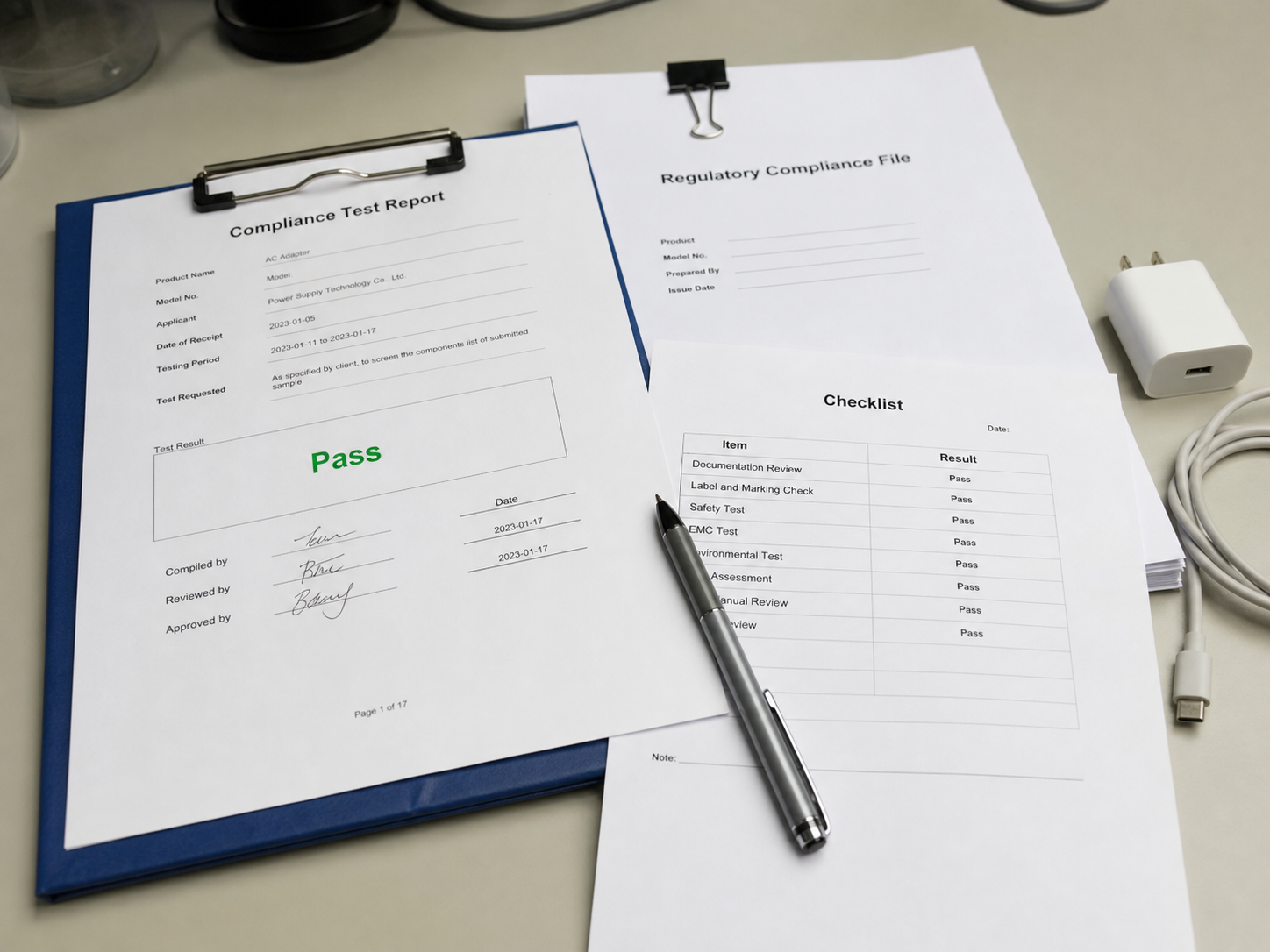
Practical Review: Comprehensive Cases and Capability Summary
High-Frequency Comprehensive Scenario Cases
Try to judge by yourself first, then look at the answers:
1. Does a pure USB-C charging cable sold separately require mandatory registration? → Usually belongs to Category C non-mandatory, because it is a pure low-voltage product without mains conversion function;
2. Can CB/CE reports be directly converted to Singapore registration without testing? → No. CB reports can be submitted to the body for assessment, which may simplify the process or require supplementary testing, but cannot be directly substituted. The official registration process still needs to be followed, and CE reports usually cannot be used as the basis for assessment;
3. Is it unnecessary to comply with regulations for small-batch sales of charger + charging cable sets via cross-border direct mail? → Cross-border direct mail and small batches do not automatically exempt controlled goods from CPS requirements; if the products in the set are CPS controlled goods, the obligations of registered supplier, registration and marking should be confirmed according to CPSR before commercial supply. For cases of personal import by consumers or doubtful product classification, confirmation should be made with EnterpriseSG or the designated conformity assessment body.
Judgments That Can Be Made Independently After Learning
Against the content of the full text, you should now be able to independently complete these things:
• Initially judge whether charging products require mandatory registration against the CPS list and sales scenarios;
• Cooperate with the local registered supplier to confirm the conformity assessment path and prepare materials;
• Sort out the key nodes and common risk points of the entire registration process;
• Independently query the authenticity of Safety Mark registration information and avoid non-compliant intermediaries;
• Complete compliance self-checks and change assessments before and after product launch.
Official Resources and Launch Self-Check Tools
There are three core official query entrances: , , and . You must use the latest official EnterpriseSG page for query, and do not use old third-party information. When querying, it is recommended to keep the query date, page version, and product model. If there is official written confirmation, it should also be properly kept.
High-Frequency FAQ
1. Do chargers in Singapore need the Safety Mark?
Independently sold external power adapters with mains plugs for consumer electronics (including GaN fast chargers, multi-port charging stations, and laptop power supplies) are Category A controlled products and must complete Safety Mark registration.
2. Do charging cables need PSB certification?
Pure low-voltage USB charging cables sold separately generally do not fall within the scope of CPS mandatory control; but if they are accessories accompanying controlled products, the designated conformity assessment body may require confirmation of their rated capacity, structure and safety adaptability in the applicable safety assessment of the whole product or adapter. Whether separate assessment or compliance with specific cable standards is required shall be confirmed according to the specific product.
3. Can CB reports be used to apply for Singapore Safety Mark?
They can be submitted to the designated certification body for assessment. The body will decide whether to accept them and whether supplementary testing is required based on the standard, version, national differences and other conditions of the report. They cannot directly replace registration, and the official process still needs to be followed.
4. What is a Singapore Registered Supplier?
That is, the registered supplier, which must be a company registered locally in Singapore. It is the responsible entity for Safety Mark registration, bears legal responsibility for product safety and compliance, and overseas entities cannot apply directly.
5. Do power banks with AC plugs need PSB certification?
It cannot be judged solely by whether there is an AC plug. It should be confirmed whether the whole product meets the definitions and exclusions of relevant categories in the ; if the product is accompanied by an independent external AC adapter, it should also be confirmed separately whether the adapter is a controlled good.
10-Item Checklist for Charging Products Before Launch
1. Confirmed that the product is within the scope of CPS control / obtained exemption confirmation
2. Implemented the local registered supplier in Singapore
3. Completed testing/report assessment by the designated body and passed
4. Obtained the official EnterpriseSG registration number
5. Safety Mark style and position meet requirements
6. Product nameplate parameters are consistent with registration information
7. The manual includes English safety warnings and multi-port power distribution rules (if applicable)
8. Key safety components of mass-produced goods are consistent with submitted samples
9. If the product has Bluetooth, Wi‑Fi or other radio communication functions, it has been confirmed according to IMDA rules whether it is a controlled device, whether an exemption applies, and whether a local distributor needs to complete device registration or other compliance procedures
10. The full set of registration and technical documents has been kept for verification
In general, Singapore’s PSB certification (Safety Mark registration) is a hard threshold for charging products to enter the Singapore market. The rules seem trivial, but as long as you proceed step by step: first clearly judge the product category, find the correct local responsible entity, follow the formal designated body process, and do a good job in subsequent consistency maintenance, you can avoid most pitfalls. Do not take chances and take shortcuts. Compliance is the foundation of long-term operation.