
If you are an overseas seller engaged in the cross-border business of charging products, or plan to introduce smart charging devices to the Chinese market, you have most likely heard terms such as “network access filing” and “network access license” — some say you need to apply for it if the device has Wi-Fi, others say all smart chargers require it, and the more you hear, the easier it is to fall into pitfalls.
This article focuses specifically on products such as chargers, power adapters, USB-C cables/docking stations, smart charging docks, and shared charging devices, and explains China’s network access filing requirements in detail: from the most basic concept differentiation, to quick judgment of common products, to pit avoidance in high-risk scenarios and compliance processes. The following content is expanded step by step in the order of basic concepts, common product judgment, high-risk scenario identification, self-inspection methods, and application and maintenance logic.
First, let’s clarify a basic conclusion: the vast majority of ordinary charging products, such as daily mobile phone fast chargers, laptop power adapters, and ordinary USB-C charging cables, do not involve network access filing requirements at all; only a small number of products with specific communication functions need to be evaluated.
1. Basic Cognition: The Relationship Between Network Access Filing and Charging Products
Many people find it complicated when they hear “network access” and “filing”. In fact, as long as you first understand a few core definitions and judgment logic, you can avoid 80% of cognitive misunderstandings.
Core Definition: What is “Network Access”
The “network access” (also called network entry) we often refer to has the full name of Telecommunications Equipment Network Access License, which refers to the official access requirement for devices before they connect to China’s public telecommunications network. The core logic is very simple: as long as a device needs to directly access the public communication network operated by operators, it must be approved by the competent authority to ensure that it will not affect network security, stability, and interconnection.
The “public telecommunications network” mentioned here specifically includes three categories: 4G/5G mobile networks operated by operators, fixed broadband access networks, and operator Internet of Things (IoT) private networks. Only devices that directly access these networks need to be evaluated for network access requirements; ordinary charging products without relevant communication functions do not involve this requirement at all.
Differences Between Three Easily Confused Concepts
Many people confuse “network access license”, “network access trial approval”, and “network access filing”. The three have very different natures and applicable scenarios, which can be quickly distinguished by referring to the following table:
| Concept Name | Nature | Applicable Instructions for Charging Scenarios |
| Telecommunications Equipment Network Access License | Official formal public network access approval document | Core compliance basis for charging products involving public network access |
| Network Access Trial Approval | Temporary access document for devices with new technologies/new standards | Effect is similar to formal network access license, but with a clear usage period |
| Network Access Filing | General term in industry colloquialism | In most charging scenarios, it actually refers to network access license; if the product uses an IoT card, it may also involve operator-side card real-name registration and access management filing |
Why Do Charging Products Involve Network Access?
Traditional chargers, power adapters, and USB-C cables essentially only perform power conversion, local power negotiation, or short-distance data transmission, and do not touch the operator’s public network at all, so they naturally do not need to consider network access requirements.
Only when smart charging products are equipped with communication modules such as Wi-Fi, Bluetooth, cellular, Ethernet, etc., is it necessary to further determine whether access requirements are triggered. It should be particularly emphasized here: **There is only one core criterion for final judgment — whether the device directly accesses China’s public telecommunications network, which has no direct relationship with whether the product has a charging function, supports local data transmission, or is a “smart product”**.
Scope of Coverage of This Article
It should be noted first that the judgment scope of this article only covers charging or power supply related products such as chargers, power adapters, USB-C cables/docking stations, smart charging docks, and shared charging devices. Mobile phones, tablets, toys, home appliances, and other smart hardware unrelated to charging and power supply are not within the scope of this article.
2. Boundaries of Three Core Compliance Certifications
Many people confuse CCC, SRRC, and network access licenses. In fact, the three regulate completely different dimensions, are parallel and non-conflicting, and cannot replace each other. We can explain it clearly with a table:
| Certification Type | Core Regulation | Applicable Scenarios for Charging Products | Common Misconceptions |
| CCC (China Compulsory Certification) | Electrical safety, electromagnetic compatibility | Most chargers and power adapters need to first be evaluated for whether they are in the CCC catalog | Thinking that CCC can cover wireless or network access requirements |
| SRRC (Radio Transmission Equipment Type Approval) | The frequency and power of wireless transmission comply with China’s frequency band planning | Products with wireless functions such as Wi-Fi/Bluetooth/cellular/NB-IoT | Thinking that having SRRC allows access to the public network |
| Network Access License | Security, stability, interconnection, and information security of public network access (competent authority is the Ministry of Industry and Information Technology, MIIT) | Only cellular/wired public network devices that directly access the public telecommunications network | Thinking that all connected devices need to apply for it |
The relationship between the three is very simple: apply for the corresponding certification according to the functions of the product. If the functions change, the access requirements must also be adjusted simultaneously. Here are some typical combinations (all are general scenario references, specific evaluation shall be based on product parameters and applicable catalogs):
• Ordinary USB-C fast charger: Usually does not involve SRRC and network access license, needs to be evaluated according to CCC catalog, electrical safety, energy efficiency, and labeling requirements
• Bluetooth digital display charging dock: With Bluetooth wireless function, usually needs to evaluate CCC + SRRC according to the catalog
• Wi-Fi desktop charging station: With Wi-Fi wireless function and supports App remote control, usually needs to evaluate CCC + SRRC according to the catalog, and simultaneously pay attention to data compliance requirements such as App personal information protection. It does not automatically require a network access license just because it supports remote network control
• 4G shared power bank cabinet: With cellular communication directly connected to the public network, usually requires CCC + SRRC + network access license (cooperate with IoT card related filing as needed)
3. Common Charging/USB-C Products That Do Not Require Network Access
Most daily charging and USB-C peripheral products do not need to apply for a network access license, as long as the corresponding safety, wireless and other relevant compliance requirements are completed. We will explain them one by one according to common types:
Ordinary Charging Products Without Any Communication Function
This is the most common category, typical products include mobile phone fast chargers, laptop power adapters, ordinary USB-C charging cables/adapters.
The judgment basis is very clear: this type of product only undertakes power conversion, local power negotiation or cable identification functions, does not have any network communication capability, and will not directly access the operator’s public telecommunications network. Let’s emphasize again: fast charging protocols such as PD/QC are only used for power negotiation between charging devices, do not belong to the category of network communication, and will not trigger network access requirements.
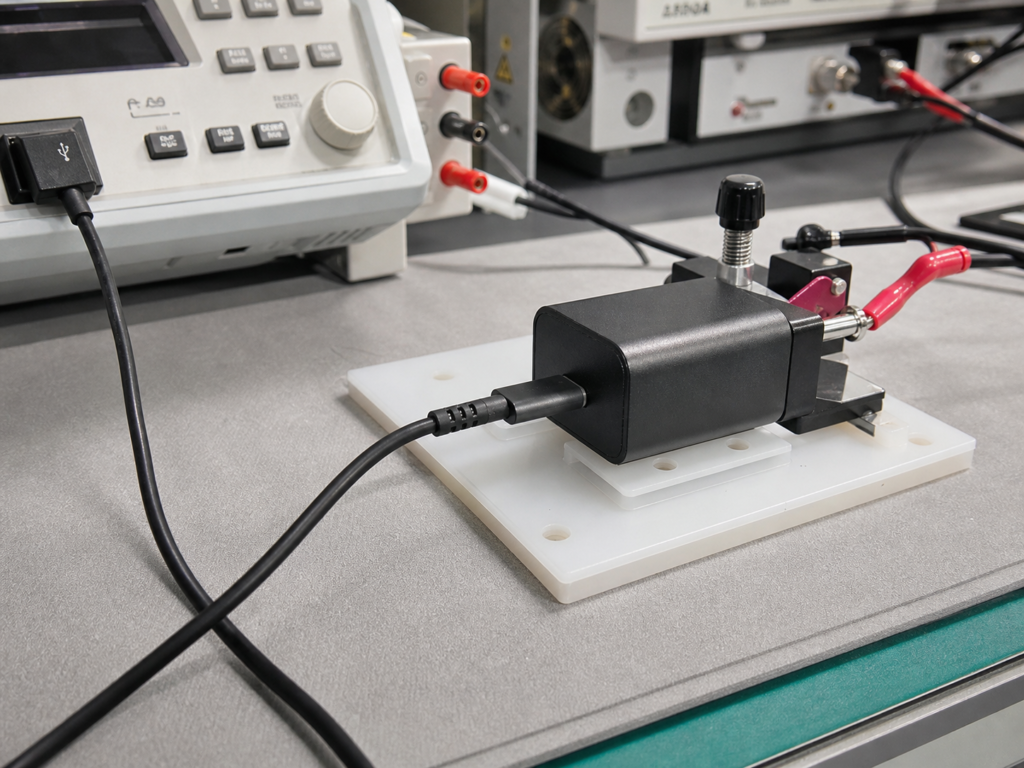
The compliance focus of this type of product usually includes: evaluating CCC certification requirements according to the catalog, compliance with energy efficiency labels, interface compatibility meeting relevant standards, and standardized and clear product labeling.
Smart Charging Products Only With Local Bluetooth/NFC
If the charging product only has short-range wireless functions such as Bluetooth or NFC, there is no need to evaluate the network access license. Typical products include Bluetooth power-adjustable charging docks, NFC tap-to-fast-charge chargers, and Bluetooth digital display charging docks.
The judgment basis is: Bluetooth and NFC are short-range wireless connection technologies, which can only transmit data between devices and terminals such as mobile phones and bracelets at close range, and will not directly access the operator’s public telecommunications network, so they do not trigger network access requirements.
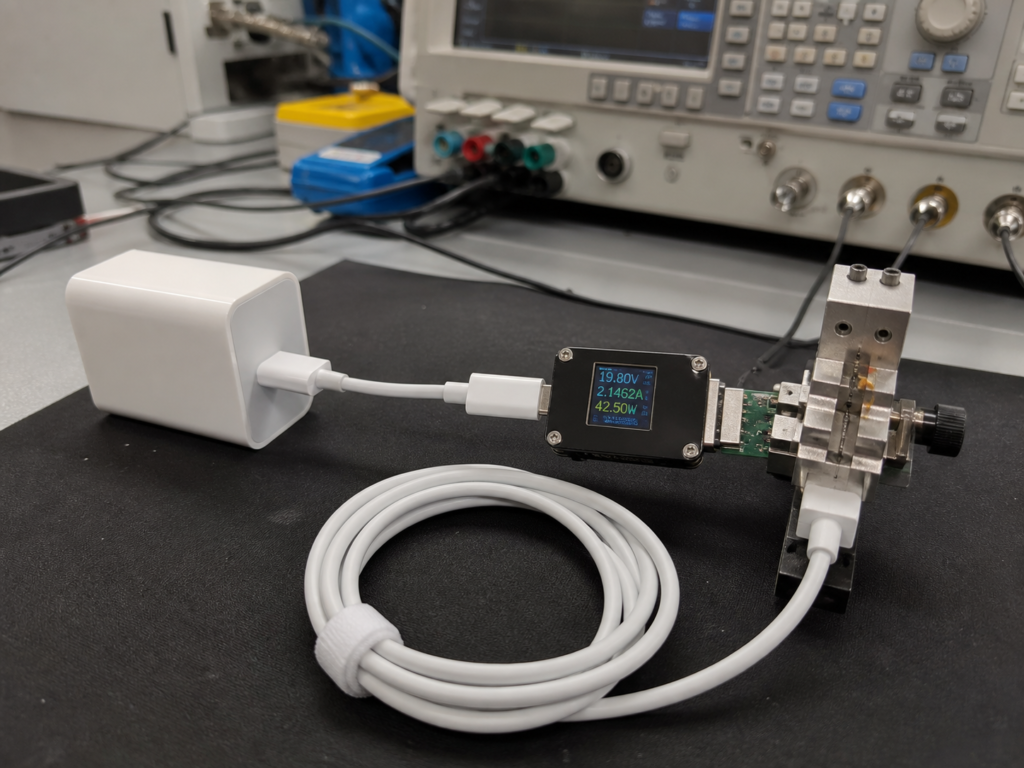
It should be noted that because this type of product has a wireless transmission function, it still needs to be evaluated for SRRC type approval as required, and simultaneously implement conventional compliance requirements such as CCC certification and product safety.
Wi-Fi Charging Products Only Connected to Home/Enterprise Local Area Networks
Many people mistakenly think that all products with Wi-Fi need to apply for network access, but in fact, ordinary consumer-grade Wi-Fi charging products usually do not. Typical products include Wi-Fi smart sockets, Wi-Fi desktop charging stations, and smart chargers supporting App remote control.
The working logic of this type of product is: they access the local area network through a home or enterprise router installed by the user, and then connect to the Internet via the router to realize functions such as App remote control and data synchronization. The device itself is not a telecommunications terminal that directly accesses the operator’s public telecommunications network, so it generally does not trigger network access license requirements.
The compliance focus of this type of product usually includes: evaluating SRRC and CCC certification according to the catalog, and implementing personal information protection and data compliance requirements on the App side. If the product also has operator-customized access, gateway or telecommunications terminal attributes, it still needs to be further judged against the MIIT network access catalog.
USB-C Docking Stations/Hubs Only With Local Network Ports
USB-C docking stations with RJ45 Ethernet ports and pure data transmission USB Hubs are also common peripheral products, and such products usually do not need to apply for a network access license.
The judgment basis is: if the product only serves as a peripheral for devices such as computers and tablets, completes local Ethernet data transfer, and does not have functions such as operator broadband access authentication, modulation and demodulation, or network-side access, it does not belong to the telecommunications terminals or network access equipment covered by the network access catalog.
The compliance focus of this type of product is usually electrical safety, electromagnetic compatibility, and interface labeling specifications, which need to be evaluated in combination with product functions and applicable standards. This should be clearly distinguished from high-risk devices with public network wired access functions mentioned later.
4. High-Risk Products That Require Key Evaluation of Network Access
If your product falls into the following categories, you must carefully evaluate the network access license requirements, as the probability of falling into pitfalls is very high:
Charging/Power Equipment With Cellular Communication Modules
Typical products include shared power bank cabinets with 4G/5G/NB-IoT, commercial smart charging terminals, and industrial power monitoring equipment.
The judgment basis is: the product directly connects to the operator’s network to transmit data through the built-in cellular communication module, without relying on a mobile phone or router.
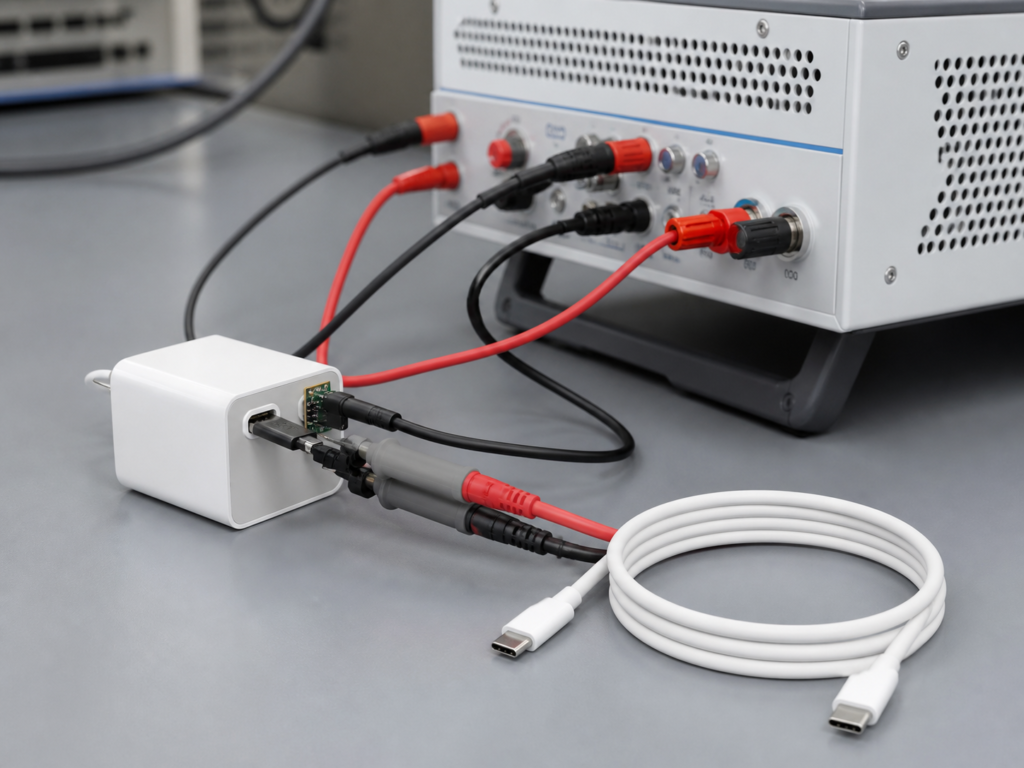
The compliance requirements for this type of product are usually complete with three certificates: “network access license + SRRC + CCC”. If an IoT card is used, additional access filing for the card is required in some scenarios.
Risk signals: The product page or promotion marks “4G network connection”, “NB-IoT remote monitoring”, “built-in data card”.
Devices With SIM/eSIM/Operator Data Cards
This type of device is a typical subdivision of the cellular direct connection scenario. The core identification point is that it has a built-in SIM card slot, eSIM chip, or supporting operator data card, and can independently access the mobile network completely without relying on mobile phone hotspots or third-party routers. Typical products include smart charging piles with SIM card slots, shared charging docks with eSIM, and power management terminals with supporting IoT cards.
In addition to the device itself needing to meet the network access license requirements, the supporting IoT cards of this type of product also need to strictly comply with the operator’s relevant regulations on real-name registration and access management.
Risk signals: The product has a SIM card slot, and the promotion says “built-in data”, “remote positioning without Wi-Fi”.
Charging/Expansion Products With Public Network Wired Access Function
Typical products include USB-C gateways with operator broadband access ports, and power monitoring boxes that support direct public network access.
To judge this type of product, you cannot only look at whether there is an RJ45/Ethernet port. You need to check three conditions at the same time: whether it is directly connected to the operator’s access line, whether it has access authentication/modulation and demodulation/network-side access functions, and whether it is included in the MIIT network access equipment catalog. Only if it belongs to the telecommunications terminals or network access equipment in the network access catalog, you need to apply for a network access license.
Risk signals: Promotion says “can be used directly by plugging into broadband”, “operator customized access”.
Special Reminder: Module Certification ≠ Automatic Compliance of the Whole Machine
This is the pitfall that overseas sellers are most likely to fall into: many people think that since the communication module they use already has a network access license, the whole machine does not need to apply for it again, which is completely wrong.
The core logic is: a certified communication module can indeed reduce the test volume of the whole machine, but it cannot replace the access judgment of the whole machine — because changes in the whole machine’s antenna design, power configuration, shell material, and software functions may change the final compliance conclusion.
Common consequences: Overseas sellers directly use the module certificate as the whole machine compliance certificate, resulting in customs clearance detention and platform listing failure.
The correct judgment method is: check whether the model and configuration of the whole machine are within the applicable scope of the module certificate. If you are not sure, be sure to conduct a whole machine compliance evaluation.
Quick Comparison Table of Typical Products
To facilitate quick judgment, we have sorted out the general rules for common products. Note that this is only the conclusion for ordinary consumer-grade scenarios, and special industry or customized products need to be evaluated separately:
| Product Type | Whether Network Access License Is Required | Core Compliance Requirements | Common Misconceptions |
| Ordinary USB-C fast charger | No | Evaluate CCC, energy efficiency, and labeling according to the catalog | Thinking that the PD protocol belongs to communication functions and requires network access |
| Bluetooth/NFC charging dock | No | Evaluate CCC and SRRC according to the catalog | Thinking that Bluetooth/NFC belongs to public network communication and requires network access |
| Wi-Fi smart socket | No (ordinary consumer-grade) | Evaluate CCC, SRRC, and data compliance according to the catalog | Thinking that Wi-Fi requires a network access license |
| 4G shared power bank cabinet | Yes | CCC, SRRC, network access license, IoT card filing (as needed) | Thinking that a certified module means the whole machine is compliant |
5. Four-Step Preliminary Judgment Method for Overseas Sellers/Purchasers
You don’t have to find a certification agency to spend money at the very beginning. For most charging products, you can judge whether a network access license is needed by yourself. Just follow the four steps:
Step 1: Confirm Whether the Product Has Communication Functions
If the product has no wireless function, no network port, no SIM card slot, directly exclude the network access license requirement.
Let’s emphasize again: products that only support fast charging protocols such as PD/QC do not have communication functions, and can be judged as ordinary power products.
If the product has Wi-Fi/Bluetooth/cellular/Ethernet port, proceed to the next step of judgment.
The operation method is very simple: check the product’s specification sheet, BOM (Bill of Materials), and function description on the promotion page, don’t just look at the appearance.
Step 2: Confirm the Type of Connected Network
Different network connection methods have vastly different access requirements:
• Bluetooth/NFC short-range connection: Focus on evaluating SRRC and electrical safety, no need to consider network access license at all
• Wi-Fi connection to home/enterprise local area network: Focus on evaluating SRRC, CCC, and data compliance; network access license needs to be checked against the catalog (ordinary consumer-grade basically does not need it)
• Cellular network directly connected to the operator: Most likely need to apply for a network access license
• Wired access to public network (such as directly connecting to operator broadband): Check the network access catalog according to the attributes of telecommunications terminals/network equipment
Step 3: Check the MIIT Network Access Management Catalog
The final judgment basis is the latest network access equipment catalog and official query system released by MIIT, which cannot be guessed by experience.
Factors affecting judgment include the official name of the product, communication standard, and usage scenario — even if the appearance is exactly the same, the access conclusions of the ordinary version, Wi-Fi version, and 4G version may be completely different.
If you are not sure, don’t force it yourself. Entrust a domestic importer, formal certification agency, or regulatory consultant to make a formal judgment, which is much more cost-effective than falling into a pit afterwards.
Step 4: Confirm the Listing Path and Responsible Entity
• If the product needs to apply for a network access license or local Chinese access documents, usually an enterprise legally established in China must serve as the application or responsible entity; overseas enterprises cannot directly serve as the application entity for network access licenses.
• The audit strictness of different sales channels varies: the data audit requirements and responsible entity arrangements for cross-border e-commerce, general trade import, and offline physical sales need to be confirmed in combination with specific channel rules.
• For products that are judged not to require network access, be sure to keep the “non-applicable judgment record” and supply chain certificates (such as module specification sheets, function descriptions), which can be directly submitted as proof in case of random inspection by the platform or customs.
• If the product is only sold and used overseas, there is no need to comply with China’s network access requirements at all.
Quick Self-Inspection Keyword List
You can directly search for these keywords against the product page, manual, and supply chain materials. The more they appear, the higher the probability that a network access license needs to be evaluated:
• Product page keywords: 4G, 5G, NB-IoT, SIM, eSIM, data card, operator network, remote positioning
• Manual keywords: cellular network connection, public network access, data upload, SMS control, voice function
• Supply chain keywords: communication module model, network access license, SRRC certificate, IoT card
• Risk signal: inconsistent model or function descriptions in promotional content, physical products, nameplates, and certificates
6. Network Access License Application and Post-Certification Maintenance Logic
If your product really needs to apply for a network access license, the following core logics can help you avoid detours:
Application Entity Requirements
The network access license must be applied for by an enterprise legally established in China, which can be a manufacturer, importer, or authorized agent. This domestic entity shall bear all legal responsibilities for the authenticity of materials, certificate maintenance, and post-listing compliance.
If it is an OEM/ODM mode, be sure to clarify the rights and responsibilities of the certificate holder, manufacturer, and brand party in advance to avoid disputes later.
Preconditions for Application
• Products with wireless functions: SRRC approval needs to be completed first (or handled simultaneously)
• Products in the CCC catalog: CCC certification needs to be completed first (or handled simultaneously)
• The specific sequence and whether they can be handled simultaneously shall be subject to the product’s applicable catalog, acceptance agency, and testing arrangement
• Product status: The model, hardware/software version must be stable, and the configuration of the sample sent for inspection and the final mass production must be completely consistent
• Material preparation: The Chinese content on the nameplate, manual, and packaging must meet the specification requirements
Core Material List
The materials required to apply for a network access license are mainly divided into four categories:
1. Enterprise qualifications: Business license of the domestic entity, brand authorization letter, basic information of the applicant entity
2. Product materials: Model, appearance drawing, USB/USB-C interface parameters, charging power, nameplate and manual drafts
3. Communication materials: Network connection method, communication standard, supported frequency bands, module model, SIM/eSIM support status
4. Pre-certificates: SRRC certificate, CCC certificate (as needed), certification documents of the communication module
Basic Application Process
The overall process is not complicated, the core is to ensure the consistency of samples and materials:
1. First conduct classification judgment to clarify whether the product is an ordinary power supply, wireless device, or telecommunications terminal
2. Prepare samples that meet the requirements and a full set of materials, ensuring they are completely consistent with the mass production version
3. Complete laboratory testing and technical material review
4. After obtaining the certificate, mark the network access license logo and number as required before listing for sale
Post-Certification Maintenance and Change Rules
Obtaining the certificate is not a once-and-for-all matter. Subsequent changes need to be handled according to different situations:
• Labeling requirements: The network access license logo and number must be marked as required, and the information on the sales page, product nameplate, and certificate must be consistent
• High-risk changes (require re-evaluation or even re-application): Replacing communication modules/antennas/mainboards, adding cellular functions or frequency bands, changing manufacturers or certificate holders
• Low-risk changes (usually do not trigger re-application, but evaluation records should be kept): The premise is that the host model, communication module/antenna/mainboard, key safety structure, nameplate information, certificate holder and manufacturer are not changed. Common examples include appearance color adjustment, packaging visual modification, and sales set changes that do not involve new accessories. If the set adds adapters, cables, communication accessories or changes the combined model, the consistency of CCC, SRRC, network access license and platform materials should be rechecked
• Validity period and renewal: The validity period of a formal network access license is generally 3 years, and the validity period of a network access trial approval is no more than 1 year. Renewal applications should be submitted before expiration
• Cycle and cost: There is no unified standard, which is affected by product complexity, laboratory scheduling, and number of rectifications. Do not believe the promotion of “one-price, get certificate in one week”
7. Common Misconceptions and Consequences of Violations
We have sorted out the 5 most common pitfalls, you can compare them to avoid them:
Misconception 1: All Connected Devices Need to Apply for Network Access License
Correct answer: Only devices that directly access China’s public telecommunications network need it. Devices connected via local area networks such as Wi-Fi/Bluetooth usually only need SRRC.
Common sub-misconceptions include: thinking that Bluetooth/NFC connection requires network access, thinking that Wi-Fi connection requires network access (ordinary consumer-grade), thinking that having a network port requires network access, thinking that PD/QC fast charging handshake protocol belongs to network communication.
Misconception 2: With CCC/SRRC, There Is No Need to Apply for Network Access License
Correct answer: The three regulate completely different dimensions and cannot replace each other. Charging devices with cellular communication usually need to apply for CCC + SRRC + network access license at the same time, which shall be subject to product functions and applicable catalogs.
Misconception 3: Overseas Certifications (CE/FCC/UKCA) Can Replace Chinese Access Requirements
Correct answer: Overseas certifications such as CE/FCC/UKCA cannot replace local access requirements such as CCC, SRRC, and network access licenses required for sales in China. Cross-border e-commerce platforms may require Chinese local certificates or non-applicable explanations according to product categories, which shall be subject to platform rules and product attributes.
Misconception 4: The Same Model Can Cover All Communication Versions
Correct answer: The compliance requirements for non-networked version, Wi-Fi version, and 4G version are completely different, and the same model and certificate cannot be mixed. The correct approach is to use different models to distinguish different communication configurations to avoid inconsistency between promotional content and certificate information.
Misconception 5: Module Certification = Whole Machine Compliance
Correct answer: The module certificate only covers the module itself and cannot replace the whole machine access judgment. For specific reasons and judgment methods, please refer to the previous section “Module Certification ≠ Automatic Compliance of the Whole Machine”. In actual sales, you should check whether the whole machine model, configuration and certificate application scope match, and do not directly use the module certificate as the whole machine compliance certificate.
Common Consequences of Violations
If you go on the market without meeting the requirements, you may face several types of consequences:
• Platform side: Product removal, sales restriction, requirement to submit certificates within a time limit
• Customs clearance side: Inspection delay, cargo return, cargo detention
• Regulatory side: Administrative penalties, fines, confiscation of illegal gains
• Credit side: Affecting the enterprise’s channel cooperation and credit records in the Chinese market
8. Full-Process Compliance Checklist
We have sorted out a practical checklist according to the whole process of the product from design to sales, you can follow it:
Product Design Stage
• Clarify the communication solution in advance: non-networked/Bluetooth/Wi-Fi/cellular, avoid temporarily adding functions later, otherwise the compliance cost will increase significantly
• Try to choose communication modules that have obtained Chinese certification, which can reduce the compliance difficulty of the whole machine
• Plan the position and content of the Chinese nameplate and manual in advance, don’t wait until mass production to modify
• Try not to frequently replace modules, antennas, and software versions before mass production, to avoid wasting previous tests
Procurement and Supply Chain Stage
• Check whether the SRRC/network access certificate of the communication module is within the validity period
• Confirm that the whole machine has completed the Chinese access judgment, and cannot only use the certification documents of the communication module to replace the complete set of compliance certificates
• Check that the models, manufacturers, and brands of CCC, SRRC, and network access licenses are completely consistent with the actually sold products
• Keep the supplier’s certificates, authorization documents, and module model correspondence tables for random inspection
Page and Packaging Inspection Before Listing
• Do not promote unreported network functions on the sales page. For example, if it only has Bluetooth, don’t say it supports 4G remote control
• The product model, power, interface, communication function and certificate information are completely consistent
• The Chinese manual clearly marks the network connection method, usage restrictions, and safety information
• Prepare the certificate documents required by the platform in advance, don’t wait until the listing is blocked to find them temporarily
Import Customs Clearance and Sales Stage
• Prepare basic trade documents such as contracts, invoices, and packing lists
• Prepare corresponding certificates according to the applicability of the product, or the explanation document of “not applicable to network access license”
• Products for sample, exhibition, and testing purposes have different access requirements from those for commercial sale, and cannot be mixed
• Keep nameplate photos, Chinese manuals, and authorization letters to respond to regulatory random inspections
Scenarios Where It Is Recommended to Consult a Professional Agency
If you encounter the following situations, don’t guess by yourself. It is more cost-effective and time-saving to seek assistance from a professional agency:
• The product has 4G/5G/NB-IoT/eSIM/SIM card slot
• Involves multiple requirements of CCC, SRRC, and network access license at the same time
• Plans to sell through multiple online and offline channels in China, requiring a unified compliance solution
• Unsure whether the product belongs to the network access management catalog
• The product has complex models, is produced by multiple factories, and has frequent version changes
Core Competence Summary
After reading this article, you can at least master practical abilities at three levels:
First, basic concept differentiation: you can distinguish the respective regulatory scopes of CCC, SRRC, and network access licenses, understand what “network access filing” refers to in charging scenarios, and will no longer be confused by various similar statements.
Second, common product judgment: you can quickly confirm that conventional products such as ordinary fast chargers, charging cables, and Bluetooth/NFC charging docks do not require a network access license, and can also identify high-risk scenarios such as shared charging devices with cellular modules and SIM cards at a glance.
Third, self-inspection and pit avoidance ability: you can use the four-step preliminary judgment method to evaluate the network access requirements of most charging products by yourself, avoid the most common compliance misconceptions, reduce listing risks, and know when to seek assistance from professional agencies to control compliance costs within a reasonable range.
For most overseas sellers operating ordinary charging products, daily sold products such as fast chargers, power adapters, and ordinary cables usually do not trigger network access license requirements; but if it involves products with cellular communication, SIM/eSIM, or public network wired access such as shared charging and commercial smart charging, be sure to do a good job of compliance evaluation in advance to reduce listing risks.