
For friends who export charging products to Indonesia or plan to bring electronic devices to Indonesia, most have probably heard of the term “SDPPI certification”, but the most frequently asked question is still: Is this certification mandatory? Do the chargers, charging cables, and wireless chargers I sell need it?
Many people, because they don’t understand the rules clearly, either waste money on unnecessary certifications, or miss the certification leading to detained goods and delisted links, resulting in significant losses. Today, we will thoroughly explain SDPPI’s mandatory rules, judgment methods, exemption scenarios, and common misconceptions for common charging products such as chargers, charging cables, and wireless chargers, to help you make a quick preliminary judgment and avoid pitfalls.
Core Conclusion Quick Overview
First, let’s give the conclusion for those in a hurry. You can first make a preliminary judgment based on your own products, and we will talk about the details later.
General Judgment Rules
SDPPI is not required for all charging products. First, it is necessary to confirm whether the complete device is a telecommunications equipment or has telecommunications functions; if so, in principle, certification shall be obtained in accordance with applicable technical standards, unless it meets clear statutory exceptions. Then, verify the declaration and customs information such as the actual product configuration, applicable technical standards, product type, brand/model, country of origin, and HS code (customs commodity classification code, one of the core bases for customs clearance supervision).
Note here: The HS code is important information for product classification, certificate data, and customs verification, but it cannot alone determine whether a product is subject to certification. You cannot directly judge that certification is not needed solely based on the HS code. Charging products with Bluetooth, Wi-Fi, cellular network, or NFC functions shall in principle be treated as requiring certification, and then verify the applicable standards, model, country of origin, and whether there are statutory exceptions. In addition, even if SDPPI is not required, you must also check other Indonesian compliance requirements such as SNI, and cannot take it lightly.
Quick Judgment for Common Charging Products
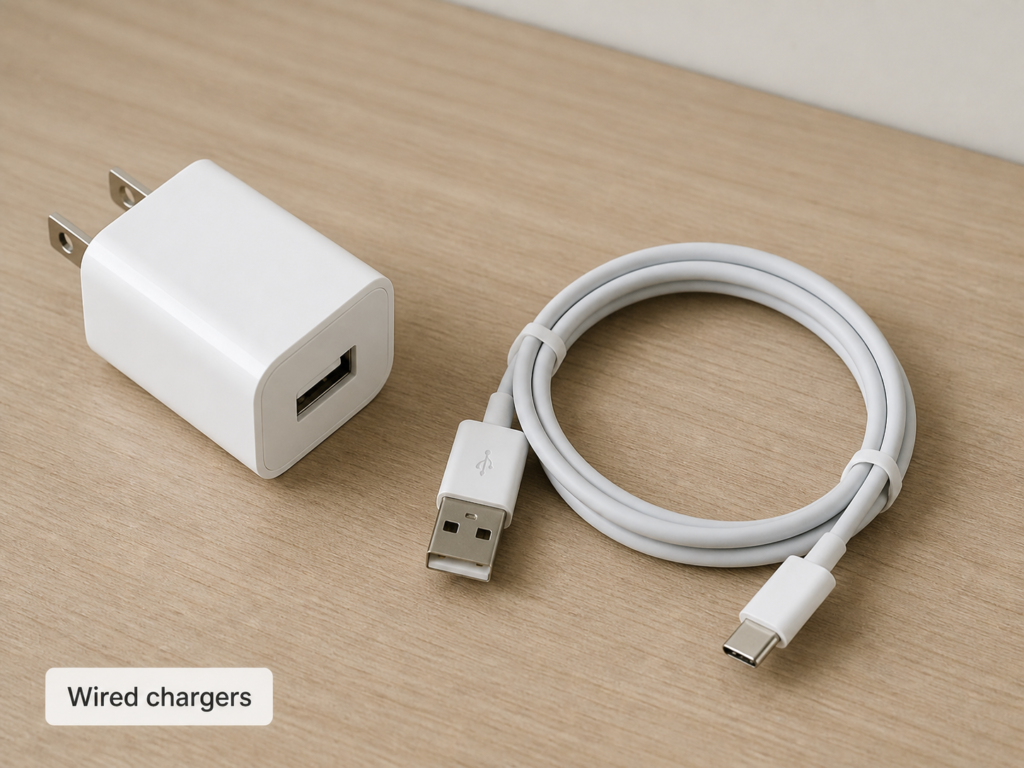
We have compiled the most common types of charging products into a table for your quick comparison:
| Product Type | Preliminary Judgment Result | Remarks |
| Pure wired chargers/power adapters, ordinary USB/USB-C charging cables (power supply only/local data transmission) | Usually not required | Basic models without any communication modules |
| Smart chargers with Bluetooth/Wi-Fi, wireless charging bases with communication functions | In principle, subject to certification as required | Then verify applicable standards, model, country of origin, and statutory exceptions |
| Basic wireless chargers without communication modules, charging accessories with NFC, charging devices with network ports | Requires official confirmation | These are boundary products and cannot be judged independently |
Core Boundaries of Mandatory Requirements
If the product falls within the certification scope, you must keep these points in mind:
• SDPPI is a statutory access requirement for telecommunications equipment in Indonesia, not a voluntary certification. Those that meet the conditions must obtain it;
• For equipment within the certification scope, in principle, a certificate must be obtained first before it can be manufactured, assembled, or imported for trade or use in Indonesia; however, those that meet the statutory exception conditions such as personal use, test samples, and research and development as stipulated by regulations shall follow the corresponding exception procedures and shall not be converted to commercial sales;
• All other certifications such as CE, FCC, and SNI cannot replace SDPPI;
• The mandatory nature will not automatically disappear just because it is a cross-border small parcel, personal purchasing agent, or in the name of samples; it will still be regulated as required.
Basic Concepts and Caliber Explanations
Some friends may not be very clear about what SDPPI is. Let’s first clarify the basic calibers and concepts so that the subsequent judgments can be easily understood.
Pre-caliber Explanation
The “SDPPI” we often talk about is a common market name. Its current competent authority is the Ministry of Communications and Digital of Indonesia (abbreviated as Komdigi), and the specific implementation is under the responsibility of its subordinate DJID. All acceptance rules, product lists, and technical standards are subject to the current announcements of DJID and the information of Indonesia’s Online Single Window (OSS, Indonesia’s official online government service system).
This article is only for preliminary judgment reference for charging products such as chargers, charging cables, and wireless chargers, and does not constitute legal advice. The final conclusion must be subject to the official written reply. The regulatory basis of this article is updated as of September 1, 2026, covering the categories of chargers, charging cables, and wireless chargers.
Legal Attributes and Control Logic
SDPPI is essentially Indonesia’s statutory access requirement for telecommunications equipment and equipment with telecommunications functions, and it controls relevant equipment **manufactured, assembled, imported, and used for sale or use in Indonesia**.
When making a judgment, first confirm whether the complete device is telecommunications equipment or has telecommunications functions; if so, in principle, certification shall be obtained in accordance with applicable technical standards, unless it meets clear statutory exceptions. The HS code is used for product classification, certificate data, and customs verification, which is important information, but it is not an independent substantive element that determines whether a device is telecommunications equipment.
Distinction from Other Indonesian Compliance Requirements
Many people confuse SDPPI with SNI. In fact, the two are requirements of completely different dimensions and cannot replace each other:
• Indonesia’s SNI certification is compliance with the national standard system, which governs general dimensions such as product safety and quality. Whether it is mandatory depends on the product category, HS code, and corresponding regulations;
• SDPPI governs the access of communication functions, which is completely different from the control dimension of SNI. If a product falls into both mandatory scopes at the same time, it must be handled separately;
• In addition, IMEI registration, import licenses, label requirements, etc., are all independent compliance items and cannot replace SDPPI.
Mandatory Scope Judgment Matrix for Charging Products
After clarifying the basic rules, let’s make a detailed judgment breakdown for common charging products. You can match your own products accordingly.
There is a priority for using this matrix: **first look at the actual functions, then verify information such as applicable technical standards, product type, brand/model, country of origin, and finally confirm declaration and customs information such as HS code**. For products with blurred boundaries, they must be submitted to the official or compliance agent for verification, and do not make decisions on your own.
Pure Wired Charging Category
Ordinary Wall Chargers/Power Adapters/Car Chargers Without Communication Modules
The key function of this type of product is only power supply, or support for wired fast charging protocols, without any communication modules.
• Preliminary judgment: Usually no SDPPI is required;
• Verification evidence to be retained: Product specification sheet, BOM (Bill of Materials), HS code classification basis;
• Next step: Keep the materials on file, and verify other compliance requirements such as SNI at the same time;
• Boundary reminder: If there is an unmarked communication module hidden in the product, it must be re-evaluated and cannot be counted as pure wired.
Ordinary USB/USB-C Charging Cables/Data Cables
The key function is only power supply, or local wired data transmission (such as connecting to a computer to transfer files, not involving remote communication).
• Preliminary judgment: Usually not required;
• Verification evidence to be retained: Specification sheet, function description;
• Next step: Just keep the materials on file;
• Boundary reminder: If it is a special cable with integrated communication module, separate verification is required.
USB-C Cables with E-Marker Chip
First, let’s explain the E-Marker chip: it is a small chip in the USB-C cable that participates in the cable identification and capability discovery communication of USB Power Delivery, such as identifying cable specifications and negotiating power supply capacity (for example, whether it can pass 100W or 240W). But it usually does not add external communication interfaces such as Bluetooth, Wi-Fi, or cellular.
• Key function: The chip participates in power supply negotiation and cable identification communication;
• Preliminary judgment: Usually not required;
• Verification evidence to be retained: Chip function specification sheet;
• Next step: Keep materials on file;
• Boundary reminder: Ordinary cables that only contain this type of USB-C cable control communication and are not configured with external telecommunications or wireless communication functions should still be verified in combination with the attributes of the complete device and applicable standards; if the chip exceeds the power supply negotiation function and has other communication capabilities, it must be verified.
Wireless Charging Category
Basic Qi Wireless Chargers (Without Communication Modules)
Qi is the current mainstream wireless charging standard, with wireless energy transmission as the main purpose, but the Qi protocol includes control communication between the transmitter and the receiver, such as load modulation, power negotiation, and foreign object detection.
• Key function: Mainly wireless energy transmission, including control communication between the transmitter and receiver;
• Preliminary judgment: To be verified, cannot directly judge that it is not needed;
• Evidence to be verified: Module list, function description, HS code;
• Next step: Check the latest applicable technical standards of DJID, or consult a compliance agent;
• Boundary reminder: Whether Qi products without additional communication interfaces such as Bluetooth, Wi-Fi, cellular or NFC are subject to Indonesian certification shall be verified according to the functions of the complete device and applicable technical standards, and cannot be excluded on the grounds that “Qi has no communication”.
Smart Wireless Chargers/Charging Bases with Bluetooth/Wi-Fi
This type of product has communication functions such as App control and remote networking, such as wireless chargers that can be used to adjust charging power and check charging status with a mobile phone.
• Key function: With App control/remote networking communication function;
• Preliminary judgment: If the complete device is actually equipped with and enabled Bluetooth or Wi-Fi functions, and is intended to be manufactured, assembled, or imported for trade or use in Indonesia, in principle, it shall be treated as requiring certification;
• Evidence to be verified: Wireless module model, specification sheet, function description;
• Next step: Verify applicable technical standards, product model, country of origin, and whether there are statutory exceptions, and initiate certification pre-assessment;
• Boundary reminder: Less than 10mW does not automatically exempt from certification. Only when the device’s transmit power is less than 10mW, it only has one same telecommunications function, and the relevant brand and model are the same, etc., are met at the same time, one certificate is allowed to cover multiple variants.
Charging Peripherals with Communication Functions
Charging Accessories with NFC
NFC is Near Field Communication, such as the function of pairing and transmitting data with a single tap.
• Key function: With near field communication function;
• Preliminary judgment: If the complete device is actually equipped with and enabled NFC function, and is intended to be manufactured, assembled, or imported for trade or use in Indonesia, in principle, it shall be treated as requiring certification;
• Evidence to be verified: NFC module specifications, power parameters, HS code;
• Next step: Verify applicable technical standards, product model, country of origin, and whether there are statutory exceptions;
• Boundary reminder: Exemption cannot be judged solely on the basis of “low power”, and must be subject to official requirements.
Rechargeable Portable Wi-Fi/Charging Devices with SIM Card
This type of product can access public cellular networks, that is, it can be inserted with a card to access the Internet, and also has a charging function.
• Key function: Access to public cellular networks;
• Preliminary judgment: Mandatory required;
• Evidence to be verified: Module qualification, HS code, function description;
• Next step: Initiate certification according to cellular terminal equipment, and verify requirements applicable to corresponding equipment such as IMEI;
• Boundary reminder: Only selling or using the terminal equipment itself does not necessarily require a telecommunications business operation license; if the enterprise also actually provides regulated telecommunications services or operates a network, then verify the business license separately.
Desktop Charging Stations with Network Port/Networking Function
For example, multi-port charging stations with Wi-Fi, Bluetooth, Ethernet interfaces that can be controlled remotely.
• Key function: With Wi-Fi/Bluetooth/Ethernet remote control;
• Preliminary judgment: If the complete device is actually equipped with and enabled Wi-Fi, Bluetooth or Ethernet remote communication functions, and is intended to be manufactured, assembled, or imported for trade or use in Indonesia, in principle, it shall be treated as requiring certification;
• Evidence to be verified: Description of actual use of network ports, list of communication modules;
• Next step: Verify applicable technical standards, product model, country of origin, and whether there are statutory exceptions;
• Boundary reminder: Physical interfaces cannot be directly used as a basis for judgment; it depends on the actual function of the interface and the purpose of the complete device. Only when there are unassembled interfaces, pure power supply interfaces, or interfaces limited to internal debugging and do not constitute the telecommunications function of the complete device, then separate judgment shall be made based on the actual design.
Official Mandatory Scope Query Channels
If you are not sure, you can verify through two channels: first, go to the official DJID website to check applicable technical standards, product classification information and related requirements; second, prepare product specification sheets and module materials, and find a compliance agent or directly consult the official.
Exemption and Non-applicable Scenarios
Many people ask “Is there any situation where SDPPI is not needed?” The answer is yes, but it is divided into two categories: one is **naturally not applicable**, that is, it is not within the control scope of SDPPI at all; the other is **statutory exception**, that is, it originally falls within the control scope, but because it meets the conditions for special purposes, it does not need a formal certificate. Don’t confuse these two categories.
Naturally Not Applicable Scenarios (Non-control Scope)
• Applicable objects: Charging products without telecommunications functions and not falling within the requirements of applicable technical standards, such as ordinary wired chargers and ordinary charging cables;
• Document retention requirements: Be sure to keep the specification sheet, BOM/module list, user manual, product photos, HS classification basis, and communication records with the official/agent;
• Note: These materials are only evidence to respond to regulatory inspections, **not equivalent to official exemption or certification**, they only prove that your product is not within the control scope;
• Additional requirement: Even if certification is not required, the product must not cause harmful interference to local communication networks in Indonesia, otherwise it will still be inspected.
Statutory Exception Scenarios (Within Control Scope, No Formal Certificate Required)
This type of product originally requires certification, but due to special purposes, if it meets the conditions stipulated by the official, it does not need to apply for a formal certificate, but it must go through the corresponding procedures:
1. **Personal Use Exception**
The applicable objects are personal user terminal equipment (CPE, that is, communication terminal products used by ordinary consumers in daily life, such as power banks with Wi-Fi for personal use). The applicable conditions are: carried with you or mailed into the country, non-commercial use, total no more than 2 units, and shall not be used for sale.
2. **Exception for R&D/Technical Testing/Disaster Response/National Specific Activities**
In such cases, official certification documents can be applied for, and no formal certificate is required. If the equipment uses radio frequency spectrum, it must hold a Radio Frequency Use License (ISR); whether other frequency management conditions must be met shall be verified according to the equipment’s frequency band and purpose.
The maximum service life is 1 year, which can be extended after evaluation. After expiration, it must either be exported, destroyed, or converted to formal certification before it can continue to be used.
3. **Test Sample Exception**
The applicable condition is that it is only used for testing and shall not be sold commercially. If applying for an exception certificate, a test sample demand letter issued by an Indonesian domestic testing laboratory shall be submitted. If the test is not carried out within 6 months from the date of issuance of the certificate, the equipment must be exported or handed over to the competent authority for destruction, and must never be sold in the local market.
4. **Special Equipment for Diplomacy/International Organizations/National Defense Security**
This type goes through exclusive approval channels and does not apply to ordinary commercial certification processes.
Notes on Exception Scenarios
All temporary exceptions shall not be converted to commercial sales use, otherwise they will be treated as uncertified violations. Don’t think that calling them “samples” or “gifts” can exempt them; they must meet the quantity and purpose requirements stipulated by the official, just changing the name is useless.
Regulatory Requirements and Commercial Risks
Some people may think “It’s okay if I don’t do it, anyway, it may not be checked”, then let’s talk about the consequences of non-compliance, and you can weigh the risks yourself.
Statutory Inspection Items
SDPPI inspections are mainly carried out in two links:
• **Customs clearance link**: The validity of the certificate, label compliance, consistency between the product and the certificate, and HS code matching will be checked;
• **Market supervision link**: The validity of certification, consistency between hardware and certification parameters, and compliance of labels and QR codes will be spot-checked.
Compliance and Commercial Consequences
If non-compliant, you may face these consequences:
• Customs clearance link: Goods may be detained, required to supplement documents, or returned, and additional storage and logistics costs will be incurred;
• E-commerce platforms: Indonesia’s mainstream e-commerce platforms such as Shopee, Tokopedia, and Lazada may directly delist uncertified products if found;
• Channel cooperation: Local distributors and large purchasers generally require verifiable certification documents, otherwise they will not cooperate;
• Brand impact: Complaints and reports will affect the brand’s reputation in the Indonesian market, and repeated violations will also affect subsequent import qualifications.
The specific legal responsibilities are subject to relevant Indonesian regulations. If you have questions, it is recommended to consult a local legal advisor for confirmation.
How to Judge Whether Your Product Needs It?
After talking so much, you may still not know how to start. We have prepared two versions of the judgment method for you. The entry-level version is suitable for ordinary sellers to make quick preliminary judgments, and the semi-proficient version is suitable for friends who ship in batches and are afraid of pitfalls to do accurate verification.
Entry-level Version: Three-Question Quick Judgment Method (Suitable for Preliminary Screening of Common Products)
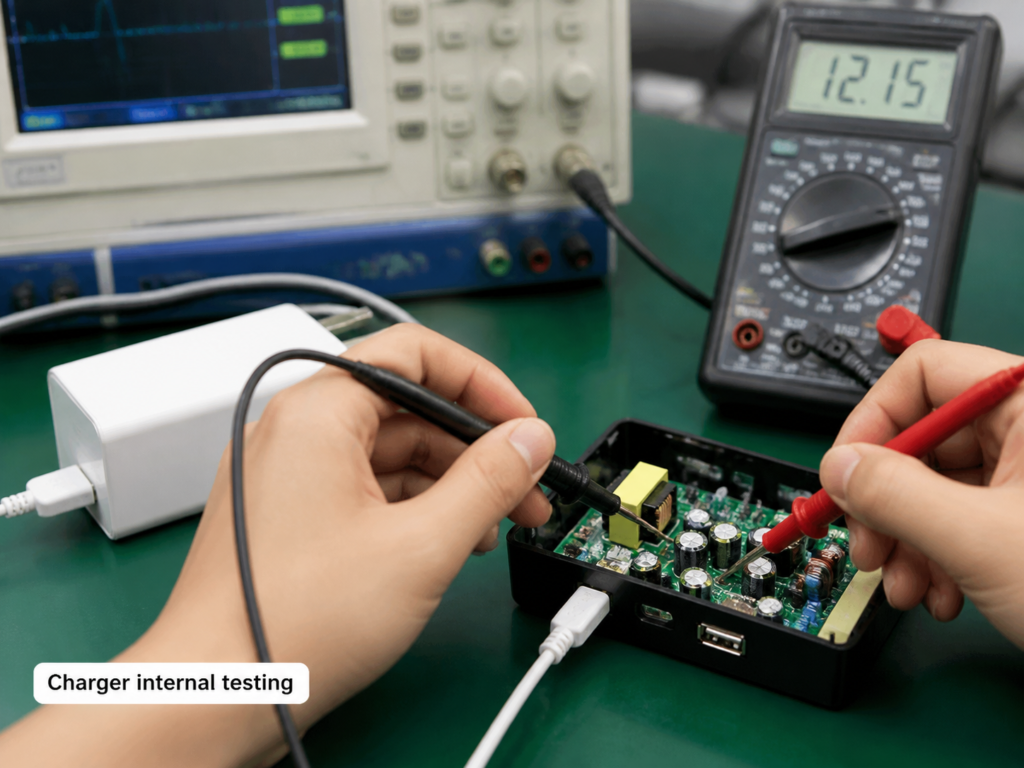
Just three questions, and you can basically have a preliminary judgment after asking:
1. **Does the product have telecommunications functions?** Note that you can’t just look at whether there are physical interfaces (such as USB ports, network ports), you have to look at the actual functions of the complete device. For example, some chargers with USB ports are only used for power supply and have no data communication function, so they don’t count.
2. **Is the communication function actually enabled?** Are the corresponding modules and antennas actually installed? If only a position is reserved on the circuit board and no module is installed, then it doesn’t count.
3. **If the product has telecommunications functions, what technical standards apply? Have the declaration and customs information such as product type, brand/model, country of origin, and HS code been verified clearly?**
Preliminary judgment conclusion: Those without communication functions and not falling within the requirements of applicable technical standards are usually not required; if the complete device has and actually enables communication functions, and is intended to be manufactured, assembled, or imported for trade or use in Indonesia, in principle, it shall be treated as requiring certification, and then verify the specific applicable standards and statutory exceptions.
Semi-proficient Version: Accurate Verification Method for Complex Products
If it is a product with relatively complex functions, or you want to import in batches and are afraid of pitfalls, follow these steps for accurate verification:
1. **Verify function details**: Don’t just look at the promotional page, check the official specification sheet, chip/module model, and investigate whether there are hidden communication modules. For example, some smart chargers have Bluetooth installed but it is not written on the surface.
2. **Verify usage scenarios**: If it is for commercial sales or batch import, evaluate according to mandatory requirements; if it is for personal use or temporary use, check the conditions of statutory exceptions.
3. **Verify product consistency**: Brand, model, country of origin, and core technical specifications must be consistent with the certificate and declaration information. Whether different hardware versions or communication modules can share a certificate shall be confirmed case by case according to the statutory conditions for multi-variant co-certification and the consistency of technical specifications, and cannot be taken for granted.
4. **Verify official basis**: Be sure to compare the latest applicable technical standards and exception requirements of DJID. Don’t use certifications from other countries such as CE and FCC as the basis, they are useless.
List of Required Materials Before Judgment
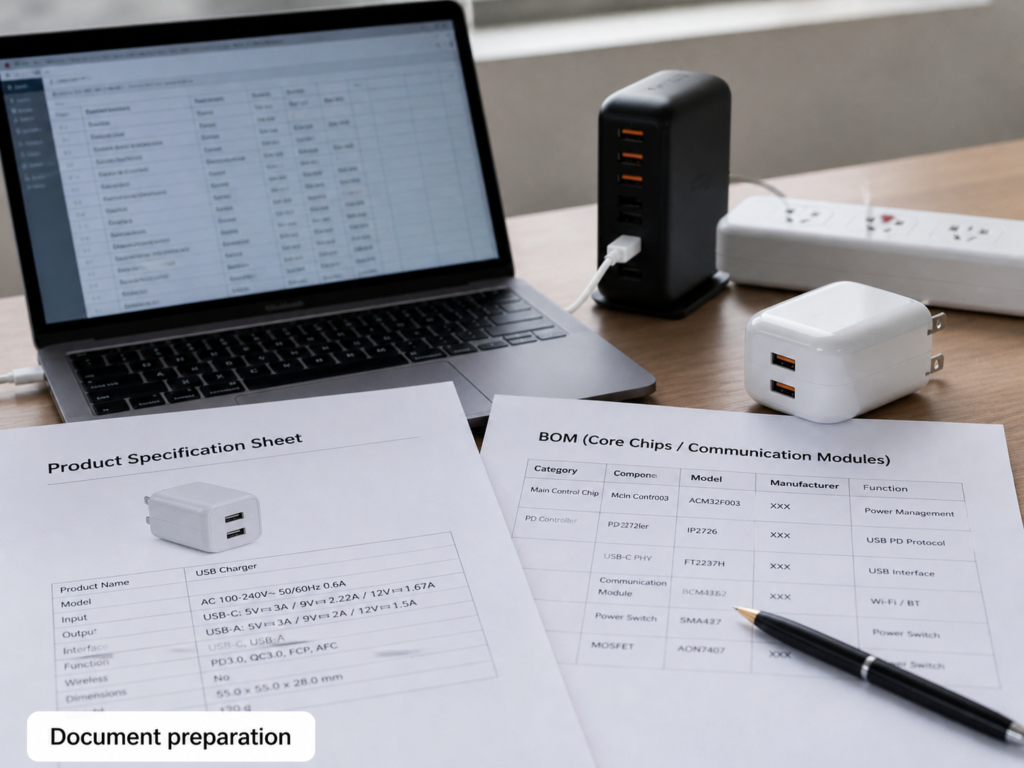
Whether you make a preliminary judgment by yourself or seek official verification, it is recommended to prepare these materials in advance:
• Product specification sheet (including complete function description and hardware parameters)
• BOM (list of core chips/communication modules)
• Wireless module specification sheet (if any)
• HS code classification basis
• Product photos, user manual
• Hardware version description
Action Diversion After Preliminary Judgment
After making the preliminary judgment, you can proceed according to this idea:
• If there is no communication function and the evidence is complete: keep the materials on file, verify other compliance requirements such as SNI and import license, and then proceed normally;
• If there is a communication function, the function is doubtful, or the HS classification is doubtful: don’t rush to mass produce, print labels, or make shipping promises, freeze these actions first to avoid losses;
• Prepare a full set of materials, submit them to Indonesian compliance agents or DJID for consultation, and make a decision after obtaining written opinions;
• If it is confirmed that certification is required: follow the complete compliance closed loop: testing → application → label filing → import → listing.
Handling Methods for Doubtful Situations
If you encounter uncertain situations, don’t gamble on your own, handle them according to the following methods:
• Products with low-power wireless functions: do not judge by yourself, first check the latest official list;
• Boundary products with complex functions: prepare a full set of materials to consult the official or compliance agent;
• Complete devices using certified wireless modules: you can consult whether to go through the simplified process, but you still need to confirm whether the complete device certification is required. It is not that the module is certified and the complete device does not need to be done.
Certification Processing and Listing Compliance Key Points
Finally, let’s briefly talk about the basic requirements for certification processing, so that everyone has a general idea and doesn’t need to get into the details at the beginning.
Application Qualification and Path
The statutory applicant can be a qualified operator, state agency, international organization, or even an individual. But if it is an overseas brand, in practice, a qualified Indonesian local entity generally submits the application through the OSS system and certification service agency.
The basic materials that need to be submitted include: product specification sheet, wireless module materials (if any), test reports that meet the standards, and Declaration of Conformity (DoC, which is a document where the enterprise itself declares that the product meets relevant standards).
Certificate Consistency Requirements
The SDPPI certificate must be consistent with information such as brand, model, country of origin, and core technical specifications, and cannot be mixed. If it is a change that affects technical specifications, such as replacing the core communication module or adding or reducing functions, it must be re-evaluated. If it is only a change in administrative information, such as a change in the applicant’s address, just apply for the change in accordance with regulations.
Less than 10mW does not automatically exempt from certification. The regulations only allow one certificate to cover multiple variants when the device’s transmit power is less than 10mW, it only has one same telecommunications function, and the relevant brand and telecommunications equipment model are the same, etc., are met at the same time. Whether different hardware versions or communication modules can be co-certified shall be confirmed case by case according to these statutory conditions and the consistency of technical specifications.
Certificate Validity Period and Usage Rules
Many people ask about the validity period. Let’s make it clear here: the certificate document itself does not have a fixed expiration date, but if it is used for manufacturing, assembling, importing for trade or use, the validity period is 3 years from the date of issuance. If you want to continue related activities after the expiration, you must re-obtain a new certificate. The authenticity of the certificate can be queried through the official DJID channel.
Post-listing Compliance Requirements
When the product is launched, compliance labels and QR codes must be affixed in accordance with regulations. After listing, it must also accept spot checks by market supervision, always keep the product consistent with the certification information, and cannot change the hardware casually.
Common Cognitive Misconceptions
We have compiled 7 of the most common pitfalls to help you identify common misconceptions:
1. **Misconception: All charging products need SDPPI**
Clarification: Products that are purely power supply, have no telecommunications functions, and do not fall within the requirements of applicable technical standards are not within the control scope. For example, ordinary wired chargers and ordinary charging cables usually do not need it.
2. **Misconception: With SNI/CE/FCC certification, you don’t need to do SDPPI**
Clarification: SDPPI is Indonesia’s independent access requirement for telecommunications equipment, which cannot replace other certifications, and it must be done if required.
3. **Misconception: All wireless chargers need SDPPI / low power automatically exempts**
Clarification: Qi’s main purpose is wireless energy transmission, but the protocol includes control communication between the transmitter and receiver. Whether basic wireless chargers without additional communication interfaces such as Bluetooth, Wi-Fi, cellular or NFC are subject to certification still needs to be verified according to the functions of the complete device and applicable technical standards; less than 10mW does not mean automatic exemption from certification. Only when the statutory conditions such as low power, same telecommunications function, same brand and model are met at the same time can one certificate cover multiple variants.
4. **Misconception: Data cables with USB interface/E-Marker chip must do SDPPI**
Clarification: E-Marker participates in USB PD cable identification and capability discovery communication, but usually does not add external communication interfaces such as Bluetooth, Wi-Fi, or cellular. Ordinary cables that only do power supply, local data transmission, and cable control communication should still be verified in combination with the attributes of the complete device and applicable standards, and conclusions cannot be simply drawn based on the presence or absence of the chip.
5. **Misconception: Selling mandatory products in cross-border small parcels doesn’t need to care about SDPPI**
Clarification: Even if mandatory products are B2C small parcels, there is a risk of being detained and delisted. Low probability of spot checks does not mean compliance.
6. **Misconception: Charging devices with network ports/USB ports must / must not need SDPPI**
Clarification: Physical interfaces cannot be directly used as a basis for judgment; it depends on the actual communication function, the purpose of the complete device, and applicable technical standards.
7. **Misconception: GPS is a radio function so it must be certified**
Clarification: GPS is usually satellite signal reception rather than active transmission; but reception itself may also be a telecommunications activity in regulations. Whether the GPS function makes a complete device subject to equipment certification shall be verified according to the specific functions of the device, applicable technical standards, and official determination, and cannot be excluded solely on the grounds of “no active transmission”.
Summary
In general, Indonesia’s SDPPI certification is not required for all charging products. The core judgment standard is **whether the complete device is telecommunications equipment or has telecommunications functions**. If the product has and actually enables communication functions such as Bluetooth, Wi-Fi, cellular, NFC or Ethernet, and is intended to be manufactured, assembled, or imported for trade or use in Indonesia, in principle, it shall be treated as requiring certification; ordinary pure wired chargers and charging cables generally do not need it. For products with blurred boundaries such as wireless chargers and accessories with NFC, they must be verified in combination with the functions of the complete device and applicable technical standards, and do not make decisions on your own.
The HS code is important information for product classification, certificate data, and customs verification, but it cannot alone determine whether certification is applicable. Whether you need to do it or not, you must keep relevant materials well, and at the same time don’t ignore other compliance requirements such as SNI and import licenses to avoid unnecessary pitfalls.