
If you have bought cross-border chargers, charging cables, or car adapters from overseas, you have most likely seen the label “compliant with IEC 60068 standard” on the packaging or product detail page. Many people regard it as a “quality certification”, thinking it means the product is drop-resistant, waterproof, and of good quality, but the actual situation may be completely different from what you think. This article will start from the most basic concepts, guiding you from beginner level to being able to independently judge the credibility of promotional claims and avoid common marketing traps.
First, Understand: What Exactly Is IEC 60068?
To understand this standard, we must start with its core positioning — it is not a certification that issues a “quality medal” to products, but a family of environmental test method standards issued by the International Electrotechnical Commission (IEC, an international organization that develops global electrical and electronic standards). You can think of it as a globally recognized “operation manual for product durability testing”: it simulates various harsh environments under controlled laboratory conditions to verify the functional and structural stability of charging products, and is a general reference method for environmental reliability testing of charging products worldwide.
What It Covers and What It Does Not
Many people’s misunderstandings about this standard come from unclear understanding of its scope. Its core coverage is whether charging products can function normally and whether their structure will be damaged under the stress caused by various harsh environments (professionally called environmental stress). But don’t confuse the following types of content:
- IEC 60068 generally does not uniformly regulate product performance indicators such as charging power and conversion efficiency and their qualification limits; however, relevant tests may require functional or electrical characteristic measurements before, during, and after the test, and specific test items and criteria shall be specified in relevant specifications;
- IEC 60068 is not a safety standard for built-in batteries. Portable sealed lithium-ion cells and batteries are generally applicable to IEC 62133-2; safety requirements for other battery types and batteries in complete machines shall be determined according to the battery chemical system, application, and applicable product standards;
- It does not cover structural life: for example, whether the interface will break after 10,000 insertions and removals, or how many times the cable will break after bending, such long-term life tests are not within the scope;
- IEC 60068 can be cited by fields such as medical and military as an environmental test method, but it itself does not constitute complete dedicated product requirements for these industries; industry-specific severity, criteria, and additional requirements shall be determined in accordance with corresponding regulations, product standards, or procurement specifications;
- The most important point: it does not specify a unified pass threshold — that is, what score counts as a pass is agreed by the manufacturer, the purchaser, the corresponding product standard, or the contract itself.
Differences from Easily Confused Standards
Many people confuse it with other common standards, but in fact their positioning is completely different, and there is no inclusion relationship between them:
- And IP protection (IEC 60529): The IP code of IEC 60529 specifies the protection level of the enclosure against access to hazardous parts, ingress of solid foreign objects, and ingress of water, among which the dustproof and waterproof levels are often concerned by consumers; while IEC 60068 tests reliability under environmental stress, for example, the salt spray test measures corrosion, not whether water enters. Even if a product passes the salt spray test, it does not mean it is waterproof.
- And safety standards (such as IEC 62368): Safety standards manage safety risks such as electric shock and fire, and IEC 60068 environmental tests do not replace safety assessments such as IEC 62368-1; whether the function is allowed to be affected during or after the high temperature test must be clarified by the qualification criteria of the applicable product specification, and any abnormality that may cause safety risks shall still be evaluated in accordance with applicable safety requirements.
- And EMC standards (IEC 61000 series): EMC manages electromagnetic interference and immunity, such as whether a charger will interfere with WiFi, which this standard does not involve at all; it only focuses on the impact of the physical environment.
- And normal temperature performance testing: Normal temperature performance tests product performance in a comfortable environment of about 25°C, while IEC 60068 tests tolerance in harsh environments. The two are complementary and cannot replace each other.
Why Should Charging Products Pay Attention to This Standard?
Since it is not a mandatory certification and does not issue quality medals, why should we pay attention to it? There are four core reasons:
First, it provides a unified basis for environmental performance comparison. Previously, every manufacturer said their products were “low temperature resistant” and “drop resistant”, but some were tested at -10°C, some at -40°C, some dropped from 0.5 meters, some from 1.2 meters, so there was no way to compare horizontally. Unified test methods provide a common basis for comparison; results can be compared horizontally only when the sub-standard version, test procedure, severity, sample state, installation method, measurement method, and qualification criteria are also the same or comparable.
Second, it is a general reference basis for market access, customer acceptance, and enterprise specifications. Note: It itself is a voluntary method standard, and it only needs to be implemented when it is cited by regulations of the target market, product standards, procurement contracts, or internal enterprise specifications. The CE mark is not a unified certification test, and FCC compliance requirements vary by equipment category and rules. The CE mark or FCC rules themselves do not constitute IEC 60068 test requirements uniformly applicable to all charging products; whether environmental tests are required shall be determined by checking applicable regulations and the product standards, contracts, or customer specifications they cite.
Third, it is a judgment basis for matching usage scenarios. For example, if you want to buy a car charger, you have to see if it can withstand the high temperature inside the car in summer; if you want to take it to a plateau trip, you have to look at the results of the low air pressure test; if you live in a coastal area, the salt spray test is very important. If you use an ordinary indoor charger in a harsh environment, it is easy to be damaged prematurely.
Finally, it is complementary to evaluation systems such as safety, EMC, IP, and normal temperature performance, which together constitute a complete quality reference for charging products.
Standard Structure and Core Concepts
IEC 60068 is not a single standard, but an entire standard family, which is mainly divided into three parts:
- Part 1 (General): It covers general rules, terminology, and basic processes, and is the foundation of the entire series, equivalent to the general manual. It is generally used by testing institutions and manufacturers, and ordinary users do not need to study it in detail;
- Part 2 (Test Methods): It is the core of the entire standard family. Each sub-item corresponds to a specific environmental stress test, such as low temperature and drop, which is also the part most often cited in manufacturer promotions;
- Part 3 (Supporting Guidelines): It covers how to select the test severity and how to operate more standardizedly, and is a document assisting test execution.
Core Concept: Severity Grade
Many people think that the higher the test level, the better the product, but in fact this is one of the biggest misunderstandings. Severity grade is a set of parameters that measure the severity of test conditions. For example, the temperature and duration of the low temperature test, and the height and number of drops of the drop test are all part of the severity grade. The higher the grade, the stricter the test, and the higher the test cost of the product, but if your usage scenario does not need it at all, it is a pure waste of money. For example, a charger for daily household use in tropical areas does not need to buy a model that can withstand -40°C low temperature at all.
Naming Rules for Test Items
All specific test item numbers are in the format “IEC 60068-2-X”, where X is a number corresponding to different tests, for example, -2-1 is low temperature, -2-2 is dry heat, -2-32 is free fall. Here’s a key point: saying only “compliant with IEC 60068” in promotions is basically equivalent to saying nothing, because the entire series has dozens or hundreds of test items, and no one knows which one was tested. Only when the specific sub-item number is clearly marked does the promotion have reference value.
Method Standard ≠ Product Specification
Finally, remember a core principle: IEC 60068 is a method standard, not a product specification. That is to say, it mainly tells you “how to simulate environmental stress”, and many sub-standards provide optional severity, duration, transition or recovery conditions. Relevant product specifications or test plans shall select conditions from the options specified in the applicable methods, and specify sample state, measurement items, and product qualification criteria.
Common Core Test Items for Charging Products
The following are the most commonly used test items for charging products, corresponding to scenarios we encounter in daily life. Let’s explain in advance: the parameters mentioned are common examples of civilian charging products, not a unified qualification threshold, and specific parameters shall be subject to the corresponding product specifications or test plans.
Climatic Environment Category (Corresponding to Daily Temperature and Humidity Scenarios)
This type of test simulates the impact of temperature and humidity changes, and is the most commonly performed test for charging products.
- Low Temperature Test (IEC 60068-2-1): Simulates scenarios such as outdoor use in winter, transportation and storage in cold regions, and low temperature in vehicles in northern areas. Common parameters are -10°C ~ -40°C, lasting 2h ~ 24h, divided into two states: storage (powered off placement) and operation (powered on charging). The key inspection points are whether the charger can start normally, whether the outer sheath of the charging cable will crack due to freezing, and whether the interface contact is normal.
- Dry Heat (High Temperature) Test (IEC 60068-2-2): Simulates scenarios such as exposure to sunlight inside a car in summer, high temperature outdoors, and use near heat sources. Common parameters are 40°C ~ 70°C, lasting 2h ~ 48h, divided into three states: no-load, loaded, and storage. The key inspection points are whether the charger will fail or reduce power under load, whether the insulation layer of the charging cable will soften, and whether the interface will deform.
- Temperature Change Test (IEC 60068-2-14): Simulates scenarios such as switching between indoor and outdoor in winter and summer, and rapid alternation of cold and hot environments. The commonly mentioned thermal shock is only one of its rapid transition procedures. This test has procedures with multiple transition speeds, and specific parameters need to be clarified in the test plan. Common ones are -20°C ~ 60°C cycling 5~10 times, with air transition time of 1~3 minutes. The key inspection points are whether solder joints will fall off, whether the enclosure will crack, and whether the interface will loosen.
- Damp Heat Test: Divided into constant damp heat (IEC 60068-2-78) and cyclic damp heat (IEC 60068-2-30), simulating scenarios such as plum rain season, high humidity areas, and condensation due to day-night temperature difference. Common parameters are constant damp heat at 40°C/93% air humidity (professionally called relative humidity) lasting 48h ~ 96h, while cyclic damp heat is 5~10 cycles of temperature and humidity. The key inspection points are whether the interior will rust, whether insulation will fail, and whether interface contacts will oxidize.
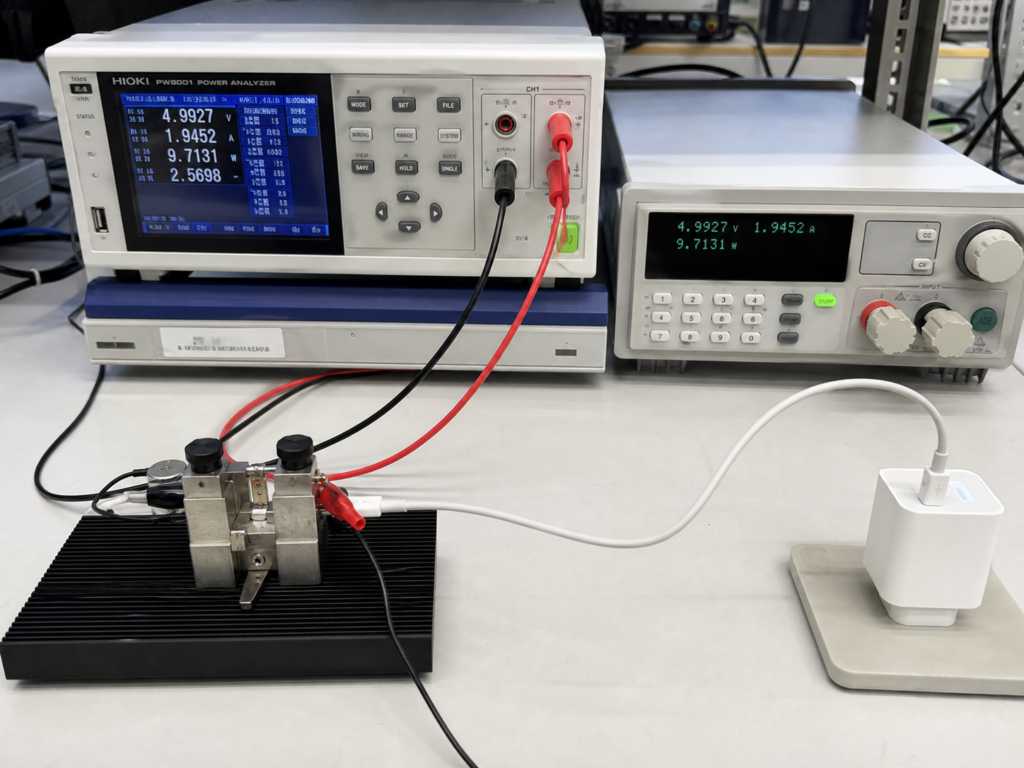
Mechanical Environment Category (Corresponding to Drop/Shake/Collision Scenarios)
This type of test simulates the impact of mechanical external forces. Note: It does not test structural life, but only tests tolerance under specified conditions.
- Free Fall Test (IEC 60068-2-32): Simulates scenarios such as falling from a table, slipping from the hand, and falling due to being pulled by the cable. When citing this test, the test procedure used shall be clearly specified, such as single free fall or repeated free fall, as well as sample state, drop surface, drop height and number of drops. Specific values shall adopt the severity specified in the version of the standard and relevant product specifications. The key inspection points are whether the charger enclosure/pins will break, whether the charging cable connector will disconnect, and whether the interface pad will fall off.
- Vibration Test: Divided into sinusoidal vibration (IEC 60068-2-6) and random vibration (IEC 60068-2-64), simulating scenarios such as express transportation, vehicle shaking, and long-term mobile use. Test parameters shall be determined according to the actual transportation or usage scenario. Common sinusoidal vibration parameters are 10~500Hz, 1~5g acceleration, tested for 1~2h on each of the XYZ three axes. The key inspection points are whether internal parts will loosen, whether charging will be intermittent, and whether the interface will disconnect momentarily.
- Shock Test: IEC 60068-2-27 applies to shock tests with specified pulse waveforms; IEC 60068-2-31 applies to rough handling shocks, including different procedures such as drop and overturn. When citing, the sub-standard, procedure and severity used shall be stated separately, and the same shock pulse parameters cannot be shared between the two. Note: Situations such as clamping, squeezing, and heavy object smashing are not within the scope of standard shock testing. The key inspection points are whether the structure will break, whether electrical functions will fail, and whether the pins will deform.
Corrosion and Special Environment Category (Corresponding to Special Usage Scenarios)
This type of test is for the needs of specific scenarios, and ordinary household products generally do not undergo all of them.
- Salt Spray Test: Divided into neutral salt spray (IEC 60068-2-11) and cyclic salt spray (IEC 60068-2-52), simulating corrosion in high salt spray environments in coastal areas. Note: This test cannot simulate sweat corrosion, and special test specifications are required for sweat resistance. Common parameters are 5% sodium chloride salt spray, lasting 24h ~ 72h (neutral salt spray). The key inspection points are whether metal pins/USB contacts will rust and whether contact is normal.
- Sand and Dust Test (IEC 60068-2-68): Includes two different procedures: dust and sand, simulating scenarios such as dusty areas, outdoor sandy environments, and long-term exposed storage. Note: The dust ingress protection level shall be evaluated according to the IP code of IEC 60529, this test measures the impact of sand and dust on function, not the dustproof level. Common parameters are exposure with talcum powder or quartz sand, lasting 8h ~ 24h. The key inspection points are whether the interface will be blocked, whether insertion and removal are smooth, and whether poor charging contact will occur.
- Low Air Pressure (High Altitude) Test (IEC 60068-2-13): Simulates low pressure environments for plateau use and air transportation. Common parameters are air pressure equivalent to an altitude of 3000m ~ 5000m. The key inspection points are whether insulation breakdown, abnormal heat dissipation, and arcing risks will occur.
| Test Type | Standard Sub-item Number | Simulated Daily Scenario | Core Inspection Points |
|---|---|---|---|
| Low Temperature Test | IEC 60068-2-1 | Outdoor use in winter, transportation in cold regions, low temperature in vehicles in northern areas | Charger startup capability, charging cable outer sheath cracking, interface contact |
| Dry Heat (High Temperature) Test | IEC 60068-2-2 | Exposure to sunlight inside a car in summer, high temperature outdoors, use near heat sources | Power reduction under load, insulation layer softening, interface deformation |
| Temperature Change Test | IEC 60068-2-14 | Switching between indoor and outdoor in winter and summer, rapid alternation of cold and hot environments | Solder joint falling off, enclosure cracking, interface loosening |
| Constant/Cyclic Damp Heat Test | IEC 60068-2-78 / -2-30 | Plum rain season, high humidity areas, day-night condensation | Internal rust, insulation failure, contact oxidation |
| Free Fall Test | IEC 60068-2-32 | Falling from a table, slipping from the hand, falling due to pulling | Enclosure/pin breakage, connector disconnection, pad falling off |
| Sinusoidal/Random Vibration Test | IEC 60068-2-6 / -2-64 | Express transportation, vehicle shaking, long-term mobile use | Part loosening, intermittent charging, momentary interface disconnection |
| Shock Test | IEC 60068-2-27 / -2-31 | Transportation impact, accidental bumping | Structural breakage, functional failure, pin deformation |
| Salt Spray Test | IEC 60068-2-11 / -2-52 | High salt spray corrosion in coastal areas | Metal pin/contact rust, abnormal contact |
| Sand and Dust Test | IEC 60068-2-68 | Dusty areas, outdoor sandy environments | Interface blockage, unsmooth insertion and removal, poor contact |
| Low Air Pressure (High Altitude) Test | IEC 60068-2-13 | Plateau use, air transportation | Insulation breakdown, abnormal heat dissipation, arcing risk |
General Execution Logic of Tests: Basis for Judging Result Credibility
Knowing the test items is not enough. For the same test, different execution methods lead to vastly different credibility of results. To judge whether a test result has reference value, we need to look at the following aspects.
Selection Principle of Test Grades
The core basis is always the actual usage scenario of the product, not the higher the better. The general rule is: ordinary indoor wall chargers have the lowest test grade, car/travel adapters are medium, and outdoor dedicated products have the highest, but the specific situation still depends on the product positioning and corresponding specifications.
Core Process of Standard Tests
Most environmental tests will specify or require relevant specifications to specify applicable links such as pretreatment, initial measurement, environmental stress application, recovery, and final measurement; whether pretreatment or recovery is required, as well as the conditions and duration, shall be implemented in accordance with the cited IEC 60068 sub-standard and relevant specifications.
Common execution ideas include:
- Before the test: According to applicable standards and specifications, perform pretreatment on the sample or test its initial performance and state as a baseline for subsequent comparison;
- During the test: Apply environmental stress according to the set conditions. Some tests require power-on and loading (for example, testing charging capability at high temperature), depending on the test purpose;
- After the test: If the applicable standard or specification requires recovery, the performance and state shall be tested after recovery under specified conditions, and compared with the initial state to judge whether it is qualified.
Agreement Rules for Qualification Criteria
Emphasize again: IEC 60068 has no unified pass threshold, nor does it set a unified classification of qualification criteria. Relevant specifications shall, in accordance with the test purpose, pre-specify the inspection items and limits related to function, performance, appearance, mechanical integrity, and necessary safety during and after the test; whether the function is allowed to be affected during the test must also be clearly agreed.
As for the range of derating, whether appearance defects count as unqualified, and what the contact resistance threshold is, these details must be agreed in advance, otherwise there will be no basis for judgment after the test.
Representativeness of Samples and Results
Test samples must have mass production representativeness, and brand-new mass-produced finished products are preferred. R&D prototypes or hand-made samples can be used for design verification, but their results shall be limited to evidence of the corresponding sample and design stage; if it is necessary to prove the compliance of mass-produced products, samples with mass production representativeness shall be used, and evaluation shall be combined with production consistency and sampling requirements.
There are no mandatory requirements for sample quantity and sampling rules in the standard, which depend on specific specifications or customer requirements. In addition, test results of products of the same series with different power and different materials cannot be directly shared. For example, if a 20W charger of the same brand passes the test, it does not mean that the 65W one can also pass, because the internal components and enclosure material may be different.
Information to Pay Attention to in Test Plans and Reports
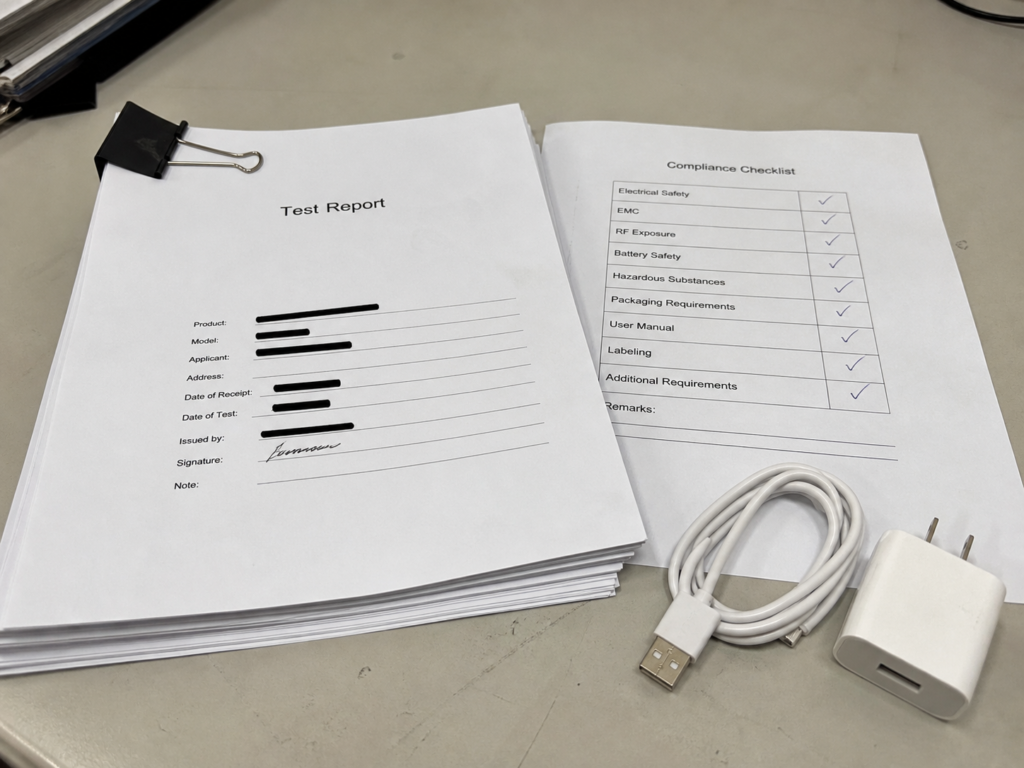
A reliable test plan should at least include the following content: standard sub-item number and version, test procedure, severity parameters; sample information, installation method, cable layout; power supply and load conditions, monitoring points and monitoring frequency;The core basis is always the actual usage scenario of the product, not the higher the better recovery conditions, pre- and post-test inspection items, qualification criteria.
The formal report shall at least meet the report clauses of the cited IEC 60068 sub-standard, and meet the record requirements of product specifications, contracts, and applicable accreditation or quality systems. It is recommended to list the test sample, procedure, severity, deviation, measurement result and conclusion in the report or traceable annex; the submission method of original records shall be agreed in advance. Reports that only have a stamp and no details have basically no reference value.
Advanced: How to Check Promotions and Reports? How to Choose According to Scenarios?
Having mastered the above knowledge, you have already surpassed most ordinary users. The following advanced content can help you independently judge the credibility of promotional claims and test reports, and also help you choose suitable products according to your own usage scenarios.
Credibility Checklist for Promotions/Test Reports
When you get any relevant promotion or report, check it according to these six points, and you won’t be fooled:
- Must check specific test items: There must be a clear IEC 60068-2-X sub-item number; directly ignore those that only mention “compliant with IEC 60068”;
- Must check the severity grade of each item: There must be specific parameters, such as temperature, height, time, number of cycles; those without specific numbers are vague promotions;
- Must check the state during the test: Whether it is powered on and loaded, no-load, or powered off for storage, it must match the scenario you care about — for example, if you care about whether it can charge at high temperature, but the test is powered off storage, then it is useless to you;
- Must check the type of qualification criteria: It depends on the inspection items and limits such as function, performance, appearance, and mechanical integrity during and after the test, which must meet expectations — for example, if you require normal charging during the test, the report must clearly state this requirement;
- Must check sample information: Whether it is a mass-produced finished product, how many samples there are, and whether they are from the same batch. Tests of R&D prototypes can reflect the situation of the design stage, but cannot be directly equated with the compliance of mass-produced products;
- Must check report completeness: There must be traceable information on test samples, procedures, severity, measurement results and deviations; reports with only a stamp and no details have very low credibility.
Key Inspection Directions for Different Charging Products
Different types of products have different core risks, and the key points of inspection are also different:
- Chargers/power adapters: Prioritize checking whether the high temperature test is carried out with rated load — many manufacturers test high temperature with power off for storage, and the test results are completely different from the actual usage scenario. Of course, if it is a high temperature test for storage state, power off is a normal setting, and the key depends on the test purpose;
- Charging cables: Prioritize checking whether conduction and insulation performance are tested in temperature change/high and low temperature tests — tests that only measure appearance have very low reference value. If the inner wire core is broken or the insulation layer is damaged, it may be completely invisible from the appearance;
- Plugs/USB-C interfaces: Prioritize checking the insertion/extraction force and contact resistance after temperature cycling/salt spray test — good appearance does not mean that the interior is not loose. Increased contact resistance will not only slow down charging, but also may cause overheating.
Scenario-Risk-Verification Item Matching Reference
Different usage scenarios have different core risks, and the test items that need attention are also different. You can check according to your own usage scenario:
| Usage Scenario | Core Risk | Recommended Core Verification Items |
|---|---|---|
| Ordinary household use | Temperature and humidity fluctuations beyond normal temperature, handling and dropping | High temperature/low temperature, constant damp heat, free fall |
| Vehicle use | High temperature exposure, low temperature startup, driving vibration | High temperature with load, low temperature operation, vibration |
| Outdoor use in northern areas | Low temperature freezing damage, cold and heat alternation | Low temperature operation, temperature change cycling |
| Coastal/high humidity areas | High humidity rust, salt spray corrosion | Cyclic damp heat, salt spray test |
| Travel and portable use | Dropping and bumping, transportation vibration | Free fall, vibration, shock |
| High altitude/aviation | Low air pressure insulation breakdown, poor heat dissipation | Low air pressure test |
Note: The specific parameters of all verification items are subject to product specifications or contract requirements, and this table only provides direction reference.
Common Misconceptions and Pitfall Avoidance Guide
Finally, we have sorted out the five most common promotional traps to help you avoid pitfalls:
- Misconception: “Compliant with IEC 60068” means good quality
Truth: It is a method standard, not a quality grade standard. Even if a low-severity test is completed, it can only indicate that the sample has passed the test on the premise of clear specific sub-item, version, procedure, severity, sample state and criteria; it is not appropriate to generally claim that the product is “compliant with IEC 60068”. For example, low temperature test at 0°C and at -40°C are both tested according to IEC 60068-2-1, but the tolerance is far different.
Pitfall avoidance: Check specific items, grades and criteria according to the checklist, and do not believe vague promotions. - Misconception: Passing IEC 60068 means waterproof and dustproof
Truth: Its positioning is completely different from IP protection, and it does not assess the dustproof and waterproof ingress capability of the enclosure. For example, the sand and dust test measures whether the function will be affected after dust enters, not whether dust can enter.
Pitfall avoidance: For products that need waterproof and dustproof, separately check the IP rating (IEC 60529). - Misconception: The higher the test grade, the better
Truth: The higher the grade, the higher the test cost and the more expensive the product, but most daily scenarios do not need high-grade tests at all. For example, ordinary household chargers do not need to withstand -40°C low temperature or 1.5-meter drop at all.
Pitfall avoidance: Choose according to the actual usage scenario, and do not pay for useless high grades. - Misconception: IEC 60068 is a global mandatory standard
Truth: It is a voluntary method standard, and it only needs to be implemented when it is cited by regulations, product standards, contracts or enterprise specifications. The CE mark is not a unified certification test, and FCC compliance requirements vary by equipment category and rules; the CE mark or FCC rules themselves do not constitute IEC 60068 test requirements uniformly applicable to all charging products.
Pitfall avoidance: Judge in combination with the target market and application scenario, and do not believe exaggerated promotions. - Misconception: Passing the test means the product will never break for life
Truth: It only represents the tolerance under specified test conditions, and use beyond the scope may still cause damage. For example, a product originally for indoor use will definitely break if it is soaked in seawater or dropped every day.
Pitfall avoidance: Take test results as a reference, not as a promise of unlimited use.
Summary
At this point, you should have a complete understanding of IEC 60068 from beginner to advanced: you can distinguish its different positioning from IP protection, safety, EMC, and normal temperature performance tests, you can name the daily scenarios and standard sub-item numbers corresponding to more than ten common test items, you can understand relevant promotions and test reports and judge their reference value, you can match core verification items according to scenarios such as household, vehicle, outdoor, coastal, and high altitude, and you can also identify common promotional traps and not be fooled by vague “compliant with standards” rhetoric.
For ordinary users, you don’t have to memorize all standard numbers by rote. As long as you remember the principle of “check sub-items, check parameters, check state, check criteria”, you can easily judge whether the environmental reliability of a product meets your own needs.