
First Things First for Beginners: What ETL Certification Is, What It Covers, and Who It Concerns
People who are new to product compliance for the North American market will most likely be confused when they hear “ETL” — isn’t that the abbreviation for “Extract/Transform/Load” in the data industry? How is it related to product certification?
Don’t worry, this ETL is not that ETL. The ETL we are talking about today is a third-party product safety certification mark issued by Intertek. Its core is to confirm through a series of tests that products will not cause electric shock, fire, or injury, and it is one of the common compliance paths in the North American market.
ETL belongs to the officially recognized NRTL system in the United States — simply put, NRTL is a list of laboratories with qualifications for product safety testing and certification published by the Occupational Safety and Health Administration (OSHA) of the United States. Only safety certifications issued by institutions on this list are recognized by U.S. regulatory authorities, mainstream channels, and most buyers. UL, which many people are familiar with, also belongs to the same list. The two have the same legal compliance effectiveness within the NRTL system, but market acceptance is affected by the designated preferences of channels and buyers. In a few scenarios, there may be brand-specified requirements, so there is no need to blindly obsess over which one is “more superior”.
It should be particularly noted that ETL is completely different from factory self-inspection: factory self-inspection is the factory’s own inspection of products, with limited credibility; while ETL is a complete certification system consisting of third-party independent testing + subsequent continuous factory supervision, with much higher recognition.
Many people hear different terms such as ETL Listed and cETLus when consulting, which are easy to confuse. There are 4 types of marks under ETL, with very different uses and boundaries, so don’t apply for the wrong one:
| Mark Type | Core Purpose | Is It a Safety Certification? | Applicable Scenarios |
|---|---|---|---|
| ETL Listed | Prove that the product meets safety standards | Yes | Mass-produced ordinary consumer goods, industrial products and other conventional electrified/products with safety risks |
| ETL Verified | Verify a certain performance or promotional data | No (optional item outside safety certification) | For example, verification of performance claims such as “30% energy saving” and “99% sterilization rate” |
| ETL Field Evaluated | On-site evaluation of product safety | Yes (safety certification for special scenarios) | Installed equipment, small-batch customized equipment, non-standardized products that cannot be sampled and tested according to conventional procedures |
| cETLus | Meet both U.S. and Canadian safety standards at the same time | Yes (dual-market mark, not an independent certification type) | For products sold to both the United States and Canada, you can directly select dual standards when applying |
Two easily confused boundaries should be particularly clarified here: cETLus is not an independent certification type, but a dual-market mark that can be used after the same product passes both U.S. UL standard and Canadian CSA standard tests, and there is no need to apply for a “cETLus certification” separately; ETL Field Evaluated belongs to on-site evaluation certification, which is only valid for the single unit/specific batch of equipment at the time of evaluation, does not cover subsequent mass-produced products, and should not be mixed with ETL Listed for mass production.
There are several other common conceptual confusions that must be clarified in advance:
Ordinary test reports can only prove the results of a single submitted sample, with no subsequent factory supervision, and basically cannot pass the compliance review of channels, so their recognition is completely not on the same level as that of ETL.
FCC only covers electromagnetic compatibility and wireless functions (for example, whether the product will interfere with other devices, or whether it will leak wireless signals), and does not cover electrical safety at all. Even with FCC certification, a product that causes electric shock is still non-compliant, and the two cannot replace each other.
CE is a compliance requirement of the European Union, and it is a completely independent set of rules from the U.S. NRTL system, so it cannot replace ETL or UL.
Quick Judgment: Does Your Product Need ETL Testing?
You don’t have to guess blindly. You can make a preliminary judgment against three core dimensions. This is a commonly used evaluation logic in the industry, not the only judgment rule:
First, does the product have safety risks? For example, electrified products, gas-powered products, and products with mechanical hazards (sharp parts, pinch points, etc.) all fall into the category of having safety risks.
Second, is the product sold to the United States or Canada, or does it need to meet the compliance requirements of the North American market?
Third, do sales channels, buyers, or local regulators explicitly require NRTL certification?
If the first two conditions are met at the same time, even if the channel or buyer has no clear requirements for the time being, it is recommended to understand the relevant compliance requirements in advance — the regulation of product safety in the North American market is generally strict. Most offline stores and mainstream cross-border platforms will require NRTL certification during the settlement or listing process. Temporary processing may delay the sales rhythm, and the specific requirements shall still be subject to the official rules of the target channel.
From the perspective of product types, the vast majority of electrified household, commercial, and industrial products, as well as some products with gas or mechanical risks, require ETL. Purely manual daily necessities without any safety risks (such as plastic combs, ceramic cups) usually do not. There is also a category of small equipment with extremely low voltage and no dangerous energy. Many people think that this category must be exempt, but in fact it is not necessarily: judging whether certification is required cannot only depend on the voltage level, but also needs to be comprehensively evaluated in combination with dimensions such as whether there is energy storage, heat generation, charging function, mechanical action, and whether users may touch live parts. For example, a night light with a lithium battery, although its output voltage is low, the battery stores energy, and overheating may cause fire and explosion, so it still requires safety certification; another example is children’s toys with charging function, even if the voltage is low, if a child can touch the live parts after biting it open, certification is also required. Simply put, low voltage does not equal automatic exemption.
Judging from the requirements of most common scenarios, there are differences in the strictness of different scenarios. Understanding in advance can help you prepare better: the compliance review of offline stores is usually stricter than that of ordinary cross-border e-commerce. Many offline channels not only require full safety tests, but also require additional EMC (electromagnetic compatibility) testing; industrial products usually have more test items and stricter judgment standards than household products due to more complex use environments and higher risks; for products accessible to children, the requirements for electric shock protection and mechanical protection will be stricter than those for ordinary adult products. For example, child safety shutters on power strips are mandatory requirements.
Finally, it should be reminded that requirements cannot be judged solely by product name. Even for products also called “desk lamps”, the applicable standards and test items may be different for those plugged into mains power and those rechargeable, those for children’s rooms and those for offices, and those with dimming function and those without. If you are not sure, just find a laboratory with NRTL qualification to do a free preliminary evaluation. Most formal institutions will provide free preliminary assessment.
Pre-test Preparation: Prerequisites for Starting ETL Testing
After confirming that you need to do ETL testing, don’t rush to send samples. Doing the preliminary preparation well first can save a lot of time and money.
The first step is to choose a reliable testing institution. There are two core judgment criteria: first, it must be an officially recognized NRTL institution in the United States; second, it must have the corresponding standard testing authorization for your type of product. If you want certification with the ETL mark, the final issuing agency is Intertek. You can go directly to Intertek, or you can find its officially authorized cooperative laboratory to do the testing and application; if you only need safety certification under the NRTL system, the certificates of other NRTL institutions such as UL and TÜV have the same effectiveness, only the marks are different, and you can choose according to the buyer’s requirements. Be particularly vigilant about institutions that claim “guaranteed pass” or “ultra-low price and quick certification”. There is a high probability of qualification fraud or hidden charges. Don’t be penny-wise and pound-foolish.
After choosing the institution, you need to determine the applicable test standards. The selection of standards mainly refers to four factors: product type, power supply method, use scenario, and target market. It should be noted that the selection of standards needs to be combined with the specific functions and use scenarios of the product, and cannot be generally judged only by product category or power supply method. For example, even for plug-in lamps, there are differences in the applicable standards for desk lamps and recessed ceiling lamps. The U.S. market uses UL series safety standards, and Canada uses CSA series standards. If you do both U.S. and Canadian markets at the same time, you need to cover both series, which is the cETLus mark mentioned earlier. It should be noted that these standards are regularly updated in version, and the current valid version at the time of testing shall prevail. Even if you have done similar products before, you need to confirm whether the standards have changed this time.
Next is to prepare technical documents. Sorted by importance, preparing them in advance can greatly speed up the progress:
The most basic is the product specification, which should clearly state the model, parameters, functions, and use scenarios. This is the basis for the laboratory to judge the applicable standards.
Then there are the core documents: circuit schematic diagram, list of key components, and safety certification certificates of key components — for example, key parts such as power cords, switches, and transformers, if they already have UL, ETL or CSA certification, and the certification coverage, rated parameters, and applicable standards completely match the use, function, and working conditions of the parts in the final product, then repeated testing is not needed, which can save a lot of money and time; if the certification scope does not match, even if the part itself has certification, additional testing of corresponding performance may still be required.
Then there is material information: material models and grades of shells and insulating parts (such as the flame retardant grade of plastics). The laboratory needs these to judge whether the materials can meet the heat resistance and flame retardant requirements.
Finally, there are marking documents: design drafts of product nameplates and labels, as well as user manuals, which must contain necessary safety warnings, and the parameters must be consistent with the actual product.
After the documents are prepared, it is time to prepare samples. Conventional small electronic products generally require 2-5 units, and the quantity of complex products (such as large industrial equipment) shall be subject to the requirements of the laboratory. The most important point is: the samples submitted for testing must be mass-produced finalized versions, and the key parts and structures must be consistent with the final mass-produced products. They cannot be hand-made prototype machines, otherwise the testing will be in vain. If there are multiple models in the same series, it is not necessary to test each one fully. As long as the core structure and key safety parts are consistent, select the “most unfavorable model” with the highest risk for full testing, and only test the differences for other models — for example, for chargers of the same series, a 100W one generates more heat than a 20W one, so select the 100W one for full testing, and only check the differences for the 20W one, which can save a lot of costs.
Full Process Breakdown: 7 Steps from Application to Certification and Key Checkpoints for Each Step
After the preparation work is done, you enter the formal application process. There are 7 steps from submitting the application to getting the certificate. Each step has key precautions, and knowing them in advance can save you a lot of detours.
The first step is to submit the application and preliminary evaluation. You submit product information and testing requirements (such as target market, whether to add EMC testing) to the institution, and they will evaluate the applicable standards, quotation, cycle, and required sample quantity of the product. The key checkpoint for this step is: be sure to confirm in advance the items included in the quotation, test standards, cycle, and whether there are hidden fees — for example, whether it includes the first factory inspection fee, and whether it includes basic retesting fees, to avoid sudden additional items and costs later.
The second step is preliminary review of documents and structure. After submitting the full set of technical documents, the laboratory will first conduct a preliminary review: whether key parts have compliant certification, whether there are obvious problems with markings and manuals, and whether there are obvious safety defects in the structure — for example, if the gap in the shell is so large that a finger can directly reach in and touch live parts, such obvious problems will be raised in the preliminary review, and you don’t have to wait until the samples are sent to find out, which can save a lot of time. The key checkpoint for this step is: confirm in advance that all key parts have compliant certification. If key parts are not certified, you either have to replace the parts or additionally test the safety performance of the parts, which will delay the progress.
The third step is sample submission and sample verification. Send the samples according to the requirements of the laboratory, and attach the necessary documents at the same time. After receiving the samples, the laboratory will first check whether the model and parameters of the samples are consistent with the documents, whether the quantity is correct, and whether the appearance is damaged. The key checkpoint for this step is: check it yourself before sending the samples. Don’t send the wrong model, or the sample parameters are different from those written in the documents, otherwise the laboratory will directly return the samples, delaying time.
The fourth step is formal test execution. This is the core of the entire process, and the laboratory will test item by item according to applicable standards. Many people think that testing only tests the safety during normal use, but this is not the case. The focus of testing is instead to simulate the safety of various misuse and abnormal scenarios — for example, blocking the air inlet of a hair dryer to see if it will catch fire, dropping the product from a height of 1 meter to see if live parts will be exposed, and even simulating the damage of a certain part to see if it will cause a safety accident. If the product has special functions (such as waterproof, wireless charging), corresponding items will also be tested additionally. The key checkpoint for this step is: follow up the test progress in time. If you receive a non-conformity notice, don’t rush to modify it first. First ask clearly what the root cause of the non-conformity is — for example, if the temperature rise exceeds the standard, is it because the heat dissipation structure is poor or the part power is insufficient? Don’t blindly rectify, and modifying for a long time without hitting the point will waste time instead.
The fifth step is non-conformity rectification and retesting. If there are non-conforming items, you need to adjust the design, replace parts or modify documents according to the reasons, then send new samples or supplementary documents. The laboratory generally only retests the non-conforming items, and does not need to retest all items. The key checkpoint for this step is: rectification must be targeted at the cause of non-conformity — for example, if the creepage distance is insufficient, increase the spacing of live parts or add insulating sheets. Don’t modify some irrelevant places, resulting in still failing the retest.
The sixth step is report issuance and first factory inspection. After all test items are qualified, the laboratory will issue an official ETL recognized report, and at the same time arrange the first factory inspection — this is a necessary part of certification. It is not enough to only test samples; it is also necessary to confirm that the factory can mass-produce products consistent with the test samples. The first factory inspection mainly checks three aspects: first, production consistency, that is, whether the mass-produced products are consistent with the test samples, and whether key parts have been replaced; second, the management and control process of key components, for example, whether the purchased key parts are all certified models, and whether there is incoming inspection; third, records of incoming material inspection and outgoing quality inspection, to prove that the factory has basic quality control. The key checkpoint for this step is: check the information on the report first after getting it — whether the applicant’s name, product model, parameters, and applicable market are correct. Don’t find out the mistake when you need to use it; at the same time, sort out documents related to production and quality inspection in advance for the factory inspection.
The seventh step is certification acquisition and public listing. After passing both the test and the first factory inspection, you will officially obtain ETL certification authorization, and the product information will also be entered into Intertek’s public directory, which anyone can check online. The key checkpoint for this step is: confirm that the certified model, production factory, and applicable market scope are consistent with actual needs — for example, if you have two production factories, you need to confirm whether both are listed in the certification, otherwise products produced by the other factory cannot use this certification.
Core Test Requirements: Plain Language Interpretation by Risk Type
Many people are curious about what ETL testing actually tests. In fact, all items revolve around the word “safety”, and can be divided into five categories by risk type. You don’t need to memorize specific parameters, just know the core requirements, so that you can avoid common pitfalls in advance when doing product design.
The first category is electric shock protection safety, which is also the most basic and important requirement. The core is: whether in normal use or simulating common misuse (such as product falling, user removing the easily removable shell), the human body cannot touch live parts. Common test items such as withstand voltage test, which applies high voltage to the insulating layer to see if it will be broken down; creepage distance and electrical clearance test, which is to see if the distance between two live parts, or between live parts and the shell, is sufficient, and whether leakage will be caused by dust or humidity; there is also accessibility test, which uses simulated fingers and probes to probe the gaps of the product to see if live parts can be touched. Take the most common example: the jacks of a power strip must have safety shutters, and children’s small fingers cannot touch the internal copper sheets when inserted. This is the requirement for electric shock protection. Many novices have a misunderstanding, thinking that it is enough that live parts cannot be touched during normal use. In fact, the standard requires that under single fault conditions (such as one layer of insulation being damaged), there should also be no risk of electric shock, which is why many products require double insulation.
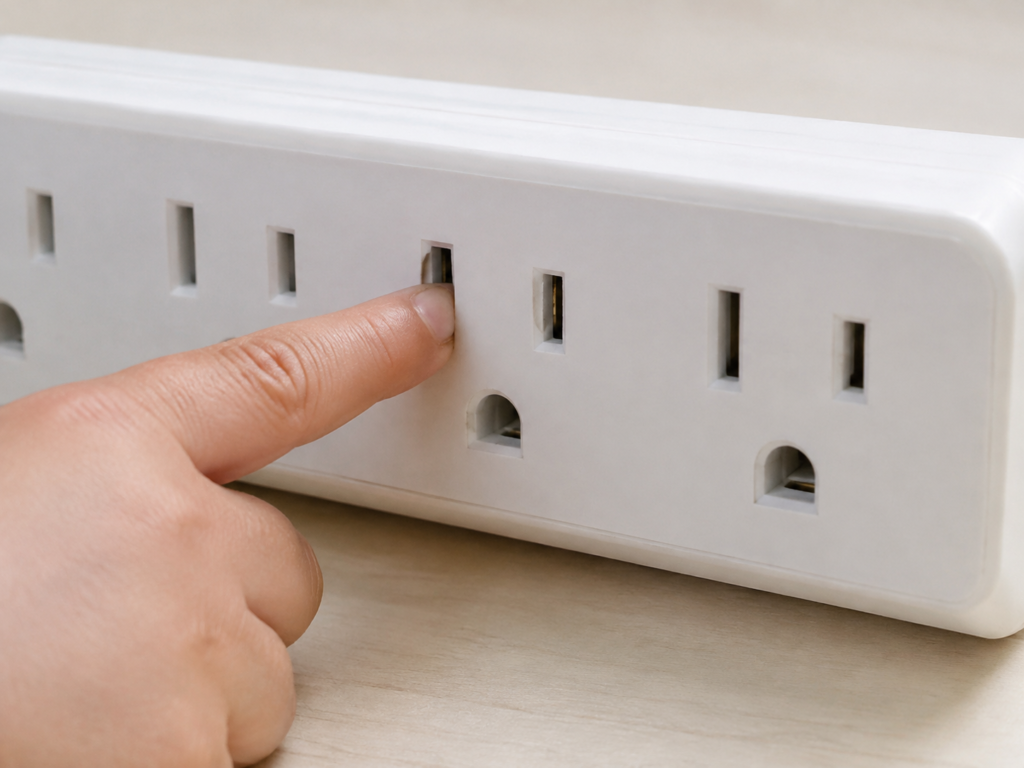
The second category is fire protection and thermal safety. There are two core requirements: first, the surface temperature of the product should not be too high during normal operation to burn users; second, when abnormal conditions such as short circuit, overheating, or locked rotor occur inside, the shell and internal parts cannot burn, or the fire cannot spread, and will not cause a fire. Common test items such as continuous full-load temperature rise test, which is to let the product work continuously under maximum load, and measure whether the temperature of each part exceeds the standard; there are also tests simulating short circuit, overload, and motor locked rotor to see if it will catch fire; there is also material flame retardant performance test, which burns the shell or insulating material with fire to see if it will extinguish itself. For example, the shell of a mobile phone charger must be made of flame-retardant plastic. Even if an internal short circuit causes a fire, the shell will not burn, let alone spread to the outside; another example is when a hair dryer is turned on to the maximum setting, the temperature of the hand-held part should not be too high, otherwise the user will not be able to hold it and get burned. It should be specially reminded here: safety under abnormal working conditions is more important than under normal conditions, because most safety accidents occur when the product is used abnormally or malfunctions.
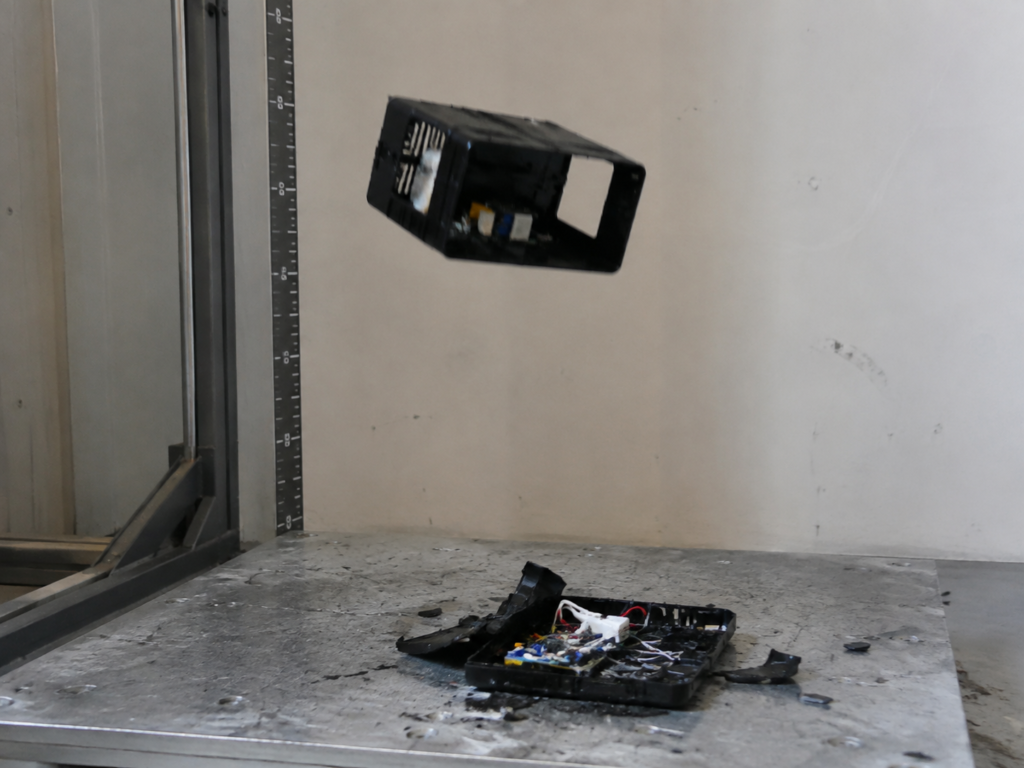
The third category is mechanical and structural safety. The core requirements are: after normal use or slight impact, the product shall not produce dangerous fragments, nor shall live parts be exposed; floor-standing and wall-mounted products shall not tip over easily. Common test items such as shell strength test, which hits the shell with a certain force to see if it will break; drop test, which drops the product from a certain height to see if live parts are exposed and if there are dangerous fragments; stability test, for example, a floor lamp cannot tip over when tilted 10 degrees, otherwise it will hit people if touched; there is also cable pull and fixation test, which requires that the internal wiring cannot be loosened when pulling the power cord; there is also protection against sharp edges, sharp corners, and pinch points, for example, the product shall not have sharp edges that cut users, and folding parts shall not pinch hands. In addition, movable electrified products also need to test the bending durability of the power cord. For example, the power cord of a hair dryer must not be damaged after being bent thousands of times, otherwise exposed copper wires will cause electric shock.
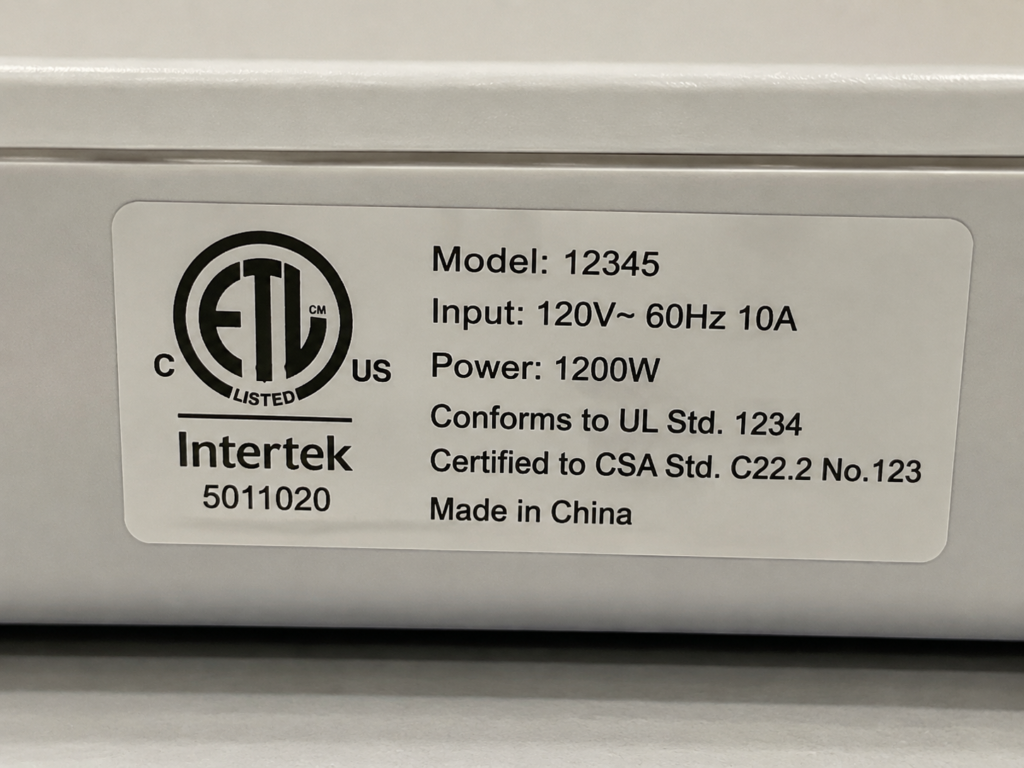
The fourth category is marking and manual requirements. Many people think this is not important, but that’s not the case. Markings and manuals are direct channels for users to understand product safety information, and are also mandatory items in testing. The core requirements are: the product must have accurate parameters and warning marks, and the manual must clearly state the usage methods and taboos. Common checkpoints include: parameters such as rated voltage and rated power must be accurate and cannot be marked randomly; warning statements must be complete, such as “Do not use in humid environments”; they must be in the local official language (for example, English in the United States, and bilingual in English and French in Canada); and the use restrictions of the product must be consistent with the test conditions. For example, if it is tested for indoor use, it cannot be marked for outdoor use.
The fifth category is non-mandatory test items and additional tests for special scenarios. Many people think that ETL certification includes all tests, but that’s not the case. What was mentioned earlier are all basic safety tests, which are the core of ETL certification. For example, electromagnetic compatibility (EMC), that is, whether the product will interfere with other electronic devices or be interfered by other devices, is not a mandatory test item for ETL safety certification. Only some products, channels or regions require additional testing, so don’t be fooled by institutions into paying extra. There are also some products for special scenarios that require additional testing: for example, outdoor products need additional testing of weather resistance, waterproof and insulation; products used in humid environments need additional testing of moisture-proof insulation; products that are frequently moved need additional testing of the durability of power cords and plugs.
Results and Maintenance: Qualification Judgment, Rectification Logic and Certificate Validity
After the test is done, how to judge whether it is qualified? Is it once and for all after getting the certificate? Many people fall into pitfalls here.
First is the standard for qualification judgment. It’s very simple: only when all test items required by applicable standards are passed and all deviation items are closed, can it be considered qualified, and then an official report will be issued and the listing process will be entered. A qualified report will be stamped with the laboratory’s NRTL qualification seal and the ETL recognized mark. Here we need to talk about the handling of deviations: if it is a non-core deviation of documents or markings (such as a missing warning in the manual, or wrong printed parameters on the nameplate), as long as it is modified and submitted to the laboratory for confirmation that there is no problem, the deviation can be closed without retesting; but if it is a deviation in structure or safety performance, rectification and retesting are mandatory. No matter what the deviation is, as long as it is not closed, it is not considered passed and you cannot get the certificate.
Then there is the severity of non-conforming items and the direction of rectification. Not all non-conformities are a big deal. They are generally divided into two categories:
One category is serious non-conformity, that is, there are direct core safety risks such as electric shock and fire, such as insufficient creepage distance, non-flame-retardant shell, and excessive temperature rise. This kind must modify the structure or replace key parts, and there is no room for negotiation.
The other category is general non-conformity, such as marking errors, missing warnings in the manual, inconsistent document parameters and other non-core problems, which can be passed only by modifying the documents.
You can do a quick preliminary screening by whether keywords such as “electric shock risk”, “fire risk”, and “mechanical injury” are mentioned in the non-conformity reasons, but this is only a preliminary reference. The formal non-conformity grade judgment shall be subject to the formal conclusion of the laboratory based on safety risks, and cannot be determined by yourself only based on keywords.
The logic of rectification is also very clear: for small problems, modify the documents without retesting; for changes in structure or key safety parts, samples must be sent for retesting; if you are not sure whether retesting is needed after rectification, just ask the corresponding engineer directly, don’t guess by yourself.
Next are the pitfall avoidance points that many people easily ignore: passing the test and getting the certificate does not mean everything is fine. There are three things you must know:
First, ETL certification only proves that the product meets safety standards, and does not mean that it meets all North American regulatory requirements. For example, FCC electromagnetic compatibility, energy efficiency certification, California Proposition 65 chemical restrictions, etc., are all additional requirements that need to be handled separately. Don’t think that with ETL you can be unimpeded.
Second, the certificate only covers the models and series listed in the report, and not all products of the same category can use it. If a new model is added, you must separately find a laboratory to evaluate whether it belongs to the same series and whether it can be added. You cannot randomly put the ETL mark on other models by yourself.
Third, the certificate is not permanently valid. If the product’s structure is changed, key safety parts are replaced, or safety standards are updated, or the factory inspection fails, the certificate may be suspended or even revoked.
There are three main points of maintenance after getting the certificate:
The first is Follow-up Service. After obtaining the certificate, the institution will conduct random inspections at the factory regularly or irregularly. The frequency of random inspections is determined by the product risk level and project type. The specific frequency and cost of random inspections vary depending on the product category and project type, and shall be subject to the official notice of the institution. The content of random inspections includes production consistency verification, key component verification, and may even take a few samples back for retesting.
The second is the change reporting rule. If the product’s circuit, key safety parts, or structure are changed, you must inform the laboratory in advance and let them evaluate whether supplementary testing or change is needed. You cannot secretly change it by yourself, otherwise the certificate will be suspended if found out. If it is only changes that do not affect safety, such as color, logo, and outer packaging, there is no need to report.
The third is validity maintenance. You must pay the listing annual fee on time. The amount of the annual fee varies with the number of certified models and product categories, otherwise the certificate will be cancelled; if safety standards are updated, you must conduct supplementary testing or rectification according to the requirements of the institution to ensure that the product always meets the latest standards.
Pitfall Avoidance for Beginners: Common Misconceptions and Practical Decision-Making Tips
Finally, let’s summarize some of the most common pitfalls and practical tips for beginners to help you avoid detours.
First are the three most common reasons for test failure. Avoiding them in advance can greatly improve the pass rate:
The first category is part problems, such as using ordinary plastic without flame retardant grade for the shell, insufficient thickness of insulating materials, and no safety certification for key parts such as power cords and switches. These are all low-level mistakes that can be avoided in advance.
The second category is design problems, such as too large shell gaps leading to unqualified electric shock protection, poor heat dissipation structure leading to excessive temperature rise, and insufficient structural strength leading to breakage when dropped.
The third category is document problems, such as the parameters on the manual and markings being different from the actual product, and lack of necessary safety warnings. This kind of problem is the most regrettable. Obviously the product is fine, but time is delayed because of wrong documents.
Then there are small tips for preliminary risk screening before sample submission. You can check it yourself at home first, which can find obvious problems in advance, instead of waiting until the samples are sent to find out they are unqualified. However, it should be emphasized that this is only a preliminary judgment and cannot replace formal testing, and can only find relatively obvious risks:
The first is preliminary temperature rise screening. Let the product work continuously for 1 hour under full load, and touch the hottest part. If it is so hot that you can’t hold it at all, then the temperature rise is most likely exceeding the standard, and you need to adjust the heat dissipation in advance.
The second is preliminary electric shock protection screening. Insert a hard small piece of paper into the gap of the product. If it can touch the internal metal live parts, then the electric shock protection is most likely unqualified, and you need to adjust the structure or add insulation.
The third is preliminary key parts screening. Check key parts such as power cords, switches, and transformers to see if there are UL, ETL or CSA certification marks on them. If not, it is best to replace them with certified ones, otherwise you may need to additionally test the parts, which costs money and time.
Regarding pitfall avoidance for cycle and cost, the core is not to trust extreme promises easily: the basic test cycle for conventional small electronic products is usually 2-4 weeks (excluding rectification and factory inspection time). Those who claim “guaranteed pass in one week” are mostly pre-testing or have questionable qualifications; when comparing prices, don’t just look at the basic test fee. You need to clarify whether the quotation includes EMC additional testing, retesting, first factory inspection, listing annual fee and other items. Packages with prices far below the industry average most likely have hidden consumption. It is recommended to find 2-3 institutions with formal NRTL qualifications for horizontal comparison before choosing.
If you need to verify the authenticity of ETL certification, you can directly query in the ETL Listed Directory on Intertek’s official website, and you can find it by entering the company name, product model or certificate number. When checking, pay attention to whether the company name, production address, product model, certification type, and applicable market are consistent with the certificate. If any one item does not match, you should be alert to fraud. In addition, the ETL mark on the nameplate of formal products is standardized, either “ETL Listed” or “cETLus”, and the style or content cannot be modified without permission.
In general, all processes and requirements of ETL testing are essentially standardized rules established around the core of “product safety”. For practitioners expanding into the North American market, clarifying the applicable boundaries, process nodes and maintenance requirements of ETL can not only help you successfully complete compliance access, but also avoid safety risks in advance from the design end and reduce subsequent compliance disputes.