
Cross-border sellers and product brand owners targeting the North American market can almost never avoid ETL certification — either Amazon or Walmart requires it, or importers and wholesalers demand it as a prerequisite. But many people are confused when they first encounter it: why can quotes for the same product differ by thousands of dollars across different agencies? Some say you can get the certificate in 4 weeks, others say it takes 3 months? Which costs are necessary, and which parts of the timeline can you control yourself?
In this article, we will break down the costs and timelines of ETL certification thoroughly, starting from the most basic concepts, to how to estimate, how to read quotes, how to avoid pitfalls, and even how to compare it with UL. After reading, you will be able to judge whether a quote is reasonable on your own, plan the certification schedule in advance, and no longer be led by the nose.
Introductory Basics: Clarify Boundaries First to Avoid Misguidance
Before discussing specific costs and timelines, we must first clarify a few easily confused basic concepts — many people fall into pitfalls because their understanding of ETL is wrong from the start.
What is ETL Certification
Simply put, ETL is a North American product safety conformity mark operated by Intertek. The U.S. Occupational Safety and Health Administration (OSHA) maintains an official list of accredited safety testing institutions, abbreviated as NRTL. Only safety certifications issued by institutions on this list carry equivalent validity for North American safety compliance. Both ETL and the more familiar UL are on this list.
It is not a government-mandated certification, but almost all retailers, e-commerce platforms, and importers require suppliers to provide it. After all, if a product has a safety issue, the channel parties are also liable. As for whether a specific product can use ETL to replace other safety certifications, it ultimately depends on the explicit requirements of the buyer, platform, or retailer. It should be noted that only OSHA-accredited laboratories under Intertek can issue ETL certificates. All certified products can be looked up in the ETL official website listing directory. If a certificate cannot be found, it is almost certainly fake.
Here are a few of the most common misconceptions clarified first:
- It is not globally applicable; it only covers the United States and Canada (the Canadian version is called cETL, which must comply with local Canadian safety standards);
- It is not valid for life; annual renewal fees are required to maintain validity;
- It is not necessarily cheaper than UL; only some product categories may have slightly lower quotes;
- It only covers product safety scope, and does not include other types of compliance requirements: such as FCC (U.S. federal-level mandatory electromagnetic compatibility/radio frequency compliance, required depending on whether the product has wireless or radio frequency functions), California 65 (a hazardous substance control regulation in California), energy efficiency, etc. These items need to be applied for separately according to product characteristics and sales regions, and cannot be replaced by ETL safety certification.
Cost Statistical Boundaries: What Exactly is Included in the Quote
Many people think a quote is cheap when they first receive it, but end up paying twice as much. The core reason is that they do not understand the included and excluded items of the quote.
Regular initial certification quotes default to including the following components: testing fee, application fee, report preparation fee, certificate fee, and labor fee for the first factory inspection.
The following items are not included in regular quotes by default and require additional payment:
- Rectification fees and retesting fees after product failure;
- Expedited service fees;
- Subsequent annual fees and regular factory inspection fees.
There are also some easily overlooked hidden costs: sample production fees, shipping and customs clearance fees for sending samples to the laboratory, document translation/nameplate design fees, and supplementary testing fees for key components without certification. If your factory is overseas (such as China, Southeast Asia), travel expenses for the first factory inspection usually also need to be borne separately, and the specific amount is subject to the official quote.
Timeline Calculation Basis: Don’t Mistake “Agency Working Days” for Total Timeline
Another common point of dispute is that the two parties have different understandings of the “timeline”. The “official timeline” stated by the agency has clear start and end points:
- Start point: The agency confirms receipt of complete application materials + qualified test samples + first payment. The process officially begins only when all three are in place;
- End point: You receive the official certificate and obtain authorization to use the ETL mark.
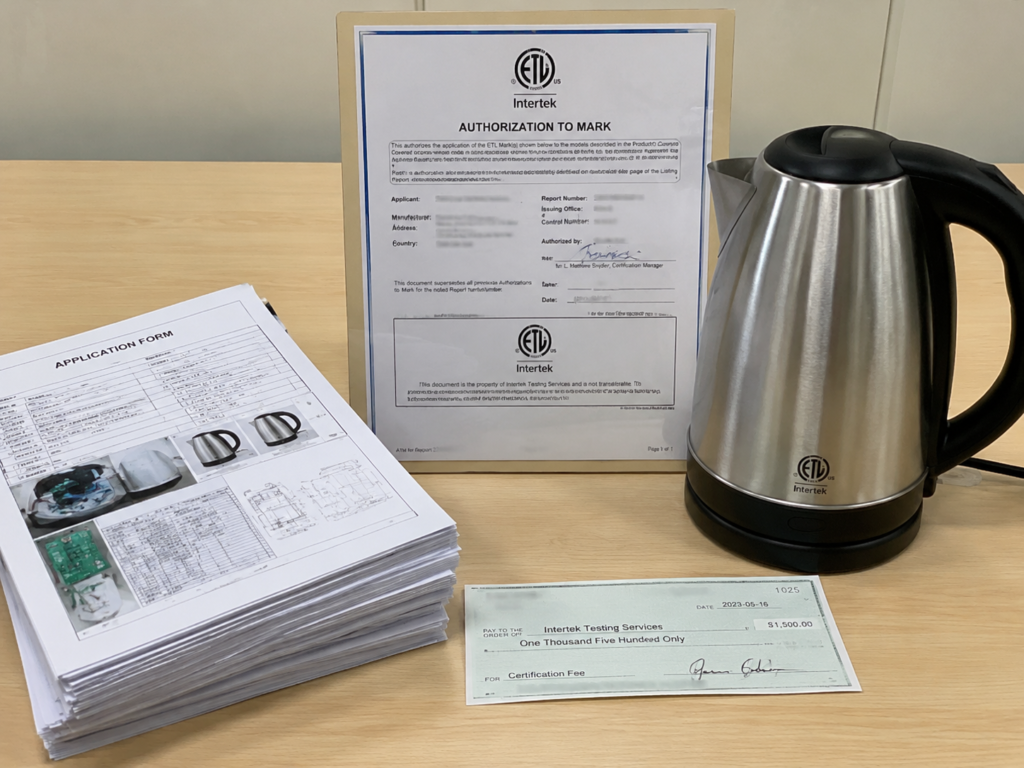
The following periods are not counted in the official timeline and need to be reserved by you:
- Time for you to prepare materials, produce samples, and select an agency;
- Shipping time for samples from the factory to the laboratory;
- Rectification and retesting time after product testing fails;
- Rectification time after issues are found during factory inspection.
Also note particularly: Scheduling waiting time during peak seasons is usually counted in the official timeline. Be sure to confirm the scheduling duration with the agency in advance. Don’t wait half a month only to find testing hasn’t started, and realize you didn’t ask clearly.
Why Cost and Timeline Are Core Decision Points
These two indicators are directly related to whether your product can launch on time, whether your inventory plan will be disrupted, and whether your cash flow is sufficient. ETL certification costs vary widely, from a few thousand to tens of thousands of dollars. If you estimate your budget based on the lowest price, you may run out of funds midway. The timeline is affected by even more factors. If you start only when the launch date is imminent, and you encounter rectification, missing peak seasons like Black Friday and Christmas could result in losses dozens of times higher than the certification fee. Understanding the rules in advance allows you to take the initiative into your own hands.
Initial Certification Costs: Where the Money Goes, Why It’s Expensive
Now that we understand the boundaries, let’s break down where the money for the first ETL certification goes, and what factors cause price fluctuations.
Core Cost Composition
For regular initial single-model safety certification projects with no additional testing and samples passing on the first try, the largest portion of ETL certification costs is the testing fee, accounting for 60%-70% of the total cost. This fee is charged according to the safety standard corresponding to the product, covering basic safety items such as temperature rise, withstand voltage, and leakage current. If you also need to test electromagnetic compatibility (commonly known as EMC, simply put, the performance that products do not interfere with each other), energy efficiency and other items, additional fees apply. The testing fee includes laboratory consumable costs, but does not include sample shipping fees.
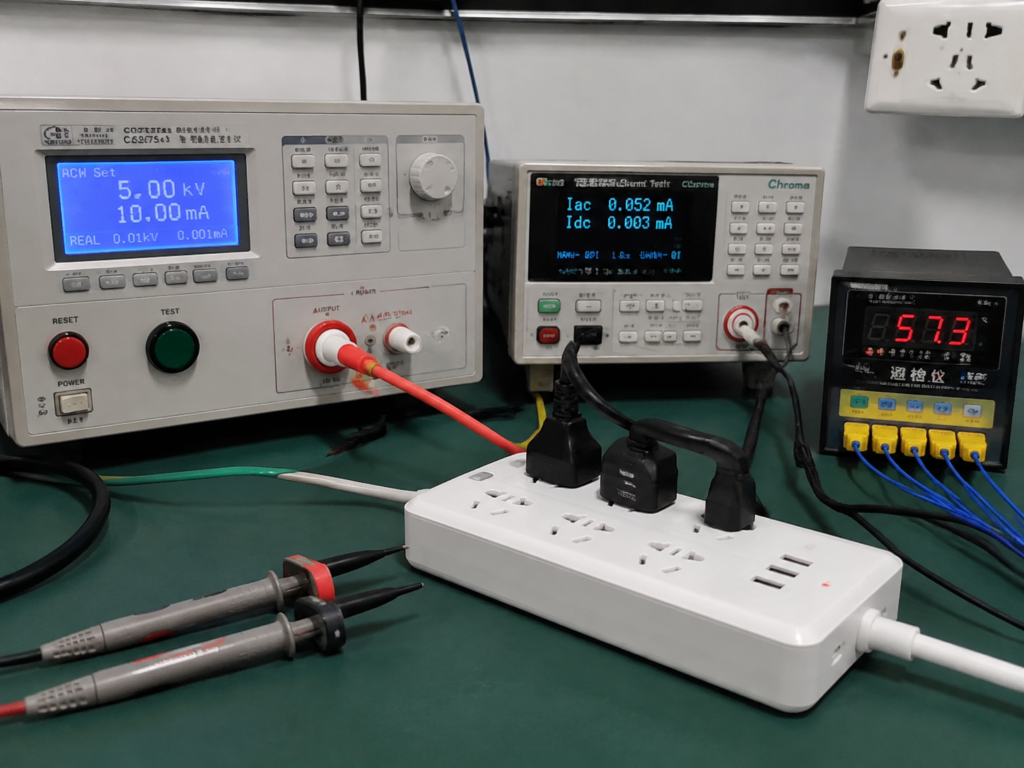
The second part is certification service fees, including application fee, report preparation fee, initial listing fee (the fee for entering your product into the ETL official queryable database), and certificate production fee.
The third part is the initial factory inspection fee: the agency will send personnel to your production factory to verify whether it can continuously produce products that meet safety standards. This fee is charged by working hours. If you have multiple factories, or use different contract manufacturers, each factory must be inspected separately and charged separately.
In addition, there are optional additional service fees, such as expedited fees, pre-testing fees (preliminary problem screening before formal testing), rectification consulting fees, model expansion fees, standard expansion fees, etc. These are only incurred if needed.
Product-Side Factors Affecting Cost
Even for ETL certification, prices can differ by several times, mainly due to differences in the product itself. There are four core dimensions:
First is risk and complexity: low-voltage low-power products (such as 5V chargers) are the cheapest, while high-voltage high-power products are more expensive; products with heating elements, batteries, motors, wireless functions, or high-voltage components have more test items, so costs are naturally higher.
Second is usage environment: indoor consumer-grade products are the cheapest; outdoor, commercial, industrial, medical, and explosion-proof products have more and stricter applicable safety standards, and costs increase step by step.
Third is model range: the cost of a single model is the lowest; if you apply for series certification, the total cost will be higher than a single model, but the average cost per model is lower — but only if the safety structure differences between models are small. If core components and shell materials are too different, test data cannot be shared, and additional fees are required.
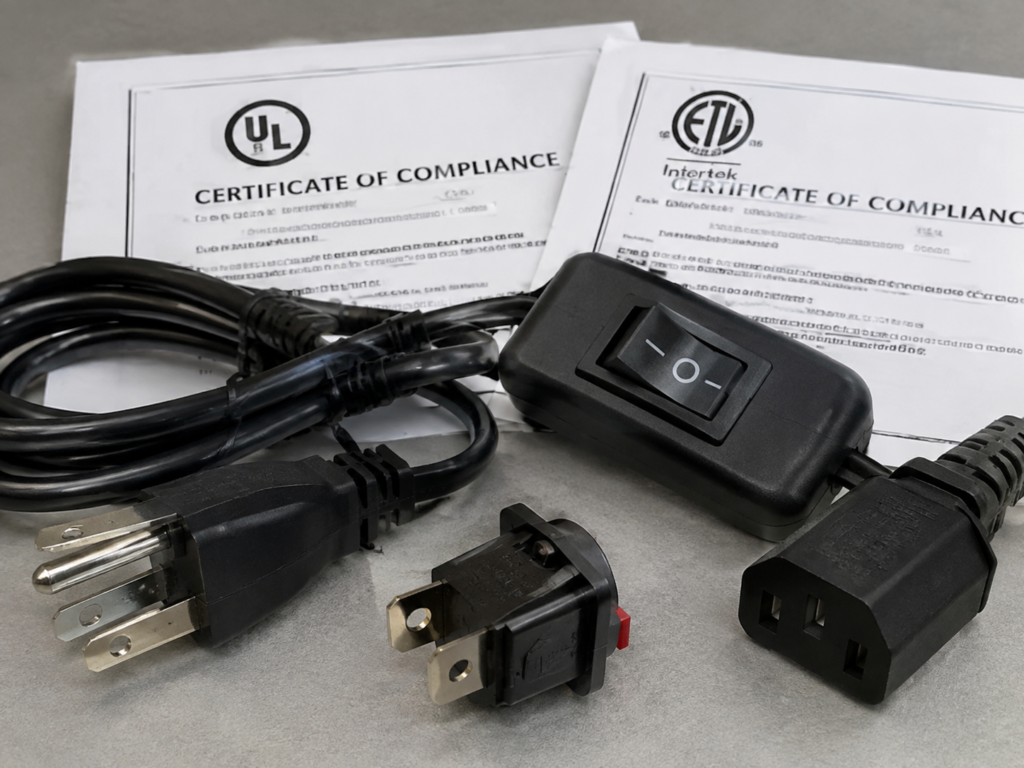
Fourth is key components: key safety-critical parts such as power cords, plugs, and switches, if they already have UL or ETL recognition certificates, do not require additional supplementary testing, which can save a lot of costs.
Service-Side Factors Affecting Cost
In addition to the product itself, the service plan you choose will also affect the final cost. Here are a few areas you can choose independently:
First is certification region: under the premise of the same product and same service level, ETL for the U.S. market only usually has a 20%-30% price difference compared to dual U.S.-Canada certification (cETL), because Canada has its own safety standards and requires additional test items. The specific amount is subject to the official quote.
Second is existing certification foundation: if you already have a CB report, UL report, or CE report that meets requirements, under the premise that the report standard version matches, the product structure is consistent, and materials are complete, you can usually save 30%-60% of the testing fee, which is commonly referred to as “certification transfer”. The specific reduction ratio depends on project conditions.
Third is agency selection: directly contacting Intertek official saves a service fee compared to using a third-party agent, but you need to follow up the process and prepare materials yourself, which is more energy-consuming.
Fourth is number of rectifications: the cost of passing the test on the first try is the lowest. Each rectification and retest is charged by item or working hour. If it is a core structure rectification, the cost will be higher.
Cost Reference Range for Common Products
Here is a rough reference range. Note the prerequisites: single model, U.S.-only safety certification, complete materials, samples pass on first try, excluding rectification/expedited/annual fees/sample costs.
- Low-voltage consumer electronics (such as 5V chargers, Bluetooth speakers): 1500-3000 USD
- Medium-risk home appliances/lighting (such as 120V electric kettles, table lamps): 3000-6000 USD
- Medium-high complexity products (such as battery-powered smart home appliances, small industrial equipment): 6000-15000 USD
- High-risk/special products (such as high-power industrial equipment, explosion-proof products, medical equipment): 15000 USD or more, depending on applicable standards
If you transfer to ETL with a qualified CB/UL report, under the premise that the report standard version matches, the product structure is consistent, and materials are complete, it usually costs 30%-60% less than a new application. The specific amount is subject to official evaluation.
Certification Timeline: Where Time Goes, What You Can Control
Cost is a matter of money, while timeline is a matter of time — many times, time is more important than money. We break down the entire certification process into several stages to see where time is spent and what you can control.
Stage Breakdown of the Full Timeline
The entire ETL certification process, from the start of preparation to certificate issuance, is roughly divided into 6 stages:
- Applicant Preparation Stage: Organize materials, produce samples, select an agency. This stage is completely under your control, not counted in the official timeline, and usually takes 1-4 weeks, depending on your efficiency.
- Agency Evaluation and Project Establishment Stage: After receiving your materials, the agency conducts evaluation, issues a quote, signs a contract, and you pay the first payment. Usually 1-5 working days, longer for complex products.
- Sample Shipping and Receiving Inspection: You send samples to the laboratory, and the laboratory verifies whether samples are consistent with the materials. Unqualified samples will be returned. The duration depends on shipping distance. For example, shipping from China to a U.S. mainland laboratory takes about 1 week.
- Laboratory Testing Stage: This is the core of the official timeline, calculated from the receipt of qualified samples. Usually 2-6 weeks. If samples fail, rectification and retesting time is additional.
- Report Review and Factory Inspection: After testing is completed, the report is reviewed, and the first factory inspection is arranged at the same time (factory inspection can be carried out simultaneously with testing to save time). If there are no issues, it takes 1-3 weeks.
- Certificate Issuance and Listing: After all links are passed, the certificate is issued, mark use is authorized, and the product is entered into the official database. This takes 3-5 working days.
Applicant-Side Factors Affecting Timeline
Many people think a slow timeline is the agency’s fault, but in fact, the applicant’s own behavior has the greatest impact on the timeline. These are all within your control:
- Material preparation efficiency: If materials are incomplete, back-and-forth supplementary submissions will delay 1-2 weeks; if the model difference table is clearly written and certificates for key components are complete, you can save a lot of time.
- Sample quality: Unqualified samples are the most time-consuming. Rectification and remaking take at least 2 weeks or more; checking samples yourself according to requirements before sending can greatly reduce the failure rate.
- Factory cooperation: Factories with a sound quality system have a high factory inspection pass rate and fast processing speed; if issues are found during factory inspection, rectification will delay 1-3 weeks.
- Decision-making efficiency: When the agency has questions and asks for confirmation, the faster you reply, the faster the process progresses.
Agency and Product Factors Affecting Timeline
The impact of the following external factors on the timeline is based on the common scenario of regular service, complete materials, and samples passing on the first try. Actual duration will vary with specific project conditions:
- Product complexity: Simple low-voltage products are 2-4 weeks faster than complex industrial equipment; adding EMC, energy efficiency and other test items will add another 1-2 weeks.
- Certification region: U.S.-only ETL is 1-2 weeks faster than U.S.-Canada dual certification.
- Agency scheduling: Scheduling during the North American stocking peak season (October-December) usually requires an extra 1-2 weeks of waiting; expedited service can usually reduce agency-side time by 30%-50%, depending on project scheduling.
- Existing certification foundation: For certification transfer with a qualified CB/UL report, under the premise that the report standard version matches, the product structure is consistent, and materials are complete, testing time can usually be saved by more than 70%.
Timeline Reference Range for Common Products
Similarly, here is a reference range, with the prerequisites: single model, U.S.-only safety certification, complete materials, samples pass on first try, excluding rectification/expedited, including 1 week of application preparation time.
- Simple low-voltage consumer electronics: total timeline 4-6 weeks
- Medium-risk home appliances/lighting: total timeline 6-10 weeks
- Medium-high complexity products: total timeline 10-16 weeks
- High-risk/special products: total timeline 16 weeks or more (3-6 months or longer)
If it is a certification transfer, under the premise that the report standard version matches, the product structure is consistent, and materials are complete, the total timeline for projects with a qualified CB/UL report is usually 2-4 weeks, subject to actual scheduling.
Practical Decision-Making Methods: How to Estimate and Understand Quotes
After understanding the basic composition, you can estimate costs and timelines on your own, and also see through the tricks in quote sheets.
3 Types of Core Information to Prepare Before Estimation
Whether you are estimating by yourself or asking an agency for a quote, you must first prepare these three types of information, otherwise the result you get will definitely be inaccurate:
- Basic product information: product type, voltage/power, core functions, usage environment, number of models, certification status of key components;
- Existing qualifications: whether you have safety test reports such as CB/UL/CE, the standard version of the report, which agency issued it;
- Certification requirements: target market is U.S. only or U.S.-Canada dual certification, whether to add EMC/energy efficiency and other test items, whether expedited service is needed.
Cost and Timeline Estimation Logic
Estimation does not need to be completely accurate, as long as you can calculate a reasonable range and reserve a buffer:
- Cost estimation: First find the corresponding basic range according to product type, then adjust up or down according to certification scope (whether to add markets, add test items) and existing qualifications (whether certification transfer can save testing fees). For first-time applications, it is recommended to reserve a 10%-20% rectification buffer budget, just in case.
- Timeline estimation: Similarly, first find the basic range, then adjust according to your own preparation efficiency, agency scheduling, and rectification risk. For first-time applications, it is recommended to reserve 20%-30% buffer time; don’t start right at the launch date.
Of course, all estimates are for reference only, and the final cost and timeline are subject to the agency’s official quote and scheduling.
4 Key Check Points for Quote Sheets
When you get a quote, don’t just look at the total price. Focus on checking these four dimensions, and you can avoid most low-price traps:
| Check Dimension | Core Inspection Content |
|---|---|
| Coverage | Number of models included, target market, test items; whether first factory inspection fee and certificate fee are included |
| Excluded Items | Whether rectification/retesting fees, expedited fees, factory inspection travel expenses, annual fees, and sample costs are charged separately |
| Standards and Type | Whether applicable safety standards match the product’s intended use, whether they are the latest version; whether it is ETL finished product listing certification |
| Timeline Assumptions | Timeline starting point (receipt of complete materials/payment/sample shipment); whether peak season scheduling is included; whether it defaults to samples passing on first try |
Pay special attention to “whether it is finished product listing certification” — some low-price quotes offer component certification or other types of proof, which cannot be used for finished product launch at all, meaning you spend money for nothing.
Standard Operation for Efficient Inquiry
When asking an agency for a quote, follow these requirements to avoid many subsequent disputes:
First, request an itemized quote, listing testing fees, service fees, and first factory inspection fees separately, not just a total price;
Second, explicitly require that the quote does not include rectification, expedited, annual fees, and sample costs, to avoid sudden price increases midway;
Third, ask the other party to clarify the timeline calculation basis, and the impact duration of peak season scheduling;
Fourth, ask the other party to provide ETL official authorization proof, to avoid fake, unauthorized agencies and fake certificates.
Pitfall Avoidance and Optimization: Common Misconceptions and Cost/Time Reduction Tips
Many people spend unnecessary money and delay time on certification because they fall into common misconceptions. Here we list the most easily encountered pitfalls, and give a few practical optimization tips.
Common Cost Misconceptions
- Misconception: ETL has a public unified price. Truth: All ETL certifications are evaluated on a per-project basis. Fixed prices online can only be used as a rough reference, and the specific price depends on the product situation.
- Misconception: The quote is the final price. Truth: Regular quotes do not include hidden costs such as rectification, expedited, and annual fees. If samples are unqualified, the final cost may be much higher than the quote.
- Misconception: The cheaper the more cost-effective. Truth: Low prices are likely to have omitted factory inspection fees, or are fake certificates from unauthorized agencies. You spend money but the certificate is useless, which is an even bigger loss.
- Misconception: There are no follow-up fees after passing the test. Truth: Certificates require annual fees and regular factory inspections to maintain validity; it is not a once-and-for-all matter.
Common Timeline Misconceptions
- Misconception: The working days mentioned by the agency are the total timeline. Truth: That is only the processing time on the agency side, excluding the time you spend preparing materials, shipping samples, and rectifying. The total timeline is much longer.
- Misconception: Paying for expedited service can shorten the timeline arbitrarily. Truth: Expedited service can only reduce scheduling and testing time on the agency side. The time you spend preparing samples and rectifying cannot be saved. If samples are always unqualified, no amount of expedited service will help.
- Misconception: You can get the certificate soon after sending samples. Truth: There are still multiple links such as scheduling, testing, factory inspection, and rectification afterward. Each step takes time. Don’t send samples only when the launch date is near.
- Misconception: The certificate is permanently valid. Truth: Annual review and fee payment are required every year. If the review is overdue, the certificate will be cancelled, and you will have to reapply.
Practical Tips for Reducing Cost and Time
These tips can be followed directly, and can help you save a lot of money and time:
- Prepare thoroughly before application: Organize all materials (specifications, BOM, circuit diagrams, nameplates, user manuals) in advance. Prepare a difference table for multiple models ahead of time. Design the nameplate according to North American requirements; don’t wait for the agency to point out issues before modifying.
- Choose the right key components: When selecting parts, prioritize key components that already have UL/ETL recognition, save the certification documents, and try not to frequently replace key parts before mass production, otherwise supplementary testing will be required.
- Self-check before sending samples: Before sending samples, first check whether rated parameters are clearly marked, whether grounding, heat dissipation, insulation distance, and warning labels are correct. For high-risk structures, you can consult the agency in advance; don’t find major problems only after sending samples.
- Plan certification well: Try to apply for series certification for models with small differences to reduce per-model cost; confirm in advance whether your sales channel accepts ETL, don’t complete certification only to find they don’t recognize it; be sure to reserve buffer time and budget for rectification, don’t cut it too close.
Notes on Certificate Maintenance
Getting the certificate is just the beginning. To maintain its validity, you need to pay attention to subsequent costs and timelines:
- Annual fees include listing annual fees and regular factory inspection fees, the specific amount depends on product type and number of factories;
- If it is a minor change, such as modifying labels or replacing key parts with models of the same specification, the timeline is 1-2 weeks, and the cost is very low;
- If it is a major change, such as modifying product structure or adjusting power, supplementary testing is required, and the cost and timeline depend on the degree of change;
- If you continuously fail to pay annual fees, or fail regular factory inspections, the certificate will be cancelled, and previous investment will be wasted, requiring reapplication.
Frequent Comparison: Cost/Timeline Differences Between ETL and UL
Many people struggle: should I choose ETL or UL? How much do their costs and timelines differ? In fact, before comparing, we must align the criteria, otherwise the comparison is meaningless.
4 Criteria to Align Before Comparison
For the comparison to be meaningful, the following conditions must be met:
- Same product, same applicable safety standard, same model coverage range;
- Quotes from laboratories in the same region, same service level;
- Both include initial testing, application, certificate, and first factory inspection fees;
- Consistent timeline calculation basis, both counted from receipt of complete materials and samples.
Regular Differences
Under the premise of aligning all the above criteria, the regular differences between the two are actually not large:
- Cost: For some product categories, ETL quotes may be slightly lower by 5%-15%, but this is not an absolute rule; UL has higher brand recognition, so some project quotes are higher.
- Timeline: ETL processes are relatively flexible, and some projects have faster scheduling; UL has a larger project volume, so peak season scheduling may be longer.
But remember: the main factors affecting the cost and timeline of both are product complexity, material preparation status, and number of rectifications, not the certification brand itself — don’t assume UL is necessarily much more expensive, or ETL is necessarily much faster.
3 Situations Where the Conclusion Changes
In some cases, the regular difference conclusion will be reversed:
- If your customer, platform, or retailer specifies UL, then no matter how cheap ETL is, it is useless — you must choose UL.
- If you already have a UL report, under the premise that the report standard version matches, the product structure is consistent, and materials are complete, transferring to ETL can save a lot of testing fees, and the timeline is much shorter than applying for a new UL certification.
- The difference for simple low-risk products is extremely small. For complex high-risk products, cost and timeline differences may shrink or even reverse, ultimately depending on applicable standards, agency scheduling, and number of rectifications.
Judgment Logic for Choosing ETL or UL
Actually, you don’t need to struggle. Just judge according to these three steps:
First, confirm the specific requirements of your sales channels, retailers, and platforms — whether they accept ETL, this is the prerequisite;
Second, if both are accepted, compare the quotes, timelines, and services of the two, and choose the one with higher cost-effectiveness;
Third, if you already have a report from one of them, certification transfer is usually more cost-effective than reapplying, so there is no need to specifically switch certifications.
When actually starting the project, organize product parameters, existing qualification documents, and clear market/testing requirements, request an itemized detailed quote from an agency holding official ETL authorization, and choose the suitable certification plan combined with your own launch rhythm.