
Practitioners in the Japanese electrical product market often encounter requirements related to “METI filing”, but they are also prone to conceptual confusion and document mismatches. This article mainly sorts out three parts of content: first, the document requirements for electrical appliance business notification under the (DENAN), distinguishing three types of documents: legally required submission, retention for inspection, and platform review; second, the classification judgment method before document preparation, to help you quickly match your own needs; third, the boundary between power business/grid connection scenarios and ordinary product filing, to avoid incorrect handling.
This article is introductory popular science content and does not constitute legal advice. Specific requirements shall be subject to the latest official rules of Japan’s Ministry of Economy, Trade and Industry (METI), the e-Gov government portal, the National Institute of Technology and Evaluation (NITE), the Japan Electrical Safety & Environment Technology Laboratories (JET), and each electric power company.
I. First, Understand the Basics: What Exactly is METI Filing, and What Does It Regulate?
The root cause of many people preparing incorrect documents is that they do not understand the essence of METI filing from the start, and mix up requirements of different regulations.
Plain-Language Explanation of METI Filing
The “METI filing” we often refer to is essentially the “notification” (届出) system implemented by Japan’s Ministry of Economy, Trade and Industry (METI, the core government department in charge of industry and product safety in Japan). In Japanese, “届出” means notification and registration, with its core legal basis being the (abbreviated as DENAN in Japan), and the full name of the filing is “Electrical Appliance Business Notification”. Simply put, it is a registration for business entities engaged in the manufacture or import of electrical appliances within Japan, to clarify who is responsible for the compliance of these products. It is a supporting system to the PSE product compliance we often mention, but their natures are completely different; the difference between the two will be explained in detail later.
Scope of This Article
Most of the METI filing requirements we encounter in practice are the aforementioned “DENAN Electrical Appliance Business Notification” (commonly known as “PSE-supporting METI filing”), which is also the core content of this article.
There is another type of scenario that is often confused: products or businesses related to power grid connection, such as photovoltaic inverters and grid-connected energy storage, are often mistakenly considered to fall under the scope of ordinary METI filing. This article will clarify the boundary between the two to reduce the risk of incorrect filing.
This article does not cover product filings under the jurisdiction of other regulations, such as industrial-specific electrical equipment, medical devices, gas appliances, and communication terminal equipment; these categories have dedicated regulatory authorities and processes.
Three Most Easily Confused Concepts, Clarified Once and for All
These three misconceptions are common pitfalls for many beginners. Clarifying the boundaries first will prevent confusion when reviewing document requirements later:
1. METI filing ≠ PSE compliance: The former is a registration of “business entities”, proving that there is a formal entity in Japan responsible for product compliance; the latter is a safety requirement for “the product itself” — specified electrical appliances require a test certificate issued by a METI-registered conformity inspection body, while non-specified electrical appliances can have their conformity self-confirmed by the business operator in accordance with Japanese technical standards. Both are indispensable; you cannot sell products legally without either one.
2. Notification system ≠ approval system: The authorities only conduct formal verification and do not carry out substantive product testing. Therefore, obtaining a “notification number” (the so-called filing number) by no means means the product has been certified by Japanese authorities; it only means the authorities have registered the business information of the relevant business entity.
3. Overseas seller ≠ notification entity: DENAN explicitly requires that the notification entity must be a manufacturer or importer located within Japan, with a fixed address in Japan, and shall bear compliance responsibilities. Overseas companies or individuals cannot directly submit filings to METI, and must do so through a Japanese partner (such as a Japanese importer or a qualified agency company).
II. Before Preparing Documents, First Make 4 Judgments
Don’t just look for a document list right away — different products, different cooperation models, and different business types require completely different documents. Spending 5 minutes first to make 4 judgments can save you at least half of the wasted effort.
Judgment 1: Is your product regulated by DENAN?
Not all electrical products require METI filing under DENAN. The core judgment criterion is: the vast majority of consumer electrical products connected to Japan’s municipal power supply (AC 100V/200V) fall within the regulatory scope of DENAN, and some energy storage products (such as power banks) are also included in the regulation.
The following are common exclusion directions for standalone products, for preliminary reference only: standalone low-voltage DC terminal products that do not fall under specific DENAN product categories usually may not be regulated by DENAN; however, if they come with an AC adapter, have a built-in energy storage unit, are sold as a combined set, or themselves fall within specific product categories, item-by-item confirmation is still required.
Common positive and negative examples are as follows for easy comparison:
• Within DENAN scope: power adapters, LED ceiling lights, power banks, mobile phone chargers
• Outside DENAN scope: low-voltage DC-powered products (such as USB 5V small fans, devices with only low-voltage DC input that do not fall under specific DENAN product categories), wireless charging transmitters, gas appliances, medical devices, communication terminal devices
The above are only common judgment directions. The final classification shall be comprehensively confirmed in combination with the list of electrical appliance categories published by METI, product structure, rated parameters, and actual use; in particular, products with power adapters, charging/energy storage units, or grid connection functions cannot be excluded from regulation solely based on output voltage. If you are unsure, the safest way is to directly check the DENAN product category list on METI’s official website, apply for prior confirmation from the authorities, or consult a formal compliance agency.
Judgment 2: Is your product a “specified” or “non-specified” electrical appliance?
For ease of understanding, this article often uses “PSE compliance” to generally refer to the state where products meet DENAN safety requirements; strictly speaking, the compliance requirements for the two types of products are different. DENAN divides electrical appliances into two categories, with different risks and different requirements:
• Specified electrical appliances (formerly called Category A): relatively high risk, such as mobile phone chargers and power adapters. They must have a test certificate issued by a METI-registered conformity inspection body, and the product must bear the diamond PSE mark.
• Electrical appliances other than specified electrical appliances (abbreviated as non-specified, formerly called Category B): relatively low risk, such as LED bulbs and ordinary electric fans. Business operators can conduct conformity inspections by themselves, and the product only needs to bear the circular PSE mark.
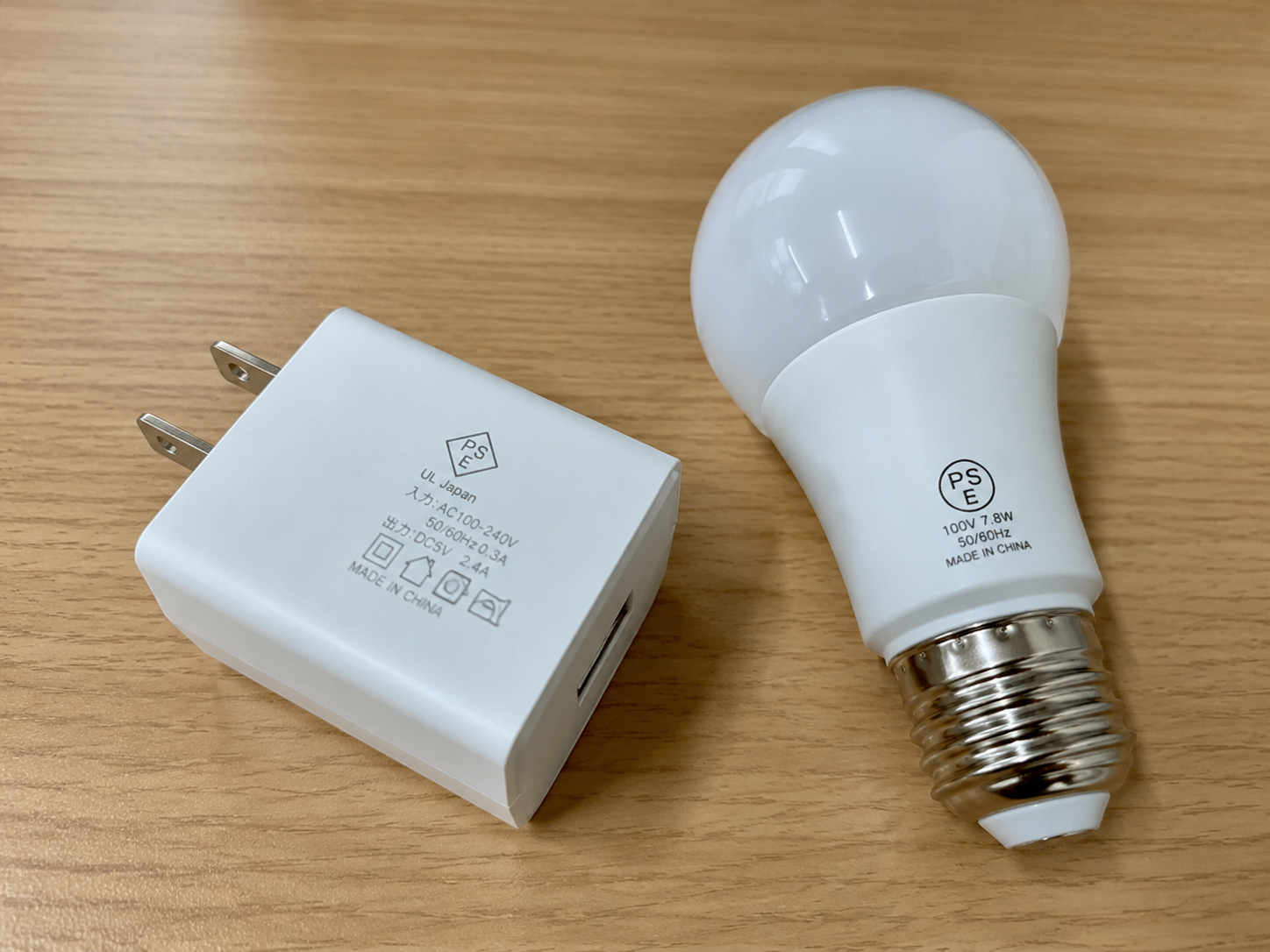
It should be noted here that the diamond and circular PSE marks are product safety labels, not types of METI filing. Both types of products go through the same Electrical Appliance Business Notification.
Judgment 3: In whose name will you act as the notification entity?
As mentioned earlier, the notification entity must be a business operator located within Japan. Overseas sellers generally have three cooperation models: partnering with a Japanese importer, finding a qualified Japanese registered agency company, or finding a formal compliance service provider — no matter which one you choose, you must first confirm whether the other party can assume responsibility as the notification entity; not all agencies have this qualification.
Once the entity is confirmed, you need to prepare corresponding documents such as entity identity proof, contact information, and address proof, which will be explained in detail later.
Judgment 4: What type of notification do you need to apply for?
There are three types of notifications, corresponding to different business stages, with different forms to fill out and different required documents:
• New notification: Filing for the first time when starting the manufacture or import of electrical appliances.
• Change notification: Updating an existing filing when core information such as notification entity information, product categories, or manufacturing factories changes.
• Cancellation notification: Canceling the filing when stopping the relevant business.
An additional note: DENAN business notifications have no fixed validity period. As long as your core information does not change, it remains valid and does not require annual renewal.
III. Core Scenario: Full Hierarchy of Documents for DENAN Electrical Appliance Notification
After clarifying the 4 judgments above, we can move on to the core content: what exactly do you need to prepare for the most commonly applied DENAN Electrical Appliance Business Notification?
I have divided the documents into four layers — from those that must be submitted to the authorities, to those kept for inspection, to those required by platforms. I will explain them layer by layer, so you can prepare accordingly based on your own needs without confusion.
Layer 1: Legally Required Submission Documents (to be submitted to METI)
1. Core form: Electrical Appliance Business Notification Form (Japanese)
This is the most core document, and all information must be filled in accurately. The required core fields include: name, address, and representative of the notifier; business classification (manufacturing or import); date of business commencement; classification of electrical appliances (specified/non-specified); model classification; applicable clauses of corresponding regulations, applicable electrical appliance names and basis for model classification; name and address of the manufacturing factory; if it is an import business operator, the source of import must also be filled in; if applying for a change notification, the specific matters of change must also be filled in.
If applying for a change notification, the original notification number, original notification matters, post-change matters, date of change, and involved product categories/factory scope must be listed, and relevant supporting documents must correspond to the original notification entity information.
2. Qualification proof of the notification entity
That is, the corporate registration certificate (if it is a company) or personal identity certificate (if it is an individual) of the business operator within Japan, which must be within the validity period, with clear information and no alterations.
3. Entrustment authorization document (only required when an overseas seller entrusts an agency/importer to handle it)
If you are an overseas seller and entrust a Japanese importer or agency company to act as the notification entity, you need to provide an authorization document signed and sealed by both parties. There is a pitfall to note here: the entrusted matter cannot be vaguely written as “handling filing”; it must clearly state the specific type of notification entrusted, the corresponding product scope, and even indicate that it is handled in accordance with the . The validity period of the entrustment must cover the entire review cycle, otherwise it is very likely to be rejected.
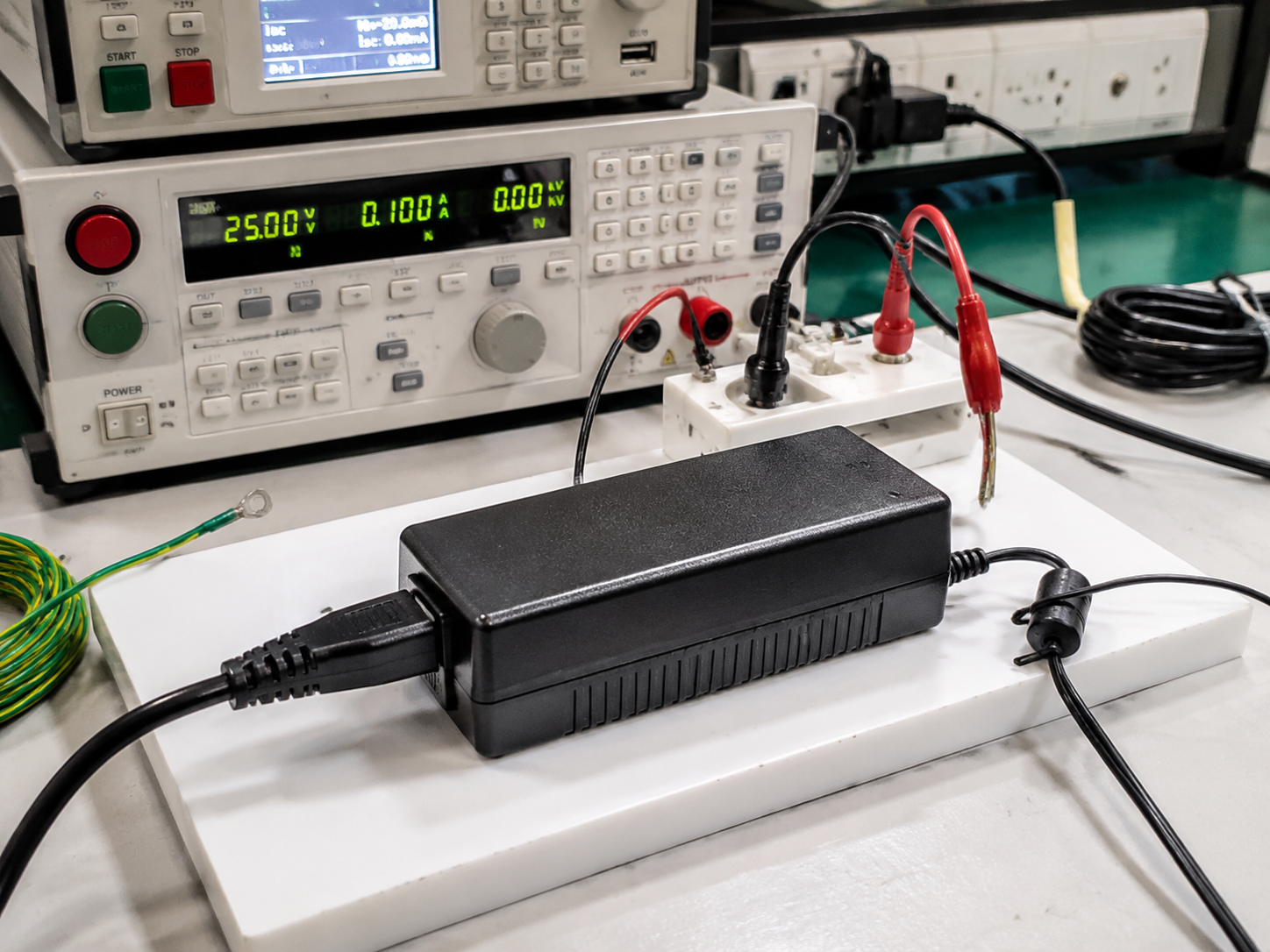
4. Supplementary documents for specified electrical appliances: Conformity inspection certificate (only required for specified electrical appliances)
If your product is a specified electrical appliance, you must additionally submit a “conformity inspection certificate” issued by a METI-registered conformity inspection body — that is, the compliance certificate corresponding to the diamond PSE mark. The product model and manufacturing factory on the certificate must be completely consistent with the information in your filing. There is no need to separately submit the qualification proof of the testing body; the authorities only need to verify the institution’s registration number on the certificate.
Another note: if you involve multiple different categories of electrical appliances, you need to fill in the notification information separately for each category, and cannot merge them into the same entry.
Layer 2: Reference Documents for Self-Judgment Before Handling (no need to submit)
This part of the documents does not need to be submitted to METI; it is for you to use to confirm classification and avoid errors before handling. Preparing them in advance can save a lot of trouble:
• Basic product parameters: product name, use, power supply method, input/output voltage, current, power — these are the basis for judging whether the product is regulated by DENAN and which category it belongs to.
• Judgment materials for shared use of series models: If you have multiple models of the same series that you want to share one filing, you need to prepare a list of main models and derivative models, and a description of model differences. Sharing is only possible when the differences are non-core content such as appearance, packaging, and power levels, while the electrical structure, core parameters, and manufacturing factory are completely consistent — the final decision on whether sharing is allowed shall be subject to the judgment of the authorities or the testing body; do not make assumptions on your own.
• Classification supporting documents: photos of the product nameplate, structural diagrams — these can help you (or your agency) quickly confirm the DENAN classification and category of the product, avoiding incorrect information filling.
Layer 3: Documents That Must Be Retained for PSE Compliance (no need to submit, but must be available for spot checks)
Many people think that once the filing is done and the notification number is obtained, everything is fine, but that’s not the case — METI conducts irregular spot checks. Although this part of the documents does not need to be submitted, if you cannot produce them during a spot check, you will still be punished, and even be required to stop sales.
This part of the documents is divided into three categories:
1. Product compliance documents:
Japanese instruction manual (must include safety warnings and abnormal handling methods required by Japan), design draft of nameplate/label (must include Japanese statutory labels, PSE mark, name of the notification entity, and rated parameters; if the product itself is too small to be labeled, a special explanation must be attached), core electrical circuit diagram, and list of key components.
2. Testing/inspection documents:
• For specified electrical appliances: there must be a complete type test report and a description of the certificate coverage (clearly stating which models and which manufacturing factory it covers).
• For non-specified electrical appliances: there must be self-conducted conformity inspection records, the number of the Japanese technical standard used as the basis for inspection (such as JIS standards or cabinet order standards, both are acceptable), and consistency inspection records for procurement or production.
3. Operational documents: sales ledgers, handling records of non-conforming products.
Retention requirements: inspection records generally need to be retained for 3 years; certificates are managed in accordance with statutory requirements or the validity period of the certificate, and the specific requirements shall be subject to the latest version of the regulations.
Layer 4: Supplementary Documents for Cross-Border E-Commerce Platforms (non-statutory, required by platforms)
If you sell on cross-border e-commerce platforms such as Amazon and Rakuten, the platform will also require you to provide some additional documents — these are not mandatory under Japanese law, but you cannot list products if you fail the platform review.
Common platform-required documents include: actual photos of the product with the PSE mark, supply chain proof (such as purchase contracts, invoices), METI notification number or acceptance receipt.
It should be noted that the platform’s review requirements may be higher than the statutory notification requirements, and only formal verification is conducted. The specific compliance shall still be subject to statutory requirements, and you must separately check the rules of the corresponding platform.
IV. Supplementary Scenario: Boundary and Document Instructions for Power Business/Grid Connection Compliance
Products or businesses involving power grid connection, such as photovoltaic inverters and grid-connected energy storage, are often mistakenly thought to require ordinary product METI filing. In fact, the two belong to different regulatory systems. The following clarifies the boundary and document directions.
First Clarification: Most of These Scenarios Are Not Ordinary Product METI Filing
The core regulatory basis for grid-connected equipment and power businesses is the , not the — it regulates the safety of the power system and business qualifications, not the registration of business entities for ordinary consumer products. The management objects and requirements are significantly different.
The most common misconception is that “photovoltaic inverters and grid-connected energy storage require METI filing under the Electricity Business Act”. In fact, most scenarios involve power company grid connection access review plus third-party technical certification. Whether METI notification is involved needs to be determined based on the specific business model.
Sub-scenario 1: Compliance Documents for Import/Sale of Grid-Connected Equipment
If you only import or sell grid-connected equipment (such as photovoltaic inverters), the core requirement is that the product must comply with Japan’s 系統連系規程 (Grid Connection Code). Most grid connection access reviews are conducted by power companies, not METI.
Documents generally required to be prepared include: product model specifications, Japanese instruction manual (must include grid connection-related safety warnings), third-party test/certification documents that meet the power company’s grid connection review requirements (such as grid connection-related certifications or test reports from institutions like JET, specific requirements shall be subject to the connected power company and applicable system requirements), defect recall commitment letter, and information on after-sales repair points within Japan.
It should be noted that ordinary product certifications such as PSE and CE cannot replace grid connection technical certification. As for whether you need to apply for METI business notification, it needs to be confirmed on a case-by-case basis — for example, if you only sell products and have nothing to do with power business, you may need to apply for ordinary filing in accordance with DENAN requirements; if grid connection services are involved, other qualifications may be required.
For example: photovoltaic inverters themselves require grid connection certification issued by institutions like JET, and whether you need to apply for METI notification for import and sale depends on whether you only sell equipment or also provide grid connection-related power services.
The compliance judgment for import and sale of grid-connected equipment can be carried out in the following order: first check whether the product falls within the scope of DENAN electrical appliance categories, and confirm whether it is necessary to apply for Electrical Appliance Business Notification; then, based on the grid connection attributes of the product, check whether it is necessary to obtain grid connection test/certification from institutions such as JET, and whether it is necessary to pass the power company’s grid connection access review; if the business involves power generation, power sales, or operation of self-owned power distribution facilities, then separately confirm the corresponding METI notification, registration, or license requirements in accordance with the .
Sub-scenario 2: Qualification Documents for Small-Scale Power Business Operation
If you are engaged in small-scale power business operation (such as building small photovoltaic power stations or wind power stations to sell electricity), then it falls under the jurisdiction of the . For different business types, the documents and competent processes vary greatly:
• Power generation business notification: Operation of power stations such as small-scale photovoltaic and wind power requires notification to METI.
• Small-scale electricity retail business registration: Engaging in electricity retail business requires registration application to METI.
• Specified power transmission/distribution/self-owned lines: Operation of self-owned power distribution facilities requires license application or notification submission.
General document directions for this type of business include: site selection proof, business scale description, equipment compliance list, power company’s grid connection consent letter, safety management system, and qualification proof of the person in charge.
An additional note: ordinary household self-use photovoltaic power sales (that is, the FIT/FIP system) mainly involves dealing with power companies, and does not fall under the scope of ordinary product METI filing. Don’t confuse them.
This type of business is highly professional. You must check the latest official requirements in combination with the specific business type, or consult a professional agency specializing in power compliance. Do not blindly handle it based on the experience of ordinary product filing.
V. Document Format Specifications and Full Submission Process
After the documents are prepared, they must meet the format requirements to be submitted smoothly, otherwise they are very likely to be rejected due to format issues.
Language and Translation Requirements
All documents submitted to the authorities should preferably be in Japanese. If the supporting documents are not in Japanese (such as the business license of an overseas company), a Japanese translation must be attached. The translation must indicate the information of the translator or translation agency, and professional terms must conform to the standard usage of the Japanese electrical industry — never use raw machine translation, as incorrect professional terms can easily lead to review rejection. For example, the term “conformity inspection certificate” cannot be casually rendered in Japanese as “test report”; it must use the statutory Japanese terminology.
Signature/Seal and Document Validity Requirements
Different types of documents have different signature/seal and validity requirements, which can be prepared accordingly:
• Electrical Appliance Business Notification Form: Must be signed or affixed with the official seal by the Japanese notification entity (corporate or individual), and the signature/seal style must be consistent with the registration information on the entity’s qualification proof.
• Entrustment authorization document: Must be signed and sealed by both the entrusting party and the entrusted party, clearly stating the entrusted notification type, corresponding regulations, product scope, and entrustment validity period.
• Entity qualification proof (corporate registration certificate, personal identity certificate, etc.): Clear color scans or verifiable electronic documents issued by the authorities must be provided. Avoid using black-and-white copies whose authenticity cannot be verified, so as not to affect the review progress.
• Documents issued by overseas entities: The signature/seal can be an official seal or the signature of an authorized representative. Whether additional notarization or consular authentication is required shall be subject to the specific notification type and the official notice from the authorities/agency; it is not required in all scenarios.
Document validity requirements: entity qualification documents (such as corporate registration certificates) must be within the validity period required by the authorities. The validity period of test or certification reports shall be in accordance with the standards of the corresponding product, and the specific requirements shall be subject to official notices.
Submission Channels and Document Specifications
The submission channel must be confirmed according to the specific type of notification. Common methods include electronic submission and paper submission:
• Electronic submission: Submit via e-Gov (Japan’s official government service platform) or the electronic application system designated by METI. The specific entry point shall be subject to the instructions currently published on METI’s official website. Generally, PDF format is required, and the file size and resolution must meet the system requirements. Before submission, it is necessary to confirm whether the Japanese notification entity has the corresponding system account, corporate authentication/electronic signature and other preconditions, and whether electronic submission is currently open for that notification type.
• Paper submission: Print on A4 paper, bind in the order of “notification form → entity qualification proof → special documents”, and it is best to attach a table of contents to facilitate official review.
It should be noted that some notification types now only accept electronic submission. Before submitting, be sure to check the latest requirements on METI’s official website to avoid submission failure.
Document Preparation Order and Post-Submission Results
It is recommended to prepare documents in the following order to reduce the workload of repeated adjustments:
First judge your own scenario and product classification → confirm the notification entity → prepare legally required submission documents → simultaneously prepare documents for inspection and documents required by platforms.
After submission, you will receive a notification acceptance receipt, which contains the “notification number” (commonly known as the “filing number”), which can be used as proof of completed entity registration for scenarios such as platform review. It should be noted that notification is only a business entity registration process; no product certification certificate will be issued after submission, and product compliance still needs to be supported by PSE-related test/inspection documents.
Chinese-Japanese Name Comparison of Common Documents
For easy comparison when preparing documents, the following is a comparison of common document names:
| English Name | Japanese Name |
| Electrical Appliance Business Notification Form | 電気用品事業届出書 |
| Specified Electrical Appliances | 特定電気用品 |
| Model Classification | 型式の区分 |
| Conformity Inspection Certificate | 適合性検査証明書 |
| Inspection Record | 検査記録 |
| Name of Notifying Business Operator | 届出事業者名 |
| Acceptance Receipt | 受領書・届出受付通知 |
VI. Document Self-Inspection and Common Misconception Pitfall Avoidance
This part is prepared for those who want to do a solid job in compliance. Mastering these will allow you to avoid the vast majority of common rejection issues, and even judge whether an agency is reliable on your own.
Pre-Submission Self-Inspection Checklist
Before submitting, check against these 5 items to avoid the vast majority of common rejections:
1. Information consistency: Information such as entity name, product model, and address in all documents is completely consistent; even a single letter or character difference is not allowed.
2. Document completeness: All documents required by law are prepared, with no omissions.
3. Format compliance: Language, signature/seal, and document format all meet METI requirements, such as whether they meet system file requirements and whether there is a Japanese translation.
4. Scenario matching: The documents correspond to your own notification scenario. Do not submit grid connection documents as ordinary product documents, nor prepare non-specified product documents according to the requirements for specified products.
5. Classification accuracy: The classification of electrical appliances (specified/non-specified), model classification, and labels are all consistent with the actual situation of the product.
Document Correction Process
In the event that you receive an official correction notice, you can handle it according to the following steps:
1. First, read the correction notice carefully. The authorities will clearly list the specific problem points, not just say “unqualified”. Be sure to understand every problem clearly.
2. Complete the correction and submit it within the specified period stated in the correction notice; overdue may result in the application not being accepted, being returned, or requiring a re-submission process. The specific consequences shall be subject to the subsequent official notice and the rules of the corresponding submission channel.
3. When resubmitting after correction, clearly mark where you have supplemented and what you have changed, to facilitate the authorities’ quick review and save time.
When Do You Need to Apply for Change or Cancellation Notification?
Many people ignore the filing after it’s done. In fact, failing to update information in a timely manner when it changes is also non-compliant. In the following situations, you must promptly apply for change or cancellation:
• The notification entity is changed
• New product categories are added, exceeding the original notification scope
• The core structure, electrical parameters, or manufacturing factory of the product changes
• The relevant business is stopped, or core operational information changes
6 Common Misconceptions, Don’t Fall for Them Again
The following are the 6 most common mistakes people make, check against them to avoid pitfalls:
1. Misconception: METI filing = PSE compliance
Preparation action: First complete product classification judgment and PSE conformity document preparation, then apply for business notification.
Risk: Missing either one is non-compliant, which may result in platform delisting, official fines, or even import prohibition.
2. Misconception: Overseas companies can directly submit filings
Preparation action: When looking for a partner, first confirm whether the other party can act as the notification entity and bear the corresponding compliance responsibilities, and avoid service providers that only submit documents on behalf but do not bear entity responsibilities; the division of responsibilities must be written into the cooperation agreement.
Risk: Non-compliant entity qualifications will lead to invalid notification, or the responsible entity cannot be matched during platform review.
3. Misconception: Overseas test reports are universally accepted
Explanation: The conformity inspection certificate for specified electrical appliances must be issued by a METI-registered institution; reports from ordinary overseas institutions are not recognized.
Preparation action: First confirm whether the product is a specified electrical appliance, then select a METI-registered conformity inspection body to issue the corresponding certificate, and verify the validity of the institution’s qualifications before submission.
Risk: The report will not be recognized, the notification will be directly rejected, wasting time and cost.
4. Misconception: Products of the same series can definitely share filing documents
Explanation: Only products of the same series with non-core differences (such as appearance, packaging) and completely consistent electrical structure/core parameters/manufacturing factory may share a filing. The final decision shall be subject to the judgment of the authorities or the testing body.
Preparation action: Confirm model differences in advance, do not expand the filing coverage on your own, to avoid problems during spot checks.
Risk: Using a filing beyond its scope will lead to invalid compliance, may be judged as non-compliant during official spot checks, and you will need to re-apply for notification and bear corresponding responsibilities.
5. Misconception: Once you hire an agency, the agency bears all responsibilities
Explanation: The notification entity is a business operator within Japan, which bears the main compliance responsibility. The service provider only assists in handling procedures and does not replace the entity’s responsibility.
Preparation action: Clarify the boundary of responsibilities of both parties when signing the agreement, and you still need to control product compliance yourself.
Risk: In the event of a product safety accident or official spot check, the notification entity and relevant parties in the sales chain still need to bear corresponding compliance responsibilities.
6. Misconception: Passing platform review means statutory compliance
Preparation action: Prepare and retain all compliance documents in accordance with statutory requirements, do not only prepare materials required by the platform.
Risk: During platform re-review, official spot checks, or product safety accident investigations, you may be required to submit a full set of statutory documents. In serious cases, products will be delisted, sales will be stopped, or administrative responsibilities will be borne.
VII. 3 Things You Can Independently Judge After Learning
By reading this far, you have a comprehensive understanding of the document requirements for METI filing, and can at least independently judge the following 3 things:
First, you can quickly distinguish whether your scenario belongs to DENAN electrical appliance notification or power business/grid connection scenario, clarify the core document direction, and avoid confusing the two types of compliance requirements.
Second, you can distinguish between legally required submission documents, documents for inspection, and platform-required documents under the DENAN scenario, and can complete preparation and self-inspection as required.
Third, you can judge when you need to apply for change or cancellation notification, know the handling process when receiving a correction notice, and can avoid basic compliance risks.
If you have doubts about product classification, document requirements, or scenario attribution, priority should be given to checking official public materials such as METI and NITE, or consulting a formal compliance service provider.