
If you are a seller or brand operator in the cross-border consumer electronics business targeting the California market, you have most likely heard of “California Proposition 65” — it may be that platforms require compliance certificates, you may have heard of peers being sued and fined, or you may even have seen warning labels printed on products stating “This product contains chemicals known to the State of California to cause cancer”.
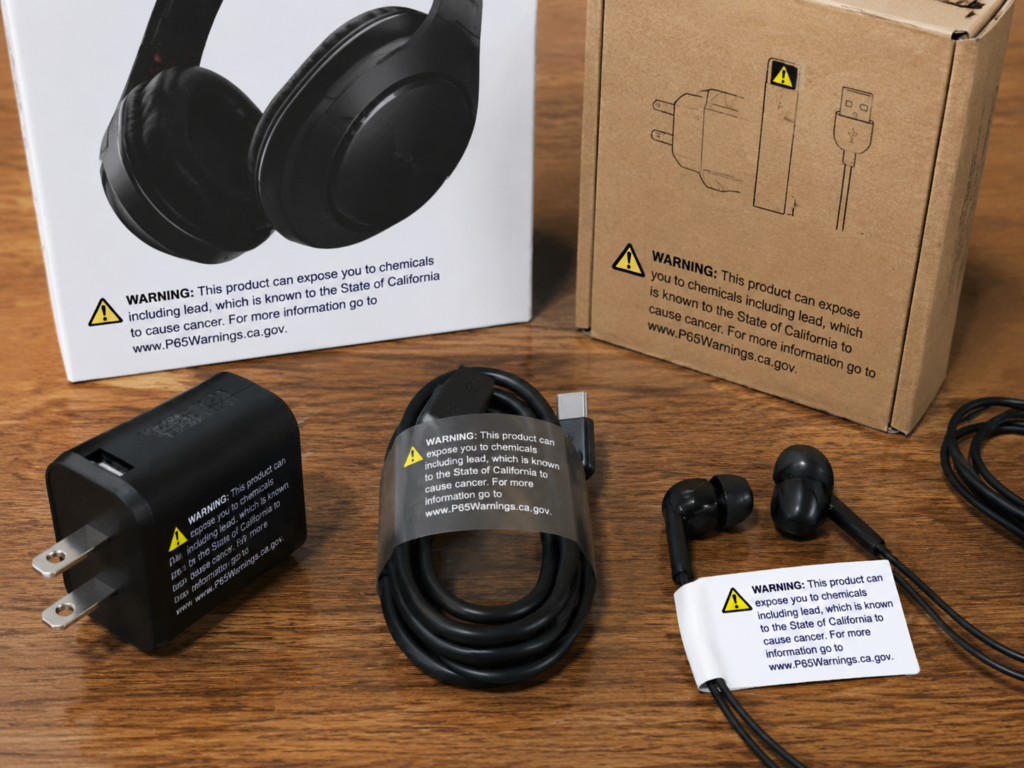
Many people’s first reaction is: Is this another mandatory certification? Do all products have to undergo laboratory testing before they can be sold? Is it illegal as long as a product contains regulated substances?
In fact, these are all common misconceptions. The essence of California Proposition 65 is a set of “risk notification” rules, not a product safety certification, and there is no official unified “California Proposition 65 certification”. This article, from the perspective of consumer electronics products, covers the entire process from assessment triggering, assessment methods, result interpretation to compliance implementation, helping you independently judge core issues and avoid common pitfalls. This article only focuses on consumer exposure scenarios of consumer electronics products, their packaging, and sales pages, and does not expand on other areas covered by Proposition 65 such as drinking water sources and workplaces.
First, Get the Basics Right: Proposition 65 Is Not a Mandatory Certification/Testing System
The official name of California Proposition 65 is the Safe Drinking Water and Toxic Enforcement Act (Proposition 65, often abbreviated as Prop 65), a ballot initiative passed by California in 1986. Its core logic can be summarized as follows: When a business knows or should know that consumers will be exposed to carcinogenic or reproductive toxic substances on the list through products, packaging, or sales scenarios, it must provide clear warnings that comply with the rules, unless safe harbor, exemption, no-exposure facts, or other statutory defenses apply.
Conversely, businesses do not only have one defense path of “proving that exposure is below the safety threshold”: if they can prove that there is no relevant exposure, that exemption conditions are met, or that there is scientific evidence proving that the risk is negligible for substances without a safe harbor, no warning label is required.
In other words, Proposition 65 regulates “whether the risk is notified”, not “whether products can contain harmful substances”. There is neither an officially issued “Proposition 65 certification” nor a mandatory requirement that all products must undergo laboratory testing before being sold.
Why Are Electronic Products Prone to Triggering Proposition 65?
Consumer electronics products are often associated with Proposition 65 for two main reasons:
First, their material composition is complex. Components such as solder, batteries, soft plastics, wire sheaths, metal plating, and printing inks themselves tend to use chemical substances on the list;
Second, there are many user contact scenarios. Holding, wearing, chewing by children, release due to heating during charging, etc., may all form actual exposure.

Of course, this does not mean that all electronic products sold to California must have warning labels — whether the notification obligation needs to be fulfilled should be comprehensively judged based on the listing status of substances, exposure scenarios, and defense bases. Even cross-border e-commerce products, second-hand goods, and imported products require compliance assessment as long as they are sold to California consumers, but if they meet the defense conditions after assessment, no labels are needed.
4 Cognitive Misconceptions to Avoid for Beginners
People who are new to Proposition 65 are easily misled by various information. First, clarify these 4 most common misconceptions, so that you will not go astray with the following content:
First, containing regulated substances ≠ mandatory warning labels. The core of whether a warning is needed is “whether there is exposure”, not “whether the substance is present”. For example, the solder on the circuit board inside a mobile phone contains lead, but users cannot touch it during normal use and it will not leak, so no warning label is required for this lead; but if the plasticizer in the sheath of a headphone cable can migrate to the skin, assessment is required. Conversely, internal components are not absolutely safe. If harmful substances are exposed after normal wear and tear of the product, or battery leakage may come into contact with users, they must also be included in the assessment.
Second, compliance ≠ completely free of harmful substances. The requirement of Proposition 65 is “notify the risk”, not “prohibit the use of harmful substances”. If the exposure level of the product indeed does not meet the defense conditions, but you affix a compliant warning label as required, it meets the requirements of Proposition 65.
Third, RoHS/REACH compliance ≠ Proposition 65 compliance. The regulatory logics of the three are completely different: RoHS focuses on concentration limits in homogeneous materials, for example, requiring lead in plastics to not exceed 1000 ppm; REACH includes mechanisms such as substance restriction and information transmission for substances of very high concern (SVHC); while Proposition 65 focuses on the actual daily exposure of users in specific scenarios. The three cannot be directly interchanged. Even if a product has passed RoHS and REACH, it may not meet the requirements of Proposition 65.
Fourth, affixing a warning ≠ everything is fine. If the content, format, position, and display timing of the warning do not meet official requirements — for example, the text is too small to see, or hidden at the very bottom of the product detail page — it is still a violation and may still be held accountable.
Do You Need an Assessment? Scope of Application and Trigger Judgment
After clarifying the basic logic, you can judge whether to start an assessment from dimensions such as scope of application and responsible entities.
Which Electronic Products Need to Consider Compliance?
Basically all electronic products sold to ordinary consumers in California are within the scope of assessment. Common ones include:
- Mainstream consumer electronics: mobile phones, headphones, computers, small home appliances, wearable devices, smart home products, gaming devices, etc.;
- Accessories and packaging: chargers, data cables, spare batteries, protective cases, printed labels, plastic packaging bags;
- Easily overlooked categories: industrial/medical electronics for ordinary consumers, repair parts, promotional gifts — even free gifts, as long as they are sold to California together with the product, also require assessment.
Who Bears the Compliance Responsibility?
The responsible entities of Proposition 65 cover the entire sales chain: manufacturers, importers, distributors, retailers, and cross-border e-commerce sellers all need to fulfill their respective compliance obligations according to their own roles and the degree of control over products/packaging/sales channels. There is no unified rule that one party “bears all final responsibility”.
Many sellers ask: The supplier gave me a compliance statement, so do I not have to worry about it? The answer is no. Supplier material declarations can only be used for supply chain risk screening, contractual liability division, and evidence retention, and cannot automatically exempt importers, brand owners, or sellers from their statutory obligations. You are still responsible for the compliance of your own link.
When Can Routine Laboratory Testing Be Waived?
Proposition 65 does not mandate that all products must undergo laboratory testing, but not testing does not mean that you do not have to bear the burden of proof — you must retain sufficient assessment evidence to prove that your product is compliant. Usually, routine laboratory testing can be waived in two cases:
First, you have complete supply chain material declarations + historical test data of similar products, and after risk classification, the exposure is judged to be extremely low. For example, for a USB flash drive with a full metal shell, the supplier has provided a material composition declaration, and products with the same process have been assessed before, with exposure far below the safety threshold, so there is no need to retest every time.
Second, you can prove through exposure modeling and expert review that there is no relevant exposure of the product, or that the exposure level is far below the threshold. For example, if harmful substances are completely sealed inside the product and will not be released during normal use or wear, and a toxicology expert has issued an assessment report, actual testing can be waived.
It is particularly important to note that many substances on the list do not have official safe harbor values published. For such substances, the logic of “no warning if below the limit” cannot be directly applied, and scientific exposure assessment, official regulatory guidelines, etc. must be used as the basis for defense.
Which Scenarios Require Priority Assessment?
If your product falls into the following high-risk scenarios, it is recommended to arrange assessment first:
- Containing high-risk materials such as soft plastics, PVC wires, solder, metal plating, ink pigments, etc.;
- Electronic products where children’s access and chewing are reasonably foreseeable scenarios, such as children’s watches and children’s headphones;
- Components that generate heat, experience friction, or are prone to wear, such as charger shells, headphone cables, and key rubber.
The Real Conditions for Small Business Exemption
Many people have heard that “small businesses can be exempted”, but they have deep misunderstandings about the exemption conditions. First, the core standard for exemption is the business has fewer than 10 employees. In addition, government agencies and some specific entities also meet the exemption conditions, but the specific employee statistical caliber (such as whether full-time/part-time employees, employees of affiliated enterprises, the time point of judgment, etc. are included) shall be subject to the current regulatory interpretations of OEHHA and California. You cannot claim exemption solely based on “low sales volume” or “occasional sales”.
Second, what is exempted is only the “warning obligation” under Prop 65. It does not mean that you can sell products containing harmful substances at will, nor does it exempt products from meeting the requirements of other California or federal regulations. More importantly, brand owners and importers upstream in the supply chain cannot automatically share the exemption of downstream small businesses — for example, if you are a large brand and find a small distributor with only 5 people to sell goods in California, you as the brand owner still have to bear your own compliance responsibility, and cannot use the distributor’s small business status as a shield.
What to Assess: Identification of Regulated Substances and Exposure Logic
After confirming that an assessment is needed, the first step is to figure out: which substances exactly need to be assessed? What is the core criterion for judgment? Many people think it is to test whether there are harmful substances in the product, but that is completely not the case — the core of Proposition 65 is “exposure”, not “content”.
Basic Rules for Regulated Substances
The list of regulated substances for Proposition 65 is maintained by the California Office of Environmental Health Hazard Assessment (OEHHA for short, the official agency responsible for list updates). Currently, there are more than 900 substances, and the specific number will dynamically change with official updates.
When verifying substances, you cannot only look at the name. You must check the substance name, CAS number (the unique number of a chemical substance, equivalent to the “ID card” of each chemical substance), toxicity type (carcinogenic/reproductive toxicity), and list release date. Only carcinogenic or reproductive toxic substances clearly listed on the list are within the regulatory scope.
High-Risk Substance Categories That Electronic Products Need to Prioritize for Verification
In consumer electronics products, there are several categories of substances that are “frequent visitors” triggering Proposition 65, but note: not all similar substances are regulated, and not all components necessarily contain these substances. You need to verify the specific CAS number, official listed form, toxicity endpoint, and actual formula:
- Lead and lead compounds: May be present in solder, batteries, circuit boards, metal plating, glass, ink pigments;
- Specific phthalates (plasticizers): May be present in PVC wires, soft plastic shells, headphone cables, key rubber, with the function of making plastics soft and elastic;
- Bisphenol A (BPA): May be present in some plastic shells and coatings;
- Formaldehyde: May be present in certain resins, adhesives, coatings, or formulations that release formaldehyde;
- Antimony trioxide (flame retardant): May be present in some plastic shells to improve flame retardant performance;
- Specific nickel compounds: May be present in metal shells and interface plating that are in long-term skin contact — note that not all metallic nickel is regulated, only specific nickel compounds listed on the list require assessment.
Three-Step Method for Substance Identification
You can use a simple three-step method to initially screen for high-risk substances in products:
First, check the latest OEHHA list to confirm whether the target substance is listed and whether the corresponding toxicity endpoint is carcinogenic or reproductive toxicity;
Second, verify the specific form and CAS number of the substance to exclude similar chemical substances that are not listed. For example, for nickel, metallic nickel is not on the list, but certain nickel compounds are;
Third, combined with the position of the component in the product, the user’s usage scenario, and the release mechanism of the substance, judge whether it is possible for consumers to actually come into contact with it.
Core Logic: Assess “Human Exposure” Rather Than “Total Product Content”
This is the most core rule of Proposition 65, and you must remember it firmly: Only count the amount that users actually contact during normal and foreseeable use, not the amount that is sealed inside the product and has no possibility of release at all.
For example, the lead content of the circuit board inside the product is very high, but users cannot touch it during normal use and will not come into contact with it due to wear or leakage. Then this lead does not count as “exposure” and does not need to be included in the assessment. Conversely, if it is lead in the surface coating that users touch with their hands every day, and the lead will migrate to the skin, then the exposure level must be calculated.
Extreme abnormal scenarios such as intentional disassembly and product abuse do not need to be included in the assessment. For example, if a user smashes a mobile phone and eats the parts inside, this situation is not within the scope of the regulations.
Common exposure routes include skin contact, oral ingestion, and inhalation. The actual assessment priority needs to be determined based on product use, user groups, contact frequency, contact medium, and substance release mechanism, and there is no unified general ranking:
- Skin contact: It is the most common exposure route in consumer electronics. For example, holding a mobile phone shell, wearing a smart watch strap, and pressing keys all belong to skin contact;
- Oral contact: Assessment is only required when children’s chewing, licking, or users touching food after touching the product are reasonably foreseeable scenarios. For example, for children’s watches, since the target users are children, chewing is a reasonably foreseeable scenario, so oral exposure needs to be assessed; ordinary home routers are usually not chewed by children, so oral exposure generally does not need to be assessed — this is a judgment based on usage scenarios, not an automatic exemption by category. If the product design or marketing targets children, reassessment is required;
- Inhalation exposure: For example, products release volatile substances when heated, or wear generates dust. This type of exposure requires assessment only when there is clear evidence of substance properties and release concentration, and not all products need to be tested.
Easily Overlooked Assessment Scope
Many people only test the main unit when doing assessments, and end up failing on details. Two categories of scope are particularly easy to overlook:
First, printing inks and plastic bags of packaging, manuals, and tapes. These packaging materials delivered to consumers together with the product also require assessment;
Second, included accessories, such as chargers, data cables, spare batteries, and promotional gifts. Even if they are free, as long as they are sold to California together with the product, they must be included in the assessment scope.
How to Assess: Core Process and Methods of Exposure Assessment
After clarifying the assessment objects, the next step is the specific assessment methods: what samples to use? What testing method to choose? How to judge whether the plan is reliable?
Sample and Scope Determination Before Assessment
First of all, it must be clear that the samples used for assessment must be mass-produced finished products, and laboratory prototypes or hand-made samples cannot be used — the process and materials of prototypes may be very different from mass-produced versions, and the test results are not representative.
When sampling, the design should be centered around potential exposure parts, separable components, surface coatings, and contact frequency. There is no need to disassemble the product into all the smallest homogeneous units for full testing. For example, when testing Bluetooth headphones, focus on the parts that users directly contact, such as the earcup soft rubber, cable sheath, and keys, and there is no need to test the solder of internal chip pins, because users cannot touch them.
For products with batteries, the assessment should cover normal use and reasonably foreseeable minor damage and leakage scenarios. Extreme liquid leakage scenarios caused by serious accidents, intentional disassembly, or abuse are not within the scope of routine assessment. You cannot take all extreme damage situations as test conditions, nor can you directly default that “having a battery means there is a risk”.
For different models of the same series, if there are changes in materials, formulas, suppliers, processes, surface treatments, exposure parts, or usage scenarios, a change impact assessment must be carried out first to determine whether the changes involve target regulated substances, exposure routes, or release mechanisms; only when representative sample test data and change management records can prove that the materials, processes, and exposure scenarios of high-risk components are completely consistent with the assessed products, can the original assessment results be reused or partially cited. They cannot be directly applied across models without basis.
Two Common Assessment Methods and Their Applicable Scenarios
Proposition 65 does not mandate a specific testing method. The commonly used assessment methods in the industry are divided into two categories, each with applicable scenarios:
The first category is rapid screening: X-ray Fluorescence Spectroscopy (XRF). It is what people often call a handheld spectrometer, which can produce results by scanning the product. It is a non-destructive testing method that does not require disassembling the product, and is suitable for on-site batch screening and verification of material uniformity.
But its limitations are also obvious: it is easily interfered by coatings and matrices. For example, if there is a plating on the surface and other materials underneath, the results may be inaccurate; it is inaccurate for light elements, organic substances, and low-concentration substances. For example, organic substances such as phthalates cannot be detected by XRF. Its probative force depends on the instrument calibration status and sample representativeness. For critical values, complex coatings, or disputed cases, XRF results cannot be used as final evidence, and confirmatory methods must be used.
The second category is laboratory confirmation: professional instrumental analysis after chemical extraction. That is, the sample is processed according to specifications, the target substance is extracted, and then tested with high-precision instruments. For example, Inductively Coupled Plasma Mass Spectrometry (ICP-MS) is commonly used for heavy metal testing, and Gas Chromatography-Mass Spectrometry (GC-MS) is commonly used for organic substance testing. This type of method has high sensitivity and accurate results, and can be used as compliance evidence. Although there is no mandatory designated method, the testing and exposure calculation processes must comply with industry standards.
3 Criteria for Judging the Rationality of an Assessment Plan
To judge whether an assessment plan is reliable, mainly look at three points:
First is method matching: A capable laboratory or toxicology expert must establish an exposure model based on the properties of the substance, contact medium (skin/oral/inhalation), contact time, ingestion behavior, and release mechanism. There is no unified mandatory testing process, and not all products follow the same template.
Second is scenario authenticity: The test should simulate normal and foreseeable usage scenarios. For example, skin contact should consider factors such as sweating (sweat will accelerate substance migration), heating during charging (high temperature will increase substance release), friction, and aging. Testing cannot be done under ideal laboratory conditions.
Third is rationality of children’s assessment: Oral exposure assessment is only required when children’s contact, chewing, and licking are reasonably foreseeable scenarios. You cannot add children’s oral testing for all products just for “safety”, which unnecessarily increases costs.
Requirements for Selecting Assessment Institutions
When selecting an assessment institution, remember three criteria, and you will basically not fall into big pitfalls:
First, prioritize laboratories with ISO 17025 accreditation whose accreditation scope covers the corresponding testing methods. ISO 17025 is an internationally recognized laboratory capability accreditation certificate, proving that its testing capability and management system meet industry standards. Prop 65 itself does not mandate that all assessments must be completed by ISO 17025 laboratories, but formal and admissible evidence usually needs to meet this capability requirement; if it involves toxicology modeling or expert defense for substances without safe harbor, it is also necessary to verify the professional experience of the responsible personnel in toxicology or related fields and the sufficiency of the basis for the report.
Second, they must have relevant experience in Proposition 65 exposure assessment for electronic products. Otherwise, there may be problems such as incorrect testing methods and non-compliant exposure calculation, and the final report will be unusable.
Third, any institution that promises “guaranteed pass” should be directly blacklisted. Formal institutions only produce real test results. Fake reports not only have no legal effect, but will also aggravate responsibility if something really goes wrong.
How to Read Results: Safe Harbor Rules and Compliance Judgment
After getting the assessment report, the key is to understand the definition of safe harbor, how to read the core information, and common interpretation misconceptions.
Plain Language Explanation of Safe Harbor Levels
“Safe harbor level” is a regulatory risk benchmark announced by OEHHA for judging whether the warning obligation needs to be fulfilled. You can understand it as the “statutory exemption line” — but it only applies to substances for which the corresponding threshold has been published, and must match the correct toxicity endpoint and exposure route.
Safe harbors are divided into two categories, corresponding to different toxicity endpoints:
- No Significant Risk Level (NSRL): Corresponding to carcinogenic substances, it refers to the maximum exposure level that will not exceed the statutory acceptable carcinogenic risk level under the lifetime daily exposure assumption set by the regulations;
- Maximum Allowable Dose Level (MADL): Corresponding to reproductive or developmental toxic substances, it refers to the maximum daily exposure level that will not produce observable reproductive/developmental toxic effects under the exposure assumption set by the regulations.
There are three key points to note:
First, the safe harbor is a regulatory benchmark for judging warning obligations, not a product safety certification, nor a material concentration limit applicable to all exposure routes;
Second, the same substance may have different safe harbor values due to different toxicity endpoints and different exposure routes;
Third, a large number of substances on the list do not have published safe harbor levels. For such substances, the logic of “no warning if below the threshold” cannot be applied. It is necessary to prove that the exposure risk is negligible through scientific exposure assessment, expert argumentation, or official regulatory guidelines, otherwise the warning obligation may need to be fulfilled.
4 Core Information to Check in an Assessment Report
You don’t have to read the report from start to finish. Focus on 4 core pieces of information, and you can quickly judge whether the report is useful and what the conclusion is:
- The assessed substances, tested parts, and methods used;
- The measured value of each substance (whether it is total content, migration amount, or release amount) and the corresponding unit;
- The matched safe harbor value or defense basis — if it is a substance with a safe harbor, it must correspond to the correct exposure route and toxicity type. For example, if the test is for lead in skin contact, you cannot compare it with the oral safe harbor; if it is a substance without a safe harbor, check whether there is a corresponding scientific assessment or expert argumentation;
- The final exposure assessment conclusion. A qualified assessment report should not only give a simple conclusion of “pass/fail”, but also list the key assumptions for converting total content, migration amount, or release amount to daily exposure, including contact frequency, contact time, contact area, or ingestion ratio, and clearly state the toxicity endpoint and exposure route corresponding to the safe harbor to ensure that the conclusion is traceable.
Judgment Logic for Common Results
For substances with published safe harbors, assessment reports usually have three types of results, and the corresponding handling methods are very clear:
- Result 1: Exposure is below the corresponding safe harbor: If the sample is representative, the exposure route matches the toxicity endpoint, the calculation method complies with industry standards, and the business has no other circumstances requiring the performance of warning obligations, no warning label is needed. Just keep the assessment report as compliance evidence;
- Result 2: Exposure is above the safe harbor: It is necessary to affix a fully compliant warning label according to official regulations. The content, format, position, and display channel of the warning must all meet the requirements to be considered as fulfilling the warning obligation;
- Result 3: Insufficient data: For example, the detection limit of the test method is higher than the safe harbor (meaning that the lowest undetectable value has already exceeded the safety threshold, so the result has no reference significance), or the sample is not representative. In this case, supplementary testing or reassessment is required.
For substances without published safe harbors, it is necessary to combine exposure assessment data and expert argumentation opinions to judge whether they meet the statutory defense conditions, and then decide whether to affix a warning label.
The common premise of the above judgments is: the business is an applicable responsible entity, there is indeed an exposure fact, and there are no other exemption or defense circumstances.
4 Common Errors in Result Interpretation
Many people tend to make low-level mistakes when reading reports, leading to misjudgment. These 4 pitfalls must be avoided:
First, “not detected” ≠ completely absent. Not detected only means that the amount of the target substance is below the detection limit of the current test method, and does not mean that it is completely absent. For substances with a safe harbor, you must confirm that the detection limit of this method is lower than the corresponding safe harbor, otherwise “not detected” is meaningless — for example, if the safe harbor is 0.5 μg/day and the detection limit of your method is 1 μg/day, even if the report says “not detected”, the actual exposure may be 0.8 μg/day, which has already exceeded. Formal reports will definitely distinguish between the three situations of “not detected”, “below the limit of detection”, and “not tested”.
Second, high total content ≠ non-compliant. Even if the total content of the substance is very high, if it is sealed inside the product with no possibility of release/contact, or the actual release amount is extremely low, it will not trigger the warning requirement.
Third, material concentration (e.g., ppm) cannot be directly compared with safe harbor (e.g., μg/day). The safe harbor is the user’s daily exposure dose, while the material concentration is the proportion of the substance in the material. The daily exposure must be calculated by combining contact mass, migration rate, contact frequency, contact time, and ingestion assumptions before it can be compared with the safe harbor. Thresholds for different exposure routes are also not interchangeable. For example, the oral MADL cannot be used to judge the exposure level of skin contact.
Fourth, don’t memorize values by rote. For example, the commonly mentioned MADL for oral reproductive toxicity of lead is about 0.5 μg/day. Note: This value only corresponds to the oral reproductive toxicity endpoint of lead, is not the ppm concentration limit of lead in materials, and cannot be directly used for other exposure routes such as skin contact and inhalation; comparison can only be made after completing the daily exposure conversion for the corresponding route and confirming that the toxicity endpoints are completely matched. The specific values shall be subject to the latest official safe harbor table released by OEHHA.
What to Do After Assessment: Decision Logic for Compliance Implementation
After understanding the results, the final step is implementation: should you change the materials or affix warning labels? How to choose for different situations? How to maintain continuous compliance?
Basic Process for Compliance Implementation
The normal compliance process can be divided into four steps. Follow them in order and you won’t get confused:
First, supply chain self-assessment: collect material declarations from all suppliers and test reports provided by suppliers, and mark high-risk components;
Second, risk classification: low-risk products are assessed using non-testing methods (e.g., supply chain declaration + exposure modeling), and high-risk products are arranged for laboratory testing or complete exposure assessment;
Third, based on the assessment results, choose material rectification or affix compliant warning labels;
Fourth, retain all compliance evidence and conduct regular review and updates.
Compliance Decisions for 5 Scenarios
For your convenience to quickly correspond to your own situation, here are the corresponding actions for 5 common scenarios:
| Scenario | Corresponding Action |
|---|---|
| Exposure is below the corresponding safe harbor / no relevant exposure | No need to affix warning labels, retain assessment evidence for future reference |
| No corresponding safe harbor, but sufficient scientific assessment proves that the risk is negligible | No need to affix warning labels, retain expert assessment report |
| Exposure exceeds the safe harbor, and material rectification cost is controllable | Replace high-risk substances and re-complete exposure assessment |
| Exposure exceeds the safe harbor, and rectification is not feasible or the cost is too high | Affix compliant warning labels according to official requirements, retain evidence |
| Unable to reliably judge exposure risk | Conduct supplementary testing or expert assessment, temporarily do not sell to California |
It is particularly reminded that: warnings only fulfill the notification obligation of Proposition 65, do not equal product safety endorsement, and cannot replace the compliance requirements of other regulations. For example, FDA, RoHS, etc. still need to be complied with.
Warning Versions and Sales Channel Requirements
Proposition 65 warnings are divided into two types: short-form and long-form, both of which have official templates. They must clearly indicate whether it is a carcinogenic risk or reproductive toxicity risk, and cannot be vague. The short-form warning rules have been revised and may be adjusted with regulatory updates. Before use, be sure to check the current effective official safe harbor warning text of OEHHA, confirm the applicable conditions, format requirements, and transition period arrangements, and do not directly use the old version of the template.
Prop 65 does not require that warnings must be set on the product itself, outer packaging, shelves, and online pages at the same time in all scenarios. The specific carriers used depend on the responsible entity, sales channel, and current safe harbor rules. The core requirement is to allow California consumers to clearly learn about the risk before making a purchase decision:
- If you are a product manufacturer or importer, you usually need to ensure that the product or its packaging has a compliant warning, or provide a pre-purchase visible warning at the sales link;
- In physical retail scenarios, distributors can choose to set pre-purchase visible warnings on shelves and display areas to replace or supplement the labels on product packaging;
- In online sales scenarios, the warning must be directly associated with the specific product page, be prominently visible before purchase, and cannot only be placed in the website footer, general FAQ, or secondary links that require multiple clicks to find. The specific display method must comply with the allowable scope of current safe harbor rules.
Practical Methods for Supply Chain Risk Sharing
Compliance is not your sole responsibility. You must learn to reasonably share risks with the supply chain:
- Clearly define Proposition 65 compliance responsibilities in procurement contracts, and require suppliers to provide true material composition declarations;
- Agree that if the OEHHA list is updated or the supplier changes materials, they must notify you in advance;
- Supplier declarations can only be used as auxiliary evidence of risk, and cannot replace the exposure assessment of finished products. The specific evidentiary effect can refer to the description in the previous chapter “Do You Need an Assessment?”.
Maintenance Requirements for Continuous Compliance
Proposition 65 compliance is not a one-time thing. There are several situations where reassessment or review is necessary, and the judgment logic is consistent with the rules for reusing reports of the same series: first assess the impact of changes on exposure risk, and if high-risk components, target substances, or usage scenarios are involved, reassessment is required:
- Product modification, such as changing materials, batteries, solder, or changing suppliers;
- When OEHHA’s regulatory list or safe harbor values are updated, timely review existing products;
- Assessment reports cannot be reused across models without basis. If they are to be cited for series products, there must be representative sample test data and change management support to prove that the high-risk components of different models are completely consistent.
Pitfall Avoidance Guide: Practical Misconceptions and Violation Consequences
After talking about the formal process, let’s talk about the most common pitfalls in practice and what the consequences of violations are — there is no need to panic excessively, nor should you take it lightly.
4 Common Misconceptions in Practical Operation
First, use raw material reports to replace finished product assessment. In the process of making raw materials into finished products, new risks may be introduced due to processes such as welding, spraying, and assembly. Qualified raw materials do not mean that the exposure of finished products is qualified. It must be judged in combination with the actual usage scenarios of finished products.
Second, only test the average value of the whole machine. For example, the phthalate content in the key rubber of headphones is very high, but if you grind the entire headphone to test the average value, the result will be diluted, leading to misjudgment. The correct approach is to focus on testing high-risk small components, not the average of the whole machine.
Third, think that a warning equals a safety certification. A Prop 65 warning is only a risk notification, does not mean that the product is “safe”, and cannot exempt from the responsibilities of other regulations and consumer protection laws. If the product really causes personal injury due to harmful substances, compensation still needs to be paid.
Fourth, think that the assessment report is permanently valid. Product modifications, material changes, and regulatory updates will all invalidate old reports. You cannot use one report for several years.
The Real Rules for Violation Accountability
Many people think that Proposition 65 “fines hundreds of thousands at every turn” when they hear it. In fact, it is not that exaggerated, but it should not be underestimated either:
- In addition to public power agencies such as the California Attorney General and district attorneys who can initiate or participate in enforcement actions according to law, private enforcers (including individuals and environmental organizations) can also file lawsuits, but usually need to first issue a statutory 60-day notice to the business and relevant law enforcement agencies; during the notice period, the regulatory agency can decide whether to intervene in enforcement, and the business can self-assess rectification, settlement, or prepare defenses, but this procedure is not a statutory “rectification grace period”, and does not mean that the business can necessarily be exempted from liability through rectification. The specific scope of application and exceptions shall be subject to current law.
- The fine standard is a maximum civil penalty of $2,500 per violation per day of violation. The actual amount will be determined by court judgment or settlement between the two parties based on the circumstances of the violation, duration, and the situation of the responsible entity, and is not always fined at the maximum;
- In addition to fines, you may also need to bear the attorney’s fees of the plaintiff, trigger removal from e-commerce platforms, and affect brand reputation.
In scenarios only involving Prop 65 warning obligations, if the business holds true and sufficient assessment evidence and has fulfilled the warning obligation in accordance with applicable rules, the fact that the product contains listed substances usually does not constitute a separate violation of failure to warn. However, if the warning content is non-compliant, assessment evidence is insufficient, other California or federal regulations are violated, or there are situations such as false publicity or personal injury, corresponding legal responsibilities may still be borne.
4 Quick Self-Check Questions
If you are not sure whether your product needs an assessment now, you can ask yourself four questions first for a quick preliminary judgment:
- Is my product sold to California consumers?
- Does the product contain high-risk materials such as soft plastics, solder, metal plating, ink, etc.?
- Will users (especially children) have long-term contact with or chew the product in reasonably foreseeable scenarios?
- Do I have supply chain declarations or formal assessment reports to support compliance?
As long as the product is sold to California consumers, and there are both high-risk materials and reasonably foreseeable exposure scenarios, it should enter the formal risk assessment process; if there is still a lack of supply chain declarations or exposure assessment evidence, priority should be given to supplementing evidence or arranging testing.
Practical Tool Templates
For your convenience to get started quickly, here are 4 tool templates that can be directly applied, covering the entire process of self-check, test planning, report review, and regulatory tracking:
One-Page Compliance Self-Check Form
Used for quick preliminary judgment of whether a product needs further assessment:
| Check Dimension | Specific Check Items | Check Result (Yes/No/Uncertain) | Next Action |
|---|---|---|---|
| Sales scope | Whether sold to California consumers (including cross-border e-commerce, independent sites, distribution, second-hand sales) | ||
| Material risk | Whether containing high-risk materials such as soft plastics, PVC wires, solder, metal plating, ink pigments, batteries, etc. | ||
| Contact scenario | Whether there are reasonably foreseeable exposure scenarios such as long-term skin contact, chewable by children, release due to heating, prone to wear, etc. | ||
| Existing evidence | Whether there are valid supply chain material declarations, historical exposure assessment reports, or expert review opinions |
Test Sample Matrix Template
Used for planning the assessment scope to avoid missing high-risk parts in testing:
| Component Name | Material/Supplier | Contact Scenario (Skin/Oral/Inhalation/No Direct Contact) | Target High-Risk Substances | Risk Level (High/Medium/Low) | Assessment Method (XRF Screening/Laboratory Confirmation/Non-Testing Assessment) |
|---|---|---|---|---|---|
| (Example: Headphone cable sheath) | (Example: PVC/XX Supplier) | (Example: Long-term skin contact) | (Example: Phthalates, lead) | (Example: High) | (Example: Laboratory confirmation) |
Assessment Report Review Checklist
Used for quickly judging whether the report is credible and can be used as compliance evidence:
| Review Item | Check Points | Compliant? (Yes/Needs Supplement) |
|---|---|---|
| Institutional qualification | The laboratory has ISO 17025 accreditation (or the corresponding toxicology assessment personnel have professional qualifications), and the capability scope covers the corresponding method | |
| Sample representativeness | The test sample is a mass-produced finished product, and sampling covers high-risk exposure parts; reuse for the same series is supported by change management, with sufficient equivalence demonstration | |
| Method matching | The testing/assessment method matches the target substance and exposure route, and complies with industry standards | |
| Method sensitivity and sufficiency of argumentation | For substances with safe harbor: the detection limit/quantitation limit of the test method is lower than the corresponding exposure threshold, sufficient to support comparison; For substances without safe harbor: there is sufficient release, migration or exposure modeling data and expert argumentation to support the conclusion | |
| Exposure calculation chain | List the key assumptions (contact frequency, time, area/ingestion ratio, etc.) for converting measured values to daily exposure, corresponding to the correct toxicity endpoint and exposure route | |
| Conclusion logic | The assessment conclusion matches the data, threshold or defense basis, with no contradiction |
Regulatory Update Record Form
Used for tracking regulatory changes and timely reviewing the compliance of existing products:
| Update Date | Update Type (List/Safe Harbor/Warning Rules) | Involved Content (Substance Name/Rule Item) | Affected Product Series | Review Conclusion (No Adjustment Needed/Needs Reassessment/Needs Warning Update) | Responsible Person/Completion Time |
|---|---|---|---|---|---|
After mastering these rules, businesses can continuously review around five core dimensions: sales scope, material risk, exposure route, evidence retention, and warning compliance. The core of California Proposition 65 is “truthfully notify risks” rather than “completely prohibit harmful substances”. The key to compliance is not to pursue the so-called “official certification”, but to do a good job in exposure assessment, retain complete evidence, and fulfill the notification obligation as required, so as to effectively reduce compliance risks.