
Whether you are a cross-border seller serving the North American market, or someone buying electrical household products in the United States or Canada, you have most likely seen the ETL and UL marks. Many people feel confused when they encounter them for the first time: Are both of these safety certifications? Which one is more formal? Which one is more cost-effective when applying for certification? Should you specifically choose products with the UL mark when shopping? Today we will thoroughly explain the core differences between these two certifications, covering basic fundamentals, selection logic, and pitfall avoidance tips. After reading this, you will be able to make judgments on your own.
First, Understand the Basics: ETL, UL, and the Most Critical NRTL
Before making comparisons, let’s first clarify the most core concepts to avoid getting more confused as we read on.
The Essence of Both: They Are Both Safety Passes for Electrical Products in North America
Simply put, both ETL and UL are third-party safety certification brands, whose function is to provide “safety endorsement” for electrical products — proving that the product has passed relevant safety tests, and that the manufacturing factory will accept ongoing supervision, so risks such as electric shock and fire are unlikely to occur under normal use.
The two have slightly different backgrounds: ETL is operated by the international testing organization Intertek, focusing on market-oriented services and a global network, with its common mark being “ETL Listed”; UL is operated by UL Solutions, a long-established U.S. safety institution that also participates in the formulation and maintenance of North American safety standards, with its common mark being “UL Listed”.
There is a very important clarification here: many people think that “UL standards are exclusive to the UL organization”, but this is not the case. The safety standards developed by UL are public standards commonly used across the entire North American industry. Any qualified institution can use this set of standards for certification, and ETL’s testing is also based on the same set of UL standards.
The scope of application of the two is basically the same, covering the vast majority of electrical products such as home appliances, lighting fixtures, power adapters, IT/audio-visual equipment, power tools, and industrial control equipment.
Common Official Qualification: NRTL
To judge whether a safety certification has official validity in North America, the core is not whether the brand is UL or ETL, but whether the issuing institution has NRTL qualification for the corresponding scope.
You can think of NRTL as a “compliance qualification license” issued by the U.S. government to certification bodies. Its official name is “Nationally Recognized Testing Laboratory”, which is uniformly accredited and managed by the U.S. Occupational Safety and Health Administration (OSHA). Only when the institution’s NRTL accreditation scope covers the safety standards of the corresponding product will the safety certification it issues be officially accepted by OSHA workplace regulators, local electrical authorities, purchasers, etc.
Both ETL and UL are in OSHA’s public NRTL list. As long as it is a product certification of the same category and same standard, the two have equal validity at the regulatory level. The core judgment logic is always to first look at the coverage of NRTL qualifications, not the certification brand name.
Unified Premise for Comparison
To avoid invalid arguments, all our subsequent comparisons are based on a unified caliber:
- The comparison is for conventional finished product safety certifications of ordinary consumer and industrial electrical products, and does not involve special fields with special rules such as medical, aviation, and gas;
- The default is the situation of the same product, based on the same set of U.S. safety standards, passing the test in one go, and having complete application materials;
- Other types of certifications such as EMC, wireless, and food contact can be provided separately by both institutions. They are not core differences, so we will not elaborate on the comparison.
Core Difference 1: Legal Effect and Market Recognition
The first question that many people care about most is “whether it is recognized”. We can look at it from two levels: the official regulatory level and the market practice level.
Official Regulatory Level: Equal Effectiveness Has Premises
First of all, it must be clear: under the premise that the same product applies the same safety standard, and the issuing institution’s NRTL accreditation scope fully covers that standard, ETL and UL certifications have equal effectiveness in terms of regulatory acceptance.
- U.S. customs clearance usually does not take ETL or UL marks as a general precondition (specific import compliance also depends on whether the product involves other mandatory requirements such as FCC, DOE, CPSC, etc.), and will not set up additional barriers just because it is ETL certified; federal-level safety spot checks on workplace products have the same recognition of both;
- Most local electrical codes recognize NRTL-listed products, but on-site installation acceptance is ultimately subject to the interpretation and project requirements of the local AHJ (Authority Having Jurisdiction over construction electrical);
- The same applies to the Canadian market. cETL and cUL with the “c” prefix have the same effectiveness as long as the institution’s corresponding qualifications cover Canadian safety standards;
- If the mark has the words “c-US” or “c UL us”, it means that the product has passed the corresponding safety certifications of both the U.S. and Canada, and can be sold in both countries.
Market Perception Difference: UL Has Higher Public Awareness
Although they are legally equivalent, because UL has a longer development history and deeply penetrated the North American consumer market in its early days, ordinary consumers are more familiar with the UL mark.
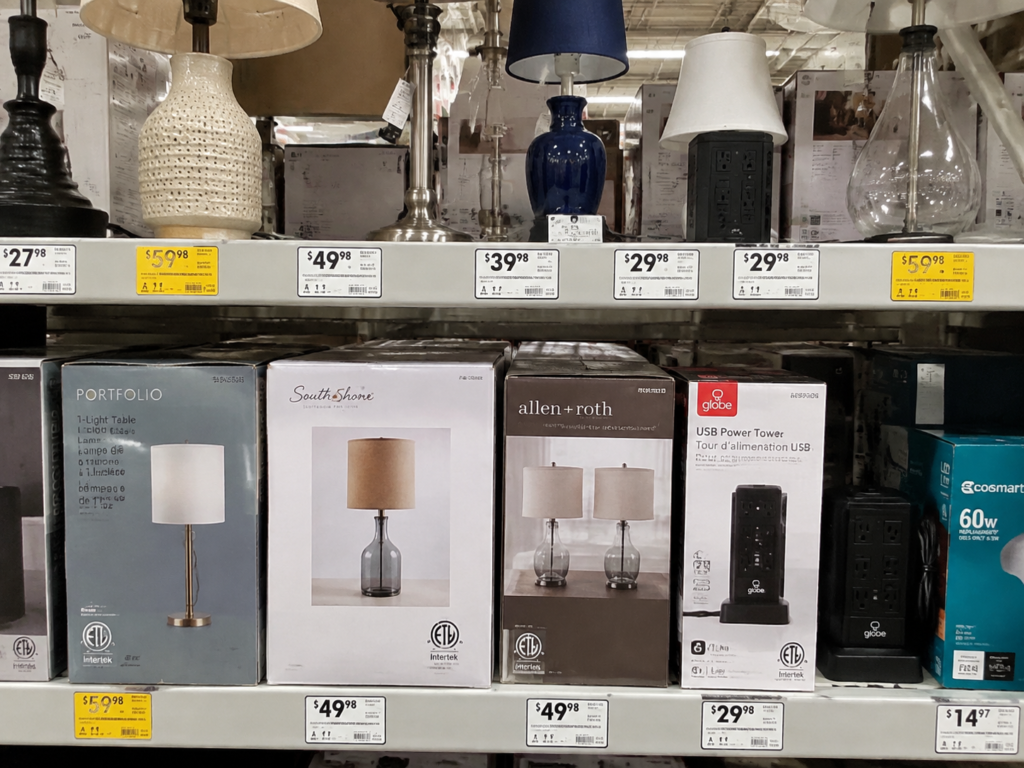
This perception difference is mainly reflected in the C-end retail market: for example, established chain supermarkets such as Walmart and Home Depot had an industry inertia of preferring UL in the early days, but now the vast majority of channels accept both certifications. In the industrial B-end market, customers’ perception of the two is basically the same; they value more whether there is NRTL qualification for the corresponding scope, and do not particularly struggle with the brand.
Special Cases With Differences in Recognition
There are several special cases that are not mandatory by regulation, where UL has higher acceptance:
- The construction electrical acceptance department (AHJ) of individual states or cities may have a local preference for UL, especially for fixed-installation electrical products in construction;
- Some brand owners and purchasers explicitly require products to have UL certification in their internal supplier rules;
- Specific categories on some e-commerce platforms may separately require UL certification (specifically, you should check the platform rules in advance).
Simply put: if any party explicitly requires UL, then UL has higher acceptance; if there is no explicit requirement, the two are completely equivalent.
Core Difference 2: Certification Process and Flexibility
The core certification processes of the two are actually the same, but there are general differences in the flexibility of practical operation.
The General Core Process Is Exactly the Same
Whether it is ETL or UL, the core links of conventional certification are: application initiation → data review → sample testing → first factory inspection → certification issuance → annual follow-up inspection. Both require that if there are changes to the product (such as replacing parts or modifying the structure), they must be reported to the institution, otherwise the certificate will become invalid.
The testing of both is based on exactly the same set of U.S. national safety standards, and there is no essential difference in whose requirements are stricter or looser.
Differences in Flexibility of Testing and Factory Inspection
The differences in practical operation are mainly reflected in flexibility:
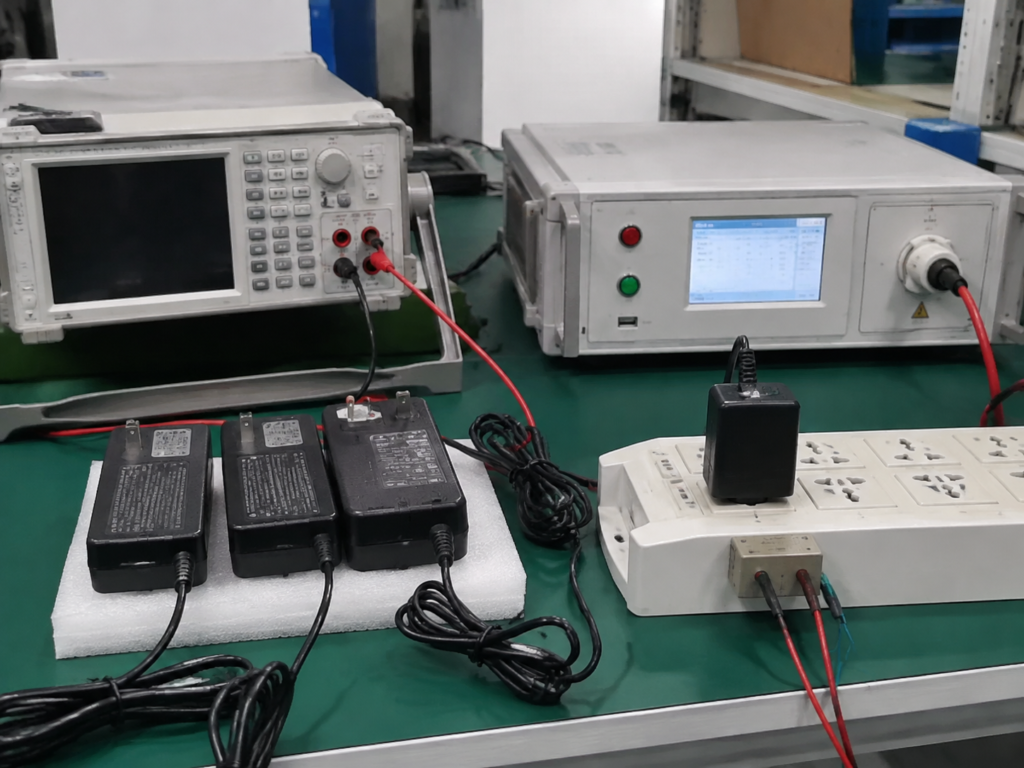
- Test execution: ETL has a more flexible mechanism for accepting data from enterprises’ own laboratories in some projects, but the premise is that the enterprise’s laboratory must pass ETL’s qualification review, and the corresponding project allows data recognition and meets the requirements of witnessed testing or document review; UL also has cooperation models such as customer laboratory authorization and witnessed testing, but its overall access rules are relatively stricter, and most conventional projects default to testing being completed in its designated or authorized laboratories.
- Factory inspection frequency: The frequency of follow-up inspections is jointly determined by the product risk level, certification scheme, factory historical compliance records, and institutional rules, and cannot be generalized by brand; relatively speaking, UL’s conventional inspection frequency is more stable, and ETL may arrange lower inspection frequencies for some low-risk projects with good compliance records, but there is no unified fixed rule of “once a year for low risk”.
- Inspection scheduling: ETL is usually more likely to adjust the inspection time to match the enterprise’s production schedule, for example, it can be postponed or advanced when rushing orders; UL’s inspection time is relatively fixed, with little room for adjustment.
Obvious Difference in Change Approval Efficiency
If the product has subsequent modifications, there is a common difference in the approval speed of non-critical changes (such as shell color, packaging design, manual text adjustments, which do not involve safety structure and key components): under the premise that the materials are complete and no supplementary testing is triggered, the common approval cycle for ETL is 1-2 weeks, and for UL it is 2-4 weeks, which is still affected by the project queue and data completeness.
If it is a change of key components (such as replacing the power supply, heating element, or core circuit board), both require re-evaluation or supplementary testing, and there is little difference in the cycle.
Of course, this difference in flexibility is not absolute. For highly complex industrial products and high-voltage products, the testing requirements and process control of the two are basically the same, and the difference will be very small; if the sample test requires multiple rectifications, the rectification cost and delay time are also basically the same, and the overall efficiency gap will be leveled.
Core Difference 3: Certification Cost and Cycle
Cost and cycle are the issues that many sellers care about most. We also explain them based on the premise of “same product, same standard, passing the test in one go, and complete materials”.
Total Cost: Common Gap of 15%-30%
For projects of conventional low-risk products, the total quotation of ETL in the industry is often lower than that of UL, with a common gap in the range of 15%-30%. The specific price difference fluctuates with product complexity, and the simpler the consumer product, the more obvious the price difference may be. The final quotation shall be subject to the applicable product standards, number of test items, number of factories, annual fee scheme, number of rectifications, and whether it is expedited.
In terms of cost composition, UL’s testing fees, factory inspection fees, and annual management fees are generally higher than ETL’s; in addition, there are hidden costs, such as subsequent modification fees and upgrade fees for safety standard updates, which are usually higher for UL.
Certification Cycle: ETL Is Generally Faster
The common empirical cycle for conventional low-risk products with complete materials and one-time pass: ETL is 4-6 weeks, UL is 6-10 weeks, which is still affected by product complexity and project scheduling.
Of course, neither cost nor cycle is fixed. There are three core influencing factors:
- Product complexity: For high-risk, high-voltage, and structurally complex products, the gap in quotation and cycle between the two will be significantly narrowed;
- Maturity of materials and samples: If the materials are incomplete and the samples require multiple rectifications, the cost and time of both will increase at the same time, with little difference;
- Number of production locations: The more factories there are, the higher the factory inspection fee. The rules of the two are the same on this point.
Core Difference 4: Mark Style and Usage Rules
Many people want to know how to distinguish the two certifications at a glance, and what rules there are for using the marks. Let’s explain them separately.
Meanings of Common Mark Types
The mark classification rules of the two are exactly the same, mainly divided into three types, don’t get confused:
- Listed: For finished products that can be sold and used independently. It is the most common mark consumers usually see on the housing of electrical appliances, representing that all safety tests have been passed;
- Recognized: Only for internal components, such as power boards and transformers. It can only be affixed to the component itself, cannot be affixed to the outer surface of the finished product, and does not mean that the entire finished product is qualified;
- Classified: It only means that the product has passed certification for specific performance under specific conditions (such as fire resistance rating), and is not equivalent to full safety certification.
Intuitive Distinction Between the Two Marks
The marks for finished product certification are easy to distinguish:
- The ETL finished product mark will have the words “ETL Listed” and the Intertek brand logo, with a unique control number next to it;
- The UL finished product mark will have the words “UL Listed” and UL’s circular ring logo, with a unique file number next to it;
- If it is a dual-country certification for the U.S. and Canada, the mark will have “c-US” or a similar dual-country mark, indicating that it meets the standards of both countries.
Difference in Strictness of Mark Usage Rules
The two have different control over the use of marks:
- ETL’s control is relatively loose. Products with ETL Listing can state in compliance statements that the product is tested and certified in accordance with applicable UL/ANSI safety standards, but it is absolutely not allowed to mislead consumers into thinking that the product has obtained UL Listed authorization, nor can it directly use the UL brand logo;
- UL has stricter control over the use of its own marks and names, and does not allow arbitrary mention of relevant content of other certification bodies.
The two also have common mandatory requirements: the mark shall be used at the designated position on the product, nameplate or durable label in accordance with the requirements of the institution’s authorization document, meeting the requirements of clarity, durability, and traceability. It cannot be altered without permission, nor can it be used beyond the certification scope (for example, affixing a component mark on a finished product, or using it on an uncertified model).
How to Choose: Decision Logic for ETL and UL
After talking about the differences, many people will still struggle with “which one should I choose”. First, remember two pre-judgment bases: first, the issuing institution’s NRTL accreditation scope does cover the applicable safety standards of your product; second, the target sales channel, customers, and local AHJ accept the corresponding certification mark. On this basis, as long as you follow the steps, it is very easy to judge.
Step 1: First Check If There Are Mandatory Requirements
This is the highest priority judgment criterion — as long as any party explicitly requires UL, don’t hesitate, choose UL directly to avoid subsequent problems. There are three places to check:
- Sales channel rules: First check whether the e-commerce platforms or offline chains you want to enter require UL for specific categories;
- AHJ requirements in the target area: If it is a construction electrical product, consult the local construction electrical authority in advance to see if there is a UL preference;
- Customer/purchaser requirements: If it is a B-end order and UL is explicitly specified in the contract, implement it in accordance with the agreement.
Step 2: When There Are No Mandatory Requirements, Consider Cost and Time Budget
If there is no explicit requirement, choose according to your own actual situation:
- For those with limited budgets and rushing to launch, prioritize ETL, which has lower cost and faster speed;
- For those with sufficient budgets and long-term C-end brand layout, you can consider UL, using its public popularity to enhance consumer trust;
- If it is a highly complex industrial or high-voltage product, the difference between the two is very small, and you can focus on comparing the subsequent service response speed.
Step 3: Choose Based on Product Type and Operation Model
You can also match according to your product and operation characteristics:
- For ordinary consumer electronics and small home appliances targeting the C-end, as long as the channel allows, ETL has higher cost-effectiveness;
- For industrial and engineering B-end customers, both are acceptable, just choose according to the customer’s preference;
- For small-batch products with many SKUs and fast updates, ETL’s flexibility is more suitable, with low modification cost and fast speed.
How to Choose for Ordinary Consumers
If you are buying household electrical products, don’t struggle with which mark is better:
- The safety effectiveness of ETL and UL is exactly the same, there is no need to pay an extra premium for the UL mark;
- Prioritize products with clear marks and models that can be found on the institution’s official website;
- It should be noted that safety certification only proves that the product meets the minimum safety requirements, and does not mean better quality, more durability, or stronger performance. Do not equate safety certification with product quality.
3 Pitfall Avoidance Tips for Decision Making
Finally, we remind you of the three most common pitfalls, don’t spend money on unnecessary things:
- Don’t choose UL for “safer” — NRTL certifications of the same scope have consistent testing standards, and there is no difference in safety level;
- Don’t worry that ETL can’t pass customs — as long as it is a formal NRTL certification, there will be no additional barriers because of the brand;
- Don’t blindly choose UL — if there is no explicit requirement, the extra money spent will not bring actual benefits.
Quick Checklist Before Decision Making
When you are unsure, just ask yourself four questions:
- Is the target market the United States, Canada, or both?
- Is the product a conventional electrical product, and are there special certification requirements such as medical or aviation?
- Do downstream buyers, retailers, and insurance companies specify a specific certification mark?
- Can the issuing institution cover your production factory for subsequent factory inspections?
Authenticity Identification and Common Misconception Pitfall Avoidance
Finally, let’s talk about some advanced content to help you avoid the pitfalls that 90% of people will step into.
Clarification of 8 Common Cognitive Misconceptions
We have sorted out the 8 most common misconceptions and explain them clearly at once:
- “UL is mandatory certification, ETL is not”: Wrong. There is no unified federal rule in the United States requiring all electrical products to have UL or ETL certification. Both are essentially third-party voluntary certifications, and both belong to the NRTL system, with completely equal qualification levels. However, in specific scenarios, NRTL certification will become an actual access requirement — for example, workplace equipment regulated by OSHA, fixed-installation electrical products covered by NEC (National Electrical Code), some channel procurement rules or insurance requirements will explicitly require products to have NRTL certification, but will not specify that it must be UL.
- “ETL is a copycat/low-end version of UL”: Wrong. Both ETL and UL are formal NRTL institutions officially recognized by OSHA. They only differ in brand, and there is no distinction between high-end and low-end.
- “UL is safer than ETL”: Wrong. The testing of both is based on the same set of safety standards, and the safety level of certifications within the same scope is exactly the same.
- “ETL only does EMC certification, UL only does safety certification”: Wrong. Both are comprehensive testing institutions that can do safety, EMC, wireless and other certifications. The core difference is the brand, not the business scope.
- “A certification mark must be valid”: Wrong. Certifications used beyond scope, with unreported product modifications, or with expired certificates are all invalid.
- “With ETL/UL, you can sell globally”: Wrong. These two certifications only cover the North American (U.S. and Canada) market. The EU requires CE, the UK requires UKCA, and Australia requires RCM. Different regions have different certification requirements.
- “If components are certified, the whole machine is automatically compliant”: Wrong. Component certification only covers the component itself. The whole machine still needs to be evaluated according to the whole machine standard, and the component mark cannot be used directly.
- “A test report with UL standards can be affixed with the UL mark”: Wrong. Certification is a complete process of “testing + factory supervision + institutional authorization”. A single test report is not equivalent to certification, nor can the certification mark be used without permission.
3 Methods to Quickly Identify True and False Certifications
Whether you are buying products or checking the qualifications of suppliers, you can use these three methods to quickly judge the authenticity of the certification:
- Check the unique number: Each certification has an exclusive control number/file number. Go directly to the public query directory on the official website of ETL or UL, enter the number to find the corresponding product information. If it matches the actual product, it is real.
- Check the mark type: Finished products must be affixed with the “Listed” mark. If the “Recognized” mark for components is affixed, it is non-compliant.
- Verify the certification scope: Confirm that the product model, parameters, and production factory covered by the certification are completely consistent with the actual product. Any discrepancy counts as use beyond the scope and is invalid.
Common Situations of Certification Invalidation
Finally, a reminder: getting the certificate does not mean it’s done once and for all. The certification will become invalid in the following situations:
- The product’s key components are changed or the structure is modified without reporting to the certification body;
- The factory inspection fails and rectification is not carried out, or the annual management fee is not paid on time;
- The safety standard corresponding to the product has been updated, and the certification has not been upgraded in time.
Summary
Finally, we use three sentences to thoroughly explain the core differences:
First, regulatory effectiveness is equal with premises: as long as it is a certification for the same product, with the same applicable standard, and covered by the issuing institution’s NRTL scope, ETL and UL have the same legal acceptance effectiveness, the same testing standards, and no difference in safety level.
Second, each has its own focus in practical operation: ETL generally has lower cost, shorter cycle, and higher process flexibility; UL has higher public popularity and a broader acceptance foundation in traditional channels.
Third, the selection logic is very clear: first confirm the institutional qualification coverage and channel acceptance, then check whether there are explicit mandatory UL requirements. If not, choose according to budget, time, and target users.
After reading this article, you should be able to independently judge whether the ETL/UL mark of a product is real and valid, and also know which one to choose for your own product or the product you want to buy. In the future, when you hear someone say “UL is more formal than ETL”, you will also be able to tell whether this statement is correct.