
If you work on charging products for the U.S. market, you’ve most likely heard of FCC Part 15 and Part 18 — some say wireless chargers need Part 18 certification, some say products with Bluetooth need Part 15, and some products require both, making it more confusing the more you hear.
In fact, both sets of rules are administered by the U.S. Federal Communications Commission (FCC) for radio frequency (RF) electromagnetic waves, but their scopes are completely different. Getting them wrong can, at best, cause certification delays and unnecessary costs, and at worst, lead to product removal from shelves, fines, or even recalls. Charging products in particular, from ordinary wired chargers to Bluetooth-enabled wireless chargers, fall right on the boundary of the two sets of rules, making them especially easy to mix up.
In this article, we start from the most basic concepts to clarify the differences between the two rules, judgment methods, and key pitfall avoidance points. After reading it, you will be able to make a preliminary compliance judgment for your charging products on your own.
First, Understand the Basics: Why It’s Necessary to Distinguish the Two Sets of Rules
Let’s first clarify a few most basic concepts, otherwise you’ll be confused by all the terminology later.
First, **radio frequency (RF)**: You can think of it as electromagnetic wave signals that spread outward when electronic products operate — some are intentionally transmitted, such as the signal from a mobile phone connecting to WiFi; some are accidentally leaked, such as the electromagnetic noise generated by the internal switching power supply when a charger is plugged in.
Then there is the **FCC**: the U.S. Federal Communications Commission, the official U.S. agency that regulates RF spectrum and equipment compliance. Its core purpose for regulating RF is only one: to prevent RF signals emitted by electronic products on the market from interfering with authorized legitimate communication services such as broadcasting, mobile phones, and public safety radio stations.
Why Charging Products Easily Fall on the Boundary of Rules
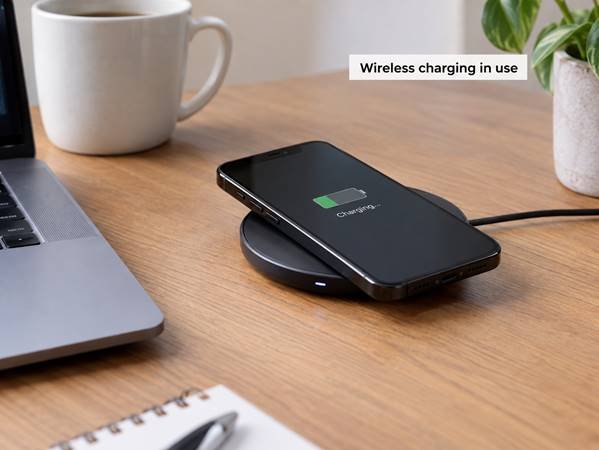
Charging products have too many diverse RF sources, which exactly cover the regulatory scope of both sets of rules:
• Ordinary wired chargers, USB-C cables with E-Marker chips, and power adapters: They are not designed to transmit signals themselves, but their internal switching power supplies and high-speed circuits will leak unintentional RF noise;
• Smart chargers with Bluetooth and WiFi, and charging bases with NFC pairing: They intentionally transmit RF signals for communication and pairing with mobile phones;
• Wireless chargers are even more special: They intentionally use RF to transmit energy, are not ordinary communication devices, nor are they unintentional leaks, so judgment needs to be made in combination with the specific requirements of Part 15, Part 18, and wireless power transfer equipment.
If the wrong rules are applied, for example, if the corresponding Part 15 or Part 18 requirements are not covered according to actual functions, certification may get stuck in the end; if the product is randomly inspected after being listed or causes harmful interference, it may also face rectification, sales suspension, or penalties.
Quick Memorization of Core Differences Between the Two Sets of Rules
In fact, the core difference between the two rules is easy to remember. Here is a quick memorization version first, and we will elaborate later:
• Part 15 covers two categories: one is RF noise accidentally leaked by circuits, and the other is intentional RF subject to corresponding sub-clauses; communication devices are the most common category, but not the only one;
• Wireless power transfer (WPT) charging functions that meet all applicable Part 15 requirements can also be approved under Part 15;
• Part 18 covers one category: devices that intentionally use RF for non-communication purposes, such as industrial, scientific, and medical (ISM) equipment, as well as wireless power transfer equipment that meets corresponding requirements;
• The same product may involve both sets of rules at the same time. For example, a wireless charger with Bluetooth, or a wireless power transfer product with inter-device information transmission function, may need to be evaluated for multiple applicable requirements at the same time.
Note first: All content in this article is compiled based on publicly effective FCC rules, and is introductory popular science. It cannot replace the evaluation of professional laboratories or formal regulatory judgments. The compliance requirements for specific products must be subject to the latest clauses on the FCC official website.
Core Understanding of FCC Part 18 (Must-Know for Beginners)
After covering Part 15, let’s look at Part 18, which is less familiar to everyone and is also the rule most commonly encountered by wireless charging products.
The regulatory scope of Part 18 is very clear: devices that intentionally transmit RF but **are not used for communication**, belonging to industrial, scientific, and medical (ISM) category of non-communication RF devices. Its biggest feature is that for specific equipment categories and operating frequencies, the applicable emission limits are different from those of Part 15; for example, within the ISM frequency bands specified in the regulations, the rules allow unrestricted radiated energy, but this does not mean that all Part 18 devices can be generally understood as “higher power” or “looser restrictions”.
Part 18 rules are based on general obligation clauses plus ISM-specific clauses. For the wireless power transfer (WPT) equipment we are most concerned about, the FCC has also issued the official KDB 680106 practical guidance, which is the core reference document for evaluating wireless charger compliance.
Typical Products
Among charging products, the core applicable products for Part 18 are wireless chargers using wireless power transfer (WPT) technology, including supporting products such as multi-in-one charging bases with wireless charging and in-vehicle wireless chargers.
Core Rules Must-Know for Beginners
Compared with Part 15, the rule logic of Part 18 has several obvious differences:
First is **classification determination**: Priority is given to the core purpose of the RF function, and then evaluation is carried out in combination with the guidance of KDB 680106. WPT devices with an operating frequency above 9kHz must comply with FCC equipment authorization rules and meet applicable Part 15 and/or Part 18 technical and operational requirements. The charging function of wireless power transfer can only be approved under Part 15 if it meets all applicable Part 15 requirements; it cannot be understood that you can freely choose either one just because the frequency is higher than 9kHz.
In addition, as long as information is transmitted between the WPT transmitter and the powered device, it also needs to be evaluated according to the applicable Part 15 Subpart C intentional radiation rules, and usually requires Certification.
Then there are **radiation requirements**: Part 18 limits depend on the equipment category and operating frequency. Within the ISM frequency bands specified in §18.301, §18.305(a) allows unrestricted radiated energy; but for non-ISM frequencies and emissions outside the specified frequency bands, the specific field strength limits specified in §18.305 apply, and at the same time, the operational obligations regarding harmful interference in §18.111 must be complied with. What is mentioned here are emission and spurious emission limits, not “out-of-band anti-interference test requirements”.
In terms of **authorization pathways**, consumer-grade ISM devices can choose SDoC or Certification. For wireless power transfer products specifically, confirmation needs to be made in combination with factors such as the requirements of KDB 680106, whether there is inter-device information transmission or additional communication functions, and RF exposure requirements, and there is no fixed corresponding relationship.
Boundary of Feedback Signals for Wireless Charging
There is a point that is particularly easy to confuse here, so we will bring it up separately: many people think that if a wireless charger has signal interaction, it is a communication device and should be regulated under Part 15 intentional radiation. In fact, it cannot be simply excluded based on “whether it serves charging”.
As long as information is transmitted between the WPT transmitter and the powered device, regardless of whether the information is used for power adjustment, foreign object detection, or charging status feedback, it should be evaluated according to the applicable Part 15 Subpart C intentional radiation rules, and usually requires Certification.
If the charging mode is authorized under Part 18 and the communication mode under Part 15 separately, it is also necessary to meet relevant rules and ensure that the two modes are independent of each other. As for additional communication or control functions such as independent Bluetooth, WiFi, and NFC used for data transmission and pairing with mobile phones, they should also be evaluated separately according to applicable Part 15 clauses.
Simply put: for wireless power transfer, you don’t just look at “whether it is charging”, but also whether there is information transmission between devices, how the charging mode and communication mode are designed, and which FCC requirements each function falls under.
Judgment Method for Applicable Rules of Charging Products (Operable for Beginners)
After talking about the differences, what you care about most must be: which rule should my charging product follow? Below is a set of judgment methods that beginners can use, just follow the steps.
Pre-Judgment: First Confirm Whether It Is an Independently Regulated Device
Not all charging products need FCC RF compliance. The first step is to judge: is your product an RF device, digital device, or ISM device defined by the FCC, and is it within the exemption scope?
Here are a few common examples:
• Passively charging cables sold separately (no chips, only used for power transmission or low-speed signals): Usually do not belong to independently regulated RF devices, and do not require separate authorization;
• Active cables (USB-C cables with chips such as E-Marker that transmit high-speed signals), wired chargers, and wireless chargers: all require further evaluation.
A special reminder here: you must never classify products directly by their names. For example, for products also called “charging cables”, those with E-Marker chips and those with pure copper wires have completely different compliance requirements, and must be evaluated in combination with actual circuits, power supply methods, and exemption conditions.
Four-Step Core Judgment
After confirming that the product needs evaluation, follow these four steps:
**Step 1: List all functions/components of the product that generate RF**
Don’t miss any. For example, for a multi-in-one wireless charger with Bluetooth, the items to list include: circuit leakage of the switching power supply, Bluetooth communication module, wireless power transfer transmitting coil, high-speed signal leakage of the USB-C port — all that can generate RF must be listed.
**Step 2: Judge the core purpose of each RF function one by one**
Against the listed functions, classify them one by one:
• If it is unintentional leakage, such as noise from switching power supplies or leakage from high-speed data cables, it is classified under Part 15 Subpart B for evaluation;
• If it is used for communication, such as Bluetooth, WiFi, or independent NFC pairing functions, it is classified under Part 15 Subpart C for evaluation;
• If it is used for energy transmission and non-communication purposes, such as wireless charging, proceed to the third step for judgment.
**Step 3: Evaluate applicable rules for non-communication RF**
For intentional RF for non-communication purposes such as wireless charging, combine its purpose, operating frequency band, and power, and then compare with the official guidance of KDB 680106 to judge the corresponding applicable requirements of Part 15 and/or Part 18.
Here, you can’t just remember “you can choose either one for frequencies above 9kHz”. WPT devices above 9kHz must meet applicable FCC equipment authorization, technical, and operational requirements; their charging function can only be approved under Part 15 if all applicable Part 15 requirements are met. If there is information transmission between the transmitter and the powered device, the applicable Part 15 Subpart C requirements must also be evaluated.
**Step 4: For multi-function products, apply the requirements of all applicable rules cumulatively**
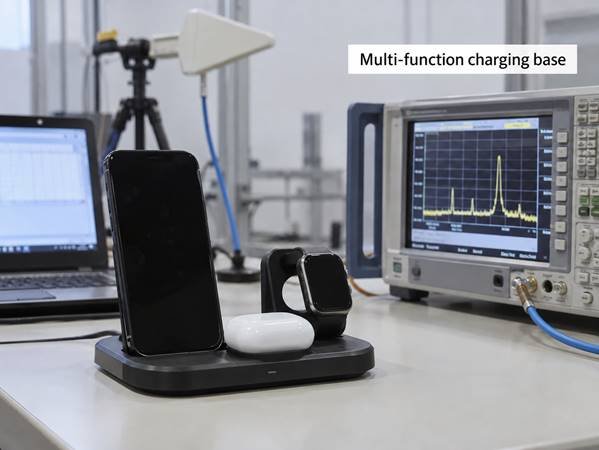
If a product has multiple RF functions, it must meet the requirements of all corresponding rules, not just one. For example, for a wireless charger with Bluetooth, you can’t only do Part 18 evaluation for the wireless charger; the Part 15 requirements for the Bluetooth part must also be met; if the WPT system itself has inter-device information transmission, the corresponding Part 15 Subpart C evaluation cannot be omitted either.
There are two more pitfall avoidance points to remember here:
• Accessories sold separately must be judged independently based on their own attributes, and cannot follow the matching product. For example, for a USB-C cable you sell separately, you can’t say “the charger it’s paired with has passed FCC, so the cable is also compliant”. Whether the cable is regulated depends on the cable’s own configuration.
• Certified wireless modules, such as Bluetooth modules and WiFi modules, need to be re-evaluated for the impact of factors such as antenna, housing, and usage scenarios on RF after being installed in a new complete device. They are not automatically compliant just by being installed — after all, the housing may block signals, and changes in antenna position may also alter radiation conditions.
Special Judgment Rules for Wireless Chargers
Because wireless chargers are the easiest to confuse, let’s talk about the judgment logic separately:
• Pure wireless charging (no additional communication functions such as Bluetooth, WiFi, NFC): Still need to evaluate applicable Part 15 and/or Part 18 requirements according to WPT guidance. As long as information is transmitted between the transmitter and the powered device, including power adjustment, foreign object detection, or status feedback, the applicable Part 15 Subpart C requirements should also be evaluated;
• Wireless chargers with independent Bluetooth, WiFi, NFC: The charging function is evaluated according to the corresponding WPT rules, and additional communication functions are evaluated separately under Part 15;
• If the charging mode is authorized under Part 18 and the communication mode under Part 15 separately, it is also necessary to confirm that the two modes meet relevant rules and remain independent.
There is another very common misunderstanding to mention in advance: Qi certification is a compatibility standard for wireless charging, which is completely different from FCC compliance. Passing Qi does not mean passing FCC, and it can never replace it.
Typical Product Judgment Examples
Here are three common charging product cases to help you understand the judgment logic — note that these are for reference only, specific products need to be confirmed in combination with actual parameters, and conclusions cannot be directly applied.
**Case 1: Ordinary USB-C PD Wired Charger**
Its core functions are switching power supply, PD protocol chip, and USB-C interface, with no communication function that intentionally transmits RF, so it most likely applies to Part 15 Subpart B (unintentional radiation/digital device). What needs to be confirmed is: whether this charger meets the FCC’s definition of a digital device and whether it is within the exemption scope.
**Case 2: Pure WPT Wireless Charging Pad (No Additional Communication Functions)**
Its core functions are wireless power transfer transmitting coil, power adjustment circuit, and foreign object detection, which belong to intentional RF for non-communication purposes, so it may apply to Part 18, or may be approved under corresponding clauses of Part 15 when all applicable requirements are met. It is also necessary to confirm whether there is information transmission between the transmitter and the powered device; if so, the applicable Part 15 Subpart C requirements should be evaluated. What needs to be confirmed are: its operating frequency, power, usage distance, and whether it meets the relevant clauses in KDB 680106.
**Case 3: Wireless Charging Base with Bluetooth APP Control**
It has three core functions: wireless power transfer, Bluetooth communication, and USB-C wired output. So the corresponding rules include: Part 15 Subpart B (unintentional radiation from wired parts and circuits), Part 15 Subpart C (Bluetooth communication function, and inter-device information transmission function of WPT when applicable), and the rules corresponding to wireless power transfer (Part 15 and/or Part 18). What needs to be confirmed are: which rule applies to wireless power transfer, the compliance status of the Bluetooth module, and the RF exposure requirements of the complete device.
Common Misconceptions and Key Pitfall Avoidance Points (Semi-Proficient: Able to Avoid Pitfalls)
Finally, we have compiled 5 of the most common misconceptions to help you avoid 90% of pitfalls. Those who make products must remember them well.
**Misconception 1: Wired charging products don’t need to worry about RF / all must do Part 15 SDoC**
These are two extreme wrong logics: either thinking that wired products don’t need to be managed at all, or thinking that all wired products need SDoC — in fact, the core is to see whether the product is an independently regulated device and whether it has exemption. For example, pure copper passive charging cables don’t need it, but high-speed cables with E-Marker chips need evaluation.
Pitfall avoidance method: First determine whether the product is an independently regulated device, then evaluate according to the corresponding rules. Never draw conclusions based on the product name.
**Misconception 2: Low-power wireless chargers fall under Part 15, and those using ISM bands must be Part 18**
Many people think the judgment standard is power or frequency band, but that’s not the case — the core is the purpose of the RF function, applicable clauses, and equipment authorization requirements. Moreover, Part 15 devices can also use ISM bands; it’s not that using ISM bands means you must go through Part 18.
Pitfall avoidance method: First look at the core purpose of the RF function, then evaluate in combination with the guidance of KDB 680106 and specific clauses. Don’t use power or frequency band as the only standard.
**Misconception 3: After passing Part 15, you don’t need to worry about Part 18 (and vice versa)**
This ignores the multi-rule application requirements of multi-function devices. For example, a wireless charger with Bluetooth has both Part 15 Bluetooth communication function and wireless charging function, so it needs to be evaluated for Part 15 and/or Part 18 according to applicable WPT rules; if information is transmitted between the WPT transmitter and the powered device, the applicable Part 15 Subpart C requirements must also be evaluated.
Pitfall avoidance method: List all RF functions of the product, check them one by one against the corresponding rules, and don’t miss any items.
**Misconception 4: Having an FCC ID means the entire product is compliant**
Many merchants use “having an FCC ID” as proof of full product compliance. In fact, the FCC ID only corresponds to the certified model and function scope — for example, some products only have the Bluetooth module certified, and the wireless charging function of the complete device is not tested at all, so that definitely does not count as full product compliance. In other cases, the module has an FCC ID, but after being installed in a new complete device, the antenna and housing change, and the radiation conditions are different, so it cannot be directly considered compliant either.
Pitfall avoidance method: After getting the FCC ID, be sure to check the corresponding model and function scope on the FCC official website to confirm whether it covers all RF functions of the complete device.
**Misconception 5: Modified products can directly use the original test report**
Many people think that if the product is only a minor modification, such as changing the housing or changing the power chip, the original test report can still be used — but as long as the modified part may affect emission or RF exposure, compliance must be re-evaluated.
When product modifications involve antennas, RF circuits, power supplies, housings, software, or other changes that may affect emission and RF exposure, depending on the nature of the change and the scope of the original authorization, supplementary testing, applying for permissive change under §2.1043, updating SDoC technical documentation, or re-applying for authorization may be required; the original conclusion cannot be directly used without evaluation.
Pitfall avoidance method: When modifying a product, as long as the change may affect RF emission or RF exposure, compliance should be re-evaluated to confirm whether the original authorization and test coverage still apply.
Quick Checklist and Competency Summary
Quick Checklist for FCC RF Rules
□ Confirm whether the product is an independently regulated FCC RF/digital device
□ List all functions/components that generate RF
□ Judge the core purpose of each RF function one by one, and correspond to applicable rules
□ For multi-function products, check whether all applicable rules are covered
□ Check the consistency between the test report and the sold version
Core Conclusions
Let’s refine the core conclusions again, just remember these points:
1. Part 15 covers digital devices with unintentionally leaked RF, as well as intentional radiators subject to corresponding sub-clauses; communication devices are a common type, but not all;
2. WPT charging functions that meet all applicable Part 15 requirements can also be approved under Part 15;
3. Part 18 mainly regulates ISM/WPT devices that intentionally use RF for non-communication purposes;
4. If there is information transmission between the transmitter and the powered device in a WPT system, the applicable Part 15 Subpart C requirements should be evaluated;
5. Multi-function products need to meet all applicable rules at the same time, and cannot only do a single certification;
6. FCC ID depends on whether Certification is adopted; SDoC products also need to meet corresponding requirements for compliance information, responsible parties, and user documentation.
Things You Can Independently Judge After Learning
After reading this article, you should be able to make these judgments independently:
• Which category of rules your charging products should generally follow for U.S. market compliance;
• Whether the “FCC certification” advertised by merchants corresponds to the correct rule category and authorization pathway;
• Whether multi-function charging products have missing compliance items;
• How to quickly check core information after getting the test report.
Of course, there are still many details to pay attention to in the compliance evaluation of specific products. If you are unsure, it is best to find a laboratory with FCC-related qualifications for early evaluation, and do not draw conclusions based on experience to avoid pitfalls later.