
If you are an overseas practitioner working on chargers, USB-C charging cables or related accessories, planning to enter the Chinese market, supply to Chinese brands, or even just operate a cross-border e-commerce China site, you will most likely encounter the compliance requirements of “China RoHS”. Many people’s first reaction is “I already have an EU RoHS report, is it universally applicable?” — this is the most common beginner misunderstanding. China RoHS is an independent mandatory management system, with different rules and requirements from EU RoHS. If you get it wrong, in mild cases your products will be removed from platforms, and in severe cases you will face fines, product returns, or even lose core orders.
Beginner Basics: First Understand the Most Core Questions
What is China RoHS
The essence of China RoHS is the **mandatory management system for the restriction of hazardous substances in electrical and electronic products**, with the core purpose of controlling toxic and hazardous substances in products from the production source, and reducing the harm to the environment and human health after products are discarded.
All products included in the control scope must complete hazardous substance labeling and information disclosure in accordance with regulations, and judge the limit status of hazardous substances based on homogeneous materials; among them, products listed in the also need to pass the conformity assessment procedure to prove that they meet the limit and applicable exemption requirements.
Which charging products are within the control scope
Most electrified components related to charging are within the control scope, including: chargers, power adapters, car chargers, wireless chargers, USB/USB-C charging cables, adapters, plugs, interface accessories, etc.
Pure mechanical accessories, product outer packaging, paper manuals and other non-electrical and electronic materials that do not carry electricity do not need to meet RoHS requirements.
There is a simple judgment trick: as long as it is a charging-related component that operates by electric current or electromagnetic field, with a rated DC voltage ≤ 1500V and AC voltage ≤ 1000V, it basically falls within the control scope. For example, a non-electrified pure plastic charging stand does not count, but a stand with magnetic charging function does.
Why should overseas practitioners pay attention
For overseas practitioners, China RoHS is not an option, but a necessary threshold for entering China:
1. As long as the product is sold in the Chinese market (including cross-border e-commerce China sites), it must meet basic requirements such as labeling and disclosure;
2. Customs, domestic e-commerce platforms, and downstream brand customers will all check RoHS compliance;
3. The consequences of non-compliance are very direct: platform removal, customs detention and fines, product returns, and even loss of long-term cooperation orders;
4. Even if you are in the business of “sourcing in China and exporting overseas”, some downstream customers may also require you to provide China RoHS-related materials as proof of product quality.
First Beginner Misconception: EU RoHS Cannot Be Directly Used as a Substitute
This is a point that all overseas practitioners must remember first: China RoHS and EU RoHS are two completely independent regulatory systems. Complying with EU RoHS does not mean automatically complying with China RoHS, and vice versa. EU RoHS reports cannot be directly used to replace China RoHS compliance certificates. The specific differences between the two in terms of controlled substances, labeling requirements, and implementation rules will be clearly compared through a table later.
Core Control Requirements: Which Substances Are Controlled and What Are the Limits
6 Mandatory Controlled Hazardous Substances
Currently, China RoHS mandates the control of 6 hazardous substances, each with clear hazards, and all have common occurrence scenarios in charging products:
• **Lead (Pb)**: A toxic heavy metal, commonly found in solder of PCB boards and metal alloys of plugs. Long-term exposure can damage the nervous system.
• **Mercury (Hg)**: Commonly known as quicksilver, it may remain in older chargers with fluorescent indicator lights, and can cause long-term pollution to water bodies and soil.
• **Cadmium (Cd)**: A toxic heavy metal, commonly found in connector plating and switch contacts. Excessive intake can affect bone health.
• **Hexavalent Chromium (Cr⁶⁺)**: A toxic chromium compound, commonly found in anti-rust plating of metal plugs, with carcinogenic risk.
• **PBB/PBDE**: Two types of brominated flame retardants, often added to cheap plastics and insulating layers to improve fire resistance, which may interfere with human endocrine function.
General Limits and Calculation Basis
Many people mistakenly think that “it is enough if the total content of hazardous substances in the whole product does not exceed the standard”. In fact, the limit calculation basis of China RoHS is **homogeneous material** — that is, the smallest unit that cannot be further split into different materials by mechanical methods (such as screwdrivers, pliers). Each unit must be tested separately and judged separately whether its content exceeds the general limit.
For example: a USB-C charging cable needs to be split into multiple homogeneous material units such as outer sheath rubber, metal braided mesh, internal copper wire, USB male plug plating, solder joint solder, etc. Each unit is tested for the content of 6 substances separately. If the product is in the compliance management catalogue, and a certain unit exceeds the standard and does not meet the applicable exemption requirements, the entire cable will be judged as non-compliant.
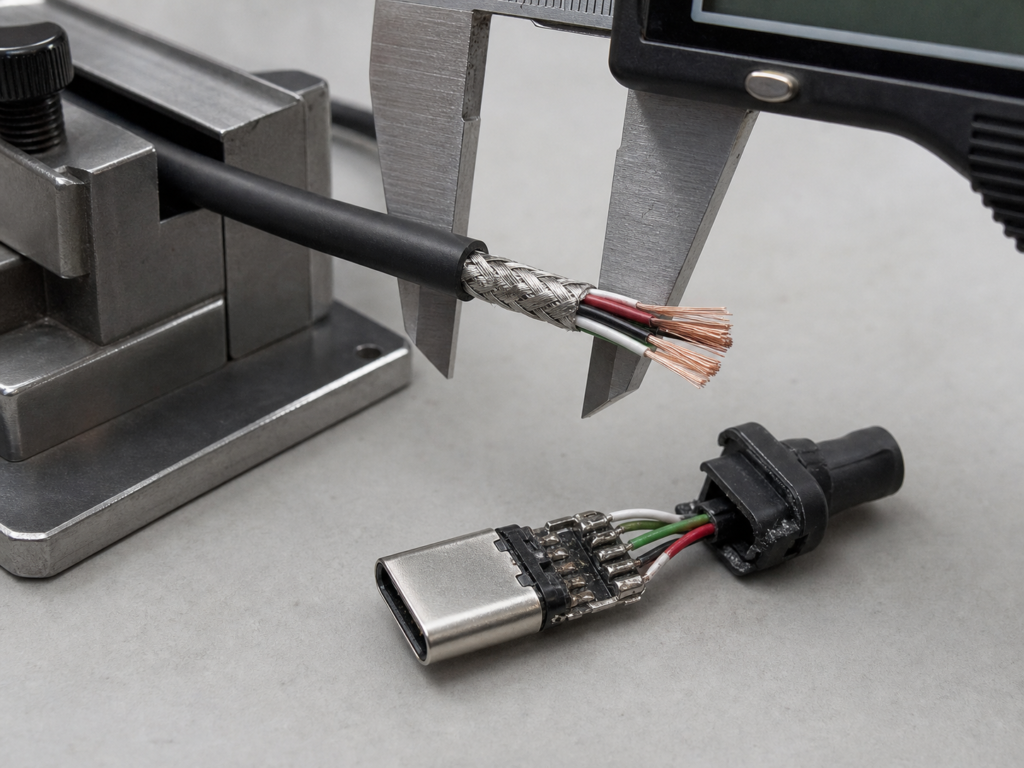
The specific general limits are: the limit for cadmium is 0.01% (i.e. 100ppm), and the limits for lead, mercury, hexavalent chromium, PBB, and PBDE are all 0.1% (i.e. 1000ppm).
High-Risk Non-Compliant Components in Charging Products
Combined with the actual situation of the industry, the components most prone to exceeding the standard in charging products are concentrated in the following parts:
• Solder of PCB boards: the most prone to lead exceeding the standard, many small factories still use leaded solder to reduce costs;
• Plating of USB-C male/female connectors: prone to cadmium and lead exceeding the standard;
• Outer sheath plastic of cheap charging cables: prone to brominated flame retardants (PBB/PBDE) exceeding the standard;
• Anti-rust layer of metal plugs: prone to hexavalent chromium exceeding the standard;
• Dark or special color plastic shells: some cheap pigments contain cadmium and lead, which are prone to exceeding the standard.
Proposed New Controlled Substances
Currently, China RoHS is revising relevant standards, and plans to add 4 phthalates (commonly known as plasticizers) as controlled substances. The specific effective time shall be subject to the official announcement of the Ministry of Industry and Information Technology (MIIT).
If you often purchase PVC charging cables, it is recommended to confirm the use of plasticizers with suppliers in advance, try to choose phthalate-free versions, and avoid future compliance risks in advance.
Exemption Rules: Not All Exceedances Are Violations
Some practitioners will ask: “The copper core of my plug contains lead, which exceeds the 0.1% limit, is it definitely unqualified?” Not necessarily, because China RoHS has the officially issued (commonly known as the “exemption list”).
Basic Logic of Exemptions
The reason for setting up exemptions is simple: some substances currently have no technically feasible and cost-effective alternative solutions, so they are temporarily allowed to be used in limited quantities in specific scenarios. The exemption list is dynamically adjusted, and the limits may be cancelled or adjusted upon expiration. It must be subject to the latest list issued by the MIIT, and enterprises cannot claim by themselves that “this is an exemption”.
Commonly Used Exemption Items for Charging Products
For charging products, there are three most commonly used exemption items:
1. Lead content in copper alloys ≤ 4% (such as the copper inner core of plugs);
2. Lead content in steel alloys ≤ 0.35%;
3. Lead content in aluminum alloys ≤ 0.4%.
Exemption Judgment Steps
If a component’s hazardous substance exceeds the standard, follow these three steps to judge whether it meets the exemption:
1. First determine the specific material and use of the non-compliant material;
2. Check against the latest exemption list of the MIIT to verify whether the limit and applicable conditions match;
3. Confirm that the exemption applies to consumer products — some exemptions are only for industrial products, and consumer electronics cannot use them.
Labeling and Information Disclosure: How to Quickly Judge Product Compliance Status
China RoHS has clear labeling and information disclosure requirements, and ordinary users and practitioners can quickly judge the basic compliance of products through labels.
Meaning of Two Types of Official Labels
Currently, China RoHS has two types of officially recognized labels:
1. **Green “e” mark**: It means that the hazardous substance content of all homogeneous materials of the product meets the limit requirements, no exempt excessive substances are used, and it is a product that fully meets the limit requirements.
2. **Orange digital Environmental Friendly Use Period (EFUP) mark**: This mark is the most easily misunderstood. Its core meaning is: under normal use conditions, the number of years during which hazardous substances in the product will not leak or mutate, and will not cause harm to the environment and human body.
Here are two common cognitive biases to correct: first, it is not the product’s shelf life, nor the warranty period or service life; second, having a digital EFUP mark does not mean that the product cannot be sold. It indicates that there are hazardous substances in the product that exceed the limit requirements, and enterprises need to disclose the corresponding components and substances in the content table at the same time; if the product is in the compliance management catalogue or involves over-limit situations, it is also necessary to further check whether it applies to exemption and conformity assessment requirements.
How to Read the Hazardous Substance Content Table
In addition to labels, compliant products also need to provide a hazardous substance content table, which lists the compliance status of 6 substances in each component in the form of a table. Common components include plastic shells, PCB boards, charging cables, plugs, USB connectors, etc.
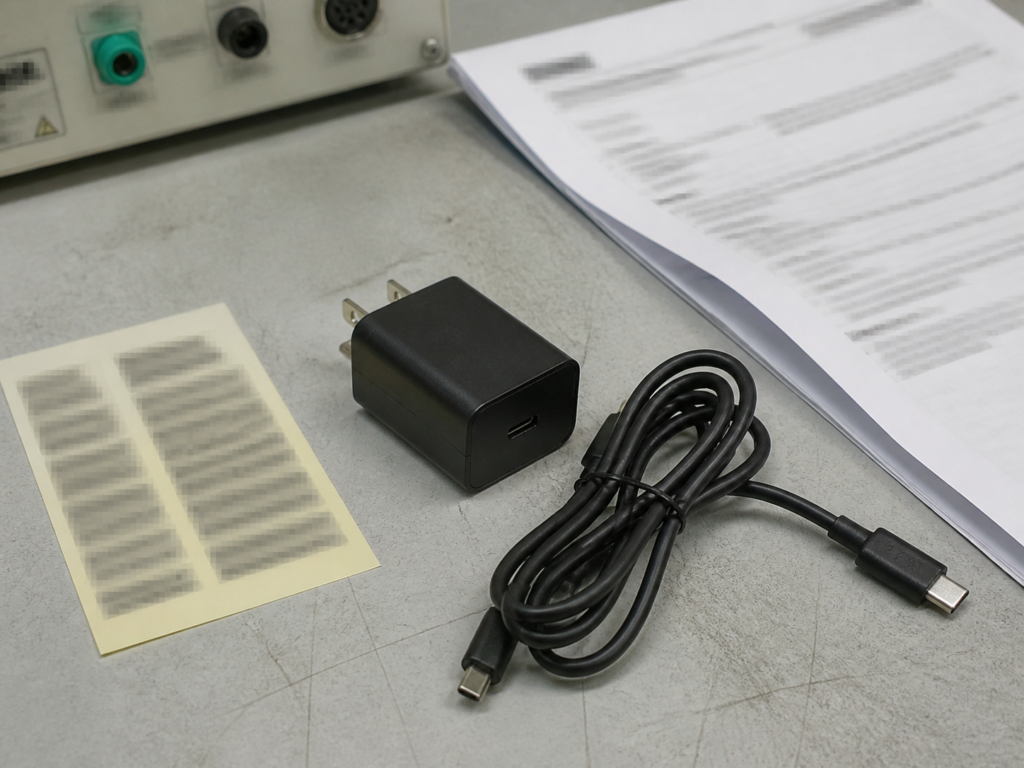
Standardized content tables usually use two officially recognized symbols to mark the results:
• ○: The content of the substance in this component does not exceed the limit requirements specified in GB/T 26572;
• ×: The content of the substance in this component exceeds the limit requirements.
If the over-limit item meets the applicable exemption clauses, it is generally explained through table remarks or an attached exception list. There is no unified official △ symbol at present, so do not use non-standard symbols to make disclosure tables by yourself.
Here is a simplified example:
| Component Name | Lead (Pb) | Mercury (Hg) | Cadmium (Cd) | Hexavalent Chromium (Cr⁶⁺) | PBB | PBDE |
| Plastic Shell | ○ | ○ | ○ | ○ | ○ | ○ |
| PCB Circuit Board | × (see Note 1) | ○ | ○ | ○ | ○ | ○ |
| Metal Plug | × (see Note 2) | ○ | ○ | ○ | ○ | ○ |
| USB Connector | ○ | ○ | ○ | ○ | ○ | ○ |
| Charging Cable Outer Sheath | ○ | ○ | ○ | ○ | ○ | ○ |
Remarks:
1. The lead content over-limit item of the solder in the PCB circuit board meets the requirements of relevant clauses in the .
2. The lead content over-limit item of the copper inner core of the metal plug meets the applicable exception clause of lead ≤ 4% in copper alloys.
Common Disclosure Locations of Compliance Information
RoHS related labels and content tables generally appear in the following places:
1. **Product body**: For example, the bottom of the charging head, the label of the charging cable; if it is a particularly small accessory (such as a mini adapter), the label can be simplified, and the detailed content can be placed in other channels, but it cannot be completely absent.
2. **Accompanying documents**: Paper documents such as product manuals and warranty cards.
3. **Online channels**: The product detail page of e-commerce platforms, the download page of the brand’s official website.
Common Incorrect Labels
Many overseas products are prone to pitfalls in labeling. The following are all non-compliant:
• Only marking “RoHS compliant” in English, without Chinese labels and Chinese hazardous substance content tables;
• Using the EU CE mark or EU RoHS mark to replace the China RoHS label;
• Marking the number of the environmental friendly use period as the warranty period;
• Small-volume accessories have no RoHS related information at all.
Compliance Certificate and Report Verification: How to Prove Product Compliance
Two-Step Management System: Not All Products Require Mandatory Certification
China RoHS implements a “two-step” management system. Many people think that all products need mandatory certification, but this is not the case:
1. **All products included in the control must do two things**: do a good job in hazardous substance labeling and information disclosure in accordance with regulations, and clarify the limit status of each substance based on homogeneous materials — this is a mandatory requirement, no exceptions.
2. **Only products listed in the *Catalogue of Compliance Management* require mandatory conformity assessment** (that is, through self-declaration or certification, to prove that the product meets the limit requirements and applicable exemption clauses). At present, most charging products have not been included in the compliance catalogue, so mandatory conformity assessment is not required. The specific categories shall be subject to the latest issued by the MIIT.
Two Compliance Certification Methods
The above two compliance certification methods are mainly applicable to products listed in the that need to complete mandatory conformity assessment; although charging products outside the catalogue do not need to submit conformity assessment certificates compulsorily, enterprises should still keep documents such as homogeneous material test reports, supplier material conformity declarations, hazardous substance content tables and label design materials for future reference.
The two specific methods of conformity assessment are:
1. **Self-declaration**: After the enterprise tests by itself or entrusts a third-party testing institution, it issues a statement to promise that the product meets the requirements, without the review of official institutions. This method has low cost and fast process, and is the mainstream choice for small and medium-sized brands.
2. **Nationally Promoted RoHS Certification**: That is, the voluntary RoHS certification promoted by the state, which needs to be reviewed and issued by an officially recognized certification body, with higher credibility. Generally, large brands or customers with high compliance requirements will choose this method.
Requirements for Imported Products
Many overseas practitioners will ask: “Are the requirements for imported products stricter? Are there any special exemptions?” The answer is: the requirements for imported products and domestic products are exactly the same, and there are no special exemptions.
Imported products can be tested by a third-party testing institution recognized in China; if the product is listed in the compliance management catalogue, the importer or domestic responsible party can choose self-declaration or nationally promoted RoHS certification to complete the conformity assessment as required; if it is not listed in the catalogue, mandatory conformity assessment is not required, and only basic requirements such as labeling disclosure and data retention need to be met.
Key Points for Verification of Third-Party Test Reports
If your supplier gives you a RoHS test report, don’t just believe it directly. Check its validity according to the following key points:
1. **Consistent basic information**: The product model and sample photo on the report must be exactly the same as the product you actually sell. Reports with wrong models or different samples are useless.
2. **Complete test content**: It must cover all 6 mandatory controlled substances, and no test can be missed.
3. **Correct test basis**: It must be tested by splitting homogeneous materials. Reports of the whole machine test are invalid — many small factories will give whole machine test reports to fool people.
4. **Timely evaluation of validity**: If the product changes suppliers, adjusts raw materials or structure, the old report cannot be used directly. First evaluate whether the change involves controlled homogeneous materials: if it involves high-risk materials such as solder, plating, plastic outer sheath, flame retardants, pigments, connector alloys, or changes in their production processes or core suppliers, corresponding components should be tested additionally or a complete report should be reissued; if it is only irrelevant adjustments such as non-controlled outer packaging and appearance silk screen printing, which do not affect the composition of controlled materials, the original report can still be used as a reference basis.
Connection with Recycling: RoHS Is the Basis for Full Life Cycle Control
Many people think that RoHS is only a requirement in the production link and has nothing to do with recycling, which is also a common misunderstanding. China RoHS is the core basis for the full life cycle control of e-waste, which is closely related to the back-end recycling system, but also has a clear boundary with the special recycling system.
Core Role in Recycling
RoHS controls hazardous substances from the source, and has three key roles in the recycling link:
1. Reduce the leakage of toxic substances during the disassembly process, protect the health of recycling workers, and avoid polluting the surrounding environment;
2. Facilitate recycling enterprises to classify waste products according to the content of hazardous substances, and improve treatment efficiency;
3. Reduce the content of toxic substances in recycled materials, and improve the reusability of recycled materials. For example, plastic shells that meet RoHS requirements can be reprocessed into new electronic product shells after recycling.
Connection with Other Recycling Systems
It should be clarified that RoHS itself mainly focuses on the restriction of hazardous substances and information disclosure in the product production link; while the recycling and treatment responsibility of waste electrical and electronic products, extended producer responsibility (EPR) requirements, consumer disposal rules, etc., mainly come from other relevant systems such as waste electrical and electronic product recycling management and solid waste pollution prevention. Whether small accessories such as chargers and charging cables fall into the specific recycling responsibility catalogue and whether they need to perform EPR obligations should be checked in combination with the current national and local recycling management requirements, and cannot be directly equated with the control scope of RoHS.
For brands, importers or producers, if their products fall into the corresponding national or local waste electrical and electronic product recycling responsibility catalogue, they shall, in accordance with the extended producer responsibility rules, bear the responsibility for the recycling and treatment of waste products or entrust qualified institutions to handle them. When consumers discard charging products, it is still recommended to dispose of them at special e-waste recycling points, and do not mix them with domestic waste to avoid the spread of toxic substances.
Advanced Pit Avoidance and Compliance Judgment: From Beginner to Practical Operation
Core Differences Between China and EU RoHS
To facilitate everyone to intuitively distinguish the two systems, here is a table comparing the core differences:
| Comparison Dimension | China RoHS | EU RoHS |
| Controlled Substances | 6 mandatory (4 phthalates proposed to be added) | 10 types (including 4 phthalates) |
| Labeling Requirements | Environmental Friendly Use Period + Chinese content table required | No unified mandatory label |
| Implementation Method | Mandatory conformity assessment for products in the catalogue | All included in CE self-declaration |
5 Pitfalls That Overseas Practitioners Must Avoid
Combined with the common problems of overseas practitioners, these 5 pitfalls must be avoided:
1. **Directly using the EU RoHS report as a China RoHS compliance certificate**: It is necessary to additionally check whether it covers the Chinese labels, Chinese content tables, homogeneous material split testing rules required by China, as well as China’s local limits and exemption clauses. Unmatched content needs to be supplemented and improved.
2. **Only testing the whole machine, not splitting and testing by homogeneous materials**: This is an invalid report, equivalent to no test.
3. **Ignoring small components and only testing large components**: For example, only testing the shell of the charging head and the outer sheath of the charging cable, not testing small components such as USB plating and solder — it is precisely these small components that are most likely to exceed the standard.
4. **Thinking that small-volume accessories do not need labeling and disclosure**: Even a mini adapter needs to have a compliant label or disclosure channel, and cannot have no information at all.
5. **Thinking that the test report must be made public to be compliant**: The test report only needs to be kept by the enterprise for future reference, and does not need to be publicly posted on the product or placed on the detail page. It is enough to disclose the content table.
Judgment Method for Boundary Issues
In actual business, there are often some scenarios with blurred boundaries, which can be judged according to the following methods:
• **Free gifts with sales**: As long as they are free gifts sold with products in China (such as the adapter given when buying a charging head), they also need to meet RoHS labeling and disclosure requirements, and cannot be relaxed because they are free gifts.
• **Industrial use vs consumer use**: The basic limit requirements are the same, but the scope of application of some exemption clauses is different. Some exemptions are only for industrial products, and consumer products cannot use them.
• **OEM/private label production**: Brand owners, manufacturers, and importers shall bear joint and several liabilities. No matter which party you are, you are responsible for the RoHS compliance of the product.
• **B2B supply**: If the downstream customer’s requirements are higher than the minimum requirements of the regulations (for example, the customer requires compliance with the EU’s 10 substance requirements), the standard agreed in the contract shall be implemented.
Basic Compliance Self-Check List
If you want to quickly check whether your products meet China RoHS requirements, you can self-check in these 5 steps:
1. Confirm that the product falls within the control scope of China RoHS (using the judgment trick mentioned earlier);
2. Check the homogeneous material limits of the 6 controlled substances (cadmium 0.01%, the other 5 0.1%);
3. If any component exceeds the standard, check whether it meets the applicable exemption clauses;
4. Confirm that the product has compliant RoHS labels and a hazardous substance content table;
5. Confirm that if materials, suppliers or product structure are changed, compliance will be re-evaluated.
Capability Sorting: From Beginner to Semi-Proficient
Beginner Level (Daily Basic Judgment)
If you can do the following, you have mastered the core basic knowledge of China RoHS and can complete daily basic judgments:
• Can quickly judge whether a charging product falls within the control scope of China RoHS;
• Can state the general limits of the 6 mandatory controlled substances, as well as the high-risk non-compliant components of charging products;
• Can understand the two types of China RoHS labels and the meaning of the symbols in the hazardous substance content table;
• Can distinguish the difference between the environmental friendly use period and the product shelf life and warranty period.
Semi-Proficient Level (Independently Handle Compliance Issues)
If you can also do the following, you have reached the level of being able to independently handle most compliance issues:
• Can clearly distinguish the core differences between China RoHS and EU RoHS, and will not use the wrong report;
• Can independently verify the validity of third-party RoHS test reports;
• Can judge the compliance requirements of common boundary scenarios such as free gifts, OEM, and B2B;
• Can independently complete the basic RoHS compliance self-check of charging products.
For overseas practitioners engaged in charging products, although China RoHS seems to have complicated details, its core logic is very clear: restrict hazardous substances from the production source, and reduce the environmental and health risks of the product’s full life cycle. Grasping the three key points of homogeneous material control, compliance labeling disclosure, and relevant data retention can avoid most compliance pitfalls; laying out the replacement of phthalates in advance can also make you more proactive when the rules are adjusted in the future.