
Sellers of charging products operating in the Mexican market have most likely heard of NOM certification — either their goods are detained by customs and require supplementary certification, or e-commerce platforms require them to upload certificates. Some sellers even misjudge the scope, resulting in wasted certification fees or products being taken down right after being listed. Many people’s understanding of NOM is limited to “Mexico’s mandatory certification”, but they are never clear about which products require it, which do not, and where the boundary lies. In this article, we will thoroughly explain the applicable scope of NOM for charging products from basic common sense to practical judgment, so that after reading it, you can make a preliminary judgment by yourself and avoid most pitfalls.
First, Understand the Basic Common Sense of NOM (Prerequisite for Judging the Scope)
Let’s first clarify the most basic concept: NOM is the abbreviation of the Spanish , which refers to Mexico’s mandatory official standard system. Whether a specific product is subject to electrical safety, energy efficiency, commercial labeling or other NOM requirements shall be judged separately based on the product category, corresponding standards and current conformity assessment procedures; not all NOMs cover these items at the same time. For charging products, since many are directly connected to Mexico’s 127V/60Hz mains power and have high risks of electric shock and fire, it is usually necessary to focus on verifying relevant NOM requirements.
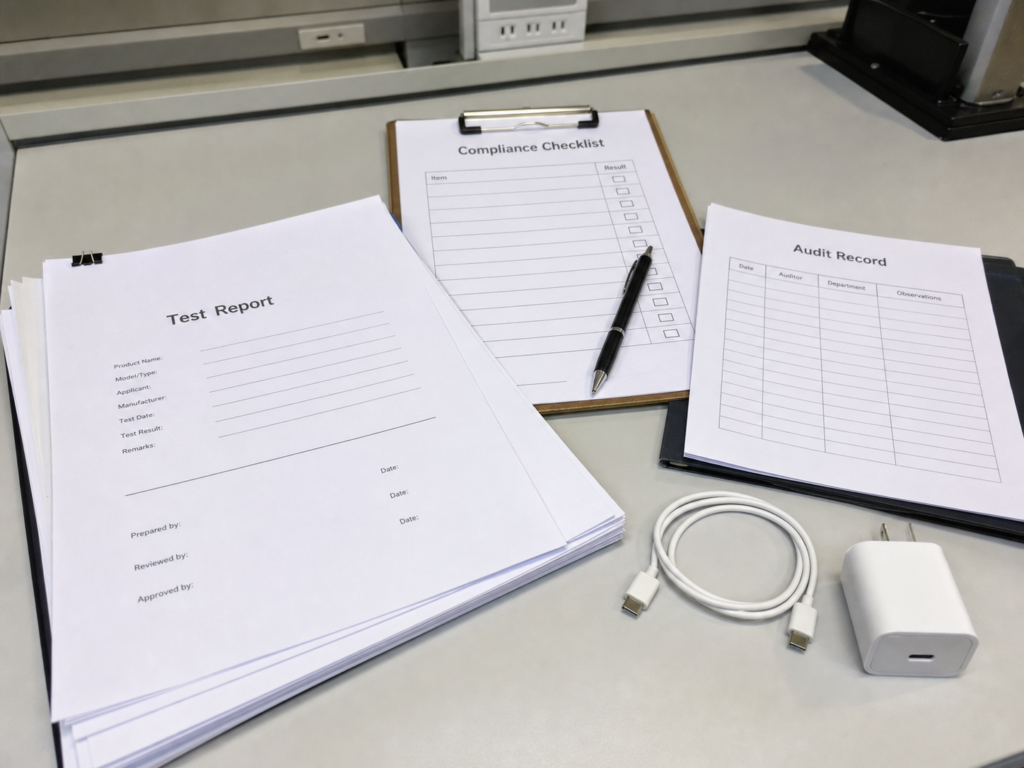
Many people are confused by a bunch of terms related to NOM. In fact, they can be broken down into four interrelated but distinct concepts that should not be mixed up: The first layer is **product scope**, that is, which products are subject to mandatory control, which is defined by the officially issued catalog and corresponding standards; not all electronic products require it. The second layer is **conformity assessment**, which is what people often call “doing NOM certification”, referring to the testing, certification issuance or other conformity confirmation processes that products need to go through, and it is the process of proving that products meet the standards. The third layer is **labeling and marking**: products subject to mandatory NOM must complete corresponding markings, commercial information and warning labels in accordance with applicable standards and conformity assessment procedures. Whether the NOM mark must be used and its specific format shall be subject to the corresponding standards, certification schemes and current mark rules. The fourth layer is **import clearance**, that is, when goods arrive at Mexican customs, compliance documents need to be verified in accordance with applicable import rules, which is the on-site verification link of compliance. In short: scope is “whether to check”, conformity assessment is “how to prove”, labeling is “how to mark”, and import is “how to pass customs”. The four cannot replace each other.
There are several other concepts that are easily confused with NOM, which should be distinguished at the beginner stage: The first is NMX, that is, Mexican Standards. NMX is usually a voluntary standard, but if it is cited by NOM, regulations, contracts or procurement requirements, it may become part of the actual compliance requirements, so the regulations and import requirements for specific products should still be checked. The second is overseas certifications such as CE, FCC, UL and CB. NOM is an independent local regulatory requirement in Mexico. Some test data from these overseas certificates can be used as a reference, but they absolutely cannot automatically replace NOM requirements. The third is IFT telecommunications approval. IFT is Mexico’s telecommunications regulatory authority, which is responsible for wireless communication compliance. Only devices with radio frequency transmission functions such as Bluetooth and Wi-Fi require additional verification, which is separate from NOM’s safety and energy efficiency requirements.
The reason why we specifically talk about the scope judgment of charging products is that this category has a particularly high probability of pitfalls: First, many charging products are directly connected to 127V mains power, so relevant safety and energy efficiency requirements usually need to be focused on verification, and customs and e-commerce platforms may also conduct compliance inspections. Second, there are too many forms of charging accessories. A product with a USB-C interface may be a charger, a charging cable, or an adapter, with completely different compliance statuses. A wrong judgment will either result in wasted certification fees or penalties for violations.
Finally, let’s get to know three key regulatory roles, which will be used for checking rules and doing certification later: First, the Mexican Ministry of Economy (abbreviated as SE) is responsible for the NOM catalog, commercial supervision and coordination within its statutory scope; specific NOMs are formulated and issued by the corresponding competent authorities in accordance with their statutory authority, and products shall be checked against the applicable competent authorities and the current official texts. Second, authorized certification bodies (abbreviated as OC), such as the commonly heard ANCE and NYCE, are responsible for certification and issuing certificates; specific testing is usually carried out by accredited and approved laboratories. Whether ANCE and NYCE can handle a certain product and a certain NOM shall be subject to their current accredited and approved business scope. Third, the local Mexican importer or responsible party is the main subject bearing legal liability for compliance. That is to say, if there is a compliance problem with the product, the local Mexican importer or responsible party who bears the liability must first be confirmed.
4 Core Boundaries for Judging NOM Scope
Now that we have understood the basic common sense, let’s talk about the core judgment logic — the applicable scope of NOM seems complicated, but in fact, as long as you grasp the four boundaries, most products can be quickly preliminarily judged. However, these boundaries can only be used for screening and cannot replace the verification of specific standards.
The first boundary is **region and purpose**, that is, where your product goes and what it is used for. As long as it is a charging product sold online or offline in Mexico, including small parcels sent via cross-border e-commerce direct mail, it is in principle within the scope of verification. Even for commercial supporting scenarios that are not directly sold for money, such as shared charging piles in hotels and charging equipment provided free of charge to customers in stores, as long as they are for commercial use, compliance requirements must also be verified.
However, the import route and parcel size may affect specific customs, express, postal or other import procedures. Whether simplified or exceptional procedures apply to cross-border e-commerce direct mail, express delivery, postal parcels and personal luggage shall be confirmed shipment by shipment in combination with current customs rules, import value, quantity, tariff code, product category and specific NOM. You cannot automatically assume exemption just because it is a “small parcel” or “small batch”, nor can you absolutely assume that there are no exceptions for all small parcels.
The second boundary is **electrical attributes**, which is an important basis for judging whether to check NOM. Products directly connected to Mexico’s 127V AC mains power should usually be subject to key verification of specific safety and energy efficiency NOMs, but the input voltage cannot alone determine the final conclusion. Product functions, structure, rated input and output, purpose, tariff code, sales form, and exclusion clauses of specific standards may all affect the applicable results.
Special attention should be paid here: output voltage, power, whether it is a wide-voltage design, and whether it uses a gallium nitride solution cannot alone determine whether it is subject to NOM constraints. Conversely, products with USB or vehicle low-voltage input cannot be uniformly classified into a certain unified “low-voltage NOM”, let alone be deemed not subject to any mains safety, commercial information, battery or other NOM requirements just because they are not connected to 127V AC. Such products still need to be judged item by item based on complete functions, structure, parameters, purpose and the specific NOM catalog.
The third boundary is **sales form**, that is, how the product is sold. If the product is priced independently and sold in separate packaging, compliance requirements must be verified separately. If it is a detachable accessory that is given away with the complete machine and not priced separately, such as a charger given away when buying a mobile phone, it depends on whether the main product certificate and applicable conformity assessment scheme clearly cover the model, configuration, components and sales or import form of the accessory, and cannot be judged solely by the identity of “gift”.
For power modules built into equipment, it cannot be concluded that they are fully covered by the complete machine certification just because they are “non-detachable”. Only when the main product certificate and applicable conformity assessment scheme clearly cover the configuration and components, and the sales and import forms also meet the requirements, can it be handled under the main product certificate. Detachable, separately sold or separately imported external power supplies, adapters and modules shall be subject to separate verification of specific NOM requirements.
There is a common pitfall here: if you take out the accessories originally given away with the complete machine and sell them separately, such as listing the charging cable bundled with the mobile phone for sale separately, then this accessory becomes an independent product, and the NOM requirements need to be re-verified, and the certification of the complete machine cannot be automatically applied.
The fourth boundary is **functional risk**, that is, the circuit complexity and additional functions of the product. Products with power conversion functions and active electronic circuits, such as chargers and adapters, usually require key verification of relevant requirements. Pure passive low-voltage adapter accessories, such as ordinary USB-A to C adapters, have no electronic circuits inside and have relatively low risks, but the scope of corresponding standards still needs to be verified, and conclusions cannot be drawn directly based on appearance alone.
If the product has radio frequency transmission functions such as Bluetooth and Wi-Fi, in addition to NOM’s safety, energy efficiency or commercial information requirements, IFT’s telecommunications compliance requirements must also be additionally applied.
NOM Scope Judgment for Common Charging Products
With these four boundaries, we can compare common charging products and see how to judge them one by one. First, let’s state the premise: the following judgments are all based on the default situation that the products are priced separately and sold to consumers. For products that are given away, built-in, imported separately or used in special scenarios, adjustments shall be made in combination with the sales form, purpose and import rules mentioned above.
First is **chargers/power adapters**, including wall-plug chargers for mobile phones and tablets. Whether they have USB-A or USB-C interfaces, or are PD fast charging or gallium nitride models, they all belong to products that require key verification. They are usually directly connected to the mains and have power conversion functions, and may involve different NOM requirements such as electronic product safety, energy efficiency, and commercial information. However, which standards are ultimately applicable shall be confirmed in combination with the specific model, rated parameters, standard version and exclusion clauses.
Next is **charging cables/data cables**, which is the most controversial category. Ordinary passive charging cables, that is, cables that have no built-in circuits and are mainly used for transmitting power or data, usually do not have a universal mandatory NOM requirement that can be applied indiscriminately, and the specific situation still needs to be compared with the scope of the corresponding standards.
However, for cables with active circuits, such as multi-in-one data cables with built-in PD protocol chips, step-up/step-down functions, or hub functions, it cannot be concluded that mandatory certification is required just because they “have chips”. Such products shall be verified whether they fall within the scope of specific electronic equipment safety, EMC, commercial information or other NOMs based on their complete functions, power supply methods, rated parameters and product classification.
Next is **plug/charging interface accessories**. If they are Mexican standard conversion plugs, wall sockets, and power strips with USB charging ports, since they are usually directly connected to the mains, it is necessary to verify the corresponding NOM standards and their applicable scope. For separately sold finished USB-A and USB-C charging interface accessories, such as interface modules for maintenance, the judgment shall be made in combination with their complete structure, purpose, sales form and the scope of corresponding standards, and cannot be generalized. For fixed charging ports built into the equipment, such as the USB-C port on a mobile phone, it shall be handled in combination with the coverage scope of the complete machine certificate, and cannot be judged separately from the complete machine certification scheme.
Then is **power banks**. Plug-and-play power banks with mains input, that is, power banks that can be directly plugged into the wall for charging, usually require key verification of corresponding NOM standards because they involve mains input and power conversion. However, whether they specifically fall within a certain mandatory scope shall still be subject to product classification, standard applicable scope and import rules.
For power banks with only USB low-voltage input, that is, models that can only be charged by plugging a USB port into another charger, they also cannot be simply classified into a unified “low-voltage NOM”. They shall be verified item by item based on whether they contain batteries, input and output characteristics, product purpose, specific structure and the applicable NOM catalog.
Next is **wireless chargers/charging docks**. Ordinary wireless chargers with mains input, that is, models that only have energy transmission function and no communication function, usually require key verification of relevant NOM requirements, but all applicable standards cannot be directly determined just by “being connected to the mains”.
For smart charging docks or docking stations with radio frequency functions such as Bluetooth and Wi-Fi, in addition to possible NOM requirements in terms of safety, energy efficiency and commercial information, IFT’s telecommunications compliance requirements must also be additionally verified. For wireless charging docks with only low-voltage USB input, the judgment shall be made based on their complete functions, structure, parameters and the specific applicable scope of NOM, rather than directly applying the unified conclusion of “low-voltage products”.
There are also **multi-functional charging devices**, such as desktop charging docks and multi-device charging stations with mains input, which usually require key verification of safety, energy efficiency and commercial information requirements, but the final classification shall still be based on product functions, rated parameters and specific standards. Shared charging devices with mains input also need to verify the applicable mandatory scope and import requirements because they are used in commercial scenarios.
Finally, **built-in power modules of complete machines**. For non-detachable power modules built into terminal equipment, whether they can be covered by the NOM certification of the complete machine depends on the complete machine certificate, the applicable conformity assessment scheme, and the configuration, components and import/sales forms covered by the certificate. It cannot be assumed that no separate application is required just because it is “built-in”.
For detachable built-in power modules that can be sold separately or imported separately, such as power modules in some replaceable power equipment, NOM requirements need to be verified separately; even if they are not sold separately, it should be confirmed whether the main product certificate clearly covers the module.
Verification Rules for Non-Mandatory and Exemption Scenarios
After talking about common situations, many people will ask: Are there any situations where NOM is not required? There are indeed some non-mandatory or exemption scenarios, but special attention should be paid: there is no universal exemption rule applicable to all charging products. All exceptions must be verified against the current official version of specific standards, conformity assessment procedures and import regulations, and cannot be assumed arbitrarily.
The first category is products for **non-circulation purposes**. For example, self-use charging equipment carried by individual passengers may be subject to personal luggage or non-commercial import rules, but exemption from NOM cannot be presumed solely based on “reasonable quantity for self-use”. Whether it can be entered as personal luggage shall be confirmed in terms of quantity, value, purpose, commodity nature and entry method in accordance with current SAT customs regulations.
Another example is non-sale samples used by enterprises for R&D, testing and exhibition, which require relevant certificates and shall be verified in combination with quantity and import rules, and are not automatically exempt either. Many people think that cross-border e-commerce direct mail small parcels do not need NOM because of their small quantity, which is inaccurate. In principle, sold goods should still be verified for applicable NOM, but direct mail, express and postal parcels may be subject to different customs and import procedures. They shall be confirmed shipment by shipment in combination with current rules, value, quantity, tariff code, purpose and specific NOM, and cannot be judged solely by the size of the parcel.
The second category is **low-risk low-voltage accessories**. For accessories with only low-voltage DC input, such as car cigarette lighter chargers and USB-powered passive accessories, they shall be verified item by item based on complete functions, input and output, whether they contain batteries or active circuits, purpose and the specific NOM catalog. “Low-voltage NOM” should not be used as a unified conclusion.
Pure passive adapter accessories, such as ordinary USB-A to C adapters, have no built-in circuits and usually have relatively low risks, but the scope of corresponding standards still needs to be verified. The core judgment of such products cannot be simply summarized as “not being in contact with 127V AC mains means not being regulated”, but depends on whether they fall under a specific product safety, commercial information or other NOM requirements.
The third category is **specific standard exemption** situations. Whether medical power supplies, PoE devices, etc. fall within the exclusion or exemption scope of NOM-029-ENER-2017 or other energy efficiency NOMs must be checked item by item against the definitions, rated parameters, purposes, product structures and exemption clauses in the text of the current standards, and cannot be generalized as universal exemption.
There are also pure OEM internal modules that are not directly targeted at consumers, such as bare-board power supplies, which need to be checked against official rules in advance or consulted with authorized certification bodies to confirm whether they are within the exclusion or exemption scope. As the saying goes: there is no unified exemption, and everything is subject to the current official version of specific standards and import implementation rules.
Types of NOM Compliance Requirements Involved in Charging Products
By now you can already judge whether most products need to be checked for NOM. Next, let’s go a little deeper and talk about what types of NOM compliance requirements are involved in charging products, so that you won’t be misled when you follow up on certification.
The first type is **electrical safety**, which is a requirement that many mains-connected products need to focus on verifying. It controls safety risks such as electric shock, insulation, temperature rise, and mechanical strength. Applicable products may include wall chargers, adapters, charging devices with mains input, etc.
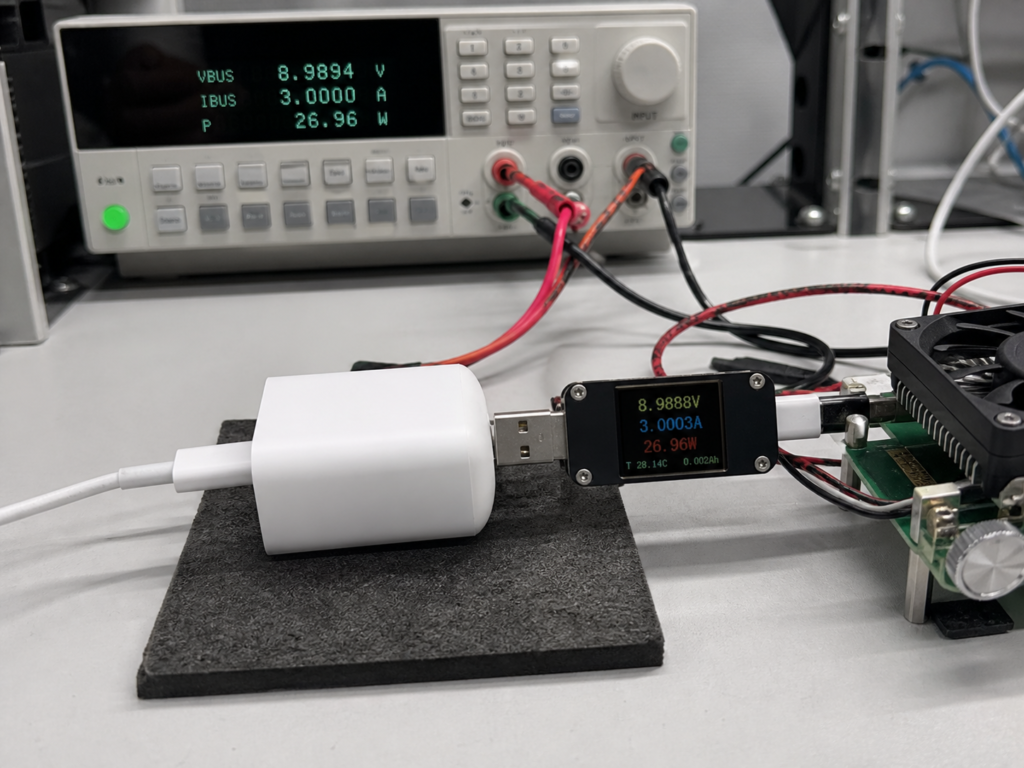
Specifically, the complete current standard number and applicable scope shall be verified. For example, whether NOM-001-SCFI-2018 applies to this electronic device needs to be judged in combination with product classification, rated parameters and exclusion clauses in the standard; at the same time, it is also necessary to check whether there is a dedicated NOM that takes precedence over or excludes NOM-001-SCFI-2018. NOM-001-SCFI-2018 cannot be regarded as the universal and sole basis for all mains-connected charging products. The standard number, version and conformity assessment procedures shall all be subject to the current official text of Mexico.
The second type is **energy efficiency**, which is an additional requirement that some external power supplies may involve. It controls energy efficiency indicators such as standby power consumption, no-load power consumption, and operating efficiency. In NOM-029-ENER-2017, a rated power not exceeding 250W is one of the important conditions in the applicable scope, but the judgment cannot be made solely based on the two conditions of “single or multiple output” and “≤250W”.
It is also necessary to simultaneously verify the definition of external power supplies, product purposes, input and output characteristics, and the exclusion and exemption clauses listed in the standard. Products such as mobile phone chargers and laptop adapters usually deserve key verification of NOM-029-ENER-2017 and its current revised version, but the final decision shall still be subject to the official standard text.
The third type is **labeling and commercial information**. Such requirements involve parameters, warning statements and responsible party information on product nameplates, packaging, and manuals, but the label content, carriers and marking methods of different products are not exactly the same.
In accordance with the applicable product safety NOM, commercial information NOM and other labeling rules, the specific content of Spanish information, rated parameters, model, manufacturer or importer information, warning statements, and which information needs to be marked on the product body, packaging, manuals or accompanying documents shall be confirmed respectively. Label compliance is an independent requirement and is not equivalent to passing safety or energy efficiency tests.
The fourth type is **wireless communication**, which actually does not fall within the scope of NOM, but is often mentioned together because many charging products have wireless functions. It controls the compliance of wireless signal transmission, and is responsible for by Mexico’s telecommunications regulatory authority IFT, which is two sets of independent requirements from NOM’s safety and energy efficiency.
Applicable products are those with radio frequency transmission functions, such as smart charging docks with Bluetooth, Wi-Fi, NFC, and charging stations with communication modules. It should be noted that ordinary wireless charging only has energy transmission and no communication transmission function, so it usually does not generate additional IFT radio frequency requirements due to wireless charging itself; if the product also has transmission functions such as Bluetooth or Wi-Fi, separate verification is required.
The fifth type is **relevant instructions on conformity assessment**. The conformity assessment method completely depends on the applicable NOM and its current conformity assessment procedures. Different products may require third-party certification, test reports, label verification or other procedures; supplier’s declaration of conformity (DoC) or other simplified methods can only be used when explicitly permitted by specific procedures, and self-declaration cannot be made just because the product risk is low.
Overseas test reports, such as CB reports and UL reports, cannot automatically replace NOM certificates. However, when permitted by applicable mutual recognition arrangements, the IECEE CB system or specific conformity assessment procedures, certification bodies may accept them as the basis for certification or part of the testing basis. The final decision shall be subject to the written confirmation of the accredited and approved body and current rules.
There are also special requirements such as electromagnetic compatibility. Whether they are mandatory depends on the product category and current regulatory arrangements, and also needs to be verified against official rules.
Practical Judgment Methods and Verification Paths
After talking about so much theory, finally we will give you a set of practical judgment methods that can be used directly, from rapid preliminary judgment to accurate verification.
3-Step Beginner’s Quick Judgment (Preliminary Judgment)
It is suitable for new sellers to make preliminary judgments, but remember: the three-step method can only be used for preliminary screening of charging products, and the final verification of specific NOM, product classification, tariff code, import method and conformity assessment procedures is still required.
Step 1: Look at the purpose: Is your product sold or used commercially in Mexico? If yes, continue to judge; if not, check the rules for personal luggage, non-commercial import, test samples or other non-circulation scenarios.
Step 2: Look at the input: Is the product directly connected to 127V mains power? If yes, usually specific safety and energy efficiency NOMs should be focused on verification; if not, it cannot be directly deemed not subject to NOM constraints, and the judgment should be continued based on complete functions, structure, parameters, purpose and the scope of specific standards.
Step 3: Look at the form: Is the product sold at a separate price? If yes, verify compliance requirements separately; if not, check the certification coverage, accessory configuration and import form of the main product.
Take the simplest example: a separately sold 20W USB-C wall charger sold on Amazon Mexico, directly connected to the mains. Since it is an external power supply directly connected to the mains, usually NOM-001-SCFI-2018, NOM-029-ENER-2017 and relevant commercial information requirements should be focused on verification, but the final judgment shall still be based on the applicable scope of specific standards and current import rules.
Advanced Accurate Verification Process (For Products with Vague Boundaries)
If you encounter products with vague boundaries, such as charging accessories with special functions, and you don’t know whether they are within the mandatory scope, use the advanced accurate verification process:
Step 1: First organize basic information: product functions, input and output parameters, whether it has radio frequency function, whether it contains batteries or active circuits, sales form, expected import method and quantity. The more complete the information, the more accurate the judgment.
Step 2: Match official rules: Check one by one against the mandatory product catalog issued by the Mexican Ministry of Economy and relevant competent authorities, the applicable scope and exclusion clauses of the corresponding NOM standards, customs tariff code related requirements, and specific conformity assessment procedures.

Step 3: Authoritative verification: If you are not sure, you can check the catalog and standards on the official website of the Mexican Ministry of Economy and relevant competent authorities, or find an authorized certification body with qualifications within the corresponding product scope to do a pre-assessment. It is best to get a written classification opinion, which is more reliable.
A reminder here: never draw conclusions casually when information is insufficient. It is better to spend more time supplementing information or consulting professional institutions than to gamble on luck, otherwise the loss of goods detention and fines will be greater.
NOM Scope Checklist for Charging Products
For your convenience in self-inspection, I have compiled a NOM scope checklist for charging products, which you can check one by one:
| Inspection Dimension | Specific Verification Items |
| Usage Scenario | Whether it is sold/commercially used within Mexico |
| Electrical Input | Whether it is directly connected to Mexico’s 127V AC power grid; if not, what are the complete functions and parameters |
| Sales Form | Whether it is sold as an independent product with separate pricing |
| Circuit Attribute | Whether it has a power conversion circuit or active electronic functions |
| Additional Functions | Whether it has radio frequency transmission functions such as Bluetooth/Wi-Fi |
| Supporting Attribute | If it is a supporting accessory, whether it is within the coverage scope of the complete machine NOM certificate |
| Compliance Validity | Whether the corresponding standard version and certification validity period meet current requirements |
| Import Information | Whether the tariff code, transportation method, import value and quantity affect specific procedures |
Common Misconceptions and Answers to Frequently Asked Questions
Finally, we have sorted out 6 cognitive misconceptions that people are most likely to fall into, as well as the 5 most frequent questions, to help you avoid more pitfalls.
6 Core Cognitive Misconceptions
1. **Misconception 1: Chargers with low power/low voltage output do not need NOM**. Correct answer: Chargers directly connected to the mains usually require key verification of requirements such as safety, energy efficiency and commercial information. However, which NOMs are ultimately applicable still needs to be judged in combination with specific product classification, parameters, standard version and exclusion clauses, and cannot be judged solely by output power or output voltage.
2. **Misconception 2: Having CE/FCC/UL/CB certificates can replace NOM**. Correct answer: NOM is an independent regulatory requirement in Mexico, and overseas certificates cannot automatically replace NOM certificates. However, when permitted by applicable mutual recognition, IECEE CB or specific conformity assessment procedures, relevant reports may be used as the basis for certification or part of the testing basis, and the final decision shall be subject to the rules confirmed by the accredited body.
3. **Misconception 3: A product with the NOM mark printed on it is compliant**. Correct answer: Failure to obtain the corresponding certification or using the NOM mark and certification mark in accordance with applicable rules may constitute illegality or non-compliance, and lead to penalties, goods detention or market withdrawal. The specific consequences shall be subject to applicable regulations and law enforcement determinations; at the same time, not all products subject to NOM are subject to exactly the same marking requirements.
4. **Misconception 4: Cross-border e-commerce small batch/small parcel shipments do not need NOM**. Correct answer: In principle, sold goods should be verified for applicable NOM, but direct mail, express and postal parcels may be subject to different customs and import procedures. They shall be confirmed shipment by shipment in combination with current rules, value, quantity, tariff code, purpose and specific NOM. You cannot automatically assume exemption just because of small parcels or small batches, nor can you absolutely assume that there are no exceptions for all small parcels.
5. **Misconception 5: If the complete machine has NOM, all supporting accessories do not need to be taken care of**. Correct answer: Only when the main product certificate and applicable conformity assessment scheme clearly cover the model, configuration, components and sales/import forms of the accessory or built-in module can it be handled under the certificate. Detachable, separately sold or separately imported accessories such as external power supplies and cables need to be verified separately.
6. **Misconception 6: Charging cables are accessories, so they definitely do not need NOM**. Correct answer: Ordinary passive charging cables usually do not have a universal mandatory NOM requirement that can be applied indiscriminately. However, cables with active circuits, hub or power conversion functions shall be verified whether they fall within the scope of specific safety, EMC, commercial information or other NOMs based on their complete functions and rated parameters, and it cannot be concluded that certification is mandatory just based on whether there is a built-in chip.
Quick Answers to Frequently Asked Questions
• **Is NOM certification mandatory for selling chargers in Mexico?**
It cannot be generalized without considering specific models and rules. Separately sold chargers directly connected to the mains usually require key verification of NOM-001-SCFI-2018, NOM-029-ENER-2017 and relevant commercial information requirements, but the final confirmation needs to be based on product classification, standard applicable scope, conformity assessment procedures and current import rules.
• **Do charging cables exported to Mexico need NOM?**
There is no universal conclusion. It needs to be judged in combination with whether they have active circuits, whether they are sold separately, complete functions, rated parameters and the applicable scope of corresponding standards. Ordinary passive charging cables are usually not within the mandatory scope of some electronic devices, but this does not exclude all other requirements; cables with PD protocol chips, hub or power conversion functions require key verification.
• **Do power banks sent to Mexico via cross-border e-commerce need NOM?**
For power banks with mains input that can be directly plugged into the wall for charging, because they involve mains input and power conversion, usually the corresponding NOM requirements need to be focused on verification. For power banks with only USB low-voltage input, the judgment shall be based on batteries, input and output characteristics, purpose and the specific NOM catalog, and cannot be generalized. Whether simplified procedures apply to direct mail also needs to be confirmed shipment by shipment in combination with current customs rules.
• **What is the difference between Mexican NOM certification and IFT?**
NOM mainly involves mandatory requirements such as safety, energy efficiency and commercial information applicable to specific products, which are managed by the corresponding competent authorities in accordance with their authority; IFT is responsible for wireless communication compliance, targeting devices with radio frequency transmission functions. The two are independent compliance requirements, and charging devices with functions such as Bluetooth and Wi-Fi may need to meet both at the same time.
• **Do individuals need NOM to bring chargers to Mexico?**
Self-use charging equipment carried by individual passengers may be subject to personal luggage or non-commercial import rules, but exemption from NOM cannot be presumed solely based on “reasonable quantity”. The quantity, value, purpose, commodity nature and entry method shall be confirmed in accordance with current SAT customs regulations; if the quantity or situation indicates commercial import, further verification of the corresponding NOM and import requirements is needed.
Summary
By now, you should have a clear understanding of the applicable scope of NOM for charging products. You can now independently do the following things: distinguish the four core concepts of NOM compliance, and no longer mix up regulations, certificates, labels and import requirements; quickly preliminarily judge whether a charging product needs to be checked for the mandatory NOM scope through the three core conditions of “purpose, input, form”; correspond to the judgment points of common charging products, and distinguish different types of compliance requirements such as safety, energy efficiency, wireless and labeling; avoid the 6 most common cognitive misconceptions about NOM scope, and master the judgment logic of frequent questions; know the correct verification path when the boundary is vague, and will not draw conclusions casually when information is insufficient.
The scope judgment of NOM seems complicated, but in fact the core is “grasp the boundaries, look at risks, and verify rules”. Direct connection to the mains is an important screening signal, but not the only conclusion; low-voltage input does not mean automatic exclusion. As long as you check the product functions, parameters, sales form, tariff code, import method and specific standards together, you can get a more reliable judgment in most cases.