
Cross-border sellers who sell electronic products such as charging cables, USB data cables, chargers, and power adapters have most likely encountered this situation: a perfectly fine Listing is suddenly taken down, a compliance rejection notification pops up in the backend, and a bunch of technical terms leave people confused, not knowing where to start. Many new sellers either panic and submit materials randomly, crossing red lines, or delay past the deadline and lose inventory. Whether sales can be restored depends on whether the product actually meets applicable requirements, whether the documents are authentic and have sufficient coverage, whether rectification is completed, and Amazon’s review result of the specific request; some situations may not be resolved by supplementing documents. Therefore, after receiving the notification, the key is not to submit blindly, but to first confirm the problem and then prepare corresponding evidence.
Must-Know Basics: Fundamental Understanding of Compliance Rejections
Before starting the appeal, clarifying a few core concepts will help you avoid many detours.
First is the scope of application and boundaries. Amazon does not have globally unified compliance rules, and requirements vary by marketplace. This guide mainly targets products such as charging cables, USB data cables, chargers, power adapters, and interface connectors; if you sell products with built-in batteries or wireless functions, they need to additionally comply with corresponding special regulations; if it is a set product, each component inside must be individually assessed for compliance, and you cannot only submit the report for the main product. Compliance rejections are not only triggered by listing review; daily safety spot checks, buyer complaints, competitor reports, and platform policy updates may all trigger them. All requirements are subject to the latest notification in the backend, and this guide is only a general reference.
Many new sellers confuse platform requirements with legal obligations, so it is important to distinguish them here: the compliance materials Amazon asks you to supplement are only for passing the platform review, and do not mean that your product fully complies with the laws of the country of sale. Legal obligations in the country of sale depend on the actual role such as manufacturer, importer, authorized representative, distributor, or producer; sellers should confirm their legal identity in the supply chain and fulfill corresponding obligations. Related obligations may involve import, sales, environmental protection, labeling, and other aspects. In addition, a compliance rejection essentially means that the evidence you submitted does not meet the platform’s rule requirements; it does not mean that your product itself is of unqualified quality, nor does it mean that the product is definitely free of any legal risks.
Compliance reviews may require documents such as test reports, declarations of conformity, photos of products and labels, registration or authorization materials, etc. The specific document types, whether they are required, and whether a certain material can be used as supplementary evidence shall be subject to the marketplace, product category, and backend notification. For example, test reports are used to show that the product has undergone relevant assessments; declarations of conformity are usually issued by the brand owner or manufacturer; registration or authorization materials may come from regulatory authorities or relevant platforms; EPR environmental registration certificates belong to extended producer responsibility requirements, not safety certifications; photos of products, packaging, and nameplates are often used to verify physical information. They do not need to be submitted at the same time every time, nor can a certain type of document be regarded as a unified mandatory material for all products.
The impact of rejection mainly has three levels: on the sales side, it will lead to Listing removal and search ranking downgrade; on the inventory side, if it is FBA shipping, inventory may be marked as unsellable, and even inbound shipping may be restricted; on the account side, a single rejection may not cause serious impact, but if false or misleading materials are submitted, it may trigger product, account, or fund-related dispositions.
There are 4 common cognitive misunderstandings that new sellers are most likely to fall into, which must be avoided in advance: First, having a certification certificate does not guarantee passing the review; information mismatch or insufficient qualifications may lead to rejection. Second, compliance requirements vary by marketplace, so you cannot directly use a US report to replace the requirements for the European marketplace. Third, a supplier’s claim of compliance does not mean you do not need to verify; when problems arise, you still need to confirm your responsibilities and obligations in the supply chain. Fourth, passing the platform review does not mean compliance with local regulations; the platform only reviews the materials you submit, and sellers still need to confirm that the product meets the applicable laws of the sales location.
Interpreting Rejection Notifications: Quickly Locating Core Issues
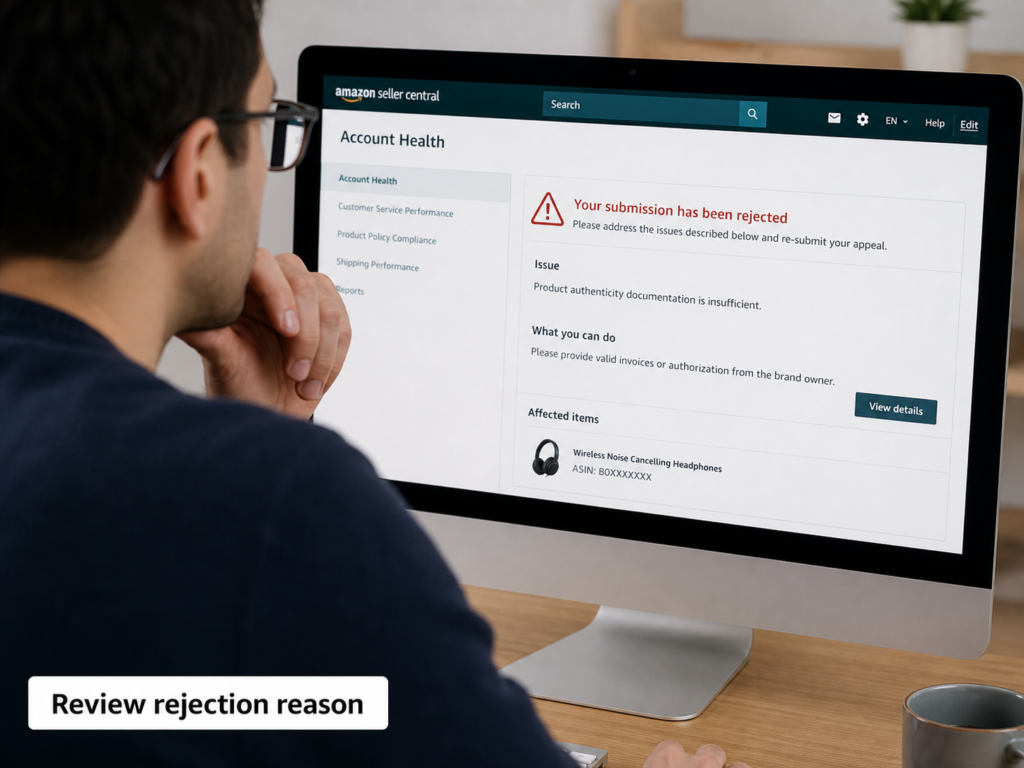
After receiving a rejection notification, the first thing to do is not to rush to find materials, but to first read the notification clearly and locate the core problem.
First, find the correct official notification entry. Prioritize checking performance notifications, the product compliance page, or the Product Compliance Manager in Seller Central to confirm the ASIN, SKU, and marketplace corresponding to the notification. Some emails may also be genuine Amazon account or product notifications, so you cannot simply treat all off-site emails as scams. Verify the email content against notifications, performance notifications, or records on the product compliance page in Seller Central; stay vigilant against emails that require off-site login, payment, or provision of sensitive information, and do not click suspicious links directly.
After getting the notification, be sure to extract 5 key pieces of information first: the rejected ASIN/SKU and corresponding marketplace, the type of compliance document the platform requires to provide, keywords of the rejection reason, submission deadline and limit on the number of supplementary submissions, and the officially designated appeal entry. Especially the deadline and number of submissions limit—many new sellers don’t pay attention, delay until the time is up, or waste supplementary submission opportunities by submitting randomly.
Rejection situations can be summarized into several categories: inconsistent information, incomplete or unreadable documents, insufficient laboratory qualifications or test scope, non-compliant product or label information, incomplete declaration or registration materials, etc. The actual rejection reason and processing priority shall be subject to the specific notification, and cannot be judged solely based on the so-called “high-frequency ranking across all marketplaces”.
Inconsistent information usually means the model, brand, and parameters on the documents do not match the Listing or the actual product; document problems may include blurriness, missing pages, non-compliant format, or lack of the language version required by the notification; insufficient laboratory qualifications or accreditation scope may be manifested as the laboratory’s capability not covering the corresponding standard or product category; insufficient compliance coverage may mean the report does not cover actual functions, models, or key configurations; labeling problems involve information or markings on the product, packaging, or nameplate; declaration or registration-related problems may include missing items in the DoC, lack of signature, or incomplete materials such as registration or responsible person information.
The severity and processing cost of different problems vary greatly. You can quickly judge: if it is a minor problem such as document format, blurriness, or missing pages, just supplement it, and the cost is very low; if it is a problem of mismatched model, brand, or parameters, either modify the Listing or supplement reports or change certificates according to the actual situation, with medium cost; if it is a problem such as insufficient laboratory qualifications, inapplicable standards, or uncovered functions or models, supplementary testing or even re-testing may be required, and the cost is relatively high; if the product’s own labeling is unqualified or its structure is inconsistent with the test sample, the product needs to be rectified, and inventory and sales risks should be further assessed if necessary.
Specific requirements also vary by marketplace. For example, the US requires judging relevant requirements based on whether the product contains wireless transmission, digital circuits, and its FCC device category; Canada distinguishes between radio equipment, digital devices, or interference-causing devices, and confirms electrical safety requirements according to the sales province or region; Europe and the UK need to separately verify applicable regulations, declarations, environmental registration, and labeling requirements; Japan, Australia, Saudi Arabia, and the United Arab Emirates also have their own product classification, certification, or registration processes. Do not apply a fixed document list solely based on the marketplace name.
Pre-Appeal Preparation: Organizing Compliance Evidence
After figuring out where the problem is, the next step is to organize the corresponding compliance evidence. This step is the key to a successful appeal.
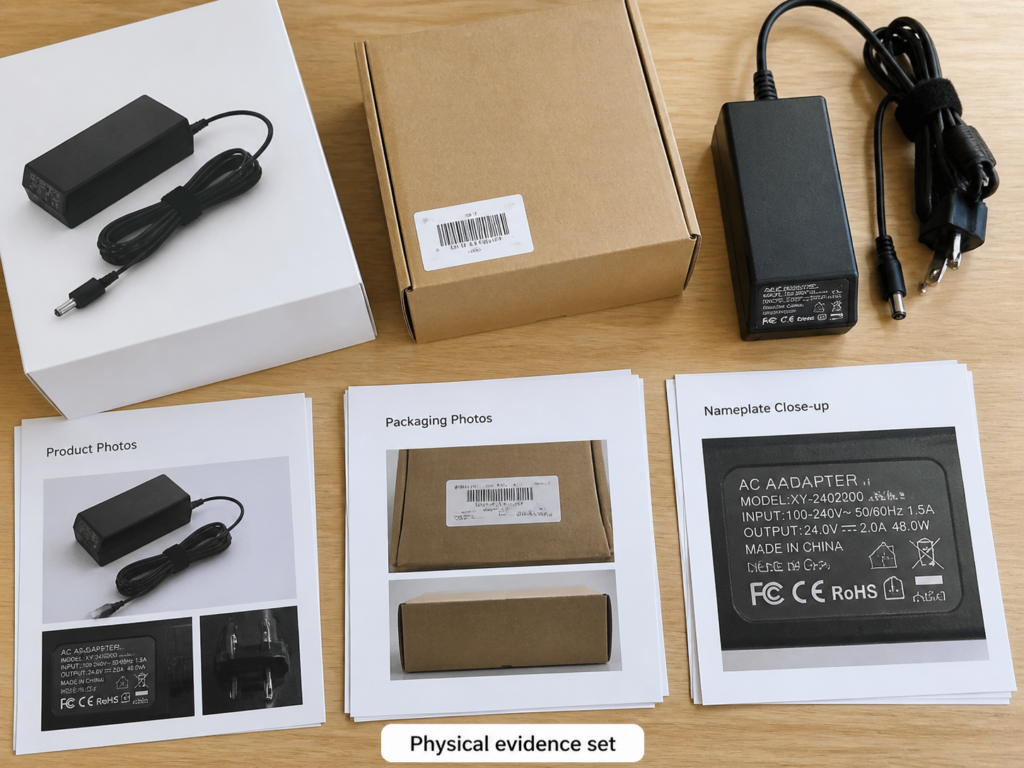
First, here is a general basic evidence list that can basically be used regardless of the marketplace or rejection reason: First, physical evidence: clear photos of the product, packaging, and nameplate, which must be consistent with the information on the Listing; second, test evidence: complete test reports required by the corresponding marketplace, and confirm that the reports are issued by a laboratory with corresponding capabilities; third, declaration and authorization evidence, such as DoC, regulatory authority authorization or registration documents; fourth, subject evidence, including manufacturer information and proof of association between the brand and the manufacturer; fifth, other materials prepared as needed, such as local responsible person or importer information, EPR registration certificate.
To facilitate your quick comparison of requirements across different marketplaces, here is a comparison table of compliance requirements for major marketplaces. The table is only for preliminary judgment, and the final decision shall still be subject to the product category, sales region, and backend notification:
| Marketplace | Covered Products | Involved Systems/Regulations | Common Evidence | Important Boundaries |
| US Marketplace | Electronic products such as chargers and USB cables | Requirements such as Part 15 shall be judged based on whether the product contains wireless transmission, digital circuits, and its FCC device category; electrical safety shall be confirmed separately | FCC authorization or conformity documents (when applicable), related test reports | When device authorization is required, intentional radiators usually apply to Certification, and some unintentional radiating devices apply to SDoC; ordinary wired cables and chargers that do not belong to relevant device categories cannot be uniformly required to provide FCC documents solely based on their use |
| Canadian Marketplace | Electronic products such as chargers and USB cables | Radio equipment is subject to corresponding ISED certification requirements; applicable digital devices or interference-causing devices need to confirm EMC requirements such as ICES; electrical safety shall be confirmed according to the sales province/region and product category | Applicable ISED certification documents, declarations of conformity, test reports, etc. | “ISED certification documents” cannot be used to generalize the requirements for all chargers or cables |
| EU/UK Marketplace | Chargers, charging cables, power adapters, etc. | Confirm according to applicable regulations such as Low Voltage, EMC, RoHS, WEEE, etc.; the EU Common Charging Directive only applies to specific rechargeable radio equipment listed in the directive, most categories apply from December 28, 2024, and laptops apply from April 28, 2026; the UK must separately verify its current regulations | EU/UK DoC, test reports, environmental registration or responsible subject materials, etc. | CE and UKCA are markings, not equivalent to a certification certificate; the DoC is issued by the corresponding responsible subject in accordance with applicable regulations |
| Japanese Marketplace | Chargers, some power cables | PSE Electrical Appliance and Material Safety Law, etc. | Applicable PSE materials, Japanese labels, etc. | PSE markings and processes shall be determined according to product classification |
| Australian Marketplace | Chargers, power adapters, etc. | EESS electrical safety system, applicable EMC requirements, and RCM marking requirements | Test reports, applicable EESS registration materials, responsible supplier information, etc. | RCM is a compliance marking. Whether a product must be registered in EESS depends on the equipment risk level: Level 2 and Level 3 must complete product registration, Level 1 does not require product registration; the responsible supplier registration and marking conditions shall also be confirmed in accordance with applicable electrical safety and EMC requirements |
| Middle East Marketplace (Saudi Arabia/UAE) | Chargers, power adapters, etc. | Confirm separately according to local regulated product scope, applicable technical regulations, and import processes | Corresponding conformity assessment, registration, labeling, and import subject materials, etc. | A unified “SASO/ECAS documents + Arabic label” cannot be used as a fixed list for all charging products; requirements for Saudi Arabia and the UAE shall be verified separately |
In addition to marketplace differences, products with different structures require different compliance coverage scopes, but fixed test items cannot be directly derived solely from the product name. Cable evaluation shall be determined based on whether it is a passive cable, whether it contains electronic components or wireless functions, rated capacity, connector type, product claims, and applicable regulations of the target market. If the product claims to comply with USB-IF specifications or uses the USB-IF logo, it shall also meet the corresponding USB-IF specifications, certification, and trademark license conditions; however, data transmission EMC, fast charging protocol, or E-marker testing should not be regarded as general statutory requirements for all related cables.
For chargers and power adapters, applicable safety, EMC, and other special requirements shall be confirmed in combination with actual characteristics such as input and output power, number of interfaces, plug form, replaceable structure, wireless function, and battery. Whether multi-port chargers need to evaluate single-port and multi-port simultaneous output shall be subject to applicable standards, product claims, and test plans; for adapters with detachable plugs, it shall also be confirmed whether all sales configurations are covered by tests and documents. Products with wireless functions or built-in batteries usually require additional assessment of relevant special regulations. For set products, the compliance requirements of each component shall be confirmed separately, and the models, configurations, and documents of the entire set of products shall be able to correspond to each other.
For common rejection reasons, the corresponding core evidence and rectification actions are also organized here, which you can directly refer to for preparation:
| Rejection Reason | Core Evidence | Rectification Actions |
| Inconsistent information | Screenshot of modified Listing, product nameplate photo, applicable certificate or report change certificate | Prioritize modifying the Listing to match existing reports; if the actual product or report needs adjustment, confirm with the laboratory or responsible subject whether re-assessment or issuance of change documents is required |
| Unqualified material format | Clear and complete PDF, documents or translations in the language required by the notification | Re-scan the full-page documents, and provide documents or translations in the required language in accordance with backend notifications and applicable regulations; provide certified translations, signatures, or notarization only when explicitly required by the notification, competent authority, or applicable procedures |
| Insufficient laboratory qualifications/accreditation scope | Laboratory ISO 17025 accreditation certificate, report verification link, or institution confirmation letter | Replace with a qualified laboratory for re-testing, or supplement materials that can prove the laboratory’s capability and the authenticity of the report |
| Insufficient compliance coverage | Supplementary test reports, updated DoC or authorization documents | Supplement testing and documents for corresponding functions, models, configurations, or standards, and ensure all materials are consistent |
| Unqualified marking/label | Photos of rectified product, packaging, nameplate, description of marking position | Remake markings in accordance with marketplace and applicable regulatory requirements, and take supplementary clear photos |
| Unqualified declaration/registration | DoC with complete information, registration certificate, responsible person information | Complete DoC fields in accordance with applicable regulations and backend requirements, complete corresponding registration, or supplement responsible subject materials |
When organizing materials, be sure to check information consistency. The mandatory fields to check include: ASIN, SKU, brand, model, manufacturer, parameters, power, plug, interface, fast charging protocol. Information in all places shall be able to correspond to each other, and there shall be no unexplainable differences.
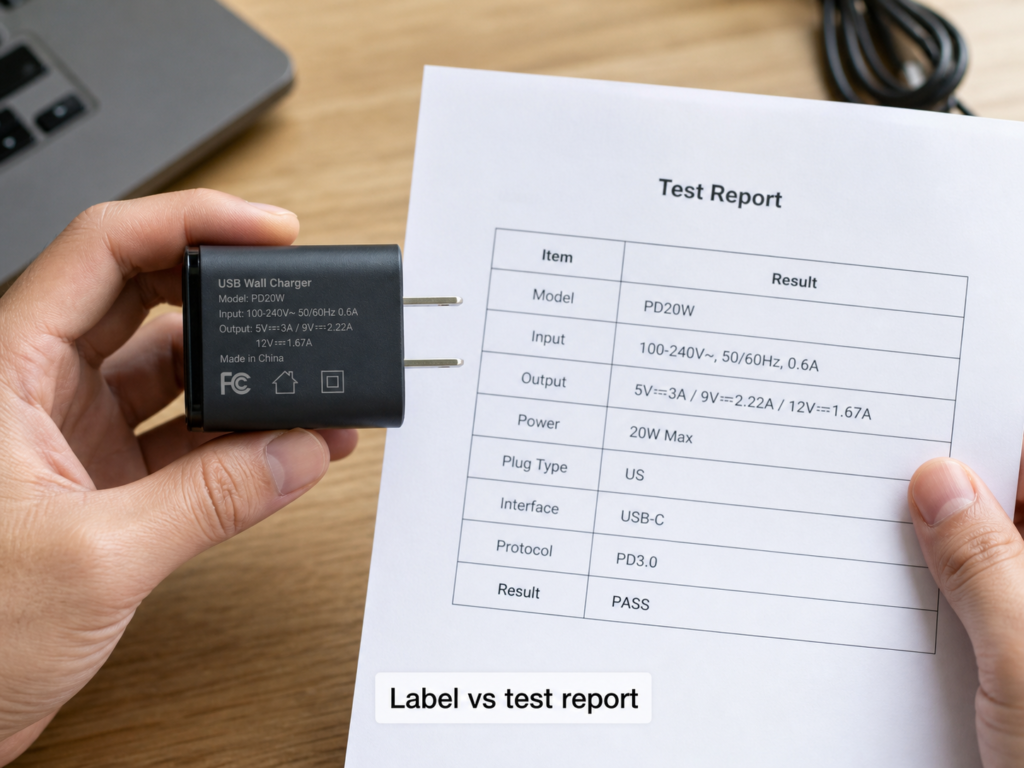
Whether models of the same series can be covered by the same test report shall be determined by applicable standards, key difference analysis, and the laboratory’s report or coverage statement. Products with different powers, interfaces, and plugs cannot be simply deemed to be unable to share, nor can they be simply deemed to be able to share; the models and configurations actually covered by the report shall be confirmed. For color changes, existing assessments may only be used if they do not affect applicable compliance characteristics and the documents can clearly identify the version being sold. The product identification method of the DoC shall comply with corresponding regulatory requirements, and does not mean that all colors or models must be listed one by one in the same format.
Before submitting the appeal, do a final self-check against these 6 items to ensure no omissions: First, marketplace, ASIN, SKU, model, brand, and manufacturer information can fully correspond; second, the test report covers the functions, power, interfaces, and plug types of the product actually sold; third, laboratory qualifications cover the corresponding standards, and the report is complete, clear, signed/stamped, and verifiable; fourth, product nameplate, packaging, and Listing parameters are consistent with all compliance documents; fifth, DoC, registration documents, and responsible person information have been prepared in accordance with marketplace requirements; sixth, all rejection reasons have corresponding rectification evidence, with no omissions.
Full Backend Appeal Operation Process
After the materials are prepared, you can submit the appeal. Be sure to use the official entry provided in the backend, and do not forcefully apply non-existent pages or processes based on other people’s experience.
Appeal entries can be found in the following priority order: First, the appeal button in performance notifications, which is usually associated with a specific ASIN; second, the entry for submitting compliance documents in the Product Compliance Manager or product compliance page; if neither of the first two entries can solve the problem, you can open a Seller Support case to contact the relevant team. Remember to keep the case number, which will be used for checking progress later. The specific entry name and submittable content may vary depending on the marketplace, category, and account page.
When submitting materials, the following items are usually required, but this does not mean that they are exactly the same for every product and every entry: first, select the type of compliance document required by the corresponding marketplace; then upload clear documents that meet the page size and format requirements by category; then fill in the basic product information to ensure it is completely consistent with the materials; finally, check all information and submit. File naming can use “ASIN + document type + model”, such as “B0123456789A20W”, to facilitate reviewers’ identification, but shall be subject to the format and naming requirements accepted by the page. Check carefully before submission to avoid repeatedly uploading the same wrong files.
If the corresponding notification or submission page requires a description, appeal reason, or plan of action, then explain the problem, rectification, and correspondence with attachments according to its fields; if the page only requires specified compliance documents, submit them in accordance with the page requirements, and do not assume that a POA is a fixed step.
When you need to fill in a description, you can organize the content around four questions: what went wrong, why it went wrong, what has been corrected, and how to prevent it in the future. The common structure is: first confirm the problem, then analyze the root cause, then clearly state the completed rectification measures, then talk about future prevention mechanisms, and finally request the platform to re-review. A practical method is to list the correspondence of “rejection reason – rectification measure – attachment number” in the description, so that reviewers can quickly find the evidence.
Take the simplest example. If the rejection is due to inconsistent information, you can write like this:
Problem Confirmation: Our company’s 20W charger with ASIN B0123456789 was rejected because the Listing model is inconsistent with the test report.
Root Cause Analysis: When launching the product, the operation staff did not check against the compliance documents and mistakenly wrote the model A20 as A25.
Completed Rectification: The Listing model has been checked and modified according to the actual product and compliance materials. See Attachment 1 for the modification screenshot; the product nameplate is consistent with the report, see Attachment 2 for the nameplate photo.
Prevention Mechanism: In the future, a compliance review link will be added before product launch, and dedicated personnel will check the key fields of the Listing and compliance documents.
Request for Re-review: We sincerely request the team to re-review based on the supplementary materials.
Note that do not write empty words or make excuses in the description; each rectification measure must be supported by corresponding evidence. If the product itself has not completed rectification, do not write planned work as completed.
After submission, you can check the progress in the Product Compliance Manager, product compliance page, or performance notification page. There is no fixed standard for review duration; everything is subject to backend notifications, and there is no need to submit frequently and repeatedly. Review results may include approval, re-rejection, or request for supplementary materials.
Appeal Failure and Special Situation Handling
If the first appeal fails, don’t panic first. First look at the new rejection reason. If the reason is the same as before, it usually means that the existing rectification or evidence has not yet solved the problem in the notification, and you need to recheck the details of the materials; if a new reason appears, you should also check whether the notification still retains the original requirements, and submit complete materials according to the latest notification. Do not ignore the notification and directly repeatedly submit materials that have been rejected and have not been rectified.
If you want to make a second appeal, there are three key adjustments: First, supplement evidence for the requirements in the latest notification, and at the same time confirm whether the original documents still need to be retained; second, list the rectification status of the previous problem and corresponding evidence at the beginning of the appeal description, and then explain the handling of the new problem this time; third, if it is a problem such as laboratory qualifications or compliance coverage, you should first conduct supplementary testing, re-testing, or obtain a valid coverage certificate before submitting the appeal, and do not take chances with a fluke mentality.
There are corresponding handling methods for special situations. For example, if FBA inventory is restricted, you can handle it according to this process: first confirm the specific status of the inventory, then suspend advertisements and new shipments to avoid expanding losses, then check the processing options given in the backend, such as whether inventory removal is available, whether sales can be restored after review is passed, and choose an appropriate plan after evaluation. The scope of support for inventory removal is subject to the options displayed in the backend; inventory removal is not available in all situations.
Another example: if your compliance documents are authentic but have been rejected multiple times, you can open a case to apply for manual verification, providing a complete chain of evidence, such as laboratory qualification certificates, official report verification links, confirmation letters issued by the laboratory, etc. Remember to keep all communication records and case numbers for subsequent follow-up.
There are 4 appeal red lines that must never be crossed: First, forging or tampering with compliance documents; second, misleadingly replacing current product materials with compliance documents of other products; third, repeatedly submitting the same rejected materials without rectification or supplementary evidence; fourth, concealing the true functions of the product, for example, the product has wireless functions but only submits ordinary safety reports that do not correspond to the actual product. Forgery, tampering, or misleading use of compliance documents may violate Amazon policies and lead to product, account, or fund-related dispositions, with specific consequences depending on the investigation results and applicable policies.
If you encounter the following situations, it is recommended that you suspend sales first and re-evaluate before deciding whether to continue the appeal: first, the core structure and parameters of the product are inconsistent with the test sample, and it is impossible to prove that they are the same product; second, laboratory qualifications are questionable, and authenticity proof cannot be provided; third, the product has obvious safety risks; fourth, the materials required by the platform are too different from your existing documents, and cannot be supplemented or corrected. Forcing an appeal will not only fail, but may also increase account risks.
Proactive Prevention: Reducing Rejection Probability at the Source
In fact, most compliance problems can be detected in advance. Doing a good job of compliance at the source is much more worry-free and cost-effective than appealing after the fact.
Before launching a new product, you can conduct compliance checks in these 3 steps: First, check the compliance requirements for the corresponding product in the target marketplace. Be sure to follow the latest backend requirements and applicable laws and regulations of the sales location, and do not rely on hearsay; second, use an information consistency check matrix to check all key fields of the product, compliance materials, and Listing to ensure they correspond to each other; third, if the product category or backend page provides an entry for pre-submitting compliance documents, you can complete the submission before sending FBA inventory and keep the results; if there is no such entry, you should complete the applicable regulation assessment, prepare documents before shipping, and continue to pay attention to subsequent compliance requests in the backend.
Here is another reminder: platform review does not replace legal obligations in the country of sale. Even if you pass the platform review, you must confirm that the product meets local applicable product safety, environmental protection, labeling, import, and responsible subject requirements.
When sourcing and selecting products, you should also do a good job of compliance verification: ask the supplier for complete test reports and compliance documents, and verify whether the laboratory’s ISO 17025 accreditation scope covers the corresponding tests of the product; confirm that the coverage scope of the report is completely consistent with the product you sell; if the product has features such as multi-port output, replaceable plugs, wireless functions, or built-in batteries, you should further confirm whether the relevant functions and configurations are within the applicable assessment scope; check whether the product and packaging markings meet the requirements of the target marketplace. Remember, there is no globally universal certification; requirements vary by marketplace and product category, so you must verify them one by one.
Compliance materials should also be managed for the long term: when storing, classify them by marketplace and model, with clear naming for easy lookup; pay attention to changes in regulations, standards, products, and platform policies, and update materials as needed; if the product’s core parameters, structure, materials, interfaces, or functions change, re-assess compliance requirements and cannot directly use old reports; regularly check the platform’s policy updates and adjust your compliance materials in a timely manner to avoid rejection after policy changes.
Overall, Amazon’s compliance rejections may seem complicated, but the key to handling them is not to blindly submit more documents, but to first understand the notification, then confirm the product, marketplace, and responsible subject, prepare authentic evidence with matching coverage, and submit according to the specific backend requirements. Whether sales can be restored depends on the actual compliance status of the product, the quality of materials, the completion of rectification, and the platform’s review results; some problems cannot be solved solely by supplementing documents.
Sellers can gradually complete these tasks independently: quickly understand rejection notifications and identify core problems, judge required compliance evidence according to product structure and marketplace requirements, organize appeal materials for issues such as inconsistent information, incomplete documents, insufficient test scope, labeling problems, and declaration or registration material problems, write descriptions and submit appeals when required by the page, handle first appeal failures and judge whether manual verification is needed, conduct compliance checks before product launch and sourcing, and at the same time identify appeal red lines to avoid account risks. Compliance is not a one-time matter, but a work that runs through the entire process of product selection, sourcing, launch, and operation. Preparing in advance is far more reliable than firefighting after the fact.