
Sellers of charging products on Amazon’s EU marketplace have almost all heard the term “compliance”, but few truly understand it. Some spend thousands of yuan on a “CE certification” only to have their listings taken down; others only find out they need to register for WEEE when their goods arrive at the port, ending up with detained goods and return shipments. In fact, EU compliance requirements are not that mysterious; it’s just that many people get the basic concepts wrong from the start. In this article, we will start from the most basic understanding, move to category-specific practical key points, then to pitfall avoidance methods, and thoroughly explain the access requirements for electronic products on Amazon’s EU marketplace, focusing on common charging products such as chargers, data cables, and adapters. New sellers can get started right after reading, and experienced sellers can also fill in gaps in their knowledge.
Essential for Beginners: Basic Understanding of Access Certification
What is Amazon EU Marketplace Access Certification
Many people think access certification is an official certificate, but that is completely not the case. It is a **dual compliance requirement of EU regulations + Amazon platform rules**, which cannot be solved with a single piece of paper. The core logic must be clarified first: Amazon’s requirements are formulated based on EU regulations, but some aspects may be stricter than regulatory requirements; conversely, even if you pass Amazon’s platform review, it does not mean your product fully complies with EU laws — EU customs, market surveillance authorities, and consumer protection agencies can still conduct independent inspections, and may take measures if non-compliance is found.
Also note that this set of requirements only covers EU marketplaces such as Germany, France, Italy, and Spain, and is not interchangeable with the UK’s UKCA or the US’s FCC. Separate materials must be prepared for different marketplaces.
Applicable Product Scope (Focus on Charging Products)
Not all charging-related products are subject to the same electronic product requirements. Let’s first draw a clear boundary.
Categories that must comply with requirements include chargers/power adapters, USB/USB-C cables/data cables, and chip-equipped connectors/adapters/docking stations. Simply put, these are charging-related products with electronic components or that perform electrical and electronic functions.
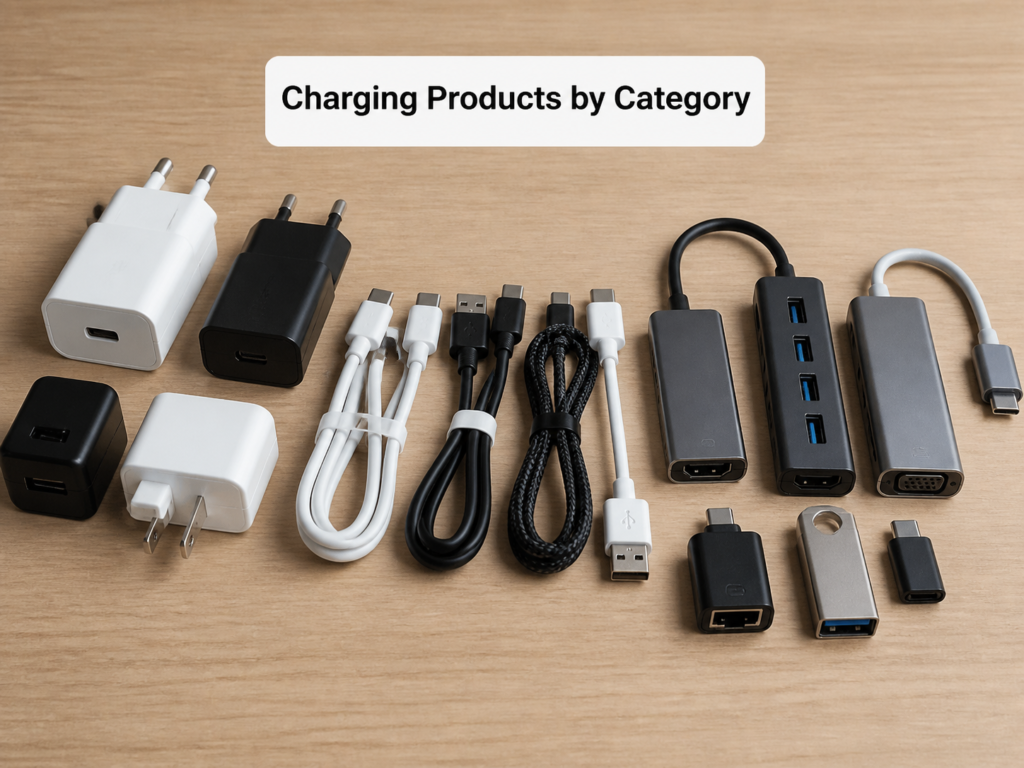
Accessories that do not perform any electrical or electronic functions, such as charging cable storage bags, usually do not fall under electrical and electronic equipment. However, passive cables and adapters with wires, terminals, or electrical transmission functions still need to be checked for RoHS, WEEE, REACH and other applicable requirements according to the product definition, and cannot be judged solely by whether there is a chip inside.
Real Consequences of Non-Compliance
Many new sellers think “I don’t sell much, so they won’t check me”, but the consequences of non-compliance are more serious than you think, mainly involving three levels.
On the platform side, you may be required to submit supplementary materials, or it may lead to listing removal, inventory removal or destruction, and in severe cases, traffic restrictions or account suspension.
If customs or market surveillance authorities find compliance issues with the product, they may suspend release, require rectification, return shipment, recall or destruction, and may impose administrative penalties or other fees in accordance with applicable laws.
The legal aspect is the most troublesome. If a product has safety issues, consumers can claim compensation, which may even trigger a product recall, and brand reputation will also be directly damaged.
4 Common Cognitive Misconceptions for New Sellers
Sellers who are new to EU compliance almost always fall into these pitfalls, and avoiding them in advance can save a lot of costs.
First misconception: CE is a certification certificate issued by the EU official. Wrong. CE is a conformity mark affixed by the manufacturer to indicate that the product complies with all applicable EU requirements. The manufacturer must complete the applicable conformity assessment, compile technical documentation, and sign the Declaration of Conformity (DoC); whether a notified body or third-party testing is required depends on the specific regulations, product category, and conformity assessment module. Not all products must have test reports issued by third-party laboratories, but the manufacturer must be able to provide sufficient evidence of conformity.
Second misconception: Small sellers and low-priced products do not need to comply. Wrong. As long as electronic products are sold on EU marketplaces, regardless of whether you are a large or small seller, and whether they sell for 9.9 euros or 99 euros, they must meet the applicable compliance requirements. There is no automatic exemption due to small scale.
Third misconception: Certification is permanently valid after one application. Wrong. If the product is modified, such as changing the power supply solution, adding functions, or changing power, or if EU regulations are updated, compliance must be re-evaluated, and testing or updated documents must be supplemented if necessary. You cannot keep using materials from several years ago.
Fourth misconception: Passing Amazon’s review means full compliance. Wrong. Amazon will review the materials you submit according to platform tasks, but platform review is not equivalent to legal certification of the product itself. EU customs and market surveillance authorities can still conduct random inspections, and even if you pass the platform review, you may still be penalized or required to rectify if non-compliance is found.
Quick Classification: Find the Right Compliance Track for Your Product
After understanding the basic concepts, don’t rush to dig into regulations first. Different types of charging products have very different compliance requirements. First classify your products correctly, so that you can accurately correspond to the requirements later. We divide common charging products into five major categories:
| Product Category | Subtype | Core Feature |
| Energy Conversion | Chargers/Power Adapters | Convert mains electricity to low-voltage DC, highest risk |
| Transmission | Passive charging cables/data cables | Usually no chip, no indicator light, no protocol conversion |
| Transmission | Active charging cables/data cables | May have E-Marker, protocol chip, or indicator light |
| Adapter | Pure mechanical adapters/connectors | Only physical interface conversion, no active circuit |
| Adapter | Active adapters/docking stations | With protocol conversion or signal processing circuits |
| Special Function | Wireless charging products | With wireless transmission, reception, or wireless power transfer functions |
| Special Function | Battery-equipped charging products | Built-in, included, or separately sold battery |
| Combo Set | Charger + data cable set, etc. | Multiple products sold as a combination |
Core Characteristics of Each Category
• **Energy Conversion (Chargers/Power Adapters)**: Directly connected to mains electricity and converted to low-voltage DC, with high risk of electric shock and fire, and compliance requirements are usually more complex.
• **Transmission (USB/USB-C cables, data cables)**: Can be divided into passive and active types. Passive cables usually have no active electronic circuits, such as common ordinary charging cables; active cables may have E-Marker chips, indicator lights, protocol chips, etc., such as cables supporting 100W PD fast charging. Whether a certain regulation applies still depends on the specific structure, rated voltage, and function.
• **Adapter (Connectors, adapters, docking stations)**: Pure mechanical conversion models mainly realize interface or structural connection; active conversion models have protocol conversion, signal processing, or power supply control circuits, such as USB-C to HDMI docking stations.
• **Special Function (Charging products with wireless/battery)**: Products with wireless functions include wireless chargers, charging devices with Bluetooth or Wi-Fi functions; products with batteries include power banks and wireless chargers with built-in batteries. Due to the added wireless or battery functions, these products require additional verification of corresponding regulations.
• **Combo Set (e.g., charger + data cable set)**: The core rule is that each product in the set must separately meet the corresponding compliance requirements, and the overall packaging must also comply with packaging regulations. Note: As long as any product in the set is replaced, the original compliance documents may need to be re-evaluated.
3-Step Quick Judgment Method (Ready for Beginners)
If you are not sure which category your product belongs to, just follow these three steps:
Step 1: First check whether the product has active electronic components, wireless functions, or batteries, distinguish between passive, active, or special models, and confirm the rated input and output voltage of the product.
Step 2: Go to the “Compliance Reference” tool in Amazon Seller Central, enter the product category, and you can find the basic compliance items required by the platform.
Step 3: If you still have doubts, ask the supplier for the product specification sheet, or directly consult Amazon’s compliance customer service. Do not judge solely based on “whether there is a chip”.
Core Regulations: Mandatory EU Requirements for Charging Products
After classification, let’s break down the mandatory EU requirements. Many people think compliance is just getting CE, but in fact CE is only part of it. There are also responsibilities such as environmental protection, recycling, and energy efficiency. Missing any one may cause problems.
CE Mark Related Regulations
First, let’s emphasize again: You cannot affix the CE mark just by getting a “CE certification”. You must meet **all CE regulatory requirements applicable to your product** before affixing the CE mark; not a single one can be missing. Common regulatory requirements include the following:
• **Low Voltage Directive (LVD)**: Mainly governs electrical safety, such as risk of electric shock or fire. It usually applies to electrical equipment with rated input or output in the range of 50–1000V AC and 75–1500V DC. Products such as chargers usually require key verification; ordinary USB/PD cables and most low-voltage docking stations are not automatically subject to LVD just because they contain chips, and should be judged based on rated voltage, function, and product structure.
• **Electromagnetic Compatibility Directive (EMC)**: Governs electromagnetic interference, meaning the product must not interfere with the normal operation of other equipment, and must not be easily interfered with by other equipment. Whether it applies depends on whether the product falls within the scope of relevant equipment, and cannot be judged solely by power level.
• **RoHS Directive**: Restricts hazardous substances such as lead, mercury, and cadmium in products. RoHS is an independent hazardous substance restriction requirement. For electrical and electronic equipment to which it applies, RoHS conformity usually needs to be included in technical documentation and DoC; if the product is also subject to other CE regulations, the CE mark can be affixed accordingly. RoHS does not require a separate RoHS mark.
• **Radio Equipment Directive (RED)**: Mainly applies to products with wireless communication, radio determination, or other functions that fall within the scope of radio equipment. In addition to safety and electromagnetic compatibility requirements, relevant requirements such as radio spectrum, network, and human health must also be verified.
Environmental Protection and Recycling Regulations (Mandatory Responsibilities Beyond CE)
These are mandatory requirements beyond CE, which many sellers easily miss and end up failing on:
• **REACH Regulation**: REACH includes requirements such as chemical registration, restriction, authorization, and information disclosure of Substances of Very High Concern (SVHC). For articles containing substances on the Candidate List that meet applicable thresholds, it may be necessary to provide information to business customers and consumers, and fulfill other REACH obligations according to specific circumstances. It cannot be simply understood that all products must undergo the same “SVHC content certification”, nor can it replace RoHS or vice versa.
• **WEEE Directive**: Governs the recycling of waste electronic products. Producers or distance sellers recognized as producers usually need to fulfill WEEE registration, declaration, and recycling obligations in each member state where the product is placed on the market. Non-domestic producers may need to appoint a local authorized representative or use a compliance service provider, and bear recycling costs and labeling obligations in accordance with local requirements.
• **Packaging EPR (Extended Producer Responsibility)**: Governs the recycling of packaging materials. Packaging producer responsibility obligations must be verified and fulfilled separately according to the member states where the products are actually placed on the market, such as Germany’s LUCID, France’s packaging producer responsibility system, Spain’s packaging producer registration, etc. Whether it affects listing sales depends on local laws and Amazon’s policies for that marketplace.
• **Battery Regulation**: When a product has a built-in battery, comes with a battery, or sells batteries separately, the Batteries and Waste Batteries Regulation (EU) 2023/1542 and the implementation requirements of the selling country should be verified, including producer registration, labeling, recycling responsibilities, and applicable product design requirements. Ordinary chargers and cables without batteries usually do not bear battery product obligations.
General and New Regulatory Requirements
There are also several general requirements and new regulations that should be noted in advance:
• **General Product Safety Regulation (GPSR)**: GPSR (Regulation (EU) 2023/988) applies from December 13, 2024. For products not covered by specific EU product safety regulations, it stipulates general safety and traceability requirements; for products already covered by specific regulations, it must be judged in combination with the applicable relationship between GPSR and specific regulations, and cannot be simply understood that all CE products are additionally fully subject to the same set of GPSR obligations.
• **Energy Efficiency Requirements (ErP)**: Ecodesign requirements should be verified based on whether the product is an external power supply and its specific category. For external power supplies subject to Regulation (EU) 2019/1782, indicators such as no-load power consumption and average active efficiency are usually involved, but this regulation also has clear product scope and exceptions, and cannot be applied to all chargers indiscriminately.
• **New USB-C Universal Charging Regulation**: For devices listed in the directive such as mobile phones, tablets, digital cameras, and headphones, USB-C and related unified charging requirements apply from December 28, 2024; for laptops, they apply from April 28, 2026. Specific verification is also required for device categories, unified charging protocols, charging information, and other requirements such as whether a charger is included with the device.
Platform Rules: Amazon Review Materials and Logic
EU regulations are the bottom line, and Amazon as a platform has its own review rules. Its requirements are based on EU regulations, but some aspects may be stricter, and the review logic is different from official random inspections.
Common Trigger Scenarios for Review
Amazon’s compliance reviews are not only for new product listings. There are four common trigger scenarios:
First, proactive submission before new product listing: some categories require passing review before sales are allowed;
Second, daily random platform inspections: even products that have been sold for a long time may suddenly be required to submit supplementary materials;
Third, triggered by consumer safety complaints: for example, if someone reports that a charger leaks electricity, the platform will immediately verify relevant compliance materials;
Fourth, batch verification after category compliance policy updates: for example, when the EU issues new regulations, the platform may require sellers in the entire category to resubmit materials.
Core Compliance Materials
Regardless of the trigger scenario, materials matching the product should be organized in advance:
1. **Declaration of Conformity (DoC)**: The DoC is signed by the manufacturer or its authorized representative; brand sellers assume manufacturer responsibilities when they are legally recognized as manufacturers. The DoC should state which applicable EU regulations the product complies with. Models, product series, and variants should be clearly defined in the DoC and technical documentation. It is not necessary to mechanically require each SKU to have an independent DoC, but the submitted content must correspond to the products being sold.
2. **Test Reports and Other Technical Evidence**: Technical documentation and necessary test evidence must be sufficient, but whether an ISO 17025 laboratory, notified body, or other third-party assessment is required should be judged according to specific product regulations and conformity assessment procedures, and cannot be uniformly mandatory for all electronic products. The product model, parameters, brand, and structure in the report or other evidence should be consistent with the product being sold, and cover applicable regulatory requirements.
3. **Compliance Mark Photos**: Provide the CE mark, model/batch number, rated parameters, manufacturer and applicable EU economic operator information, and WEEE mark on the product, packaging, accompanying documents, or other allowed carriers in accordance with applicable regulations. The CE mark should usually be no less than 5mm, but there are exceptions when the nature of the product does not allow it; the WEEE mark is a wheeled trash bin with a cross, not a trash bin with arrows.
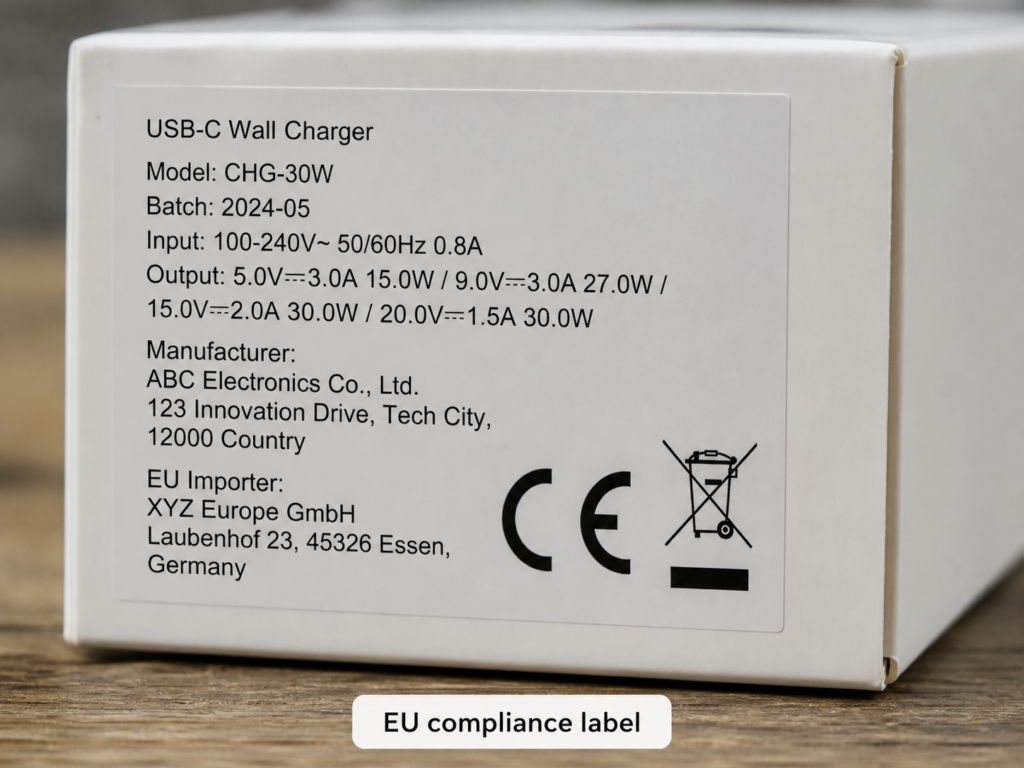
4. **EU Responsible Person (EU Representative) Information**: Sellers located outside the EU usually need to confirm the requirements for EU economic operators or responsible persons under applicable regulations, and ensure that relevant information can receive official compliance documents and notifications. The information should be placed on allowed carriers such as products, packaging, parcels, or accompanying documents in accordance with applicable regulations.
5. **Supplementary Materials as Needed**: For example, WEEE registration or declaration information, packaging EPR information, energy efficiency documents, wireless equipment related materials, etc., submitted according to specific platform tasks and requirements of the selling country.
Common Reasons for Review Failure
Many people submit materials but are still rejected, basically for these reasons:
• The testing laboratory or assessment body does not meet the requirements of specific regulations, for example, using documents from institutions without corresponding capabilities or qualifications as mandatory compliance evidence;
• The model, parameters, and brand on the report or other documents are inconsistent with the product being sold, for example, the report is for a 20W charger, but the product sold is 30W;
• Missing DoC, responsible person information, or necessary compliance marks;
• Using a general model report to cover specific models, with incomplete test items, for example, using a multi-port charger report to cover all single-port models.
Amazon Official Compliance Tools
Amazon has two free compliance tools that you must use, don’t just judge based on third-party experience:
• One is the “Compliance Reference” tool, which can be found in Seller Central. Enter the product category and marketplace, and you can find the corresponding compliance requirements;
• The other is the “Compliance Dashboard”, where you can view all pending compliance tasks and review progress at a glance.
Category-Specific Practice: Compliance Key Points for Core Charging Products
After talking about general rules, let’s go back to the charging products themselves. We will list the compliance key points and common pitfalls of the most common types of products, which you can check directly against.
Chargers/Power Adapters
Applicable regulations: LVD, EMC, RoHS, REACH, applicable ErP requirements, WEEE, GPSR, and packaging EPR should be verified according to the product scope.
Core checkpoints: The input and output parameters on the product must be consistent with the technical documentation and test evidence; for multi-port fast charging chargers, the relevant assessment should cover all important output combinations, such as power and voltage during single-port output and dual-port simultaneous output, not just single-port performance.
Common pitfalls: Using a general power report to cover models with different powers, for example, using a 65W report to cover 20W and 30W models; false power labeling, where actual output does not reach the nominal value; missing applicable ErP energy efficiency assessment.
USB/USB-C Charging Cables, Data Cables
Divided into two cases:
• **Passive cables (ordinary models)**: Usually need to verify RoHS, REACH, WEEE, GPSR, and packaging EPR requirements. Most low-voltage cables are not subject to LVD just because their own operating voltage is low; whether other CE regulations are involved depends on product function and applicable scope.
• **Active cables (PD fast charging/functional models)**: EMC, RoHS, GPSR, and other applicable requirements should be verified based on whether they contain circuits that generate or process electromagnetic phenomena, whether they have wireless functions, and their rated voltage. LVD cannot be uniformly applied or CE marking required just because they support PD fast charging or contain E-Marker. Specific safety test items should be determined according to product standards and structure.
Common pitfalls: Either thinking all charging cables need CE, or thinking no cables need it; claiming to support high-power fast charging but having no evidence matching the actual structure and performance of the product.
Connectors/Adapters/Docking Stations
Also divided into two types:
• **Pure mechanical conversion models**: If the product has wires, terminals, or electrical transmission functions, it still needs to verify RoHS, WEEE, REACH, GPSR, and packaging EPR requirements, and cannot directly exclude electrical and electronic regulations just because there is no chip.
• **Models with circuit/protocol conversion**: EMC, RoHS, GPSR, and other possibly applicable regulations should be verified; LVD applies only when the LVD voltage range and product scope are met. The CE mark depends on whether the product is subject to one or more CE regulations. Metal shell models also require additional attention to electric shock protection performance.
Common pitfalls: Misjudging chip-equipped adapters as pure mechanical accessories. For example, many PD fast charging adapters have protocol chips inside and are not purely mechanical, but are sold as ordinary accessories, and end up being inspected.
Special Charging Products (with Wireless/Battery)
• **Wireless models (wireless chargers, charging devices with Bluetooth/Wi-Fi)**: Products with wireless communication functions such as Bluetooth and Wi-Fi are usually subject to RED; wireless power transfer devices should verify RED according to technical implementation and applicable standards. Radio parameters, user information, and CE requirements should be provided in accordance with RED; the notified body number should only be marked when required by the relevant conformity assessment procedure, and cannot be generally referred to as a certification number.
• **Battery-equipped models (power banks, wireless chargers with batteries)**: When the product has a built-in battery, comes with a battery, or sells batteries separately, Regulation (EU) 2023/1542 and the implementation requirements of the selling country should be additionally verified, including producer registration, labeling, recycling responsibilities, and applicable product design requirements.
Common pitfalls: Thinking that wired fast charging also needs RED (whether it applies depends on whether the product is a radio device); thinking that ordinary chargers also need to comply with battery regulations (ordinary chargers and cables without batteries usually do not bear battery product obligations).
Combo Sets (e.g., Charger + Data Cable)
Each product in the set must separately meet the corresponding regulatory requirements. You cannot only certify one product just because it is a set;
All product information and responsible person information must be marked on the packaging, not just the set model;
When promoting power, it must be clear whether it is single-port power or total power, as well as applicable conditions, to avoid false labeling that misleads consumers.
Full Process: Compliance Steps from Product Selection to Listing
Now that you know what materials are needed, let’s go through the complete compliance process. Follow it step by step from product selection to listing, and there will basically be no major mistakes.
Product Selection Stage: First Check Compliance Basics
Don’t wait until you’ve ordered goods to think about compliance; you must control the gate during product selection. First, ask the supplier for a full set of compliance documents, including DoC, test reports, and technical documentation; then check whether the model, appearance, and parameters on the report are completely consistent with the product you plan to sell; then confirm the product functions (whether there is wireless, battery, active chip) to initially judge applicable regulations. If the supplier cannot provide compliance documents, or the documents do not match, it is best to choose cautiously. The cost of supplementary certification later may be higher than the product profit.
Document Review Stage: Evaluate Whether Existing Documents Are Usable
Don’t use the supplier’s documents directly after getting them. First review them according to the “3-step judgment method for test report validity” to be discussed later, confirm that all applicable regulations are covered and test items are complete, and check whether the standard version is still applicable to the product, whether it still enjoys the presumption of conformity stipulated by regulations, and whether there are transition periods and regulatory update requirements. After standard updates, it should be evaluated whether supplementary testing or updated technical documentation is needed, and it cannot be generally concluded that old reports are completely unusable.

Label and Packaging Preparation Stage
Provide the CE mark, model/batch number, rated parameters, manufacturer and applicable EU economic operator information, and WEEE mark on the product, packaging, accompanying documents, or other allowed carriers in accordance with applicable regulations. The CE mark should usually be no less than 5mm, but there are exceptions when the nature of the product does not allow it; the WEEE mark is a wheeled trash bin with a cross.
Instructions, safety information, and consumer information required by regulations should be in the official language or language form required by the selling member state in accordance with applicable laws of that country. Specific languages, label positions, and content that needs translation should be verified country by country, and it cannot be simply assumed that all packaging information must be completely reprinted in a single official language. The information must also be consistent with the product label, and include applicable safety tips and waste disposal instructions.
In addition, be sure to verify the WEEE and packaging EPR registration, declaration, and recycling responsibilities of the selling country in advance. Don’t wait until the product is listed to handle it, to avoid affecting sales due to local laws or platform policy requirements.
Backend Upload and Review Stage
Go to the Compliance Dashboard in Amazon Seller Central, find the compliance task for the corresponding product, and upload the corresponding materials as required. You don’t need to upload all files, just upload what the platform requires.
The review time limit is subject to Amazon Seller Central tasks and official notifications; it may be extended when materials are incomplete or supplementary verification is required. 3–7 working days should not be used as a unified time limit commitment for all electronic products. Remember to check the review results in time, and supplement materials as required if there are problems.
Ongoing Compliance After Launch
Don’t think everything is fine once the product is listed. Compliance is a long-term matter. First, technical documentation, test reports, etc. must be retained for at least the period stipulated by applicable regulations. Many CE regulations usually require retention for 10 years after the product is placed on the market, subject to the specific regulations applicable to the product; EU regulatory authorities may request them at any time.
Second, if regulations are updated, products are modified, or suppliers are changed, compliance must be re-evaluated, and testing must be redone if necessary; also regularly pay attention to changes in platform compliance policies and update materials in a timely manner.
Advanced Pitfall Avoidance: Semi-Proficient Judgment and Decision-Making Methods
If you already have some experience, want to further reduce risks and control costs, or want to quickly judge whether the supplier’s documents are reliable, you must master the following advanced methods.
3-Step Judgment Method for Test Report Validity
When you get a report, you don’t need to flip through dozens of pages of text. First check according to these three steps, and you can basically judge whether it can be used:
Step 1: **Check qualifications**: Confirm whether the laboratory or assessment body has the capabilities and qualifications matching the testing or assessment project. ISO 17025 or ILAC accreditation may be helpful, but not all electronic product regulations uniformly mandate such laboratory reports.
Step 2: **Verify consistency**: Check whether the product model, brand, parameters, and appearance on the report are consistent with the product you sell. A single letter difference in model, different power, or changed internal solution may affect the applicability of the document.
Step 3: **Check coverage**: Check whether the test items cover all applicable regulations, whether the standards used are still applicable to the product, whether they still enjoy the presumption of conformity stipulated by regulations, and whether there are transition periods or regulatory update requirements. After standard updates, it should be evaluated whether supplementary testing or updated technical documentation is needed, and it cannot be generally concluded that old reports are completely unusable.
Cost Decisions for Different Business Stages
Compliance has costs, and different business stages can have different strategies. You don’t need to do everything at the beginning:
• Small-batch trial sales: Prioritize basic compliance assessment for a single model, and choose a compliance service provider familiar with Amazon’s requirements. Although it may be a bit more expensive, the material preparation is more standardized, and the trial and error cost is low.
• Large-batch long-term sales: It is best to conduct compliance assessment for the full series of models, covering all power and interface versions. Although the upfront cost is a bit higher, it can reduce the risk of random inspections and avoid affecting the entire store due to non-compliance of one model.
Special reminder: Never use fake reports or general reports. Once discovered, losses such as listing removal, store suspension, and goods detention may be far higher than compliance costs, which is not worth the gain.
Avoidance of High-Frequency Compliance Misconceptions
In addition to the beginner cognitive misconceptions mentioned earlier, there are several common pitfalls to avoid in operation:
• Randomly printing the CE mark on products without completing the applicable conformity assessment, technical documentation, and DoC is a high-risk practice;
• Only completing CE-related compliance work, missing requirements such as WEEE, packaging EPR, EU economic operator or responsible person. Many sellers fail on this, especially on the German and French marketplaces;
• Thinking one report can cover all models and all EU countries. Products of different models and functions must be evaluated separately, and recycling registration in different countries must also be handled according to local systems;
• Thinking ordinary data cables do not need compliance at all. In fact, even passive cables may involve requirements such as RoHS, WEEE, REACH, and GPSR, it’s not that nothing needs to be done;
• Directly using the general report provided by the supplier without checking model consistency — many suppliers’ reports are for old or general models, which do not match the products you sell at all, and may be rejected even if submitted.
Certification Validity Period and Update Judgment
Many people ask “How many years is the validity period of CE certification?” In fact, the CE mark itself does not have a unified fixed validity period. However, products must continuously comply with applicable regulations, and technical documentation and DoC must also remain accurate. If product design, functions, production conditions, or applicable regulations change, re-evaluation is required.
If the following situations occur, re-certification or evaluation is required:
First, EU regulations or harmonized standards are updated. It is necessary to check whether the standard version is still applicable to the product, whether it still enjoys the presumption of conformity stipulated by regulations, whether there are transition periods and regulatory update requirements, and then judge whether supplementary testing or updated technical documentation is needed;
Second, the product is modified, such as changing the power supply solution, adding functions, or changing power;
Third, the supplier or production factory is changed. The production processes and key components of different factories may be different, and the original documents may not be applicable.
By now, you should have a complete understanding of the access requirements for electronic products on Amazon’s EU marketplace. From the most basic CE concepts, to compliance requirements for different products, to the full process operation from product selection to listing, you can not only distinguish the different roles of CE, DoC, test reports, and EU representatives, but also list the necessary regulations and materials according to your own product type, and quickly judge whether the report given by the supplier is valid. Even after the product is listed, you can judge when to update certification and supplement materials, avoiding most common compliance risks. Compliance is not a one-time task, but the foundation of long-term operation. Especially when doing business in the EU market, doing compliance in advance can avoid major losses later.