
Many overseas sellers of chargers and wireless charging pads often encounter an unexpected pitfall when first entering the Chinese market: they assume that products with FCC and CE certifications can be sold normally, but they may face obstacles during import, sales, or market supervision, because the products have not obtained SRRC certification as required. For electronic products with wireless functions that are included in the scope of type approval management, SRRC is an important compliance requirement for entering the Chinese market. This article focuses on charging products such as chargers, USB/USB-C data cables, power adapters, and wireless charging pads, and explains the entire process from basic knowledge to practical application to help you avoid compliance risks.
2. Quick Self-Check: Does Your Charging Product Require SRRC Certification
To determine whether SRRC certification is required, the core is to look at three principles that must be met simultaneously, and then correspond to the specific scenarios of charging products.
Three Core Principles (All Must Be Met to Require Certification)
1. **The product has the function of actively transmitting radio waves**: for example, wireless functions used for communication, control, and data transmission. Devices that truly only receive radio signals and do not have any active radio transmission function are usually not subject to radio transmission equipment type approval. However, the wireless charging receiver may feed back information to the transmitter in a specific way, and the product may also have hidden functions such as Bluetooth and Wi-Fi, so it cannot be judged solely by the name “receiver”. Note: Hidden transmission states such as standby Bluetooth broadcasting, WiFi configuration, and hotspots are also considered active transmission.
2. **The equipment type is included in the latest *Catalogue of Radio Transmission Equipment Type Approval* issued by the Ministry of Industry and Information Technology (MIIT)**: this catalogue is updated irregularly, and the latest version shall prevail.
3. **The product is planned to enter the Chinese market**: that is, imported into China, sold in China, or used within the territory.
Typical Scenarios for Charging Products That Require SRRC Certification
Against the following scenarios, as long as one of them is met, SRRC certification is basically required:
• Smart chargers and power adapters with Bluetooth pairing/control (such as Bluetooth fast chargers with APP power adjustment and timed on/off);
• USB-C fast chargers and multi-port power strips with WiFi connectivity (such as WiFi power strips supporting remote control and voice control);
• Charging accessories with radio frequency remote control (such as charging power strips with dedicated remote controls);
• Wireless charging pads/charging cases with Bluetooth communication (such as wireless chargers that can pair with mobile phones to display charging power);
• Outdoor power supplies and smart charging devices with built-in cellular communication modules (such as outdoor power supplies with 4G positioning and remote monitoring).
Exemption/No Certification Required Scenarios
The following charging products usually do not require SRRC certification, but should still be confirmed in combination with the specific technical implementation and the current catalogue:
• Ordinary wired chargers, USB/USB-C data cables and other purely wired charging accessories;
• Near-field energy transmission products that may not require certification only after confirming that the product does not have any active radio transmission function included in the scope of type approval and meets the current exemption conditions. Wireless charging products such as Qi may involve identification, control or power negotiation between the transmitter and the receiver, which should be judged item by item in combination with the specific protocol, circuit implementation and current catalogue, and cannot be exempted solely because of the use of magnetic induction;
• Charging accessories that truly only receive radio signals and do not have any active radio transmission function. Power banks that only receive wireless charging still need to be confirmed in combination with specific protocols and circuit implementations, and cannot be directly deemed as not requiring certification solely by the name “receiver”.
For special purposes such as R&D, testing, production or exhibition, it is necessary to first confirm whether exemption, filing or temporary use procedures apply in accordance with the current radio management regulations. Even if special procedures apply, formal sales to the market shall not be carried out directly on this basis.
Several Confusing Boundary Issues
When in doubt, you can judge according to the following rules:
• **Complete machines with certified modules**: a certified module does not mean the complete machine is exempt. When the antenna, structure, power supply, software or other configurations of the complete machine change, it is necessary to re-evaluate whether it still meets the certificate and type approval requirements.
• **Products with multiple wireless functions**: as long as one transmission function is in the approval catalogue, certification needs to be evaluated, and all transmission functions must meet the requirements.
• **Changes to non-wireless parameters**: changes such as adjusting charging power, increasing or decreasing the number of interfaces, and changing appearance color can only be treated as changes or same series only after confirming that they do not affect wireless transmission parameters, radio frequency hardware, antennas, power supply and certificate registration information, and comply with the current model division rules. Changes in charging power, number of interfaces, brand, etc. cannot be generally deemed as not requiring re-application.
Self-Check Tools for Beginners
If you are still unsure, you can use two simple methods to quickly judge:
• **3-second preliminary judgment checklist**: ask yourself three questions – does it have active transmission function? Is the function in the approval catalogue? Is it planned to be sold in China? If all three answers are “yes”, you need to apply.
• **3-step detailed inspection method**: the first step is to list all active transmission functions of the product (including hidden functions); the second step is to match the category against the latest approval catalogue; if there is still doubt in the third step, entrust a domestic agent or competent authority to conduct pre-verification, and do not guess by yourself.
4. Full SRRC Application Process for Overseas Sellers
Overseas manufacturers cannot directly submit applications to the MIIT, and must entrust an agency with legal person qualification within China to handle it. The overall process is divided into three stages.
Pre-Application Preparation
Doing this step well can save a lot of time:
• **Subject requirements**: a legally registered legal person institution within China must be entrusted as the agent, and overseas manufacturers cannot submit directly;
• **Required materials**: product manual, wireless module specification, circuit block diagram, antenna parameters, model difference description, etc. The agent can provide a list for details;
• **Sample requirements**: prepare a specified number of finalized samples according to the applicable equipment category, testing institution and test requirements. The software, wireless module, antenna, supporting power supply and key hardware of the samples shall be consistent with the planned mass production version, and the specific quantity shall be subject to the acceptance and testing requirements;
• **Pre-check**: confirm that the firmware has locked the Chinese frequency band and there are no undeclared hidden transmission functions to avoid problems being found during testing.
Testing Stage
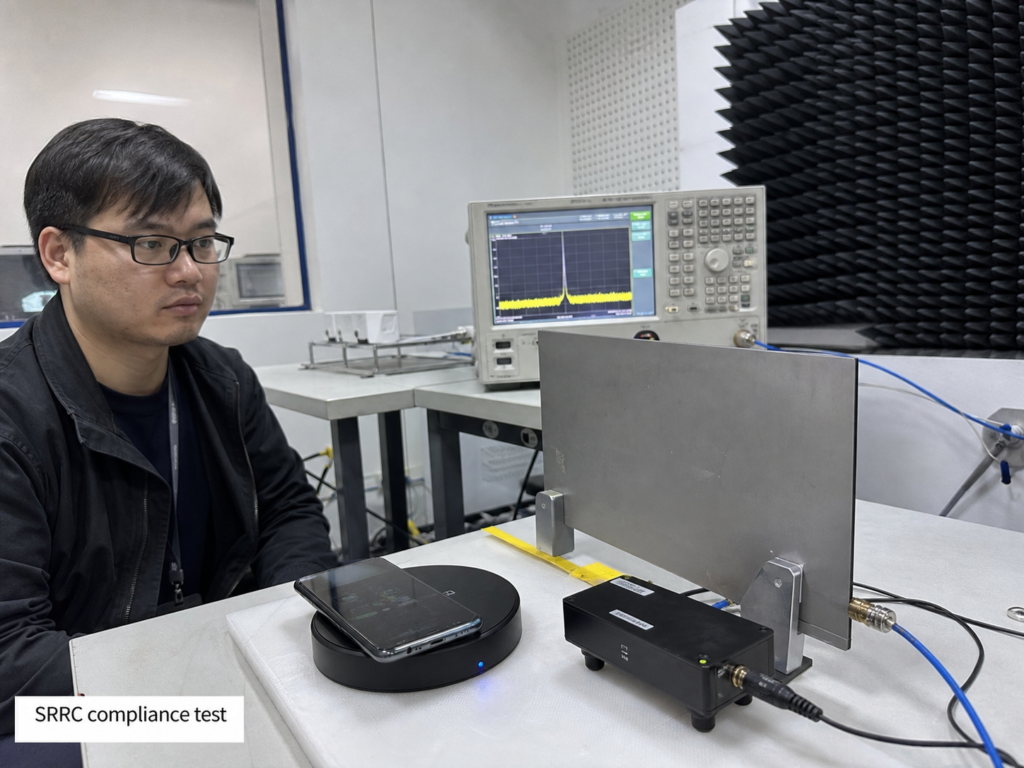
Testing shall be entrusted to a type approval testing institution announced by the Ministry of Industry and Information Technology, and a testing report that meets the requirements shall be submitted in accordance with the current work guidelines. Ordinary test reports issued by other institutions usually cannot replace the type approval test report. Do not seek cheapness and find laboratories that cannot undertake type approval testing.
• The core test items are frequency tolerance, transmission power, spurious emission, bandwidth, etc. Just cooperate according to the laboratory’s requirements, and sellers do not need to master the test details;
• The test cycle for conventional charging wireless products is about 2-4 weeks, and multi-standard products (such as those with both Bluetooth and WiFi) will be extended accordingly.
Review and Certification
After passing the test, the agency will submit the application and test report through the MIIT government service platform:
• The administrative approval time limit shall be subject to the working day time limit announced in the current MIIT government service guide; the time for testing, material correction, technical review and rectification is calculated separately, and the actual total cycle will vary depending on the equipment category and the completeness of the materials. Incomplete materials will be returned for correction, and the time will be extended accordingly;
• The SRRC certificate is valid for 5 years from the date of issuance, and key information such as product model, frequency band, and power will be marked on the certificate;
• The first thing after getting the certificate: check that the brand, model, and wireless parameters on the certificate are completely consistent with the actual product. If there is any error, apply for change or re-approval in time according to regulations to avoid problems in subsequent spot checks.
6. Common Pitfall Avoidance Guide
Pitfall Avoidance in the Application Stage
• If testing is not entrusted to a type approval testing institution announced by the Ministry of Industry and Information Technology, the submitted ordinary test report usually cannot replace the type approval test report, and re-testing may be required;
• The test samples are inconsistent with the mass production version (for example, good antennas are used for testing, and poor antennas are used for mass production), which may cause problems in review or market spot checks;
• The overseas version of the firmware does not adjust the Chinese frequency band, especially the 5GHz WiFi channel, resulting in test failure and requiring rectification;
• Unclear model division, either repeated applications for multiple models waste costs, or missing applications are illegal;
• The actually used antenna is inconsistent with the declared parameters, resulting in test failure.
Pitfall Avoidance in Sales and Procurement Stages
• The product does not bear the CMIIT ID in accordance with current requirements, or the identification is inconsistent with the certificate and the actual product, which may lead to risks of rectification, removal from shelves, or spot checks;
• Changes in the sales entity of OEM/ODM products do not automatically invalidate the certificate. It is necessary to check whether the actual manufacturer, brand, model, wireless module, antenna and software configuration are consistent with the certificate; if the brand, manufacturer or model changes affected by the rules, change or re-application shall be handled in accordance with regulations;
• The procurement contract does not stipulate SRRC responsibilities. If the supplier provides a fake certificate, expired certificate, or a certificate that does not match the actual product, it may increase the compliance risk of the seller;
• The advertised wireless function is inconsistent with the certificate (for example, 5G WiFi is advertised but the certificate only covers 2.4G), which is suspected of violating regulations;
• Special reminder: cross-border e-commerce retail targeting Chinese consumers also needs to conduct compliance judgment based on whether the product is included in the scope of type approval management, and do not take chances.
Methods for Verifying the Authenticity of Certificates
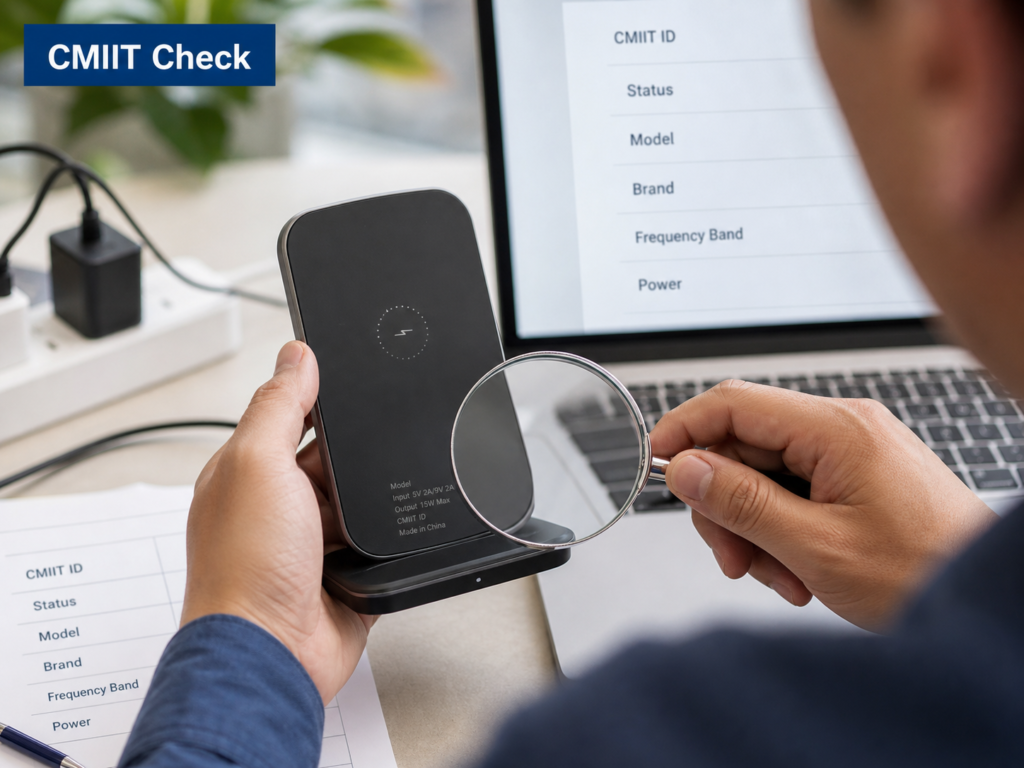
If you are purchasing ready-made products, you must verify the authenticity and applicability of the SRRC certificate:
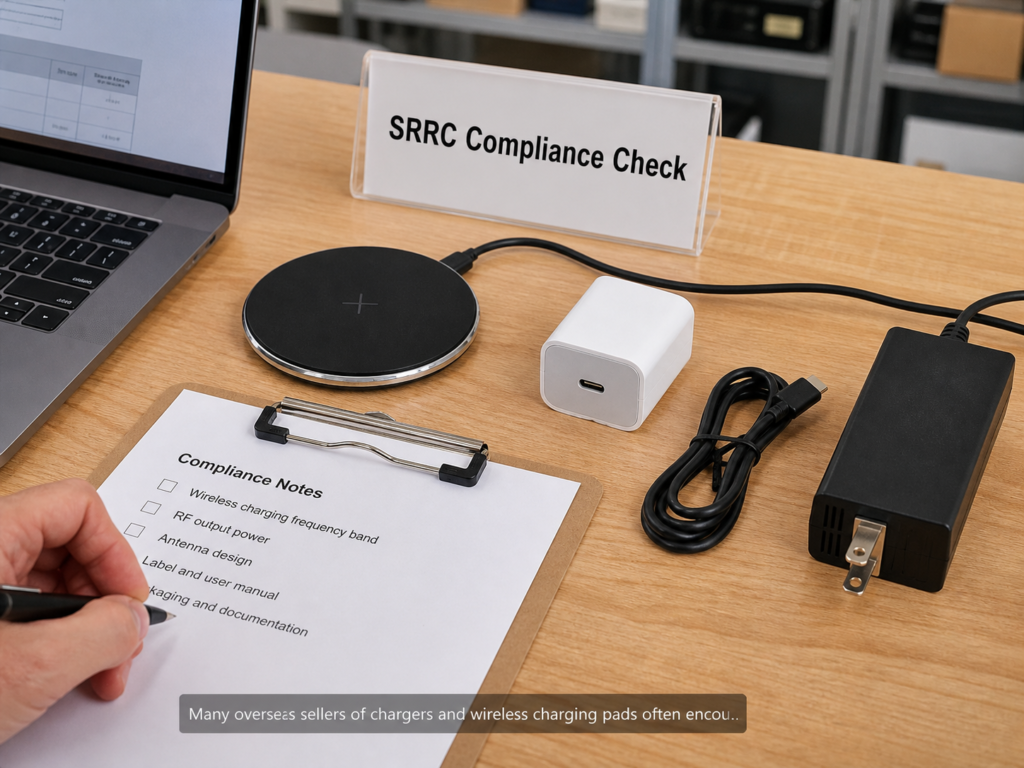
• **Official channel**: verify through the radio transmission equipment type approval information query entrance announced by the Ministry of Industry and Information Technology. The query entrance shall be subject to the information published on the current official website and government service platform of the MIIT;
• **Key points for verification**: in addition to the CMIIT ID, also check the certificate status, model, manufacturer, brand, operating frequency band, transmission power, as well as the actual product and wireless configuration. Do not only look at “whether there is a certificate”;
• **Common risks**: Photoshopped fake certificates, fraudulent use of others’ CMIIT IDs, expired certificates, and inconsistent certificate information with actual products.
7. Post-Certification Maintenance and Action Suggestions for Beginners
Getting the certificate is not the end. Good follow-up maintenance can ensure long-term compliance.
Key Points of Post-Certification Compliance Maintenance
• **Certificate renewal**: if the certificate needs to be renewed upon expiration, an application shall be submitted within the specified time limit in accordance with current regulations. Enterprises can arrange several months in advance according to the testing, material preparation and approval cycles, but “3 months in advance” is an internal suggestion, not a unified legal deadline;
• **Information and product changes**: when the applicant’s name, manufacturer, brand, model or packaging information changes, the handling method shall first be confirmed in accordance with the current certificate change and model division rules. Corresponding changes can only be processed if they are allowed registration information changes and do not affect wireless technical parameters, otherwise re-application may be required;
• **Response to market spot checks**: ensure that the products on sale are marked with the type approval code consistent with the certificate as required, and product materials such as e-commerce pages, manuals and packaging should also be consistent;
• **Special scenarios**: if a separately sold wireless charging module has an active radio transmission function included in the scope of type approval and is a device in the catalogue, it also needs to apply for SRRC according to the actual situation, not only the complete machine needs it.
Action Suggestions for Beginners
If you are new to SRRC, just follow these four steps to avoid blind investment:
1. **Sort out the list of product wireless functions**: including module model, supported frequency bands, power, etc. First, get a clear understanding of your own products;
2. **Check the latest official catalogue**: download the latest from the MIIT official website to initially confirm the category;
3. **Find a formal institution for free evaluation**: contact 2-3 formal SRRC agents with charging product experience for a free preliminary evaluation. Whether free evaluation is provided shall be subject to the actual services of the institution;
4. **Determine the application plan**: after evaluation, decide whether to apply and the specific plan. Do not pay money right away.
In general, SRRC is an important compliance requirement for wireless charging products included in the scope of type approval management to enter the Chinese market. It seems that there are many processes, but as long as you sort out the rules in advance, make good preparations, and find the right formal institution, it is not complicated. Do not take chances, nor be misled by false information. Plan ahead and operate in compliance to successfully open up the Chinese market.