
If you sell products like charging cables, USB-C adapters, and connectors in the US market, you have most likely heard of “California Proposition 65” — either because e-commerce platforms require you to fill in compliance information in your listings, or because you have heard that peers received lawyer letters for not posting warnings. Many sellers, when first encountering it, mistake it for a mandatory certification like FCC or UL, thinking “if you pass it you can sell, if you don’t you can’t” — in fact, this is the most common misunderstanding. The core logic of Proposition 65 is completely different from ordinary certifications; getting it wrong can lead to listing removals and inventory freezes at best, and settlement fees of tens of thousands or even hundreds of thousands of dollars at worst.
Core Judgment: Does Your Charging Product Need a Warning Label?
After clarifying the basic rules, the most critical question arises: does the charging cable/charger I sell need a warning label? When making a judgment, you cannot only look at whether the product contains a certain chemical substance, but must make a comprehensive assessment combined with the list, exposure scenarios, exposure level, warning requirements, and potentially applicable exemptions or defenses.
Step 1: Check OEHHA’s Current Toxic Substance List
First, you need to confirm whether your product or its materials contain substances on the OEHHA list. This list is dynamically updated, and currently has more than 900 substances. You must refer to the latest version on OEHHA’s official website, and cannot use old materials from several years ago, nor just listen to suppliers saying “we are compliant”.
For charging products, there are several categories of substances that are frequently involved in risks, which can be used as clues for initial screening (note that these are only clues, not definitive conclusions):
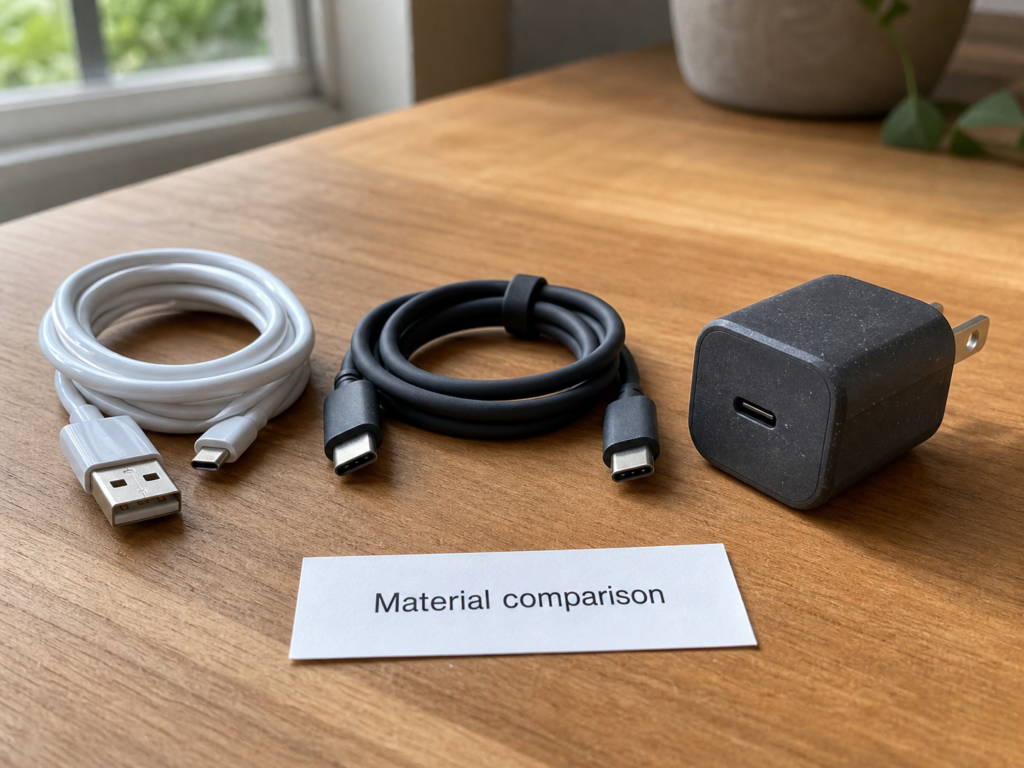
• **Lead**: Commonly found in solder for PCB boards, plating of metal interfaces, and glass components;
• **Phthalates**: May appear in the outer sheath of PVC cables, soft plastic parts of plugs, and printing inks; however, whether they are actually used and whether they cause relevant exposure requires verification of specific formulations and products;
• **Cadmium**: May appear in the plating of metal contacts and color pigments;
• **Flame retardants**: May be used in cable outer sheaths and plastic housings of connectors; specific risks depend on the chemicals used and exposure conditions.
PVC cables, products with soft plastic parts, or recycled plastics with unknown sources and formulations can be used as priority screening clues, but you cannot directly conclude that the product is a legally high-risk product based on this, nor can you conclude that a warning label is mandatory.
When verifying, you should clearly record the name of the substance, CAS number (unique identifier for chemical substances), toxicity classification (carcinogenic or reproductive toxic), date of inclusion in the list, and official source; you cannot draw conclusions based solely on old supplier declarations.
Step 2: Determine Whether There Is Foreseeable Consumer Exposure
It is not the case that a product containing a listed substance is necessarily non-compliant. The key depends on whether the enterprise causes foreseeable consumer exposure to the substance during normal operation and sales. “Exposure” here does not only mean that consumers directly touch or see the chemical substance, but may also include migration, release, or leaching of the substance from the product, or oral ingestion, inhalation, and other situations.
Therefore, you should assess whether there is consumer exposure during normal use, as well as during reasonably foreseeable wear and tear, damage, repair, and disposal, and make a judgment combined with evidence of exposure routes and exposure levels.
Common exposure scenarios for charging products include: long-term skin contact with charging cables/chargers, children chewing on data cables, migration, release, or leaching of substances under product wear or high temperatures.
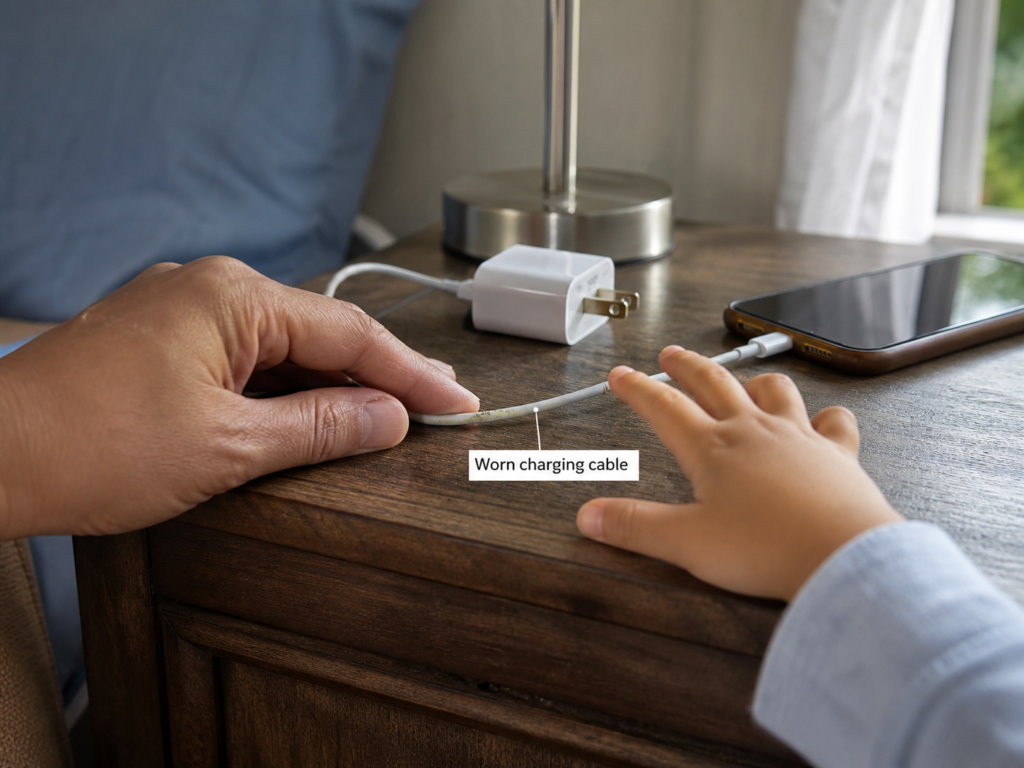
If there is no consumer exposure under these reasonably foreseeable scenarios, or if it can be proven that the exposure level is below the applicable safe harbor level, a warning may not be required. Solder on PCB boards enclosed inside the charger housing can usually reduce the risk of direct contact, but you cannot automatically exclude the exposure risk of lead after migration, release, damage, aging, repair, or disposal solely based on “not being visible” or “being completely sealed”.
Step 3: Compare Against the Safe Harbor Level
If the product involves listed substances and there is foreseeable consumer exposure, the next step is to compare against the “safe harbor level”. If it can be proven that the exposure level under the applicable exposure route is below the safe harbor level specified by OEHHA, you can usually claim that no warning is required based on this, but you need to retain sufficient evidence to support this conclusion.
Here, special attention should be paid to a common misconception: **the safe harbor is an exposure threshold, not a product total content limit**. You cannot directly use the safe harbor value as the content requirement for materials, because the amount in the material is not the same as the amount consumers actually come into contact with.
Safe harbor levels are divided into two categories:
• For carcinogenic substances, it is called **NSRL (No Significant Risk Level)**, which refers to the dose at which the carcinogenic risk does not exceed one in 100,000 when exposed daily for a lifetime;
• For reproductively toxic substances, it is called **MADL (Maximum Allowable Daily Level)**, which refers to the maximum daily exposure dose that does not affect reproductive development.
It should also be noted that different exposure routes (oral, dermal, inhalation) correspond to different thresholds, which cannot be used interchangeably. For example, the threshold for skin contact cannot be used to judge the situation of children chewing (oral exposure).
The safe harbor is not a comprehensive exemption that can be automatically applied regardless of exposure scenarios. If a substance does not have a set safe harbor level, it does not mean that enterprises can freely judge whether it is safe; it needs to be determined in combination with exposure assessment, regulatory requirements, and professional opinions.
Key Conditions for Proposition 65 Risk Assessment
Risks related to Proposition 65 cannot be simply reduced to “a product is non-compliant if a listed substance is detected”. Usually, further confirmation is required:
1. Whether the enterprise causes consumer exposure to listed substances during its operations;
2. Whether such exposure is foreseeable and reaches a level that requires measures to be taken;
3. Whether the enterprise has provided compliant warnings in accordance with applicable rules;
4. Whether there are applicable small business exemptions, occupational exposure rules, other statutory exemptions or defenses.
Therefore, the detection of listed substances in the product itself does not mean that Proposition 65 has been violated; similarly, you cannot only look at the total content of materials, nor can you draw conclusions solely based on whether the substance is “visible” in the product’s appearance.
Exceptions That May Exempt from Warning Labels
There are several situations where warning labels may not be required, but the specific conditions of each situation should be verified:
1. **Federal law preemption**: If specific federal laws stipulate warning requirements and meet statutory conditions, they can replace Proposition 65 warnings, but this situation is rarely encountered in charging products;
2. **Small business exemption**: Enterprises with an average of fewer than 10 employees may apply the Proposition 65 small business exemption, but the calculation method of employee count and subject qualification should be verified. Platforms may still require sellers to fill in or submit materials based on their own policies; this is a platform compliance requirement and is not equivalent to the statutory obligations of Proposition 65;
3. **Exposure level below the safe harbor level**: If it can be proven that the exposure level under the applicable exposure route is below the safe harbor level, you can usually claim that no warning is required based on this;
4. **No consumer exposure subject to Proposition 65**: If it can be proven that there is no relevant consumer exposure in combination with normal use and reasonably foreseeable scenarios, it may also affect the judgment of warning obligations.
Initial Risk Screening and Testing Methods
If you don’t want to spend a lot of money on testing at the beginning, you can first do zero-cost initial screening: charging cables with PVC outer sheaths, products with soft plastic parts, and chargers with recycled plastic housings of unknown source and formulation can be listed as priority inspection targets. But these are only screening clues and cannot be used as compliance conclusions.
In terms of the probative force of compliance evidence, from low to high, it is roughly: supplier self-declaration < XRF rapid screening results < laboratory chemical quantitative analysis report < migration/release test report < complete exposure assessment report issued by a professional institution. Sellers can choose corresponding evidence based on the product’s sales volume and risk level, but the test results must match the specific product and exposure scenario.
Common testing methods also apply to different scenarios:
• **XRF testing**: Can quickly screen the total heavy metal content in materials. Its advantages are speed and low cost, but it can only measure total content and cannot replace exposure testing;
• **Chemical quantitative analysis**: Measures the total content of a certain substance in materials, but the total content of materials still cannot be directly equated to consumer exposure;
• **Migration/release testing**: Simulates actual use scenarios, such as skin contact, high temperature, or wear and tear, to measure the leaching amount of substances, which is closer to real exposure;
• **Exposure assessment**: Combines materials, usage methods, frequency, exposure routes, and test data to determine whether the exposure is below the applicable safe harbor level.
A valid test report should clearly correspond to the specific SKU, tested material parts, production batch, assessed exposure route, and the detection limit of the testing method, so that it can be used as part of the compliance assessment.
E-Commerce Platform Compliance: How to Handle Listings? What to Do If They Are Removed?
For cross-border sellers, most Proposition 65 problems occur on platform listings, so this part must be clearly understood.
Platform Compliance Logic
First, it should be clarified that e-commerce platforms are not law enforcement agencies for Proposition 65; they only require sellers to disclose compliance information on their own for their own risk control purposes. But if you do not meet the platform’s requirements, the platform’s penalties may be faster than those of the law enforcement party: at best, listings are removed and inventory is restricted; at worst, accounts are frozen and security deposits are deducted.
The platform’s requirements for filling in information, submitting documents, and page display belong to platform contracts, seller policies, or internal risk control requirements. Even if a seller applies the small business exemption in accordance with the law, it does not mean that the platform will definitely waive its own information submission requirements.
Listing Compliance Verification Checklist
You can verify your listing according to the following points:
1. **Backend filling**: Fill in according to the latest policy requirements of the compliance module in the platform’s seller center. Backend requirements may vary for different sites, categories, and versions; do not apply experience from other sites to the California site;
2. **Page display**: Both page warnings and physical packaging warnings should comply with applicable regulations respectively, and information on products, hazard types, and chemical substances must not contradict each other. Regulations do not require the two to be completely identical word for word; if the platform has additional consistency requirements, the platform policy must also be met. The page should also be clearly visible before purchase and adapted for mobile display;
3. **Special scenario handling**: For variant products, judgment should be made SKU by SKU. For example, if there are child SKUs of PVC cables and TPE cables under the same listing, warnings must be set separately for different materials, and cannot be shared by all child SKUs; sets and combination packs must be evaluated separately, and cannot be judged based on only one product inside;
4. **Record retention**: Save screenshots of the listing, update time, and corresponding SKUs. If you are complained about or the listing is removed in the future, these can be used for appeal and traceability.
Key Points for Appealing Listing Removal
If your listing is removed due to Proposition 65 issues, don’t panic, prepare the appeal according to the following key points:
• Materials to prepare include: real photos of warning labels, supplier declarations or test reports, and your own compliance assessment records;
• When appealing, clearly state that you have displayed warnings on the listing and product packaging respectively in accordance with applicable requirements, and that the information on the involved products, hazard types, and chemical substances is not contradictory to each other;
• All submitted materials must correspond to the involved SKU; you cannot use reports from other products to make up the numbers, otherwise it will be difficult to form valid proof.
Common Misconceptions: Avoid These Pitfalls
We have compiled 9 pitfalls that sellers are most likely to fall into, you can check if you have encountered any of them:
Basic Cognitive Misconceptions
1. **”Proposition 65 is a mandatory product certification”**: Wrong. It is mainly a consumer right-to-know and exposure management system, not a safety certification in the traditional sense, nor a simple sales ban rule. Whether a warning is required needs to be judged in combination with exposure, warnings, exemptions, and other defenses;
2. **”Only local California sellers need to comply”**: Wrong. As long as you sell products to California consumers, you may be affected by relevant requirements, regardless of the place of registration or shipping location;
3. **”With FCC/UL/RoHS certification, there is no need to comply with Proposition 65″**: Wrong. The regulatory focus of these certifications or regulations is different from that of Proposition 65, and they cannot automatically replace the exposure assessment or warning obligations of Proposition 65.
Judgment Logic Misconceptions
4. **”A product containing listed substances is definitely non-compliant”**: Wrong. The detection of listed substances itself does not mean that Proposition 65 has been violated. It is also necessary to judge whether it causes relevant consumer exposure, whether the exposure level reaches a degree that requires measures, and whether there are compliant warnings, exemptions, or other defenses;
5. **”Meeting the total content standard is equivalent to meeting the exposure level standard”**: Wrong. Total content refers to the content in materials, which is not equal to the amount that consumers actually contact, inhale, or ingest; it needs to be judged in combination with exposure scenarios and exposure routes;
6. **”Low sales volume means no accountability”**: Wrong. The level of risk is related to product type, exposure situation, sales scenario, and government or private enforcement strategies; low sales volume does not mean automatic exemption.
Implementation Operation Misconceptions
7. **”If the supplier says it’s compliant, there’s no need to verify”**: Wrong. Sellers need to bear corresponding responsibilities, and supplier commitments cannot directly exempt liability; you still need to verify the covered models, materials, batches, and test scopes yourself;
8. **”With a warning label, you can use high-risk materials at will”**: Wrong. Warnings are only an obligation of the consumer’s right to know; you still need to comply with other regulations, such as RoHS, CPSC and other requirements; a warning label does not mean everything is fine;
9. **”Putting a warning on the shipping outer box is enough”**: Wrong. Ordinary logistics outer boxes usually cannot replace product or retail packaging warnings for consumers; if the outer box is also the product packaging that consumers purchase or receive, it should be judged in combination with specific scenarios.
Long-Term Compliance: How to Maintain Compliance at Low Cost?
Proposition 65 is not a one-time thing that can be solved; it requires long-term maintenance, but you can prioritize resources on high-risk SKUs and key materials through layered management.
Supply Chain Management: Reduce Risks from the Source
One of the most cost-effective compliance methods is to identify and reduce risks as early as possible from the supply chain side:
• **Pre-purchase requirements**: Ask suppliers to provide substance declarations or exposure test reports, clearly covering specific models, materials, and batches; generic declarations cannot replace specific product information;
• **Prioritize low-risk material selection**: When choosing charging products, you can prioritize evaluating styles that are PVC-free, phthalate-free, and use lead-free solder to reduce risky substances from the source. However, these material descriptions themselves cannot automatically prove Proposition 65 compliance, and still need to be judged in combination with specific formulations and exposure levels;
• **Contractual liability agreement**: When signing a contract with a supplier, clarify that if Proposition 65 non-compliance is caused by material issues, the supplier shall bear the corresponding losses — of course, statutory liability still needs to be judged based on the law and specific facts, and contractual agreements cannot of course exempt the seller from external liability;
• **Changes trigger re-evaluation**: As long as the supplier or factory is changed, materials, formulations, core components are changed, or production batches are adjusted, compliance must be re-evaluated; you cannot say that because it was tested before, it will always be fine.
Internal Compliance File Establishment
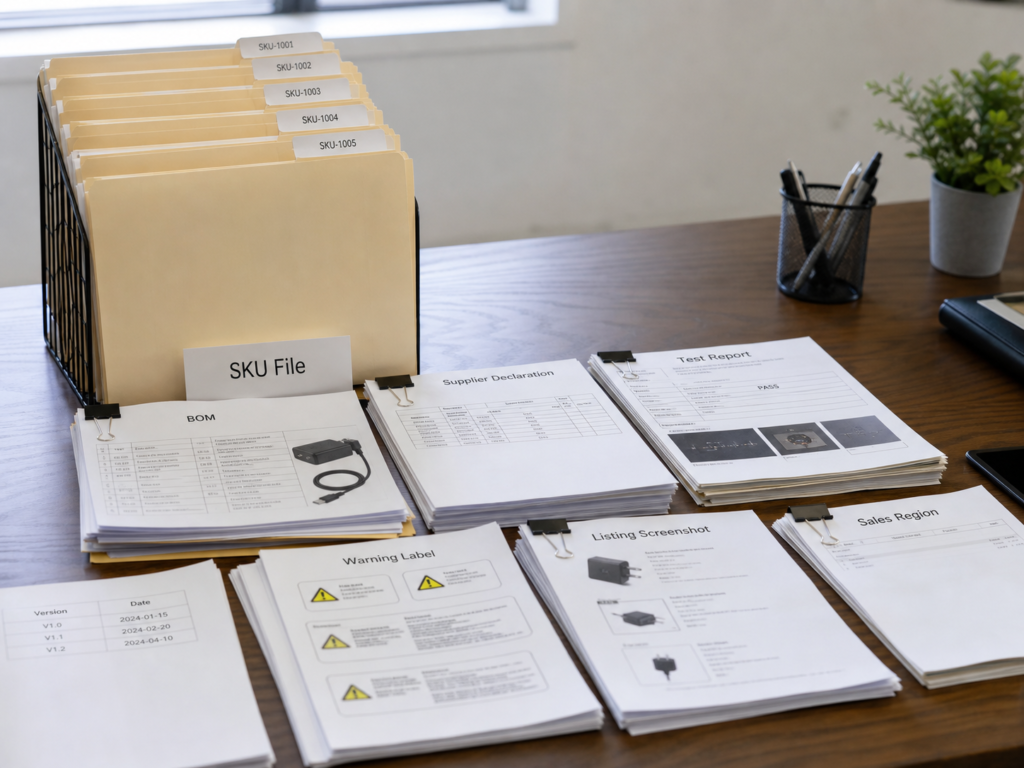
Create a compliance file for each SKU and store these documents: BOM, supplier declarations, test reports, warning label samples, and listing screenshots. The file should record the version, date, and corresponding sales region of each document, so that if there is an inspection in the future, you can take it out immediately without searching temporarily.
Low-Cost Daily Maintenance Tips
You don’t need to stare at regulations every day; just follow these points:
• Regularly track updates to OEHHA’s list and warning rules, for example, check once a quarter;
• Conduct initial risk screening before new products are listed, verify materials, chemical substances, exposure routes, and existing evidence, and if necessary, conduct testing or provide warnings before listing;
• Manage in layers according to the risk level of SKUs: for high-sales, high-risk models, prioritize spending on testing, design optimization, or material changes; for low-sales models, you can first provide warnings after confirming the applicable format, and then optimize when sales increase.
When Do You Need Professional Help?
For most routine situations, you can first complete basic data sorting and initial risk screening, but if you encounter the following situations, it is recommended to seek professional help:
• Receiving formal notices or lawsuits from the government or lawyers;
• The product involves multiple listed substances, the exposure scenarios are complex, and you cannot judge by yourself;
• The involved substance does not have a corresponding safe harbor level, and a risk assessment is required;
• Needing to judge whether the enterprise meets the exemption conditions, how liability is divided, or negotiating a settlement plan;
• Involving workplace use, requiring judgment on Proposition 65 occupational exposure rules and Cal/OSHA requirements.
Quick Judgment and Core Summary
Finally, we have compiled quick judgment methods, a self-check list, and core knowledge points for your convenience to check at any time.
30-Second Quick Judgment for Charging Products
Not sure if you need to comply? Ask yourself three questions first:
1. Am I selling this product to California consumers? Yes → further assessment is required; No → usually does not fall into this type of sales scenario for California consumers;
2. Does this product contain materials or components that require key screening, such as PVC cables, soft plastic parts, or recycled plastics with unknown sources and formulations? Yes → further verification of specific chemical substances, exposure routes, and exposure levels is required; No → does not mean automatically low risk, and still needs to be judged in combination with product information;
3. Can I provide evidence to prove that there is no relevant consumer exposure, or that the exposure level is below the applicable safe harbor? No → choose testing, exposure assessment, exposure reduction, or provide compliant warnings as needed.
Compliance Self-Check List
You can gradually advance compliance according to these four layers:
• **Entry level**: Confirm whether you are within the applicable scope and clarify your own responsibilities;
• **Judgment level**: Complete listed substance verification, exposure scenario judgment, and safe harbor level comparison;
• **Implementation level**: Ensure that the warning text is compliant, the placement meets requirements, and the listing is updated synchronously;
• **Management level**: Complete compliance files, and timely re-evaluate when products change.
Core Knowledge Point Summary
Finally, let’s highlight four key points; remember these four, and you won’t make principled mistakes:
1. Proposition 65 is mainly a consumer right-to-know and exposure management system, not a safety certification, nor a simple sales ban rule;
2. A product containing listed substances itself is not equivalent to non-compliance; the key depends on whether it causes foreseeable consumer exposure subject to the rules, whether applicable warnings are provided, and whether there are exemptions or other defenses;
3. Proposition 65 can be enforced by the government, or promoted by private entities through notices and lawsuits; electronic accessory sellers may also be affected by platform risk control measures;
4. Common handling methods include reducing or eliminating exposure, proving that exposure is below the applicable safe harbor through testing and assessment, providing warnings in accordance with the law, and confirming applicable exemptions or other defenses. Neither material replacement nor warning labeling is a one-size-fits-all solution that automatically ensures compliance regardless of specific facts.
Official Information Query Portals
If you want to check the most authoritative information, go to these two official websites:
• OEHHA official website: You can query the latest substance list, safe harbor levels, and warning rules;
• Official California Proposition 65 Warning Website: www.P65Warnings.ca.gov, which has standard warning texts and frequently asked questions.
Frequently Asked Questions
**Q: Will Proposition 65 warnings affect product conversion rate?**
A: The degree of impact depends on product positioning, warning content, and consumer perception, and cannot be generalized. Ordinary charging products may have limited impact, but for high-end brand products that focus on safety and health, warnings may affect some consumers’ judgments. In this case, you can assess whether to reduce exposure through product design, materials, and packaging, and decide whether warnings are still needed based on evidence.
**Q: Do cross-border sellers who ship directly from China to California buyers need to comply?**
A: Further assessment is required. Proposition 65 focuses on sales to California consumers and the resulting relevant consumer exposure, and usually does not automatically exclude relevant requirements just because the seller’s registration location or shipping location is outside the United States.
**Q: Do I need to comply if I only sell to B-end customers and not to ordinary consumers?**
A: B-end sales are not automatically exempt. If the product will be resold, provided to consumers for use, or the sales scenario will generate consumer exposure subject to Proposition 65, assessment is still required.
Pure occupational exposure may be subject to occupational exposure-related rules or exemptions, but it cannot be simply judged by whether employees have “long-term contact”. It should be judged by professionals familiar with relevant rules in combination with specific usage scenarios and Cal/OSHA requirements.
**Q: The product already has RoHS certification, do I still need a Proposition 65 warning?**
A: Separate judgment is required. RoHS mainly restricts the concentration of specific restricted substances in homogeneous materials, and is affected by the scope of application and exemption provisions; Proposition 65 focuses on relevant exposure caused by specific listed substances and consumer warnings. RoHS compliance cannot replace the exposure assessment or warning obligations of Proposition 65.
3 Things New Sellers Can Do Right Now
If you are new to Proposition 65 and don’t know where to start, do these three things first:
1. Check California orders in your store and list SKUs that require priority screening, such as charging products using PVC outer sheaths, soft plastic parts, or recycled plastics with unknown sources and formulations;
2. For SKUs that require priority inspection, verify the applicable Proposition 65 warning format, and provide compliant warnings on the detail page after confirming the product, chemical substances, and sales scenario; do not treat randomly adding a warning sentence as the final solution;
3. Request product substance declarations from core suppliers, confirm the specific models, materials, and batches they cover, and conduct a preliminary assessment of relevant exposure risks.
Overall, Proposition 65 seems to have many clauses and heavy penalties, but its core is still to judge whether specific listed substances cause consumer exposure subject to the rules, and whether the enterprise has provided applicable warnings or met corresponding exemption and defense conditions. For charging product sellers, risks can be reduced through material and supply chain management, exposure assessment, necessary testing, and compliant warnings. For complex products or when receiving notices, targeted legal and technical assessments are still required, and conclusions cannot be drawn solely based on material names, supplier declarations, or a single test report.