
For overseas merchants selling consumer electronics such as chargers and charging cables, the SABER compliance process is one of the most common import compliance requirements when entering the Saudi market. Many people cannot distinguish between various types of certificates, either missing applications and delaying customs clearance, or wasting money on fake certificates. Today, we will explain the SABER compliance process clearly from basic knowledge to practical operation, and specifically address common pitfalls for charging products one by one.
First, Understand What SABER Is
Scope of Application
SABER is an online import compliance system operated by the Saudi Standards, Metrology and Quality Organization (SASO for short). Simply put, it is Saudi Arabia’s “online service hall” for some imported products. SABER is mainly used for commercial products included in relevant technical regulations and import control scopes. For products determined by the system to be regulated, it is usually necessary to obtain the corresponding PC certificate and apply for an SC certificate for each batch of goods as one of the customs clearance compliance documents; whether it applies shall be subject to the product’s HS code (Harmonized System code, a unified number used to classify products in global trade), the corresponding Saudi technical regulations, import scenarios, and the final determination of the SABER platform.
Differences Between the Two Core Certificates
Many beginners are most confused about PC certificates and SC certificates; in fact, the division of labor between the two is relatively clear:
| Certificate Type | Issuance Basis | Validity Period | Scope of Application | Core Function |
| PC Certificate (Product Conformity Certificate) | For specific products, models, or model ranges confirmed by the body | Usually has a certain validity period, commonly one year, subject to the indication on the certificate | Used for shipments of relevant batches within the certificate coverage and validity period | Proves that the product meets applicable Saudi technical requirements, and is a prerequisite for applying for the corresponding SC certificate |
| SC Certificate (Shipment Conformity Certificate) | Issued per shipment batch | Valid for a single use | Only corresponds to the single batch of goods applied for | Serves as one of the customs clearance compliance documents for this batch of goods |
The processing logic is usually as follows: first apply for a PC certificate for specific products, models, or model ranges confirmed by the body, and then apply for an SC certificate for each subsequent batch of goods corresponding to that batch. The importer, product model, quantity, and other batch information on the two certificates must match each other before they can be used for subsequent customs clearance. A PC certificate is not equivalent to permanent or general market access qualification; the specific scope of application, validity period, and renewal conditions shall be subject to the certificate content and the audit result of the conformity assessment body.
Easily Confused Concepts
First is the relationship between SABER and SASO: SASO is one of the competent authorities responsible for Saudi standards, metrology, quality, and related conformity assessment work; SABER is an online platform for submitting product and shipment compliance applications, managing and verifying certificates. Specific regulations may also involve other relevant competent authorities, so it cannot be simply understood that all requirements are formulated or managed solely by SASO.
Second is a common question: I have overseas certifications such as CB, CE, and FCC, can they be used directly for SABER? The answer is no. These certifications can only be used as reference materials for technical audits and cannot directly replace the SABER compliance process. Whether they will be accepted in the end and how much testing can be saved shall be determined by the conformity assessment body in accordance with applicable Saudi technical regulations and standards.
There are two other high-frequency misconceptions that need to be clarified in advance: first, registering a SABER platform account does not mean completing product compliance, it only gives you the qualification to apply; second, having only a PC certificate usually cannot complete customs clearance directly, you also need to match it with the SC certificate corresponding to this batch of goods.
How to Determine If My Charging Product Needs to Be Processed
You don’t have to find a body right away; you can first use a 5-step method to quickly judge the general direction.
5-Step Quick Judgment Method
The first step is product identification. Don’t just draw conclusions based on “charging cable” or “charger” in the product title; you must clarify the core function and rated parameters of the product. For example, even if they are all called charging cables, some can only charge, some have data transmission, and some have fast charging identification chips or conversion modules, so the applicable requirements may be completely different.
The second step is to confirm the HS code, which must be accurately matched according to the actual function and material of the product. You cannot randomly choose a similar code, otherwise the subsequent product classification may be wrong.
The third step is to enter the HS code on the official SABER platform to query the product category matched by the system. The system’s classification result is an important basis for judging whether it belongs to the relevant control scope.
The fourth step is to confirm the corresponding technical regulations, such as low-voltage electrical regulations, battery regulations, or communication equipment requirements. The testing and documentation requirements of different regulations vary greatly.
The fifth step is to verify the import scenario. If it is for personal use or a small number of samples, there may be different exemption or simplification rules, but the specific rules shall be subject to the latest regulations of Saudi Customs and relevant platforms, and do not default to exemption on your own.
Differences in Requirements for Different Charging Products
Different charging products have different control directions, you can refer to the following for comparison:
• **Power adapters/chargers**: Focus on verifying the requirements of low-voltage electrical regulations, plug standards, electrical safety, and electromagnetic compatibility (EMC for short; simply put, the product will not interfere with other devices when working, nor will it be easily interfered with by other devices).
• **Pure charging cables**: Do not default that cables do not need to go through compliance procedures; you must confirm according to the HS code and SABER system classification results.
• **Data/conversion charging cables**: In addition to basic cable requirements, the compliance of conversion functions, identification chips, and other parts must also be additionally evaluated.
• **Wireless chargers**: Additional confirmation of safety, EMC, and other wireless technical requirements related to wireless charging is required.
• **Power banks/portable power supplies**: In addition to the charging function, applicable battery, transportation, and safety requirements must also be additionally verified.
• **Charging products with Bluetooth/Wi-Fi**: Verify applicable equipment type approval, registration, spectrum, or other technical requirements with the Saudi Communications, Space and Technology Commission (CST, formerly CITC). Whether specific permits are required depends on the wireless standard, frequency band, purpose, and import and sales arrangements.
• **Charging sets**: Confirm whether they are assessed as a single product or multiple components according to the sales unit and HS code.
Three Common Judgment Misconceptions
Many people easily make assumptions and fall into pitfalls, so here we specifically point them out:
First, do not judge only by voltage threshold, for example, thinking that products below 50V AC or 75V DC do not need to be processed. Whether a product is regulated cannot be judged solely by this voltage condition; ultimately, it shall be subject to the HS code, applicable regulations, and system classification.
Second, do not default that pure cables do not require certification. Whether cables need to go through relevant compliance procedures shall be confirmed based on product function, HS code, and SABER classification results.
Third, do not default that low-power products, such as 5V1A chargers, are necessarily exempt. You still need to query the system and confirm in combination with the specific product classification.
What to Prepare Before Processing
Who Handles It
First of all, the responsible subject must be clarified: usually, a locally registered Saudi importer acts as the applicant subject on the SABER platform and bears the corresponding import compliance responsibility. Manufacturers, exporters, and authorized service agencies can assist in submitting materials and following up on the process, but the application usually needs to be initiated from the importer’s account.
Importers usually need to hold a valid Saudi commercial registration and meet the import qualifications stipulated by the platform, customs, and the competent authority for specific products. If a certain type of product has additional import license or industry license requirements, they also need to be obtained together. It cannot be understood that all SABER products uniformly require the same type of import license.
Materials to Prepare
The materials for charging products can be divided into four categories. Preparing them in advance can save a lot of detours:
The first category is basic product information, including product model, brand, HS code, specification sheet, and clear photos of the appearance, nameplate, plug, and interface.
The second category is technical testing materials, priority is given to providing valid CB reports. A CB report is a test report in the International Electrotechnical Commission’s mutual recognition system, which can be used as a reference material for technical audits in Saudi Arabia. However, whether it will be accepted and whether supplementary testing is required shall still be confirmed by the conformity assessment body based on applicable regulations and standards. If there are other test reports such as electrical safety and EMC, they can also be provided together.
The third category is commercial and product background information, including manufacturer information, as well as documents such as certificates of origin and brand authorization letters prepared according to the project situation.
The fourth category is batch materials, which are mainly used when processing SC certificates, including commercial invoices, packing lists, etc.
Functions of Materials
Test reports and CB reports are important bases for technical assessment, used to support the review of product safety performance and other technical indicators.
Commercial invoices and packing lists are mainly used for SC certificate review, helping to verify the model, quantity, value, and other shipment information of this batch of goods.
Documents such as certificates of origin and brand authorization letters shall be prepared according to the requirements of customs, product categories, brand owners, and certification bodies. They can be used to support the verification of origin, brand use, or transaction relationships, but they should not be regarded as uniformly required materials for all SABER applications, nor should it be understood that the SABER certificate itself can solve all intellectual property or import compliance problems.
Exclusive Pre-check for Charging Products
You can do a round of self-check before submitting materials, and rectifying in advance can reduce the probability of rejection:
First, plug verification. Products with AC input, such as wall-mounted chargers, shall be checked for compliance with applicable Saudi plug standards. Non-compliant national standard (Chinese) or US standard plugs cannot be used directly.
Second, label verification. Nameplates, packaging, manuals, and warning labels must meet the language and content requirements corresponding to the product category. Some products may require Arabic or Arabic-English bilingual labeling, so you cannot only prepare English labels without confirming the requirements.
Third, parameter verification. The rated power, current, and voltage must be consistent with the nameplate, specification sheet, and test report, and the fast charging labeling must also match the actual function, no false labeling is allowed.
Fourth, interface verification. According to the product type and applicable standards, verify the safety requirements of USB/USB-C interfaces, connectors, cables, and power supply circuits. For products with power conversion or active control functions, protection against overcurrent, overload, and short circuit shall also be evaluated according to applicable standards; passive cables themselves usually do not bear all the protection functions of chargers.
Fifth, grid adaptation. For products with AC input, the input voltage range must cover the grid requirements of the target sales or installation area in Saudi Arabia. The conventional public grid in Saudi Arabia shall be checked at approximately 230V, 60Hz; 220V nominal can still be seen in some materials. Products that only support 110V input and are not equipped with applicable voltage transformation or power adaptation solutions shall not be directly connected to the conventional Saudi grid; ultimately, it shall be confirmed in combination with the product nameplate, applicable standards, and target installation scenario.
How the Complete Processing Flow Works
Step 1: Apply for a PC Certificate (Product Conformity Certificate)
The PC certificate is the basis of the entire process, the specific steps are as follows:
First, the Saudi importer logs into the official SABER platform to register an account and complete the enterprise qualification information.
Then, enter the product information in the system, and the system will match the product category and applicable regulations. It should be noted here that do not arbitrarily choose a category for convenience; you shall declare according to the actual product information and system requirements.
Next, select a conformity assessment body in the SABER system. It is recommended to prioritize bodies with experience in auditing charging products, which will make communication smoother and help identify problems with materials and testing in advance.
After that, submit the technical materials for the body to review. Whether the CB report will be accepted, whether sample exemption or supplementary testing is required, shall be confirmed by the body in accordance with applicable Saudi regulations, standards, and the coverage of the report, and is not fixed.
If testing is required, the items shall be determined according to the product structure, applicable technical regulations, and referenced standards, which may involve electrical safety, insulation or withstand voltage, temperature rise, EMC, plug or label verification, etc.; not every charging product will necessarily include all items. For example, pure cables may not be subject to all withstand voltage, temperature rise, or plug test items applicable to chargers.
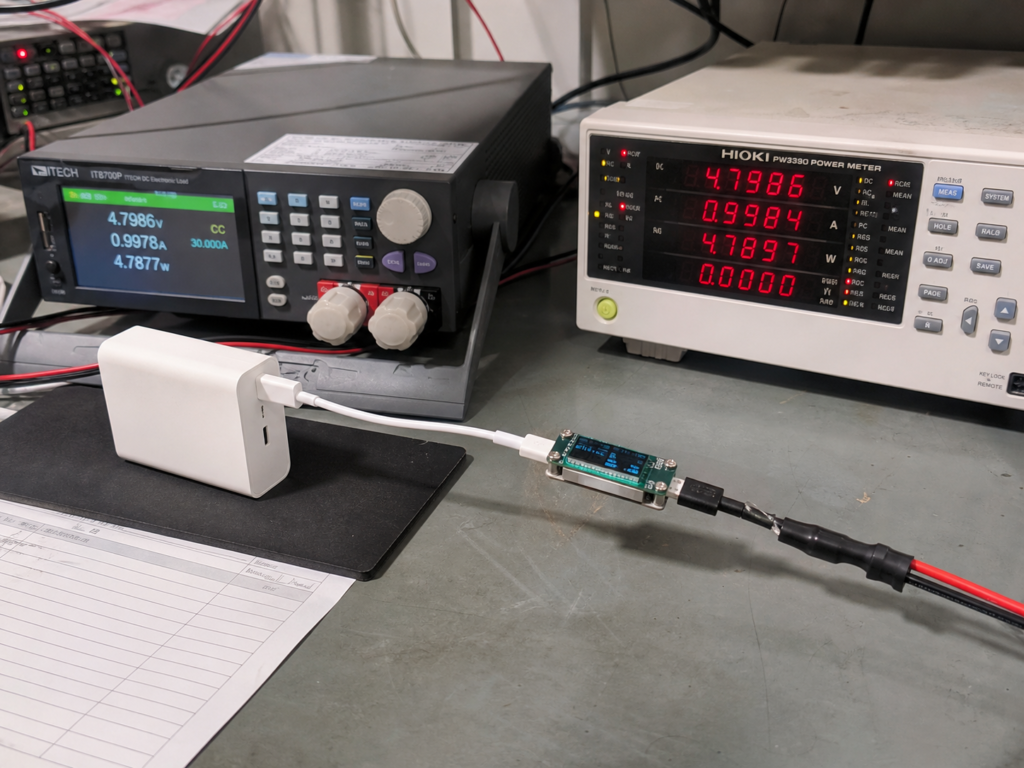
Finally, the PC certificate is issued after the audit is passed. The validity period of the certificate is subject to the indication on the certificate. When the product changes or the applicable standards are updated, you should first confirm with the body whether it affects the certificate. Common reasons for rejection of PC certificate applications for charging products include: inconsistent product information across different documents, non-compliant plugs, false parameter labeling, missing necessary information on labels, and failure to pass testing or technical audits.
Step 2: Apply for an SC Certificate (Batch Shipment Certificate)
After obtaining the PC certificate, for each batch of regulated goods shipped, it is usually necessary to apply for the corresponding SC certificate, and the steps are simpler than those for the PC certificate:
First, before shipment, confirm that the PC certificate for the corresponding model or product range is still within the validity period and covers all products in this batch. Do not wait until the goods are shipped to find that the PC certificate has expired, or that a certain model is not within the coverage.
Then, use the importer’s account to submit the SC application, link the corresponding PC certificate, and upload batch materials such as invoices and packing lists.
Next, the conformity assessment body will conduct document review, and some batches may be selected for consistency verification between goods and certificates.
After the audit is passed, the SC certificate is issued. The SC certificate is usually valid for a single use and can only be used for the batch of goods applied for.
A special reminder here: be sure to reserve sufficient application time, do not wait until the goods are about to arrive at the port to start processing the SC certificate. In case you are selected for verification, or the invoice and packing list are inconsistent with the PC certificate information, additional port detention and storage costs may be incurred.
Step 3: Use for Customs Clearance
After obtaining the SC certificate, provide the valid certificate to the Saudi customs clearance agent as one of the customs clearance compliance documents. SABER platform review, conformity assessment, and on-site inspection by Saudi Customs are different regulatory links; having a certificate does not mean that there will definitely be no inspection.
Before customs clearance, ensure that the goods information is consistent with the certificate and declaration materials, including model, quantity, parameters, importer, and other information. When the information is consistent and other customs requirements are also met, the entry procedures can usually be completed smoothly.
Key Compliance Verification Points for Charging Products
Different types of charging products have different compliance focuses, you can check in advance against the following.
Chargers/Power Adapters
The input voltage range must cover the grid requirements of the target sales area; the output power and current must be consistent with the nameplate, specification sheet, and test report, and the fast charging function must not be falsely labeled.
Multi-port products must clearly mark the total power and the power distribution rule when multiple ports output simultaneously. Such products may fall within the scope of relevant regulations for low-voltage electrical equipment, but whether they are regulated and the specific applicable requirements shall still be subject to the HS code, input characteristics, current SABER classification, and the confirmation result of the conformity assessment body.
USB/USB-C Charging Cables
It is necessary to distinguish between pure charging, data-charging 2-in-1, and cables with fast charging chips or conversion functions; different types may have different compliance requirements.
Product labels must clearly mark key information such as rated current or power, length, and interface type. Cables with conversion functions, such as USB-C to Lightning, also need to separately evaluate the compliance of the conversion module and related functions.
Sets/Combination Products
Whether they are assessed as a single product or multiple components depends on the sales unit, HS code, applicable technical regulations, and the assessment method of the certification body.
If the components in the set are independently regulated products, or are declared as independent sales or independent import units, they may need to apply for corresponding PC certificates separately; whether they need to be assessed separately shall be confirmed according to the HS code, technical regulations, sales unit, and certification body, and conclusions cannot be drawn solely based on “components can be sold separately”.
If the core components change, for example, replacing the 65W charger in the set with a 30W one, you should first re-evaluate the coverage and validity of the original PC certificate.
Charging Products with Additional Functions
Products with Bluetooth, Wi-Fi, or other wireless communication functions shall verify applicable equipment type approval, registration, spectrum, or other technical requirements with the Saudi Communications, Space and Technology Commission (CST, formerly CITC). Whether specific permits are required depends on the wireless standard, frequency band, purpose, and import and sales arrangements.
Power banks with batteries and other products with built-in batteries shall additionally verify applicable Saudi battery, transportation, and safety requirements. Ordinary wireless chargers without batteries should not be directly classified under battery regulations just because they have a wireless charging function. Wireless chargers shall also be separately evaluated for applicable electrical safety, EMC, and wireless technical requirements.
Cost, Cycle, and Pitfall Avoidance Guide
Cost Composition and Estimation
There is no unified price for the SABER compliance process cost, and the conventional composition includes three parts: PC certificate review fee, SC certificate per-batch fee, and testing fees incurred when there is no recognized test report.
If there is a valid CB report, it may usually reduce the testing cost, but whether it can be reduced and the extent of reduction depend on the product complexity, report coverage, and body rules.
A reminder here: be wary of ultra-low-price “all-inclusive” promises. Some quotations may omit SC certificates, testing, or subsequent rectification costs, and the risk of fake certificates or hidden fees cannot be ruled out.
Factors Affecting the Cycle
There is no official unified processing time limit for the SABER compliance process applicable to all products. There are many factors affecting the cycle, including whether the materials are complete, whether there is a test report recognized by the body, product complexity, whether supplementary testing or rectification is required, and Saudi holiday arrangements, etc.
It is recommended to plan the time in advance and reserve a buffer period, and the specific progress shall be subject to the audit arrangement of the selected conformity assessment body.
Avoidance of Exclusive Pitfalls for Charging Products
Charging products have several particularly easy pitfalls that require special attention:
First, the model pit. Products of the same series but with different power, different ports, or different fast charging protocols cannot default to sharing one PC certificate; you must judge according to the coverage confirmed by the body.
Second, the label pit. The requirements for Arabic labeling vary depending on the product category and applicable regulations. You should confirm with the body in advance and do not only prepare English labels.
Third, the fast charging pit. The power labeling of fast charging products such as USB-C PD must be consistent with the actual test and rated output capacity. Do not label short-term peak power directly as rated power.
Fourth, the classification pit. Do not declare chargers simply as “ordinary electronic accessories”; they should be classified according to the actual function, HS code, and the category matched by the SABER system, otherwise it may lead to audit delays, supplementary materials, or other compliance risks.
Methods for Identifying Fake Certificates
There are many fake SABER certificates on the market. When identifying them, you should focus on verifying the certificate number, importer, product model, validity period, and certificate status, and verify them through the official SABER platform.
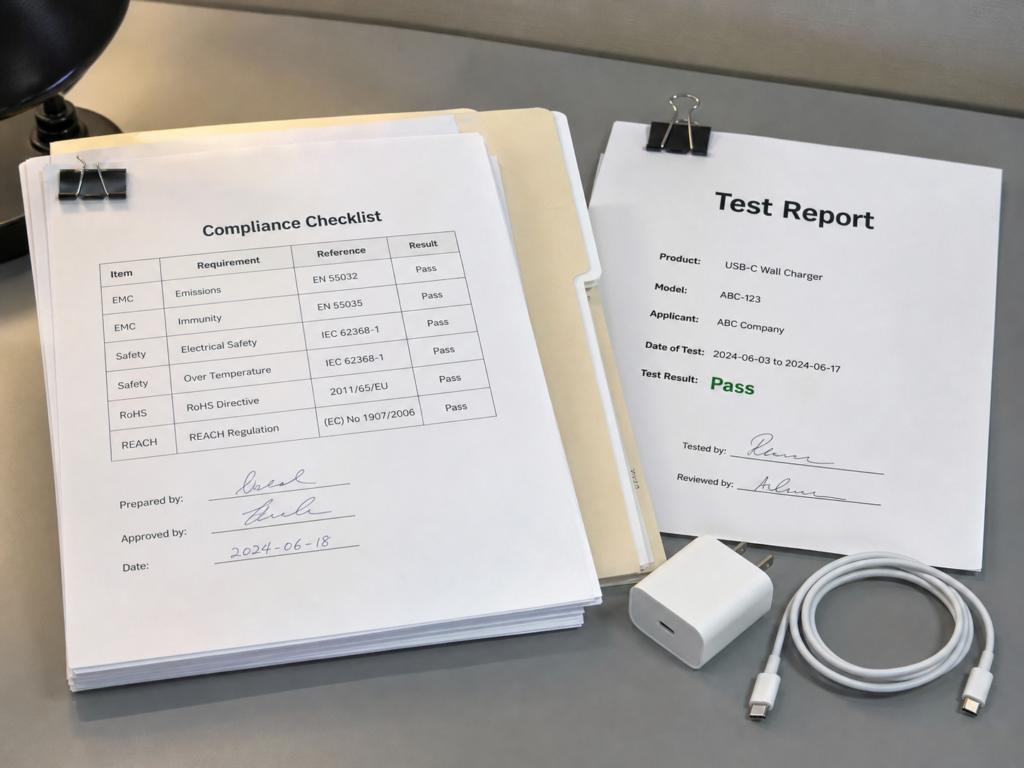
You cannot deem a certificate valid just based on the certificate screenshot, PDF, or certificate number; you must also confirm that the certificate completely matches the import batch, importer, product model, and other information. Even if the certificate number itself is real, it does not mean it is necessarily applicable to the current batch of goods.
Whether sample submission or supplementary testing is required depends on the product category, applicable standards, and the body’s recognition of existing CB reports or other conformity certification materials. Sample exemption or repeated testing exemption does not necessarily mean the certificate is fake. If the other party claims that the certificate can be issued directly without any technical material review or conformity assessment body review, you should be highly vigilant and verify through the official SABER platform and the issuing body.
Certificate Management and Model Coverage Rules
Validity Period and Renewal Rules
The validity period of the PC certificate is subject to the indication on the certificate, usually one year. Before expiration, the importer can initiate a renewal application on the platform. If the product has not undergone changes that affect compliance, and the applicable standards have not been updated, the body may waive repeated testing depending on the situation, but whether it can be renewed directly shall still be subject to the body’s audit result.
The SC certificate is usually valid for a single use, only corresponding to the single batch of goods applied for, and does not need to be renewed like a PC certificate.
Core Rules for Model Coverage
Many merchants will ask whether multiple models of the same series can share one PC certificate to save costs. This question cannot be answered only by looking at the product name or series name.
Whether models can share a PC certificate shall be confirmed on a case-by-case basis by the conformity assessment body based on brand, manufacturer, production location, product structure, key components, rated parameters, plugs and interfaces, product functions, applicable standards, and the coverage of the test report. Even if they look similar or belong to the same series, they cannot default to being combined.
In addition, the product model, brand, and manufacturer name in all materials must be consistent, and parameters must not conflict with each other, otherwise it may affect the audit and certificate use.
Handling After Product Changes
If the product model, manufacturer, or production location changes, or if the input and output parameters, rated power, fast charging function, plug, interface, core circuit, wireless module, battery, or core components of the set change, the conformity assessment body shall first conduct a change impact assessment.
According to the assessment result, it may be necessary to update the certificate, supplement technical materials, retest, or re-apply for a PC certificate. You cannot continue to use the old certificate directly without confirmation.
Management Suggestions for Multi-Model/Series Products
For merchants with many models, there are two practical suggestions:
First, do not default that all models of the same series can share one PC certificate; be sure to let the conformity assessment body confirm the coverage in advance, and don’t wait until after shipment to find that the certificate is not applicable.
Second, it is recommended to establish a corresponding ledger of “model – test report – PC certificate”, and check one by one before batch shipments to avoid mismatches between models, parameters, and certificates.
Practical Reference and Summary
Typical Charging Product Case Reference
Here are three common examples of charging products for your reference and judgment.
65W USB-C PD Fast Charging Adapter
In terms of applicability, if such products are regulated low-voltage electrical equipment under the current classification of Saudi SABER, they usually need to apply for a PC certificate as required and apply for an SC certificate for each batch of goods. Whether it is ultimately applicable shall be subject to the HS code, input characteristics, SABER platform classification, and the confirmation result of the conformity assessment body.
Required materials include specification sheets, CB reports (preferably including applicable Saudi national differences), nameplate and plug photos. The key verification points are that the plug meets applicable Saudi requirements, the nameplate has compliant Arabic or bilingual labeling, and the fast charging power is consistent with the test report.
Common mistakes include labeling peak power as rated power, non-compliant plugs, and missing necessary Arabic information on the nameplate.
100W Pure USB-C Charging Cable
In terms of applicability, first confirm whether it is a regulated product according to the HS code and SABER classification, do not default to exemption.
Required materials include specification sheets marked with rated parameters and interface types, test reports (if any), and appearance photos. The key verification point is that the product label clearly marks the rated parameters; if it has an E-Marker chip, it is also necessary to confirm whether the chip and related functions meet the applicable requirements.
Common mistakes are defaulting that no compliance procedures are needed just because it is a “cable”, and missing product parameter labeling.
Wireless Charging Power Bank with Bluetooth
For such products, verify the requirements for batteries, wireless charging, electrical safety or EMC, and Bluetooth wireless communication respectively. Whether the low-voltage electrical technical regulations apply, and whether CST-related type approval or other procedures are required, shall be confirmed according to the product’s input characteristics, HS code, wireless standard, and the classification of SABER and relevant competent authorities.
Required materials may include battery-related test reports, charging and wireless charging function materials, EMC reports, and Bluetooth module or wireless equipment compliance documents. The key verification points are that the battery meets applicable requirements, the Bluetooth function complies with relevant CST regulations, and the safety and EMC performance of wireless charging meet applicable standards.
Common mistakes are applying only as an ordinary charger, omitting battery, wireless charging, or communication-related requirements.
Full Processing Flow Checklist
You can check against the following list before processing:
• **Before application**: Complete the 5-step applicability judgment, prepare all materials required for the project, and complete the exclusive pre-check for charging products.
• **When applying for a PC certificate**: Confirm that the importer’s qualifications are valid, select a conformity assessment body with corresponding product audit capabilities, and confirm that the documents meet the requirements of model and coverage.
• **When applying for an SC certificate**: Confirm that the PC certificate is still within the validity period, all models in this batch are within the coverage, and the invoice and packing list are consistent with the certificate information.
• **Troubleshooting order when problems occur**: First check the validity and matching of the certificate, then check the consistency of the model and manufacturer, then check the HS code and product classification, and finally verify the coverage of the test report.
Key Takeaways
After reading this article, you should have mastered the following content: you can use the 5-step method to judge whether charging products may need to go through SABER-related compliance procedures; clarify the full process steps from material preparation to customs clearance, as well as the responsibilities of each subject; understand the factors affecting cost and cycle, and avoid the exclusive pitfalls of charging products; you can also verify certificates through the official platform, and handle common problems such as certificate renewal and product changes.
Finally, it should be reminded that Saudi compliance requirements may be updated dynamically. The final requirements shall be subject to the current classification of the SABER platform, applicable technical regulations of SASO and other relevant competent authorities, and written confirmation from the conformity assessment body. This article is a general introductory guide and cannot replace case-specific compliance advice. For specific projects, it is recommended to confirm with an authorized conformity assessment body in advance to avoid unnecessary losses.