
Sellers of charging products in the Latin American market have most likely heard of NOM certification, but many run into trouble with another easily overlooked requirement: IFT certification. For example, smart chargers with Bluetooth APP control, even if they meet applicable NOM requirements, may still face customs clearance or sales risks due to uncompleted applicable IFT approval, or inconsistencies in documents, models, and labels. Many people cannot distinguish between IFT and NOM, nor do they know whether their products need it or how to do it. In this article, we will start from the actual scenarios of charging products and thoroughly explain the core requirements of IFT certification.
First, understand: What is IFT, and what does it regulate?
The full name of IFT is the Instituto Federal de Telecomunicaciones (Federal Telecommunications Institute of Mexico), the official agency responsible for the regulation of telecommunications, broadcasting and related radio spectrum in Mexico, equivalent to the radio management department of the US FCC or the Radio Administration Bureau of the Ministry of Industry and Information Technology in China. IFT is responsible for implementing applicable approval and technical compliance requirements for products, equipment or devices falling within the scope of Mexico’s telecommunications, broadcasting and radio spectrum regulation. Whether Homologación (approval) is required shall be judged item by item in combination with wireless functions, operating frequency bands, technical rules and product use; not all items with wireless reception or that generate electromagnetic radiation are automatically subject to the same approval process.
Many people easily confuse IFT and NOM. In fact, the two are completely independent compliance systems, and the core differences can be referred to in the table below:
| Comparison Dimension | IFT | NOM |
| Regulatory Agency | Instituto Federal de Telecomunicaciones (Federal Telecommunications Institute of Mexico) | Mexican Official Mandatory Standard (NOM) system; the specific competent authority and conformity assessment body shall be determined according to the applicable NOM |
| Core Regulatory Scope | Radio frequency compliance, and applicable telecommunications, broadcasting and spectrum technical requirements | Electrical safety, partial electromagnetic compatibility, performance requirements |
| Applicable Products | Equipment falling within the scope of relevant telecommunications, broadcasting or radio spectrum technical regulations | Most electrical products connected to the mains (determined according to the official list) |
| Relationship Between the Two | They do not replace each other; electrical products with wireless functions may require both | They do not replace each other; electrical products with wireless functions may require both |
In addition to IFT and NOM, there are several key roles in the entire compliance chain: laboratories within the scope of IFT recognition or approval are responsible for testing and issuing reports; in some scenarios, conformity assessment bodies are responsible for document review and report assessment; the importer is the primary responsible entity for compliance and needs to keep certificates for inspection; customs and e-commerce platforms are responsible for verifying the validity of certificates, model consistency and label compliance.
3-second quick preliminary judgment on whether your product needs IFT verification
No need to look through complex regulations, first make a preliminary judgment according to this rule:
• Products with wireless transmission and communication functions such as Bluetooth, Wi-Fi, cellular, LoRa or active NFC read/write should usually be prioritized for IFT requirement verification;
• Purely wired products without any wireless functions usually do not require IFT, but may require NOM and import labels;
• No direct conclusion can be drawn for wireless charging, passive reception and near-field coupling products; special confirmation is required based on operating frequency, transmission nature, product use and applicable technical regulations.
If the preliminary judgment indicates that IFT may be involved, the next step is to carefully check the scope. But don’t worry first, there are a few easily confused terms to clarify first to avoid pitfalls later:
1. **Homologación (Type/Compliance Approval)**: This is Mexico’s procedure for compliance approval of applicable telecommunications, broadcasting or radio equipment, and specific requirements are determined according to the product and applicable technical regulations. The “IFT certification” often mentioned in the industry usually refers to this type of IFT approval.
2. **Wireless Module Approval**: Separate Bluetooth modules and Wi-Fi modules can first obtain IFT approval, but the module approval certificate cannot automatically replace the whole machine approval. Whether the approved module can be used in the host, whether test data can be reused, and whether the host needs separate approval shall be confirmed according to the module certificate conditions, host installation method, antenna and RF parameters, applicable technical regulations and requirements of the conformity assessment body.
3. **Mutual Recognition Report**: Test reports from overseas laboratories that meet relevant requirements can be submitted as application materials, but cannot automatically replace Mexico’s IFT approval and applicable test requirements. Whether it can be used shall be reviewed and confirmed by the conformity assessment body based on current rules, laboratory qualifications, test standards and report content.
What are the consequences of non-compliance?
If products are sold to Mexico without completing applicable IFT requirements, they may face customs clearance or sales risks. Depending on the nature of the case, consequences may include required rectification, sales restrictions, customs detention or return, administrative penalties, etc. Market supervision may involve IFT, customs, economic authorities, PROFECO or other agencies with jurisdiction, depending on the illegal facts, applicable laws, product types and law enforcement decisions.
How to judge whether your charging product needs IFT?
After the preliminary judgment, a precise scope judgment is required. The core criterion is: **Whether the product includes radio transmission, reception or communication functions falling within the scope of Mexico’s telecommunications, broadcasting or radio spectrum technical regulations**.
Scope of wireless functions to be verified
Don’t just check if there is Bluetooth. Wireless transmission or communication functions such as Bluetooth, Wi-Fi, cellular, LoRa, and active NFC read/write should all be included in the verification scope. Products with only USB wired data transmission usually do not trigger IFT requirements due to wired data transmission itself – do not treat wired data transmission as a wireless function.
Wireless charging and passive reception products shall be judged separately. The operating frequency, transmission nature, product use and applicable technical regulations shall be verified. It cannot be directly concluded that IFT approval is required just because the product has electromagnetic radiation, nor can it be deemed exempt without verification.
Reference for typical classification of charging products
We divide common charging products into three categories according to whether they need IFT, you can directly match your product:
Products that usually need to verify IFT requirements
• Smart chargers, power adapters, smart plugs with Bluetooth and Wi-Fi functions;
• Charging accessories with NFC read/write and wireless data transmission (such as charging cables with NFC tap-to-connect function);
• Wireless charging pads and charging docks with Bluetooth and APP control;
• Charging power strips and adapters with wireless remote control functions.
Products that usually do not need IFT
• Ordinary wired chargers and power adapters without any wireless functions;
• Charging cables, adapters, and charging port components with purely physical structure without wireless functions;
• Charging accessories with only USB wired data transmission.
Boundary products requiring special verification
• **Wireless charging products**: Cannot be exempted by default, nor can it be directly said that they must be done. It is necessary to verify its operating frequency, transmission nature, product use, and then judge against the applicable IFT rules;
• Charging accessories with passive reception function: It is necessary to confirm whether the reception function is within the scope of IFT regulation. The regulatory requirements for accessories that only receive wireless charging energy may be different from those for active transmission or communication equipment.
What if you are not sure how to check the rules?
If you cannot judge by yourself, you can check the official rules according to these dimensions: wireless technology type, operating frequency band, power range, product form. There are two official inquiry channels: the technical rule database on the IFT official website, and the official list inquiry entry of NOM. When checking, be sure to verify the latest version of the rules, **and cannot directly apply overseas standards such as FCC and CE**. FCC, CE or overseas laboratory reports cannot automatically replace Mexico’s IFT approval and applicable test requirements; whether they can be used shall be reviewed and confirmed by the conformity assessment body based on current rules, laboratory qualifications, test standards and report content.

If it is still impossible to judge, verification shall be made with IFT, laboratories with corresponding recognition or approval scope, conformity assessment bodies or professional consultants; whether fees are charged shall be subject to the quotation of the institution.
4 common charging product judgment cases
To make it clearer for you, we have found 4 of the most common charging product scenarios, and directly give conclusions and precautions:
Case 1: 65W USB-C wired charger without wireless functions
Conclusion: Usually no IFT approval is required.
But pay attention to two points: first, confirm whether the product has hidden wireless functions; second, verify whether this product is within the mandatory scope of NOM. Documents to be prepared include NOM-related documents (if required) and import label materials. The most common misjudgment is treating USB wired data transmission as a wireless function, or missing NOM requirements.
Case 2: 25W smart charger with Bluetooth APP control
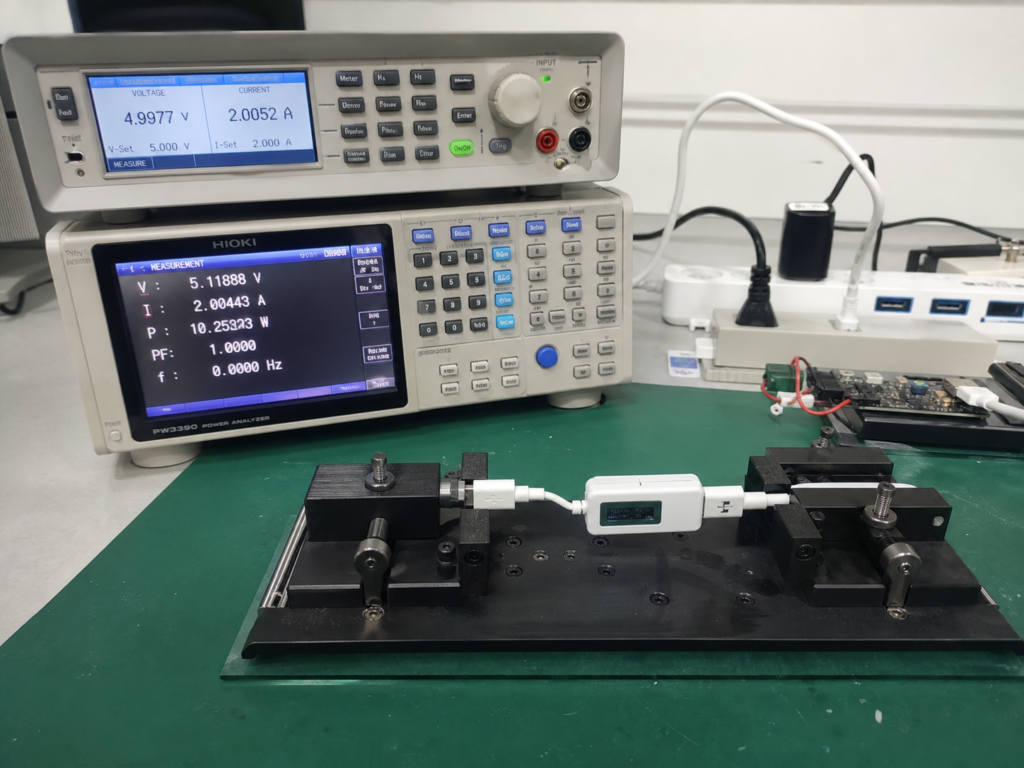
Conclusion: It is usually necessary to verify in accordance with applicable IFT radio requirements, and apply for corresponding approval if necessary, and may also need to meet NOM requirements.
Parameters to be verified include Bluetooth version, operating frequency band, transmission power, and whether it is within the mandatory scope of NOM. Materials to be prepared include wireless parameter table, product circuit diagram, Spanish instruction manual, and NOM-related documents (if required). The most common pitfall for this type of product is that the circuit radiation increases in fast charging mode, resulting in excessive RF interference or spurious emissions, or the test does not cover representative working modes and the most unfavorable conditions.
Case 3: 15W wireless charging dock with NFC read/write function
Conclusion: The active NFC read/write function should usually be verified in accordance with applicable IFT radio requirements, and corresponding approval shall be obtained if necessary; the wireless charging part needs to be separately confirmed according to operating frequency, transmission nature and applicable technical regulations, and a conclusion cannot be drawn solely based on the 15W power.
Parameters to be verified include the operating frequency of NFC, the operating frequency and power of wireless charging, whether it is intentional emission, and the product use. Materials to be prepared include NFC module parameters, wireless charging parameters, and whole machine test reports. The most common misunderstanding is that wireless charging is defaulted to not require IFT, or the test and compliance assessment of the NFC function are omitted.
Case 4: Smart charging plug using an approved Wi-Fi module but with a replaced antenna
Conclusion: The compliance of the whole machine needs to be re-evaluated, and the module approval certificate cannot be directly used.
Parameters to be verified include the gain of the new antenna, installation method, and changes in RF parameters. Materials to be prepared include the approval certificate of the original module, the specification sheet of the new antenna, and the whole machine RF test report. Replacing the antenna usually requires a re-assessment of compliance impact, but it does not necessarily mean that all tests must be re-tested or re-applied. Whether the module approval or original test data can continue to be used shall be confirmed in combination with the module certificate conditions, host configuration and applicable procedures.
Once you confirm you need IFT, which compliance path is the most cost-effective?
Not all products need to undergo exactly the same tests. The specific IFT path and document requirements shall be determined in combination with the product, technical regulations and conformity assessment procedures. We list them from common to special according to applicable scenarios:
1. Whole machine Homologación (Type/Compliance Approval, most commonly used)
This is the most conventional path, suitable for finished charging products sold independently, such as your own brand smart chargers and wireless charging pads. The core requirement is to complete necessary whole machine tests and document assessment in accordance with applicable technical regulations, and obtain the IFT approval document corresponding to the whole machine model.
2. Using approved wireless modules (simplified testing can be evaluated)
If the Bluetooth or Wi-Fi module you use has already obtained IFT approval, you can first check the applicable conditions of the module certificate, including module parameters, antenna, shielding, installation method and host configuration. When the conditions are met, part of the test data of the module may be reused to reduce repeated testing.
But it should be emphasized again: whether the approved module can replace the whole machine approval, whether the host needs separate approval, and which reports can be reused shall be subject to the module approval conditions, applicable technical regulations and the review results of the conformity assessment body, and cannot be generalized.
3. Combined application for series models
If you have several models of charging products that use the same design platform, with exactly the same RF parameters, and only differences in non-RF parameters (for example, the same smart charger, only with power levels of 18W, 25W, 45W, and the RF part uses the same Bluetooth module and the same antenna), you can evaluate the feasibility of a combined application for series models. However, whether they can be combined shall be subject to IFT rules, applicable procedures and the review of the conformity assessment body.
4. Special treatment for small-batch/sample import
For one-time small-batch imports such as trial sales, exhibitions, and samples, whether there is special treatment shall be confirmed case by case according to the import purpose, quantity, time limit, product use and the effective IFT and customs regulations at that time. Small batches cannot be directly regarded as exempt from Homologación, nor can they automatically replace applicable conventional compliance requirements. Products for long-term commercial sales shall be handled in accordance with applicable conventional compliance paths.
How to choose the right path for yourself?
It mainly depends on three factors:
• **Product form**: If it is a finished product sold independently, prioritize the evaluation of whole machine approval; if an approved wireless module is used, you can further confirm whether the module data can be used and some tests can be simplified;
• **Sales scale**: For long-term large-volume sales, handle in accordance with applicable conventional compliance paths; if it is only a small-batch trial sale, first confirm whether it meets the specific conditions for samples, exhibitions or temporary imports;
• **Iteration speed**: If the product is revised quickly, using wireless modules that have obtained IFT approval may help reduce repeated testing, but each revision still requires evaluating whether the module conditions, antenna, installation method and whole machine RF configuration have changed.
Is the testing phase the most likely to run into problems? Core test points for charging products
After choosing the path, you will enter the testing phase, which is also the place where problems are most likely to occur. Because charging products have power conversion circuits, especially in fast charging mode, RF interference may be more complex than ordinary wireless devices, so there are several test points to pay attention to.
4 dimensions of core testing
There is no unified “four-dimensional test” list for all charging products under IFT. Specific test items, limits, working conditions and sample configuration shall be determined according to applicable IFT technical regulations, equipment categories, laboratory test plans and their recognition or approval scope. For charging products, the following aspects usually need to be paid attention to:
1. **RF compliance**: Verify parameters such as operating frequency, transmission power, bandwidth, and spurious emissions according to applicable rules;
2. **EMC/Immunity**: Confirm whether there is interference between the charging function and the wireless function according to applicable requirements. For example, fast charging cannot cause abnormal wireless connections, and wireless function operation cannot affect charging stability;
3. **Wireless charging radiation**: If it is a wireless charging product, confirm whether relevant radiation or other tests are required according to operating frequency, transmission nature, power and applicable technical regulations;
4. **Whole machine coexistence test**: Confirm the compliance when the charging mode and wireless function work at the same time according to the test plan, and if necessary, cover the simultaneous operation of fast charging, Bluetooth connection, wireless charging, etc.
The test shall cover representative working modes and the most unfavorable conditions, but it cannot be preset that all charging gears and all wireless gears must be tested separately. Which modes to choose specifically shall be determined by applicable technical regulations and laboratory test plans.
What should be checked for RF parameters?
Before sending for testing, you can first check the RF parameters yourself to avoid a wasted trip due to incorrect parameters. Parameters to be checked include: operating frequency band, technical standard, bandwidth, power caliber, antenna gain. It should be noted here that **IFT has no universal limit values applicable to all products**, and the specific limits shall be subject to the current effective technical rules of IFT. Do not casually apply old data from the Internet or limits from other countries.
Basic rules for test execution
Testing shall be carried out in accordance with applicable IFT procedures, and laboratories and conformity assessment bodies with corresponding recognition or approval scope shall be selected. FCC, CE or overseas laboratory reports cannot automatically replace Mexico’s IFT approval and applicable test requirements; whether they can be used shall be reviewed and confirmed by the conformity assessment body based on current rules, laboratory qualifications, test standards and report content.
The test working conditions cannot be determined only by experience. According to applicable technical regulations and laboratory test plans, representative working modes and the most unfavorable conditions shall be covered, including the simultaneous operation of charging and wireless functions if necessary.
The most common test failure reasons for charging products
We have sorted out several problems that charging products are prone to encounter during IFT testing, which you can avoid in advance during the design stage:
1. In fast charging mode, the switching noise of the power conversion circuit may increase, resulting in excessive RF interference or spurious emissions;
2. When wireless charging products operate at full load, the radiation parameters exceed the applicable limits;
3. Frequency offset and poor antenna matching lead to excessive spurious emissions;
4. When charging and wireless functions work at the same time, the coexistence performance is not up to standard, for example, the Bluetooth connection is unstable during fast charging, or the charging power drops when Bluetooth is working.
Full IFT application process: What to prepare? How long does it take?
After the test is completed, the next step is the application process. The following still focuses on the conventional whole machine approval approach to explain the matters needing attention in each link. The specific applicant entity, materials, institutional participation methods and submission channels shall be subject to the current IFT procedures.
Prepare these two things before applying
1. Subject qualification verification
First of all, it is necessary to confirm the applicant entity, authorization entrustment and agency requirements, which shall be subject to the current IFT procedures. If the import is carried out by a Mexican entity, it also needs to meet the requirements of SAT and customs for RFC, importer registration and customs declaration documents.
The division of responsibilities is generally as follows: the manufacturer is responsible for providing technical materials; the authorized representative or agent is responsible for connecting with relevant institutions in accordance with procedures; the importer is responsible for preparing import documents and keeping certificates and related materials for inspection. There may be differences in different application structures, and a certain agency arrangement cannot be regarded as a unified prerequisite for all applications.
2. Document and sample preparation
Documents are divided into two categories:
• Technical documents: wireless parameter table, product circuit diagram, function description, label draft;
• Documentary materials: Spanish product instruction manual, compliance declaration, subject qualification documents.
For samples, the conventional number is 2-3 finished products with good functions, and the specific number depends on the requirements of the laboratory and applicable procedures.
4 steps of conventional application
1. **Pre-assessment**: First find a professional institution or laboratory to do a pre-assessment to confirm the type of wireless function, the suitable compliance path, and the corresponding test standards. Don’t send for testing right away; if the path is wrong, you will waste money;
2. **Sample testing**: In accordance with applicable technical regulations, select a laboratory with corresponding recognition or approval scope to complete necessary tests;
3. **Document submission**: In accordance with the current IFT application procedures, the test report and technical documents shall be submitted by the eligible applicant entity, agent or conformity assessment body;
4. **Approval and certificate issuance**: After passing the review, obtain the IFT approval document. The number, query method and disclosure level of the approval document shall be subject to the documents issued by IFT and the official query system. It cannot be assumed in advance that all certificates can be queried through the same public webpage.
How to calculate the cycle and cost?
Many people ask right away “How much does it cost to do an IFT? How long does it take?” In fact, there is no fixed answer, because there are too many influencing factors.
Factors affecting the cycle include: number of frequency bands (those with only Bluetooth are definitely simpler than those with Bluetooth, Wi-Fi and NFC at the same time, but the actual time still depends on applicable procedures), test complexity, whether retesting is required, translation quality, document completeness and review efficiency. For example, if the translation is wrong and needs to be supplemented, or the test fails and needs to be retested, the cycle will be lengthened.
Factors affecting the cost include: testing fee, assessment fee, service fee, sample transportation fee, tax, etc., all of which are determined according to the complexity of the product. When asking a service provider for a quotation, be sure to ask the other party to break down the cost details to avoid hidden consumption – for example, some quotations are very low, but later retesting and translation require additional fees, and the final total price is higher instead.
In addition, the validity period, renewal requirements, and change requirements of the approval document shall be subject to the markings on the document and the current IFT rules. Don’t listen to others say “it’s all 5 years”; there may be differences for different products and procedures.
Is everything fine once you get the certificate? Pay attention to changes after approval
Many people think that once they get the certificate, they don’t have to worry about it. In fact, that’s not the case – if there are changes to the product later, you must first evaluate whether it will affect RF compliance, and then decide whether to retest, update documents or re-apply.
Types of changes that need to be evaluated include:
• RF-related: replacing wireless modules, adjusting antennas, changing transmission power or frequency bands, firmware upgrades affecting RF parameters, changing PCB layout, changing shielding structure;
• Other related: charging protocol upgrades affecting coexistence performance, adding or adjusting model suffixes.
The principle for handling changes is: for changes that may affect the approval scope, RF parameters, antennas, models or label information, a change assessment shall first be conducted in accordance with IFT procedures, and based on the results, retesting, document updating or re-application shall be carried out; whether non-critical changes need to be filed shall be confirmed according to current rules. Not all changes can be defaulted to require updating of certificates and labels, nor can the original approval document be directly used without evaluation.
Notes after getting the certificate: Market launch labels and spot check requirements
Obtaining the IFT approval document is only the first step. If the labels, instructions and actual products do not meet the requirements when launched on the market, you may still face regulatory risks.
IFT labels must meet these 4 requirements
IFT-related labels are an important part of compliance inspection, and the following points shall be checked:
1. **Content must be correct**: The corresponding label and approval number shall be used in accordance with applicable IFT labeling regulations, and shall be consistent with the approval document and product model;
2. **Position must be correct**: The content and position of the label shall be confirmed in accordance with applicable IFT regulations and product category requirements. Small-volume products cannot judge by themselves that the label can be placed on the packaging or in the instruction manual;
3. **Electronic labels must comply with rules**: Whether electronic labels are allowed, as well as the specific display method and replacement conditions, shall be strictly confirmed in accordance with applicable IFT rules, and cannot be adopted on your own just because the product is small in size;
4. **Language must be correct**: Compliance-related instructions shall be accompanied by Spanish, not only English.
Other mandatory labeling requirements
In addition to the IFT label, there are several other requirements that must also be met:
• The instruction manual must be in Spanish, and shall mark the frequency bands used by the product, compliance declaration, and precautions;
• The packaging shall mark the information of the manufacturer or importer, product model, and country of origin;
• If the product requires NOM certification, the NOM label shall also be marked in accordance with NOM rules.
How are market spot checks conducted?
Market supervision may involve IFT, customs, economic authorities, PROFECO or other agencies with jurisdiction, depending on the nature of the case. The inspection content may include: whether the approval document is applicable or still valid, whether the label meets the requirements, whether the product model is consistent with the actual configuration, and whether the product has undergone unevaluated changes.
Common violations include: missing or illegible labels, inconsistent certificate numbers and product models, changed product parameters without updating relevant documents, or inconsistent import documents and actual goods.
Full-process risk control: Pitfall avoidance checklist from design to market launch
In fact, most IFT compliance pitfalls can be avoided as long as risk control is done in advance. We have sorted out key checkpoints according to the whole process of the product from design to market launch:
Design freeze phase
First list all wireless functions and verify whether they are all within the scope of IFT regulation; prioritize the use of wireless modules that have obtained IFT approval, and reserve space for RF debugging to avoid trouble with board modification later; simultaneously evaluate other compliance requirements such as NOM and import labels, don’t just do IFT and forget the others.
For wireless charging, passive reception and near-field coupling functions, it is also necessary to separately confirm the operating frequency, transmission nature, product use and applicable technical regulations, and cannot judge whether approval is required solely based on the product name.
Testing submission phase
Be sure to confirm the test plan according to applicable technical regulations and laboratory test plans, covering representative working modes and the most unfavorable conditions, including the simultaneous operation of charging and wireless functions if necessary; try to choose a laboratory with experience in testing charging products and with corresponding recognition or approval scope – the RF interference of charging products has particularities, and an experienced laboratory can help you find the rectification direction in advance and avoid detours.
FCC, CE or overseas laboratory reports cannot automatically replace Mexico’s IFT approval and applicable test requirements. Whether they can be used shall be reviewed and confirmed by the conformity assessment body based on current rules, laboratory qualifications, test standards and report content.
Application phase
Verify the qualifications of the agent or authorized representative, preferably with IFT application cases for charging products, otherwise it is easy to take detours; all Spanish materials must comply with IFT specifications, don’t delay the review time due to translation errors; the applied model must be exactly the same as the actually sold model, don’t let the model on the certificate be different from the one sold, which increases customs clearance and sales risks.
Label production phase
Check the style, number, and posting position of the label according to the current IFT rules; at the same time, check the requirements of NOM labels and import labels, don’t make IFT labels and forget the others; if the product is very small, confirm in advance according to applicable rules whether alternative solutions such as packaging, instruction manuals or electronic labels can be used, and cannot judge label exemption by yourself.
Customs clearance phase
Prepare the approval documents and import qualification documents in advance to ensure that the model of the goods is exactly the same as the model on the documents, and do not mix goods with incomplete documents or inconsistent models.
Platform listing phase
The uploaded approval documents shall match the sold products and models, and confirm that the documents are still applicable; the compliance statements on the product detail page shall meet the requirements of the platform, don’t brag about “global certification” or “full category compliance”, which is easy to be checked by the platform.
Change re-evaluation phase
For any changes involving RF, hardware, model or label, first conduct a compliance assessment, and then decide whether to retest, update documents or re-apply, don’t find out that the original approval is affected after the change; regularly check whether IFT rules are updated, and confirm that the approval documents and product configuration continue to meet the requirements.
In general, for devices such as Bluetooth, Wi-Fi, cellular, and active NFC that fall within the scope of Mexico’s telecommunications, broadcasting or radio spectrum technical regulations, the applicable IFT Homologación requirements shall be confirmed first. For wireless charging, passive reception and other boundary products, judgment must be made item by item in combination with frequency, transmission nature, use and current technical regulations. IFT and NOM, which is responsible for electrical safety and other requirements, are two independent systems, and they cannot replace each other. Choosing the right compliance path and avoiding common problems in the design and testing stages in advance can reduce compliance costs and risks. After reading this article, you should be able to preliminarily judge the IFT compliance needs of your own charging products, evaluate the appropriate application path, understand the core materials and key factors affecting the cycle and cost, also distinguish the boundary between IFT and NOM, and know when re-evaluation is required when products change.