
If you are an overseas merchant selling charging accessories and want to sell your products in the Chinese market, you will most likely first learn about CCC safety certification. But when it comes to SRRC, many people are confused: chargers are not mobile phones or routers, do they also need radio certification? In fact, many charging products have wireless functions, so they must pass SRRC before they can be legally imported and sold, and there are many merchants who have fallen into this pit. Today we will thoroughly explain the scope of application of SRRC, from beginner judgment to boundary pitfall avoidance, covering common charging and USB-C related scenarios.
1. Basic SRRC Knowledge Necessary for Charging Products
Let’s first clarify SRRC thoroughly: its full name is Radio Transmission Equipment Type Approval, which is a mandatory access requirement in China for **equipment that actively transmits radio waves outward**. Its core function is to prevent unqualified wireless signals from interfering with legitimate communication services such as domestic mobile phones, broadcasting, and satellites. This certification is supervised by China’s radio regulatory authorities. Products that obtain the certification must have an exclusive CMIIT ID printed on their nameplates, which is equivalent to the product’s wireless compliance ID card.
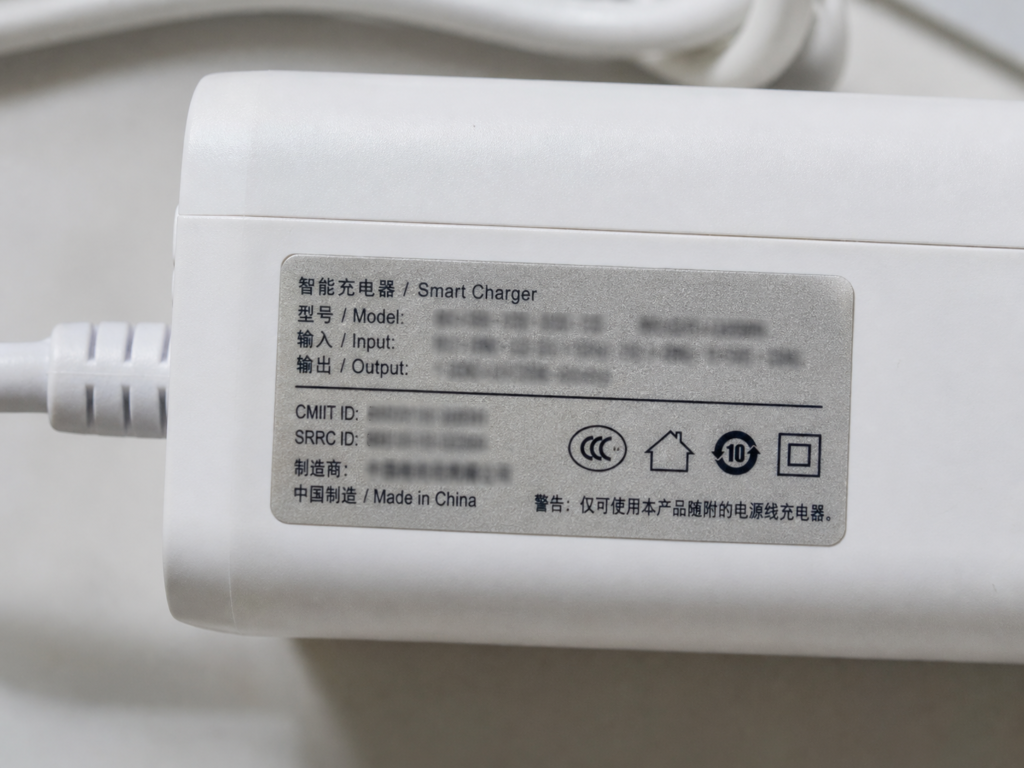
Many merchants who sell charging accessories previously only cared about safety certification and thought SRRC had nothing to do with them, but that is not the case: charging products with active wireless transmission functions must be verified in accordance with special regulations such as the Type Approval Catalog, micro-power equipment regulations, and wireless power transmission regulations before being imported or sold in batches within China; those that fall under the catalog and have no exemption shall obtain SRRC type approval. The consequences of lacking qualification are straightforward: customs detention of goods, fines from regulatory authorities, and removal from e-commerce platforms are common penalties. Conversely, ordinary pure-wired chargers and charging cables generally do not require SRRC, but as long as a wireless function is added to the product, compliance must be re-judged.
Let’s first clarify the boundary of SRRC’s responsibilities to save you unnecessary worry: it does not manage charging safety (that is under the jurisdiction of safety certifications such as CCC), does not manage power energy efficiency levels, does not manage the compatibility of USB PD fast charging, and cannot replace other mandatory certifications such as CCC and network access license — each certification manages its own scope, and none can be missing.
The scope of application of SRRC is not formulated arbitrarily; it has a clear official rule hierarchy: at the top is the , which clarifies at the legal level that radio transmission equipment requires type approval; the core basis is the “Type Approval Catalog”, which lists the types of equipment that conventionally require certification; for boundary products such as wireless chargers and low-power short-range devices, there are also special micro-power equipment catalogs and wireless power transmission regulations as judgment bases; finally, note that these catalogs and regulations are dynamically adjusted, and everything shall be subject to the latest official documents.
For beginners, first remember a core premise: **not all chargers require SRRC, and not all chargers do not require SRRC**. The core of judgment is “whether the product has the function of actively transmitting radio waves”, and then judgment is made in accordance with official rules. It has nothing to do with the product’s appearance or whether it is a charging accessory — a WiFi repeater that looks like a charging head requires SRRC, while a pure-wired charging power strip that looks like a router does not.
2. Four-Step Judgment Logic That Beginners Must Master
After understanding the basic concepts, you can use this general four-step logic to judge by yourself whether your product requires SRRC.
Step 1: Check whether there is an active radio transmission function
This is the most basic threshold. The so-called active transmission means that the product will actively emit radio waves outward, neither only receiving signals nor purely relying on wired data transmission. Common active transmission functions in charging products include: WiFi, Bluetooth, cellular network (4G/5G), 2.4G remote control, active card-reading NFC, wireless charger transmitter, FM transmission, positioning backhaul, etc. If the product is purely wired or only has a one-way receiving function, the mandatory requirement of SRRC can be directly excluded.
Here’s a pitfall to avoid: many products label themselves as “receivers”, such as Bluetooth audio receivers and WiFi signal receivers. Do not directly assume that they do not need SRRC — the vast majority of Bluetooth and WiFi devices are two-way communication. Even if they are called receivers, they will transmit signals back, so they still belong to active transmission equipment.
Step 2: Verify whether it falls under the type approval catalog or special management scope
After passing the first step, not all equipment with transmission functions requires conventional SRRC; it must also correspond to official classification rules. Conventional wireless communication functions such as WiFi, Bluetooth, and cellular are usually under the management of the Type Approval Catalog; when sold/imported to China and there is no applicable exemption, SRRC shall be applied for. However, boundary functions such as wireless chargers, NFC, and low-power short-range remote control devices cannot be directly applied to the conventional catalog, and must be judged in accordance with special management documents. Also note that if the product’s wireless frequency and parameters do not meet China’s requirements, you may not be able to obtain the certification at all, and the product may even be prohibited from sale.
Step 3: Verify whether it meets statutory exemption scenarios
Some equipment with transmission functions do not need to apply for SRRC as long as they fully meet the statutory technical requirements. However, exemption is not arbitrary; the premise is that all parameters such as the product’s frequency band, transmission power, bandwidth, and spurious signals meet the standards, and cannot be modified without authorization. There are three common exemption scenarios: first, low-power equipment that fully meets the micro-power short-range requirements; second, pure one-way receiving equipment; third, samples temporarily imported for testing and exhibition, which require advance filing and must absolutely not be used for sale.
Step 4: Confirm whether the sales/import scenario triggers mandatory requirements
The last step depends on the specific scenario: if it is transmission equipment imported in batches and sold within China, it must meet SRRC requirements. However, if it is cross-border direct mail for personal use, it is usually handled in accordance with the rules for personal articles, which is not equivalent to being able to be sold in batches as commodities; it still needs to meet requirements such as customs personal article limits, reasonable personal use, and China’s radio parameter restrictions. Temporarily imported test and exhibition samples only need to be filed with the official authorities in advance, but are strictly prohibited from being sold on the market.
3. Quick Check of Applicable Details for Charging/USB-C Products
The four-step logic is a general method. To save you time, we have directly classified common charging and USB-C products into “definitely required”, “definitely not required”, and “boundary products requiring verification”, which you can directly compare.
Products That Definitely Require SRRC
Such products are usually conventional wireless communication equipment within the Type Approval Catalog. When sold/imported within China and there is no applicable statutory exemption, SRRC certification is required:
• Smart charging devices with WiFi/Bluetooth: such as smart chargers, smart charging power strips, charging cables with Bluetooth;
• Charging devices with cellular communication: such as outdoor power stations/energy storage power stations with 4G/5G monitoring functions, shared power banks with positioning backhaul;
• Accessories with wireless gateway/hotspot: such as USB-C docking stations with WiFi/Bluetooth, desktop charging stations.
Products That Definitely Do Not Require SRRC
Such products are either purely wired or only have a one-way receiving function, with no active transmission capability at all, so SRRC does not need to be considered:
• Pure wired charging/power supply category: ordinary USB-A/C fast charging heads, pure power adapters, wired PD chargers;
• Pure wired accessories category: various charging/data cables (including full series USB cables, USB-C cables with E-Marker chips);
• Pure one-way receiving accessories: wireless charger receiving back clips/patches, pure receiving accessories without two-way transmission;
• Pure wired expansion category: USB-C docking stations without wireless modules, multi-port charging stations, wired charging power strips.
Boundary Products Requiring Key Verification
No direct conclusion can be drawn for such products; official rules must be checked according to specific parameters:
• Charging devices with NFC: active card-reading type (for example, the charger actively swipes an NFC card to start charging) requires verification, while passive trigger type (triggered by external device induction, does not actively transmit itself) does not;
• Low-power 2.4G private remote control charging devices: need to verify whether they meet the technical requirements of micro-power short-range devices;
• Car chargers with FM transmission: need to verify whether the frequency band and power meet regulatory requirements;
• Charging docking stations with wireless reception: don’t relax when you see “reception”. The vast majority of Bluetooth/WiFi docking stations are two-way transceivers, which need to be verified clearly.
Special Instructions for Wireless Charging Equipment
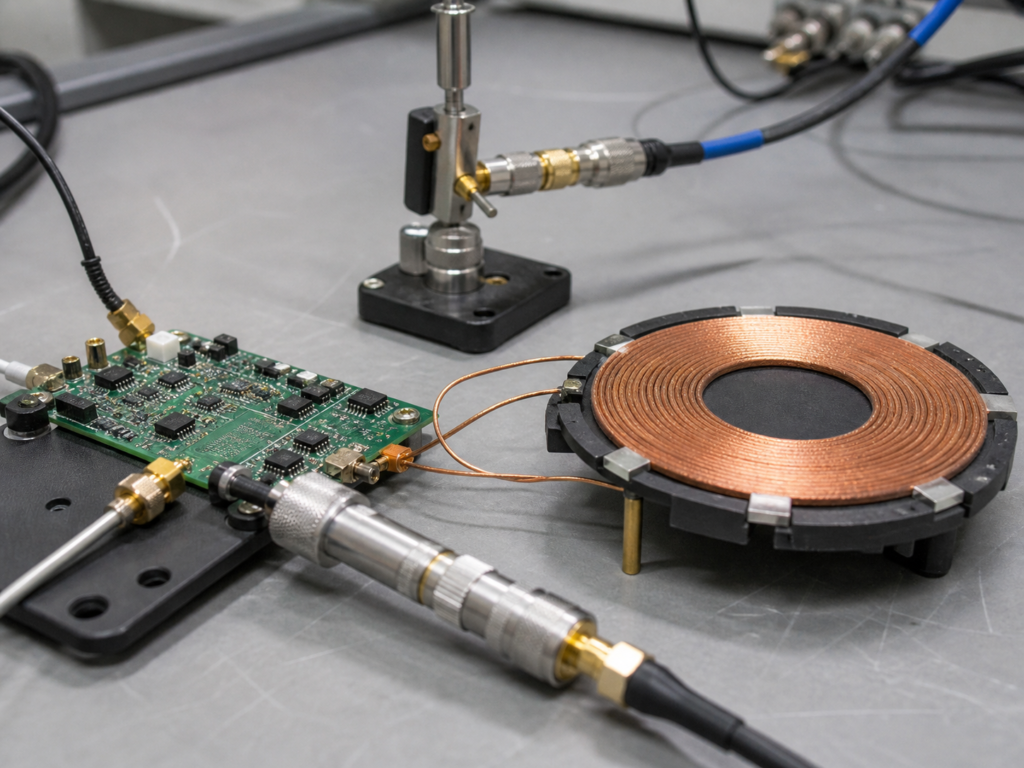
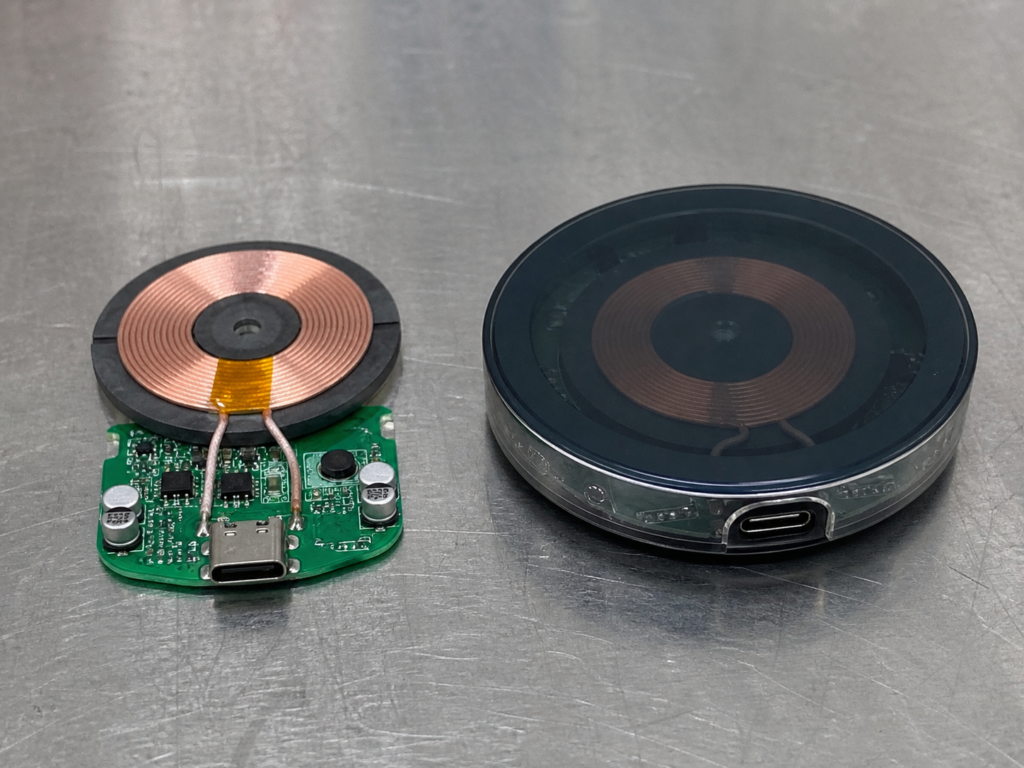
The rules for wireless charging (wireless power transmission) equipment are relatively special, and cannot be simply handled as “apply for SRRC if the exemption power is exceeded”. It is necessary to first correspond to the special regulations on wireless power transmission and judge in combination with micro-power requirements — the special regulations have clear restrictions on the operating frequency, transmission power/equivalent radiation parameters, operating distance, antenna or coupling structure of wireless chargers for different purposes, which need to be checked one by one during verification. There will be three final compliance conclusions: first, fully meeting the exemption requirements, no SRRC required; second, falling within the scope of the Type Approval Catalog, requiring certification application; third, parameters not meeting China’s requirements, which may be directly prohibited from sale. Common such products include desktop/car wireless charger transmitter bases (including magnetic models), power banks with wireless charging transmission function, and wearable device charging bins that support reverse wireless charging.
4. Pitfall Avoidance List for Exemption and Boundary Rules
Misjudgments are most likely to occur with boundary products and exemption rules. The following semi-professional knowledge points will help you avoid common hidden pitfalls.
The exemption for micro-power short-range devices is not unlimited: it must simultaneously meet the conditions of using the specified frequency band, power/field strength not exceeding the limit, compliant bandwidth, and qualified spurious signals. Even if the exemption requirements are met, during use, you cannot arbitrarily change the purpose, increase the transmission power, replace high-gain antennas, let alone interfere with legitimate radio services. Once interference is caused, you are responsible for eliminating it yourself. Common low-power NFC, 2.4G remote control, and compliant low-power wireless chargers in charging products all belong to this type of exemption scenario that requires meeting multiple conditions at the same time.
Also note that the application of SRRC is not once and for all. As long as the product has the following changes, compliance must be re-judged: first, function addition or removal, such as adding a Bluetooth module to a pure wired charger; second, parameter changes, such as transmission power and frequency exceeding the exemption threshold or allowable range; third, software and hardware changes, such as replacing wireless modules/antennas, adjusting gain or antenna installation position, modifying transmission parameters in firmware. There is a common big pit here: **the built-in wireless module having an SRRC certificate does not mean that the whole machine does not need certification** — the module certificate only shows that the module itself is compliant. After being installed in the whole machine, the transmission parameters may change due to the influence of the shell, antenna position, and other circuits, so it cannot directly replace the whole machine type approval.
For overseas merchants, there are several special rules to remember: first, overseas wireless certifications (such as US FCC, EU CE, Japan TELEC, etc.) cannot replace SRRC, and China only recognizes its own radio approval; second, overseas charging accessories to be sold in China in batches must be re-applied or verified in accordance with China’s requirements, and cannot be sold directly in overseas versions; third, the wireless parameters of overseas versions (such as WiFi channels, transmission power) may not meet China’s requirements, and if directly copied, you either cannot get the certificate or will be investigated and punished after listing.
5. Differences Between SRRC and Other Charging Product Certifications
Many people confuse SRRC with other charging product certifications. We will clarify the division of labor of several core mandatory certifications, and by the way list the certification combinations for common products, so you don’t have to figure them out yourself.
The division of labor of the three types of core mandatory certifications is completely different, and they cannot replace each other:
• SRRC (Type Approval): manages wireless transmission compliance, marked with CMIIT ID, all charging products with wireless transmission need to consider it;
• CCC: manages electrical safety and EMC. Whether power adapters and chargers are included in mandatory management shall be subject to the current CCC catalog, product use, rated parameters, and supporting objects; products listed in the catalog need to obtain CCC certification;
• Network Access License (NAL): manages the qualification of equipment to access public communication networks. Charging products with cellular communication require additional verification.
There are also some non-mandatory industry certifications that absolutely cannot replace SRRC: for example, Qi certification only manages the compatibility of wireless chargers, that is, whether wireless chargers and devices of different brands can charge normally, which has nothing to do with radio compliance; USB-IF certification and PD certification only manage the consistency of USB interfaces and fast charging protocols, and also cannot replace mandatory access requirements.
The certification combinations of common charging products can refer to the following table:
| Product Type | Required Mandatory Certifications | Description |
| Pure wired PD charger/ordinary USB-C fast charging head | CCC (when within the catalog) | Only wired charging, no wireless transmission, no SRRC required |
| Bluetooth smart charger/smart power strip with WiFi/USB-C desktop charging station | CCC (when within the catalog) + SRRC | Has wireless transmission function, when there is no exemption, both safety and wireless compliance must be met |
| Outdoor power station/energy storage power station with 4G remote management | CCC (when within the catalog) + SRRC (network access license verified as needed) | With cellular communication function, SRRC must be done first. Whether a network access license is required needs to be judged based on whether it is a telecommunication terminal accessing the public network, the whole machine/module form, and sales configuration |
| Ordinary wireless charging base | CCC (when within the catalog) + (SRRC as needed) | First verify whether SRRC is required according to special wireless charging rules, safety requirements must be met |
| Smart charging cable with Bluetooth | (safety certification as needed) + SRRC | Bluetooth is a function within the type approval catalog. When there is no exemption, SRRC is required, and corresponding safety requirements must be met at the same time |
6. Quick Judgment Method for Overseas Users
If you don’t want to compare the rules one by one, you can first use this simplified 3-step self-check method for quick initial judgment:
1. Check the product function page or manual for keywords related to active transmission such as WiFi, Bluetooth, wireless charger transmission, cellular, positioning, FM transmission. If there are none, directly exclude the mandatory requirement of SRRC;
2. Compare with the four-step judgment logic above to verify the product type, parameter compliance, and whether it meets the exemption conditions;
3. Confirm the sales scenario: batch import or domestic sales must strictly meet compliance requirements, cross-border direct mail for personal use is managed according to personal article rules.
For your quick check, we have compiled an SRRC judgment table for 12 common charging products:
| Product Type | Core Function | Whether SRRC is Required | Judgment Reason | Next Action |
| Ordinary USB charging head | Pure wired charging | No | No active radio transmission function | No action required |
| Wired PD charger | Pure wired fast charging | No | No active radio transmission function | No action required |
| USB-C charging cable with E-Marker | Wired data/charging | No | Wired transmission, no transmission function | No action required |
| Wired multi-port charging station | Pure wired multi-port charging | No | No active radio transmission function | No action required |
| Pure wired USB-C docking station | Wired expansion/charging | No | No active radio transmission function | No action required |
| Wireless charger receiving back clip | One-way reception of wireless power | No | Pure reception, no active transmission | No action required |
| Smart charger with Bluetooth | Wired charging + Bluetooth communication | Yes (when no exemption) | Bluetooth is a wireless communication function within the type approval catalog | Apply for SRRC, verify CMIIT ID |
| Smart charging power strip with WiFi | Wired charging + WiFi networking | Yes (when no exemption) | WiFi is a wireless communication function within the type approval catalog | Apply for SRRC, verify CMIIT ID |
| Outdoor power station with 4G | Energy storage charging + 4G remote management | Yes (when no exemption) | Cellular communication is within the type approval catalog, and network access license also needs to be verified | Apply for SRRC, and simultaneously verify network access license requirements |
| Ordinary desktop wireless charging base | Wireless power transmission | To be verified | Need to check parameters according to special wireless charging regulations | Check the frequency band, power, purpose and other requirements of the special regulations on wireless power transmission, and judge in combination with micro-power rules |
| Charging lamp with 2.4G remote control | Charging + 2.4G remote control | To be verified | Need to verify whether it meets micro-power short-range requirements | Verify the technical parameters of micro-power equipment |
| Car charger with FM transmission | Car charging + FM audio transmission | To be verified | Need to verify whether the frequency band and power meet regulatory requirements | Check relevant FM transmission management regulations |
If you encounter a situation that you are really unsure about, don’t guess blindly, verify through formal channels:
• First, the Ministry of Industry and Information Technology (MIIT) Type Approval Query System, which is mainly used to query the CMIIT ID and corresponding model information of certified products;
• Second, the official release channels of the MIIT and the national radio regulatory authorities, which are used to query the latest policy documents such as the Type Approval Catalog, micro-power equipment regulations, and wireless power transmission rules;
• Third, formal third-party certification bodies, most of which can provide free pre-assessment services, but the pre-assessment conclusion cannot replace the official final judgment.
Special note: do not trust unofficial exemption lists on the Internet, everything shall be subject to the latest official documents.
7. Common Misconceptions and Violation Risk Pitfall Avoidance
Finally, let’s talk about several cognitive misconceptions that overseas merchants are most likely to fall into. Don’t regret it until your goods are detained:
1. “Charging products do not require SRRC” — wrong, those with active transmission functions require verification or even certification;
2. “With overseas FCC/CE certification, you can sell in China” — wrong, China only recognizes its own SRRC or official approval documents, overseas certifications are invalid;
3. “All wireless charger receivers need SRRC” — wrong, pure one-way receivers do not, only two-way transmitters need verification;
4. “With CCC, you don’t need SRRC” — wrong, the two certifications manage different dimensions, and all required ones must be obtained;
5. “If the wireless module has a certificate, the whole machine doesn’t need it” — wrong, the module certificate does not automatically cover the whole machine, and parameters may change after being installed in the whole machine;
6. “All wireless chargers are exempt from SRRC” — wrong, you need to check special regulations, and those that do not meet may require certification or even be prohibited from sale;
7. “Labeled as receiver, so no need” — wrong, the vast majority of Bluetooth/WiFi receivers are two-way transceivers with transmission functions;
8. “If parameters exceed exemption, just apply for SRRC” — wrong, if the frequency band and parameters do not meet China’s requirements, the product may be directly prohibited from sale, and you cannot get the certificate at all.
If you really sell products to China without obtaining SRRC, the consequences are more serious than you think: during the import process, customs may detain goods, return them or even impose fines; during the sales process, regulatory authorities will impose fines and order sales suspension; products on e-commerce platforms will be directly removed from shelves, and even the security deposit will be deducted.
Here are some practical pitfall avoidance principles, writing them down can save you a lot of trouble: first, for charging accessories with active wireless transmission, first assume that verification is required and then verify slowly, don’t think it’s not needed at the beginning; second, be sure to confirm compliance in advance before batch import or sales, don’t take chances; third, don’t arbitrarily replace wireless modules and antennas, and don’t arbitrarily upgrade firmware that will modify transmission parameters; if modified, re-verification is required; fourth, the CMIIT ID on the product nameplate must be completely consistent with the model and parameters on the certificate, and cannot be printed randomly.
In general, mastering the core judgment logic and boundary rules of SRRC can help you quickly judge the wireless compliance requirements of charging and USB-C products, and reduce the risk of misjudgment when selling products in China.