
If you often buy Chinese-made smart fast chargers, charging cables with Bluetooth item-finding functions, or desktop charging stations with WiFi, you may have seen a string of identifiers starting with “CMIIT ID:” on the product body or packaging. Many people think this is an ordinary production batch number, but behind it is China’s mandatory access system for radio transmitting equipment — SRRC Radio Type Approval.
For overseas users, whether you are shopping for Chinese-made charging accessories via cross-border e-commerce, or want to sell your own products to the Chinese market, understanding SRRC can help you avoid many pitfalls: for example, why do some low-cost Bluetooth fast chargers interfere with Bluetooth headsets? Such common wireless interference problems are actually related to SRRC’s regulatory requirements.
What Exactly is SRRC: The Market Entry Pass for Radio Signal Regulation
Many people know that SRRC is a certification, but cannot clearly explain what it is. In fact, SRRC was originally the English abbreviation of the “State Radio Regulatory Commission”. The SRRC that people often refer to now has the official name of **China Radio Transmitting Equipment Type Approval**, which is issued by the radio management authority of the Ministry of Industry and Information Technology (MIIT). It is a mandatory entry permit for radio transmitting equipment to be publicly sold in the Chinese market.
Unlike what many people think — that “every product unit needs to be tested” — SRRC is issued by “product model”: products of the same model with exactly the same software and hardware configurations share one approval certificate, and there is no need to test each unit individually. For charging products, this certification only covers products **with active radio transmitting functions** — ordinary wired fast chargers and ordinary charging cables are not within its regulatory scope at all.
Why SRRC Exists: The Core Purpose is to Prevent Signal Interference
SRRC has only one core purpose: to prevent mutual interference of radio signals.
The mobile phones, WiFi, Bluetooth headsets, and even civil aviation communications around us all rely on radio signals of different frequency bands to work. If a radio device has frequency hopping, excessive transmission power, or leaks a lot of useless spurious signals, it may interfere with other surrounding devices: for example, a non-compliant Bluetooth fast charger may cause your connected Bluetooth headset to cut in and out, slow down the nearby 2.4G WiFi speed, and in severe cases, even affect critical signals such as public communications and civil aviation navigation. Therefore, China clearly stipulates that all radio transmitting equipment publicly sold in the Chinese market must pass SRRC approval before being put on the market for circulation.
Compliance Mark: CMIIT ID is the “ID Card” of SRRC
Products that have passed SRRC approval will have a unique identity code — CMIIT ID, usually in the format of “CMIIT ID: alphanumeric combination of 8 characters or more”.
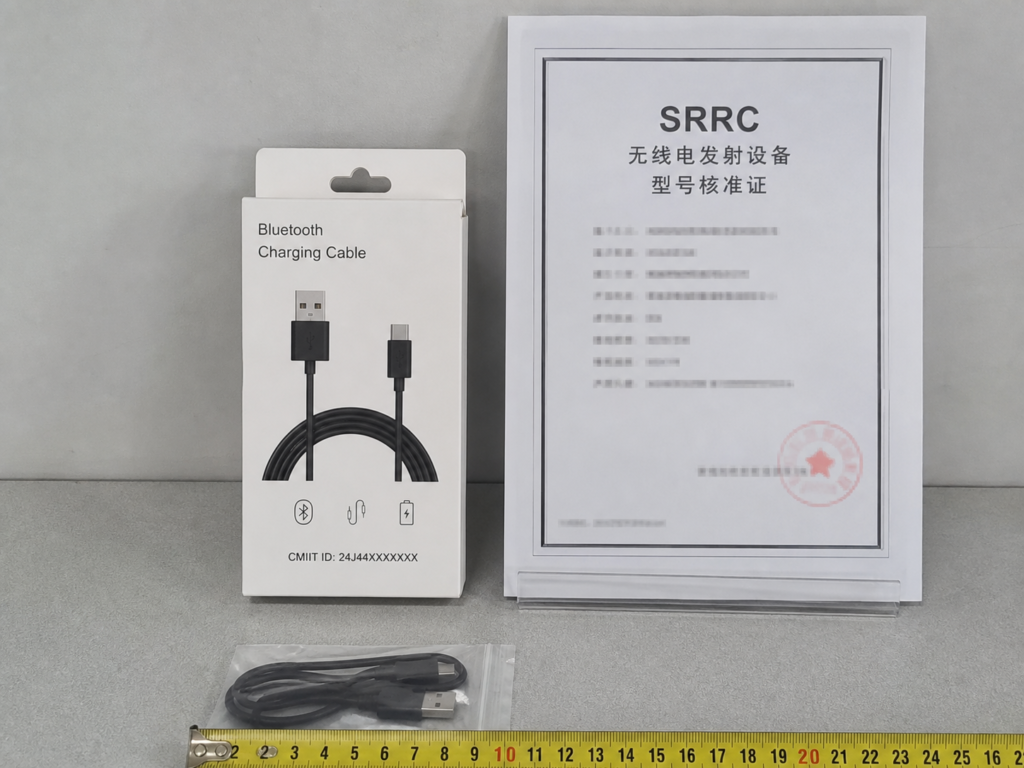
This number is usually printed on the nameplate of the product body, the bottom sticker, or in the instruction manual and outer packaging, such as the bottom of a smart power strip, or the back of the packaging of a Bluetooth charging cable; you can find it if you look carefully. The first four digits of the number represent the approval year: for example, those starting with 2024 were approved in 2024, and the following characters correspond to the device type and approval sequence number. It should be noted that CMIIT ID is an exclusive mark of SRRC, which is completely different from the common 3C (CCC) certification number and telecommunications network access license number, and they cannot replace each other.
Do Charging Products Need SRRC: Quick Judgment in 3 Steps
At this point, you may ask: does the charging product I have need SRRC? In fact, you don’t need to memorize it by rote; you can make a quick judgment in just 3 steps:
Step 1: Check if it has **active radio transmitting function**. Special attention should be paid here: wireless chargers that only use Qi for energy transmission and have no communication/networking functions are usually not regulated by SRRC, and the final determination is subject to the official catalog; only products that actively transmit radio signals for communication, networking, or remote control require approval.
Step 2: Check if it is **publicly sold/circulated in the Chinese market**. If it is a small number of products purchased for personal use, there is no need to specifically look for SRRC; but if it is purchased in bulk for sale, it must have SRRC approval.
Step 3: If you are unsure, check the official . All types of equipment that require approval are clearly listed in the catalog, and it is safest to follow official regulations.
Typical Product Classification
For charging products, we can directly distinguish them by function:
• **Products that require SRRC**: All have active transmitting functions, such as smart fast chargers, desktop charging stations, and smart power strips with Bluetooth or WiFi; charging cables and network configuration adapters with NFC or Bluetooth item-finding functions; outdoor power supplies and IoT power devices with 4G/5G cellular communication; and charging accessories with Zigbee or 2.4G RF remote control.
• **Products that do not require SRRC**: Ordinary wired chargers, PD fast chargers, power adapters and other products that have no wireless transmitting function at all; ordinary charging cables, adapters, wired charging docks and other passive accessories; and accessories that only have radio receiving function and no active transmitting capability.
Easily Confused Boundary Cases
There are several common boundary issues, which are clarified here at once to avoid pitfalls:
First, pure Qi wireless chargers (no communication, networking or data transmission functions, only used for energy transmission) are usually not within the regulatory scope, and the final determination is subject to the official catalog. Be careful not to confuse “wireless for energy transmission” with “wireless for communication”.
Second, having SRRC for a wireless module does not mean the whole device is compliant. For example, if you buy a Bluetooth module with SRRC and install it in a fast charger you designed, changing the antenna, modifying the casing, or adjusting the firmware power will change the actual RF parameters. Therefore, the whole device still needs to be approved separately, and the module’s certificate cannot be used directly.
Third, products of the same series with different wireless configurations cannot share an approval certificate. For example, for a desktop charging station of the same series, the basic model only has wired charging, the Pro model has Bluetooth, and even the Bluetooth version and WiFi version in the same series cannot share one certificate, because the wireless configuration has changed, so the parameters are different.
Fourth, there are two exemption scenarios: prototypes for R&D use, and products in reasonable quantities for personal use by inbound passengers do not need SRRC. But if they are used for public sale, the exemption does not apply.
What Does SRRC Regulate: Core Requirements and Basic Rules
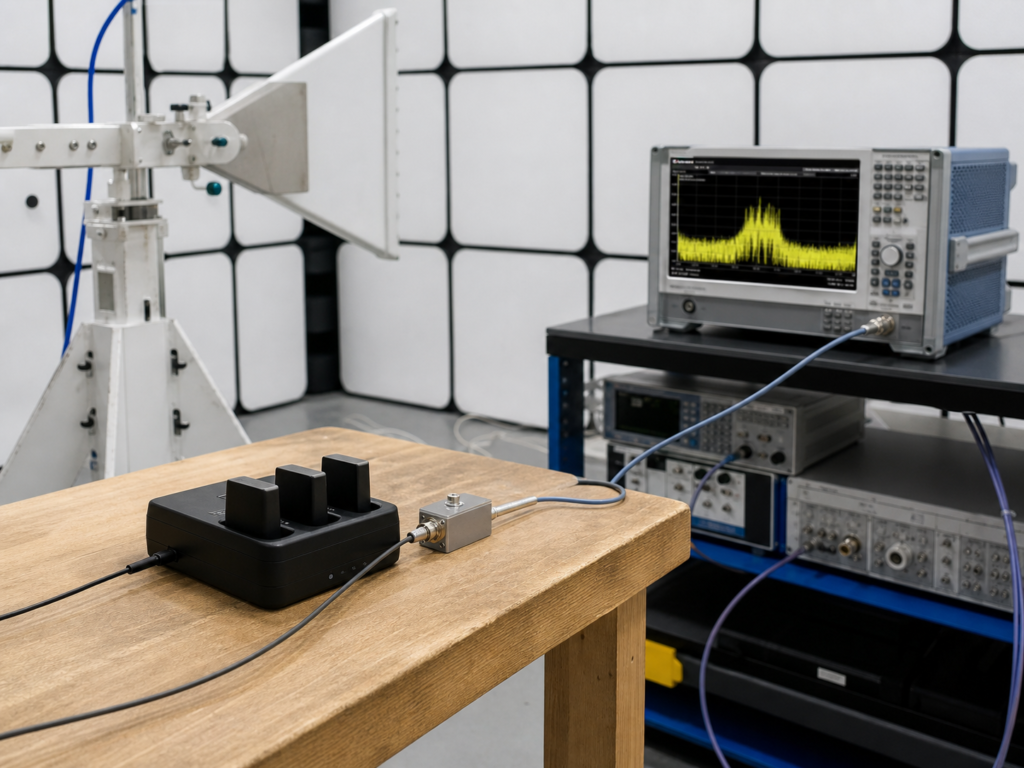
You may be curious: what exactly does SRRC test? In fact, there are only 3 core indicators. Ordinary users do not need to memorize the parameters; as long as they know there is a valid approval certificate, it means the product meets the standards.
3 Core Regulatory Indicators
The first is **operating frequency**: the radio signal of the product must fall within the public frequency bands allowed by China. For example, the available channels of 5GHz WiFi in China are not exactly the same as those in the European Union and the United States. Using overseas version products directly may cross the line of non-compliance.
The second is **transmission power**: it must not exceed the upper limit stipulated by China. The higher the power, the larger the range of signal interference, so the upper limit must be strictly controlled to avoid affecting more devices.
The third is **spurious emission**: in addition to the target operating frequency band, the product must not leak too much useless spurious signals. Although these spurious signals are weak, they can accumulate and interfere with the normal operation of other devices.
Approval Process and Basic Rules
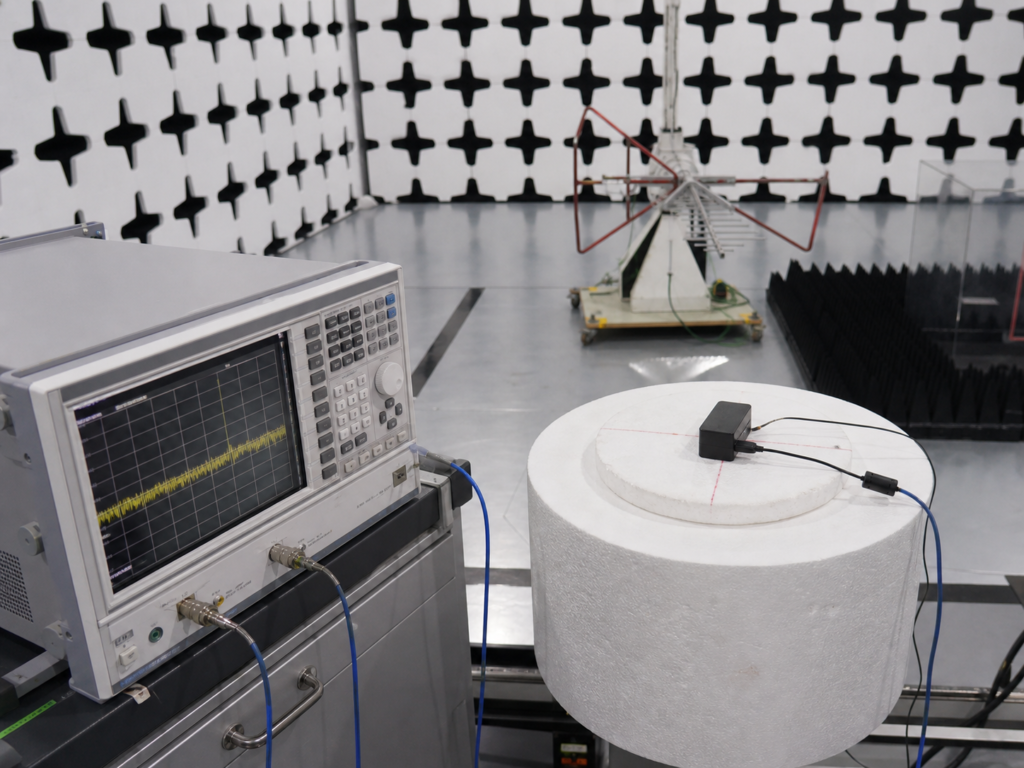
You don’t need to go into too much detail about the SRRC approval process; just know the four general steps: first, confirm that the product is within the scope of the approval catalog; then send the samples to a qualified laboratory for RF parameter testing; after passing the test, submit a full set of technical documents to the competent authority for review; after passing the review, an approval certificate will be issued and an exclusive CMIIT ID will be assigned. There is no unified standard for the approval cycle and cost, which depends on the complexity of the product: for example, the process for a simple Bluetooth fast charger will be faster, while an outdoor power supply with 5G cellular has more test items, so the cycle and cost will be higher.
Regarding the basic rules of SRRC, just remember three key points:
First, the validity period of the approval certificate is 5 years. You can apply for renewal before it expires, without going through the full process again.
Second, the applicant for SRRC must be an enterprise within the territory of China. If overseas brands want to sell their products to China, they must entrust a domestic agency company to apply, and cannot submit directly in the name of an overseas company.
Third, the approval certificate is bound to the software and hardware configuration of a specific model. As long as the wireless-related hardware or firmware changes, the original certificate can no longer be used.
Common Scenarios of Approval Invalidation
There are several situations that will cause the originally valid SRRC approval to become invalid, which you should pay attention to when buying or making products:
First, if core wireless components such as wireless modules, chips, or antennas are replaced, and the parameters change, the original approval will naturally become invalid;
Second, if the validity period expires and no renewal application is made, the certificate will be expired;
Third, if the actual model and function of the product are different from those at the time of approval, for example, the approval was for Bluetooth function, but WiFi is actually added, this also counts as invalidation;
Fourth, illegal firmware upgrades, such as privately enabling frequency bands that were not originally approved, or increasing the transmission power, will cause the approval to become invalid even if the hardware is not changed, as long as the firmware is modified.
Don’t Confuse: Differences Between SRRC and Other Certifications
Many people confuse SRRC with certifications such as 3C, FCC, and network access license. In fact, they regulate completely different things, which can be clearly explained with a table:
| Certification Type | Core Regulatory Direction | Typical Applicable Charging Products | Relationship with SRRC |
| 3C (CCC) Certification | Electrical safety, electromagnetic compatibility (anti-interference, etc.) | Power adapters, chargers, etc. listed in the CCC mandatory product certification catalog; ordinary charging cables, passive adapters, etc. are usually not included in the scope of CCC whole-machine certification, subject to the current catalog and product attributes | Mutually non-replaceable, no overlapping regulatory scope |
| Overseas Radio Certification (FCC ID/CE-RED) | Radio signal compliance of the corresponding country/region | Charging products with wireless functions sold only overseas | Cannot replace SRRC; China has independent frequency band and power requirements |
| Telecommunications Equipment Network Access License | Public network (cellular network) access qualification | Outdoor power supplies with 4G/5G cellular communication, etc. | Different regulatory directions; some products need to obtain both |
In short, the qualification requirements for charging products sold in the Chinese market need to be judged in combination with product attributes: if the product falls within the scope of the CCC catalog, it must first obtain CCC certification; if it also has active radio transmitting function, it also needs SRRC approval; if it has 4G/5G cellular public network access function, it may also need a telecommunications equipment network access license. The three types of qualifications perform their own duties and cannot replace each other.
How to Check the Authenticity of SRRC: Official Channels and Verification Methods
Since SRRC is mandatory, how to judge whether the CMIIT ID on the product is real or fake? In fact, there are official inquiry channels, and ordinary people can easily verify it.
The Only Official Inquiry Channel
The only official inquiry channel for SRRC is the official inquiry system of the MIIT Radio Business Acceptance Center. Just enter the complete model of the product or the CMIIT ID number, and you can find the corresponding approval information. Overseas users can try to access this system directly; whether it can be opened depends on the local network environment, and it can be accessed normally in most regions.
How to Judge Whether the Inquiry Result is Valid
After finding the information, you can judge whether it is valid by checking three core points:
First, **the model completely matches**. You can’t just check if the brand matches; the specific model must be exactly the same. For example, if model A of the same brand has a certificate, it does not mean that model B also has one.
Second, **the status is “valid”**. If the status is expired, cancelled, or revoked, it is useless even if there is a number.
Third, **the functions are consistent**. The wireless functions stated on the approval certificate must be consistent with the actual functions of the product. For example, if the certificate only approves Bluetooth, but the actual product also has WiFi, it is non-compliant.
If you can’t find the information, it may not all be fraud: it may be that the number is entered incorrectly (for example, the number 0 is written as the letter O), or it may be that the information of a newly approved product has not been entered into the system (usually a 1-2 month entry period is required). You can first check the number and wait for a period of time before checking again.
Common SRRC Fraud Forms for Charging Products
There are four common types of SRRC fraud for charging products:
The first is **using someone else’s number**: pasting the approval number of model A onto model B. For example, using the certificate of a cheap Bluetooth power strip and pasting it on an expensive charging station with WiFi. The number can be found, but the model does not match.
The second is **forging a number**: making up a string of non-existent identifiers and printing them randomly on the packaging, which cannot be found upon checking.
The third is **reusing an expired certificate**: printing an already expired approval certificate on new products, pretending it is still valid. It can be found, but the status is expired.
The fourth is **function mismatch**: the certificate only approves Bluetooth function, but the actual product also has other wireless functions such as 2.4G remote control and WiFi, which exceeds the approval scope.
Must-Read for Overseas Users: SRRC Rules for Different Scenarios
For overseas users, SRRC rules are different in different scenarios. We will clarify four common situations:
First, **carrying/mailing charging products into China**. If it is a reasonable quantity for personal use, SRRC is usually not required as in the public sales scenario, but it still needs to comply with the latest customs requirements on reasonable quantity for personal use, declaration, taxes and fees, and lithium battery transportation; if it is mailed in bulk for sale, it must have SRRC, otherwise it may be detained by customs. The specific standard for personal use quantity is subject to the latest regulations of China Customs, and you don’t need to blindly believe old statements online.
Second, **purchasing/using charging products within China**. Currently, on mainstream e-commerce platforms in China, charging products with wireless functions must have SRRC to be listed. Compliant products meet China’s frequency, power and spurious emission limits under the approved configuration, which can reduce the risk of abnormal interference to devices such as Bluetooth and WiFi; actual connection stability is also affected by many factors such as routers, distance, obstruction and product design. If you buy non-compliant products, the probability of problems such as wireless charger disconnection, Bluetooth pairing failure, and nearby WiFi slowdown will be higher.
Third, **shopping for Chinese-made charging products via cross-border e-commerce from overseas**. If you only use the products overseas after purchase, you don’t need to consider SRRC at all, as long as they meet the local certification requirements of your country/region; if you want to bring them back to China for use later, there will be no problem as long as it is a reasonable quantity for personal use.
Fourth, **overseas sellers selling products to the Chinese market**. If your product has active radio transmitting function, you must obtain SRRC first before it can be publicly sold in China; note that the 5GHz channel and transmission power of overseas version products may not meet China’s requirements, so you need to adjust the configuration first; since the applicant must be an enterprise within the territory of China, you need to entrust a domestic agency company to apply; if you sell in violation of regulations, you may face penalties such as product removal, fines, and confiscation of goods.
Common Misconceptions and Pitfall Avoidance List
Finally, we have sorted out the most common SRRC misconceptions and practical pitfall avoidance methods, which can be used whether you are buying or selling products.
6 High-Frequency Cognitive Misconceptions (Must Avoid for Beginners)
1. **All chargers need SRRC**: Wrong. Only those with active radio transmitting functions are required; ordinary wired chargers and ordinary charging cables do not need it at all.
2. **SRRC regulates charging safety**: Wrong. SRRC only regulates the compliance of radio signals. The electrical safety of charging depends on CCC certification, and the two have completely different regulatory directions.
3. **With overseas FCC/CE certification, SRRC is not needed**: Wrong. China has independent frequency band and power limit requirements, which are not mutually recognized with overseas certifications, so SRRC must be applied for separately.
4. **Wireless charging receivers also need SRRC**: Wrong. Only transmitters with communication functions require approval; products with only receiving functions such as wireless charging receiver cases and receiver modules do not need SRRC.
5. **If the module has SRRC, the whole device doesn’t need to be taken care of**: Wrong. Changes in usage conditions after the module is installed in the whole device will affect RF parameters, and the whole device needs to confirm compliance separately. For details, please refer to the previous boundary case description.
6. **Wireless chargers must need SRRC**: Wrong. Pure energy-transmitting Qi wireless chargers usually do not need it; only wireless chargers with communication and networking functions need to be checked.
Product Selection Pitfall Avoidance and Quick Identification
If you are buying charging products, remember three pitfall avoidance tips:
First, prioritize products from legitimate brands with clear CMIIT ID markings. The probability of fraud is much higher for low-cost smart fast chargers and wireless chargers from unknown brands.
Second, before buying, you can check in the official inquiry system to see if the number matches the model and if the functions are consistent.
Third, quick identification of suspicious SRRC only takes three steps: check the mark (whether there is a clear CMIIT ID on the body/packaging/instruction manual), check the match (whether the model and function corresponding to the number are completely consistent with the product), and verify the status (whether the approval status is “valid”).
Summary
In general, after understanding SRRC, you can at least independently judge three things: first, you can quickly distinguish whether a charging product needs SRRC, and clarify boundary cases such as pure wireless chargers and wired chargers; second, you can check the authenticity of SRRC through official channels and identify common fraud methods; third, you can distinguish the differences between SRRC and CCC, overseas certifications, and network access licenses, and will not be fooled by merchants’ promotions. Whether you are shopping for charging accessories for personal use via cross-border e-commerce, or planning to sell products to the Chinese market, grasping the core logic of “only active transmission requires approval, public sales require qualification checks, and the authenticity of identifiers is verified officially” can help you avoid the vast majority of SRRC-related problems.