
If you are an overseas brand producing chargers, power adapters, or charging cables, looking to sell products in the Chinese market or partner with Chinese contract manufacturers, you have certainly heard of CCC certification — but many people’s understanding of it only goes as far as “it’s done once the sample passes testing”. In fact, for chargers, power adapters, and other products included in the China Compulsory Certification (CCC) Catalog, the core threshold for obtaining and maintaining a valid CCC certificate is factory inspection. Many overseas brands suffer heavy losses because they do not understand the rules of factory inspection: either their certificate is stuck and cannot be issued, or it is revoked after issuance, leaving goods stranded at customs and unsellable.
This article will thoroughly explain the CCC factory inspection requirements for charging products, from basic knowledge to practical risk avoidance. You don’t need to memorize regulations; you can apply what you learn right after reading.
1. First, Understand: What Exactly is CCC Factory Inspection?
Plain-Language Definition and Core Function
The full name of CCC is China Compulsory Certification, which is a mandatory market access requirement for charging products included in the CCC Catalog to enter the Chinese market. CCC factory inspection refers to on-site verification conducted by personnel dispatched by the certification body to the production site, to confirm that the factory has the capacity to mass-produce qualified charging products that are completely consistent with the submitted test samples.
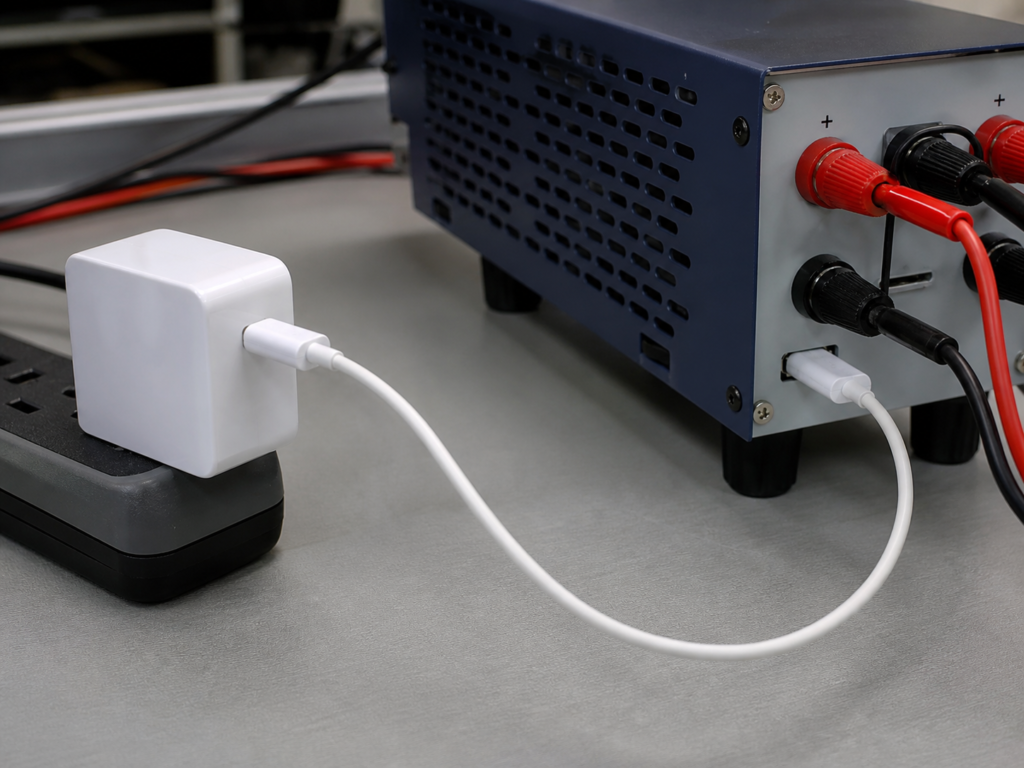
Its core function is very straightforward: to prevent the practice of “using high-quality materials for test samples while cutting corners on mass-produced goods”. For example, a submitted charger may be equipped with standard safety capacitors (also known as X/Y capacitors, key safety components that prevent electric shock and voltage surges), but these are secretly omitted in mass production; a submitted charging cable may use 20AWG thick copper wire, while mass-produced units use thinner 24AWG copper wire — these are all issues that factory inspection focuses on cracking down on.
Many people confuse it with other similar concepts, so let’s clarify them all at once:
• Type test: Only tests whether a single submitted sample is qualified, and does not consider mass production capacity;
• ISO9001 system audit: A general quality management system certification applicable to all industries, which does not focus on the safety of specific products;
• CCC factory inspection: Focuses exclusively on the charging products you manufacture, with the core of checking “mass production safety consistency”, rather than general management requirements.
Why Overseas Users Must Understand It
For overseas brands, this is not “the factory’s own business”, but directly relates to your vital interests:
First, it is a precondition for the validity and ongoing effectiveness of the CCC certificate; if you fail the inspection, you cannot legally sell products in China;
Second, it is the core basis for judging the compliance of Chinese charging product suppliers and the stability of the supply chain — factories that can consistently pass CCC factory inspections have a much lower probability of cutting corners;
Third, if an overseas brand acts as the certificate holder (certification subject), it shall bear direct responsibility for product compliance and inspection results, and the certificate status is directly linked to the brand’s market access qualification.
Clarification of Common Entry-Level Misconceptions
Let’s first clarify the most common cognitive pitfalls to avoid getting more off track later:
1. **No more inspections are needed once you have a CCC certificate?** Wrong. There is ongoing supervision after certification. If products fail market random inspections or receive safety complaints (such as charger electric leakage, charging cable overheating and fire), inspections will be tightened, and even unannounced inspections may be conducted.
2. **If the contract manufacturer has a CCC certificate, my brand’s products can use it?** Wrong. The CCC certificate clearly lists the certificate holder, manufacturer, production factory, trademark, and model, and only covers the listed content. The contract manufacturer’s certificate will not automatically cover your brand and model.
3. **Do all charging products require factory inspection?** Wrong. Only products subject to mandatory certification in the CCC Catalog require it. For example, purely passive charging cables do not need separate inspection, and the judgment rules will be explained in detail later.
4. **Only the quality department is inspected?** Wrong. The inspection covers the entire process of procurement, production, quality inspection, and warehousing, not just a casual chat with the quality department.
2. Who Sets the Rules? What Are the Responsibilities of Each Party?
Core Regulations and Standard Basis (Applicable to Charging Products)
CCC factory inspection is not conducted arbitrarily; all requirements have clear regulatory basis. For charging products, the main references are the following categories:
• Top-level rules: The mandatory product certification implementation rules issued by the Certification and Accreditation Administration of the People’s Republic of China (abbreviated as CNCA), which are the general rules of the entire CCC system;
• Implementation details: The corresponding product certification implementation details formulated by each certification body based on the top-level rules, which specify the specific inspection process and requirements;
• Product safety standards: The applicable standards for chargers, power adapters and other products shall be determined in combination with the CCC Catalog, corresponding implementation rules, certification body implementation details, and product categories. The common applicable standard is GB 4943.1-2022 ;
• Marking rules: , which govern how the CCC mark is affixed and used;
• Verification benchmark: The core reference for all inspections is your original type test report and certification certificate. All requirements are essentially “consistent with the content you have reported”.
Roles and Responsibilities of Each Participating Party
Many people are unclear about the relationships between parties in the CCC system, but the division of labor is actually very clear:
• Certification and Accreditation Administration (CNCA): Determines which products require CCC, sets the overall rules, and supervises whether certification bodies issue certificates improperly;
• Certification body: Responsible for issuing CCC certificates, organizing factory inspections, judging inspection results, and deciding whether the certificate is valid, suspended, or revoked;
• Testing laboratory: Only responsible for testing submitted samples, issuing type test reports, and proving whether a single sample is qualified;
• Certificate holder (e.g., overseas brand party): Bears overall responsibility for product compliance. If problems are found during inspection, the certificate belongs to you, and the losses are also yours;
• Production factory: Cooperates with inspections, ensures that produced products are consistent with the reported content, and that quality control meets CCC requirements.
3. Which Charging Products Require Factory Inspection?
This is the boundary issue that everyone is most concerned about, especially the determination of charging cables, which many people find confusing.
Core Scope of Mandatory Inspection
The core objects of CCC factory inspection are active charging products in the CCC Catalog that are directly connected to the mains power supply, such as wall-plug chargers and power adapters. The specific scope is dynamically adjusted in line with the CCC Certification Catalog and corresponding product categories.
For charging cables, which everyone is most uncertain about, the determination is divided into three scenarios:
1. **Purely passive USB/USB-C cables**: Ordinary cables that only have copper wires and insulation layers, with no power conversion or electronic control functions, are not separately included in the CCC Catalog and do not require separate factory inspection;
2. **Charging cables sold as accessories with chargers/adapters**: As accessories/key materials of the complete machine, they will be included in the consistency inspection scope of the complete machine — that is to say, the cables you give away when selling chargers must also be consistent with the reported content;
3. **Active cables with power conversion, electronic control, or extended functions**: For example, special cables with boost or trigger functions. Whether they are included in the CCC scope depends not only on whether they have electronic control, but also on whether their final product form falls under the current CCC Catalog and corresponding certification rules. If you are unsure, you can directly confirm with the certification body.
The boundary for not requiring CCC factory inspection is also very clear: charging products that are only for export and not sold within China, as well as purely passive data transmission cables that are not managed as independent CCC Catalog products, do not require separate CCC factory inspection. The core principle for judgment is: whether the product involves mains power conversion, and whether there are safety risks of electric shock or overheating. If uncertain, you can confirm with the certification body.
Certification Unit Rules
CCC certificates are not issued one per model; instead, they are divided by “certification units”: one certificate corresponds to a group of products with exactly the same core safety design. Products in the same unit can be inspected together, without going through the process separately for each model.
• Examples of same unit: 5W-20W ordinary chargers with the same structure, matching USB-C to C charging cables with the same wire gauge;
• Examples of different units: 20W ordinary charger and 65W GaN fast charger (large differences in structure and power, different safety designs), matching charging cables with different core cross-sectional areas (different current-carrying capacities, different safety risks).
Inspection Objects and Multi-Scenario Boundaries
The object of CCC factory inspection is the **production factory** listed on the certificate, not the brand’s office, nor a trading company.
• If the same product is produced by multiple factories, each production factory needs to undergo the corresponding inspection;
• In OEM/ODM scenarios, the inspection object is still the production factory listed on the certificate; if using the contract manufacturer’s certification qualification, you must confirm that your brand and purchased models are all within the listed scope of the contract manufacturer’s certificate, otherwise the compliance responsibility cannot be covered by the certificate.
4. What Types of Factory Inspections Are There? When Will They Occur?
CCC factory inspection is not only conducted once before certification, but is divided into four types, corresponding to different trigger scenarios:
1. Initial Factory Inspection (Mandatory Before Certification)
This is a precondition for obtaining the certificate, and its core function is to confirm that the factory truly has the capacity to mass-produce qualified certified products, rather than “finding a sample to make up the number”.
• Trigger timing: Usually after the new product passes the type test and before the official certificate is issued;
• Applicable scenarios: A new factory applies for charging product CCC for the first time, an existing factory adds a new charging product category or new certification unit;
• Inspection scope: Covers the entire production process and quality control system of all charging products applying for certification.
2. Post-Certification Supervision Inspection (Ongoing Supervision After Certification)
Obtaining the certificate is not a once-and-for-all matter. The purpose of supervision inspection is to ensure that certified products continue to meet safety requirements and prevent corner-cutting in mass production.
• Common methods: Not only annual on-site inspections, but a combination of on-site inspections, document reviews, sampling tests, and flight inspections;
• Frequency rules: Charging products are usually classified as medium-risk categories, and supervision inspections are commonly carried out regularly, arranged annually in many scenarios. However, the specific frequency and method are jointly determined by the corresponding implementation rules, certification body implementation details, enterprise classification management, and risk situation;
• Tightening trigger conditions: If products fail market random inspections, receive safety complaints, or are reported for fraud, the inspection frequency and strictness will be increased;
• Inspection focus: Production consistency, recent quality records, and rectification of previous non-conformities.
3. Supplementary Inspection for Changes/Expansion (When Products/Factories Change)
If there are changes to the product or factory, a full process re-audit is not required; only a supplementary inspection is needed to verify the changed parts.
• Trigger scenarios: Factory relocation, replacement of core production processes, addition of new certified models/units, changes to key safety designs;
• Common changes for charging products: Replacement of core components, adjustment of safety structure, modification of power parameters, etc.;
• Inspection feature: Only the changed parts are verified, and the change takes formal effect only after passing the inspection.
4. Flight Inspection (Unannounced Supervision Inspection)
This is a special post-certification supervision method, consisting of unannounced on-site surprise inspections.
• Trigger scenarios: Being reported for fraud, serious non-conformity of charging products found in market random inspections, major safety-related public opinion incidents;
• Consequences: If problems are found during inspection, the certification body may take disposal measures such as rectification verification, sampling testing, certificate suspension, or certificate revocation according to the nature of the problem; if there are serious safety hazards, it may directly trigger certificate suspension or revocation, which shall be subject to the certification body’s judgment.
5. What Are the Core Contents of Charging Product Factory Inspection?
The core content of on-site inspection revolves around the “safety consistency between mass-produced products and submitted test samples”, mainly covering the following modules:
1. Responsibilities and Resource Allocation
First of all, there must be corresponding personnel and equipment; it cannot be a small workshop.
• Post requirements: There must be a clear quality responsible person, as well as defined responsibilities and authorities for safety-critical posts such as high-voltage testing and finished product inspection;
• Personnel requirements: Employees in key positions must be trained, able to operate equipment correctly, and able to judge whether products are qualified; you cannot just find someone to press the switch;
• Production/testing resources: There must be production sites, testing equipment, and warehousing conditions matching the charging products. For example, you cannot manufacture 65W fast chargers without even a suitable load tester.
2. Document and Record Control
All control requirements must have written basis, and records must be authentic and verifiable, not just verbal claims.
• Required documents: Certification certificates, type test reports, key component lists, production process documents, and inspection specifications — these are the “rules” for the entire production;
• Record requirements: Records of procurement, production, inspection, changes, and non-conforming product handling must all be authentic and verifiable, and cannot be fabricated after the fact.
3. Procurement and Key Component Control (High-Frequency Non-Conformity Items)
This is the area where factories are most prone to problems, and also the hardest hit area for corner-cutting.
Key safety components for charging products are mainly divided into two categories:
• Chargers/adapters: Transformers, optocouplers, safety capacitors, fuses, USB-C connectors, housing flame-retardant materials;
• Matching charging cables: Core material/cross-sectional area, insulation layer material, USB connector terminals.
The control requirements are also very clear: these key components must be completely consistent with the model, specification, and supplier reported for certification. If you want to replace them, you must go through the formal change process, and cannot replace them secretly. When purchasing goods, you must verify the qualification certificates, conduct random inspections as required, and reject unqualified ones. In addition, key components should preferably be models that have obtained CCC or CQC certification, which have more guaranteed safety performance and are easier to pass inspection.
4. Production Process Control
Production must be carried out in accordance with the reported process, and cannot be changed arbitrarily.
Key processes for charging products, such as soldering, injection molding, aging, and assembly, must be implemented in accordance with the reported process documents. Common verification points include: whether the aging test of chargers is actually conducted, whether the extrusion thickness of the insulation layer of charging cables meets the specifications, and whether the process parameters are consistent with the reported ones. Key test stations on the production line, such as high-voltage testing for chargers and continuity testing for charging cables, must operate in accordance with specifications with complete records.
5. Routine Inspection and Verification Inspection (Core of Finished Product Safety)
These two concepts are easy to confuse, and the core difference lies in the purpose and implementation method of the inspection:
• **Routine inspection**: It is a batch-by-batch or unit-by-unit inspection of products before leaving the factory. Specific requirements are implemented in accordance with certification rules and the inspection specifications reported by the factory. Common verification items for charging products include withstand voltage (also called electric strength, which tests whether insulation is sufficient and whether there is a risk of electric shock), insulation resistance, output parameters, appearance, etc.;
• **Verification inspection**: It is a sampling inspection conducted regularly, covering more comprehensive core safety items, used to verify the long-term stability of product quality.
The specific items, sample size, and frequency of the two types of inspection must meet the requirements of the corresponding product implementation details, safety standards, and certification body. All records must be authentic and verifiable, and cannot be fabricated or filled in after the fact.
6. Testing Equipment Management
The testing equipment itself must be accurate, otherwise the testing is useless.
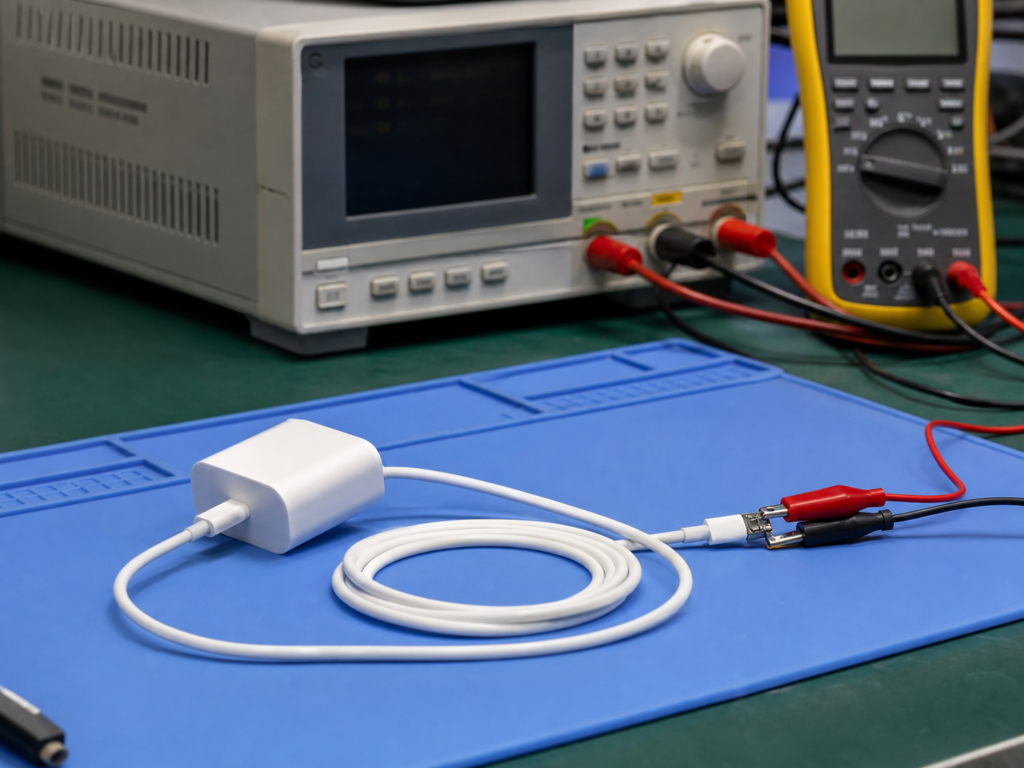
Special testing equipment for charging products, such as withstand voltage testers, load testers, and continuity testers, must be within the calibration validity period, and their ranges must match the products. There must also be daily inspection records to confirm that the equipment is normal before starting work every day, to prevent unqualified products from being mistaken for qualified ones due to equipment inaccuracy.
7. Product Consistency Control (The Most Core Requirement)
The essence of the entire CCC factory inspection is to check the safety consistency between mass-produced products, type test samples, and reported materials, which is the most core requirement.
The key verification points for charging products include:
• Structure and parameters: Input and output power, safety-related fast charging protocols (such as overvoltage/overcurrent protection trigger logic), high-low voltage isolation distance (professionally called creepage distance/clearance, which poses electric shock risk if insufficient), insulation thickness, core specification;
• Key components: Completely consistent with the reported list, cannot change brand or model;
• Marking information: The model, manufacturer, and parameters on the product nameplate, packaging, and manual must be consistent with the certification documents;
• Software/protocols: Only safety-related parts are inspected; non-safety functions (such as power display, colorful light effects) are not mandatory requirements.
8. Change Control
Changes to safety-related designs, processes, and key components must be applied to the certification body in advance, and mass production can only start after approval; you cannot act first and report later. There is a special quick judgment table later for which changes need to be reported.
9. CCC Mark Management
The CCC mark cannot be affixed arbitrarily; it must comply with the provisions of the , the certificate, and the implementation rules.
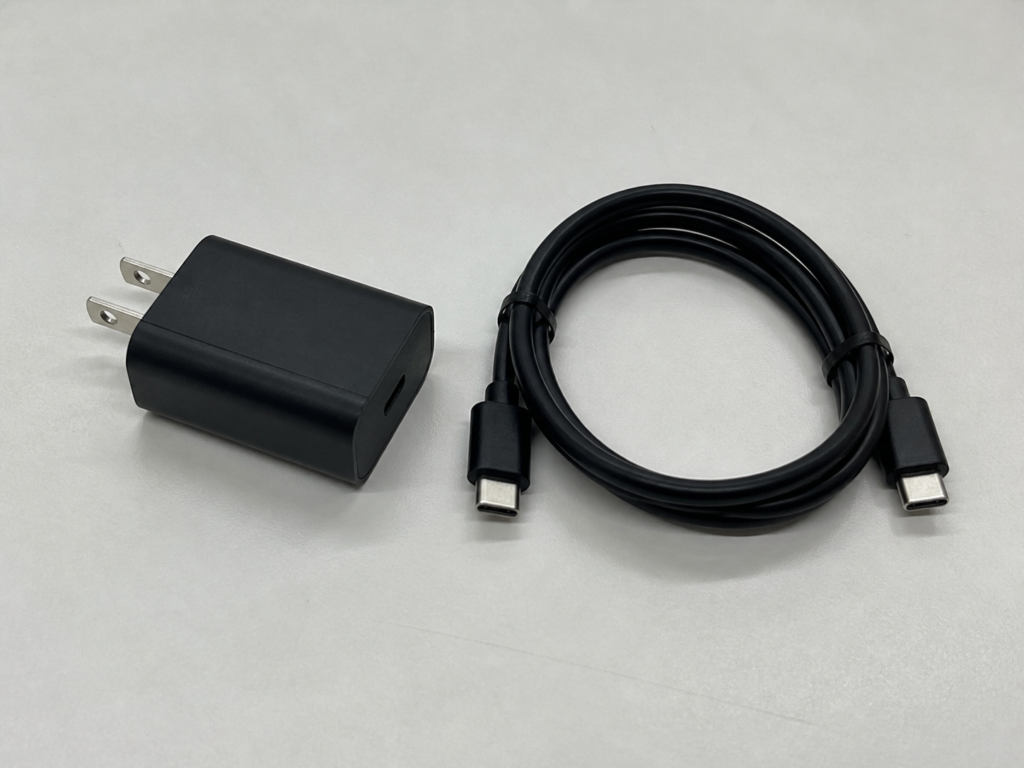
Key verification points include: the use method (printing/molding, etc.), specification ratio, and position of the mark meet the requirements, and it can only be used on valid products covered by the certificate. It is strictly prohibited to use the mark beyond the certificate scope, continue to use it after the certificate is suspended/revoked, or forge or alter the CCC mark.
10. Non-Conforming Products and Corrective & Preventive Measures
Defective products cannot be released casually; when problems occur, they must be corrected and not repeated.
• Non-conforming product control: Unqualified chargers and charging cables must be isolated, identified, reworked or destroyed as required, to prevent them from entering the market;
• Corrective and preventive action: When non-conformities occur, the root cause must be analyzed, corrective measures taken and their effects verified, to avoid recurrence;
• Internal audit: Conduct internal quality audits regularly to verify the effectiveness of the CCC control system.
6. What is the Full Inspection Process and How Are Results Judged?
Standard Inspection Process (Taking Initial On-Site Inspection as an Example)
A formal on-site inspection generally consists of three steps:
1. **Opening meeting**: Inspectors and the factory party hold a meeting to confirm the scope, schedule, and rules of this inspection;
2. **On-site verification**: Visit all areas such as the production workshop, warehouse, and testing laboratory, check documents and records, and may also conduct sampling tests on core safety items;
3. **Closing meeting**: Report the problems found during the inspection and give a preliminary inspection conclusion.
Classification of Non-Conformity Severity
Problems found during inspection are divided into three categories according to severity:
• **Serious non-conformity**: Directly related to safety risks, such as charger withstand voltage not meeting standards, charging cable insulation layer being too thin, key components being completely inconsistent with the reported ones. Such problems will directly affect the validity of the certificate;
• **General non-conformity**: Only management-related or minor problems, such as incomplete records, small marking defects, small deviations in non-critical processes. Only rectification within a time limit is required;
• **Observation item**: Potential risks, such as equipment calibration nearing expiration, or processes having room for optimization. Usually no formal rectification is required; you just need to pay attention to adjustments on your own.
Inspection Results and Follow-Up Actions
The final inspection results correspond to three handling methods:
• **Fully qualified**: No non-conformities, pass directly. You can obtain the certificate or maintain the certificate’s validity;
• **Conditionally qualified**: Only general non-conformities exist. Submit rectification certificates and corrective measures within the time limit required by the certification body, and it is considered passed after verification;
• **Unqualified**: If there are serious non-conformities, or rectification fails, the certificate will not be issued, or the corresponding CCC certificate will be suspended or revoked.
Certificate Status Query and Interpretation
The status of all CCC certificates can be verified on the official query platform of the Certification and Accreditation Administration of China. By entering the factory name, certificate number, or product model, you can check information such as the production factory, manufacturer, and covered models.
It should be noted that a “valid” certificate status is a necessary prerequisite for products to legally enter the Chinese market, but not the only condition — you must also verify that the product model, specification parameters, certificate holder, manufacturer, production factory, and trademark are all within the certificate coverage scope, that key components and safety structures are consistent with the reported content, that no unapproved safety-related changes have occurred, and that the use of the CCC mark complies with regulations, before the product can be sold normally. If the status shows “suspended” or “revoked”, the product cannot be sold, and the CCC mark cannot be used.
7. Advanced Risk Avoidance: High-Frequency Risks and Self-Inspection Methods
After understanding the basic requirements, you can use the following high-risk identification and quick self-inspection methods to judge the CCC compliance level of suppliers or your own factories, and avoid common pitfalls.
Common High-Risk Non-Conformity Items for Charging Products
In factory inspections, there are five main types of common high-risk non-conformity items for charging products, which can be focused on during verification:
1. **Inconsistent key components**: Chargers use unbranded safety capacitors, or charging cables have reduced core cross-sectional area without reporting;
2. **Fabricated/missing factory inspection records**: Fabricating records without conducting withstand voltage tests as required, or only having “qualified” conclusions without specific test data;
3. **Irregular use of CCC mark**: Using beyond the certificate scope, continuing to affix after certificate suspension, or specification ratio not meeting requirements;
4. **Unreported process/key component changes**: Changing the PCB layout of chargers (affecting safety distance), or changing the insulation material of charging cables without applying for a change;
5. **Inaccurate testing equipment**: Withstand voltage tester calibration expired, or parameter setting errors leading to invalid testing.
Quick Judgment Table for Charging Product CCC Changes
Many people are unsure whether product changes need to be reported. You can quickly judge by referring to this table:
| Changes that must be applied for in advance (otherwise the certificate may become invalid) | No formal change required (only internal records needed) |
| Change of supplier/model for transformers, optocouplers, fuses, safety capacitors, housing flame-retardant materials, USB-C connectors | Minor adjustments to non-critical appearance parts (such as packaging color, non-parameter silk screen content) |
| Changes to PCB layout (affecting safety distance), creepage distance/clearance, insulation thickness, plug structure | Normal changes of production personnel, replacement of non-critical equipment |
| Changes to rated input/output values, power levels, safety-related fast charging protocols | Minor process optimizations that do not affect safety |
| Relocation of production address, change of core production process (such as soldering method), addition of new certified models |
Quick Self-Inspection Method for Charging Product Suppliers
Even if you don’t go to the factory site, you can quickly judge the CCC compliance of suppliers using these five methods:
1. **Four-consistency verification method**: Confirm that the model, parameters, manufacturer, and production factory of the “certificate-report-product-marking” are completely matched. You cannot have model A on the certificate but model B actually sold;
2. **Key component verification method**: Request the certified key component list, compare it with physical photos of warehouse goods and procurement records, to confirm that core components are consistent with the reported ones;
3. **Inspection record sampling method**: Sample factory inspection records from the past 3 months, check whether the data of mandatory test items such as withstand voltage and output power are reasonable, and whether there are real test values;
4. **Mark compliance inspection method**: Check whether the use method, position, and covered model of the CCC mark on the product meet the requirements, and whether there is over-scope use;
5. **Official website verification method**: Check the certificate status, coverage scope, and whether the information of the certificate holder, manufacturer, and production factory match on the official CNCA platform, to avoid getting a fake certificate.
Exclusive Risk Avoidance and Decision-Making Guide for Overseas Users
Overseas brands are most likely to fall into four cognitive pitfalls because they are not familiar with Chinese regulations:
1. **Finding a contract manufacturer with a CCC certificate means you can sit back and relax**: The contract manufacturer’s certificate only covers the listed certificate holder, trademark, model, and production factory. Before purchasing, you must verify whether the brand and model of the target product are within the certificate scope; you cannot assume that the contract manufacturer’s certificate can be used directly.
2. **Factory inspection is only the factory’s business**: If the overseas brand is the certificate holder, failing the inspection will directly lead to the invalidation of the certificate under the brand’s name, and the products cannot be sold in the Chinese market. The relevant compliance losses shall be borne by the brand, and you cannot shift all responsibility to the factory.
3. **You can buy a CCC certificate to skip factory inspection**: A valid CCC certificate usually corresponds to a complete certification process and post-certification supervision requirements. There is no compliant path of “paying for a certificate and skipping factory inspection”. All certificates can be verified for authenticity on the official CNCA platform. Do not trust illegal promises easily.
4. **It’s okay to make up certification after product changes**: Changes to safety-related key components, structures, and parameters must be reported to the certification body in advance, and mass production can only start after approval and completion of necessary testing or inspection. Otherwise, it may lead to certificate invalidation, and already produced products cannot be launched for sale.
If you want to choose a charging product supplier, you can follow these three steps:
Step 1: First check the authenticity of the certificate on the official website, confirm that the status is valid, and that it covers the model and production factory you want to purchase;
Step 2: Request the latest factory inspection report and key component list, and verify that they are consistent with the product you want to purchase;
Step 3: Be wary of products far below the market price — there is a high probability of corner-cutting, and they are very likely to fail inspection.
When cooperating with contract manufacturers, you should also clarify these points in the contract to avoid subsequent disputes:
• Clarify that the factory is obligated to cooperate in maintaining the validity of the CCC certificate, and losses caused by inspection failure due to the factory’s reasons shall be borne by the factory;
• Agree that changes to key components and processes must be notified to the brand in advance, and the CCC change process shall be carried out simultaneously, with mass production only allowed after approval;
• Review the certificate status and factory inspection records every six months to avoid being unaware of certificate invalidation.
8. Frequently Asked Questions
Basic Category
**Q: Do USB-C charging cables require CCC factory inspection?**
**A: It depends: Purely passive USB-C cables (without power conversion or electronic control functions) are not separately included in the CCC Catalog and do not require separate factory inspection; charging cables sold as accessories with chargers/adapters will be included in the complete machine consistency inspection as accessories; cables with active functions such as power conversion and electronic control need to be judged whether they fall under the CCC Catalog based on the product form. If uncertain, you can confirm with the certification body.**
**Q: How often is CCC factory inspection conducted?**
**A: Initial factory inspection is conducted once before certification; for post-certification supervision inspection, charging products are commonly inspected regularly, arranged annually in many scenarios. However, the specific frequency and method are jointly determined by the implementation rules, certification body details, enterprise classification, and risk situation; if situations such as product sampling failure, safety complaints, or reports occur, the inspection frequency will be tightened, and unannounced flight inspections may also be arranged.**
Process Category
**Q: What is mainly inspected in CCC factory inspection for chargers?**
**A: The core is to check the safety consistency between mass-produced products and submitted test samples, covering the entire process of procurement, production, quality inspection, and warehousing, with focus on content directly related to safety such as key components, withstand voltage insulation, power parameters, and production records.**
**Q: What if the factory inspection fails?**
**A: It depends on the severity of non-conformity: If there are only general non-conformities, submit rectification certificates and corrective measures within the time limit required by the certification body, and it will be okay after verification passes; if there are serious non-conformities, or rectification fails, the certificate will not be issued, or the corresponding CCC certificate will be suspended or revoked.**
Certificate Category
**Q: Can products be shipped during the suspension of the CCC certificate?**
**A: No. During the suspension of the CCC certificate, the corresponding products cannot be sold or imported in the Chinese market, nor can the CCC mark be used. Normal shipment can only resume after the certificate is restored to valid status.**
**Q: Can CCC key components be changed first and then reported?**
**A: No. Key components fall under the category of safety-related changes. You must apply for a change to the certification body in advance, and the change can be implemented in mass production only after approval and completion of the necessary verification process. Otherwise, it may affect the validity of the certificate.**
In general, the core logic of CCC factory inspection is to ensure the safety consistency of certified products from the production end, and avoid the situation of “samples are qualified but mass-produced goods cut corners”. It is not only a necessary link for Chinese market access, but also an important basis for screening compliant suppliers and reducing supply chain risks. For overseas brands involved in charging products, as long as they clarify the applicable scope, inspection types, core requirements, and responsibility division, and master certificate verification, change judgment, and basic self-inspection methods, they can effectively avoid compliance risks and ensure the normal circulation of products in the Chinese market.