
If you have ever purchased products like chargers, charging cables, or wireless chargers in Canada, you may have received a recall notice from the platform, or bought a budget fast charger that gets too hot to hold after half an hour of use, but didn’t know who to report to or who is in charge of such safety issues. In fact, all consumer-facing charging products in Canada are subject to the federal (CCPSA for short). This law not only stipulates what safety requirements products must meet, but also has a complete set of market regulation and recall mechanisms. Its core logic is prevention-oriented: instead of holding people accountable after injury accidents occur, it removes potentially hazardous products from the market in advance.
Basic Introduction: Core Understanding of CCPSA and Charging Products
Let’s first clarify a few most easily confused terms to avoid confusion later:
CCPSA is the core federal law governing consumer product safety in Canada. All products sold to ordinary consumers, as long as they may pose safety risks, are basically within its jurisdiction.
Market regulation does not only refer to “store inspections”, but all official actions to verify whether products on sale (or even those still in transit) meet safety requirements, ranging from port inspections to in-store spot checks.
Recall is not a random “trade-in” activity by merchants, but a statutory process requiring brands or merchants to take back products with safety hazards and provide remedial solutions. It is legally binding and not a matter of whether enterprises want to do it or not.
Scope and Boundaries of Regulation
Many people think that only separately sold chargers are regulated, but the scope is actually wider than you think: common wall chargers, power adapters, USB-A/C charging cables, multi-port charging stations, car chargers, and wireless chargers all fall under regulated categories.
There are also several easily overlooked categories within the regulatory scope: for example, original chargers/cables included with mobile phones or laptops, free charging cables given as promotional gifts by merchants, official refurbished charging products, and even unbranded white-label fast chargers on cross-border e-commerce platforms. As long as it is a commercial act of selling to Canadian consumers, it must comply with CCPSA requirements.
Of course, there are cases that are not regulated: industrial and medical-specific charging equipment (such as chargers for electric forklifts in factories, dedicated chargers for medical equipment in hospitals) have special regulatory rules and are not governed by the consumer-focused CCPSA; in addition, non-commercial personal second-hand transfers, such as selling your unused charger to a neighbor, are also not within the regulatory scope.
3 Common Misconceptions for Beginners
People who are new to CCPSA often have three misconceptions, which are clarified here in advance:
First, it is not only products produced in Canada that are regulated. Whether they are local brands, imported goods, or products directly mailed by cross-border e-commerce, as long as they are ultimately sold to Canadian consumers, they are all subject to regulation. There is no such thing as “overseas shipping is beyond regulation”.
Second, having safety certifications applicable to the Canadian market such as CSA, cUL, and cETL does not mean that a product will absolutely never be recalled. First of all, note that certification marks only for other markets (such as the US-only UL mark) cannot automatically replace Canada’s applicable requirements; second, even compliant Canadian market certifications only prove that the submitted samples meet safety standards. If subsequent production batches cut corners, or the design itself has undetected defects, a recall may still be triggered — certification is a reference for compliance, not a “get-out-of-jail-free card”.
Third, recalls are not only carried out after injury accidents occur. CCPSA takes prevention as its core principle. As long as testing or investigation confirms that a product has clear potential safety risks, a recall can be initiated even if no consumers have been injured yet.
Market Regulation Operation Rules (Charging Product-Specific Scenarios)
After clarifying the basic concepts, let’s take a closer look at how Canada’s market regulation operates for charging products — there are clear implementation rules covering who is responsible, how inspections are triggered, and how problems are handled once found.
Responsible Bodies for Regulation
Regulation is not a single department working alone, but a system of tripartite cooperation:
The leading party is Health Canada, which is responsible for implementing consumer product safety regulation under the CCPSA framework, including conducting spot checks on products on the market, risk investigations, compliance enforcement, and issuing official recall notices; in addition to meeting the general safety requirements of CCPSA, charging products may also need to meet applicable electrical safety standards, certification and labeling specifications. All recall information is subject to the public announcements issued by Health Canada.
The collaborating party is the Canada Border Services Agency (CBSA), commonly known as customs. During the import process, it will take measures such as detaining, transferring to Health Canada for evaluation, or refusing entry to imported charging products suspected of being non-compliant, based on risk information, document verification, obvious appearance non-compliance, or Health Canada’s cooperation requests. It blocks obviously problematic products from entering the market at the border.
The cooperating parties are major e-commerce platforms and offline retailers. Once Health Canada confirms that a product is non-compliant, platforms and merchants must immediately remove it from shelves as required and may not continue selling it.
4 Trigger Methods
Regulatory inspections do not rely entirely on random sampling. There are four common trigger scenarios, many of which are related to consumers’ daily behaviors:
The first is proactive spot checks. Health Canada staff regularly go to offline electronics stores, online sales channels, platform domestic inventories, local warehouses, or import links to randomly select charging products for testing. They also cooperate with regulatory authorities in other countries — for example, if the US recalls a certain PD fast charger, Canada will also refer to the relevant recall information to investigate the same model or same batch of products in the domestic market.
The second is complaints and reports. If consumers find that their purchased charger is severely overheating, the charging cable connector is melting, or there is even electric leakage, they can directly report to Health Canada. As long as there are clear risk clues, a formal investigation will be launched.
The third is border interception. When the CBSA finds suspected non-compliant charging products during entry inspections, it will detain the goods and notify Health Canada for further evaluation, which is an important part of risk prevention and control in the import link.
The fourth is enterprise reporting. According to the statutory requirements of CCPSA, if manufacturers, importers, or sellers find that a product may cause death, serious health injury, has safety defects, or learn that the same product has been recalled in other countries/regions, they must submit a safety incident report to Health Canada in a timely manner. This is not an option, but a mandatory obligation. If an enterprise proactively identifies batch problems through self-inspection, reports in advance and cooperates with the investigation, subsequent enforcement discretion will be lenient as appropriate, which is also a compliance practice encouraged by the authorities.
Core Inspection Items
For charging products, the inspection focus of regulatory authorities mainly revolves around three types of the most common safety risks:
The first type is electric shock risk: for example, whether the insulation layer of the prongs is thick enough and will not fall off easily, whether the thickness of the charging cable sheath meets the standard, and whether there are exposed metal parts at the interface that users can easily touch. These are all hidden dangers that may directly cause electric shock.
The second type is fire risk: for example, whether there are overload protection and short-circuit protection circuits, whether the heat dissipation design can withstand long-term fast charging, and whether the shell material is flame-retardant — in simple terms, if something goes wrong inside, will it catch fire easily and spread to the outside.
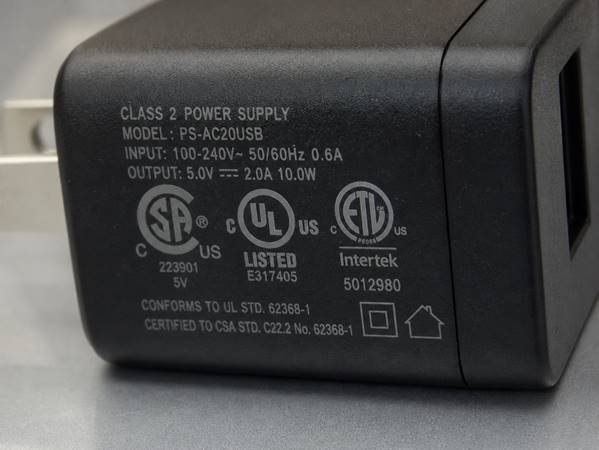
The third type is labeling compliance: for example, whether the rated voltage, current, and power marked on the product are true, whether there are bilingual (English and French) safety warnings, and whether the certification marks applicable to the Canadian market such as CSA, cUL, and cETL printed on the product are real and verifiable, not randomly printed.
Graded Handling of Non-Compliance
After problems are found, not all cases lead to direct recall. They will be handled in grades according to the severity of the risk:
If it is a minor problem, such as missing French safety warnings on the label or unclear parameter printing, the enterprise will generally be given a rectification period, and sales can continue after the rectification is qualified.
If it is a moderate problem, such as the insulation layer thickness being slightly lower than the standard, or the heat dissipation design having minor defects, but not to the point of causing immediate accidents, all inventory will be required to be removed from shelves first, and can only be restocked after rectification is completed and re-testing is qualified.
If it is a serious problem, such as a fast charger being extremely prone to fire after overload, or a broken pin of a charging cable causing direct short circuit, the recall process will be directly initiated. Not only all inventory must be removed from shelves, but all sold products must also be taken back for disposal.
Common Penalty Ranges
If an enterprise’s violation is serious, it will also face varying degrees of penalties. The specific severity is directly related to the type of violation, subjective fault, and applicable procedures:
Minor violations (such as missing label items, incomplete compliance documents, and other labeling or process issues that do not directly involve safety risks) are generally handled by ordering rectification and oral warnings, and may also be subject to small administrative fines ranging from hundreds to thousands of Canadian dollars.
If it violates regulatory orders (such as refusing to rectify, refusing to implement shelf removal/recall requirements) or has generally serious illegal circumstances, under administrative fines or summary criminal procedures, individuals may be fined up to 100,000 CAD, and enterprises up to 1,000,000 CAD; if it involves egregious circumstances such as selling products knowing they have major safety hazards, or deliberately concealing risks and causing serious consequences, criminal public prosecution may be triggered, the upper limit of fines will be higher, and the court may also issue enforcement orders such as freezing non-compliant inventory and prohibiting the sale of related products. The specific amount is ultimately subject to the determination of the competent authority or the court.
If an enterprise refuses to cooperate with the recall, conceals product sales volume or risk information, it will also be given a heavier penalty. Health Canada may apply to the court for compulsory enforcement, requiring the enterprise to fulfill its recall obligations and pay additional fines.
Full Recall Mechanism Process (Corresponding to Typical Charging Product Cases)
If a product problem is serious enough to require a recall, the entire process has clear statutory steps, and enterprises cannot just issue a random notice. Combined with common cases of charging products, we will break down the entire recall mechanism clearly.
Recall Initiation Conditions
Any of the following circumstances may trigger a recall:
The first is actual harm has been caused: for example, a charger fire causes burns to the user, or a charging cable leakage causes electric shock injury to the user. An investigation will definitely be launched, and a recall will be carried out once it is confirmed to be a product problem.
The second is clear potential risk exists: for example, testing finds that a certain 65W gallium nitride (GaN) fast charger explodes when overloaded, or the pins of a certain USB-C cable are easy to break and cause short circuit. Even if no consumers have been injured yet, as long as the risk is clear, a recall will be triggered.
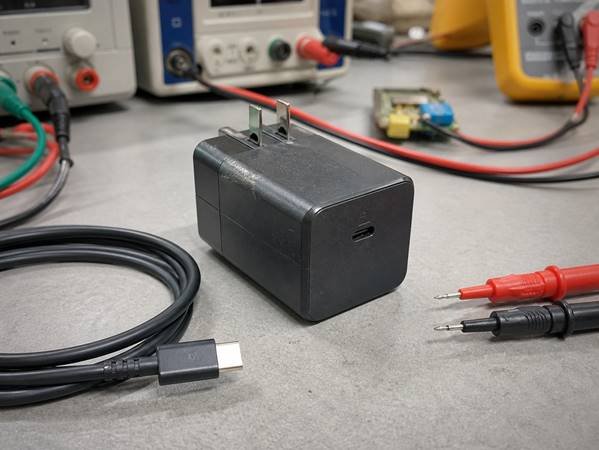
The third is non-compliance with applicable safety requirements and existence of risks: CCPSA is the core framework law for consumer product safety in Canada. Specific technical requirements such as plug size, insulation thickness, and protection circuit parameters usually come from supporting electrical safety standards, certification specifications, or relevant mandatory regulations; if the product does not meet these requirements (such as substandard plug size causing it to loosen and fall off the wall easily, severely insufficient insulation layer thickness, complete lack of short-circuit protection, etc.), and there are potential safety risks such as electric shock, overheating, and fire, a recall may be triggered even if no actual harm has been caused.
Recall Types and Risk Grading
Recalls can be classified from two dimensions, and different types have different handling intensities:
By initiation method, the most common is voluntary recall — either initiated proactively by the enterprise, or the enterprise agrees to cooperate after Health Canada makes a recommendation. The vast majority of charging product recalls fall into this category, because cooperation will result in more lenient handling. If the enterprise refuses to cooperate, or the risk is particularly urgent (for example, it has caused multiple serious injuries), the Minister of Health can directly order a mandatory recall. In this case, the enterprise must implement it without room for negotiation.
According to the severity of the risk, the safety hazards corresponding to recalls are usually divided into three categories (Note: actual official recall announcements may not directly mark Level 1/Level 2/Level 3, consumers please refer to the risk description and disposal requirements in the announcement):
• Level 1 (highest risk): Most likely to cause serious injury or even death, such as low-quality GaN chargers that are prone to fire and explosion during use. This type of recall will require consumers to stop using immediately, and may even recommend direct disposal without returning.
• Level 2 (medium risk): May cause minor injuries, such as charging cable sheaths that are easily damaged to expose copper wires, or occasional minor electric leakage. This type generally requires consumers to stop using and return for a refund or replacement.
• Level 3 (low risk): Usually unlikely to cause actual personal injury, may involve imperfect labels, instructions, warnings, or other low-risk compliance issues. Most do not require all products to be taken back, and can be rectified by correcting labels, supplementing instructions, etc.
Complete Implementation Steps
A complete recall generally has clear advancement steps, and the whole process is supervised by Health Canada:
The first step is investigation and confirmation: After receiving clues, Health Canada will first conduct testing and investigation to confirm that the product does have safety risks, then negotiate with the enterprise on the scope of the recall (such as which production batches, how many sales are involved, which channels are sold), and the specific remedial plan.
The second step is official announcement: After the plan is confirmed, Health Canada will issue an announcement in the official “Recalls and Safety Alerts” database, which will include actual product photos, brand, model, production batch, specific risk description, and guidance on what consumers should do.
The third step is enterprise notification: The enterprise must notify consumers through all sales channels. For example, e-commerce platforms will send emails to users who have purchased the product, the brand’s official website will post a recall announcement, and offline stores must also post notices in prominent positions.
The fourth step is progress follow-up and supervision: During the implementation of the recall, the enterprise needs to regularly report progress data such as notification coverage rate and product recovery volume to Health Canada; Health Canada supervises the implementation effect throughout the process. If it is found that the notification is not in place, the recall coverage rate is low, or the enterprise does not implement according to the plan, it may require the enterprise to add additional reach channels and expand the recall scope. In serious cases, enforcement or penalty measures will be taken.
The fifth step is recall closure: After the recall is completed, the authorities will publicize relevant progress as appropriate, but not all cases will disclose the recall rate or final number of recalled items. The specific content is subject to official release.
Common Remedial Solutions
When consumers encounter a recall, common remedial methods are as follows:
The most common is refund processing. As long as the product is in the corresponding recall batch, it can generally be refunded according to the amount agreed in the announcement, mostly full refund, not limited by the warranty period of ordinary goods.
The second is free replacement: the enterprise will send consumers the same type of product with safety improvements, without requiring consumers to pay additional fees.
The third is stop using and dispose of according to guidelines: for products with particularly high risks — such as low-quality fast chargers that may catch fire even on the way back, the authorities will advise consumers to stop using immediately, discard them according to guidelines or send them to designated e-waste recycling points, and can get a refund without returning the product.
Overall, consumers usually do not need to pay for recall processing, and the specific methods and procedures are subject to the announcement.
Differentiation of Easily Confused Concepts
Here we need to clarify several concepts that are often confused with recall to avoid misunderstanding:
First, shelf removal and recall: Shelf removal only prevents new sales by removing goods from shelves and warehouses, but sold products still need to go through the recall process. Shelf removal is not the end of the matter — after all, hazardous products are already in the hands of consumers, and the risk still exists.
Second, warranty and recall: Warranty is for ordinary quality problems, such as failure to charge, loose connectors, and generally has a warranty period limit; but recall is a statutory disposal for safety risks, not bound by the warranty period. As long as the product is in the corresponding batch, it can participate in the recall.
Third, certification invalidation and recall: If the product’s certifications applicable to the Canadian market such as CSA and cUL are revoked, it may trigger a regulatory investigation, but not necessarily a recall — the core of recall is whether there is actual safety risk. If the certification status changes but the product’s own safety performance meets the standard, the enterprise may only be required to complete the certification process again, and no recall will be initiated.
Practical Guide for Beginners: How Consumers Can Check and Respond to Recalls
After talking about so many rules, the most practical thing for ordinary consumers is how to check for recalls, what to do if they buy a recalled product, and how to identify risks in daily life.
Recall Query Methods
If you are worried that the charging product you bought has been recalled, you can check through three channels:
The most authoritative is Health Canada’s official “Recalls and Safety Alerts” database. You can directly enter keywords such as charger, USB-C cable, wireless charger in the search box to see all relevant recall announcements. The information is the most complete and accurate. The scope, risks, and remedial methods of all recalls are subject to the content of official announcements.
The second is e-commerce or brand channels: if you bought it on platforms like Amazon or Best Buy, once the product is recalled, the platform will directly send you an email notification; the support page of the brand’s official website usually also has a special recall announcement section.
Here is a special reminder: when checking recalled products, you can’t just look at similar appearance. You must match the three pieces of information: brand, model, and production batch — many products with the same appearance may have several production batches, and only one batch has problems. If you get it wrong, it will be a waste of effort.
Steps to Take If You Bought a Recalled Product
If you really bought a recalled product, follow three steps to avoid mistakes:
The first step is to stop using immediately and unplug the power supply. Never disassemble, repair, or cut the cable by yourself, and do not continue to use it with the mentality of “using it for a few more days first” — since the recall is triggered, it means there is a clear safety risk, and if an accident happens, the loss will outweigh the gain.
The second step is to register with the brand or sales platform according to the contact information in the recall announcement, prepare purchase vouchers (such as order screenshots, receipts), and confirm that your product is within the recall batch.
The third step is to complete the return, replacement, or designated disposal process according to official guidelines. Mailing, recycling, or replacement costs related to the recall are usually borne by the enterprise. Consumers should not pay extra fees to eliminate safety hazards, and specific requirements are subject to the announcement.
How to Report Safety Hazards
If the charging product you bought has problems such as overheating, smoking, or electric leakage, but you haven’t seen an official recall announcement, you can proactively report it to Health Canada to prevent more people from encountering the problem:
The reporting channel is the Consumer Product Incident Report Portal on Health Canada’s official website. It is recommended to leave contact information to facilitate investigators to supplement and verify information.
The information to be provided should be as detailed as possible: clear photos of the product, brand and model, purchase channel and time, specific problem description (such as “it gets too hot to hold after 20 minutes of use, and has a burning smell”). If there is a video, you can also attach it, which can help staff make a faster judgment.
The processing time depends on the severity of the risk, the completeness of evidence, and whether additional testing is required. There is no statutory fixed period; usually, you will receive an acceptance or preliminary reply within 1-2 weeks after submission. For complex investigations involving testing, cross-border supply chains, or multi-batch screening, the processing time will be extended accordingly.
Daily Risk Identification Methods
In fact, many high-risk products can be initially identified when buying and using, without waiting for a recall announcement:
Before buying, try to avoid “three-no” charging products (no brand, no model, no compliance label), especially fast chargers whose price is significantly lower than mainstream products of the same specification — they are most likely the result of cutting corners, and their safety is not guaranteed at all.
If the following situations occur during use, stop using immediately: the charger is too hot to hold (normal fast charging only causes slight warmth, pain from heat is abnormal), has a burning smell, the shell is bulging or cracked; the charging cable connector is overheating, melting, or exposing internal copper wires. Do not continue to use if these situations occur, and you can proactively report even if you don’t see a recall announcement.
Intermediate Level: Risk Judgment and Compliance Key Points
If you are a user who often buys electronic accessories, or a seller running a small business of charging products, you can learn some more advanced judgment methods and compliance key points to help you avoid risks in advance.
Judgment of Recall Risk Level
How to judge whether a charging product has a high probability of being recalled in the future? It can be viewed from three dimensions:
Product side: Unbranded white-label goods, obviously exaggerated parameters (for example, marked 100W but actually only 40W, the protection circuit is most likely cut corners), and a large number of user reviews mentioning overheating, loose connectors, or short circuits will have a much higher recall risk.
Scenario side: Some usage scenarios will amplify the potential risk of the product — for example, using a multi-port charger to fast charge a computer, mobile phone, and tablet at full power at the same time, or leaving the charger plugged into the wall for a long time, or using it in humid environments such as bathrooms and kitchens. Products with only minor defects may have major problems in these scenarios, and are more likely to trigger batch complaints and recalls.
Batch side: If the same brand and same model of product have multiple similar complaints in a short period of time, such as “overheating and tripping halfway through charging”, it is most likely a design defect or a production problem of a certain batch. In this case, the probability of triggering a recall is very high.
Recall Applicable Boundaries (Non-Initiation Situations)
Of course, not all product problems will trigger a recall. There are several situations that are not within the scope of recall:
The first is human-caused damage: for example, the user cuts the charging cable by themselves, or continues to use a charger that is broken after being dropped. This is a problem caused by improper use, not a design or production defect of the product itself, and no recall will be initiated.
The second is non-consumer products: industrial and medical-specific charging equipment have special regulatory departments and standards, and are not governed by CCPSA’s consumer recall.
The third is negligible risk situations: for example, only minor scratches on the shell, slightly crooked printing, which do not affect electrical safety at all, no recall will be initiated — after all, the cost of recall is very high, and only those involving safety risks will be initiated.
Advanced Misconception Avoidance
There are also several pitfalls that even small business sellers are prone to step into, which are clarified here in advance:
First misconception: “If a cross-border purchased product is recalled, you can’t find the responsible person, so consumers can only accept their bad luck” — wrong. Cross-border e-commerce platforms or retail channels usually need to cooperate with regulatory authorities to remove products from shelves, notify consumers who have purchased, and transfer recall information; the specific division of responsibilities depends on who is the importer, seller, distributor, and the role the platform plays in the transaction. When consumers encounter such situations, they can first follow up through the purchase channel, official brand announcements, and Health Canada recall information.
Second misconception: “You can’t participate in the recall after the warranty period expires” — this is a common misunderstanding of the nature of recall. Recall is for product safety defects, not bound by the warranty period, and you can participate as long as the product is within the recall batch.
Third misconception: “I’m just a retailer/importer, just find the factory if there’s a problem, it has nothing to do with me” — wrong. CCPSA stipulates that importers, distributors, and retailers all bear corresponding safety responsibilities. As long as you sell products to Canadian consumers, you have the obligation to cooperate with regulation and recall, and you cannot push all responsibility to overseas factories.
Basic Compliance Key Points for Small Sellers/Importers
If you are a small seller or importer of charging products, as long as you do these points well, you can basically avoid most compliance risks:
Before listing: Be sure to ask suppliers to provide formal compliance test reports, resolutely do not purchase “three-no” goods (no brand, no parameters, no certification). The parameters on the product listing must be truthfully marked, and power must not be exaggerated for better sales.
Daily operation: Establish a complaint screening mechanism. As long as consumers report overheating, smoking, electric shock, or fire, they must be listed as the highest priority issues and investigated immediately, and cannot be perfunctorily treated as ordinary quality problems.
Record retention: All supply chain records, batch information, and sales records must be kept well. In case of a recall, you can quickly locate which batches have problems, how many were sold, and which consumers they were sold to, greatly reducing the difficulty and cost of the recall.
Risk response: If you really find that the product has safety hazards, stop selling immediately and isolate the inventory. Do not continue to sell with a fluke mentality. If necessary, proactively report to Health Canada and cooperate with the recall — proactive cooperation will result in more lenient handling. If you conceal the risk and are caught, the fine may be dozens of times more than the money you make from selling the goods.
Quick Judgment Checklist
Finally, we have sorted out three quick judgment checklists that you can directly compare. You don’t need to memorize complex rules, just check against them:
How to Judge Whether a Product Is Regulated by CCPSA?
It can be confirmed through three core conditions. If all are met, the product falls within the scope of CCPSA consumer regulation:
1. Is it commercially sold to Canadian consumers?
2. Does it fall into the category of consumer charging electronic accessories (wall chargers, charging cables, wireless chargers, car chargers, etc.)?
3. Is it not within the statutory exclusion situations such as industrial/medical-specific use, non-commercial personal transfer, etc.?
It should be noted that safety risks such as electric shock, overheating, and fire are not prerequisites for judging whether a product is regulated — as long as it meets the above three conditions, even if no risk is found for the time being, it is within the scope of CCPSA regulation; but if the product has shown such risk signals, it will be listed as a key object for spot checks, investigations, or recall screening.
How to Judge Whether a Problem May Trigger a Recall?
1. May it cause personal injury (rather than only affecting user experience, such as slow charging, appearance scratches)?
2. Does it involve multiple consumers, multiple batches, or the same design defect?
3. Are there high-risk signals such as smoking, melting, fire, or electric shock?
4. Are there still products on the market or in the hands of consumers?
If most of them are met, the probability of triggering a recall is very high.
How to Judge Whether a Recall Notice Is Real?
1. Is the specific brand, model, production batch, and actual product photo clearly marked?
2. Does it clearly explain the type of risk and the actions consumers need to take immediately?
3. Does it provide clear remedial methods and formal enterprise contact information?
4. Can the corresponding announcement be found in Health Canada’s official recall database?
If several of these are missing, especially if it asks you to click unfamiliar links or fill in credit card information, it is most likely a scam. Be sure to verify it in the official database.
Core Summary
Overall, CCPSA has established a full-chain safety regulation system for charging products, from port spot checks to recall disposal, with prevention as the core, rather than waiting for accidents to occur before handling. For ordinary consumers, it should be clear that the vast majority of consumer charging accessories (including included accessories, gifts, and refurbished products) are within the regulatory scope. You can check recalls through Health Canada’s official database, and be sure to verify the three pieces of information: brand, model, and batch. If you buy a recalled product, stop using it immediately and handle it according to the announcement process. Recalls are not limited by the warranty period, and individuals do not need to bear the cost. For small sellers and importers, compliance is not just about holding certifications. There is a statutory obligation to report when serious safety risks are found. It is necessary to keep batch and sales records well, and proactively cooperate with regulation to avoid high penalties for concealing risks. Finally, note that certification is only a reference for compliance, shelf removal is not the same as recall, and warranty and recall have completely different natures. Prioritizing the safety risks of the product itself is the most effective way to avoid pitfalls.