
Many practitioners new to the Australian market often treat RCM as a “unified certification certificate” when they first encounter it, assuming that affixing the RCM mark covers all compliance requirements. In reality, RCM is only a compliance mark, corresponding to multiple sets of independent Australian regulatory compliance requirements: communications compliance is regulated by the Australian Communications and Media Authority (ACMA), while electrical safety compliance is managed by the EESS system led by ERAC; the same product may also need to meet other regulatory requirements such as GEMS energy efficiency and general product safety. Many products with Bluetooth or Wi-Fi functions are exported only after completing electrical safety RCM, and may be required to rectify or cease supply during ACMA random inspections, and may face penalties in serious cases. The core reason is that they have not clarified the boundaries of different systems and missed communications compliance requirements.
1. Basic Understanding: RCM Mark and ACMA Jurisdictional Scope
RCM stands for Regulatory Compliance Mark, a statutory mandatory compliance mark in Australia. It is not a unified official certification certificate, and is essentially a supplier declaration system. This means that affixing the RCM mark on a product represents the responsible supplier’s declaration that the product meets all applicable Australian regulatory requirements. Core compliance evidence (such as test reports, declarations of conformity, etc.) is kept by the responsible supplier for inspection. Most products do not require universal submission to the authorities for filing, and there is no public unified product certification database available for query.
The RCM has no fixed validity period; its compliance validity changes with updates to product configuration, firmware version, applicable standards or regulations. Once relevant conditions change, compliance must be re-evaluated. Since 2016, Australia has gradually integrated and replaced old communications-specific marks such as A-tick (telecommunications) and C-tick (EMC) with RCM. Currently, communications and electrical safety compliance share the same RCM mark. Specific transition arrangements are subject to the latest official notice issued by ACMA.
ACMA is the abbreviation of the Australian Communications and Media Authority, responsible for compliance supervision in the communications field. It mainly administers three types of communications compliance requirements, corresponding to three sets of official labelling notices, which are also the legal basis for the RCM mark in the communications field:
- Radiocommunications category: Corresponding to the Radiocommunications (Labelling) Notice, it regulates products that actively transmit wireless signals. Radio compliance records must be kept and the RCM mark must be affixed;
- Telecommunications terminal category: Corresponding to the Telecommunications (Customer Equipment Labelling) Notice, it regulates terminal equipment directly connected to the public communications network. Telecommunications access compliance records must be kept and the RCM mark must be affixed;
- Electromagnetic Compatibility (EMC) category: Corresponding to the Electromagnetic Compatibility (Labelling) Notice, it regulates the electromagnetic disturbance emission of electronic equipment. Compliance records must be kept and the RCM mark must be affixed.
The evidence requirements and assessment procedures for the three types of compliance are different. There is no unified grading rule covering all three categories: Only EMC and telecommunications terminal categories apply Level 1/2/3 evidence levels according to their respective corresponding labelling notices, while radio equipment uses an independent evidence determination path and does not directly apply this grading system.
Note the jurisdictional boundaries of ACMA: Electrical safety RCM is managed by ERAC’s EESS system, and requirements such as GEMS energy efficiency and general product safety are not under ACMA’s jurisdiction. The same product may involve multiple compliance systems at the same time. For example, a rice cooker with Bluetooth must meet both electrical safety RCM requirements and the radio and EMC compliance requirements administered by ACMA. You cannot arbitrarily affix the RCM mark after completing only one type of compliance.
If a product does not meet ACMA’s communications compliance requirements, ACMA may conduct investigations in accordance with the law, and issue regulatory orders such as rectification notices, supply cessation requirements, or recall initiation depending on the circumstances. Measures such as border interception, cargo detention, return or destruction are subject to relevant statutory authority and case-by-case procedures, and are not inevitable outcomes; measures such as product removal and penalties on e-commerce platforms are determined by platform rules and regulatory coordination requirements. If a product causes radio interference complaints, the regulatory authority will directly pursue the legal liability of the local Australian responsible supplier.
Key Common Misconceptions for Beginners
Practitioners new to the field can avoid the most common cognitive pitfalls in advance:
- Misconception 1: Having the RCM mark equals passing ACMA compliance – RCM covers multiple types of requirements, and may only have electrical safety compliance completed, missing communications/EMC compliance
- Misconception 2: Having CE/FCC reports means you can directly use RCM – international reports are for reference only and must match Australian-specific rules (refer to the overseas report assessment checklist in Chapter 5)
- Misconception 3: Using a pre-certified wireless module equals whole-product compliance – changes in configurations such as antennas and enclosures will affect the compliance of the whole product (see the advanced risk avoidance section in Chapter 6 for complete reuse rules)
- Misconception 4: LIPD wireless devices are fully exempt from compliance – they are only exempt from individual frequency licences, and still need to meet obligations such as labelling, EMC, and EME (see Chapter 3 for complete exemption boundaries)
This article is a beginner’s popular science guide and does not constitute formal legal advice. All applicable standard versions, exemption scopes, frequency band power limits, licensing rules, and labelling requirements are subject to the official ACMA documents, Australian Federal Register of Legislation, and specific requirements of applicable states/territories in force at the time of product supply. Before a product is officially launched, be sure to verify the latest version of regulatory requirements.
2. Quick Assessment: Does Your Product Need ACMA RCM Compliance?
3-Step Beginner Self-Check Method
If you are unsure whether your product needs ACMA RCM compliance, you can first use 3 simple questions for quick screening:
Step 1: Does the product have wireless transmission functions, or is it directly connected to the Australian public communications network? For example, Bluetooth headsets have wireless transmission, and NBN optical modems need to connect to the public network, both requiring further verification.
Step 2: Does the product have electronic circuits? Whether it is mains-powered or battery-powered, as long as it has electronic circuits, it may involve EMC requirements.
Step 3: Verify whether the product falls within the officially clearly exempt scope; even if it meets a certain type of exemption, it only exempts specific obligations of the corresponding category, and you still need to check other applicable requirements such as radio, EMC, EME, labelling, and supplier registration (see Chapter 3 for specific exemption boundaries).
Core Definitions of the 3 Categories of Products Under ACMA Jurisdiction
To make an accurate assessment, you must first understand the core boundaries of the three categories of products, explained below with specific scenarios:
- Radiocommunications category: The core is active wireless signal transmission. For example, Bluetooth headsets, WiFi routers, and drone remote controls all fall into this category. If it is a pure receiving device (such as an ordinary radio), a passive component (such as a passive antenna), or has a built-in wireless module but the transmission function is not enabled, further verification of official rules is required, and it cannot be directly classified as radiocommunications.
- Telecommunications terminal category: The core is direct connection to the Australian public communications network. For example, landline phones, NBN optical modems, and mobile phones with cellular call functions all fall into this category. If they only connect to local networks or the Internet via WiFi or Bluetooth, such as smart light bulbs and Bluetooth mice, they do not belong to the telecommunications terminal category.
- EMC category: All products with electronic circuits that may generate electromagnetic disturbances count, ranging from small Bluetooth wristbands to large industrial equipment. Note that ACMA’s EMC regulation focuses only on “disturbance emission” (the electromagnetic interference emitted by the product cannot be too strong); as for the product’s ability to resist external interference (immunity), it is not a generally mandatory requirement, and only needs to be done when specified by specific product standards or purchaser requirements.
4-Layer Rigorous Assessment Method (to Avoid Misjudgment)
If you are still unsure after the 3-step self-check, you can use the more rigorous 4-layer assessment method to narrow down the scope step by step:
Layer 1: First determine the actual functions of the product: Does it have wireless transmission? Can it connect to the public communications network? Does it have electronic circuits? First list the categories that may be involved.
Layer 2: Then determine the equipment definition under the corresponding regulations: For example, does it fall under “supplied user equipment” in the labelling notice? Some industrial supporting equipment may not be within the scope of “supply”, which needs to be checked specifically.
Layer 3: Determine the applicable labelling notice and specific exemption clauses: Check whether the product is on the exemption list and whether it meets the exemption conditions.
Layer 4: Determine the supply method: Is it retailed to ordinary consumers, or used as supporting equipment for industrial customers? Is it officially imported for sale, or temporarily imported samples? Different supply methods have different compliance requirements.
Multi-Category Overlap and Common Misjudgment Cases
Many products fall into multiple categories at the same time. For example, a mobile phone with cellular calling has both radio transmission, needs to connect to the public communications network, and has electronic circuits, so it involves four types of requirements: radio, EME, telecommunications terminal, and EMC, all of which must be met.
Here are some of the most common misjudgment cases for reference and verification:
- Products with auxiliary communication functions do not need compliance: For example, a rice cooker with Bluetooth, where Bluetooth is only an auxiliary function for connecting to a mobile phone APP, but as long as there is wireless transmission, it must meet the corresponding radio and EMC requirements, and cannot be ignored because it is an auxiliary function.
- Pure receiving devices and passive antennas belong to the radiocommunications category: The radiocommunications category regulates actively transmitting devices. Pure receiving radios and passive antennas generally do not fall under radiocommunications regulation, but specific cases must be checked against the official list and cannot be generalized.
- Battery-only products are of course exempt from EMC: EMC exemptions are based on product categories and conditions, not on the power supply method. Battery-powered products may also need EMC compliance, which must be checked against the notice.
3. Boundaries and Exemptions: Which Products Do Not Need ACMA Compliance?
ACMA has several types of exemptions, each with different boundaries. They cannot be confused, let alone have their scope expanded on your own.
Category 1: Products Generally Not Subject to ACMA Communications Regulation
Products with purely mechanical structures, no electronic circuits, and that do not meet the definition of radio-related equipment are generally not subject to ACMA communications regulation, such as ordinary manual switches and basic passive components without electronic components. Note that different products have different judgment boundaries: ordinary signal/power cables are generally not subject to communications regulation, unless used as part of dedicated radio frequency components or antenna systems; passive antennas need to be checked against actual functions and usage scenarios to determine whether they fall under radiocommunications regulation. Such products may still need to meet the requirements of other Australian compliance systems, and the RCM mark must not be affixed arbitrarily, otherwise it may constitute misleading statements and be suspected of violations.
Category 2: Products Within ACMA Scope but Exempt from Individual Radio Frequency Licences
These products are under ACMA jurisdiction but do not need to apply for an individual radio frequency licence. It is important to draw a clear boundary here: they are only exempt from the obligation to apply for a frequency licence, and still need to meet other requirements such as EMC, EME, labelling, and supplier registration, not full exemption.
The most typical are Low Interference Potential Devices (LIPD), which usually do not require an individual frequency licence provided they meet the conditions of the corresponding class licence. Specific frequency bands, power, and usage conditions are subject to the current LIPD Class Licence, and other applicable obligations such as EMC, EME, labelling, and supplier registration are not exempted. There are also some pure receiving products without transmission functions, some categories of which are also exempt from frequency licences, subject to verification against the official list.
Category 3: EMC Exemptions (Only Verified Item by Item Against Current Notices)
EMC exemptions may exempt some EMC testing or formal compliance record requirements, but must meet item by item the exempt categories and applicable conditions clearly listed in the current Electromagnetic Compatibility (Labelling) Notice, and the scope of exemption cannot be expanded on your own. Many people mistakenly believe that “low power means EMC exemption” or “battery power means EMC exemption”. In fact, the notice does not use power or power supply method as a general basis for exemption. You must find clear exemption clauses for the corresponding category to apply.
Even if the exemption conditions are met, you still need to keep exemption judgment records, indicating the basis of the exemption clause, the specific conditions met, and the reviewer’s information, for regulatory random inspection. At the same time, the exemption only applies to part of the EMC requirements, and the product still needs to fulfill other applicable compliance obligations such as radio, EME, labelling, and supplier registration.
Category 4: Special Arrangements for Temporary Non-Sales Scenarios
The core premise of such arrangements is that the product must not be sold on the market, and can only be used within limited scenarios, time, and quantity ranges. Specific exemptions or simplified compliance requirements may apply, but all conditions of the corresponding clauses must be met:
- Military and police equipment must obtain official formal approval documents and be used within the approved scope;
- Temporarily imported samples for exhibition or testing must not be converted into sales inventory, and must comply with relevant regulations on temporary importation;
- A small number of personal items for personal use must comply with the quantity and purpose restrictions for personal item importation.
Actionable Verification Methods When Unsure
If you are still unsure, you can verify through official channels: query the current valid labelling notices, ACMA compliance guides, Federal Register of Legislation, spectrum licence documents, and applicable standard lists. If third-party assessment is required, be sure to check whether the institution is a conformity assessment body recognized in the corresponding notice. Before the product is launched, be sure to check the latest version of all rules to avoid pitfalls.
4. Core Requirements: Key Control Points for ACMA’s Three Types of RCM Compliance
The three types of communications compliance under ACMA jurisdiction have different focuses. The core control logic and key requirements are explained below respectively.
Radio Spectrum Compliance: Operate Within Authorized Scope and Must Not Cause Harmful Interference
The core logic of radio compliance is clear: wireless equipment must operate within the frequency and technical conditions authorized by applicable class licences, apparatus licences, spectrum licences, or equipment standards, and must not cause harmful interference, otherwise it will affect the normal use of other legal communications equipment, such as interfering with dedicated equipment in airports and hospitals, and may face regulatory penalties in serious cases. Consumer low-power devices usually operate under class licences, while private networks or special services may operate under apparatus licences or spectrum licences.
Australia’s spectrum compliance framework consists of several parts: class licence, apparatus licence, spectrum licence, plus corresponding equipment standards. Most civilian consumer low-power wireless devices, such as Bluetooth headsets and home routers, are covered by class licences – that is, general licences for a category of equipment, no individual licence application is required, and they can be used as long as they meet the rules. For special scenarios such as private networks and satellite communications, corresponding dedicated licences need to be applied for.
There are four core control parameters for radio compliance: operating frequency band, transmission power, spurious emissions, and antenna gain. Specific limits are subject to applicable spectrum licences and equipment standards.
The following only explains verification dimensions and does not constitute any unified limits for frequency bands, power, or duty cycles. Specific requirements are subject to ACMA’s current valid rules:
- 2.4G Wi-Fi/Bluetooth/Zigbee: Applicable to the 2400-2483.5MHz class licence, power limits are adjusted according to equipment type, modulation method, and usage scenario;
- 5 GHz Wi-Fi (non-cellular 5G): Available sub-bands, DFS (Dynamic Frequency Selection, automatic avoidance when radar signals are detected) requirements, indoor/outdoor restrictions, power and antenna conditions must be verified against Australian applicable class licences and equipment standards, subject to ACMA’s latest rules;
- LoRa/LPWAN (LPWAN = Low Power Wide Area Network, a wireless communication technology suitable for low-rate, long-distance IoT scenarios): Power, transmission duration or other technical restrictions shall be verified according to actual operating frequency band, transmission parameters and applicable licence conditions;
- Cellular modules (4G/5G): Must comply with applicable Australian spectrum rules and operator frequency band requirements. Equipment standards, usage scenarios and licence conditions should also be verified, and may be included in telecommunications terminal management at the same time;
- Drone remote controls, UWB (UWB = Ultra-Wideband, a wireless technology that achieves short-distance high-speed transmission through extremely wide spectrum): Dedicated frequency bands, power limits and usage scenario requirements must be verified, as well as corresponding equipment standards and licence conditions. Some UWB frequency bands are restricted in Australia.
If operating outside the frequency range authorized by applicable licences or equipment standards, it may constitute illegal radio transmission and face regulatory penalties. When using overseas test reports, the Australia-New Zealand difference assessment must be completed according to the overseas report assessment checklist in Chapter 5, and cannot be directly used.
EME Human Radiofrequency Exposure Compliance: First Screen Applicability, Then Select Assessment Path
EME (Electromagnetic Energy, human radiofrequency exposure) compliance is a part that many people easily overlook. Simply put: the radiofrequency energy emitted by wireless devices must not exceed human safety limits to avoid health impacts.
Whether to conduct EME assessment cannot be based solely on power. It must be comprehensively judged in combination with frequency, maximum Equivalent Isotropically Radiated Power (EIRP), antenna type, usage distance, human exposure scenario (wearable/handheld/fixed installation), and concurrent transmission conditions.
There are several common assessment paths, subject to applicable standards:
- Portable/handheld devices (in close contact with the human body, such as mobile phones and Bluetooth wristbands): Specific Absorption Rate (SAR) testing is commonly used to measure the radiofrequency energy absorbed by human tissue;
- Mobile/fixed devices (used far from the human body, such as home routers and outdoor base stations): Maximum Permissible Exposure (MPE) assessment is commonly used to measure the radiofrequency field strength in the environment;
- Very low power/specific scenario devices may meet exemption conditions, which need to be verified against official rules.
Compliance evidence can be a declaration of compliance with limits, calculation report, or test report, implemented specifically according to applicable rules. During assessment, first verify whether exemption conditions are met according to applicable rules; if not met or cannot be proven to be met, then use applicable calculation, MPE assessment, SAR testing or other recognized paths based on distance from the human body, exposure scenario, frequency, EIRP, antenna and concurrent transmission conditions. The most common omission is the relevant assessment of low-power wireless devices (such as Bluetooth wristbands and smart watches). Exemption screening or applicability assessment must not be skipped due to low power.
EMC Compliance: Focus on Controlling Electromagnetic Disturbance Emissions; Immunity is Separately Required as Needed
The core of ACMA’s EMC regulation is to supervise the electromagnetic disturbances emitted by products to avoid interfering with the normal operation of other devices – for example, routers interfering with TV signals and chargers interfering with radios all fall within the scope of EMC regulation. As for the product’s ability to resist external interference (immunity), it is not a generally mandatory requirement of ACMA, and only needs to be done when specified by specific product standards, purchaser requirements, or industry rules.
EMC adopts AS/NZS (Australia-New Zealand) standards, corresponding to the international CISPR series of emission standards, which must be matched according to product categories. The following are common direction references, subject to the latest standard list:
- IT/AV equipment (computers, monitors, speakers): Corresponding to AS/NZS CISPR 32 (emission);
- Lighting equipment (LED lights, driver power supplies): Corresponding to AS/NZS CISPR 15 (emission);
- Power adapters and chargers: Match corresponding emission standards according to product function, power supply topology, and usage environment, and are not directly equivalent to IT/AV categories;
- Home appliances and industrial equipment: Corresponding to EMC emission standards for exclusive categories.
EMC exemptions must be verified item by item against current notices and cannot be self-determined. When using overseas EMC reports, difference assessment must be completed according to the overseas report assessment checklist in Chapter 5.
Telecommunications Terminal Compliance: Must Not Affect the Normal Operation of the Public Communications Network
The core requirement of telecommunications terminal compliance is: terminal equipment must not pose security risks to the public communications network, nor disrupt the normal operation of the network.
First, clarify the applicable boundary: Only terminal products directly connected to the Australian public communications network need to comply; products that only access local networks/the Internet via WiFi/Bluetooth (such as smart light bulbs and Bluetooth mice) do not fall into this category.
Let’s further refine the boundary of “direct access to the public communications network”:
- Included: Landline phones, NBN optical modems/CPE (CPE = Customer Premises Equipment, usually refers to network access equipment installed in the user’s home), VoIP gateways (VoIP = Voice over Internet Protocol, commonly known as Internet phone), terminals with cellular call/data functions (need to verify the definitions and exclusions in the telecommunications labelling notice at the same time);
- Not included: Smart devices only connected to WiFi, Bluetooth devices, local area network devices.
The core control points of telecommunications terminals are network access compatibility, security, and signal quality. Common applicable standard directions: Fixed access categories correspond to AS/CA S series access standards (AS/CA S series = telecommunications access standard series jointly formulated by the Australian and New Zealand communications industry), VoIP/IP phone categories need to comply with VoIP network access specifications, and cellular terminal categories usually involve both radio and EME requirements. Whether the telecommunications terminal label applies needs to be confirmed according to access method and equipment definition.
Here is an important reminder: Network operator access approval is not equal to ACMA labelling compliance, these are two different things – operator access approval is the operator’s corporate requirement, while ACMA labelling compliance is a statutory requirement. They must be verified separately and cannot be confused. When using overseas telecommunications terminal reports, the Australian network access difference assessment must be completed according to the overseas report assessment checklist in Chapter 5.
Compliance Evidence Levels for EMC and Telecommunications Terminals
Compliance for EMC and telecommunications terminals is divided into evidence levels according to product risk. Different levels require different strengths of compliance evidence, subject to the latest provisions of the corresponding labelling notices and applicable standards:
- Level 1 (low risk): Suppliers can self-declare compliance, no mandatory third-party testing is required, just keep technical evidence and Supplier Declaration of Conformity (SDoC) on hand;
- Level 2 (medium risk): Test reports meeting requirements must be prepared, which can be issued by laboratories with corresponding qualifications. In some scenarios, conformity assessment bodies recognized by the corresponding notice are required to participate in the assessment;
- Level 3 (high risk): According to the requirements of the corresponding labelling notice, a recognized conformity assessment body must issue a conformity assessment document, and the supplier still needs to sign the SDoC and file it.
The level of a specific product can be confirmed by checking the applicable labelling notice and standard list.
Independent Evidence Path for Radio Equipment
Note that radio equipment does not apply the above Level 1/2/3 grading. Its compliance evidence requirements need to be confirmed from four dimensions respectively:
- Equipment classification and evidence requirements of the radio labelling notice;
- Conditions of applicable spectrum licences (such as class licences);
- Testing requirements of corresponding equipment standards;
- Applicable rules for EME exposure.
All radio equipment require the responsible supplier to keep a full set of compliance evidence and sign a declaration of conformity. The mark must not be affixed arbitrarily without basis.
5. Beginner’s Practical Operation: Full Process Steps for ACMA RCM Compliance
After completing the assessment of compliance requirements, you can implement ACMA RCM compliance according to the following five steps.
Step 1: Confirm Product Compliance Requirements (Build a Compliance Matrix)
First, clarify all compliance requirements of the product to avoid missing items. The best method is to build a compliance matrix table.
Construction method: First disassemble all functions of the product. For example, a smart desk lamp with WiFi has functions of lighting, WiFi connection, and power supply. Then correspond each function to the regulatory category, applicable regulations/standards, and evidence requirements. For example, WiFi corresponds to radio, EMC, and EME; lighting corresponds to EMC; power supply corresponds to EMC. Also check whether there are requirements from other systems such as electrical safety and GEMS energy efficiency.
Then check whether there are exemption situations. For example, if a function meets the exemption clause, the corresponding requirement can be removed. Also confirm the current valid version of the applicable standard and the transition period requirements for standard updates, so as not to use expired standards.
Finally, output the compliance matrix table, clearly corresponding product functions, applicable regulations, standards, test items, evidence documents, and responsible persons one by one to avoid missing items.
Step 2: Prepare Required Compliance Documents
Next, prepare the required compliance documents, which are divided into two parts: basic documents and core evidence:
- Basic documents: Product specification (must clearly mark communication parameters, such as frequency band, power, modulation method, antenna gain, etc.), circuit diagram/block diagram, user manual, label draft.
- Core compliance evidence:
- Test report: Usually needs to include laboratory qualification, sample consistency description, standard version, test mode, antenna/power configuration, test photos, key parameters, deviation description, etc.; check whether the report has covered these key information according to applicable notices, standards and evidence levels; when key information related to product consistency, test configuration or standard applicability is missing, supplementary explanations, difference assessments or supplementary test evidence should be obtained.
- Declaration of Conformity (SDoC): Signed by the local Australian responsible supplier. Declaration requirements for different categories are subject to applicable notices.
Many overseas sellers will ask: I have CE/FCC reports, can I use them directly? Here is a complete checklist for assessing the usability of overseas test reports. If even one item does not meet the requirements, it cannot be used directly, and corresponding assessment or testing must be supplemented:
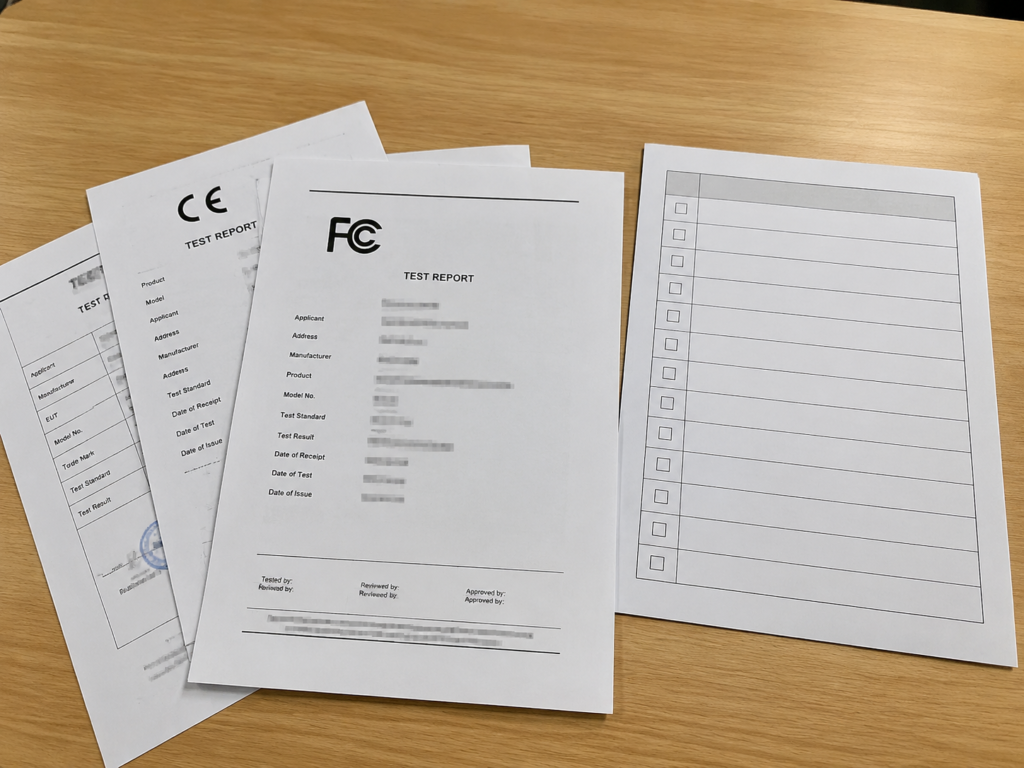
- Standard equivalence: Has the difference between international standards and applicable AS/NZS standards been assessed?
- Frequency band/power difference: Does it meet Australian-specific spectrum, power, DFS and other requirements?
- Network access difference: Do telecommunications terminal categories comply with Australian public network access rules?
- Test configuration: Are the test antenna, power supply, and firmware consistent with the actual sold product?
- Laboratory qualification: Does it have test qualifications for corresponding standards (must meet the requirements of corresponding notices)?
- Report validity: Is the applicable standard the current valid version? Expired reports require supplementary assessment.
In addition, overseas manufacturers need to issue a compliance document authorization letter to the local responsible supplier to ensure that the local party can fully provide all materials required for supervision. Otherwise, if documents cannot be provided during regulatory random inspections, it will be deemed non-compliant.
Step 3: Complete RCM Supplier Registration
The core requirement of RCM supplier registration is: the registered entity must meet the local Australian accountability conditions, usually a local Australian importer, local brand owner, or local distributor. Entity qualification is subject to the registration requirements of the RCM National Supplier Database, and cannot be determined solely by the entity’s nationality or sales channel.
The division of responsibilities must be clear: Overseas manufacturers providing technical documents does not exempt the local responsible supplier from the statutory obligations of compliance verification, document filing, and responding to supervision.
For products subject to corresponding communications labelling notices and requiring the use of RCM, a qualified responsible supplier shall register in accordance with current database rules and assume filing responsibilities; when the EESS electrical safety system also applies, relevant registration requirements shall be verified separately according to EESS rules. The registration channel is the RCM National Supplier Database. Affixing the RCM mark without completing registration as required may constitute a violation. If the local responsible supplier, importer, or brand OEM is changed later, the corresponding registration must be completed again, and the authorization relationship of compliance documents must be updated.
Step 4: Affix the RCM Mark as Required
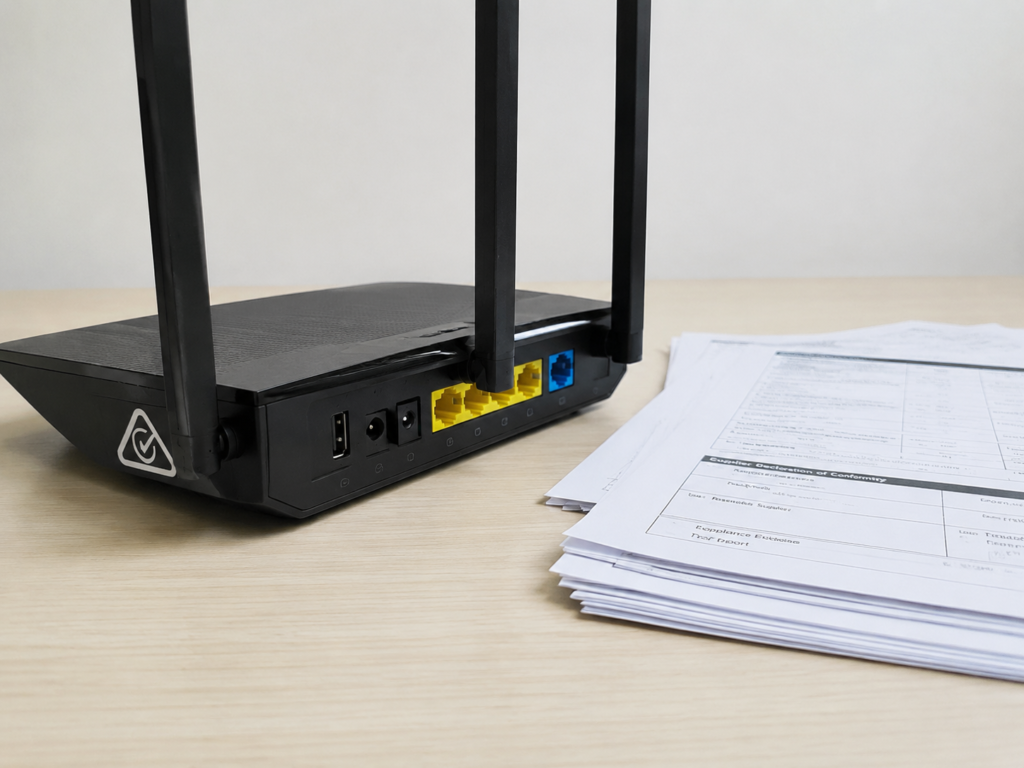
The basic requirements for affixing the RCM mark are: the mark graphic conforms to official specifications, is clear, durable, and identifiable under normal sales conditions; product model, responsible supplier and compliance documents must be traceable. The specific carrier of traceability information and labelling position shall be confirmed according to applicable notices.
The labelling position is preferably on the product body; only under the premise permitted by applicable notices can alternative labelling methods such as packaging and accompanying documents be used. It is absolutely impossible to use only web page display to replace the labelling obligation on the product body or legal alternative carriers, which is a pitfall that many e-commerce sellers easily fall into.
In addition, the RCM mark can cover multiple types of compliance requirements such as communications and electrical safety at the same time, but only on the premise that all applicable requirements are met. You cannot claim full coverage after only meeting one type.
Step 5: Document Retention and Change Control
All compliance documents need to be kept for at least 5 years after the last supply, subject to the current requirements of ACMA’s labelling notices. They cannot be discarded after sale.
If there are changes to the product’s configuration or firmware, they cannot be ignored directly. It is necessary to assess whether to update compliance documents according to the impact level of the change. The specific judgment rules are shown in the change decision table in the advanced section.
Also pay attention to the response requirements for market random inspections: ACMA may require the provision of compliance documents in accordance with the law, and the local responsible supplier must submit them within the specified time limit. Failure to provide them within the time limit is deemed non-compliant, so documents must be stored in categories and can be retrieved quickly.
Beginner’s Pre-Launch Checklist
The following is the beginner’s pre-launch checklist. Checking off items one by one can avoid core omissions:
□ The ACMA jurisdiction category and evidence requirements of the product have been confirmed
□ The compliance matrix covers all applicable functions, regulations and valid standard versions
□ Compliance evidence (test reports/declarations of conformity) for corresponding requirements is fully prepared, and difference assessment for overseas reports has been completed
□ The qualified local responsible supplier has completed RCM database registration, and authorization documents are valid
□ The RCM mark is affixed in accordance with applicable notice requirements
□ All compliance documents have been archived, meet retention requirements, and can respond to regulatory random inspections
6. Advanced Risk Avoidance: Compliance Authenticity Verification, Common Pitfalls and Change Judgment Rules
After completing basic compliance, you also need to master compliance authenticity verification methods, common practical risk avoidance rules, and compliance judgment logic after product changes, to avoid subsequent compliance problems.
How to Judge the Authenticity of ACMA RCM Compliance
Many people will ask: How do I know if the RCM provided by the supplier is real? Here we need to first explain a core logic: ACMA adopts a supplier declaration system, and most products do not have public product filings. Therefore, you cannot judge solely by checking the database, but must verify from multiple dimensions.
The following is the 3-step verification method:
- Check supplier qualification: Query whether the responsible supplier is validly registered in the RCM National Supplier Database. It is important to note here: Supplier registration does not equal product approval, it only means that the supplier is qualified to use the RCM mark, and does not mean that all its products are compliant.
- Verify compliance documents: Require the supplier to provide a full set of documents such as declarations of conformity and test reports, and check whether the product information (brand, model, configuration, function) in the documents is consistent with the actually sold product.
- Check mark and model: Verify whether the RCM mark, model, and configuration on the physical product are consistent with the declaration documents, and whether there is any misattribution.
Supplementary note: Only a very small number of very high-risk products may have filings in ACMA’s special database. Low/medium risk products do not have mandatory public filings, so it is normal that no filing can be found. You cannot say it is fake just because you cannot find the filing; compliance documents still prevail.
How to Verify Whether a Test Report is Valid
After getting a test report, you can verify its validity from the following aspects:
- Verify product identity: Are the brand, model, hardware version, wireless module/antenna/power configuration consistent with the actually sold product? If the model is different or the configuration has changed, the report is useless.
- Verify coverage: Reports shared by multiple models must clearly cover the sold models; all enabled wireless functions, frequency bands, and operating modes must be covered. For example, if a product has two WiFi bands of 2.4G and 5GHz, a report that only tests 2.4G is not acceptable.
- Verify report qualification: The laboratory has test qualifications for corresponding standards. Qualification requirements are subject to applicable labelling notices. Not any laboratory’s seal is valid.
- Verify test details: Test mode, antenna gain, power supply method, and key parameters are consistent with the actual product, and deviation items have reasonable explanations.
If it is an overseas report, you also need to additionally verify whether the Australia-New Zealand difference assessment has been completed (refer to the assessment checklist in Chapter 5).
Compliance Reassessment Decision Table for Product Changes
Product changes are inevitable after launch, such as changing modules or updating firmware. At this time, do you need to redo compliance? Many people are unsure. The following is the change impact level decision table for reference and judgment:
| Impact Level | Change Type | Handling Method |
|---|---|---|
| High impact (must reassess/supplement testing) | Replacement of wireless modules/chips/antennas, adjustment of transmission power/frequency bands, addition of communication functions, replacement of power supply solutions, modification of PCB radio frequency circuits, change of public network access methods | Compliance assessment must be redone, missing tests must be supplemented, and all compliance documents must be updated |
| Medium impact (to be determined after assessment) | Replacement of structural enclosures, adjustment of antenna positions, firmware updates involving communication parameters/RF calibration, replacement of non-core electronic components | In accordance with applicable notice requirements, consult a recognized conformity assessment body or technical institution with corresponding capabilities when necessary to determine whether compliance is affected, then decide whether supplementary testing or document updates are needed |
| Low technical impact (usually no re-testing required, but document/entity updates still need to be completed) | 1. No compliance-related changes to product technical configuration: ordinary interface bug fixes, non-structural/non-RF appearance changes, firmware updates not involving communication parameters; 2. Change of responsible entity but unchanged product configuration: change of local responsible supplier, importer or OEM entity | 1. Technical low-impact changes: No need for reassessment, just keep change records on file; 2. Change of responsible entity: No need for re-technical testing, but must re-verify the qualification of the responsible entity, RCM registration status, SDoC signing entity, authorization relationship of compliance documents and product traceability, and complete corresponding registration updates |
If you are really unsure, consult a conformity assessment body recognized by the corresponding notice. Do not make self-judgments, otherwise you will be responsible if problems arise.
Common Practical Pitfalls for Overseas Sellers
The following are the most common practical pitfalls for overseas sellers, which can be avoided by comparison:
- Only completing electrical safety RCM, missing the ACMA communications/EMC part: The solution is to build a compliance matrix to cover all applicable functions and avoid missing items.
- Directly using CE-RED/FCC reports as ACMA compliance evidence: Difference assessment must be completed according to the overseas report checklist in Chapter 5, and supplementary testing must be done when needed, otherwise it will be deemed non-compliant during random inspections.
- Assuming whole-product compliance by default when using pre-certified wireless modules: First obtain and review the original compliance evidence of the module, confirm that its covered frequency bands, power, antenna conditions, firmware and installation restrictions are still applicable to the whole product; the module’s radio compliance conclusion can only be reused if the whole product’s antenna, enclosure, power supply, and firmware version are completely consistent with the module’s certified configuration. If the antenna gain changes, enclosure shielding changes, power supply solution is different, or firmware adjusts RF parameters, the whole product applicability assessment should be redone, and whether to conduct supplementary testing should be determined based on the differences. Moreover, module pre-certification only covers the corresponding radio requirements of the module itself, and does not mean that the whole product automatically meets other compliance obligations such as EMC, EME, and telecommunications terminals.
- Thinking LIPD devices are fully exempt: Verify according to the LIPD boundaries in Chapter 3, and do not mistakenly believe that LIPD exempts all compliance obligations.
- Thinking small-volume/online sales will not be inspected: ACMA can carry out market supervision. Platform governance and border measures depend on actual law enforcement and platform rules. Do not take chances.
- Using alternative labelling arbitrarily: Must be implemented strictly in accordance with the labelling requirements in Chapter 5. Web page display cannot replace statutory labelling obligations.
Advanced Checklist
The following is the advanced operation checklist, which can be followed when carrying out daily Australian market business:
- Procurement and inspection verification: Reports are consistent with physical product models/configurations, standard versions are valid, all functions are covered, and difference assessment has been done for overseas reports
- Product change verification: Assessed according to the change decision table, compliance updates have been completed for those requiring supplementary testing, and change records have been archived
- Post-launch monitoring: Regularly check ACMA standard/regulation updates to ensure continued compliance validity
- Supplier verification: The local responsible supplier has valid qualifications, contact information can normally respond to supervision, and authorization documents are complete
Summary
After learning the content of this article, you can independently complete the following three core tasks:
First, accurately judge whether a product needs ACMA RCM compliance, clarify its jurisdiction category, and whether it meets exemption conditions and corresponding boundaries;
Second, complete the implementation of ACMA compliance according to the beginner’s process, including building a compliance matrix, preparing compliance documents, completing supplier registration and affixing the RCM mark as required;
Third, identify the authenticity of compliance, avoid common practical misunderstandings, and judge whether compliance needs to be re-evaluated after product adjustments according to the change impact level.