
For enterprises targeting the UK market, UKCA is one of the core concepts in product compliance. After the UK’s withdrawal from the EU, the original general rules for the CE mark have changed, and many practitioners have doubts about the applicable boundaries, handling paths, and mark usage of UKCA. In this article, “UKCA certification” is a common general term in the industry, which actually includes two types of conformity assessment paths: enterprise self-declaration and third-party institution certification. Specific requirements shall be subject to the corresponding regulations. Starting from basic definitions, the following content will systematically sort out the key points of the entire UKCA process from preliminary judgment, handling procedures to post-completion maintenance, to help enterprises carry out compliance work accurately.
Beginner Basics: Definition, Applicable Boundaries and Common Misconceptions
The full name of UKCA is UK Conformity Assessed, which is the UK conformity assessment, a product conformity mark exclusively applicable to the three regions of England, Scotland and Wales (collectively referred to as the GB market) after the UK’s withdrawal from the EU. Its essence is a statement of responsibility by enterprises after completing compliance assessment, not a quality award uniformly issued by the UK government — that is, after an enterprise proves by itself or entrusts a third party to prove that the product meets UK requirements, the UKCA mark is used to indicate this compliance status.
CE and UKCA serve the EU and the GB market respectively, and are subject to their respective regulatory systems; existing CE-related tests, risk assessments, and technical documents can be used for UKCA compliance assessment on the premise of meeting the requirements of current UK regulations, designated standards, product consistency and conformity assessment procedures, and the two are not completely separated.
Applicable Regions and Market Boundaries
The mandatory scope of application of UKCA is the GB market (England, Scotland, Wales). The core criterion for judging whether it is necessary to comply with UKCA requirements is whether the product is first placed on or supplied to the GB market, rather than the place of shipment, the place of company registration, or the identity of the final buyer — whether supplying to consumers, distributors or enterprises in the GB region, as long as the product enters the GB market for circulation for the first time, it must comply with relevant UKCA requirements. Even if the enterprise is registered in the EU and the goods are shipped from a German overseas warehouse, as long as they are finally placed on the GB market for sale, they must meet UKCA compliance requirements.
UKCA is not mandatory in Northern Ireland (NI), and local compliance rules follow the provisions of the UK-EU agreement: first, under normal circumstances, products placed on the Northern Ireland market must bear the CE mark; second, the UKNI mark only needs to be affixed alongside the CE mark when the corresponding regulations require third-party conformity assessment and the enterprise selects a UK designated body (rather than an EU notified body) to complete the assessment; third, UKNI cannot be used alone, and products bearing the CE+UKNI mark cannot be directly deemed to meet the UKCA requirements of the GB market — they still need to complete UKCA conformity assessment in accordance with regulations when entering the GB market.
The EU and the European Economic Area only recognize the CE mark, and UKCA has no compliance validity for products entering the EU market.
Mandatory Covered Categories and Applicable Exceptions
At present, the categories mandatorily covered by UKCA roughly overlap with the original CE coverage scope. Common ones include electronic and electrical products, toys, machinery, personal protective equipment (PPE), medical devices, building materials, radio equipment, etc. Special attention should be paid: the same product may be subject to multiple regulations. For example, Bluetooth headsets must not only meet the requirements of electrical safety and electromagnetic compatibility, but also meet the requirements of radio equipment regulations and the Restriction of Certain Hazardous Substances (RoHS) regulations. Compliance assessment cannot be carried out only according to a single category.
Not all products entering the GB market are subject to the UKCA mark system. The following situations need to be confirmed in combination with specific rules, and are not universally exempt:
1. Second-hand and antique products: Whether UKCA applies needs to be confirmed in combination with product definition, market placement method and corresponding regulations;
2. Products for military and police use: Managed under special defense and public safety regulations, and are not subject to ordinary UKCA mark rules;
3. Temporarily imported exhibition items: Exhibits that meet the conditions for temporary entry do not need to be affixed with UKCA according to the requirements for marketed products;
4. Categories such as pharmaceuticals and motor vehicles: Subject to their own special regulatory systems, and are not subject to general UKCA mark requirements;
5. Services do not fall into the category of products, and do not involve UKCA mark requirements.
The 4 Most Common Beginner Misconceptions
Practitioners who are new to UKCA are prone to several cognitive misunderstandings. Clarifying them in advance can avoid detours:
• Misconception 1: With CE, you never need to apply for UKCA → Correct answer: The rules for the acceptance of the CE mark in the GB market depend on specific product regulations, and there is no conclusion of “permanent universality”. For details, please refer to the detailed description of CE acceptance rules later in this chapter.
• Misconception 2: All products exported to the UK need UKCA → Correct answer: Only products placed on the GB market and within the mandatory scope of corresponding product regulations need to comply with UKCA requirements. Products governed by other systems or meeting exemption conditions do not need to complete UKCA procedures.
• Misconception 3: UKCA must be issued by an official institution → Correct answer: UKCA is a statement of responsibility after the completion of compliance assessment, and there is no unified government issuing authority; only when the corresponding regulations require third-party conformity assessment is the participation of a UK Approved Body required, and most categories allow enterprises to conduct self-assessment.
• Misconception 4: Only affixing the mark is enough without preparing documents → Correct answer: Technical documents are the core basis for UKCA compliance. Only affixing the mark without corresponding compliance documents is a violation.
Pre-Application Judgment: Whether Your Product Needs UKCA
After clarifying the basic definition of UKCA, the first step is to judge whether the product needs to be processed to avoid invalid investment. You can quickly sort it out through three steps:
Step 1: Confirm the market where the product is placed/supplied: Only products first placed on or supplied to the GB market need to consider UKCA requirements, and the Northern Ireland and EU markets are subject to their respective compliance rules.
Step 2: Identify applicable product regulations: Match the corresponding UK product regulations according to product functions and intended use, and exclude situations governed by other special systems or meeting exception conditions.
Step 3: Check CE acceptance rules: Query whether the corresponding regulations currently accept CE conformity assessment results, the specific conditions for acceptance, and transition arrangements (see the description of CE acceptance rules in this chapter for details).
Query Method for UK Regulations Corresponding to Products
When judging the applicable regulations for a product, you cannot rely solely on subjective experience. Priority should be given to accessing the dedicated UKCA marking page on the official UK government website, initially matching the corresponding regulations according to product functions and intended use, then consulting the official guidelines, designated standard list and transition arrangement instructions of the regulation. At the same time, you can query the official directory of UK Approved Bodies simultaneously to facilitate subsequent path selection. It is recommended to record the check date, corresponding regulation version and designated standard number after querying, to facilitate subsequent traceability and policy update verification.
Here, it is necessary to first clarify the legal role of “UK designated standards”: they are commonly used technical bases officially recognized by the UK to prove that products meet the basic requirements of regulations. If a product fully meets the requirements of the corresponding designated standard, it can usually be directly presumed to meet the basic safety and compliance requirements of the regulation; if the designated standard is not adopted, the enterprise can still prove that the product meets the requirements through other sufficient technical evidence (such as risk assessment reports, special verification data, etc.), but it needs to bear the full burden of proof by itself, and the difficulty and cost of compliance verification are usually higher.
Three key points should be noted when querying: First, matching cannot be done only by product name, but must be judged in combination with actual functions. For example, a desk lamp with wireless charging function must comply with radio equipment-related regulations in addition to ordinary lighting regulations; second, the initial screening on the official website is for reference only, and the final applicable regulations need to be confirmed in combination with the specific attributes of the product and compliance scenarios; third, the current valid version of UK designated standards must be checked, and the old version of standards used for CE cannot be directly used. If there are differences between the UK and EU standard versions, a difference assessment needs to be supplemented.
Precautions for CE Acceptance Rules
There is no unified expiration date for the CE acceptance rules in the GB market, which need to be checked separately according to specific product regulations. There are three core precautions:
1. CE acceptance conditions and periods vary for different categories and regulations, and there is no general conclusion: some regulations accept qualified CE conformity assessment results for a long time, some regulations have clear transition periods, and some categories do not accept CE at all, requiring separate UKCA assessment.
2. Compliance rules for categories such as medical devices and construction products are formulated independently, and the CE acceptance policies of other categories cannot be applied. The official instructions of the corresponding regulations must be queried separately.
3. Relevant policies may be adjusted with regulatory arrangements. Before formal processing, it is necessary to check the latest announcements on the official UK government website to avoid relying on outdated information.
Boundary Scenarios Prone to Misjudgment
There are several common boundary scenarios prone to judgment deviations, which require special attention:
1. Cross-border e-commerce overseas warehouse shipment: As long as the product is finally placed on or supplied to the GB market, it must meet the UKCA requirements of the GB market, regardless of the country where the overseas warehouse is located and the place of shipment.
2. Accessories sold separately: Accessories marketed separately (such as independently sold mobile phone chargers and spare batteries) need to be judged separately whether UKCA requirements apply, and the compliance qualification of the matching host device cannot be directly used.
3. Set sales: For product combinations sold in sets (such as power tool sets), it is necessary to ensure that each independently regulated component in the set meets the requirements of corresponding regulations, and a single conformity assessment cannot be conducted only on the set as a whole.
Pre-Application Preparation: Path Selection and Material List
After confirming that UKCA is required, clarifying the compliance path and preparing basic materials first can reduce subsequent rework.
Core Distinction Criteria for the Two Application Paths
The UKCA application path is determined by the corresponding UK regulations for the product and the applicable conformity assessment modules. The core distinction criterion is whether the regulations require the participation of a UK Approved Body in the conformity assessment, rather than the risk level judged by the enterprise itself:
• Manufacturer self-assessment path: No participation of an Approved Body in the audit is required; the enterprise completes the compliance assessment by itself and bears all compliance responsibilities; ordinary home appliances, low-risk IT equipment, etc. mostly fall into this category (only as common examples, must be confirmed according to applicable regulations and conformity assessment modules).
• Approved Body participation path: The relevant conformity assessment links must be completed by an Approved Body that has obtained official UK authorization and has the corresponding category qualification; the results of enterprise self-assessment are not recognized; high-risk personal protective equipment, Class III medical devices, pressure equipment, etc. mostly require this path (only as common examples, must be confirmed according to applicable regulations and conformity assessment modules).
Reuse Rules for Existing CE Materials
If CE compliance assessment has been completed before, many materials can be reused on the premise of meeting the conditions, without starting all over again:
• Can be directly reused: Basic technical materials such as test reports, risk assessments, design drawings, and manuals that are consistent with the current product can be directly used for UKCA compliance assessment on the premise of meeting current UK regulations, designated standards and conformity assessment requirements.
• Content that needs adjustment: The basis for regulation citation, the format of the Declaration of Conformity, mark requirements, etc., need to be adapted to the UK regulatory system.
• Situations that cannot be directly reused: First, the standard version used for CE is inconsistent with the current UK designated standard version, and supplementary difference testing or assessment is required; second, the key components and core functions of the product have changed, which is inconsistent with the product state during the original CE assessment; third, the qualification of the EU notified body involved in the original CE assessment is not recognized by the corresponding UK regulations, and the assessment results issued by the relevant body cannot be directly used.
Responsible Parties That Must Be Confirmed in Advance
The manufacturer is the primary responsible party for UKCA compliance and bears full responsibility for the compliance of the product. Regardless of whether a third-party institution is entrusted to complete testing or document preparation, the final responsibility is borne by the manufacturer.
When overseas manufacturers (such as cross-border sellers not registered in the UK) sell to the GB market, whether it is necessary to designate a UK-based responsible person needs to be confirmed according to the requirements of corresponding product regulations: some regulations require the designation of a UK-based responsible person, who is responsible for keeping compliance documents and cooperating with regulatory spot checks; some categories have no mandatory requirements, and arrangements can be made according to actual needs.
List of Basic Materials to Prepare in Advance
Regardless of which path is taken, the following basic materials must be prepared in advance, and all materials should be consistent with the information of the actual mass-produced products:
1. Entity materials: Manufacturer qualification documents, contact information of the UK-based responsible person (if required by regulations);
2. Product materials: Model specifications, manuals, structural/circuit drawings, list of key components;
3. Compliance materials: Existing compliance test reports, risk assessment records, etc. (such as CE-related materials).
Regarding the language requirements of materials, they must be checked one by one according to the specific provisions of corresponding product regulations: Generally speaking, materials accessed by users such as manuals, safety warnings, and labels for users in the GB market must be in English; the language requirements for technical documents and Declaration of Conformity (DoC) must also meet the provisions of corresponding regulations. In most cases, English versions are accepted, but some special categories may have additional requirements, and it cannot be directly assumed that all materials only need to be in English.
Core Application Steps (Divided into Two Paths)
After the preparation work is completed, you can enter the formal application process. The operation requirements of the two paths are different and need to be corresponded separately.
Manufacturer Self-Assessment Path (5 Steps + Checkpoints)
The manufacturer self-assessment path does not require the participation of an Approved Body, but each step must meet regulatory requirements, otherwise the enterprise must bear all compliance responsibilities.
• Step 1: Gap analysis. First sort out all UK regulations, designated standards and conformity assessment requirements applicable to the product, check item by item for differences between product design, labels, manuals and UK requirements, form a gap list, and clarify the rectification direction.
• Step 2: Testing and rectification. First confirm the conformity assessment procedures allowed by applicable regulations, then determine test items according to designated standards or compliance technical solutions, to ensure that samples are representative, test methods meet requirements, and test equipment meet calibration or capability requirements. Testing can be completed by the enterprise’s internal laboratory or a third-party laboratory, and complete original test records (including test data, process records, photos, etc.) must be retained; if there are non-conformities, re-verification is required after rectification until the requirements are met.

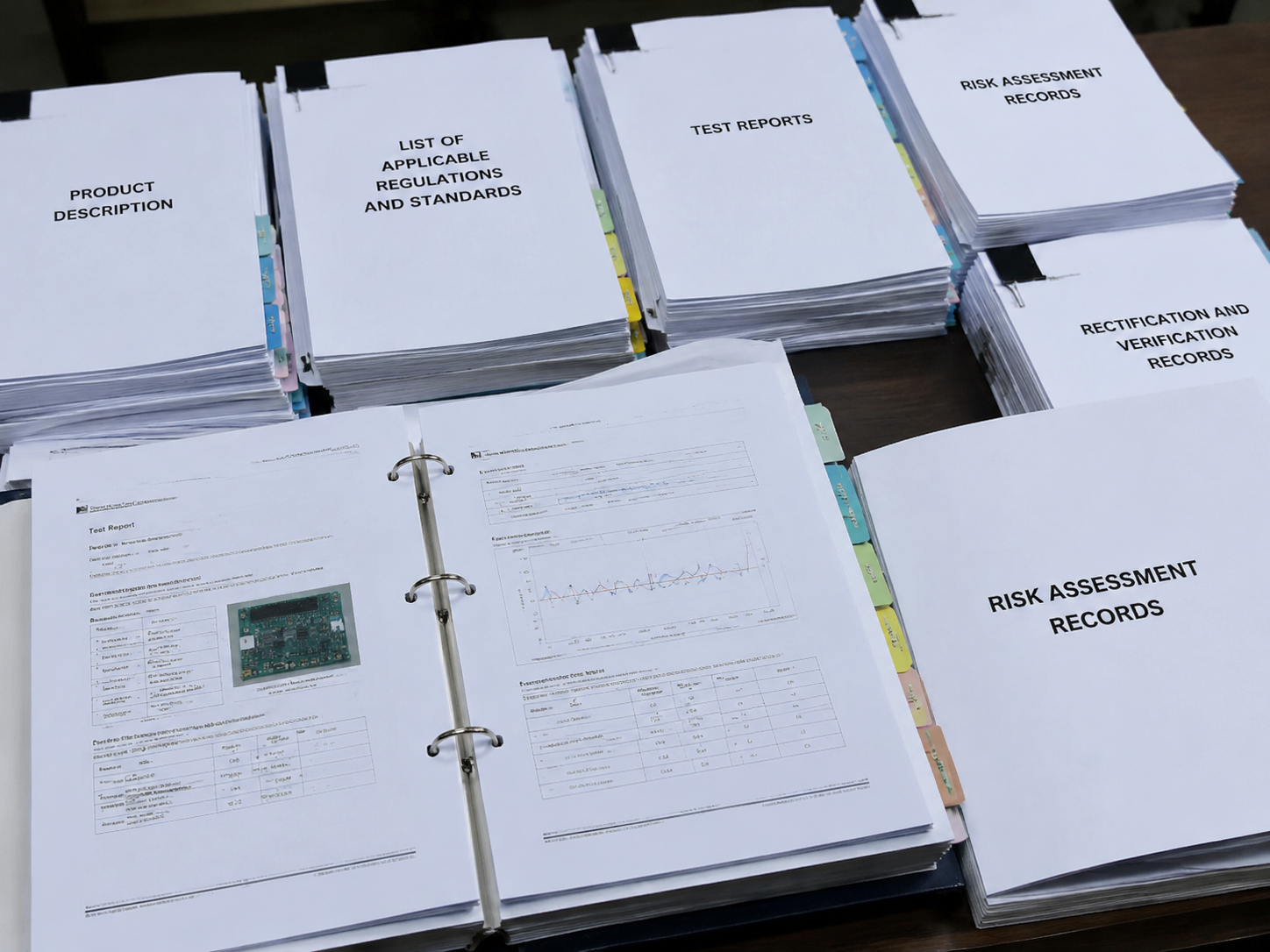
• Step 3: Prepare technical documents. Technical documents are the core basis for UKCA compliance, which need to include all materials that can prove the product meets the requirements, such as product description, list of applicable regulations and standards, test reports, risk assessment records, rectification and verification records, etc., and need to be organized into a complete and traceable document system.
• Step 4: Sign the Declaration of Conformity (DoC). The Declaration of Conformity is an official compliance commitment document issued by the enterprise, which must include necessary fields as required by applicable regulations, usually including: unique identification information of the product (such as model, specification, serial number or batch number); full name and registered address of the manufacturer; list of applicable UK product regulations; list of adopted UK designated standards or other technical bases; a statement that the enterprise bears full responsibility for the compliance of the product; name, position, signature of the authorized signatory; date and place of signing the declaration. After signing, the enterprise must bear full legal responsibility for the authenticity and accuracy of the declaration.
• Step 5: Labeling and document retention. Affix the UKCA mark in accordance with the requirements of applicable regulations, and the full set of technical documents and Declaration of Conformity must be retained for the number of years required by the regulations.
Key Checkpoints: The UKCA mark can only be affixed after all conformity assessment procedures are completed and the product is confirmed to meet the requirements. It is not allowed to affix the mark first and then supplement the documents; technical documents must be provided in a timely manner according to regulatory requirements, and must not be delayed without reason.
Approved Body Participation Path (5 Steps + Checkpoints)
If regulations require the Approved Body participation path, the core prerequisite is to select a body with corresponding qualifications.
• Step 1: Screen and verify the body. Select a body through the official UK government directory of Approved Bodies, focusing on verifying two items: first, the body has the authorization qualification for the corresponding product category, applicable regulations and conformity assessment modules; second, the authorization status of the body is within the validity period.
• Step 2: Submit assessment application. Submit technical materials and representative samples according to the requirements of the body. The specific assessment content depends on the product risk level and applicable modules: it may only include document review, or may involve type testing. High-risk products may also require factory quality system audit to verify the consistency between mass-produced products and assessed samples.
• Step 3: Rectification and re-examination. For non-conformities raised during the body’s assessment process, rectification must be completed as required and submitted to the body for re-examination until all requirements are met.
• Step 4: Obtain assessment documents. After passing the assessment, the body will issue corresponding conformity assessment documents (such as certification certificates), which will be marked with the body identification number and unique number; if you need to verify the validity of the documents, you can check the current authorization scope of the body through the official directory and confirm the information directly with the issuing body.
• Step 5: Labeling and document retention. The Declaration of Conformity must be marked with relevant body information as required by applicable regulations. Whether the body identification number needs to be affixed next to the UKCA mark depends on the corresponding regulations and the conformity assessment module used, and is not mandatory for all categories; the full set of technical documents, Declaration of Conformity and body assessment documents must be retained as required by regulations.
Key Checkpoint: The authorization qualification of the body must fully cover the category, regulations and assessment modules of the corresponding product, otherwise the assessment result is invalid.
Comparison of Core Differences Between the Two Paths
For quick distinction, the core differences between the two paths are sorted out as follows:
| Comparison Dimension | Manufacturer Self-Assessment Path | Approved Body Participation Path |
| Responsible Party | The manufacturer bears all compliance responsibilities | The manufacturer bears the primary responsibility, and the Approved Body bears the audit responsibility for the corresponding assessment links as required by regulations |
| Applicable Scenarios | Products for which corresponding regulations allow manufacturers to complete conformity assessment on their own | Products for which corresponding regulations mandate the participation of an Approved Body in conformity assessment |
| Cost and Cycle | No body audit fee, low cost; usually completed in 1-4 weeks when materials are complete and no rectification is required | Includes body audit and assessment fees, high cost; usually takes 2-6 months, longer for complex products or those requiring factory audits |
| Core Vouchers | Declaration of Conformity (DoC) signed by the manufacturer and full set of technical documents | Declaration of Conformity, full set of technical documents, and conformity assessment documents issued by the Approved Body |
UKCA Mark Usage Rules: Standards and Taboos
The use of the UKCA mark must comply with the requirements of corresponding product regulations. The core principle is that the mark is clear and distinguishable, and the information is true and valid. The following are general rules, and specific requirements need to be confirmed in combination with applicable regulations.
Mark Style Requirements
The UKCA mark must use the officially specified pattern and proportion, and must not be stretched or deformed at will; the mark must be clear, legible, and form sufficient contrast with the background. Color requirements depend on corresponding regulations, and there is no general rule mandating uniform black. The minimum height of the mark is usually not less than 5mm. If the product size is too small, it can be scaled down proportionally, but must be kept clear and distinguishable. Specific exception requirements shall be subject to applicable regulations. The attachment method of the mark must meet regulatory requirements, and must be recognizable during the normal use cycle of the product. Whether methods such as durable labels, silk screen printing, and laser engraving are acceptable shall be confirmed according to the rules of corresponding categories.
Mark Affixation Position Rules
The affixation position of the UKCA mark must follow the principle of “priority on the product body, attachment to accompanying items as exceptions”:
1. Default requirement: Priority is given to affixing it to a prominent position on the product body or fixed nameplate in accordance with regulatory requirements, to facilitate identification by consumers or supervisors.
2. Exception situations: Only when the nature, size or structure of the product makes affixation on the body infeasible, and the corresponding product regulations explicitly allow it, can the mark be affixed to the product packaging or accompanying documents.
3. Priority rules for special categories: If there are special regulatory requirements for the affixation position of special categories such as medical devices and building materials, those provisions shall apply.
No matter which affixation method is used, the UKCA mark must not be completely omitted (except as otherwise explicitly provided by regulations), and the mark must be clear, distinguishable, and not easily damaged.
Situations Where the UKCA Mark is Prohibited
The UKCA mark must not be affixed in the following situations, otherwise it may constitute a violation:
1. The product does not fall within the scope of regulations applicable to the UKCA mark, or is governed by other special systems;
2. All conformity assessment procedures have not been completed, the Declaration of Conformity has not been signed, and the product has not been confirmed to meet the requirements;
3. The product is only placed on the Northern Ireland market and does not need to meet UKCA requirements;
4. There is one of the following compliance invalidation situations: the assessment document issued by the Approved Body expires or is revoked according to the terms; changes in the product or key supply chain cause the original assessment to no longer cover compliance requirements; the information of the entity/label/manual is inconsistent with the actual product and has not been updated; the ongoing compliance control obligations required by regulations are not met.
Common Usage Misconceptions
Several common mark usage errors in actual operation need to be avoided:
1. Overlapping and obscuring of marks: The UKCA and CE marks can be used at the same time, but they must be independent and clearly visible, and must not obscure each other.
2. Exemption from labeling for small products: If the product size is too small to be labeled on the body, it is necessary to confirm whether it can be labeled on the packaging or accompanying documents according to regulatory requirements, and the mark must not be completely omitted directly.
3. The mark is permanently valid and does not need to be updated: The validity of the UKCA mark is attached to the compliance status of the product. When the product, applicable regulations/standards, or responsible party changes, it is necessary to re-evaluate compliance and update relevant documents, and adjust mark information if necessary; whether the certification certificate issued by the Approved Body has a validity period and whether it needs to be renewed depends on the certificate terms and applicable regulations, and there is no unified renewal rule.
4. Arbitrary adjustment of mark style: The proportion and pattern of the mark must not be changed at will. If the size needs to be adjusted, it must be scaled according to the official proportion to ensure recognizability.
Application Cycle and Cost Estimation: Reasonable Expectations and Pitfall Avoidance
There is no unified statutory time limit for UKCA conformity assessment, nor is there a fixed “one-price” charging standard. The following cycles and costs are empirical estimates for common industry projects. The premise of the estimation is that product classification, representative samples and basic compliance materials have been clarified, and are for reference only. Specifics need to be judged in combination with the actual situation of the product.
3 Key Influencing Factors for Cycle Estimation
There are three types of core factors affecting the application cycle:
1. Path type: For the manufacturer self-assessment path, if the materials are complete and no rectification is required, it can usually be completed in 1-4 weeks; if supplementary testing and rectification are required, the cycle will be extended accordingly. The cycle of the Approved Body participation path is generally longer, usually 2-6 months, and for complex products (such as medical devices, large machinery) or those requiring factory audits, the cycle will be further increased.
2. Product complexity: The more regulations a product involves and the more complex its structure, the longer the assessment cycle.
3. Degree of preparation: Common reasons for delay include path deviation caused by incorrect product classification, the need to supplement a large number of tests due to outdated original compliance materials, repeated revisions of labels and manuals that still fail to meet requirements, and inconsistency between submitted samples and mass-produced products.
Core Composition and Influencing Factors of Cost
In terms of cost, the cost of the manufacturer self-assessment path mainly includes testing fees and document preparation fees, with no Approved Body audit fee, and the overall cost is low. The cost of the Approved Body participation path includes testing fees, body assessment fees, certificate fees, etc. Products requiring factory audits may also involve annual supervision fees.
Key factors affecting cost include: product category and complexity, number of applicable regulations and standards, whether type testing or factory audit is required, and whether multiple models can be assessed jointly. The premise of joint assessment for multiple models is: in addition to consistent core structure and components, it is also necessary to confirm that product materials, rated parameters, wireless modules, software versions, key safety performance, label content and intended use have not changed; if this cannot be confirmed, the laboratory or Approved Body must judge the sampling rules and model coverage scope, and it cannot be directly judged that they can be combined solely based on “appearance differences”.
Method for Correctly Estimating Costs
To obtain an accurate quotation, it is necessary to first clarify the product category, applicable regulations, required standards and model differences, and provide complete product information to the body or laboratory, otherwise the quotation is not referential. You can compare quotations from 2-3 bodies with corresponding qualifications at the same time. When comparing, pay attention to verifying the service content included in the quotation, and whether there are hidden additional costs such as subsequent supervision fees and rectification re-examination fees, to avoid mid-process price increases. There is no general “one-price” UKCA conformity assessment service. For bodies that give a fixed quotation without verifying product details, you should carefully verify their qualifications and service scope.
Post-Application Compliance Maintenance and Exception Handling
UKCA compliance is a long-term process, not something that can be done once and for all after the assessment is completed. Continuous maintenance is required afterwards to ensure that the product’s compliance status remains continuously valid.
Daily Maintenance of Compliance Status
1. Product change assessment: When replacing key components, adding core functions, or upgrading product models, it is necessary to first assess the impact of the change on compliance. If the change involves assessed compliance items, supplementary testing or re-assessment is required, and the product cannot be directly marketed for sale.
2. Entity information change: When entity information such as the UK-based responsible person or manufacturer name changes, the Declaration of Conformity or relevant assessment documents must be updated in a timely manner to ensure consistent information.
3. Regulation and standard tracking: It is necessary to regularly pay attention to updates of corresponding UK product regulations and designated standards, and adjust product design and documents in a timely manner to ensure continuous compliance with current requirements.
4. Handling of qualification changes: If the qualification of the Approved Body participating in the assessment changes, it is necessary to immediately check the notice of the competent authority, certificate terms and applicable regulations to confirm the validity of existing assessment documents, and whether it is necessary to transfer to another qualified body, conduct supplementary assessment, or stop product placement. It does not automatically become invalid immediately.
Key Points for Responding to Regulatory Spot Checks
UK market regulation adopts a spot check system, and when subject to a spot check, it is necessary to cooperate as required. The core points are as follows:
1. Document retention requirements: Technical documents, Declaration of Conformity, and relevant assessment documents must be retained for the number of years required by regulations (usually not less than 10 years, for special categories, subject to corresponding regulations), must not be lost or damaged, and must be provided in a timely manner according to regulatory requirements, without unreasonable delay.
2. Contact entity: For overseas manufacturers, regulatory spot checks usually first contact the UK-based responsible person (if any), who will cooperate to provide the full set of compliance documents. The enterprise must ensure that the responsible person can retrieve and submit documents in a timely manner.
3. Response to incomplete documents: If it is determined that the documents are incomplete, they must be supplemented within the time limit specified by the regulatory authority, otherwise penalties such as fines and product removal may be faced.
4. Response to non-compliance: If a product is determined to be non-compliant, measures such as stopping placement, rectification, notifying relevant parties, withdrawal or recall must be taken according to the risk level, the scope of the market already placed, and regulatory requirements; whether it is necessary to re-apply for assessment depends on regulatory requirements and rectification situation, and not all non-compliance situations require re-processing.
Mass Production Consistency Control Requirements
UKCA compliance requires mass-produced products to be consistent with the samples during assessment, to ensure that batch products continue to meet regulatory requirements:
1. When changing suppliers or adjusting production processes, it is necessary to first assess the impact on product compliance performance. If changes involve key safety, electromagnetic compatibility and other performances, re-verification is required.
2. When updating labels, manuals, and packaging, it is necessary to simultaneously review whether they meet the requirements of UKCA-related regulations, to avoid non-compliance of mark size, compliance information, etc.
Compliance Red Lines
The following four types of behaviors are serious violations and must be strictly avoided:
1. Affixing the UKCA mark before completing all conformity assessment procedures and confirming that the product meets the requirements is a false compliance mark, which may face law enforcement penalties and product removal. In serious cases, it may involve criminal responsibility. The specific consequences depend on applicable regulations and the circumstances of the violation.
2. Forging test reports, Declaration of Conformity or Approved Body assessment documents is a serious violation and requires corresponding legal responsibility.
3. Using assessment documents issued by a body that does not have authorization qualifications for the corresponding category, regulations and modules, even if the body itself is a real Approved Body, the assessment results beyond the authorization scope are still invalid and will be treated as violations.
4. Failing to retain technical documents as required by regulations, or having fraudulent technical documents that cannot respond to regulatory spot checks, requires corresponding compliance responsibility.
Quick Decision-Making and Summary
Practitioners who are new to UKCA can use the following six “question + next step” quick decision checklists to self-check whether the direction is correct:
1. Question: Is the market where the product is finally placed or supplied the GB market, Northern Ireland, or the EU?
Next Step: If it is the GB market, enter the regulation matching stage; if it is Northern Ireland or the EU, the corresponding compliance systems such as CE or CE+UKNI apply respectively, and there is no need to process UKCA.
2. Question: Does the product fall within the scope of regulations applicable to the UKCA mark, and what are the CE acceptance rules of the corresponding regulations?
Next Step: After excluding exempt categories, query the CE acceptance conditions, validity period and transition arrangements of the corresponding regulations, and record the check date and regulation version; if CE is still accepted and the product already has compliant CE materials, CE can be used temporarily to enter the GB market, while tracking policy changes.
3. Question: What functions and accessories does the product involve, how many different models are there, and do multiple regulations need to be applied?
Next Step: Match applicable regulations one by one according to product functions, sort out all regulated components and models, clarify the standards and assessment requirements that need to be covered, and avoid compliance risks caused by missing regulations.
4. Question: Do corresponding product regulations allow manufacturers to conduct self-assessment, or must an Approved Body participate in the conformity assessment?
Next Step: If self-assessment is allowed, testing, technical document preparation and DoC signing can be completed as required; if an Approved Body is required to participate, immediately verify the body’s authorization qualifications for the corresponding category, regulations and assessment modules, and then start the assessment process.
5. Question: Are existing compliance materials (such as CE-related materials) consistent with the current product, current UK regulations and designated standard versions?
Next Step: If consistent, basic materials can be directly reused, only adjusting regulation citations and declaration formats; if not consistent, supplement difference testing or update materials before proceeding with the assessment.
6. Question: Is the information of the Declaration of Conformity, technical documents, product labels and mass-produced physical products consistent?
Next Step: Check the matching of the four parties’ information item by item. If there are differences, update the corresponding documents or adjust the product design in a timely manner, and affix the UKCA mark for marketing only after confirming all are consistent.
As the core product compliance system for the GB market after the UK’s withdrawal from the EU, UKCA may seem to have numerous entries, but its core logic always revolves around “clarifying the applicable scope – matching corresponding regulations – selecting a compliance path – retaining compliance evidence – continuously maintaining validity”. During the application process, it is necessary to avoid relying on general conclusions, and all judgments must be based on the current requirements of corresponding product regulations, so as to ensure long-term compliant marketing of products while controlling costs and avoid regulatory risks.