
If you live in the United States or work in cross-border e-commerce, you have most likely seen DOE-related markings on charger packaging and heard the term “standby power theft”. This set of rules is directly related to everyone’s wallet and business — it not only regulates the power waste of chargers when they are plugged in but not in use, but also determines whether a product can legally enter the US market. This article sorts out the content step by step from basic concepts to practical judgment, so that ordinary consumers and small cross-border sellers can quickly master the core judgment methods.
1. First, Understand: What Exactly Are the DOE Battery Charger Regulations?
Many people find “DOE regulations” esoteric when they first hear them, but their essence is very simple: they are mandatory energy efficiency access rules formulated by the U.S. Department of Energy (DOE), which set minimum energy-saving thresholds for electronic products sold in the United States.
For battery chargers, this set of rules only assesses one thing: power waste. That is, of the electricity drawn by the charger from the grid, how much is actually used for charging, and how much is wasted as heat loss. As for the risk of electric shock from the charger, charging speed, and impact on battery life, these are not under the jurisdiction of the DOE, and are covered by other special rules.
Its core nature is mandatory access — as long as it is a regulated charger legally sold in the US market, it must meet the requirements. Non-compliant products may face import restrictions, platform delisting, recalls, or civil penalties. The specific consequences depend on the facts of the violation, the number of products, and the discretion of the law enforcement agency.
Practical Impact on Different Groups of People
Different identities are affected from completely different angles:
- Ordinary consumers: Compliant models have extremely low standby power consumption. If there are multiple chargers with high standby power consumption plugged in all year round at home, based on the average US residential electricity price and an estimated extra 0.5W standby power consumption per unit, you may spend an extra several to tens of dollars on electricity bills a year. The specific amount depends on usage habits and local electricity prices.
- Sellers/importers: The main responsibility for compliance lies with the brand owner or manufacturer. OEM production does not transfer responsibility; the party whose brand is affixed is responsible.
Basic Cognitive Boundaries
There are several common points of confusion that can be clarified in advance to avoid many detours:
First, the DOE only regulates energy efficiency and cannot replace other compliance requirements such as safety, electromagnetic compatibility, and battery transportation. Meeting DOE requirements only means that the product’s energy efficiency meets the standard, not that it is safe or free of electromagnetic interference. Other necessary certifications still need to be obtained.
Second, merchants’ promotional claims of “energy saving”, “environmental protection”, and “low standby” cannot be used as a basis for compliance. There must be official compliance certificates corresponding to the specific model.
Third, the limit requirements of the regulations are regularly updated. The specific compliance is subject to the effective version when the product enters the US market, and old standards cannot be applied to new products.
2. Which Chargers Need to Meet DOE Requirements?
Many people think that “anything that can charge is regulated”, but in fact, the DOE’s jurisdiction has clear boundaries. To quickly determine whether a charger is regulated, just ask three questions: First, is its core function to replenish electrical energy for rechargeable batteries or battery packs? Second, is the product to be manufactured, imported, or sold in the United States? Third, is it not a special category explicitly excluded by the regulations? Only if all three answers are “yes” does it fall within the scope of jurisdiction.
Common Regulated Chargers
Most charging products encountered in daily life are within the scope, roughly divided into three categories:
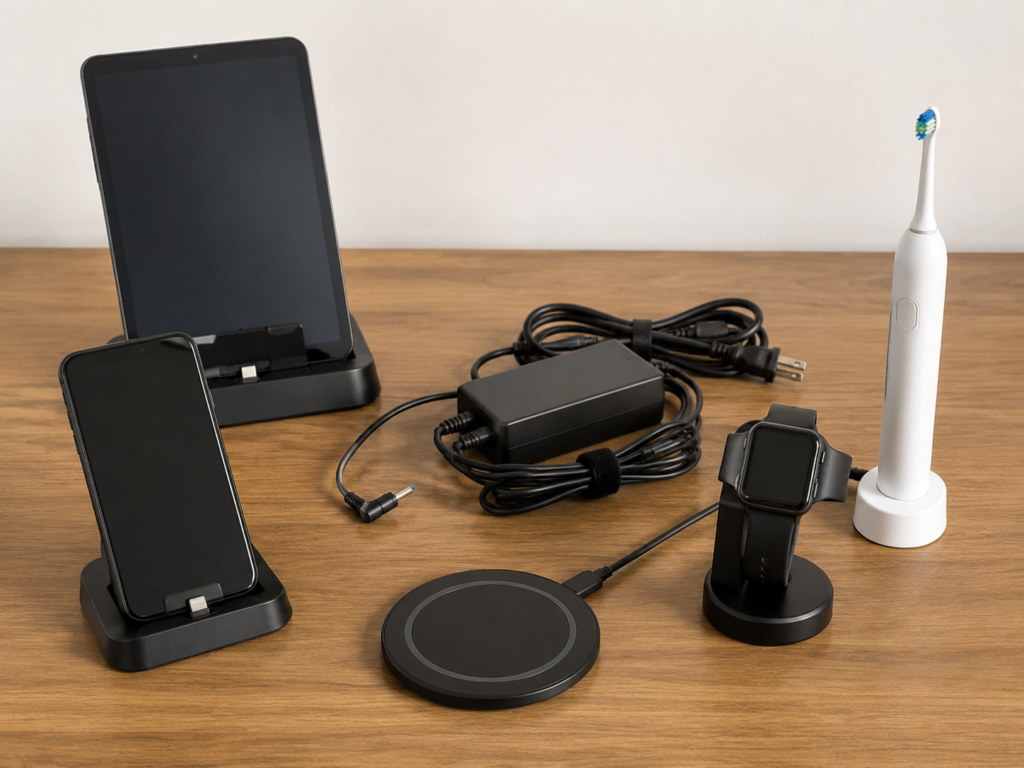
- Consumer electronics: Mobile phone/tablet charging docks with charging control functions, dedicated laptop chargers, wireless charging pads, smart watch/electric toothbrush charging docks, etc.; the classification of ordinary USB/PD wall chargers cannot be determined solely by which end the charging control is on. It needs to be comprehensively judged based on product structure, sales form (whether it is bundled with specific equipment), output purpose, and the definitions in DOE regulations. It may be subject to battery charger or external power supply (EPS) rules, and cannot be directly classified based on a single feature.
- Tools and home appliances: Electric tool chargers, charging bases for wireless vacuum cleaners and robot vacuums, small backup power chargers, etc.
- Easily overlooked categories: Individually sold multi-port charging docks, power strips with USB charging function (only the USB charging part is assessed, the mains socket power supply function is not included).
Categories That Require Separate Confirmation or May Be Excluded
There are several types of products for which it is impossible to directly determine whether they fall within the scope of jurisdiction by name alone, and verification is required based on product definition, power supply method, and sales form:
- Special charging equipment for road vehicles: Equipment specially designed for road motor vehicles (such as passenger cars, trucks) and used as original vehicle supporting equipment or public charging infrastructure is not within the scope of general battery charger regulation; however, separately sold aftermarket in-vehicle chargers (such as cigarette lighter to USB products) are not included in this exclusion and require separate judgment.
- Pure solar chargers without mains input: The DOE battery charger rules apply to products connected to the public grid. Chargers that rely entirely on solar power and have no AC input interface are not within the scope of these rules.
- Original vehicle-mounted charging devices: On-board charging modules that come with the vehicle when it leaves the factory, are part of the vehicle, and are not sold separately do not fall into the category of independent battery chargers; separately sold aftermarket models are not included in this exclusion.
- Special charging modules built into industrial equipment: Charging circuits that are only built-in components of industrial equipment, not sold separately to consumers, and specially designed for the dedicated batteries of the industrial equipment need to be evaluated for whether they fall within the scope of jurisdiction based on specific uses and regulatory definitions, and cannot be directly determined to be exempt solely based on “industrial use”.
- Medical-purpose chargers: Due to the special regulatory requirements for medical devices, separate confirmation is required based on product classification and applicable rules.
In addition, there is a simple judgment standard: integrated products such as mobile phones that have built-in batteries, have charging management fully integrated inside the device, and are not sold as independent chargers do not need to comply with battery charger regulations separately.
Differentiation Logic for Easily Confused Products
For several types of products that are often confused with battery chargers, differentiation requires judgment based on multi-dimensional characteristics, and conclusions cannot be drawn based on a single function alone:
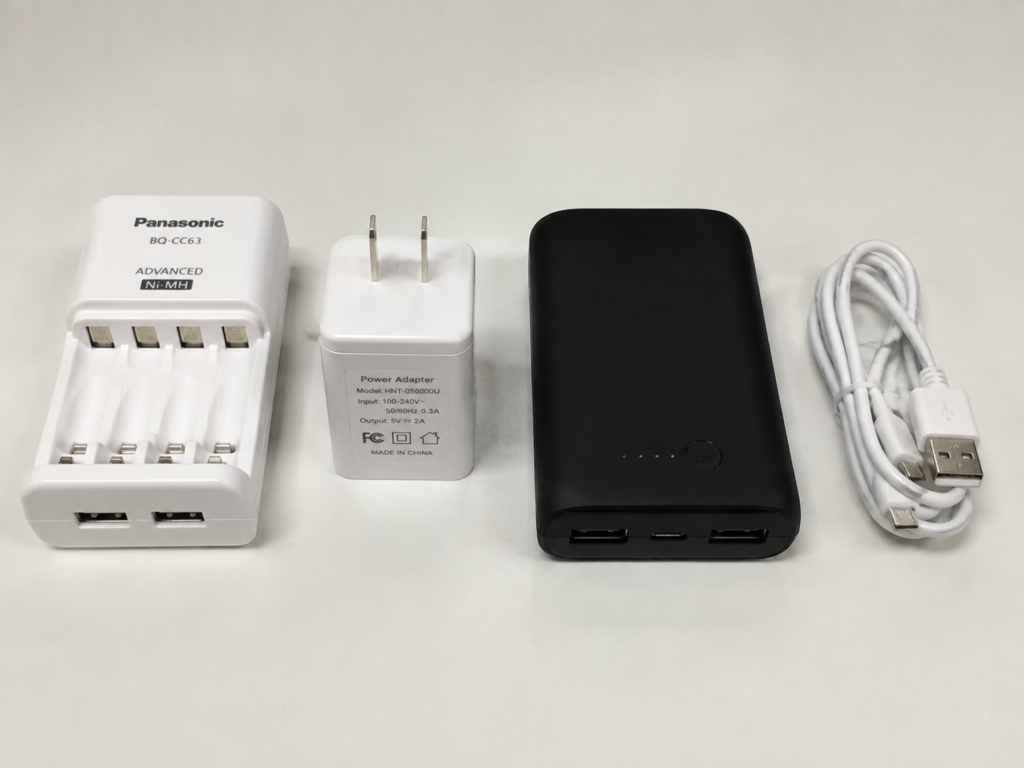
- Power adapters: If the product is designed only to provide continuous DC power supply for equipment and does not undertake battery charging management functions, it may be subject to DOE energy efficiency rules for external power supplies (EPS); if its core function is to replenish electrical energy for rechargeable batteries, it is subject to battery charger rules. The same sales bundle may involve both types of DOE requirements, which need to be evaluated separately.
- Power banks: The compliance attributes of two operating directions need to be evaluated separately: when it is charged by connecting to the mains, its internal charging circuit may be subject to battery charger rules; when it outputs power to supply/charge other devices, it may be subject to external power supply (EPS) rules. The specific classification needs to be confirmed based on product structure, nominal functions, and regulatory definitions, and a single conclusion cannot be directly applied.
- Pure USB charging cables: They are only conductive cables with no charging control circuit, are not considered chargers, and do not need to meet DOE requirements.
3. What Exactly Does the DOE Check for Charger Power Consumption?
To understand the DOE’s assessment logic, we must first clarify the four working states of chargers — all energy efficiency tests are carried out for different states:
- Charging mode: The state where the charger delivers the main amount of energy when the battery level is low, which is commonly referred to as “charging”.
- Maintenance mode (full charge standby): The low-power state where the charger maintains the battery level after the battery is fully charged, such as trickle charging after a mobile phone is fully charged.
- No-battery mode (no-load): The state where the charger is plugged into the mains but not connected to any battery or device. The corresponding power consumption is commonly referred to as “standby power theft”.
- Off mode: Only chargers with physical switches have this state, that is, the power consumption after the switch is toggled to fully off. Products without physical switches do not need to be assessed for this.
Based on the above states, the DOE will measure the corresponding parameters, and then comprehensively determine compliance according to product grouping rules. The core measurement indicators usually include three categories:
1. Average Conversion Efficiency: How Much Electricity Actually Goes Into the Battery
Simply put, average conversion efficiency is the proportion of grid electrical energy that is actually charged into the battery after passing through the charger, and the remaining electrical energy is lost in the form of heat, etc. For example, when the efficiency is 80%, if 100Wh of electrical energy is drawn from the grid, about 80Wh is actually charged into the battery, and the remaining 20Wh is lost in the form of heat, etc.
The limit logic for this indicator is not that the higher the power, the stricter the requirement. Instead, the requirements for medium-power products are relatively higher, and the requirements for products with too small or too large power are slightly relaxed. The specific limits need to be determined according to the product’s group, corresponding test procedures, and the currently effective provisions of 10 CFR Part 430. There is no uniform value applicable to all chargers.
2. No-Battery Mode Power Consumption: No-Load Power Waste
This is the “standby power theft” that everyone is most concerned about — the power consumption of the charger itself when it is plugged in but not connected to a device.
The limit logic for this indicator is very clear: the smaller the charger power, the stricter the upper limit requirement for no-load power consumption. The reason is that low-power chargers have the largest ownership, and every household has multiple units. Even if each unit only consumes an extra 0.1W, the total waste is very alarming. The specific limits are also subject to product grouping, test conditions, and effective regulations.
3. Maintenance Mode Power Consumption: Power Consumption After Full Charge
Many people confuse power consumption after full charge with no-load power consumption, but in fact the two are different: in maintenance mode, the charger needs to maintain the battery’s full charge state, so the limit is usually slightly higher than the no-load power consumption, and it also follows the rule that the higher the power, the looser the limit.
Special attention should be paid: no-load and maintenance modes are two completely independent measurement items and cannot replace each other.
Basic Process for Final Compliance Determination
Compliance is not determined by looking at a single independent indicator, but has clear judgment steps. Beginners can first understand the overall logic:
- Product classification: First confirm whether it is under the jurisdiction of battery chargers based on product definition, use, and sales form, then classify it into the corresponding group according to rated power, battery chemistry type, and product category;
- Determine test items: Clarify the working states and indicators that need to be measured according to the group (such as conversion efficiency, no-load power consumption, maintenance mode power consumption, etc.);
- Testing and comparison: After obtaining test data in accordance with official test procedures, products in some groups need to be converted into Unit Energy Consumption (UEC) according to the usage assumptions specified in the regulations (such as annual operating hours of each mode, load ratio, etc.) — that is, the annual wasted power of the charger under the conventional usage scenario assumed by the regulations, and then compared with the UEC limit of the corresponding group; products in other groups are directly assessed for the upper limit of power consumption or minimum efficiency of specific modes.
- Document retention: Enterprises need to keep complete test reports, declaration records, and product consistency documents as the basis for compliance.
Here is an example only for understanding the process: For an independently sold consumer lithium-ion battery mobile phone charger, first confirm that it is a regulated independent battery charger, then classify it into the corresponding product group, then measure charging efficiency, no-load power consumption, and maintenance mode power consumption according to the test procedure. If the group requires UEC calculation, substitute the annual usage duration assumption specified in the regulations to convert the annual energy consumption, and finally compare it with the corresponding limit to determine compliance. Note: This example is only for sorting out the logic. The specific grouping, test items, and limits must be subject to the currently effective regulations and test procedures, and conclusions cannot be directly applied based solely on the product type in the example.
Also, because the grouping and judgment rules are different, different types of chargers cannot directly compare efficiency or power consumption values horizontally. For example, the requirements for mobile phone chargers and electric tool chargers are inherently different, so forced comparison is meaningless.
4. Beginner Practice: 3 Steps to Quickly Determine if a Charger is DOE Compliant
No professional testing is required, and a preliminary judgment can be completed in the following three steps:
Step 1: Check the Product Compliance Marking and Corresponding Model
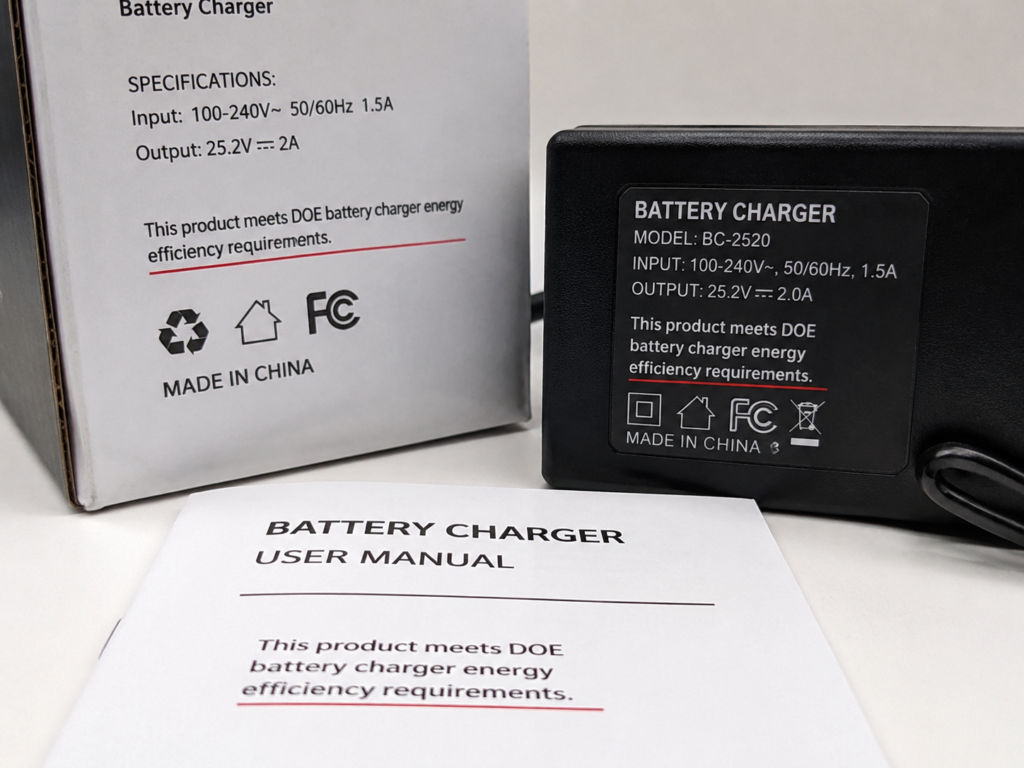
Compliant products usually mark “meets DOE battery charger energy efficiency requirements” or an equivalent official statement on the packaging, nameplate, or manual.
Two points need to be noted: vague promotional claims such as “energy saving”, “low standby”, “fast charging”, and “environmental protection” cannot be used as a basis for compliance; compliance is divided by specific model, and you cannot default to the current model being compliant just because other products of the same brand are compliant.
Step 2: Verify Official Filing and Supplier Compliance Documents
The most authoritative public verification channel is the U.S. Department of Energy’s public compliance declaration system, and comprehensive judgment must be made in combination with documents provided by the supplier:
- DOE compliance adopts the enterprise self-declaration + official filing and public disclosure model. It is not issued by a third-party institution, and there is no unified “DOE certification certificate”. The “DOE certification” promoted by merchants is a colloquial expression;
- The declaration records in the database may be published according to the manufacturer’s internal model, model family, or equivalent model. For retail models and bundle models familiar to consumers, you may need to confirm the model correspondence with the supplier;
- A record in the database only means that the enterprise has completed the declaration. The final compliance still needs to be judged based on the test report, product consistency, and accuracy of the declaration information; failure to find a record does not directly mean non-compliance, which may be caused by different model naming or declaration entities. You need to request complete compliance documents (test report, declaration voucher, model correspondence description) from the supplier for verification.
Step 3: Preliminary Screening for Ordinary Users (For Personal Reference Only, Not as a Basis for Compliance)
If ordinary users do not have professional equipment, it is not recommended to judge compliance solely based on heat generation — the shell temperature of the charger is affected by many factors such as output power, charging stage, ambient temperature, shell material, and heat dissipation design, and has no direct correspondence with energy efficiency limits: products with low no-load power consumption may also have a slight temperature rise due to poor heat dissipation design, and low shell temperature does not mean that efficiency or maintenance mode power consumption meets the standard.
If you have a basic power meter, you can stably measure the power consumption for more than 1 hour in no-load state as a reference for personal risk screening, but this result must absolutely not be used as a legal basis for compliance. The final judgment must be based on officially recognized test reports and declaration records.
Quick Identification of Fake Compliance
There are many cases of fake compliance on the market. Remember three points to quickly see through them:
- Safety certifications (UL/ETL, etc.) do not represent DOE energy efficiency compliance. The two have completely different jurisdictions and cannot replace each other;
- Market access requirements of other countries or regions (such as EU ErP energy efficiency, China energy efficiency label, Japan PSE safety compliance, etc.) cannot replace DOE. This is a mandatory requirement of the United States, and only rules applicable in the United States are recognized;
- If a product only vaguely promotes “meeting DOE requirements”, cannot provide test reports and declaration instructions for the corresponding model, and cannot verify the filing information, there is a high probability of fake compliance risk.
5. Advanced Judgment: Requirement Differences and Compliance Assessment for Different Chargers
If you need to more accurately judge the strictness of requirements or do product compliance planning, you need to understand the differences in requirements for different products and the assessment rules for special scenarios.
Requirement Trends by Power Level (Schematic Division)
Power is one of the core factors affecting the strictness of requirements. The following three tiers are only schematic divisions for beginner understanding, and are not the official grouping basis in DOE regulations. The official classification needs to be determined in combination with the rated power definition, product category, battery chemistry system, and the current DOE classification table:
- Low power tier (approx. ≤15W): For example, chargers for mobile phones, Bluetooth headsets, and smart watches have the strictest overall requirements and the lowest no-load power consumption upper limit, because this type of product has the largest ownership and the most total waste.
- Medium power tier (approx. 15W-100W): For example, chargers for laptops, electric tools, and robot vacuums have moderate requirements, which are looser than the low power tier.
- High power tier (approx. >100W): For example, chargers for low-speed electric vehicles and large backup power supplies have relatively the loosest requirements.
The overall trend is that the smaller the power of the product, the stricter the requirements for indicators such as standby power consumption. The specific limits are subject to the official classification table.
Requirement Differences by Battery Chemistry Type
In addition to power, battery chemistry type also affects the requirements:
- Lithium-ion battery chargers: The mainstream category of consumer electronics, subject to the most general mandatory requirements.
- NiMH/NiCd battery chargers: Mostly used in old-fashioned toys and low-end electric tools, with slightly lower efficiency requirements than lithium-ion batteries.
- Lead-acid battery chargers: Mostly used in backup power supplies and some robot vacuums, with separate test methods and limit rules, different from lithium-ion batteries.
Compliance Assessment for Special Scenarios
For some special scenarios, general rules cannot be directly applied, and assessment is required based on specific circumstances:
- Chargers given as gifts or included in bundles: Do not default that chargers given as gifts, included in bundles, or not charged separately can be exempted from compliance — only those that correspond to the clear exception clauses in the currently effective regulations, fully meet the conditions of the clauses, and complete the prescribed procedures can apply special arrangements. Ordinary chargers sold with the main unit, given as gifts in platform activities, or given as buy-one-get-one free in stores all need to meet DOE requirements, and compliance responsibility cannot be exempted on the grounds of “not charged separately”.
- Second-hand original chargers: Original second-hand products that have not been modified, have not had core charging components replaced, and whose original model has completed compliance declaration when first entering the US market usually do not need to be re-declared if they still belong to the original compliance unit; however, if there is refurbishment, replacement of charging circuits, rebranding, model change, or unconfirmed source, it is necessary to re-evaluate whether re-testing, updating the declaration, or supplementing compliance documents is required.
- Multi-port power strips with USB charging function: Only the energy efficiency of the USB charging part is assessed, and the mains power supply function of the power strip itself is not included in the assessment scope.
- Non-independent charging modules built into industrial equipment: If they are part of industrial equipment, not sold separately, and specially designed for the dedicated battery of the equipment, it is necessary to evaluate whether they fall within the scope of jurisdiction based on specific uses and regulatory definitions, and cannot be directly determined to be exempt solely based on “industrial use”.
Situations Where Compliance Needs to Be Re-Evaluated
Many sellers fall into the trap of “if the appearance doesn’t change, there’s no need to re-comply”. In fact, as long as there are changes to charging-related components or functions, compliance must be re-evaluated, and if necessary, re-tested and declaration records updated:
- When replacing the power module, charging algorithm, or battery pack type;
- When modifying the maintenance mode logic, standby function, or rated output power;
- Models with the same appearance but different internal charging circuits (such as 20W and 40W chargers with the same shell) must be evaluated separately, and compliance records cannot be shared.
6. Pitfall Avoidance Guide: Common Misconceptions and Risk Reminders
Regarding the DOE battery charger regulations, there are many widely circulated false statements, which are uniformly clarified here:
Clarification of Common Cognitive Misconceptions
- Misconception: All devices that can charge need to meet DOE requirements → Clarification: Only independent battery chargers that meet the regulatory definition are required. Original vehicle-mounted supporting charging modules, special charging facilities for road vehicles, and integrated devices with built-in charging circuits (such as mobile phones) do not need to comply with battery charger regulations separately.
- Misconception: Fast chargers definitely do not meet DOE requirements → Clarification: Fast charging only means fast charging speed, and there is no inevitable connection with energy efficiency level. As long as indicators such as conversion efficiency meet the standards, it can be compliant. Fast charging products of regular brands also need to be confirmed by checking the compliance records of the corresponding model.
- Misconception: The higher the power of the charger, the stricter the energy efficiency requirements → Clarification: On the contrary, the lower the power of the charger, the stricter the overall requirements, because low-power products have a larger ownership and more total energy waste.
- Misconception: DOE compliance means zero standby power consumption → Clarification: It only limits standby power consumption to a reasonably low level, not absolute zero power consumption. Current technology cannot yet achieve completely zero power consumption.
- Misconception: The slower the charging speed, the more energy-efficient → Clarification: Slow charging takes longer, and the total energy consumption may be higher instead. Comprehensive judgment needs to be made in combination with conversion efficiency, maintenance power consumption after full charge, etc. It is not that the slower the more energy-saving.
Pitfall Avoidance Reminders for Ordinary Consumers
- Chargers with no brand and incomplete compliance materials have higher uncertainty in meeting energy efficiency standards, and may cause additional power waste when plugged in all year round. When purchasing, it is recommended to prioritize products that can provide clear compliance information.
- Do not just look at promotional terms such as “fast charging” and “GaN (gallium nitride)”, which have no inevitable connection with energy efficiency. It is best to check DOE compliance-related information when purchasing.
- The most power-saving method is always to unplug the charger when not in use. Even compliant products have standby power consumption, and unplugging is zero consumption.
- Note: The DOE only sets the minimum threshold for specific energy efficiency indicators, and cannot represent the safety, durability, or overall quality of the product.
Basic Compliance Pitfall Avoidance for Sellers/Importers
- Test reports of similar models, old-version circuits, or other market versions cannot be used to replace DOE compliance documents. Testing and declaration must be completed in accordance with applicable US standards.
- Even chargers given as supporting gifts and not charged separately need to meet DOE requirements. The regulations do not distinguish whether they are charged or not, as long as they are circulated in the US market.
- After replacing charging-related components (such as power ICs, charging algorithms), the compliance of the product must be re-evaluated, and it cannot be ignored just because the appearance has not changed.
- Do not think that low-power USB products are naturally unregulated. For example, low-power products such as Bluetooth headset charging docks also fall within the scope of jurisdiction, and the overall requirements are stricter.
7. Differentiation of Easily Confused Rules: The Relationship Between DOE and Other Certifications/Regulations
The jurisdictions of different rules are completely different. The core differences can be referred to in the following table:
| Rule/Certification | Nature | Core Jurisdiction | Mandatory |
|---|---|---|---|
| DOE Battery Charger Regulations | Federal energy efficiency regulations | Power waste of chargers | Mandatory (US market access for regulated products) |
| UL/ETL Safety Certification | Third-party safety certification | Safety risks such as electric shock and fire | Mandatory in some scenarios (e.g., platform, channel requirements) |
| FCC-related Compliance Requirements | Federal electromagnetic regulatory requirements | Control of electromagnetic emission/radio interference; some products with wireless functions involve wireless device authorization | Mandatory when applicable (for intentional or unintentional radiating devices under FCC jurisdiction, implemented according to the corresponding authorization path) |
| ENERGY STAR | Voluntary high energy efficiency label | High energy efficiency higher than the DOE minimum standard | Voluntary |
The above rules do not replace each other. A legally sold charger may need to meet multiple requirements at the same time. Among them, DOE and ENERGY STAR are the most easily confused: the former is a mandatory minimum access threshold, while the latter is a voluntary high energy efficiency label with requirements higher than the DOE minimum standard. The absence of the ENERGY STAR label does not mean a violation of DOE regulations.
Federal DOE vs. State-Level Rules Such as California’s
For energy efficiency requirements of similar products already covered by federal DOE energy efficiency standards, federal law usually has preemptive effect, and states generally cannot set their own similar energy efficiency requirements that are lower than or different from federal standards, unless they obtain federal exemption; however, state-level requirements such as labeling, recycling, and registration that are not energy efficiency limits may still apply separately and need to be verified according to specific circumstances.
If a product is sold in multiple states, it must meet both the federal DOE requirements and the relevant regulations of the state where it is sold.
Summary
After reading this article, you don’t need to be a regulatory expert to master three core competencies:
First, you can quickly delineate the applicable scope: judge whether a product may fall within the jurisdiction of DOE battery chargers, and distinguish easily confused categories such as power adapters, pure charging cables, and integrated devices;
Second, you can complete preliminary compliance verification: verify compliance by checking markings, verifying official filings, and requesting compliance documents, and identify common fake compliance tricks;
Third, you can avoid common risks: understand the logic of requirement differences for different products, know which changes require re-evaluation, can distinguish the boundary between DOE and other certifications, and avoid cognitive misconceptions.
For ordinary consumers, DOE regulations are a minimum energy efficiency threshold that can reduce unnecessary power waste; for sellers, sorting out compliance logic in advance can effectively reduce the compliance risk of cross-border sales.