
If you have just started operating a small workshop or warehouse in the United States, or are responsible for your company’s equipment procurement and safety compliance, you have most likely heard the terms OSHA inspection and NRTL certification. Some people say “products need UL certification to pass OSHA inspections”, while others say “OSHA itself does not do certification at all”. There are all kinds of statements that are easy to confuse. The essence of the two is the division of labor and cooperation between the “law enforcement regulator” and the “accredited professional third party”. This article sorts out everything from identity positioning, legal logic, applicable boundaries, enforcement practice to pitfall avoidance rules, to help you build a clear compliance judgment framework.
1. First, Sort Out: Core Identities and Relationship Between OSHA and NRTL
Clarifying the positioning of the two core roles is the basis for understanding all enforcement rules, and is also the most prone to misunderstanding. You can quickly distinguish the core boundaries of the two through a comparison table:
| Subject | Core Identity | Core Responsibilities | Regulated/Service Targets | Key Boundary |
|---|---|---|---|---|
| OSHA | Federal workplace safety enforcement authority | Formulate occupational safety rules, conduct on-site inspections, and impose penalties on non-compliant entities | Employers responsible for workplace safety | Does not directly conduct product testing or issue product certifications |
| NRTL | Third-party product safety certification body accredited by OSHA | Test products in accordance with corresponding safety standards, and issue listing/labeling certificates | Product manufacturers and purchasers | May only conduct certification within the product categories and corresponding standard scopes authorized by OSHA |
OSHA stands for the Occupational Safety and Health Administration of the United States. You can colloquially understand it as the “workplace safety regulator” at the US federal level. Its core responsibilities are to formulate rules, conduct inspections, and implement enforcement around workplace safety.
NRTL stands for Nationally Recognized Testing Laboratory, which is an independent third-party organization accredited after OSHA’s qualification review. Commonly known brands such as UL, ETL (Intertek), CSA, and TÜV Rheinland are all well-known NRTL brands in the market. It should be noted that these are all brand names. In practice, you must verify the specific legal entity in OSHA’s official NRTL list, as well as the product categories and safety standard scopes for which the entity is authorized. You cannot judge the OSHA validity of a certificate solely by the brand name.
There is no administrative affiliation between the two. Their core cooperation logic is qualification accreditation + enforcement reliance: OSHA is responsible for formulating rules and reviewing the qualifications of third-party organizations. After accreditation, OSHA relies on the product certification conclusions issued by these organizations during enforcement. As an independent third party, NRTL is responsible for professional product safety testing and certification.
Here we need to correct a very common expression misunderstanding: there is no such thing as an “OSHA-certified product”. The correct expression is “a product listed/certified by an OSHA-accredited NRTL”. If someone uses “OSHA certification” to describe product compliance, it is usually a misunderstanding of the rules.
2. Legal Logic: Why OSHA Enforcement Relies on NRTL Certification
You may ask: Since OSHA is the enforcement authority, why doesn’t it test products itself, but instead recognizes certifications from third-party organizations? This is not an arbitrarily set rule; it has clear legal basis and is an inevitable choice for enforcement efficiency.
First is the regulatory-level framework foundation. The core basis for OSHA to regulate the NRTL system is Title 29, Part 1910.7 of the Code of Federal Regulations of the United States (29 CFR 1910.7). This rule clarifies NRTL qualification requirements, accreditation processes, and definitions of related terms. It is a rule for OSHA to manage NRTL bodies, rather than a general mandatory provision that directly requires all employers to use NRTL-certified products. OSHA’s own authorization comes from the Occupational Safety and Health Act, which grants it the authority to accredit third-party testing organizations.
In various specific OSHA safety standards (such as classification standards for electrical safety, hazardous environment equipment, personal protective equipment, etc.), three terms related to product compliance often appear, which are easy to confuse when encountered for the first time:
- listed: Usually means that a product has been tested by an OSHA-accredited body to meet corresponding standards and is included in the body’s public certification directory (in simple terms, the product can be found in the body’s “compliance list”);
- labeled: Means that the product bears an accredited compliance mark. The mark usually includes information such as model number and control number (a unique number used to locate specific certification files), which can be traced back to the corresponding certification record;
- approved: A general term in OSHA standards for “meeting statutory safety requirements”, which cannot be directly equated with NRTL certification. Within the scope required by relevant standards, NRTL listing/labeling is a common way to meet the “approved” requirement, but specific standards may also allow other statutory compliance paths, which must be based on the clear definitions of the corresponding standards.
There are three main reasons why OSHA entrusts product safety verification work to NRTLs:
First, OSHA is an enforcement agency, not a testing laboratory. It is impossible for it to have product testing capabilities for all categories and all industries. Only by relying on professional third parties can it cover the safety requirements of thousands of industrial products;
Second, the unified use of accredited third-party certification can greatly reduce the cost of disputes in enforcement—avoiding disagreements between employers and enforcement authorities, and improving judgment efficiency;
Third, the credibility of independent third-party testing is much higher than employer self-declaration, which can effectively reduce compliance loopholes.
It is precisely because of this statutory reliance relationship that valid NRTL listing is important evidence to prove that a product meets the corresponding safety standards. OSHA usually relies on this evidence first during inspections and will not directly conduct independent safety performance testing on products. However, this reliance does not exempt employers from their statutory obligations in equipment installation, maintenance, use environment, on-site safety management, and other aspects.
3. Applicable Boundaries: When Will Inspections Occur? Which Equipment Requires Key Verification?
OSHA’s NRTL verification does not cover all workplaces and all equipment. Its trigger scenarios and verification objects have clear rule boundaries.
Three Types of Scenarios That May Trigger NRTL Verification
Not all workplace inspections involve NRTL certification verification. The following three types of scenarios usually increase the probability of verification, but whether verification is actually conducted still depends on accident facts, report content, inspection priorities, and applicable standards:
The first type is post-accident investigation. If an accident suspected to be related to equipment safety, such as electric shock or fire, occurs in the workplace, OSHA may verify the compliance of the involved equipment during the investigation, and NRTL listing is one of the common verification contents.
The second type is report-based verification. If the content reported by an employee to OSHA points to the employer’s use of unsafe electrical or hazardous environment equipment, OSHA may simultaneously check NRTL-related compliance during on-site verification.
The third type is routine spot checks. For high-risk industries such as manufacturing, chemical industry, and construction sites, if the scope of routine spot checks covers categories such as electrical safety and hazardous location equipment, it may involve NRTL listing verification.
Common Types of Equipment That Require Key Verification of Listing Requirements
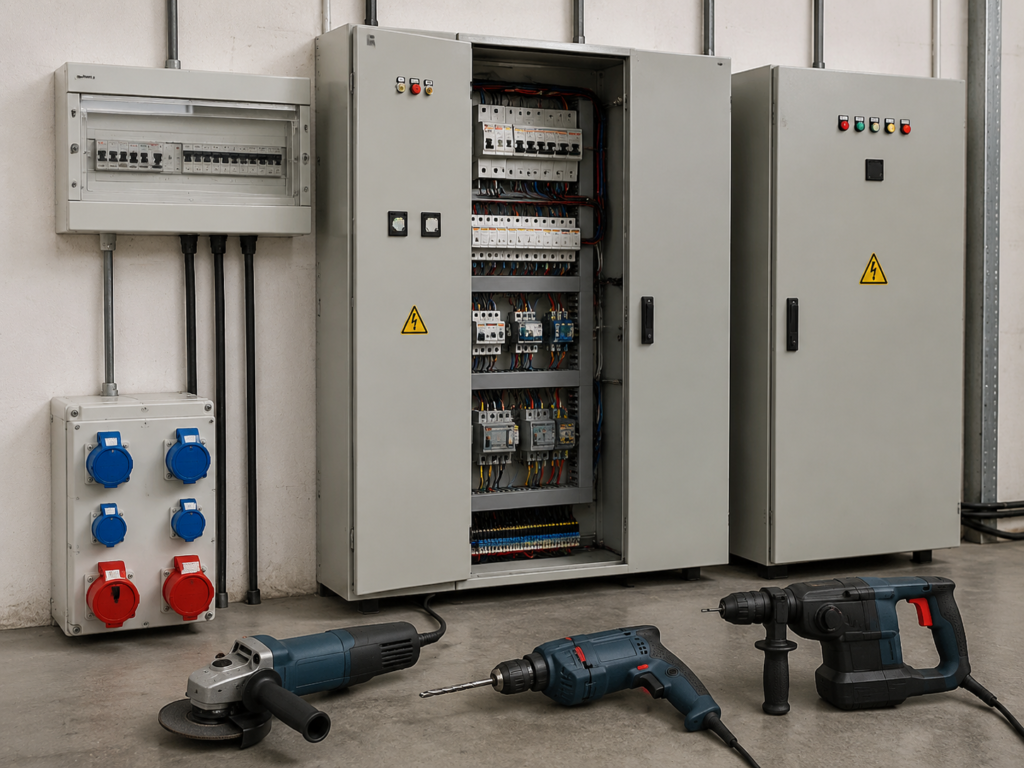
The following three types of equipment are common objects of NRTL verification, but there is no general rule that “as long as it belongs to this category, it must have NRTL”. Whether listing is required ultimately depends on the applicable specific standard provisions:
First is industrial electrical equipment, such as distribution boxes, power tools, industrial sockets, control cabinets, and other products directly related to industrial electricity. Whether NRTL listing is required needs to be judged in combination with applicable OSHA electrical safety standards, equipment type, and installation method (permanent wiring/temporary electricity use).
Then is equipment for hazardous environments, such as explosion-proof lamps and special electrical equipment for chemical zones, which need to be used in flammable, explosive, or corrosive environments. Judgment needs to be made in combination with the classification of hazardous areas (flammable and explosive/corrosion grade), equipment protection level, and corresponding hazardous location safety standards.
Also, personal protective equipment for live working, such as insulating gloves and insulating operating tools, which are protective equipment used to prevent electric shock. The core requirements for such products usually include matching protection level, qualified factory performance testing, pre-use inspection, regular retesting, clear marking, and correct maintenance. Whether NRTL listing must be obtained cannot be judged generally by product name, but must be based on the specific provisions and accreditation paths of applicable personal protective and electrical safety standards. You cannot default to requiring NRTL certification just because it is an electrical protective product.
Three Types of Situations Where Mandatory NRTL Listing Is Not Required
The following “no NRTL required” all refer to no mandatory NRTL listing from the perspective of OSHA workplace regulation, which does not mean that no safety certification is required:
First, products used in non-work scenarios. OSHA regulates workplace safety. Products for household or private use are not subject to its constraints, so naturally NRTL-related requirements do not apply.
Second, products for which applicable OSHA standards do not put forward approved/listed/labeled requirements. For example, low-risk products such as ordinary hand tools and conventional office furniture do not require mandatory NRTL certification if there are no clear standard requirements.
Third, there are other equivalent safety certifications recognized by OSHA. If specific standards allow “approved” to be achieved through other paths, methods recognized by the standards can be used (such as test reports from federally designated bodies, on-site assessments accepted by the competent authority, etc.). Note: Ordinary supplier self-declarations, CE/FCC marks, and employer self-judgment cannot automatically constitute equivalent certification. They must comply with the accreditation paths clearly specified in the corresponding standards.
There is a very easy-to-make-mistake scenario here: using household products in the workplace. Many people think that “household products can be used as long as they have NRTL” or “household products definitely do not have NRTL”, both of which are wrong. The core of judgment is: when using household products in the workplace, you must first verify the requirements of applicable OSHA standards for this type of equipment, and then confirm whether the product’s listing applicable scenarios, rated parameters (voltage, current load, etc.), and usage methods meet the requirements. For example, if the listing of an ordinary household power strip is only applicable to temporary low-load household electricity use, using it in a long-term industrial power supply scenario in a factory workshop may not meet the requirements even if it has NRTL listing; if the product does not meet the compliance requirements of the corresponding scenario, an assessment must be completed in accordance with applicable standards.
4. Enforcement Practice: How Does OSHA Inspect? What Are the Consequences of Non-Compliance?
OSHA’s inspections adjust their priorities according to specific scenarios. There is no fixed NRTL verification process applicable to all situations. The common verification logic progresses layer by layer from “standard requirements → certification validity → usage consistency”:
First is verifying applicable standard requirements: First confirm whether the OSHA standards corresponding to the involved equipment have listing/labeling requirements, and what compliance paths are allowed, to avoid taking non-mandatory requirements as the basis for violations.
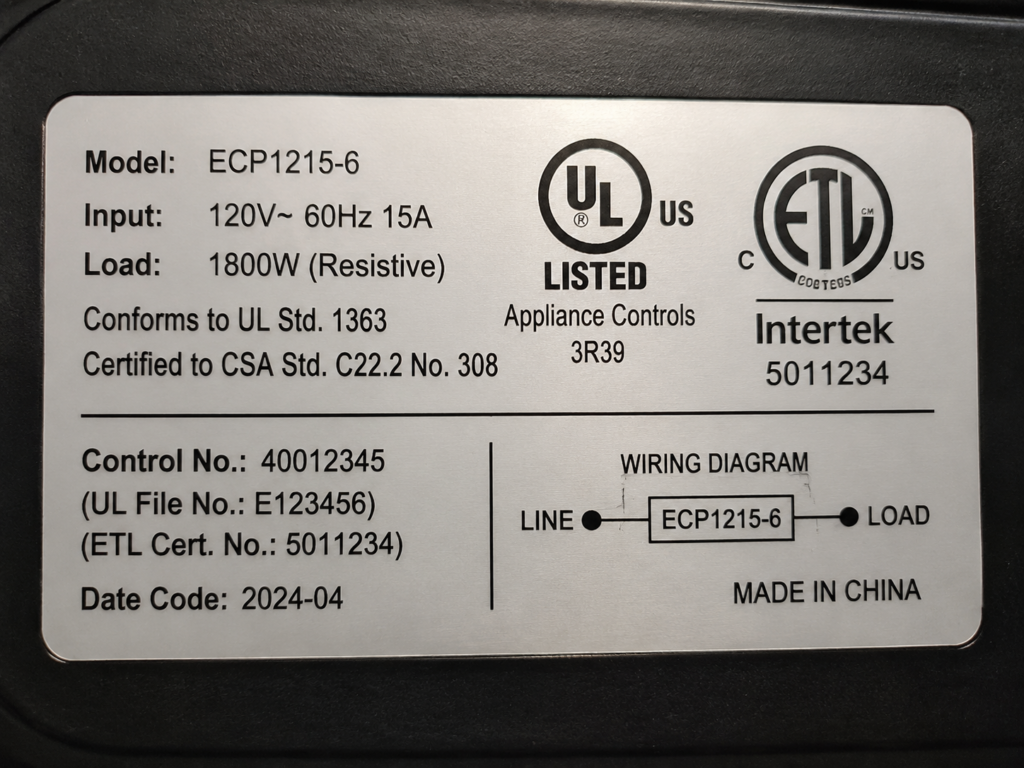
Second is verifying certification validity: First, confirm that the specific legal entity issuing the certificate is in the NRTL accreditation list officially released by OSHA, and that the entity has authorization for the corresponding product category and applicable standards; second, confirm that the product’s model and specifications are within the listing coverage of the body, and the listing status has not been revoked or suspended; finally, check whether the listing mark on the product is clear and traceable—on-site verification cannot only look at the logos of bodies such as UL/ETL, but must simultaneously verify three pieces of information on the product nameplate or label: the body’s mark, control number/certification number, and model specifications, and match them one by one with the records in the NRTL official database to ensure that all three are within the certification coverage.
Third is verifying usage consistency: Verify whether the actual use environment, installation method, and equipment status of the product meet the applicable conditions of the listing. For example, whether ordinary industrial equipment is used in explosion-proof areas, or whether there is unauthorized modification that affects safety performance.
There are several situations that may be determined as NRTL-related non-compliance, but the specific determination still needs to be based on applicable OSHA standards and facts:
- Applicable standards clearly require NRTL listing, but the product has not obtained listing for the corresponding scope;
- The product’s model and specifications are not within the listing coverage, or the listing status has been revoked or suspended;
- The legal entity issuing the certificate does not have OSHA authorization qualifications for this type of product and corresponding standards, which is out-of-scope certification issuance;
- The product’s listing mark is blurred and untraceable, or the product’s safety-critical structure has been unauthorizedly modified, resulting in the invalidation of the original listing.
If you have objections to the verification results, you can supplement and submit supporting materials such as NRTL official query records and certification documents on the spot to clarify the facts; if you receive an official OSHA Citation (an official violation determination document issued by OSHA), you must handle it in accordance with the statutory period specified in the document. Usually, you can first apply for an informal meeting with OSHA for communication, or submit a formal Contest within the specified working days. On-site communication cannot replace formal statutory procedures.
Violation citations in OSHA workplace inspections are usually directed at employers who bear the main responsibility for workplace safety; as for whether manufacturers, importers, suppliers, or other business entities need to bear independent product liability, employment liability, or other regulatory liabilities, that needs to be judged separately based on specific regulations and facts, and is not within the direct scope of OSHA workplace enforcement.
According to statutory conditions such as the nature, severity, and urgency of the violation, and the employer’s compliance history, measures OSHA may take include:
- Rectification requirements: For problems with minor circumstances that can be quickly corrected, OSHA may require rectification within a time limit, suspension of use of non-compliant equipment, and resumption of use only after risks are eliminated;
- Official violation notice and fine: If a statutory violation is constituted, an official Citation will be issued and a fine will be imposed according to the violation level. The fine amount is adjusted annually for inflation, and the specific amount is subject to the statutory standards announced by OSHA that year;
- Emergency risk disposal: If there is an imminent safety hazard (such as a risk of electric shock or explosion at any time), OSHA will legally require immediate cessation of related operations or deactivation of equipment until the risk is eliminated. In severe cases, work suspension measures may be enforced through judicial procedures—such measures only apply to statutory emergency hazard scenarios and are not a regular result of ordinary NRTL violations.
5. Key Pitfall Avoidance: Non-Compliance May Occur Even With NRTL Listing
Having NRTL listing does not mean full compliance with OSHA requirements. The following types of situations may still be determined as violations:
The first type is problems with the validity of the certification itself. For example, the issuing body’s authorization for the corresponding category is suspended or revoked by OSHA, and the official notice requires re-evaluation of related products; or the product’s listing has expired or been cancelled, but it is still put into use.
The second type is the product is modified beyond the scope of the original listing. For example, unauthorized replacement of key safety components of the product, modification of circuits, or repair by an unauthorized body. After modification, the safety performance of the product is no longer the same as the original tested one, so the original NRTL listing may naturally become invalid. If equipment needs to be modified, you should first confirm with the manufacturer or a qualified NRTL whether the original listing is still valid. If necessary, complete re-evaluation or certification, and do not put it into use without authorization.
The third type is usage that does not meet the preconditions of the listing. For example, non-standard installation and wiring violate the installation conditions required by the listing; or the use environment exceeds the scope of the listing, such as using ordinary industrial equipment in explosion-proof, humid, or high-dust areas, where the safety premise of the listing is not valid, so of course it is a violation if something goes wrong; also, improper daily maintenance leads to a decline in the product’s safety performance, such as continuing to use a product with damaged insulation, which also does not meet requirements.
The fourth type is the easiest to overlook: NRTL listing cannot replace other safety obligations of employers. Listing only proves that the product itself meets the standards, but employers also need to perform statutory obligations such as hazard identification, employee safety training, and daily safety management, which cannot be exempted just because there is a listing. For example, if all equipment has compliant listing, but employees are not trained in electrical safety, and an accident occurs due to employees’ improper operation, OSHA will still impose penalties in accordance with the law.
Four Common Cognitive Misconceptions
- Misconception: UL is NRTL
Correct explanation: UL is a well-known one among many NRTL bodies, and different NRTLs have different authorized category scopes. When choosing, you need to confirm that the specific legal entity issuing the certificate has OSHA authorization for the corresponding product category and applicable standards, rather than only looking at the body’s popularity. - Misconception: CE and FCC certifications can replace NRTL
Correct explanation: When applicable OSHA standards clearly require NRTL listing, CE or FCC certification cannot replace this requirement. CE is a safety compliance mark for the EU market, and FCC is a regulatory requirement of the US Federal Communications Commission for fields such as electromagnetic compatibility. Both belong to different systems from OSHA workplace product safety certification and do not meet the equivalent conditions for NRTL listing. - Misconception: With NRTL, you can sell freely in the US, and products that can be sold have NRTL
Correct explanation: From the perspective of OSHA workplace regulatory rules, NRTL is not a unified mandatory requirement for the sale of all civilian products. Civilian products may circulate in the market even without NRTL listing, but product sales also need to comply with other federal, state, and local product regulation, electrical code, and other requirements; if civilian products are used in the workplace, they need to meet the OSHA compliance requirements of the corresponding scenario. - Misconception: With NRTL, you will not be penalized by OSHA
Correct explanation: NRTL listing only proves that the product itself meets the corresponding standards. If equipment is used improperly, on-site management is inadequate, the product is unauthorizedly modified, or there are problems with the body’s qualifications, it may still be determined as a violation and penalized.
6. Practical Guide: How to Judge and How to Avoid Pitfalls
Basic Compliance Judgment Steps
To judge whether a product requires NRTL listing, do not rely on the subjective feeling of “high risk”, but verify step by step according to the following steps:
- Confirm regulatory scope and applicable standards: First clarify whether the location is within the jurisdiction of federal OSHA or state-level occupational safety regulatory agencies, then find the corresponding applicable specific safety standards (such as classification standards for electrical safety, hazardous environments, personal protective equipment, etc.).
▶ Quick judgment: If the location is not a work scenario under occupational safety regulation (such as purely private household use, private space for non-commercial purposes), NRTL listing is usually not required from the perspective of OSHA workplace regulation. - Verify mandatory requirements of standards: Check whether the applicable standards put forward mandatory approved/listed/labeled requirements for this type of product, and what compliance paths are allowed.
▶ Quick judgment: If the applicable standards do not put forward clear listing/labeling/accreditation requirements for this type of product, NRTL listing is not mandatory. - Match compliance methods: If the standards allow meeting requirements through NRTL listing, confirm that the product has NRTL listing for the corresponding scope; if the standards allow other equivalent compliance paths, prepare corresponding supporting materials as required.
▶ Quick judgment: If the standards recognize other compliance paths and you can provide supporting materials that meet the requirements, you can meet compliance requirements without NRTL.
Basic Verification Points for Procurement and Daily Use
Doing the following three basic verifications well can avoid the vast majority of common NRTL compliance risks:
- Check the body and scope: Confirm that the specific legal entity issuing the certificate is in OSHA’s official NRTL list, and has authorization for the corresponding product category and applicable standards, and that the product’s model, specifications, and applicable scenarios are within the listing coverage.
- Check mark traceability: When receiving goods, verify that the NRTL mark, model, and control number on the product are consistent with the query results from the NRTL official database to prevent the risk of counterfeit certificates.
- Retain supporting documents: Properly keep materials such as official NRTL listing query records, product nameplate photos, and procurement vouchers, so that they can be quickly provided during inspections.
Advanced Pitfall Avoidance Tips
- Be wary of “counterfeit certificate” products: Do not only rely on certificates provided by suppliers. Be sure to enter the product model or control number into the NRTL official database yourself to verify the authenticity and coverage of the listing.
- Confirm before equipment modification: If equipment needs repair or modification involving safety structures, first consult the manufacturer or a qualified NRTL to confirm whether it affects the validity of the original listing. If necessary, complete re-evaluation or certification.
- Regularly check equipment marks: Avoid blurring and untraceability of listing marks due to wear or oil stains. If the mark is damaged, contact the manufacturer in time to confirm the method of reprinting or supplement and retain supporting materials.
Key Response Points for OSHA Inspections
- Actively cooperate with the inspection, provide retained materials such as listing supporting documents and procurement records, and truthfully explain the use scenarios and maintenance status of the equipment.
- If you have questions about the verification conclusion, you can explain the situation on the spot and supplement supporting materials, and request that relevant information be recorded in the file; if you receive an official Citation, you need to follow the statutory communication or objection procedures within the period required by the document, and there is no need to argue on the spot.
- For complex compliance issues (such as custom equipment, state-specific special rules), you can consult professional compliance personnel or the corresponding regulatory agency for assistance.
7. Compliance Precautions for Special Scenarios
In addition to conventional scenarios, there are compliance rules for some special situations, which are suitable for practitioners who need a more in-depth understanding.
Differences in State-Level Regulatory Rules
Occupational safety regulation in the United States is divided into two categories: direct jurisdiction by federal OSHA, and jurisdiction by OSHA-approved state-level Occupational Safety and Health Plans (State Plans). There are OSHA-approved State Plans, some of which cover both the private sector and state/local public sectors, and some only cover state/local public sectors; the specific number, coverage scope, and rule differences are subject to the State Plan list officially announced by OSHA. Most state plans have NRTL-related requirements consistent with federal OSHA, and some states have supplementary regulations—for example, California’s Cal/OSHA has additional safety requirements for some electrical equipment and hazardous environment equipment. The specific requirements are subject to the regulatory rules of the state where you are located and the requirements of the local competent authority. You cannot default to all states fully following federal rules.
Compliance Paths for Temporary and Custom Equipment
For temporarily used equipment (such as temporary electricity for exhibitions, temporary equipment for short-term construction) and custom non-standard equipment, if conventional NRTL listing cannot be obtained, there is no general “temporary exemption” rule. You need to select a compliance path in combination with applicable OSHA standards and state-level rules. Common paths include:
- On-site assessment: Conduct on-site safety assessment by a body with corresponding qualifications, but whether it is accepted by the regulatory agency depends on the applicable standards, the enforcing body, and the requirements of the local competent authority (such as the electrical competent authority);
- Variance: It is a formal regulatory license for specific OSHA standard obligations. It is not a conventional procurement certificate supplement tool, but a formal procedure to apply for alternative protective measures when it is indeed impossible to implement according to the original standard provisions. The applicant must prove that the alternative solution can provide equivalent or higher levels of safety protection. Before approval, you cannot consider yourself as meeting the requirements or exempt from obligations. Moreover, the license only applies to the specific scenario applied for, cannot expand the scope of use, and is not equivalent to NRTL certification of the product.
Impact of NRTL Body Qualification Revocation
If the qualification of an NRTL body changes, first confirm whether the adjustment is to the overall accreditation qualification, or to the authorization for specific product categories or specific safety standards. You cannot default to all issued certificates remaining valid or all becoming invalid. The specific impact is subject to OSHA’s official announcement, the formal notice of the involved NRTL, and the affected scope of the corresponding products:
- Under normal circumstances, if only the authorization of some categories is adjusted, valid listings for unaffected categories can continue to be used;
- Subsequent product design changes and listing renewals need to be transferred to other NRTLs with corresponding qualifications;
- If a body’s qualification is revoked due to serious violations such as issuing false reports or forging data, OSHA may require related products to complete compliance re-evaluation, and the specific situation is subject to the official notice.
Final Summary
The relationship between OSHA and NRTL is essentially a division of labor and cooperation of “the regulator sets the rules, the third party conducts professional testing, and professional conclusions are relied upon during enforcement”: OSHA is responsible for workplace safety enforcement and third-party body qualification accreditation, and does not directly conduct product certification; NRTL is an independent third party accredited by OSHA, conducting product safety testing and listing within the authorized scope.
For employers, the core of NRTL compliance is not “just buy products with marks and that’s it”, but to start from the applicable specific standards, first confirm whether there are mandatory requirements, then verify that the listing body’s qualifications and coverage match actual needs, while ensuring that installation, use, and maintenance meet the certification prerequisites, and fulfilling the statutory obligations of on-site safety management. By clarifying this logic, you can independently judge NRTL compliance requirements in common scenarios and effectively avoid most foreseeable compliance risks; when encountering special scenarios (such as custom equipment, state-specific special rules), you also know that you need to further confirm with NRTLs, regulatory agencies, or professional compliance personnel.