Foreign trade practitioners, cross-border sellers, or suppliers that provide equipment to U.S. enterprises targeting the U.S. market have most likely heard of the term NRTL. Many people are unclear about its nature and scope of application when they first encounter it, and easily confuse it with other common U.S. compliance concepts. This article starts from basic concepts and moves to practical judgment methods, to help you sort out the core logic of NRTL and master common compliance judgment methods.
I. First, Figure Out What NRTL Really Is
Many people, when first exposed to NRTL, think it is a product certification mark similar to CE, but the two are completely different in level and nature. We start with the most basic definition.
Basic Definition: A Specific Standard Recognition Qualification Granted by OSHA to Laboratories
The full name of NRTL is Nationally Recognized Testing Laboratory, which literally means a nationally recognized testing laboratory. In essence, it is a recognition qualification granted by the U.S. Occupational Safety and Health Administration (OSHA, the federal agency responsible for regulating workplace safety) to third-party testing laboratories in accordance with specific testing standards, not a certification of the product itself.
OSHA recognizes NRTLs to conduct product safety testing and certification activities within the scope of its designated testing standards; NRTLs, in accordance with their own certification program rules, authorize the use of corresponding marks on compliant products or list them in public directories. It should be noted that whether a product can be accepted for use in a specific location also requires simultaneous verification of applicable federal/state regulations, requirements of the Authority Having Jurisdiction (AHJ for short, usually referring to the local official or authorized agency responsible for compliance audits of electrical, fire safety, and other related matters), local electrical or fire safety rules, and provisions of procurement contracts; compliance cannot be directly determined solely based on test reports.
Core Position: A Third-Party Professional Safety Assessment Role Under Official Supervision
All NRTLs are independent third-party organizations. They are neither laboratories directly under the U.S. government nor responsible for formulating safety standards. Their core work is to conduct product testing and certification in accordance with published U.S. safety standards, and as a third-party professional force under the government regulatory system, they help reduce regulatory costs and promote the unified implementation of federal-level workplace safety requirements.
Most Easily Confused Basic Relationship: NRTL Qualification ≠ NRTL Product Certification
NRTL is a recognition qualification for laboratories, proving that the laboratory has the ability to conduct testing and certification within the scope of a certain type of safety standard designated by OSHA; the product safety certification issued by an NRTL with corresponding qualifications is what is commonly referred to as “NRTL certification” in daily practice. Simply put: a laboratory must first obtain NRTL recognition for the corresponding standard before it can issue product certifications to enterprises within that scope, and the two are at completely different levels.
II. Why NRTL Must Be Taken Seriously in the U.S.
NRTL is neither an optional item nor a universally mandatory requirement, but a compliance requirement that needs to be implemented when specific conditions are met under U.S. workplace safety rules, with clear regulatory logic behind it.
Source of Requirements: OSHA Workplace Safety Rules
The legal basis for NRTL-related requirements comes from the U.S. Occupational Safety and Health Act, which is enforced by OSHA. OSHA’s workplace safety rules explicitly require that equipment used in the workplace must obtain “qualified approval”, that is, it must be evaluated and confirmed by a qualified agency to meet corresponding safety requirements; NRTL listing or certification is currently one of the most commonly used proof paths, but not all workplace equipment is uniformly required to obtain NRTL certification.
Whether NRTL is specifically required needs to be comprehensively judged based on the type of equipment, applicable specific OSHA provisions, corresponding recognized safety standards, the OSHA State Plan of the relevant state (an occupational safety regulatory program approved by federal OSHA and implemented by the state government itself, with specific requirements that may differ slightly from federal rules), local AHJ requirements, and procurement contract provisions.
It should be clarified here that the direct enforcement targets of OSHA are usually the users of the products (i.e., U.S. employers and enterprises), rather than ordinary consumers or product sellers. For example, if a factory purchases and uses non-compliant electrical equipment and is inspected by OSHA, the penalized party is the factory employer; precisely because of this, U.S. enterprises usually require suppliers to provide corresponding compliance certificates during procurement to reduce their own liability risks.
Practical Impacts of Non-Compliance
If a product does not meet applicable NRTL-related requirements, it may bring various risks:
• When an on-site OSHA inspection determines a violation, corresponding penalties will be imposed. The penalty amount is classified by violation type and adjusted for annual inflation. The specific amount is subject to the facts determined by the inspection, the violation level, and the officially announced fine standards for the current period; there is no fixed unified amount range.
• Detention at the import stage is not an automatic consequence of NRTL requirements. Detention, refusal of entry, or subsequent enforcement may only occur when the product simultaneously triggers import enforcement rules or document requirements of other competent authorities.
• If a product causes a safety accident, the lack of compliance may lead to heavier civil or criminal liability for the enterprise, and the specific liability needs to be determined based on the causal relationship of the accident.
• Many U.S. enterprises’ procurement clauses, project bidding requirements, and even property insurance clauses explicitly stipulate NRTL-related compliance requirements, and non-compliance may directly lead to loss of cooperation qualifications or affect claims settlement.
Preliminary Screening Scenarios with Low NRTL Demand
The following categories of situations are only preliminary screening references with a low probability of NRTL demand, and cannot be directly used as a basis for exemption. The final judgment still needs to be combined with the usage scenario, applicable regulations, local AHJ requirements, and contract provisions:
• Personal household consumer-grade products: These products are mainly regulated by the U.S. Consumer Product Safety Commission (CPSC). If they are only for ordinary consumers’ household use and not used in the workplace, they usually do not involve OSHA’s NRTL requirements; however, if such products are used in the workplace, their compliance still needs to be evaluated in accordance with workplace safety requirements.
• Low-risk products: Products without electrical, fire, or mechanical safety risks (such as ordinary manual screwdrivers, paper office supplies) usually have no corresponding OSHA-recognized safety testing standards, so NRTL demand is low, but they still need to meet other applicable workplace safety rules.
• Special products with separate procurement standards of the U.S. federal government: Implemented in accordance with the specific procurement requirements of the federal government. If there are already special safety acceptance rules, additional NRTL certification may not be required.
• Purely mechanical products without any electrical components: In most cases, they do not involve electrical safety-related NRTL requirements, but may be subject to other workplace safety rules such as mechanical protection. High-risk machinery still needs to be confirmed by checking official requirements.
III. Coverage Boundary of NRTL: Which Products Are Within the Scope
The recognition scope of NRTLs all corresponds to specific safety standards, and there is no general “full category coverage”. We can narrow the judgment scope from two directions: common categories and exclusions.
Common Core Product Categories Covered
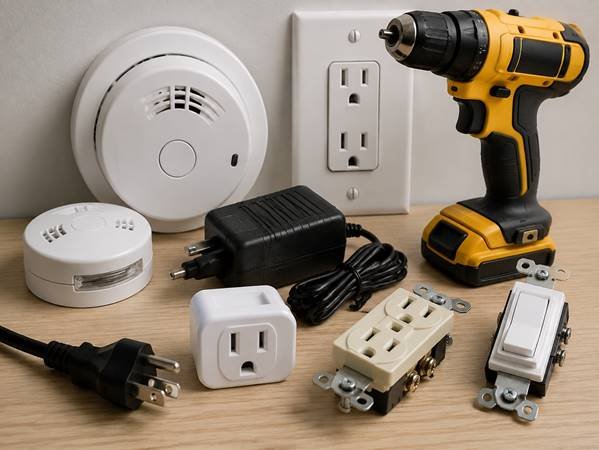
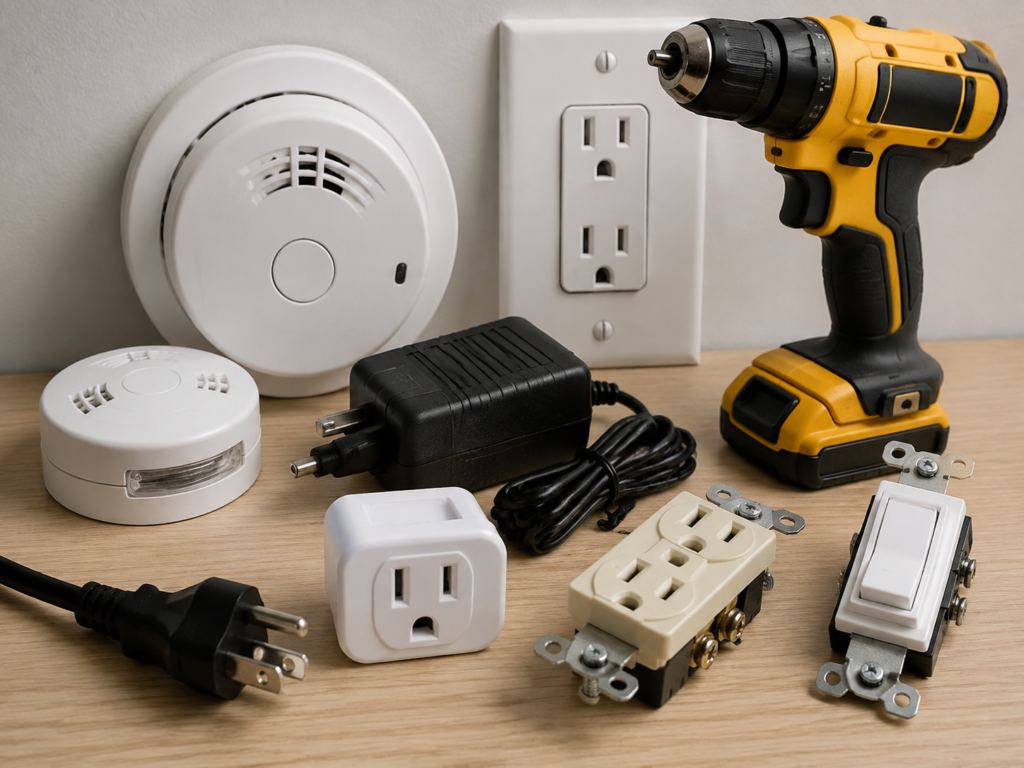
• Commercial electrical equipment: industrial motors, power distribution cabinets, office electrical appliances, lighting equipment, power tools, etc.;
• Fire safety products: smoke alarms, emergency lights, fire extinguisher components, fire door accessories, etc.;
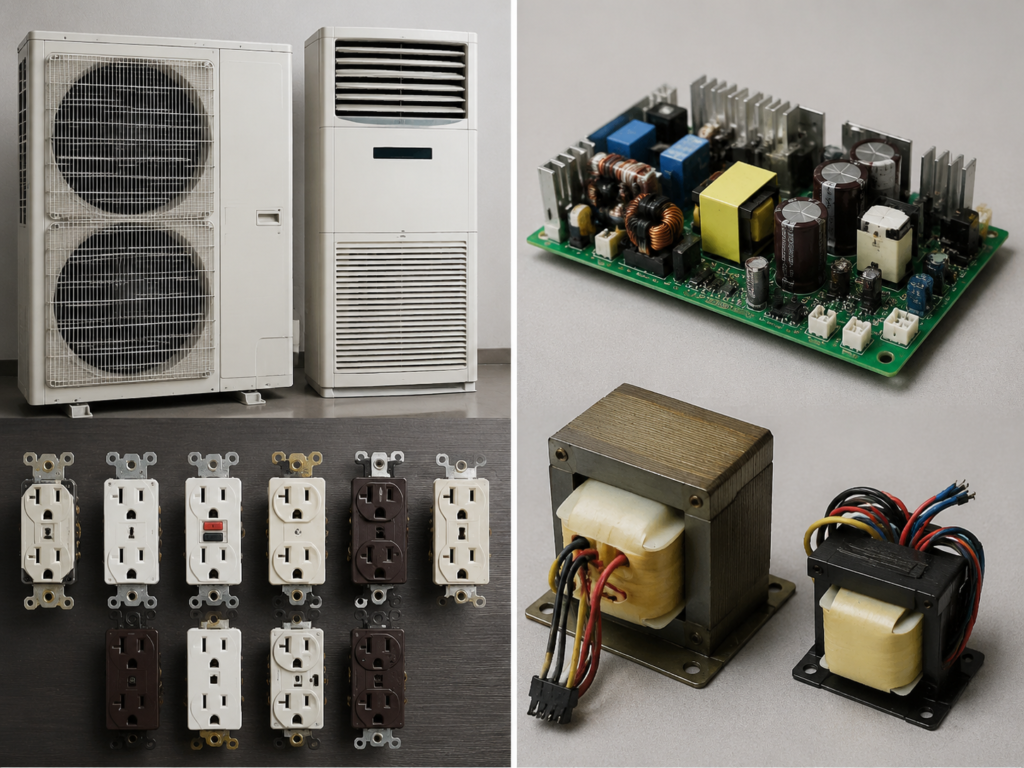
• Electrical accessories: power cords, sockets, switches, transformers, power adapters, etc.;
• **Electrical safety part** of industrial machinery and commercial medical equipment with electrical components – only involves electrical safety testing, not product marketing approval.
Clearly Excluded Areas
NRTLs only cover content related to their recognized safety standards, and the following areas are not within their jurisdiction:
• Electromagnetic compatibility and wireless signal compliance: under the jurisdiction of the U.S. Federal Communications Commission (FCC);
• Marketing approval of food, drugs, and medical devices: under the jurisdiction of the U.S. Food and Drug Administration (FDA);
• Automotive, marine, and aviation products: under the jurisdiction of NHTSA (National Highway Traffic Safety Administration), USCG (U.S. Coast Guard), FAA (Federal Aviation Administration), and other departments respectively;
• Product performance, quality, energy efficiency, and environmental protection requirements: NRTLs do not involve these unless relevant requirements are attached to the corresponding safety standards.
3-Step Method to Quickly Judge NRTL Demand
There is no need to memorize the product list by rote. Preliminary judgment can be completed in these 3 steps, and the final conclusion is still subject to official rules and professional assessment:
Step 1: Look at the usage scenario: Whether the product will be used in a commercial or workplace environment in the U.S.; if it is only sold to ordinary consumers for household use, it is mainly under the jurisdiction of the CPSC and usually does not involve NRTL requirements;
Step 2: Identify the type of risk: Determine whether the product has safety risks that need to be assessed by applicable safety standards (such as electric shock, fire, mechanical injury, etc.). Risk judgment is only for preliminary screening and cannot directly lead to an exemption conclusion;
Step 3: Verify official rules and applicable requirements: First confirm whether OSHA rules or the local AHJ require equipment to obtain recognized test certificates, then check the NRTL recognized standard list on the OSHA official website to verify the corresponding category, or consult the public customer service of a formal NRTL agency in combination with contract provisions.
IV. The Full Operation Process of NRTL
Now that we understand the basic concepts, let’s look at the operation logic of the NRTL system – what are the core links of the entire process from the laboratory obtaining recognition to the product obtaining certification.
Basic Requirements for Laboratories to Obtain NRTL Recognition
To obtain OSHA’s NRTL recognition, a laboratory needs to meet a series of core conditions, including personnel competent for testing and certification of relevant standards, supporting test equipment, a complete quality management system, and required independence, etc. The specific requirements are subject to the official rules of the OSHA NRTL program.
NRTL recognition is granted item by item according to specific safety standards, and laboratories must pass OSHA’s on-site audit before obtaining recognition for the corresponding standards; OSHA maintains the recognition status through mechanisms such as continuous supervision, regular re-examination, or random spot checks to ensure that laboratories continue to meet the requirements. It should be noted that this is OSHA’s supervision at the laboratory level, which is a two-tier different mechanism from the factory follow-up inspections conducted by NRTLs on certified products.
It should also be emphasized here that NRTL recognition is not a “universal qualification” – for example, if a laboratory obtains recognition for the socket safety standard, it can only conduct testing and certification within the scope of that standard, and cannot issue certificates for industrial motors beyond the scope; certifications beyond the scope do not have corresponding validity.
General Process of NRTL Product Certification
When enterprises apply for NRTL certification for their products, the general process mainly includes four stages, and the specific details may vary slightly depending on the product category and the agency’s program rules:
Step 1: Pre-certification preparation: First confirm the safety standards applicable to the product, select an NRTL agency with recognition qualifications for the corresponding standards, and prepare materials such as product specifications, circuit diagrams, and key component lists;
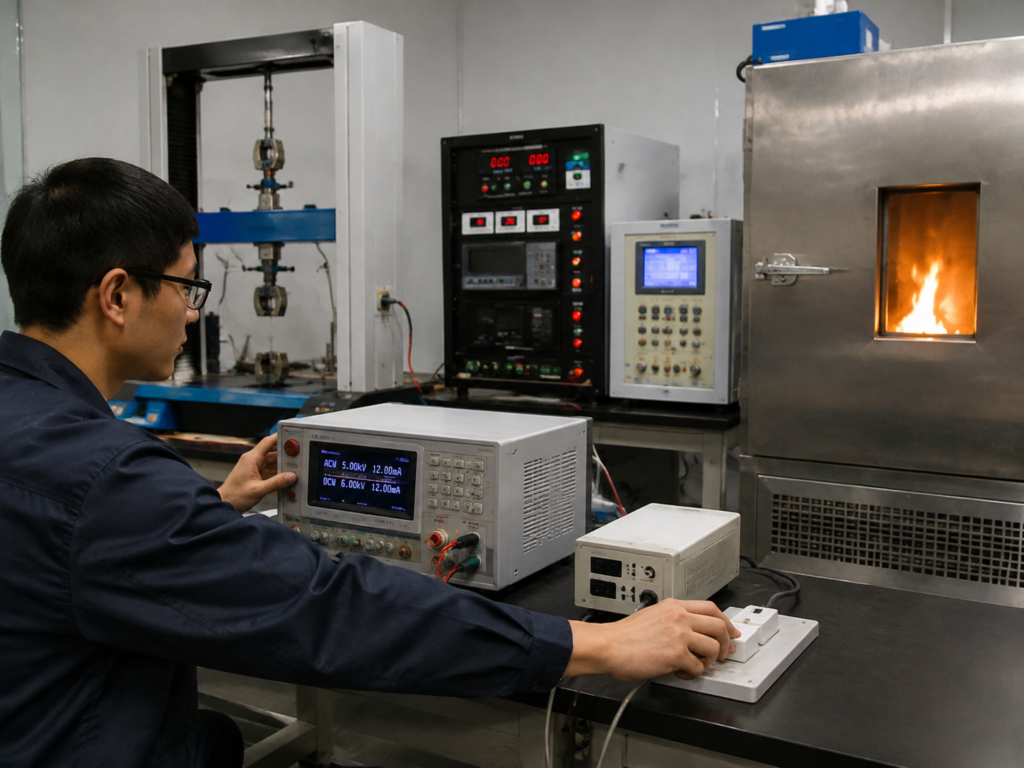
Step 2: Sample submission for testing: The enterprise submits samples that meet the requirements, and the laboratory conducts full-item testing in accordance with applicable safety standards within the scope of OSHA’s current recognition (some of which are formulated by standard organizations such as UL and ANSI), focusing on safety risks such as electric shock, overheating, fire, and structural strength;
Step 3: Certification decision and authorization: After passing the test, the laboratory will give the corresponding certification result according to the product category and program rules. Common ones include Listing (Listed), Recognized Component records, etc., authorizing the enterprise to use the corresponding mark on compliant products;
Step 4: Follow-up inspection: Most product certification programs include subsequent factory audits or follow-up inspections, which are implemented by the issuing NRTL in accordance with its own certification program rules. The purpose is to verify whether the safety characteristics of mass-produced products are consistent with those of the submitted samples. The inspection frequency and requirements are subject to the program rules of the issuing agency.
Differences Between Two Common Certification Results
Among NRTL certification results, the following two types are the most common, with different applicable scenarios. Do not confuse them:
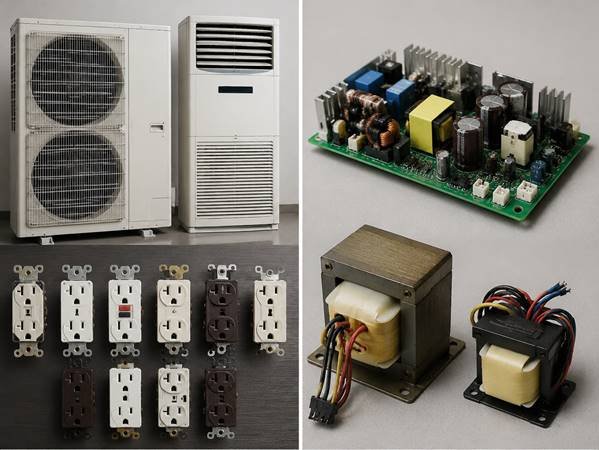
• **Listed (Listing)**: For complete machines or end products (such as complete commercial air conditioners, finished sockets). Products that obtain Listing indicate that they meet the corresponding safety standards and can be used in commercial scenarios as required;
• **Recognized (Recognition)**: For components or sub-assemblies (such as power boards in air conditioners, transformers in equipment). This type of certification only proves that the component itself meets safety requirements under specific usage conditions. It must be installed in a complete machine and undergo an overall safety assessment before the complete machine is considered to meet the corresponding requirements, and it cannot be claimed alone that the complete machine has NRTL compliance.
Examples of Common Formal NRTL Agencies
The list of OSHA-recognized NRTLs is dynamically adjusted, and the specifics are subject to OSHA’s current publicly available NRTL directory. Common formal NRTL agencies in the industry include:
• UL (Underwriters Laboratories), which entered the market early and has high popularity;
• ETL (under Intertek Group), with wide recognition;
• CSA (Canadian Standards Association), which has both U.S. NRTL and relevant Canadian compliance qualifications;
• In addition, TÜV Rheinland, MET, and other agencies are also in OSHA’s NRTL directory.
A key principle needs to be clarified here: for the same test standard recognized by OSHA, the validity of another recognized NRTL cannot be denied solely based on the difference in agency brand; however, in actual use, it must be confirmed that the specific recognition scope of the agency covers the standard of the corresponding product, and at the same time meets the additional requirements of customers, local AHJs, and local rules. If the customer or procurement contract explicitly specifies the mark of a certain agency (such as UL), the corresponding agency must be selected according to the contract requirements.
V. Comparison of Easily Confused Concepts: Avoid Cognitive Pitfalls
Many people confuse NRTL with other common compliance concepts. We will compare the core differences one by one to help you avoid cognitive pitfalls.
NRTL vs UL Certification: Not Concepts at the Same Level
This is the most easily confused group of concepts. The core difference is: NRTL is a recognition system for laboratories by OSHA, while UL is a specific agency that has obtained NRTL recognition for multiple standards. In other words, UL certification is a product certification issued by UL, which is a type of NRTL certification.
If the customer or procurement contract explicitly specifies the UL mark, UL must be selected to conduct the corresponding certification; otherwise, under the premise that the agency has recognition for the corresponding standard, the certification validity of other formal NRTLs meets OSHA requirements at the federal level, but still needs to meet additional agreements of the local AHJ or the contract.
NRTL Certification vs FCC Compliance: Completely Different Regulatory Directions
NRTL focuses on product safety (such as electric shock prevention, fire prevention, mechanical injury prevention, etc.); FCC focuses on radio frequency, electromagnetic emissions, and authorization requirements for related equipment. Equipment under FCC rules is mainly divided into two categories: intentional radiators (devices that actively emit wireless signals, such as routers, Bluetooth speakers) and unintentional radiators (electronic devices that do not actively emit wireless signals but generate unintended radio frequency emissions when working, such as ordinary laptops, cordless power tools).
It should be clarified that if a commercial product involves both electrical safety risks and falls within the scope of intentional or unintentional radiators under FCC rules, it usually needs to meet the compliance requirements of NRTL and FCC respectively. The two have different regulatory directions and cannot replace each other. Whether FCC compliance is required, and whether the applicable path is certification, supplier’s declaration of conformity, or other paths, depends on the type of equipment and the corresponding FCC rule provisions; products without wireless functions may also need to meet relevant FCC requirements because they are unintentional radiators, which cannot be generalized.
NRTL Certification vs CE Compliance: Different Applicable Regions and Logics
CE is the European Union’s safety compliance marking system, and its conformity assessment methods vary depending on the applicable EU regulations, product categories, and conformity assessment modules: some low-risk products can be self-declared by the manufacturer, while some high-risk products must be assessed with the participation of EU notified bodies. NRTL, on the other hand, is a third-party certification requirement under the U.S. workplace safety system, which requires testing and certification to be carried out by OSHA-recognized laboratories within their recognition scope.
Products with CE certification do not mean they meet NRTL requirements and cannot be directly used in U.S. workplaces. There are differences in testing standards and audit procedures between the two. If a product is exported to both the EU and the U.S., it needs to meet the compliance requirements of both regions respectively. Some test items may be shared, but certificates and compliance processes are not interchangeable.
NRTL Qualification vs ISO/IEC 17025 Recognition: Different Legal Effects
ISO/IEC 17025 is an internationally recognized standard for laboratory competence accreditation, covering a wide range of testing scopes, but it is only a proof of laboratory competence and does not have legal enforceability under the U.S. OSHA system. NRTL is a recognition granted by OSHA for specific safety standards, which has validity under the corresponding workplace safety rules.
ISO/IEC 17025 recognition cannot replace OSHA’s NRTL recognition: a laboratory with ISO 17025 qualification does not necessarily have NRTL recognition for the corresponding standard; whether a specific NRTL holds ISO 17025 recognition and its scope needs to be verified one by one.
NRTL vs FDA: Non-overlapping Regulatory Scopes
FDA regulates food, drugs, medical devices, and other categories, and applies corresponding regulatory requirements according to product category and risk level, which may be different paths such as pre-market review, registration and listing, or exemption. Not all medical devices require the same type of marketing approval. NRTL only covers the electrical safety testing of medical devices with electrical components. NRTL laboratories with corresponding capabilities can complete part of the electrical safety testing for FDA submission or technical documents, but whether the test results are accepted by the FDA depends on the submission path and evidence requirements of the specific product.
In other words, obtaining NRTL certification for medical devices does not mean that they have passed FDA’s marketing compliance requirements, and the two have non-overlapping regulatory scopes.
The core differences between each concept can be quickly sorted out by referring to the following table:
| Comparison Item | Core Regulatory Authority | Core Focus | Core Applicable Scenarios |
| NRTL | U.S. OSHA | Product safety (electric shock, fire, etc.) | Safety compliance in U.S. workplace/commercial scenarios |
| UL Certification | UL agency | Product safety under corresponding standards, etc. | Depends on the specific UL certification type and target market |
| FCC Compliance | U.S. FCC | Electromagnetic emissions, radio frequency equipment authorization | Intentional or unintentional radiating equipment subject to FCC rules |
| CE Compliance | Competent authorities of EU member states | Basic requirements for safety, health, and environmental protection | EU and regions that recognize CE |
| FDA Regulation | U.S. FDA | Regulation, pre-market review, or registration and listing of food/drugs/medical devices, etc. | FDA-regulated categories throughout the U.S. |
| ISO/IEC 17025 | Accreditation bodies of various countries | General laboratory testing competence | Proof of laboratory competence worldwide |
VI. Practical Judgment Methods: Check the Authenticity and Validity of NRTL by Yourself
Now that we have mastered the basic concepts, let’s talk about something practical – how to verify the authenticity and validity of NRTL by yourself and avoid common pitfalls.
How to Check Whether a Laboratory Is a Real NRTL
To confirm whether a laboratory has valid NRTL recognition, the only official channel is the public NRTL database on OSHA’s official website. Do not rely solely on the agency’s promotional pages or verbal promises.
When querying, two core points need to be verified: First, whether the full name of the laboratory is in the current valid recognition list of the OSHA directory, and the recognition status is subject to the directory’s marking; second, whether the laboratory’s recognized standard scope includes the name, number, and applicable version of the safety standard corresponding to the target product. Testing and certification conducted beyond the scope do not have corresponding validity.
It should be noted that the OSHA directory can only verify the recognition qualification at the laboratory level. The certificate or listing status of the product must also be separately verified through the official channel of the issuing NRTL.
How to Check Whether a Product’s NRTL Certification Is Real
To query the authenticity of a product’s NRTL certification, it needs to be verified in accordance with the public rules of the issuing agency. The general steps are as follows:
Step 1: Confirm the agency to which the mark belongs: First identify the issuing agency corresponding to the NRTL mark on the product. Different agencies have different mark layouts and labeling information, and there is no unified “must carry a number” rule;
Step 2: Verify through official channels: Find the official certification query entry of the issuing NRTL, and use information such as product model, manufacturer name, file number, or control number to search; if the agency does not provide a public search service, you can directly contact the issuing agency to apply for written verification;
Step 3: Check information consistency: Confirm that the key content in the queried certification information, such as product model, manufacturer, and applicable safety standards, is completely consistent with the actual product; if the information does not match, the certification cannot correspond to the product.
How to Judge Whether an Existing Certification Can Continue to Be Used
If a product is modified, the core judgment principle for whether the original NRTL certification is still valid is: whether the modification affects the safety characteristics of the product, and it must be evaluated and confirmed by the original issuing agency, and cannot be judged by oneself.
The following are examples of high-risk changes that usually need to be submitted to the original issuing agency for evaluation before implementation. The evaluation result may be no additional testing required, supplementary materials, difference testing, change authorization, or re-certification:
• Replacement of key safety components such as power supplies and transformers;
• Modification of circuit design;
• Replacement of housing flame-retardant materials or adjustment of housing protection structure;
• Change of key parameters such as rated voltage, power, and current of the product.
The following changes have little impact on certification validity on the premise that they do not involve controlled safety labels, installation/warning information, housing protection, or safety structures, but it is still recommended to confirm with the issuing agency in advance:
• Replacement of product outer packaging;
• Modification of text content unrelated to safety in the manual;
• Adjustment of non-safety-related appearance of non-critical components.
If you are unsure, the safest way is to contact the original issuing agency for a change evaluation to avoid compliance risks caused by self-judgment.
Common NRTL Fraud Schemes
Common NRTL fraud schemes on the market mainly fall into the following categories, which require careful identification:
• Directly forging NRTL marks: the product has not undergone any certification, and the mark is printed without authorization to claim compliance;
• Using expired or revoked certificates to impersonate valid certifications, for example, continuing to use the certification after it becomes invalid due to failure to pass follow-up inspections;
• Laboratories issuing certificates beyond their scope: for example, only having recognition qualifications for socket standards but issuing certifications for industrial motors. Even if the laboratory itself is a formal NRTL, certifications beyond the scope are invalid;
• Using certifications from other countries or systems (such as CE, CCC) to impersonate NRTL certification, claiming that the two are equivalent, but in fact, the U.S. OSHA system does not directly recognize them;
• Using component Recognized certification to impersonate complete machine Listed certification: for example, if the power supply inside the device has component recognition, it is claimed that the entire device has NRTL certification. In fact, component certification cannot directly replace the overall safety assessment of the complete machine.
VII. Common Misconceptions and Practical Limitations of NRTL
Finally, we clarify several common cognitive misconceptions and the applicable boundaries of NRTL itself, to avoid you having overly high or wrong expectations of it.
Common Cognitive Misconceptions
1. **Products with NRTL certification are absolutely safe**: Wrong. NRTL certification only proves that the product meets the requirements of corresponding safety standards, and the testing is based on samples submitted by the enterprise; subsequent follow-up inspections are only used to verify the consistency of mass-produced products and reduce risks, and cannot replace the manufacturer’s own quality control. If used beyond the scope or not operated in accordance with the instructions, it may still cause safety risks.
2. **All products sold in the U.S. must have NRTL**: Wrong. NRTL-related requirements only apply to products with corresponding applicable standards in workplace/commercial scenarios under OSHA’s jurisdiction; household consumer-grade products are mainly under the jurisdiction of the CPSC, and low-risk products may also have no corresponding NRTL requirements. The specific situation needs to be judged based on the scenario and rules.
3. **NRTL certification is issued directly by the U.S. government to products**: Wrong. NRTL is a recognition qualification granted by OSHA to laboratories. Specific product certification is carried out by third-party NRTL agencies. The government only supervises the competence and compliance of laboratories and does not directly review each product.
4. **Components with NRTL certification = complete machine has certification**: Wrong. The Recognized recognition of components only proves that the component itself is compliant under specific conditions. The safety of a complete machine is a systematic project, which also needs to consider factors such as component coordination and overall structure. A complete safety assessment must be completed, and component certification cannot be directly used to claim that the complete machine is compliant.
5. **NRTL certification is permanently valid**: Wrong. Many product certifications using the continuous supervision mode do not have a unified fixed term, but specific certificates may have a validity period or maintenance conditions agreed upon by the program. The validity of certification depends on whether regular follow-up inspections are passed, whether the certification status is maintained on time, whether key changes occur to the product, the transition rules after standard updates, and the final decision of the issuing agency; standard updates do not necessarily cause the original certificate to become invalid immediately, and the specifics are subject to the notice and rules of the issuing agency.
Practical Limitations of NRTL
NRTL is not a universal compliance certificate; it has clear applicable boundaries:
• It only covers requirements related to its recognized safety standards, and does not involve other indicators such as product performance, quality, energy efficiency, and environmental protection;
• It is only a part of the U.S. federal-level workplace safety system. Some state or local governments may have additional compliance requirements such as electrical and fire safety, which need to be met simultaneously;
• It is only valid for the corresponding requirements of U.S. workplace/commercial scenarios, and is not directly recognized by other countries;
• Only testing and certification conducted within the scope of recognition standards designated by OSHA have the corresponding NRTL validity, and testing beyond the scope is not applicable;
• Different NRTL agencies have different service cycles, fees, and supported product standard scopes. You can choose according to your own needs and customer requirements, and you don’t need to only focus on the most well-known agencies.
VIII. 4 Things You Can Independently Judge After Learning
After reading this article, you can already independently complete the following 4 core judgments to deal with most daily NRTL-related compliance issues:
1. **Judge whether a product and scenario require NRTL**: Able to complete preliminary screening through the three-step method of “scenario-risk-official rules”, clarify whether further verification of applicable standards and regulatory requirements is needed, and will not generally believe that all U.S. market products need or do not need NRTL;
2. **Distinguish the differences between common compliance concepts**: Able to distinguish the levels, regulatory directions, and scopes of application of concepts such as NRTL and UL, FCC, CE, FDA, ISO 17025, and will not be confused by the requirements of different systems;
3. **Verify the authenticity of qualifications and certifications**: Able to verify the qualifications and recognition scope of NRTL laboratories through the official OSHA directory, and also able to check the validity of product certifications through the issuing agency channels, avoiding common fraud schemes;
4. **Evaluate the certification status after changes**: Able to identify high-risk safety changes of products, know that they need to be submitted to the original issuing agency for evaluation and confirmation, and will not self-judge whether the certification is valid or invalid, avoiding unnecessary compliance risks.