
Cross-border sellers, brand owners, or manufacturers operating in the U.S. and Canadian markets have most likely encountered situations where UL certification is required: Amazon’s backend requires review, purchasers require qualifications before signing contracts, and offline retailers require proof for entry. But when asking for quotes, prices range from a few thousand dollars to hundreds of thousands of dollars, with huge differences. Many people’s first reaction is, “Am I being scammed?”
In fact, the core reason for the large difference in UL certification costs is that many people do not understand: what you pay for is not a “certificate fee” for a piece of paper printed with the UL mark, but the cost of ongoing compliance services provided by a safety testing institution. For certifications targeting the U.S. market, services are provided by NRTLs (Nationally Recognized Testing Laboratories, of which UL Solutions is one of the most representative institutions) recognized by OSHA (Occupational Safety and Health Administration) of the United States; if targeting the Canadian market or applying for the cULus mark valid for both the U.S. and Canada, evaluation must be conducted in accordance with Canada’s applicable safety standards and accreditation requirements, and fees will be adjusted according to the specific scope of the mark. Once you understand the essence, composition, and influencing factors of the costs, you can not only estimate a reasonable budget on your own, but also avoid the vast majority of low-price traps.
It should be noted that not all products exported to the U.S. and Canada need to bear UL certification costs. Usually, the certification process only needs to be initiated when purchasers, offline retailers, e-commerce platforms (such as Amazon) explicitly require it, or when some states or specific industries have compliance access requirements.
First, Understand: UL Certification Cost Is Not Buying a Certificate, But Buying Compliance Services
Many people’s first misunderstanding of UL certification is to regard it as a one-time deal of “spending money to buy a certificate”, but this is not the case at all.
What Exactly Is UL Certification Cost
You are not paying the U.S. government, but an institution with the corresponding market safety testing qualifications: U.S. market certification services are provided by OSHA-recognized NRTLs, and relevant evaluations for the Canadian market must meet Canadian accreditation requirements. This fee covers the entire process from initial standard determination and sample testing to subsequent factory inspections, UL mark authorization, and annual follow-up supervision. Its core attribute is long-term compliance service fee, not a government tax, let alone a one-time “certificate fee” — as long as you want your product to maintain UL certification qualifications, you must continue to pay for compliance services.
When Do You Need to Pay UL Certification Costs
You need to bear the relevant UL certification costs if you meet any of the following conditions:
- You are a product manufacturer, brand owner, or cross-border e-commerce seller, and your products are sold to the U.S. and Canada with compliance access requirements;
- Purchasers, offline retailers, or e-commerce platforms explicitly require UL certification as an access credential;
- For products that have already obtained UL certification, if subsequent model changes, production address changes, or new model expansions require certification updates, the certificate holder must also pay the corresponding change fees.
Supplementary note: The U.S. federal level does not mandate UL certification for all products, but most state safety regulations, mainstream e-commerce platforms, and large purchasers take it as a mandatory access condition. Without certification, you may not be able to list products or take orders.
2 Groups of Cost Differences That Novices Are Most Likely to Confuse
People who are new to UL often confuse several different “tests”, leading to completely mismatched budgets. Let’s explain them separately:
The first group is official UL certification vs UL test report: Official UL certification includes factory inspection, annual follow-up services, and UL mark use authorization, which is a complete compliance qualification and costs more; a UL test report is only a report of a single sample test, without factory inspection or mark authorization, and can only be used for temporary platform review or purchaser preliminary investigation, with a cost of about 1/3 to 1/2 of official certification. Many people think they have done “UL certification” by spending a few thousand dollars, but in fact they only got a test report, which cannot be used for sale with the UL mark at all.
The second group is UL certification vs ordinary testing: UL certification has ongoing factory supervision, high market recognition, and is a general access credential for the U.S. and Canadian markets; ordinary testing only tests samples once and does not follow up after testing, with very low recognition and much lower costs, basically only for internal reference.
Core Composition of UL Certification Costs: 4 Mandatory + 4 Optional
If you break down UL certification costs, they are actually 4 mandatory basic fees plus 4 possible additional expenses. The trick of many low-price quotes is to hide the mandatory fees, only quote one of them, and then add fees slowly after you sign the contract.
4 Mandatory Basic Fees
As long as you are applying for official UL certification, these 4 fees are definitely required. You cannot get a valid certificate without any one of them:
- Application and project management fee: This is the fee for UL officials to connect with your project, determine the applicable UL standard for the product, and establish a certification file. Pricing is based on product complexity. The same product under the same standard only needs to be paid once, with a common range of hundreds to thousands of dollars.
- Product testing fee: This is the largest part of the total cost, accounting for about 60%-80%, including sample safety testing, structural review, material verification, risk assessment, etc. The charging logic is based on the number of test items and test difficulty of the corresponding UL standard. The higher the product risk, the more items need to be tested, and the more expensive the fee.
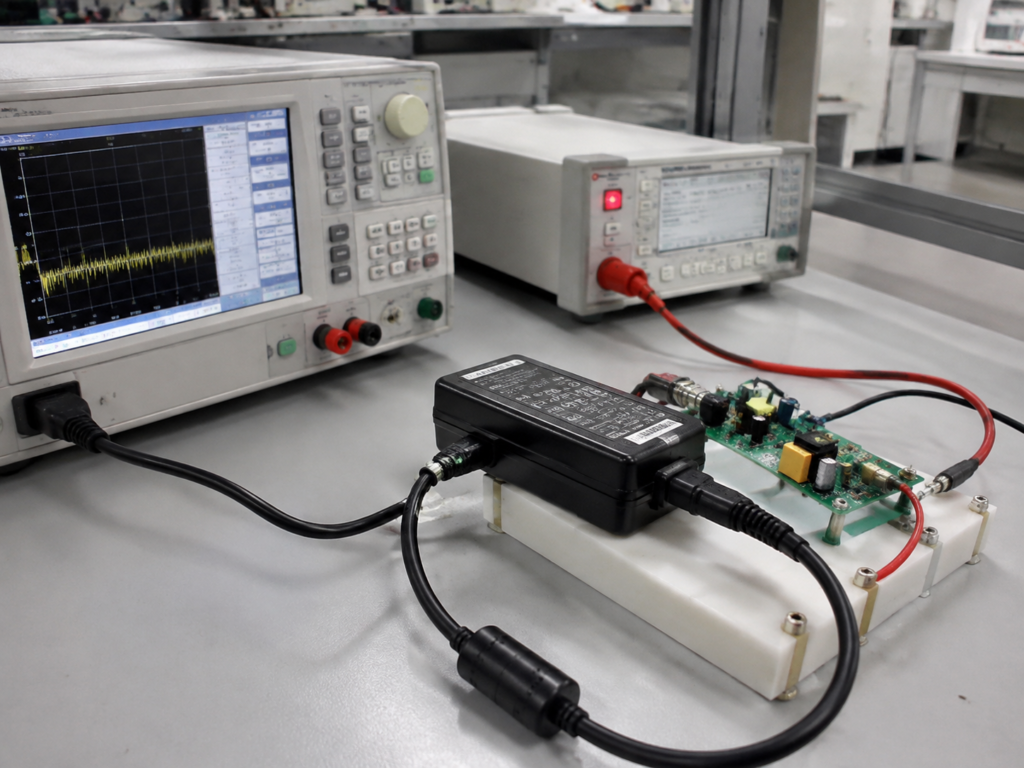
- Initial Production Inspection (IPI) fee: After the sample test passes, UL will send personnel to the production factory to verify whether the mass-produced products are completely consistent with the submitted samples. This fee for the first production compliance verification is called IPI in the industry. It is calculated based on the number of person-days of inspection. For overseas factories outside North America (such as factories in China and Southeast Asia), additional travel expenses for inspectors must be paid. Note: The production factory here refers to an independent production address; different production lines within the same address do not need to be charged repeatedly; whether multiple factories can be evaluated jointly shall be subject to UL’s final determination on the scope of certified products.
- Annual follow-up service fee: After obtaining the certificate, UL will conduct irregular follow-up inspections at the factory every year, and at the same time authorize you to use the UL mark and maintain your certification file. The fee for these services is the annual follow-up service fee, which is charged annually according to product category and the number of independent production addresses. The billing method for follow-up inspections of multiple factories needs to be confirmed in combination with the certification scope. This fee is the key to maintaining the validity of the certification. If payment is stopped, the certification status will become invalid or be revoked, and the UL mark may not be used until the valid status is restored; if you need to restore the certification, you must re-apply or complete the relevant procedures as required by UL.
4 Possible Additional Fees
These 4 fees are not encountered by everyone, but if you don’t know about them in advance, it is easy to exceed the budget:
- Retest fee: If the initial test does not meet UL standards, you need to retest after rectification, and you need to pay a retest fee, which is charged separately for the test items that failed. Doing a pre-test in advance can greatly reduce this expense.
- Certification change fee: After obtaining the certificate, if you want to change core components, product structure, or production address, you must report to UL and pay the change fee at the same time, ranging from hundreds to thousands of dollars depending on the size of the change. If you make changes without reporting, the certification will be directly revoked, and the money you spent before will be wasted.
- Agency/consulting service fee: If you entrust a third-party institution to handle the certification process and guide rectification, you need to pay this fee, which is priced according to the service content (full package / guidance only). It is not a mandatory fee. If you are familiar with the UL certification process and requirements, you can apply directly to UL. It should be noted that the cost-effectiveness of agency services needs to be comprehensively judged based on your own experience, time cost, and retest risk, and it is not necessarily more expensive or cheaper.
- Expedited service fee: If you need to speed up the test scheduling or arrange factory inspection in advance, you have to pay an expedited fee, usually 20%-50% of the corresponding normal fee. It is not recommended to choose it unless necessary. As long as you plan in advance, you can completely avoid this expense.
6 Key Factors That Determine the Level of UL Certification Costs
Why is it that for UL certification, a plug only costs a few thousand dollars, while a lithium battery costs hundreds of thousands? The core is that 6 factors determine the cost level. You can make a preliminary estimate by yourself without waiting for a quote.
The first factor is product risk level and applicable UL standard. Low-risk categories such as plugs, power cords, and ordinary adapters have fewer test items and lower costs; high-risk categories such as home appliances, lithium batteries, medical equipment, and high-power industrial equipment have more test items and higher costs. The judgment method is very simple: first confirm the UL standard corresponding to your product. The more complex the standard and the more standards that need to be superimposed, the higher the cost; it must be calculated based on the current effective version. If the standard update adds new test items, sample requirements, or evaluation items, the cost may rise accordingly.
The second factor is number of product models and structural differences. If it is a series of products with the same core structure, key safety components, and working principle, you can apply for series certification, which only requires a small model expansion fee, which is very cost-effective; but if the structures and working principles between models are very different, separate testing is required, and the cost will directly double. The core of judgment is whether the core components such as batteries, circuit boards, and safety components are the same.
The third factor is UL certification status of key components. For core safety components such as batteries, plugs, fuses, PCB boards, and power modules, if they already have UL certification, some test items can be waived, saving a lot of money; if core components do not have UL certification, additional testing may be required, or simply replacing compliant components will cost more. It should be noted here that component UL certification has clear scope of application restrictions (such as temperature, voltage level, use environment). If it is used in the whole machine beyond its certification scope, additional testing may still be required, and it cannot be directly exempted.
The fourth factor is number and location of production factories. For local North American factories, no additional travel expenses are required for factory inspections, and the cost is lower; overseas factories (such as those in China and Southeast Asia) need to pay for the transportation and accommodation of inspectors, which is more expensive. If there are multiple independent production addresses, usually each address must pay factory inspection-related fees separately, and the specific degree of combination shall be determined by UL.
The fifth factor is certification type and mark scope. There are several types of UL certification with large cost differences. You can quickly understand them by referring to the following table:
| Certification Type | Applicable Objects | Cost Ratio (based on UL Listed for the same category) | Core Benefits |
|---|---|---|---|
| UL Listed (whole product listing) | Complete finished products for end consumers | 100% | UL mark can be used, including factory inspection and annual follow-up |
| UL Recognized (component recognition) | Semi-finished products/components for integration by other manufacturers | 50%-70% | UL recognition mark can be used, only for component compliance |
| UL Classified (specific performance classification) | Products that only need to evaluate a certain safety/performance item | Determined by test scope | Only proves that specific performance meets requirements |
All three certification types above can be applied with the cULus mark, which means meeting the safety standard requirements of both the United States and Canada at the same time, and is not an independent certification type. A special reminder here: choosing the wrong certification type will lead to repeated applications and waste of money. For example, if you are a component supplier selling power modules, applying for UL Listed whole product certification is completely unnecessary — it is expensive and useless.
The sixth factor is data preparation and project management. If your data is complete and the samples are fully in line with the mass production state, UL’s quote will be very accurate, with less rework and lower additional costs; if the data is repeatedly modified and the samples are unqualified, additional evaluation and retest costs will be increased. Insufficient data preparation is the most common reason for novices to overspend. Many people do UL for the first time, and just making up data takes several rounds of tossing, which wastes money and delays time.
Reference Range of UL Certification Costs for Common Categories
To facilitate your preliminary budget planning, we have sorted out the reference cost range of common categories in the industry, but you must first remember two premises: first, UL officials have never made a unified price list public, all quotes are calculated based on the specific situation of the product, the following figures are only for budget reference, and the final shall be subject to the official quote; second, the costs here only count the direct costs paid to UL or authorized institutions, excluding the hidden costs you need to bear yourself.
Direct Cost Range for Different Risk Categories
| Risk Level | Representative Categories | Reference Range of Direct Costs | Prerequisites |
|---|---|---|---|
| Low risk | Plugs, power cords, ordinary adapters | Starting from thousands of dollars | Single model, core components have UL certification |
| Medium risk | LED lamps, small home appliances, ordinary consumer electronics | Tens of thousands to over 100,000 US dollars | Single model, no special test requirements |
| High risk/complex | Lithium batteries, high-power industrial equipment, medical electrical equipment | 100,000 to hundreds of thousands of US dollars | When there are many test items and multiple superimposed standards |
Reference Cost Ratios for Different Certification Forms
In addition to the basic whole product certification, the costs of other common certification forms can be estimated proportionally:
- UL test report (only single sample test): the cost is 1/3-1/2 of official UL certification, without factory inspection and mark authorization;
- UL Recognized (component recognition): the cost is 50%-70% of UL Listed (whole product listing) for the same category;
- Adding cULus mark (meeting the safety requirements of both the U.S. and Canada): 10%-30% more expensive than UL certification only for the U.S. market.
Easily Overlooked Hidden Budget
Many people only calculate the direct cost to UL when making a budget, and end up overspending a lot. The following hidden costs must be considered in advance:
- Sample cost: Generally, 2-5 sets of test samples need to be prepared. Many tests are destructive, and the samples cannot be used after testing;
- Logistics and customs declaration fees: International shipping fees, customs declaration fees, and insurance fees for sending samples to UL laboratories;
- Rectification cost: If the test fails, the R&D and production costs of modifying the design, replacing components, and adjusting the production line;
- Delay loss: If the certification delay leads to delayed product launch or order breach of contract, this loss may be higher than the certification fee itself.
Payment Schedule for Each Stage of UL Certification
Knowing the approximate range of the total cost, the next step is to figure out when to pay, which is convenient for you to arrange cash flow. UL certification fees are charged in stages, and each stage corresponds to different service nodes:
The first stage is project initiation and quotation stage: After you submit the product information, UL will issue an official quote. After signing the agreement, pay 10%-30% of the start-up fee (or the full application fee), and the project will officially start. The quote is usually valid for 30-90 days, and the cost needs to be recalculated after expiration.
Second stage is sample testing stage: Before the sample is submitted for testing, the full test fee (or the proportion agreed in the contract) needs to be paid. If the initial test fails and you need to retest after rectification, the retest fee will be charged separately before the retest.
Third stage is initial factory inspection stage: After the sample test passes, the initial factory inspection fee needs to be paid before arranging the factory inspection; if it is an overseas factory, the inspector’s travel expenses must also be paid in advance. If the factory inspection fails and rectification is required, the re-inspection fee must also be paid separately.
Fourth stage is certification obtaining and maintenance stage: The first year’s annual follow-up service fee needs to be paid before the certificate is issued. Subsequently, the annual fee for the current year is paid before the expiration of each year. The follow-up inspection fee can be settled per visit or packaged annually, depending on the contract agreement.
How to Judge Whether a UL Quote Is Reasonable: 3 Steps to Understand and Avoid Pitfalls
After getting quotes from several institutions, how do you judge which one is reliable? Will there be hidden consumption? In fact, as long as you follow 3 steps and check 5 core items, you can avoid most low-price traps.
3 Steps to Quickly Estimate Total Budget
The first step is to confirm the basic information first: target market (U.S. or U.S. + Canada), product category and corresponding UL standard, number of models, number of factories, required certification type. The more complete this information, the more accurate the estimate.
The second step is to find 2-3 institutions that are UL official or have valid authorization qualifications for the product category and corresponding UL standard to issue detailed quotes. Don’t just look at the total price, compare the service content included in it.
The third step is to reserve 10%-20% of budget redundancy to deal with retests, changes, and hidden costs. Novices doing UL for the first time are prone to additional expenses due to unfamiliarity with the process, so leaving a margin will not make you panic.
5 Core Items That Must Be Checked on the Quote
After getting the quote, don’t look at the total price first, look for these 5 items first. Be vigilant if any one is missing:
- Whether it clearly states the certification type (Listed/Recognized/Classified) and applicable UL standards, to avoid doing a certification type you don’t need;
- Whether it includes the 3 mandatory fees: initial test fee, initial factory inspection fee, and first-year annual service fee. Many low-price quotes hide these items and add money later;
- Whether it explains the charging rules for retest fees, change fees, and expedited fees, to avoid arbitrary price increases later;
- Whether it indicates the quote validity period and payment nodes;
- Whether it is clear that the certificate can be queried in UL’s official database, and core information such as product name, model, applicable standard number, certificate holder, certificate status, and authorized mark type can be verified during query.
3 Dimensions to Judge the Rationality of the Quote
After checking the core items, judge whether the quote is reasonable from 3 dimensions:
The first is risk matching degree: If the quote for high-risk products (with batteries, high voltage, heat generation) is too low, you must be vigilant. It is most likely a fake certification or missing service items; if the quote for low-risk products is too high, you need to check whether unnecessary test items are overcounted.
The second is full-cycle coverage: Don’t just look at the cost of getting the certificate for the first time. You have to include the annual fee and subsequent maintenance fees into the total cost. Some institutions have very low quotes for the first year, but the subsequent annual fees are ridiculously high.
The third is institutional reliability: You must confirm that the service provider has valid recognition or authorization qualifications for the product category and corresponding UL standard. Otherwise, the certification will not be recognized by platforms and purchasers, and the money will be wasted.
6 Practical Tips to Legally Reduce UL Certification Costs
UL certification costs are not low, but as long as the method is correct, you can legally reduce costs without affecting the effectiveness of the certification. The following 6 are commonly used compliance cost reduction practices in the industry:
The first tip, prioritize core components with UL certification in the design stage. When designing the product, for core safety components such as batteries, plugs, and fuses, prioritize models that already have UL certification and whose parameters and usage scenarios match. This can not only waive some test items, but also reduce the risk of retesting and save costs.
Second tip, combine same-series products for series certification. Package and apply for models with the same core structure, key components, and working principle. Multiple models can save 50%-80% of the test fee, and only need to pay a small model expansion fee, which is much lower than the cost of doing each model separately.
Third tip, do a pre-test in advance before formal submission. Find a qualified laboratory to do a preliminary pre-test first, and then send it to UL for formal testing after rectification is qualified. The pre-test fee is only 10%-20% of the formal test fee, which can effectively reduce the high retest cost caused by the failure of the first test.
Fourth tip, plan 3-6 months in advance to avoid expedited fees. Start certification 3-6 months before the product is launched, don’t wait until the platform or purchaser urges you to start. This way you can completely avoid the 20%-50% expedited fee, and with sufficient time, you also have enough time to rectify if there are problems.
Fifth tip, prepare all materials and qualified samples at one time. Prepare BOM tables, circuit diagrams, key component certificates, product specifications and other materials in advance, and try to make the samples close to the mass production state. This can reduce rework fees and time costs caused by incomplete materials and unqualified samples, which is also the easiest place for novices to save money.
Sixth tip, advance certification in stages. First certify the core model with the largest sales volume, and then gradually expand other series; first do the certification for the main market (for example, first do UL certification for the U.S. market), and then add the cULus mark certification covering the Canadian market after sales increase. This can reduce the one-time budget pressure and will not waste money on models that are not selling well for the time being.
Common Cost Misconceptions and Pitfall Avoidance
We have sorted out 8 high-risk cost misconceptions that novices are most likely to step into. Many people have stumbled when doing UL for the first time. You can check them to avoid pitfalls:
- Misconception: UL certification is a one-time fee, and it is permanently valid after payment → Truth: Annual follow-up service fee must be paid every year. If payment is stopped, the certification status will become invalid or be revoked, and the UL mark may not be used until the valid status is restored.
- Misconception: U.S. law mandates that all products must have UL certification → Truth: The U.S. federal level does not mandate UL certification for all products, but most state safety regulations, mainstream e-commerce platforms, and large purchasers take it as a mandatory access condition. Without certification, you may not be able to list products or take orders.
- Misconception: The lower the quote, the more cost-effective it is, just find the cheapest institution to do it → Truth: Only certifications from institutions with authorization qualifications for corresponding products and standards are recognized by the market. Low prices are mostly fake certifications or missing-item quotes, which will result in greater losses in the end.
- Misconception: For the same product, the quotes of all institutions should be exactly the same → Truth: The difference in quotes comes from the included service content (such as pre-test, travel expenses, rectification guidance, service cycle, etc.), which needs to be judged in combination with details, and the cheaper is not necessarily the better.
- Misconception: The UL test report required by Amazon is the official UL certification → Truth: The test report is only the result of a single sample test, without factory inspection and UL mark authorization, can only be used for temporary review, and is not an official UL certification.
- Misconception: If components have the UL mark, they can be directly used for whole product certification → Truth: The UL certification of components has clear scope of application restrictions (such as temperature, voltage level, use environment, installation method, etc.). If it is used in the whole machine beyond its certification scope, additional testing may still be required, and relevant evaluation cannot be directly exempted.
- Misconception: After getting the certificate, changing a small part or changing the production address doesn’t need to tell UL → Truth: Changes to key safety components, product structure, and production address must be reported to UL and corresponding change fees must be paid. Unauthorized changes will result in direct revocation of certification.
- Misconception: Finding an agent to handle it must be more expensive / must be cheaper → Truth: The agent will charge a service fee, but if you are not familiar with the process, the agent can reduce data rework, reduce retest risks, and save communication costs. Whether it is cost-effective overall needs to be comprehensively judged based on your own experience, time cost, and retest risk.
After sorting out all the cost logic and pitfall avoidance points, you can basically independently complete 4 things related to UL certification costs: first, you can clearly disassemble the cost composition of UL certification, and accurately distinguish mandatory expenses, optional additional expenses, and easily overlooked hidden costs; second, you can combine your own product type, number of models, factory layout, and required certification type to initially estimate a reasonable cost range, and quickly identify low-price traps that are obviously unreasonable; third, you can understand the core items of the UL certification quote, and judge whether the quote is reasonable from the three dimensions of risk matching, full-cycle cost, and institutional qualification; fourth, you can combine your own sales scale and product launch rhythm to choose a suitable certification plan, and legally reduce costs on the premise of ensuring compliance effectiveness.
In general, the essence of UL certification is ongoing compliance services based on product safety risks, and the cost level is directly corresponding to product complexity, certification scope, and service content. There is no need to blindly pursue low prices (mostly missing-item quotes or fake certifications), nor to be deterred by high prices — as long as you clarify the market access requirements of your own products, plan the certification rhythm in advance, and choose the right certification plan, you can control the cost within a reasonable range on the premise of ensuring compliance effectiveness.