
Most people engaged in the Japanese electrical product market are no strangers to PSE certification, but many run into pitfalls at the “factory inspection” stage: some think that passing sample testing guarantees they will get the certificate, only to have all previous efforts wasted when the factory inspection fails; some think that passing one inspection means lifelong peace of mind, only to have their certification revoked later in a surprise inspection; others cannot figure out whether they need to undergo inspection at all, and waste a lot of effort on unnecessary tasks. This article clarifies the rules of PSE factory inspection, covering basic definitions, applicable boundaries, trigger scenarios, specific inspection contents, process rules, and pitfall avoidance methods, making it directly referenceable for both new and veteran sellers.
Beginner Basics: Core Definition and Function of PSE Factory Inspection
PSE factory inspection is not an independent certification, but a supporting production-side verification for Japan’s PSE electrical safety certification. Its core purpose is to ensure that the safety performance of mass-produced products is consistent with that of the submitted certification samples, preventing the scenario where “samples pass inspection but mass-produced products fall short of standards”. If product testing is equivalent to spot-checking the score of a single test paper, factory inspection is verifying the overall production management and control level, to ensure that every batch of products can stably meet requirements.
Legal Basis and Implementing Entities
PSE factory inspection has a clear legal and implementation system, and not any institution can carry it out:
• The legal basis is Japan’s (commonly referred to in the industry as the DENAN Law), which is the core law for electrical product safety in Japan. PSE factory inspection is based on this law, and its specific implementation also incorporates relevant cabinet orders, ministerial ordinances, technical standards, and RCB operating rules.
• The competent authority is the Ministry of Economy, Trade and Industry of Japan (abbreviated as METI), a government department responsible for economic, trade, and industrial supervision in Japan, which undertakes the responsibilities of rule-making and supervision of implementation.
• The actual inspections are carried out by Registered Certification Bodies (abbreviated as RCBs) authorized by METI. For example, JET and JQA, which are common in the industry, are such third-party professional institutions.
Many overseas factories worry that “since the factory is abroad, will the inspection standards be looser?” The answer is no: inspections of overseas factories are generally carried out by the RCB’s local cooperation team, but the inspection standards are exactly the same as those for Japanese domestic factories, and requirements will not be relaxed due to location.
3 Common Cognitive Pitfalls for Beginners
People who are new to this field easily have several misconceptions, and understanding them in advance can save a lot of detours:
1. “Passing one inspection is valid for life”: Wrong. There are regular inspections within the validity period of PSE certification, as well as unannounced surprise spot checks. If the factory relocates or the product model is revised, re-verification is required — it is not a once-and-for-all matter.
2. “Sample qualification equals guaranteed certification”: Wrong. For Diamond PSE, sample testing is only part of the certification process. If the factory inspection fails, even if all sample tests are qualified, you cannot get the certificate; even after obtaining the certificate, if problems are found, the certification will be revoked. For Circle PSE, the core requirements are enterprise self-management, record retention, and acceptance of regulatory spot checks, so you also cannot consider yourself compliant just because the samples are qualified.
3. “Factory inspection is just flipping through documents”: Wrong. Inspectors will not only check documents, but also go to the production site to verify processes, randomly select mass-produced finished products for testing, and even interview frontline workers to confirm whether production is truly carried out in accordance with specifications. You cannot get by with fake documents.
Applicable Boundaries: Whether Your Products and Factories Need Inspection
Whether you need a PSE factory inspection depends on two core dimensions: which type of PSE your product falls under, and whether your factory is within the compliance scope.
Inspection Requirements for the Two Types of PSE (Core Judgment Basis)
Japan divides PSE-certified products into two categories, corresponding to completely different factory inspection requirements, which is the core judgment criterion:
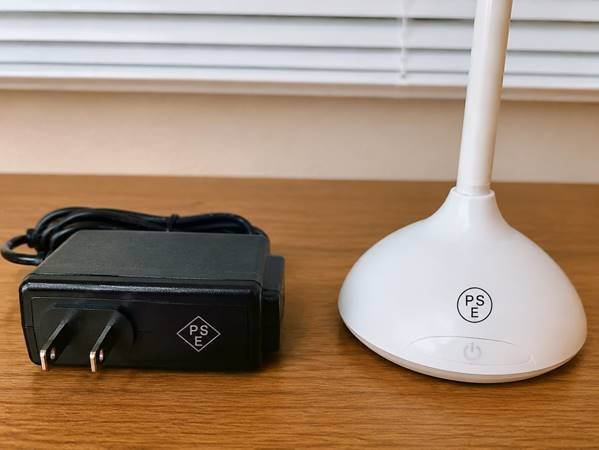
| Product Category | Risk Level | Factory Inspection Requirements | Typical Product Examples |
| Diamond PSE (Specified Electrical Appliances and Materials) | High risk | Mandatory third-party factory inspection; all factories producing such products must undergo verification | Power adapters, chargers, electric heating appliances, and other high-risk products listed in the Specified Electrical Appliances and Materials catalog |
| Circle PSE (Non-Specified Electrical Appliances and Materials) | Ordinary risk | No mandatory third-party annual inspection; enterprises conduct self-inspection and keep records, and METI may conduct random spot checks | Low-risk electrical products (specifically subject to METI’s official catalog) |
If you are unsure which category your product belongs to, the most accurate method is to check the officially released by METI, or directly consult the cooperating RCB that issues the certificate; do not make a judgment on your own.
Which Factories Must Meet the Requirements
As long as the premise of “producing PSE-type products for sale in Japan” is met, regardless of where the factory is located or how large it is, it must meet the requirements:
• Whether it is a Japanese domestic factory, or an overseas factory in China, Southeast Asia, etc., it is within the inspection scope.
• If the same model is produced in multiple factories, all involved production factories must be included in the inspection; you cannot only inspect one.
• Even OEM/ODM foundries that are not the certificate holders must undergo inspection as long as they actually produce PSE-type products.
• There are no exemption rules for small-batch PSE-type products sent via cross-border e-commerce direct mail; they also need to be compliant.
Common Boundary Misconceptions
Regarding applicable boundaries, there are several other common misconceptions:
• “Circle PSE does not need to worry about factory inspection at all”: Wrong. For Circle PSE, there is simply no mandatory requirement to hire a third party for annual inspection, but enterprises must do a good job of production-side safety management and control on their own, and keep inspection records properly. If they cannot produce them during a METI spot check, they will still be penalized.
• “Inspections for overseas factories are looser”: Wrong. Inspection standards are unified globally; only the implementation team and communication language differ. Requirements will not be relaxed just because the factory is located abroad.
• “Small factories/small batches can have relaxed requirements”: Wrong. The rules of PSE factory inspection do not distinguish between factory sizes or order sizes. As long as the product is sold in the Japanese market, it must meet the requirements; there is no such thing as “small-scale exemption”.
Trigger Scenarios: When Will Inspections Occur
PSE factory inspections are not carried out randomly at any time. Different types of inspections have clear trigger conditions, and knowing them in advance allows you to prepare well.
Initial Inspection: When Obtaining Certification for the First Time / Adding Production Capacity
The initial inspection is the most common, and its trigger conditions include: new application for Diamond PSE certification, addition of new production factories/production lines under existing certification, and transfer of certification from one RCB to another.
This type of inspection generally gives formal notice 1-2 weeks in advance, clarifying the inspection scope and materials to be prepared, and will not come to the door suddenly.
Regular Supervision Inspection: Periodic Re-inspection by Risk After Obtaining Certification
After obtaining Diamond PSE certification, the RCB will conduct periodic re-inspections according to the product risk level within the validity period, generally once every 1-3 years. The specific frequency is subject to the RCB’s notice.
The higher the risk of the product, the higher the inspection frequency; if the factory has previous complaints or non-conformity records, the number of inspections will also be increased.
Unannounced Surprise Spot Checks:突击 Inspections Without Prior Notice
Unannounced surprise spot checks are突击 verifications with no prior notice, and are generally triggered by the following situations: products are complained by consumers about safety issues, safety accidents occur, products fail spot checks in the Japanese market, or the RCB finds abnormalities in certification information.
This type of inspection may directly initiate on-site verification, or be carried out through importers or the RCB’s local cooperation procedures. The core is to verify real compliance, and no time is given to supplement materials or adjust the site in advance.
Change Verification: When There Are Major Changes to the Factory or Product
If there are major changes to the factory or product, you must proactively report to the RCB, and the RCB will judge whether a change verification is needed; you cannot make adjustments without authorization.
Situations that trigger change verification include: factory relocation, change of product structure/key safety components, and name change of manufacturer/certificate holder. If you make changes without reporting and are caught, it will be directly deemed a serious non-conformity, with very serious consequences.
Core Inspection Contents: What Exactly Do Inspectors Check (Including Items Not Checked)
Many people wish they could bring out all their documents when preparing for an inspection, but that’s actually unnecessary. PSE factory inspections only check content related to electrical safety and product consistency, with a clear scope, and there are even many items that are not inspected.
Highest Weight Item: Product Consistency
Product consistency is the top priority of the inspection, which simply means “whether mass-produced goods are the same as certification samples/filed documents”, and it accounts for the highest weight:
• Inspectors will randomly select mass-produced finished products to compare whether their structure, materials, and electrical parameters are consistent with the certification samples and filed documents.
• They will verify whether the style, position, and size of the PSE mark, as well as the rated parameters and manufacturer code on the product nameplate, meet the requirements.
• They will confirm that all models currently in production are within the scope of the certification certificate, and there is no situation of affixing the PSE mark beyond the scope.
Key Safety Components and Supply Chain Management
Key safety components are parts that directly affect electrical safety, such as power cords, plugs, insulating materials, capacitors, transformers, fuses, etc. Problems with these parts can easily lead to electric shock, fire and other accidents, so they are also key inspection points:
• Verify whether the suppliers, models, and specifications of key safety components are consistent with those filed for certification.
• Verify the incoming inspection records and qualification certificates of key components, and whether safety assessments have been conducted for new suppliers.
• If key components need to be replaced, you must report to the RCB in advance to confirm whether additional testing is needed; you cannot replace them without authorization.
Production Process and On-Site Management
This part checks whether the production process is carried out in accordance with specifications, and it is not enough to just have documents:
• For key processes such as welding, insulation assembly, and high-voltage testing, check whether there are written work instructions, and whether the actual operations of workers are consistent with the documents; you cannot “write one thing and do another”.
• Conditions related to electrical safety in the production environment must meet standards, such as storage of key safety components, anti-static measures, fire prevention measures, etc.
• Non-conforming products must be stored in isolation, and must undergo re-safety inspection after rework, and cannot be casually mixed into qualified products.
• In case of mixed-line production (the same production line produces both certified and non-certified products), clear identification marks must be provided to prevent incorrect affixing of the PSE mark.
Inspection Equipment and Record Management
This part checks whether the factory’s own inspection capabilities and records are standardized:
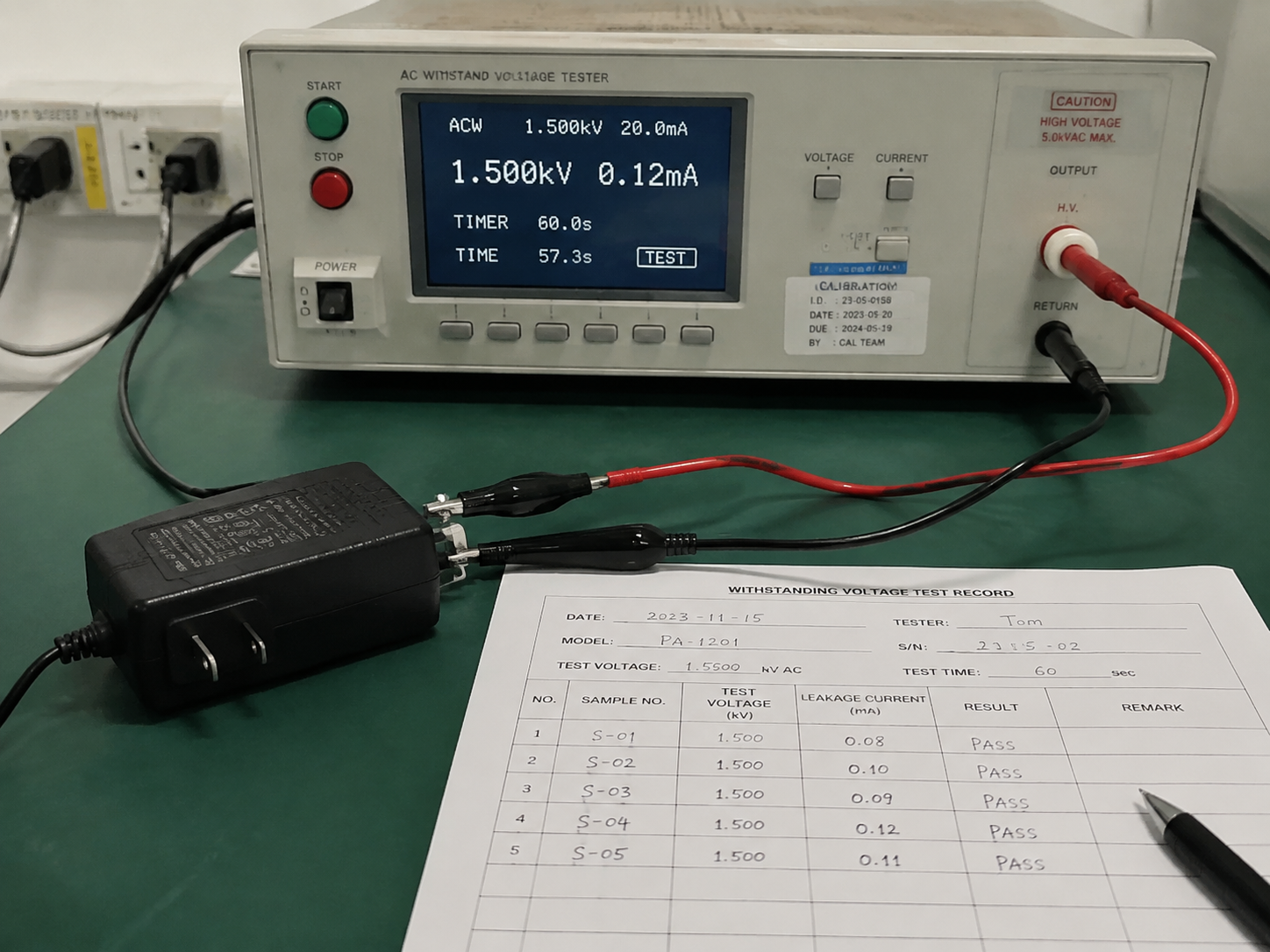
• Safety testing equipment (such as withstand voltage testers, ground resistance testers) must be within the calibration validity period; inaccurate equipment cannot be used for testing.
• Factory safety inspection items must cover core safety requirements, and inspection records must correspond to specific batches; you cannot just write “qualified” and be done with it.
• The retention period of all PSE-related records must cover the regulatory requirements after the product is discontinued; the specific duration is subject to the RCB’s rules.
• Technical documents (drawings, specifications, test reports) must be version-controlled and consistent with the current product state in production; you cannot keep using old documents after the product has been modified.
Clearly Excluded Items (Avoid Unnecessary Preparation)
You don’t need to do useless work for the inspection; the following items are not checked in PSE factory inspections:
• Products and production lines not within the scope of PSE certification are not checked; only the part you applied for certification is checked.
• Content unrelated to electrical safety such as production capacity, delivery time, environmental protection, and social responsibility is not checked.
• The full set of documents for general quality management systems such as ISO9001 is not required; only the parts related to PSE safety are needed.
Complete Process and Result Judgment: How the Inspection Proceeds and How Results Are Determined
Now that you know what is inspected, understanding the entire inspection process and result rules will give you peace of mind.
Pre-Inspection Preparation
Doing these three things well before the inspection can greatly improve the pass rate:
• Document preparation: Organize core documents such as certification certificates, test reports, key component lists, inspection records, and equipment calibration certificates, and place them by category for easy access by inspectors.
• Personnel preparation: Designate contact persons for quality, production, procurement, and inspection positions. Overseas factories are best equipped with translators who understand professional terminology to avoid communication errors.
• Pre-inspection self-check: Go through the inspection contents mentioned above by yourself first, fill in missing records, and correct inconsistencies on site in a timely manner; don’t wait until the inspector arrives to find problems.
Standard Steps of On-Site Inspection
On-site inspections generally have three fixed steps, which are not chaotic:
1. Opening meeting: The inspector first holds a short meeting to explain the scope, process, and confidentiality requirements of this inspection, and the factory side briefly introduces the basic situation.
2. On-site execution: The usual order is document review → production site patrol → finished product sampling verification → key position personnel interviews. The specific order may be adjusted according to the inspector’s habits, but the core content will not be missing.
3. Closing meeting: After the inspection, problems are reported on the spot, and the level of non-conformities and rectification requirements are explained; you will not be told the results after the inspector goes back.
3 Types of Inspection Result Judgments and Follow-up Processing
Inspection results are divided into three categories, corresponding to different handling methods:
• Qualified: No non-conformities, pass directly, certification is issued normally or remains valid.
• Minor non-conformity: The problem does not involve core safety risks, and rectification is required within a time limit (usually 1-2 months, specifically subject to RCB notice). Usually, rectification evidence such as photos, documents, and records can be submitted for the RCB’s written review; if the problem involves on-site authenticity or the rectification effect needs to be verified, the RCB may still require an on-site re-inspection.
• Serious non-conformity: The problem is relatively serious, certification is directly suspended or revoked, and you need to re-apply for on-site inspection after completing rectification, which is equivalent to starting all over again.
Time Reference (Subject to Actual Notice)
Here is a general time frame for reference, the specific arrangement is subject to the RCB’s actual schedule:
• Initial inspection: 1-2 days, adjusted according to factory size and number of product types; it may take longer for large factories with many products.
• Regular supervision inspection: half a day to 1 day.
• Rectification re-inspection: final results are issued 1-2 weeks after submitting rectification evidence; for serious non-conformities, another on-site re-inspection may be required.
Consequences of Certification Suspension/Revocation
You must attach importance to the inspection results. If certification is suspended or revoked, the cost is very high:
• You cannot continue to use the PSE mark on products and packaging.
• Products already on the Japanese market may be required to be recalled or removed from shelves.
• Japanese importers may face fines, and even goods may be directly detained during customs clearance and unable to enter the Japanese market.
Advanced Pitfall Avoidance: Judgment Methods and Practical Decisions
If you already understand the basic rules, this part of the content can help you avoid the vast majority of pitfalls, and even judge risks in advance and make good decisions.
How to Judge the Strictness of Inspection for Your Factory
The inspection strictness varies for different factories, mainly depending on three dimensions:
• Look at product risk: Diamond PSE is stricter than Circle PSE; high-risk products such as power supplies and electric heating products will be inspected in more detail and more strictly.
• Look at factory history: Factories applying for certification for the first time, or with previous complaint/recall records, will have a wider inspection scope and higher frequency.
• Look at change situation: For factories that have recently relocated, changed production lines, replaced key components, or transferred certification, inspectors will focus on verifying the changed parts.
High-Frequency Non-Conformities and Pitfall Avoidance Methods
Common non-conformities in practice are mainly concentrated in four categories. Preparing in advance can cover most common risks:
1. Product consistency category: The most common are unauthorized replacement of key safety components and modification of product structure without reporting. Pitfall avoidance method: For any safety-related changes, consult the RCB first, and implement after confirming there are no issues.
2. Document and record category: For example, incomplete inspection records, expired test equipment calibration. Pitfall avoidance method: Sort out all PSE-related safety records 3 months in advance, set reminders for equipment calibration, and don’t wait until the expiration date to remember.
3. On-site management category: Work instructions are inconsistent with workers’ actual operations. Pitfall avoidance method: Conduct a special PSE self-inspection every quarter. If operations are changed, update documents in a timely manner, and don’t let documents sit there gathering dust.
4. Marking category: Incorrect PSE mark style, wrong nameplate parameters. Pitfall avoidance method: Before each printing of marks, check one by one against the marking requirements on the certification certificate, and confirm there are no issues before printing.
Change Decision-Making: When Must You Proactively Report to the RCB
Many people stumble on “failure to report changes”, but the judgment criteria are actually very simple:
• Changes that must be reported: Factory relocation, new production lines, major changes to product structure/key safety components, name change of manufacturer/certificate holder.
• Changes that do not need to be reported: Non-safety-related appearance adjustments (such as changing shell color), ordinary packaging changes (such as changing carton style).
• Judgment principle: If you are unsure, ask the RCB; do not make a judgment on your own. Asking one more question does no harm, but the consequences of missing a report are very serious.
Exclusive Pitfall Avoidance Tips for Overseas Factories
Overseas factories are more likely to encounter pitfalls due to geographical and language issues. Pay attention to these three points:
• Prepare documents in English or Japanese first, don’t have all documents in local language, to avoid inspector misjudgment caused by translation errors.
• Confirm with the RCB in advance whether remote inspection is supported. However, remote inspection only applies to some low-risk scenarios and cannot be used in all cases.
• Under the OEM/ODM model, the responsibilities of the certificate holder, inspection contact party, and record keeping party must be clarified in advance. Don’t let them shift responsibility to each other when the time comes, and both parties will be held responsible if problems arise.
Judgment of Easily Confused Certification Differences
Many people confuse PSE factory inspection with other factory audits, but they are actually completely different:
• Difference from ISO9001: ISO is a general quality management system applicable to all industries; PSE is a special electrical safety inspection only for electrical products in the Japanese market. The two cannot be exempted from each other, but some documents (such as work instructions, record templates) can be reused.
• Difference from factory inspections of other markets: Factory inspections for certifications such as EU CE and North American UL have their own standards. Japan’s PSE inspection is independent, and inspection results from other markets cannot be directly substituted.
• Difference from customer factory audits: Customer factory audits are commercial requirements of customers, such as checking production capacity and social responsibility; PSE factory inspection is a mandatory requirement under Japanese law and cannot be replaced by customer factory audits. Even if the customer recognizes your factory, it is useless if the Japanese government does not recognize it.
Summary After Learning: 5 Things You Can Now Quickly Judge
After reading this article, you should have a comprehensive understanding of PSE factory inspection, and at least be able to quickly judge these 5 things:
1. You can distinguish which type of PSE inspection your products and factories fall under, and whether you must undergo third-party verification;
2. You can judge the trigger timing of different types of inspections, prepare in advance, and will not be in a rush at the last minute;
3. You can quickly sort out the core inspection contents, covering most common non-conformity risks;
4. You can judge which changes need to be proactively reported to the RCB, and will not have certification suspended or even revoked due to missed reporting;
5. You can distinguish the differences between PSE factory inspection and ISO, other market certifications, and customer factory audits, so you don’t have to make unnecessary preparations.